
NRI South Indian Wedding Guide: Kerala, Tamil Nadu, Karnataka
Plan an NRI South Indian wedding in 2026: 9-month timeline, ₹15-40L budget, legal paperwork, and corridor playbooks for Kerala, Tamil Nadu, and Karnataka.

On this page
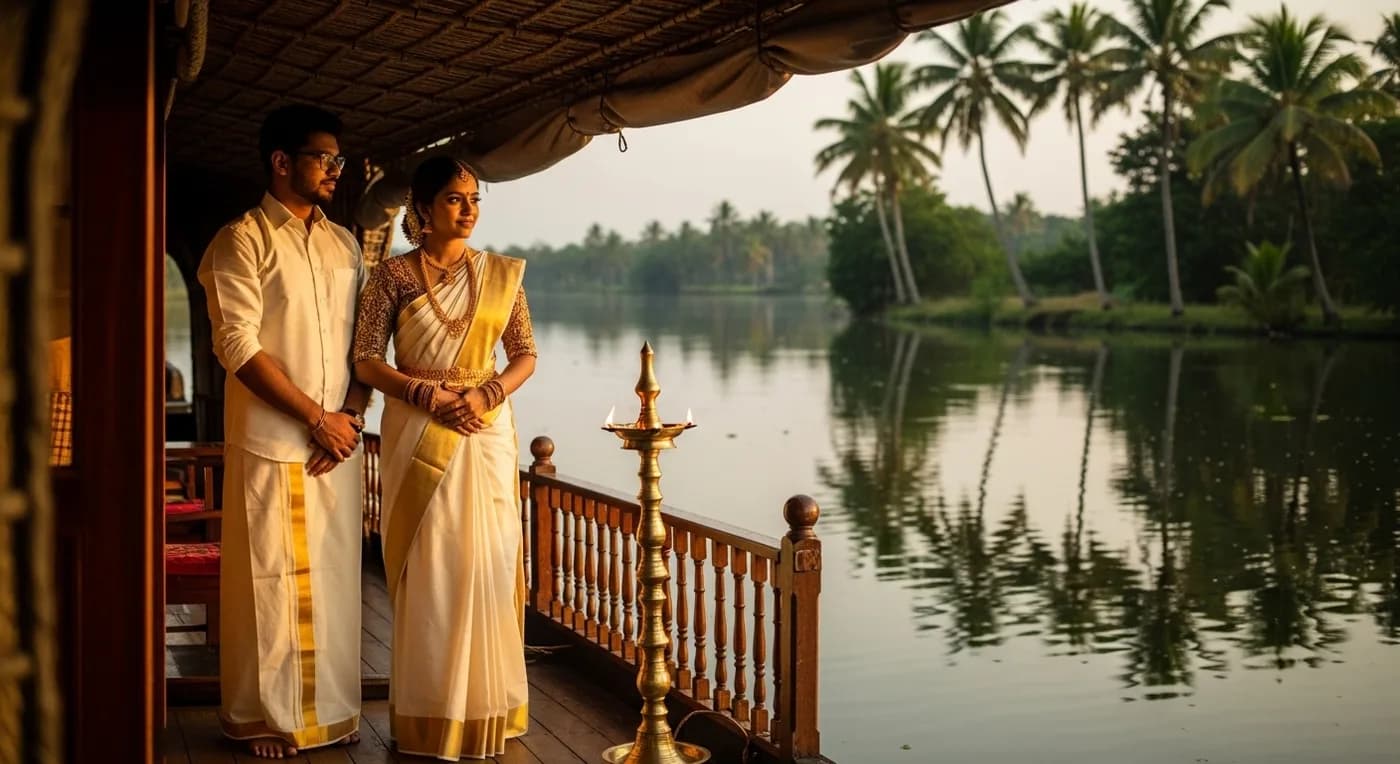
For NRI South Indians planning a wedding back home, start nine months out, budget ₹15-40 lakh for 200-350 guests, and file any Special Marriage Act notice 30 days before the ceremony. Kerala, Tamil Nadu, and Karnataka now host around 2.2 million Kerala-origin emigrants' families alone, and the corridor playbooks differ sharply between the USA, the Gulf, and the UK.
Quick Answer
An NRI South Indian wedding is a three-axis planning problem: corridor (where you fly from), community (Hindu, Syrian Christian, Kerala Muslim, Tamil Brahmin), and legal track (Hindu Marriage Act, Special Marriage Act, or Foreign Marriage Act). Start at the nine-month mark, budget ₹15-40 lakh for a 200-350 guest celebration, and treat the 30-day SMA notice as the single most important deadline on your calendar.
Note
Pricing methodology: Cost ranges in this guide come from itsmy.wedding vendor pricing data across Kerala, Tamil Nadu, and Karnataka, collected in Q4 2025 and Q1 2026, cross-referenced with published tier-1 industry sources cited inline. Currency conversions use 2026 indicative rates (USD ≈ ₹84, AED ≈ ₹23, GBP ≈ ₹106).
When I moved back from Boston to Kochi (Cochin) in 2023 after eight years in tech, the first wedding invitation waiting for me was my cousin's, in Kumarakom, three weeks later. That week taught me more about NRI wedding logistics than any checklist could.
According to the Ministry of External Affairs (May 2024), there are now 15.85 million Non-Resident Indians and 19.57 million Persons of Indian Origin worldwide. A substantial share traces its roots to the four southern states, yet the wedding content most of them find online is built around Udaipur palaces and Delhi farmhouses. This guide fixes that. It pairs with our general how to plan a Kerala wedding guide for couples who want the non-NRI baseline first.
Across 30-plus NRI South Indian weddings I've attended as guest, groomsman, and unofficial logistics coordinator, the same ten questions come up every time. This post answers them and links out to deeper playbooks.

Who are NRI South Indians today?
The South Indian diaspora is one of the largest regional diasporas in the world. The MEA's May 2024 population data counts 15.85 million NRIs and 19.57 million PIOs globally — a combined 35.42 million of Indian origin abroad.
Kerala alone accounts for a remarkable share of that footprint. The Kerala Migration Survey 2023 (IIMAD) reports 2.2 million Kerala emigrants, with 38.6% in the UAE and 80.5% across the Gulf Cooperation Council countries. Those emigrants sent back ₹2.16 lakh crore in remittances, and Kerala now holds around 21% of all NRI deposits in Indian banks. For comparison, the RBI's latest remittance bulletin shows total inward remittances to India hit $135.46 billion in FY25, with the US and UK recently overtaking the Gulf as leading sources.
Tamil Nadu, Karnataka, Andhra Pradesh, and Telangana contribute their own substantial emigrant populations across the USA, UK, Australia, and Singapore. The result is a diaspora that is unusually bifurcated: one half in the Gulf on short-haul contracts, and the other half in the West on long-haul schedules. That split shapes everything about how NRI weddings actually get planned.
Why do NRI weddings need their own playbook?
NRI weddings compress a twelve-month Indian planning cycle into fragmented video calls and a two-week on-ground sprint. That is not how generic wedding guides assume couples plan, and it is why the standard advice breaks down the moment you apply it across an 11-hour time difference.
Four frictions make the NRI case genuinely distinct. First, time-zone overlap between a Bay Area bride and a Kottayam florist is roughly 90 minutes a day. Second, the 14-day trip pressure means you land, fight jet lag, and are expected to make irreversible decisions within 72 hours. Third, cross-border paperwork (passports, OCI cards, SMA notice, Certificate of No Impediment) runs on government timelines that do not care about your muhurtham. Fourth, the second-generation language gap is real: a niece raised in London may not follow the priest's Malayalam or Tamil.
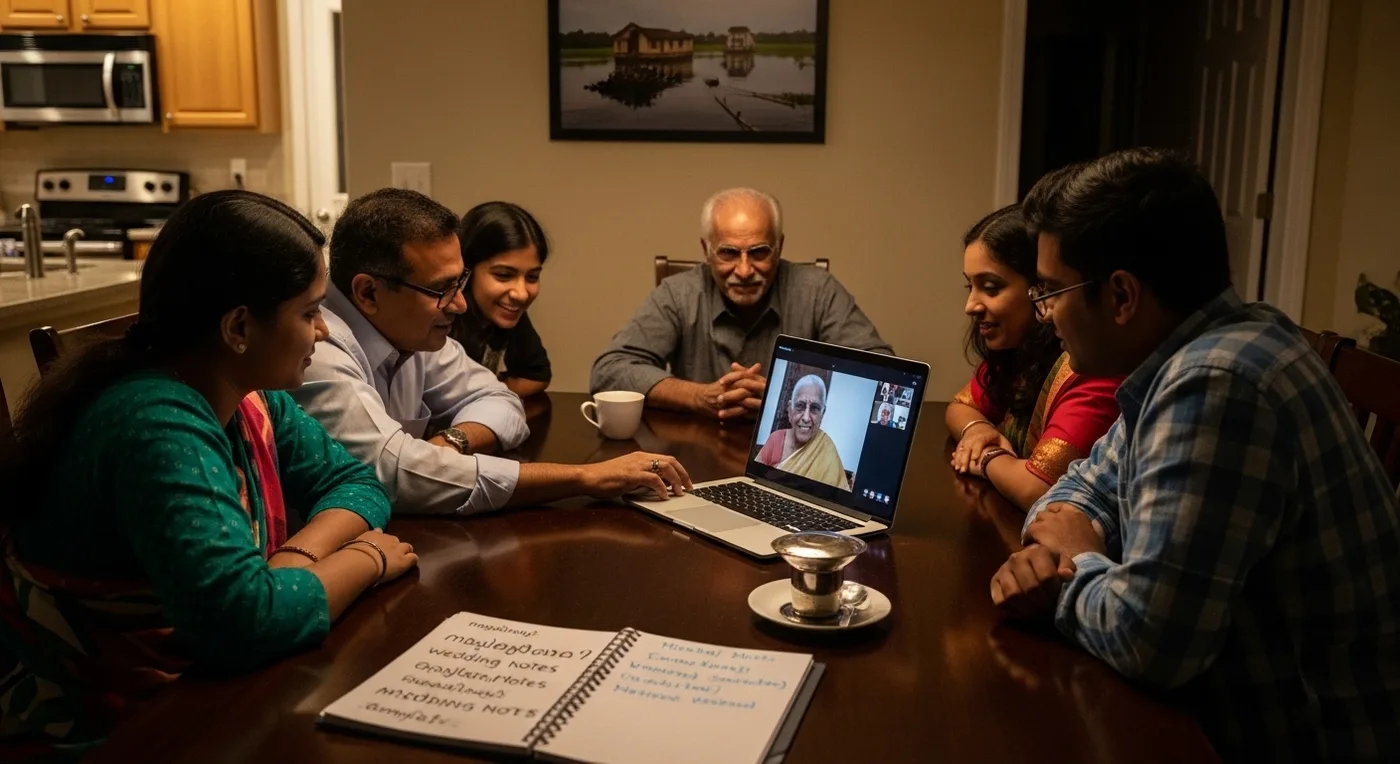
By comparison, a domestic Kerala wedding gives you the luxury of weekly in-person site visits. NRIs have to replace that with documentation, trust networks, and a parents-on-the-ground model. As a result, the posts in this cluster are organised around those constraints rather than around a generic timeline.
How do you choose between Kerala, Tamil Nadu, Karnataka, and Telangana as the wedding destination?
State choice for an NRI South Indian wedding comes down to four variables: community fit, venue type, airport access, and vendor maturity. Each southern state optimises differently, and the right answer is rarely the one with the cheapest airfare.
Kerala wins for backwater resorts and sadhya-first catering. Ernakulam, Thiruvananthapuram (Trivandrum), and Kottayam are the three most NRI-ready districts, with Kochi (Cochin) airport handling most long-haul traffic. Tamil Nadu delivers the most authentic temple and heritage mandapam experience, with Chennai, Coimbatore, and Madurai leading for Tamil Brahmin weddings. Karnataka offers a middle path: Bengaluru (Bangalore) brings international flight access, while Mysuru (Mysore) offers palace venues. Telangana, centred on Hyderabad, serves Telugu NRI families well. For NRI couples seeking island exclusivity, the Andaman Islands offer coral-reef ceremonies at Havelock (Swaraj Dweep) — direct flights from Chennai, Kolkata, and Bangalore make it reachable within a single travel day. NRI couples based in the Gulf or Singapore are also increasingly choosing Sri Lanka as a destination wedding hub — Colombo is a one-hour flight from Chennai, and the Foreign Marriage Act gives the certificate automatic recognition in India.
For example, a USA-based Malayali Hindu couple with grandparents in Kottayam almost always chooses Kerala. A Tamil Brahmin couple in New Jersey whose extended family is in Chennai will pick Tamil Nadu. The decision is rarely about the state itself; it's about where the elders live and which airport the foreign guests can actually reach.
Looking for Venues in Kochi?
Tell us what you need and get quotes from verified venues
What does a realistic 9-month NRI planning timeline look like?
Nine months is the working floor for an NRI South Indian wedding, and even that assumes your muhurtham window is already chosen. The domestic Indian timeline runs twelve months; NRIs can compress it to nine only if the family-on-the-ground model is in place.
Here is how the nine-month plan runs. Month nine: lock the muhurtham, shortlist three venues via video walkthroughs, and file the Special Marriage Act notice if needed. Month eight: book venue, photographer, and caterer. Month seven: decor, makeup, and mehendi artists. Month six: bridal and groom attire with in-person fittings. Month five: invitations and guest list lock, including foreign guest visa letters. Month four: music, sangeet, and jewellery. Month three: hotel blocks, airport transfers, and the foreign-guest welcome brief. Month two: menu tasting via a family proxy and final payments schedule. Month one: fly in and run the 14-day on-ground playbook.
For the full month-by-month US-corridor version, see our plan a Kerala wedding from the USA guide. For the Gulf corridor, read plan a Kerala wedding from UAE and Gulf.
How do families coordinate across time zones without burning out?
Time-zone friction is the single biggest cause of NRI planning burnout, and it is rarely addressed head-on in wedding guides. A Bay Area couple planning a wedding in Ernakulam has roughly a 90-minute sweet spot each day for real-time conversations. Everything else has to run asynchronously or through a trusted proxy on the ground.
The families that get this right do three things. They nominate one "India lead" (usually a parent or sibling) as the single point of contact for vendors. They use WhatsApp voice notes rather than video calls for routine updates, because voice notes respect sleep schedules. And they run a shared Google Sheet or Notion doc as the source of truth.
Tip
Schedule one formal weekly "family sync" at a fixed time that works across all corridors (typically 8 AM Kochi = 10:30 AM Dubai = 10:30 PM US Eastern the night before). Keep it to 45 minutes. Everything else stays async. Across the NRI weddings I've watched succeed, this single habit eliminated most of the conflict.
What are the most-ignored legal traps NRI couples hit?
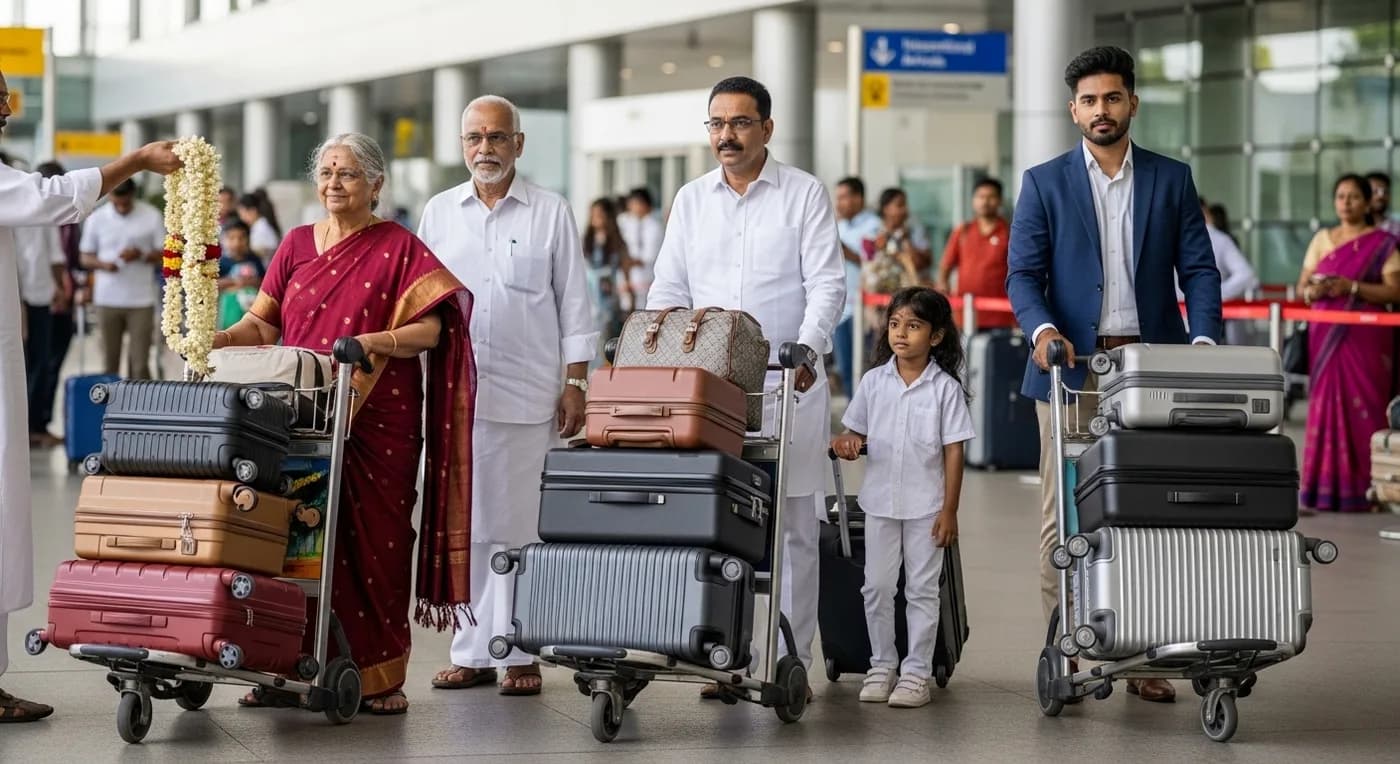
The single highest-value warning in this entire guide is the Special Marriage Act 30-day notice period, and almost no generic wedding blog mentions it. If you plan to register your marriage under the Special Marriage Act in India (which is what most inter-faith and NRI couples do when they want a civil marriage certificate), both parties must file a notice in person at the marriage registrar's office exactly 30 days before the ceremony. There is no online filing, no acceleration for NRIs, and no workaround.
Important
The 30-day SMA trap: Couples who plan their muhurtham first and their paperwork second routinely discover they cannot legally register the marriage on the ceremony day. The fix is to file the SMA notice at least 31 days before your planned wedding date, which usually means one extra trip to India, or filing at the very start of your on-ground window and choosing a muhurtham at least 30 days out. The Registration of Marriage of Non-Resident Indian Bill 2019 tracker on PRS India explains the legislative context. For the full walkthrough, read our upcoming NRI marriage registration in South India legal playbook.
Other common traps include assuming your foreign marriage certificate will be automatically recognised for OCI spouse endorsement (it often requires attestation), missing the Liberalised Remittance Scheme limits when sending wedding funds home, and skipping the gift-tax exemption paperwork. On that last point, wedding gifts received by NRIs from relatives in India are fully tax-exempt with no threshold, which the ClearTax guide to the Liberalised Remittance Scheme explains clearly.
How much does an NRI South Indian wedding actually cost?
A realistic NRI South Indian wedding costs ₹15-40 lakh for 200-350 guests across two to three days of celebration, based on itsmy.wedding vendor data collected across Kerala, Tamil Nadu, and Karnataka in Q1 2026. That puts the average celebration at roughly ₹15,00,000 – ₹40,00,000 once you include venue, catering, photography, decor, attire, and transport.
The Grand View Research India Wedding Services Market report valued the Indian wedding services market at $103.93 billion in 2024 and projected a 14.3% CAGR through 2030. The WedMeGood Annual Wedding Industry Report 2024-2025 tracks a similar upward trend across metros and destination hubs.
On the other hand, NRI weddings in South India remain dramatically cheaper per head than hosting abroad. A 200-guest wedding in New Jersey or the Bay Area typically costs $80,000-$120,000, while the same wedding at a backwater resort in Kumarakom lands between ₹18,00,000 – ₹35,00,000. At the same time, the "Wed in India" push from PM Modi in December 2023, targeting roughly ₹1 lakh crore in outbound wedding spend, is pulling more NRI couples home each year.
For the full breakdown in USD, GBP, and AED, see our NRI wedding budget in USD, GBP and AED post. Our Kerala wedding budget guide and destination wedding cost Kerala posts cover the domestic baseline.

What's different about planning from the USA vs the Gulf vs UK/Australia?
Corridor matters more than most NRI couples expect. The US corridor and the Gulf corridor are genuinely different planning problems, not variations on the same one, and the UK and Australia each have their own quirks on top.
The US corridor is defined by distance and trip count. A typical American NRI couple plans one scouting trip and one wedding trip, total. Time-zone overlap is minimal, and the on-ground window rarely exceeds 14 days. Paperwork trends toward the Special Marriage Act or Hindu Marriage Act route, and foreign guests usually need visa letters. The Indian Visa Online portal documents standard e-visa processing at three to five business days.
By comparison, the Gulf corridor runs on short-haul economics. Flights from Dubai, Doha, or Muscat to Kochi or Thiruvananthapuram take four to five hours and cost a fraction of Western fares. Gulf-based couples often plan three trips instead of one. Paperwork leans on NORKA support, and the NORKA (Non-Resident Keralites Affairs) department actively helps with documentation for Kerala-origin returnees. Budgets convert into AED, SAR, and QAR rather than dollars.
UK and Australia corridors sit between these poles. UK-based couples get reasonable fares and a familiar legal framework, while Australian couples face the longest flights and run the fewest on-ground days. See our plan Kerala wedding from the USA and plan Kerala wedding from UAE and Gulf posts for the deep dives.
Looking for Photographers in Chennai?
Tell us what you need and get quotes from verified photographers
Which communities need community-specific planning?
Three South Indian communities have planning patterns distinct enough to warrant dedicated playbooks: Tamil Brahmin, Syrian Christian Malayali, and Kerala Muslim. A generic South Indian wedding guide will miss the details that actually matter inside each of these traditions.
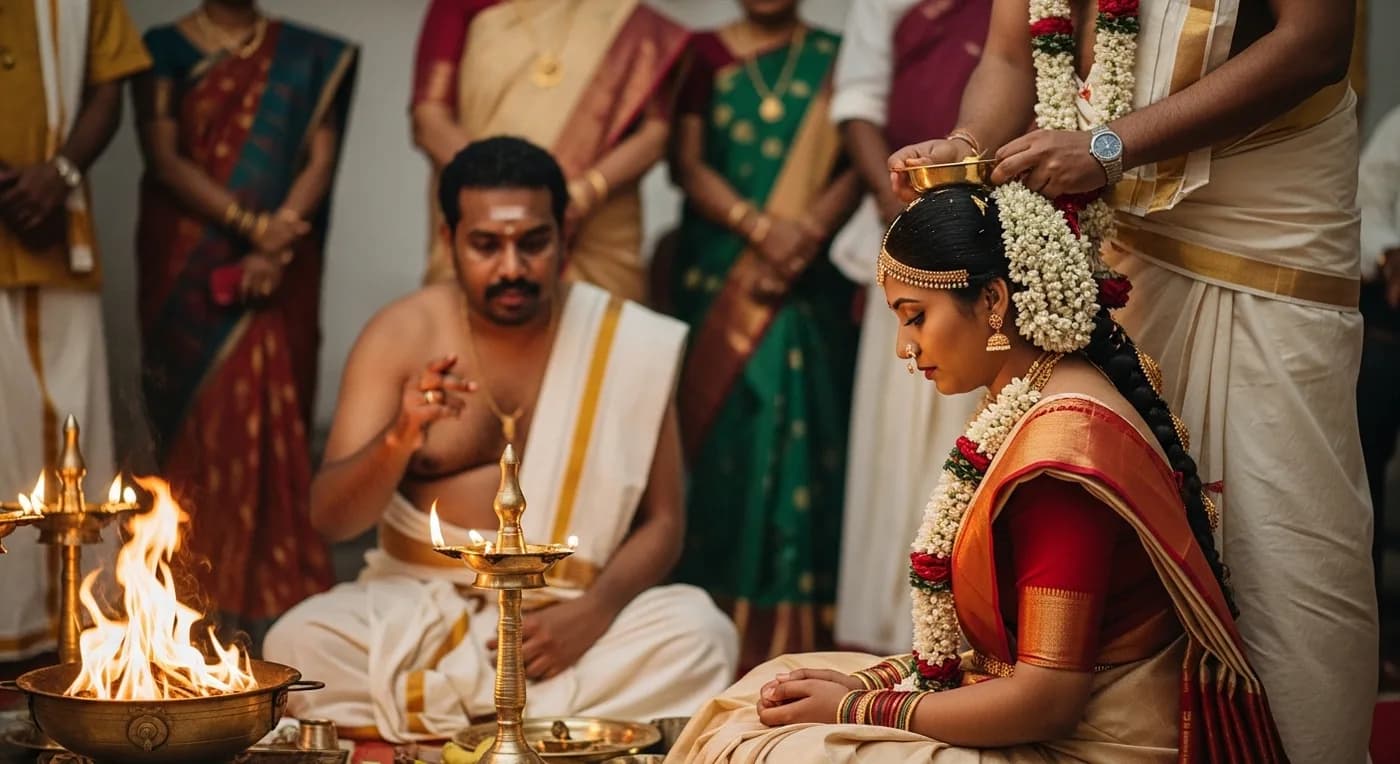
Tamil Brahmin (Iyer and Iyengar) NRI weddings revolve around a multi-day ritual sequence: nichayathartham, kashi yatra, oonjal, mangalya dharanam, and saptapadi. Second-generation NRI couples raised in the US often need a plain-English briefing sheet just to know when to stand or chant. Venues cluster around Chennai, Coimbatore, and Madurai. See the Tamil Brahmin NRI wedding guide for the full ritual glossary.
Syrian Christian Malayali weddings are centred on the church ceremony and require coordination with dioceses in Kottayam, Pala, Thiruvalla, or Chengannur. Denomination matters: Orthodox, Jacobite, Syro-Malabar, and Marthoma churches each have different booking windows and Pre-Cana (marriage preparation) requirements. Our Syrian Christian Malayali NRI wedding guide covers whether Pre-Cana can be completed abroad.
Kerala Muslim weddings follow the nikah format with a qazi, mahr agreement, and walima reception. Gulf-returnee couples often split celebrations across Dubai and Kerala, which is covered in our Muslim wedding Kerala planning guide. Our South Indian temple wedding guide is a useful companion read.
How do you brief foreign guests without overwhelming them?
Foreign guests (the non-Indian friends, colleagues, and in-laws flying in) are the third most-ignored piece of NRI wedding planning. They arrive jet-lagged, unfamiliar with the rituals, and almost always under- or over-dressed in ways that make them self-conscious.
A one-page welcome brief solves 80% of the problem. Send it digitally two weeks before the trip. It should cover what to wear across each function, what to expect during the ceremony, basic sadya etiquette, tipping norms, SIM card and transport basics, and a dress code with photo examples. On the other hand, resist the urge to over-brief. Foreign guests do not need a 20-page ritual glossary; they need confidence, not completeness. Our bringing foreign guests to a South Indian wedding host's brief provides the full template, and guest logistics and accommodation covers hotel room blocks and airport transfers.
FAQs
Which months are best for an NRI South Indian wedding in Kerala?
The November-to-February window remains the most popular for NRI weddings in Kerala, Tamil Nadu, and Karnataka. Rainfall is minimal, temperatures are pleasant, and muhurtham density gives you real date flexibility. That said, peak season pushes vendor rates up 15-25% and forces bookings 10-12 months ahead. If you're willing to travel in the shoulder months of October or March, you'll get dry weather, shorter waitlists, and lower costs. Monsoon weddings (June-September) work for small indoor celebrations and carry the lowest rates of the year, but they bring weather risk for outdoor functions. For exact auspicious dates, our muhurtham dates Kerala 2026-2027 guide lists the full calendar.
How do NRI couples send wedding funds to India legally?
NRI couples use the Liberalised Remittance Scheme (LRS) to transfer wedding funds home, with a current cap of $250,000 per resident sender per financial year. Most banks offer NRE and NRO accounts that simplify the process and avoid double taxation. Wedding gifts received from close relatives are fully tax-exempt in India with no threshold, which means grandparents gifting jewellery or cash trigger no Indian tax liability. Keep paper records of every major transfer, because banks in both countries may flag large wedding-related movements for additional KYC. If you're splitting vendor payments between the family in India and the couple abroad, coordinate early so payments clear before final vendor deadlines.
What's the minimum guest count for an NRI destination wedding to make economic sense?
Somewhere between 80 and 120 guests is the point where an NRI destination wedding in South India starts delivering real per-head savings compared to hosting abroad. Below 50 guests, you could run an intimate ceremony anywhere and the destination premium disappears. Above 120 guests, the fixed costs of a backwater resort get amortised across enough attendees that the per-head maths becomes dramatically better than any US or UK equivalent. Most NRI South Indian weddings I've attended land in the 180-350 guest range, which is where venues and caterers have designed their packages. Our destination wedding cost Kerala guide breaks down per-guest economics for each tier.
Can I have the wedding in India but the legal certificate from my home country?
Yes, and many NRI couples do this. One common pattern is to complete a civil marriage in the US, UK, UAE, or Australia before flying to India for the cultural ceremony, which side-steps the 30-day Special Marriage Act notice entirely. The cultural wedding then becomes a religious celebration rather than a legal event. The catch is that your home-country certificate will usually need attestation for Indian purposes like OCI spouse endorsement. A US certificate needs apostille under the Hague Convention; a UAE certificate needs Ministry of Foreign Affairs and Indian consulate attestation. Our NRI marriage registration in South India playbook walks through each corridor's attestation path.
What should foreign guests wear to a South Indian wedding?
Foreign guests should aim for semi-formal clothing in rich colours, avoiding white (worn by Christian brides and mourners) and black (considered inauspicious at Hindu ceremonies). For the muhurtham or church ceremony, women can wear a silk saree, salwar kameez, or a knee-length dress with sleeves; men can wear a kurta, bandhgala, or a suit. For the sangeet or reception, the dress code loosens to modern cocktail wear with Indian accents. Comfortable footwear that slips on and off easily is essential, because many ceremonies require removing shoes. Providing this guidance as photos rather than text works far better for non-Indian guests, who have usually never attended a South Indian wedding.
The takeaway
An NRI South Indian wedding is absolutely plannable from Boston, Dubai, London, or Sydney, but it demands a different operating model. Start at nine months, nominate your India lead, respect the 30-day Special Marriage Act deadline, and pick your corridor and community playbook before you pick your venue.
For the USA, start with our plan a Kerala wedding from the USA deep dive. For the Gulf, read plan a Kerala wedding from UAE and Gulf. For paperwork, the NRI marriage registration in South India legal playbook is the single most important document in this cluster. For currency-specific budgets, see NRI wedding budget in USD, GBP and AED; for the on-ground sprint, see 14-day NRI wedding trip Kerala.
Whatever corridor you're flying from, the goal is the same: a wedding that feels like home, even though you've spent the last eight years somewhere else. That's what my cousin pulled off in Kumarakom in December 2023.
Looking for Wedding Planners in Bengaluru?
Tell us what you need and get quotes from verified wedding planners
Topics
nri south indian weddingnri kerala weddingnri wedding planningsouth indian wedding from abroaddiaspora wedding indianri marriage indianri wedding guideExplore more
Frequently Asked Questions
1How to plan a destination wedding in Kerala as an NRI?
2What's the minimum planning time for an NRI wedding in South India?
3How much does a destination wedding in Trivandrum or Kochi cost for an NRI?
4What does a destination wedding cost in South India compared to a wedding in the USA?
5Is it better to have a South Indian wedding in Kerala or in the United States?
6What paperwork do NRI couples need for a wedding in South India?
Continue reading
Related Articles

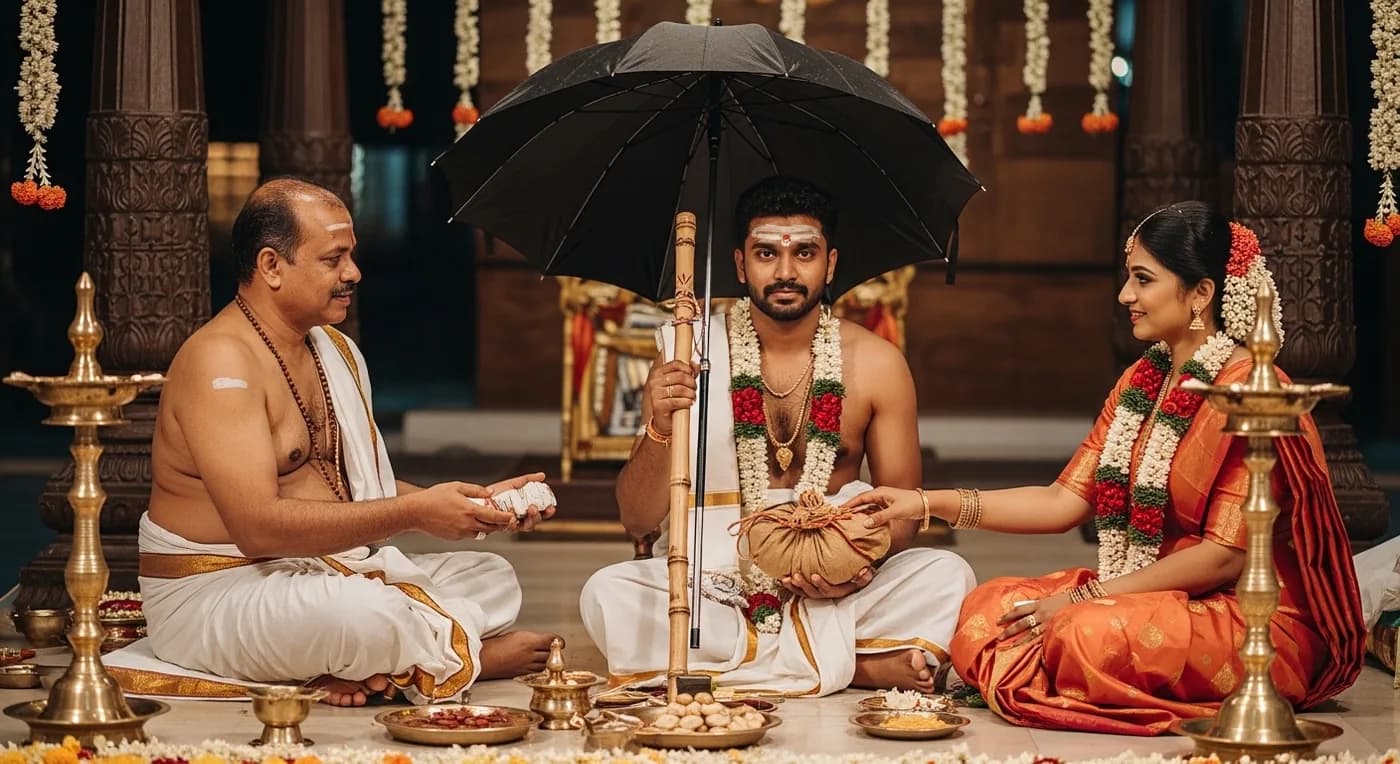
Plan a Kerala Wedding from the USA: NRI Playbook (₹15–40L)
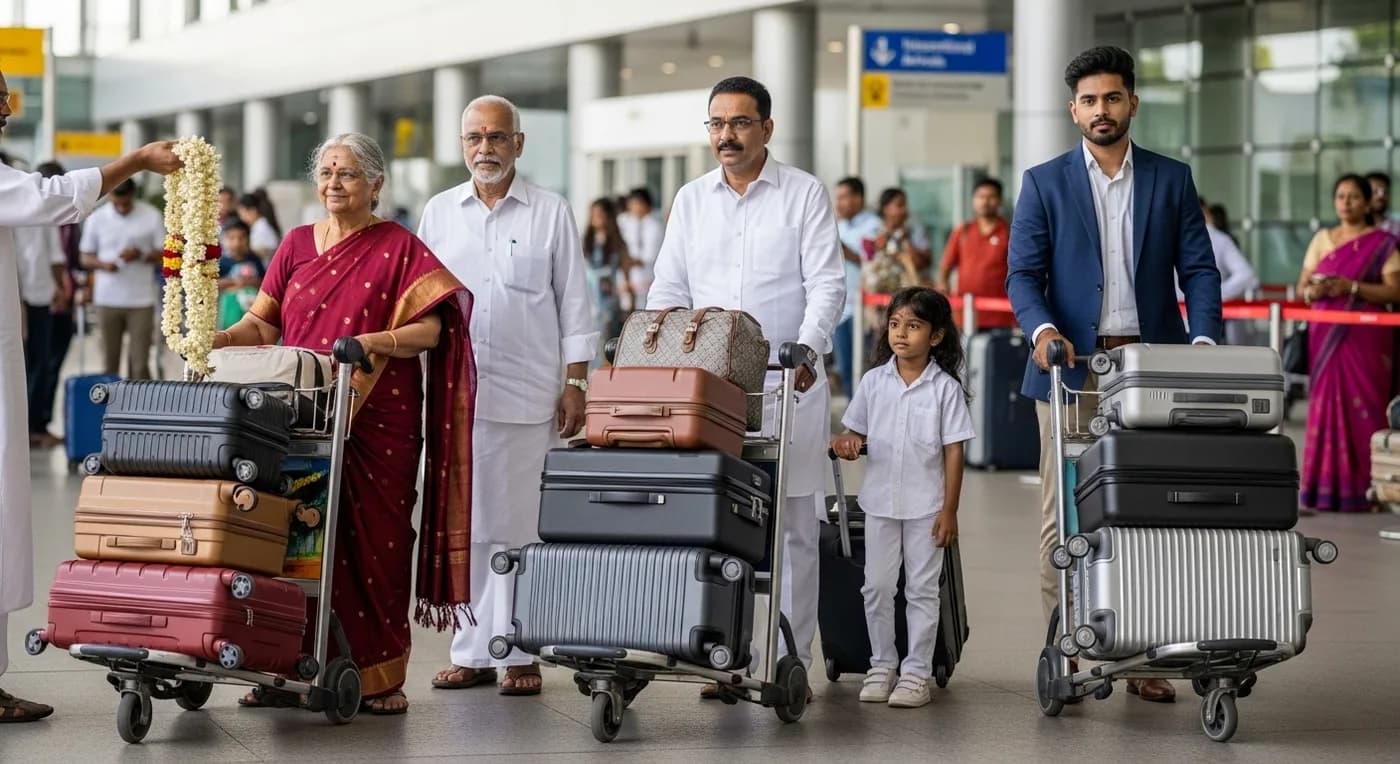
Plan a Kerala Wedding from UAE & Gulf: NRI Guide (₹12–35L)
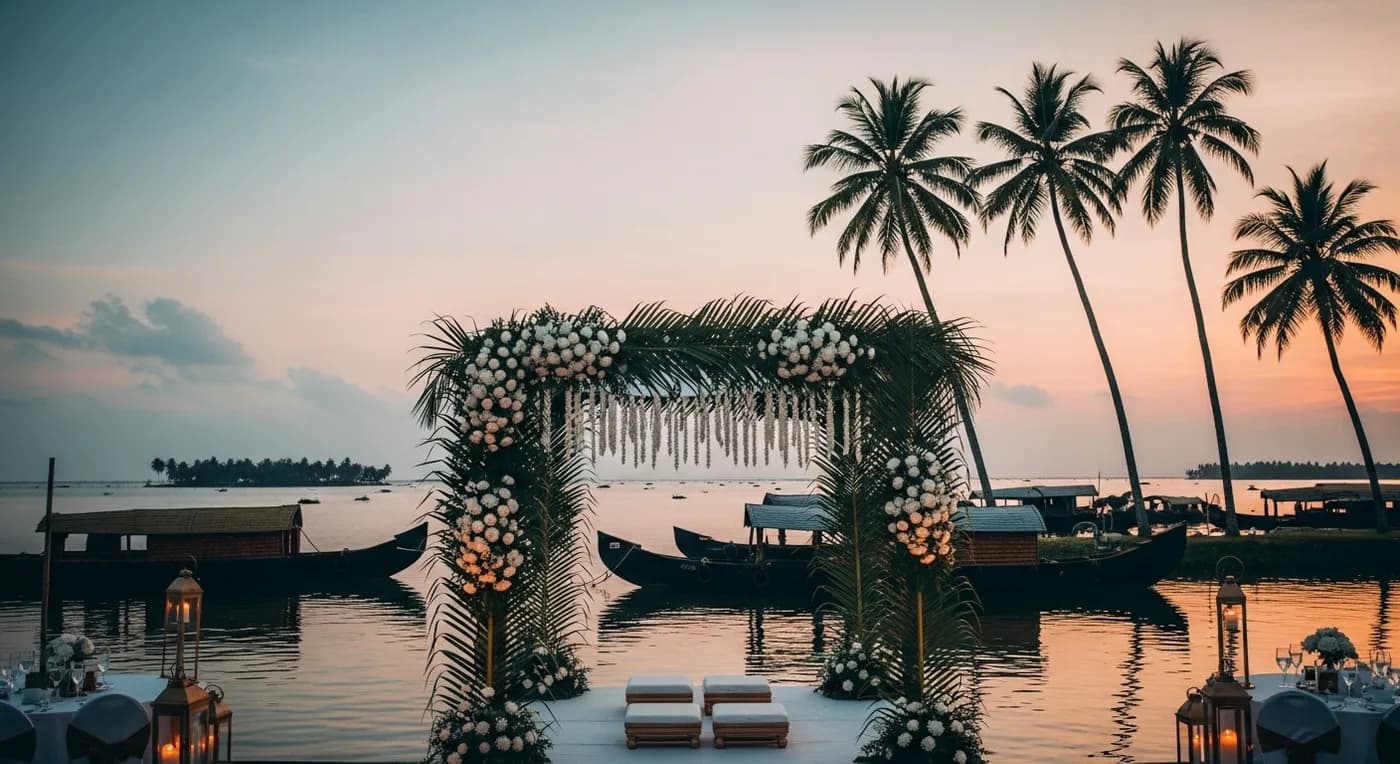
NRI Marriage Registration in South India: Legal Playbook
NRI South Indian Wedding Budget: ₹15–40L in USD, GBP, AED

14-Day NRI Wedding Trip to Kerala: Hour-by-Hour Playbook
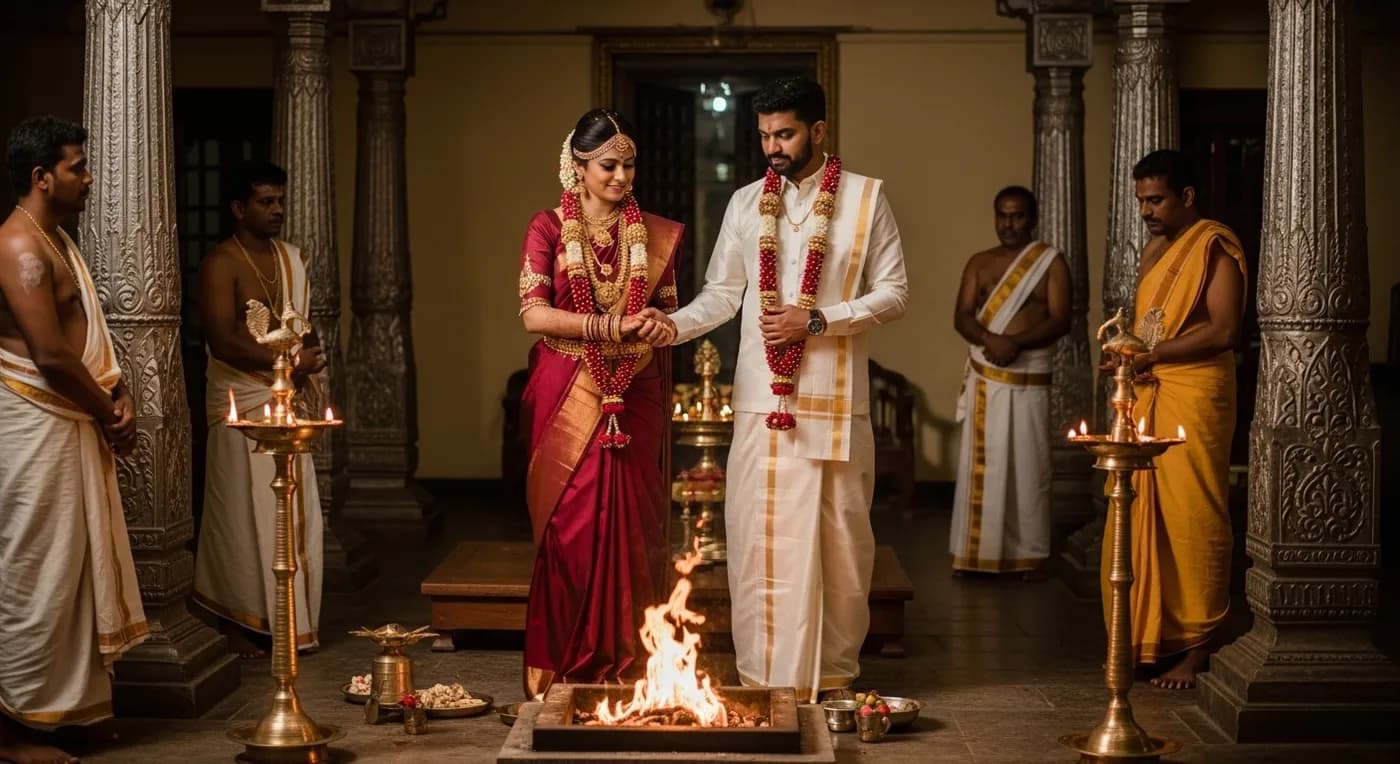
Tamil Brahmin NRI Wedding: Rituals, Translations & Logistics
Still planning?
Get quotes from India's best vendors
Tell us what you're planning and we'll match you with verified photographers, venues, decorators, and more.
Get free quotes