
14-Day NRI Wedding Trip to Kerala: Hour-by-Hour Playbook
A realistic 14-day NRI wedding trip playbook for Kerala: jet-lag days, fittings, tastings, rehearsals, muhurtham hour-by-hour, reception, and buffer days.

On this page
A 14-day NRI wedding trip to Kerala is not a luxury — it is the minimum honest window for jet-lag recovery, fittings, tastings, rehearsals, the muhurtham, the reception, and the post-wedding buffer. Anything shorter forces expensive decisions while your body still thinks it's 3 AM back home, and that's where most NRI regrets begin.
Quick Answer
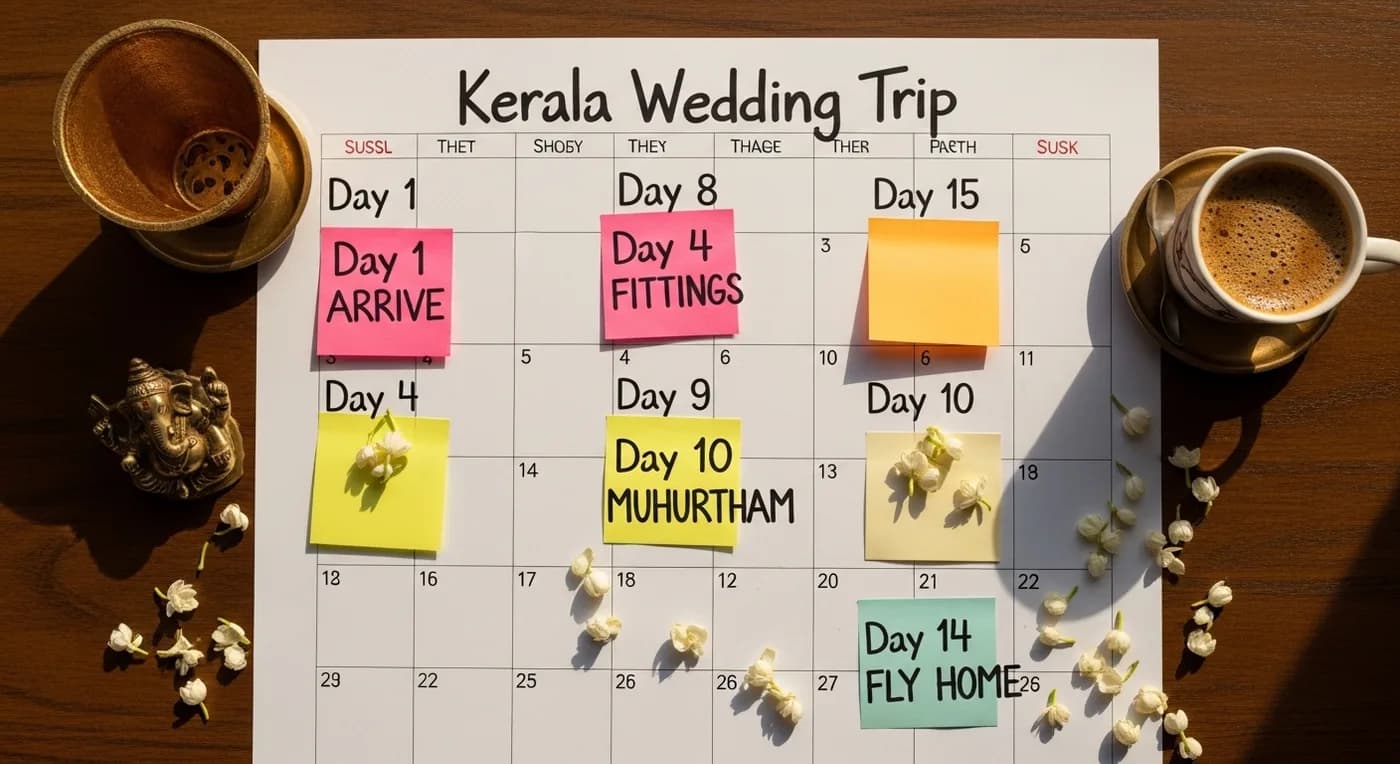
Plan a full 14-day on-ground window: Days 1–3 for jet lag and immediate family only (no vendor meetings), Days 4–6 for fittings, tastings, and decor trials, Days 7–9 for rehearsals and the mehndi function, Day 10 for the muhurtham, Day 11 for post-wedding rituals, Day 12 for the reception, and Days 13–14 as a protected buffer for thank-you visits, jewellery returns, and a calm flight home.
When our cousin got married at Kumarakom in December 2023, she flew in from New Jersey exactly 10 days before the muhurtham and spent the first five of them apologising to her parents for decisions she'd made on a Zoom call two months earlier. She made a jewellery choice on Day 3 she tried to reverse on Day 7 and couldn't. That week is why I now tell every NRI couple the same thing: 14 days, non-negotiable.
This post is the on-ground operating manual for an NRI Kerala wedding. It pairs with our NRI South Indian wedding complete guide for the 9-month planning view and plan a Kerala wedding from the USA for pre-trip corridor logistics. Everything below is tested against 30-plus NRI weddings I've attended or coordinated.
Why do NRI couples need a 14-day playbook and not a "fly in 3 days before" plan?
Jet lag alone eats three to five productive days on a long-haul flight from the US. The US-Kerala corridor is a 10.5-hour shift — the worst band for circadian recovery. Add fittings, tastings, rehearsals, the muhurtham, the reception, and the post-wedding ritual calendar, and the real working window shrinks fast. According to the Ministry of External Affairs population data (May 2024), 15.85 million NRIs and 19.57 million PIOs live abroad, and a meaningful share of the Kerala-origin slice traces back to districts served by Kochi (Cochin) airport.
The arithmetic of a compressed trip is brutal. A 10-day window gives roughly 7 functional days after jet lag, and those 7 must absorb fittings, venue walkthroughs, a sadhya tasting, a decor trial, a full rehearsal, the mehndi, the muhurtham, and the reception — no buffer for a missed alteration or a sick grandparent. A 14-day window gives 11 functional days.
| Window | Functional days | Risk profile | When it works |
|---|---|---|---|
| 10 days | ~7 | High — any setback is a crisis | Small civil ceremonies, 50 guests or fewer |
| 12 days | ~9 | Medium — some buffer but no margin | Single-day weddings, no reception |
| 14 days | ~11 | Low — one full buffer day | Standard NRI muhurtham + reception |
| 16–18 days | ~13–15 | Very low — full contingency | Large multi-community weddings, foreign guests |
Days 1–3: What should you do (and NOT do) during jet-lag recovery?
Jet lag recovery from a US long-haul flight to Kochi takes three to five days, and the highest-return decision you can make is to protect the first 72 hours from every critical task. No vendor walkthroughs, no venue visits, no extended-family meetings, and absolutely no decor, attire, or catering approvals in this window.
Day 1: land at Kochi (Cochin) international airport, clear immigration, go straight to your hotel or family home. Sleep in 90-minute cycles, drink two litres of water, and see only parents and siblings. Day 2: unpack, check that every outfit and piece of jewellery survived the flight, and take a gentle walk outside to reset your circadian rhythm. Day 3: a light logistics review with your India lead — the parent or sibling who has handled on-ground vendor communication for nine months — to walk through the master planning sheet and confirm the 14-day calendar. No decisions that cost money.
Tip
Jet-lag tactic that works: On the Boston or SFO-to-Kochi flight, sleep from hour 3 and skip the second meal. Land, shower, go outside into Kerala daylight for 20 minutes before any nap, then nap in 90-minute cycles. Couples who did this were functional by Day 3 instead of Day 5.
Days 4–6: When should you do fittings and final vendor walkthroughs?
Days 4 through 6 are the correct window for bridal fittings, groom fittings, the venue walkthrough, the sadhya tasting, and the decor trial. By Day 4 your body can stand still for an hour without fog, and you still have six days before the muhurtham to absorb alteration cycles. Day 4: first bridal and groom fitting at Seematti, Kalyan Silks, or your local tailor in Ernakulam (Kochi) or Thiruvananthapuram (Trivandrum). Bring every piece of jewellery so the stylist matches kasavu, kanjeevaram, or temple sets against the final silhouette.
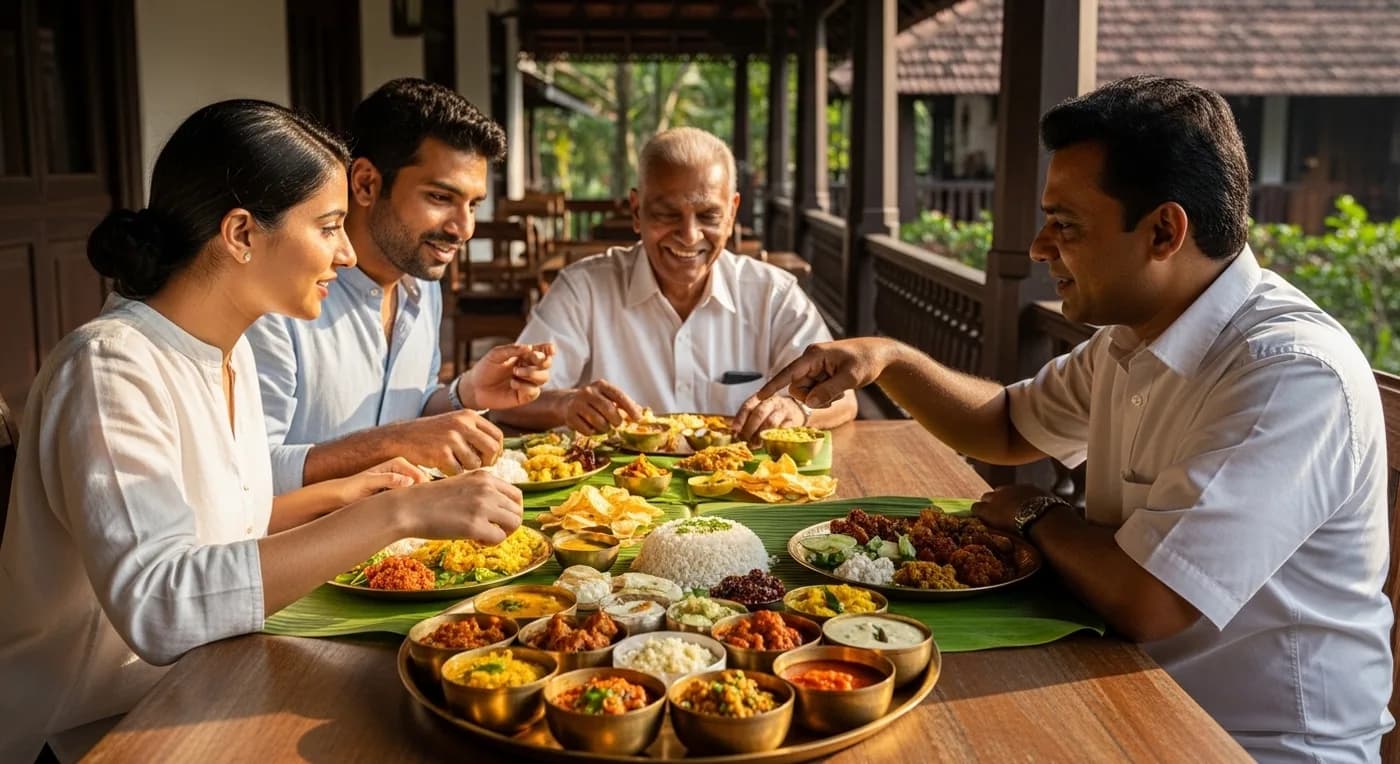
Day 5: venue walkthrough with your planner and photographer. Confirm mandapam layout, electrical points, guest flow, and the logistical quirks that didn't come through on video calls. Follow it with the sadhya tasting — ideally with both sets of parents — so the caterer locks the final menu in one round. Day 6: decor trial with floral and lighting samples, mehndi artist test pattern, and photography pre-shoot location scout.
Looking for Wedding Planners in Kochi?
Tell us what you need and get quotes from verified wedding planners
Costs for this stretch are predictable. A mid-tier bridal fitting package in Kochi runs ₹15,000 – ₹45,000 for kasavu saree draping and blouse adjustments, and a sadhya tasting for six people sits around ₹3,500 – ₹9,000. The WedMeGood Annual Wedding Industry Report 2024-2025 tracks similar pricing patterns across Kerala and Tamil Nadu destination vendors.
Days 7–9: How do rehearsals and the mehndi function fit in?
Day 7 is the full ceremony dry-run with your priest, pastor, or maulvi, walked start to finish. Confirm the muhurtham timing to the minute, the chant sequence, mandapam seating, and cue sheets for any second-generation NRI cousins participating without speaking Malayalam or Tamil. At a friend's wedding in Thiruvananthapuram last February, the priest added a 15-minute rehearsal specifically for the bride's US-raised brother so he knew when to step forward for the kashi yatra — that rehearsal was the reason the ceremony didn't stall.
Day 8 hosts the mehndi function in the evening, kept to three or four hours. Day 9 is a deliberate slow-down: morning rest, afternoon family lunch, small rehearsal dinner for immediate family only. Lay out every outfit and jewellery piece for the muhurtham before 8 PM, then sleep by 9. The temptation to stay up greeting relatives on Day 9 is real and expensive — resist it.
Day 10: What does the muhurtham day hour-by-hour look like?
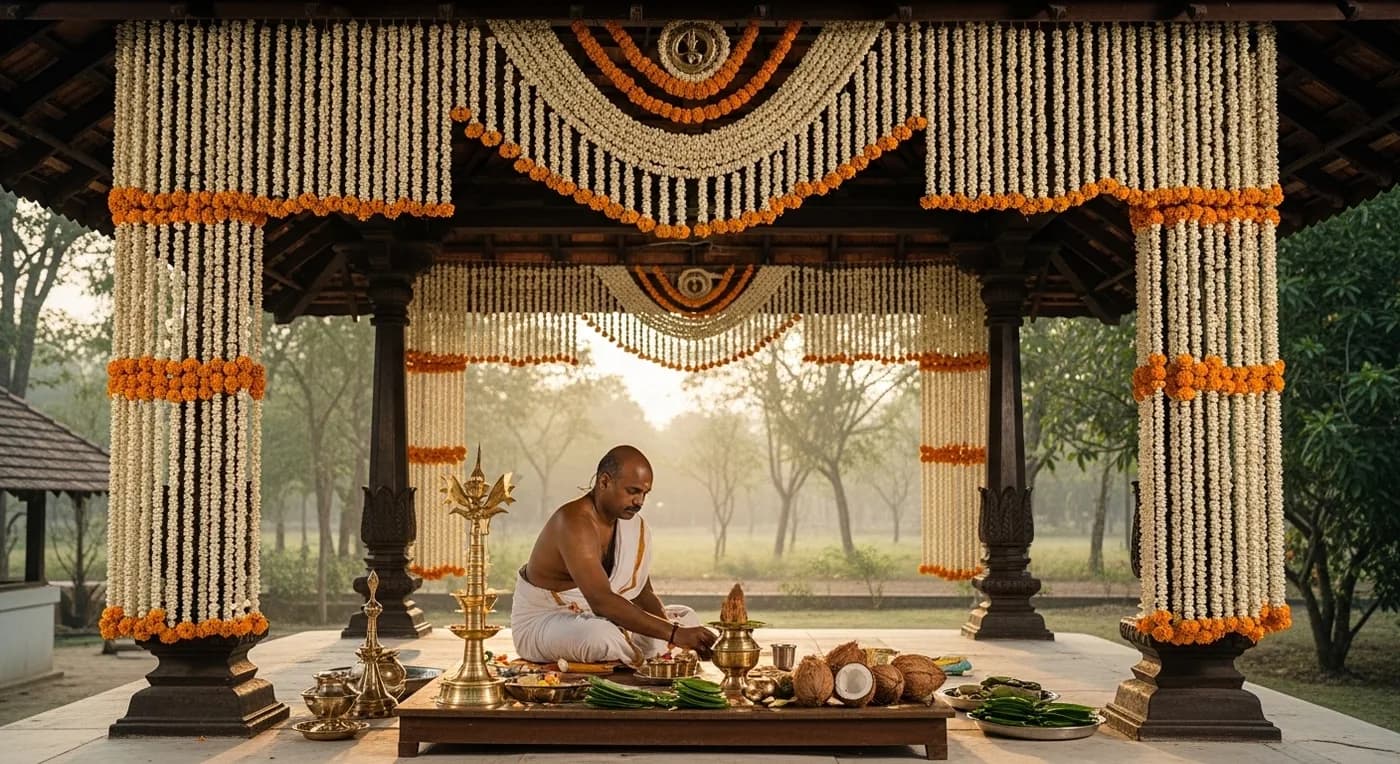
Muhurtham day begins at 3 AM and ends by 2 PM for most Kerala Hindu weddings, and the schedule is unforgiving once it starts. Here is the hour-by-hour for a typical 5:30 AM muhurtham at a venue in Ernakulam or Kottayam:
| Time | Activity |
|---|---|
| 3:00 AM | Bride and groom wake, light breakfast, hydration |
| 3:30 AM | Hair, makeup, and attire — bride in one room, groom in another |
| 4:30 AM | Jewellery fastening, final touch-ups, family photos indoors |
| 5:00 AM | Arrival at mandapam, parents greet priest, ashtamangalya laid out |
| 5:30 AM | Muhurtham ceremony begins — tali tying at the exact auspicious minute |
| 6:15 AM | Saptapadi, pradakshina, and family blessings |
| 7:00 AM | Breakfast reception for early guests (pal payasam, idli, vada) |
| 9:30 AM | Mid-morning sadhya served on banana leaves |
| 11:30 AM | Couple retreats for a 90-minute rest |
| 1:00 PM | Late lunch with immediate family only |
| 2:00 PM | Afternoon rest — critical before evening reception |
Important
The Day 10 timing trap: NRI couples routinely try to squeeze an afternoon temple visit, a cousin's lunch, and a reception setup check into the post-sadhya window. Don't. You've been awake since 3 AM after thin sleep and have a reception tomorrow. Nap 2 PM to 5 PM. The temple visit can wait for Day 11. This is the difference between a reception where you look radiant and one where you look exhausted.
Day 11: How do you manage post-muhurtham rituals and second-day events?
Day 11 is for the gentler ritual calendar — temple visits, family lunches, nalungu (the post-wedding bridal bathing ritual in Tamil Brahmin and some Kerala Hindu traditions), and grihapravesam if the couple is entering the groom's family home for the first time. In Kottayam and Kumarakom Christian weddings, Day 11 often involves a church visit and a lunch at the bride's home; in Kerala Muslim weddings, the walima may shift to Day 11. Use the day to catch up on sleep and let elderly relatives who missed the early-morning muhurtham spend real time with you.
Day 11 costs are usually family-absorbed, but hosting a lunch for 60-80 at home or a small venue runs ₹25,000 – ₹90,000 for catering and transport. The Grand View Research India Wedding Services Market report valued the Indian wedding services market at $103.93 billion in 2024 with a projected 14.3% CAGR through 2030 — a growing share goes to these secondary-day functions NRI couples used to improvise.
Day 12: How should you structure the reception day?
The reception is the social peak of the trip. Structure it as: afternoon rest, 6 PM start, late-night family closing. Morning of Day 12, run a hair and makeup trial for reception styling (usually more polished than the muhurtham look), nap from 1 PM to 4 PM, then move into prep — styling, venue pre-shoot, and a quiet 15 minutes with your partner before guests arrive. Most Kerala venues run the reception from 6 PM to 10:30 PM with a buffer half-hour.
Looking for Photographers in Kochi?
Tell us what you need and get quotes from verified photographers
A typical NRI reception at a backwater resort in Kumarakom or Alleppey (Alappuzha) costs ₹3,50,000 – ₹12,00,000 depending on guest count, decor, and catering, based on itsmy.wedding vendor pricing data from Q1 2026. Venues in Kozhikode (Calicut) and Chennai tend to run slightly lower per head. The Kerala Migration Survey 2023 (IIMAD) documents 2.2 million Kerala emigrants anchoring this NRI reception economy — which is why venues now offer dedicated "returning NRI couple" packages.
Days 13–14: Why buffer days matter and what to actually do with them
Buffer days are the most underrated part of an NRI wedding trip and the detail experienced Kerala families refuse to compromise on. Day 13 is for thank-you visits to elderly relatives who couldn't attend, returning borrowed jewellery (often a ₹3-8 lakh responsibility that cannot be delegated), settling final vendor payments, and sitting with your photographer for a first-cut review of ceremony photos while memories are fresh. Day 14 is for repacking, sorting gift boxes, one slow family breakfast, and getting to Kochi airport with time to spare.
I've watched three different NRI couples try the "fly out the morning after the reception" trap — all three spent their first week home untangling logistics by WhatsApp from a different time zone. One couple flew out of Kochi 11 hours after the reception and forgot to return a ₹4.2 lakh temple jewellery set; recovering it took two months of courier coordination. Build the buffer.
Note
Vendor culture note: Kerala vendors run on relationship time, not US-tight schedules. A decor team that promised 9 AM setup may start at 10:30 AM because the truck was stuck behind a procession in Thrissur — normal. Build 90-minute buffers into Day 10 and Day 12. The MEA Marriages to Overseas Indians booklet documents this cultural context for NRI families new to planning in India.
What are the biggest timing traps NRIs fall into?
Across 30-plus NRI South Indian weddings I've been part of, five traps account for most of the avoidable stress. First, scheduling critical decisions in the jet-lag window. Second, skipping the post-reception buffer. Third, stacking too many events into one day — the temptation to squeeze a cousin's lunch between the Day 10 sadhya and the reception prep is strong and always wrong.
Fourth, assuming Kerala vendors run on Manhattan-tight schedules. The Kerala Tourism site markets the state's celebration culture internationally, and that culture genuinely runs at a different tempo. Fifth, underestimating the emotional weight of the reunion — you're seeing grandparents for the first time in two years, and every hour of processing is an hour you cannot spend on vendor decisions.
For the cost side in dollars, pounds, and dirhams, see NRI wedding budget in USD, GBP and AED. For pre-trip corridor planning, read plan a Kerala wedding from the USA and plan a Kerala wedding from UAE and Gulf. For the general planning baseline, how to plan a Kerala wedding is the sibling post every NRI couple should read alongside this one. For managing overseas guests rather than your own trip, see Kerala wedding guest logistics and accommodation and bringing foreign guests to a South Indian wedding host's brief.
The takeaway
A 14-day NRI wedding trip to Kerala is not over-engineered — it's the honest minimum. Protect Days 1–3, run fittings and tastings on Days 4–6, rehearse and host the mehndi on Days 7–9, move through the muhurtham and reception on Days 10–12, and keep Days 13–14 as a protected buffer. If your leave policy forces fewer days, compress the planning side with Zoom calls before you fly — never compress the on-ground window.
Whatever district you're flying into — Ernakulam (Kochi), Thiruvananthapuram (Trivandrum), Kottayam, Kumarakom, Alleppey (Alappuzha), Kozhikode (Calicut), or Chennai — the calendar structure is the same. Fourteen days. Non-negotiable. That's what our cousin should have planned for Kumarakom in December 2023, and it's what every NRI couple I've talked to since has ended up grateful for.
Topics
nri wedding trip kerala14 day wedding trip indianri wedding schedule keralanri wedding itinerary indiakerala wedding playbooknri wedding planningExplore more
Frequently Asked Questions
1How long should an NRI plan to stay in India for their wedding?
2What should I do on the first 3 days after landing from the US?
3When should I schedule bridal fittings and final trials?
4Is 10 days enough for an NRI wedding trip to Kerala?
5What buffer should I build after the reception?
Continue reading
Related Articles
NRI South Indian Wedding Guide: Kerala, Tamil Nadu, Karnataka

Plan a Kerala Wedding from the USA: NRI Playbook (₹15–40L)
Plan a Kerala Wedding from UAE & Gulf: NRI Guide (₹12–35L)
NRI South Indian Wedding Budget: ₹15–40L in USD, GBP, AED
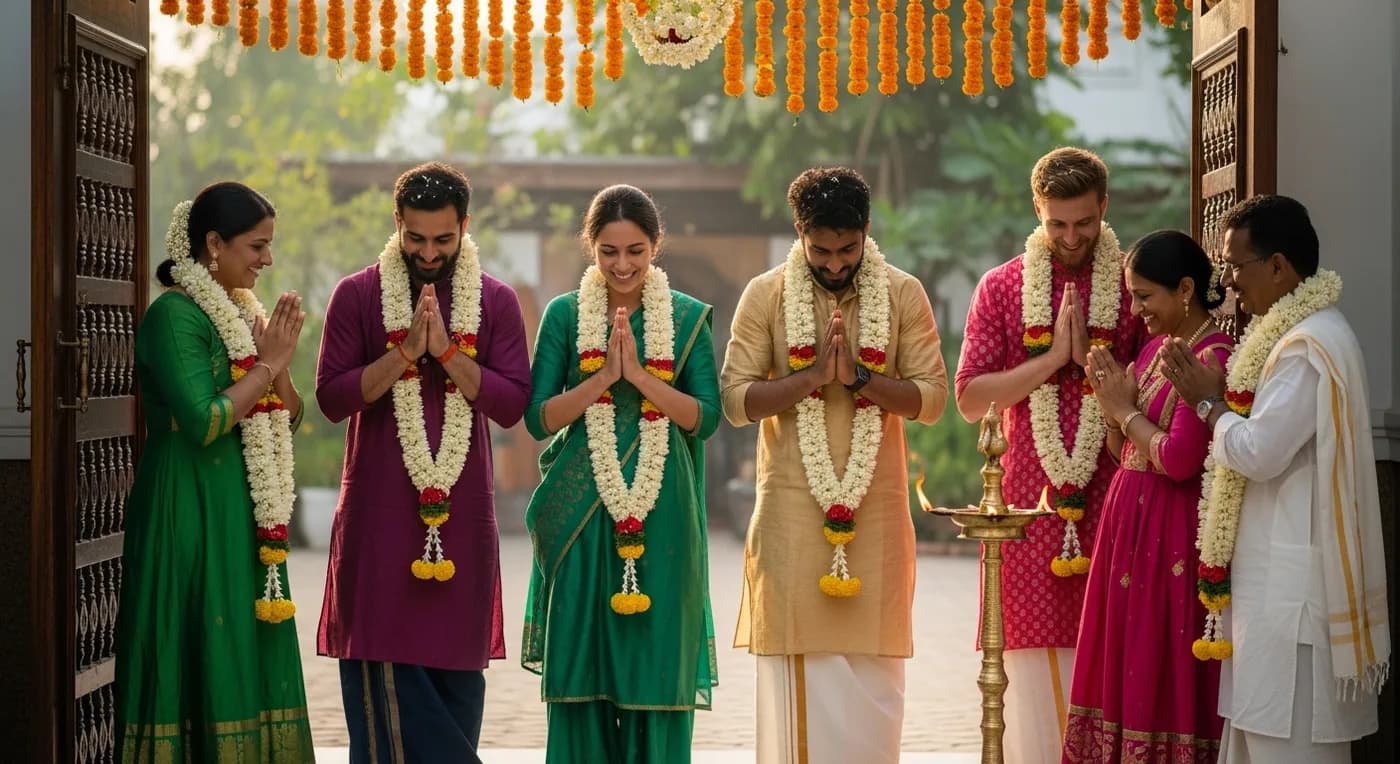
Foreign Guests at a South Indian Wedding: Host's Brief
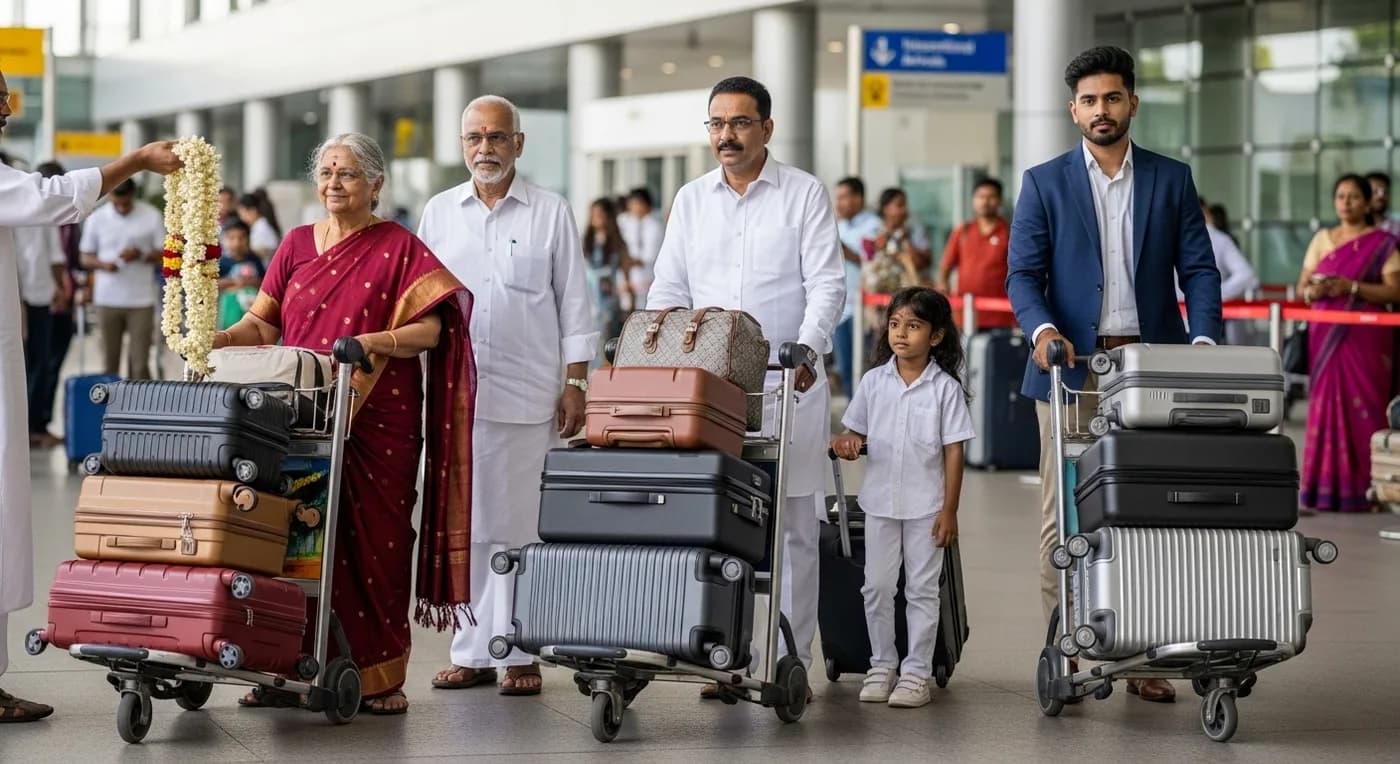
NRI Marriage Registration in South India: Legal Playbook
Still planning?
Get quotes from India's best vendors
Tell us what you're planning and we'll match you with verified photographers, venues, decorators, and more.
Get free quotes