
How to Plan a Kerala Wedding: The Complete 2026 Guide
Plan a Kerala wedding step by step: budget ₹10-20 lakhs for 400-600 guests, book venues 10-12 months early, and pick the right muhurtham date for 2026.

Senior Wedding Planner
Priya Nair is a senior wedding planner based in Kochi with over eight years of experience coordinating Hindu, Christian, and destination weddings across Kerala.
On this page
To plan a Kerala wedding, start 10–12 months ahead: choose a muhurtham date, set a budget (₹12–20L average), book your venue and caterer, then hire a photographer, decorator, and makeup artist. Kerala weddings typically involve 400–600 guests, a traditional sadya feast, and ceremonies lasting one full day across Hindu, Christian, and Muslim traditions.
Quick Answer
Start planning 10–12 months ahead for peak-season dates. Lock the muhurtham and venue first, then build your vendor team around them. A mid-range Kerala wedding for 300–500 guests typically costs ₹10–20 lakh (based on itsmy.wedding data); luxury and destination celebrations can exceed ₹30 lakh.
Note
Pricing methodology: Cost ranges in this guide are based on vendor pricing data from the itsmy.wedding marketplace and published industry reports, collected in Q4 2025 – Q1 2026.
Planning a Kerala wedding is a deeply rewarding experience — one that blends centuries-old tradition with the warmth and vibrancy that God's Own Country is known for. With the state welcoming over 25 million tourists annually, per Kerala Tourism official statistics, it is no surprise that Kerala has become a top choice for destination weddings. Whether you are a couple rooted in Kerala or planning a destination wedding amidst its backwaters and hills, the process involves a unique set of decisions that differ from weddings elsewhere in India.
This Kerala wedding planning guide for 2026 walks you through every step, from picking an auspicious date to coordinating your final day-of details. By the end, you will have a clear roadmap to plan a wedding that honours tradition, fits your budget, and reflects your personal story.
Setting Your Wedding Date
Auspicious Dates and the Panchangam
In Kerala, the wedding date is rarely chosen on a whim. Most Hindu families consult a jyothishi (astrologer) who examines the couple's horoscopes and refers to the Panchangam — the traditional Hindu almanac — to identify muhurtham dates that are considered auspicious. These dates tend to cluster around certain months, so it is wise to begin this process early. For a ready reference of the most auspicious windows, see our muhurtham dates for 2026–2027.
For Christian and Muslim weddings in Kerala, the date selection is more flexible, though families often still prefer to avoid certain inauspicious periods and coordinate with their church or mosque calendar well in advance.
Seasonal Considerations
Kerala's tropical climate plays a significant role in wedding planning. The most popular wedding season runs from November through May, when rainfall is minimal and temperatures are pleasant. The monsoon months of June through September bring heavy rain that can complicate outdoor ceremonies and logistics.
That said, monsoon weddings have their own quiet charm — lush green landscapes, fewer scheduling conflicts, and often better rates from vendors and venues.
Tip
If you are planning your Kerala wedding from the USA, Gulf, UK, or Australia, our NRI South Indian wedding complete guide covers corridor-specific timelines, the 30-day Special Marriage Act trap, and budget breakdowns in USD, GBP, and AED.
Creating Your Wedding Budget
Before you book a single vendor, sit down together and set a realistic budget. Kerala weddings can range widely in cost depending on the scale, location, and level of customisation you desire.
₹5,00,000 – ₹30,00,000According to WeddingWire India's national survey, the average Indian wedding costs around ₹29.6 lakhs with roughly 330 guests — but Kerala weddings vary widely by scale. A modest yet elegant Kerala wedding for 200 to 300 guests typically falls between 5 and 15 lakhs. Larger celebrations with 500 or more guests, premium venues, and extensive decor can reach 30 lakhs or more. For a structured breakdown of what is achievable at each price level, see our budget wedding Kerala tier plans. Destination weddings at resorts in Kumarakom, Munnar, or Kovalam often carry a higher price tag due to accommodation and logistics.
Budget Breakdown by Category
Here is a rough allocation to guide your planning:
- Venue and catering: 40 to 50 percent
- Photography and videography: 10 to 15 percent
- Decor and floral arrangements: 10 to 15 percent
- Bridal attire and jewellery: 10 to 15 percent
- Makeup and grooming: 3 to 5 percent
- Invitations, transport, and miscellaneous: 10 to 15 percent
Tip
Choosing Your Ceremony Style
Kerala is a culturally diverse state, and weddings here reflect that richness. Understanding the traditions of your ceremony style will help you plan with intention. Our Kerala wedding by religion guide provides a detailed comparison across Hindu, Christian, and Muslim ceremonies.
Hindu Kerala Weddings
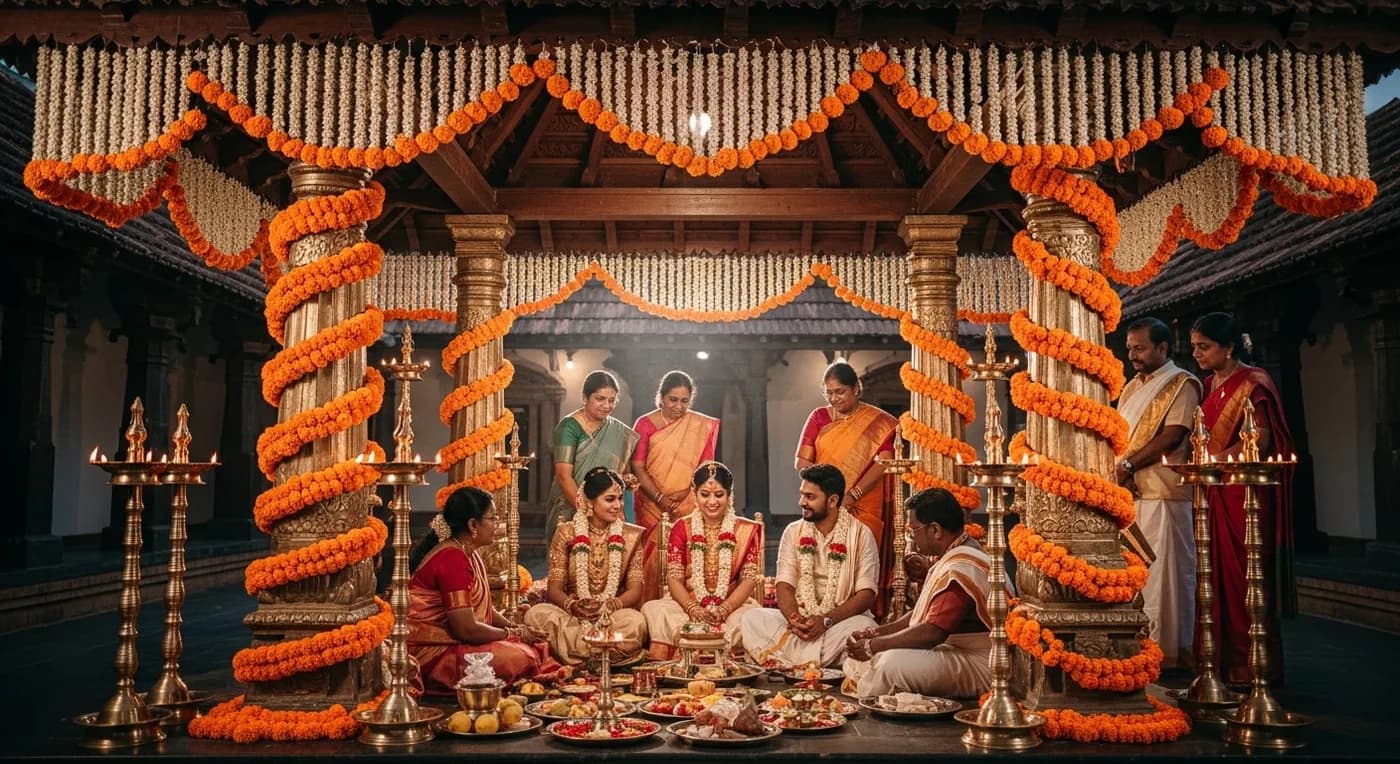
The traditional Hindu Kerala wedding, or Kalyanam, is a relatively simple and elegant affair centred around the muhurtham, as detailed in WeddingWire India's overview of the ceremony. The groom ties the thali (mangalsutra) around the bride's neck at the auspicious moment, usually on a mandapam decorated with flowers and brass lamps. The ceremony is typically conducted by a thanthri or temple priest.
Key rituals include the Kanyadaanam (giving away of the bride), the Pudamuri (the groom presenting the bride with a wedding sari), and the exchange of garlands. Hindu Kerala weddings are known for their understated grace — traditional white and gold attire, banana leaf motifs, and the fragrance of jasmine and temple flowers.
Christian Kerala Weddings
Kerala's Syro-Malabar, Syro-Malankara, and Latin Catholic communities each have their own liturgical traditions, but Christian weddings in Kerala generally centre around a church ceremony with a full Mass. The bride typically wears a white gown or a Kerala Christian-style sari, and the reception that follows is often a grand affair with a sit-down meal.
Church bookings in Kerala — especially at popular parishes in Kottayam, Ernakulam, and Thrissur — should be made 6 to 12 months ahead.
Muslim Kerala Weddings
A Muslim wedding in Kerala, or Nikah, is conducted at the bride's home or at a mosque, officiated by a Qazi. The Mahr (bridal gift) is agreed upon, and the ceremony is followed by a reception known as the Walima. Kerala Muslim weddings are known for their elaborate feasts, often featuring Malabar biryani and a spread of traditional dishes.
Venue Selection
Your venue sets the tone for the entire celebration. Kerala offers an extraordinary range of options, from heritage temples and grand auditoriums to beachside resorts and backwater houseboats. As highlighted on Kerala Tourism's destination wedding portal, the state's diverse landscapes make it one of India's most versatile wedding destinations.
Types of Venues
- Convention centres and auditoriums: The most practical choice for large guest lists (500+). Cities like Kochi, Thiruvananthapuram, and Kozhikode have numerous well-equipped halls.
- Heritage properties and palaces: For couples who want a traditional ambiance. Properties in Thrissur, Palakkad, and central Kerala offer stunning architecture.
- Resorts and hotels: Ideal for intimate or destination weddings. Backwater resorts in Kumarakom and Alleppey, hill resorts in Munnar, and beach properties in Kovalam and Varkala are popular picks.
- Temple or church grounds: Many families prefer to hold the ceremony and reception at or near their place of worship.
Tip
Looking for Venues?
Tell us what you need and get quotes from verified venues
Venue Tips by Region
- Kochi / Ernakulam: Best for guests arriving by air; wide range of banquet halls, churches, and hotel venues. The most connected city in Kerala for outstation guests.
- Trivandrum: Proximity to Kovalam and Varkala beaches makes it ideal for couples who want a traditional ceremony followed by a coastal celebration. Read our Trivandrum wedding planning guide for city-specific tips.
- Thrissur: Ideal for traditional temple weddings and large local ceremonies — close to Guruvayur and rich in cultural heritage. See our complete Thrissur wedding planning guide for details.
- Kozhikode: Rich Malabar heritage with grand auditoriums and a strong catering tradition — our Kozhikode wedding guide covers everything from venue selection to local customs.
- Munnar / Wayanad: Romantic hill stations with cooler climates, perfect for intimate destination resort weddings. Avoid heavy outdoor setups during monsoon.
- Alappuzha / Kumarakom (backwaters): Unique houseboat and lakeside ceremonies — factor in boat capacity, safety provisions, and guest transport logistics.
Tip
Looking for Venues in Kochi?
Tell us what you need and get quotes from verified venues
Key Questions for Your Venue Visit
- What is the maximum guest capacity for both the ceremony and reception?
- Are there indoor and outdoor options in case of rain?
- What is included in the rental — tables, chairs, sound system, lighting?
- Are there accommodation options for out-of-town guests nearby?
- What are the noise and timing restrictions?
Key Vendors to Book
The vendors you choose will shape the look, feel, and flow of your wedding day. Here are the essential professionals to prioritise.
Photographer and Videographer
Kerala wedding photography has evolved into an art form. Candid photography, cinematic wedding films, and drone coverage are now standard expectations. If you are particularly interested in the video side, our wedding videography guide for Kerala covers styles, pricing, and what to look for in a wedding film. Book your photographer early — the best professionals are booked 8 to 12 months in advance for peak-season dates.
Look for a photographer whose portfolio resonates with your aesthetic. Do they capture emotion well? Are they experienced with the lighting conditions at your venue? Ask for full wedding galleries, not just highlight reels.
Looking for Photographers?
Tell us what you need and get quotes from verified photographers
Decorator
From traditional pandal setups with brass lamps and banana stems to contemporary floral arches and fairy-light canopies, your decorator brings your vision to life. Share reference images, discuss your colour palette, and confirm whether they handle both the ceremony mandapam and the reception stage.
Looking for Decorators?
Tell us what you need and get quotes from verified decorators
Caterer
If your venue does not provide in-house catering, you will need to hire a dedicated team. For Hindu weddings, the sadya — a traditional banana-leaf feast — is a centrepiece of the celebration. Christian and Muslim receptions often feature elaborate multi-course meals. Tastings are essential; never book a caterer without sampling their food first. For reception-specific planning, our Kerala reception planning guide covers menu strategies, entertainment, and evening logistics.
Looking for Caterings?
Tell us what you need and get quotes from verified caterings
Makeup Artist
Kerala bridal makeup balances tradition with modern technique. Hindu brides often favour a classic look with gold-toned eyeshadow and traditional bindis, while Christian and Muslim brides may opt for more contemporary styles. If you are looking for recommendations in Ernakulam, see our best makeup artists in Kochi guide. Book your makeup artist at least 6 months ahead, and schedule a trial session to ensure you are happy with the result.
Looking for Makeup Artists?
Tell us what you need and get quotes from verified makeup artists
Other Vendors to Consider
- Mehendi artist for pre-wedding functions
- Live musicians or DJ for the reception — see our Kerala wedding music and entertainment guide for options and pricing
- Transport and valet services for large guest counts
- Invitation designer for both printed and digital invites — our guide on wedding invitation wording for Kerala covers cultural conventions across communities
- Wedding favours — for creative ideas, see our Kerala wedding favours guide
Your Kerala Wedding Planning Timeline
A structured timeline keeps stress at bay. Here is a month-by-month checklist to guide you from engagement to wedding day. For an even more detailed version with task-level guidance, see our Kerala wedding timeline.
12 Months Before
- Finalise your budget and guest count estimate
- Consult an astrologer for auspicious dates (if applicable)
- Book your ceremony and reception venues
- Begin researching photographers, decorators, and caterers
9 Months Before
- Book your photographer, videographer, and decorator
- Start shopping for bridal and groom attire
- Book the makeup artist and schedule a trial
- Send out save-the-dates to out-of-town guests
6 Months Before
- Finalise your caterer and conduct tastings
- Order wedding invitations (printed and digital)
- Plan pre-wedding events — Nischayam, Mehendi, Haldi
- Book accommodation for travelling guests
- Begin assembling your trousseau
3 Months Before
- Confirm all vendor contracts and payment schedules
- Finalise the ceremony itinerary with your priest, pastor, or qazi
- Arrange transport and logistics for the wedding day
- Plan the honeymoon and book travel — explore our honeymoon destinations near Kerala for ideas
1 Month Before
- Send out formal invitations
- Conduct final fittings for all outfits
- Confirm headcounts with the caterer
- Finalise the decor plan and walk through the venue with your decorator
1 Week Before
- Prepare a day-of timeline and share it with all vendors
- Pack an emergency kit (safety pins, pain relievers, stain remover, phone chargers)
- Delegate responsibilities to trusted family members or a day-of coordinator
- Enjoy your Mehendi and Haldi celebrations
Tip
Kerala-Specific Wedding Traditions
These rituals are what make a Kerala wedding truly special. Even if you are planning a modern celebration, incorporating some of these traditions adds cultural depth and family significance. If you are sharing this guide with guests unfamiliar with Kerala weddings, our what to wear to a Kerala wedding as a guest guide covers dress codes and etiquette.
Nischayam (Engagement Ceremony)
The Nischayam is the formal engagement where both families meet, exchange rings, and officially confirm the marriage. It is typically held at the bride's home or a temple hall and is followed by a meal. In many families, this is the occasion when the wedding date is formally announced.
Mehendi and Haldi
While not traditionally part of every Kerala wedding, Mehendi and Haldi (turmeric) ceremonies have become popular additions, especially among younger couples. These are joyful, informal gatherings — perfect for bonding with friends and family before the main event.
The Kerala Sadya
No Kerala wedding is complete without a sadya — a vegetarian feast served on a banana leaf. A traditional sadya includes over 20 dishes: rice, sambar, avial, olan, thoran, pachadi, payasam, and more. The sadya is as much a cultural experience as it is a meal, and guests often judge a wedding by the quality of the food.
For non-vegetarian receptions, Malabar-style biryani, fish curry, and appam with stew are crowd favourites.
Pudamuri and Thalikettu
In Hindu ceremonies, the Pudamuri — where the groom drapes a new sari over the bride — and the Thalikettu — the tying of the sacred thread — are the most significant ritual moments. These take place during the muhurtham and are attended with great reverence by the gathered families. For a detailed hour-by-hour walkthrough of how these rituals unfold on the wedding day, see our Kerala wedding ceremony sequence.
Day-of Coordination Tips
Even the best-planned wedding can feel chaotic on the day itself. A few practical strategies will help everything run smoothly.
Appoint a coordinator. Whether you hire a professional wedding planner or designate a trusted family member, have one person who knows the full schedule and can communicate with all vendors. You should not be fielding phone calls from the caterer on your wedding morning.
Build in buffer time. Kerala weddings often run on flexible timings. Add 30 to 45 minutes of buffer between major events — the ceremony, photo sessions, and the reception — to account for natural delays.
Prepare a vendor contact sheet. List every vendor's name, phone number, arrival time, and specific requirements. Share this with your coordinator and at least two family members.
Stay hydrated and eat. It sounds simple, but many couples forget to eat on their wedding day. Have someone ensure you have water, snacks, and a proper meal between events.
Enjoy it. You have spent months planning. Trust your preparation, lean on your family and vendors, and be present for the moments that matter.
Weather and Timing Considerations
Kerala's tropical humidity affects every outdoor element of your wedding. Schedule heavy outdoor events — the ceremony, group photos, couple portraits — for early morning or late afternoon to avoid the midday heat. Golden-hour photos are particularly stunning at beach and backwater venues.
For summer weddings or high-humidity periods, favour light fabrics for attire, arrange shaded seating areas, and consider evaporative fans or mist systems near guest zones. If you are planning during monsoon months (June to September), always have a covered backup area ready.
Important
Food and Sadya Planning
The sadya (banana leaf feast) is the cultural centrepiece of most Kerala weddings. When choosing your caterer, confirm their experience with temperature control, timely serving rotation, and authentic preparation of core dishes — sambhar, olan, avial, thoran, and payasam.
For resort or destination weddings, consider offering an evening reception menu alongside the morning sadya to accommodate guests unfamiliar with traditional fare. Always clearly label allergens (fish, coconut, dairy) and maintain a separate vegetarian section for temple or dietary-restricted guests.
Tip
Common Mistakes to Avoid
- Leaving temple or priest booking to the last minute — popular temples and priests are booked months ahead
- Choosing an outdoor-only setup during monsoon months without tent or hall backup
- Hiring a general caterer who lacks specific experience with sadya service
- Not coordinating guest transport from Kochi airport or railway stations
- Skipping the vendor contact sheet — one missing phone number can cause day-of chaos
- Forgetting to build buffer time around the muhurtham for natural delays
Common Questions About How to Plan a Kerala Wedding
How far in advance should I start planning my Kerala wedding?
For peak-season weddings between November and February, start planning 10 to 12 months in advance. This gives you the best selection of venues and vendors. Off-season weddings can be planned in 6 to 8 months, though starting earlier is always less stressful.
What is the average cost of a Kerala wedding in 2026?
The cost varies significantly based on guest count, venue, and customisation. A mid-range Kerala wedding for 300 to 500 guests typically costs between 10 and 20 lakhs. Intimate celebrations can be managed for 5 to 8 lakhs, while luxury or destination weddings can exceed 30 lakhs.
Can I have an outdoor wedding in Kerala during monsoon season?
It is possible but requires careful planning. Choose a venue with both indoor and outdoor options so you have a backup. Monsoon weddings benefit from lower costs, stunning green scenery, and less competition for vendor dates. Just ensure your decor and logistics plan accounts for rain.
What are the must-have elements of a traditional Kerala Hindu wedding?
The essential elements are the muhurtham (auspicious time), thalikettu (tying of the mangalsutra), pudamuri (gifting of the wedding sari), and a sadya (banana leaf feast). A decorated mandapam, brass oil lamps, floral arrangements with jasmine and lotus, and the bride in a traditional kasavu sari complete the picture.
How do I find reliable wedding vendors in Kerala?
Start by browsing curated vendor directories like itsmy.wedding where you can filter by category, location, and budget. Read reviews, view portfolios, and always meet vendors in person or over a video call before signing a contract. Personal referrals from recently married friends and family are also invaluable.
Wrapping Up
For couples exploring options beyond Kerala, our how to plan a wedding in India guide covers the broader national landscape. India's wedding industry is valued at ₹10.79 lakh crore and projected to reach ₹24 lakh crore by 2030, according to IBEF, and Kerala's market is a significant contributor. Planning a Kerala wedding is about more than logistics — it is about weaving together family, faith, food, and celebration into a day that feels authentically yours. Whether you are drawn to the simplicity of a temple ceremony or the grandeur of a resort wedding overlooking the backwaters, Kerala offers a setting and tradition for every couple.
Take it one step at a time, lean on the expertise of trusted vendors, and remember that the most memorable weddings are not the most expensive ones — they are the ones planned with care, intention, and love.
Tip
Plan smarter with free tools — generate a personalised timeline with our AI Wedding Checklist, estimate costs with the Wedding Cost Calculator, or create a stunning digital invitation in minutes.
Topics
kerala weddingwedding planningkerala traditionswedding checklisthow to plan a kerala weddingkerala wedding timelineExplore more
Frequently Asked Questions
1How far in advance should I start planning my Kerala wedding?
2What is the average cost of a Kerala wedding in 2026?
3Can I have an outdoor wedding in Kerala during monsoon season?
4What are the must-have elements of a traditional Kerala Hindu wedding?
5How do I find reliable wedding vendors in Kerala?
Continue reading
Related Articles
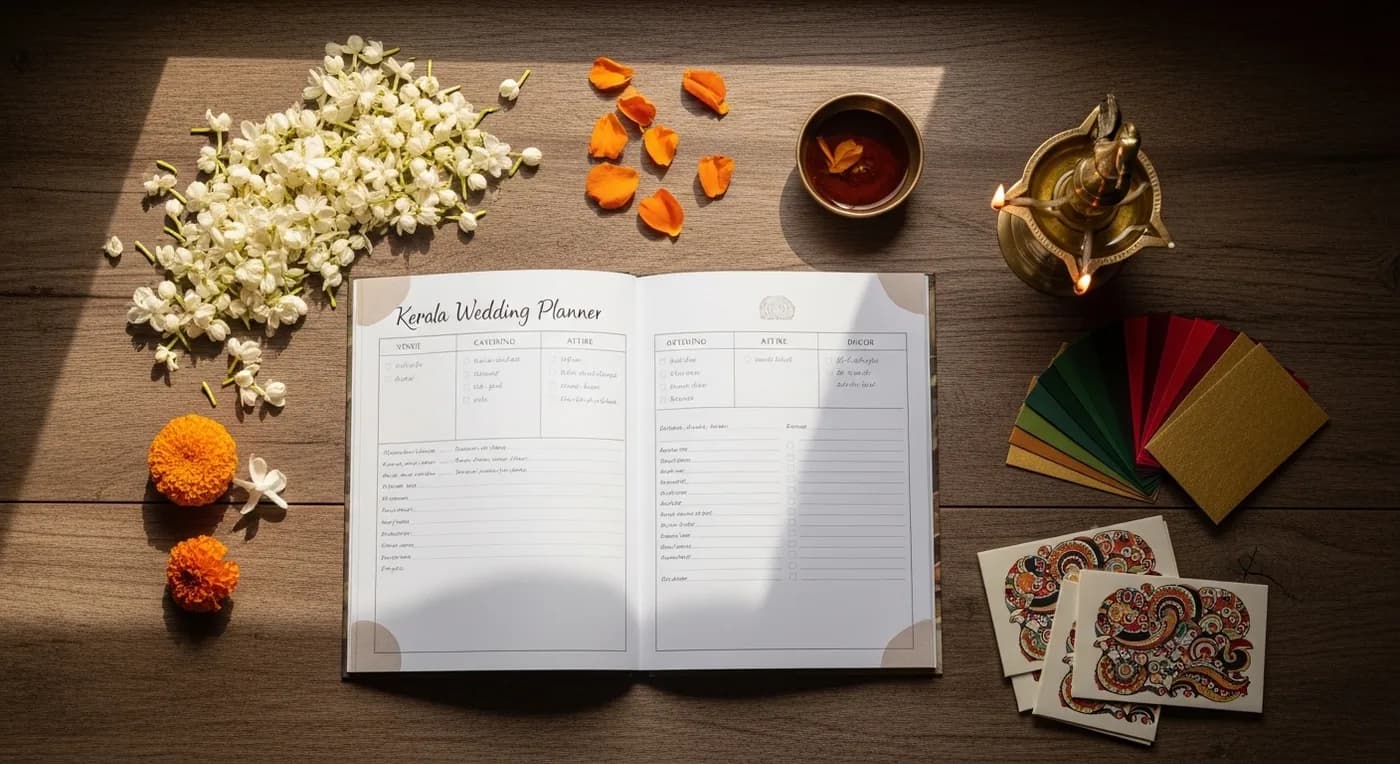
Kerala Wedding Checklist: Complete Printable Planner for 2026
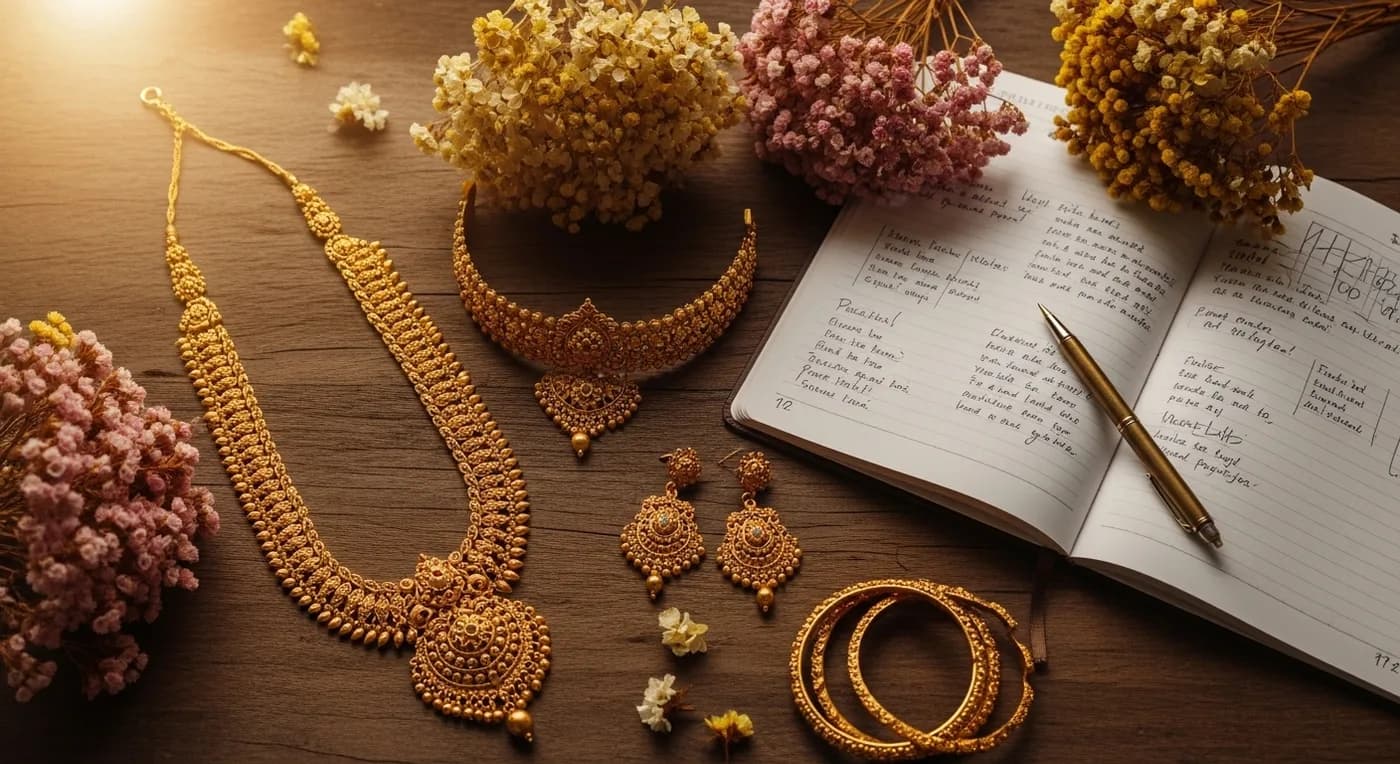
Kerala Wedding Budget Guide: 2026 Cost Breakdown
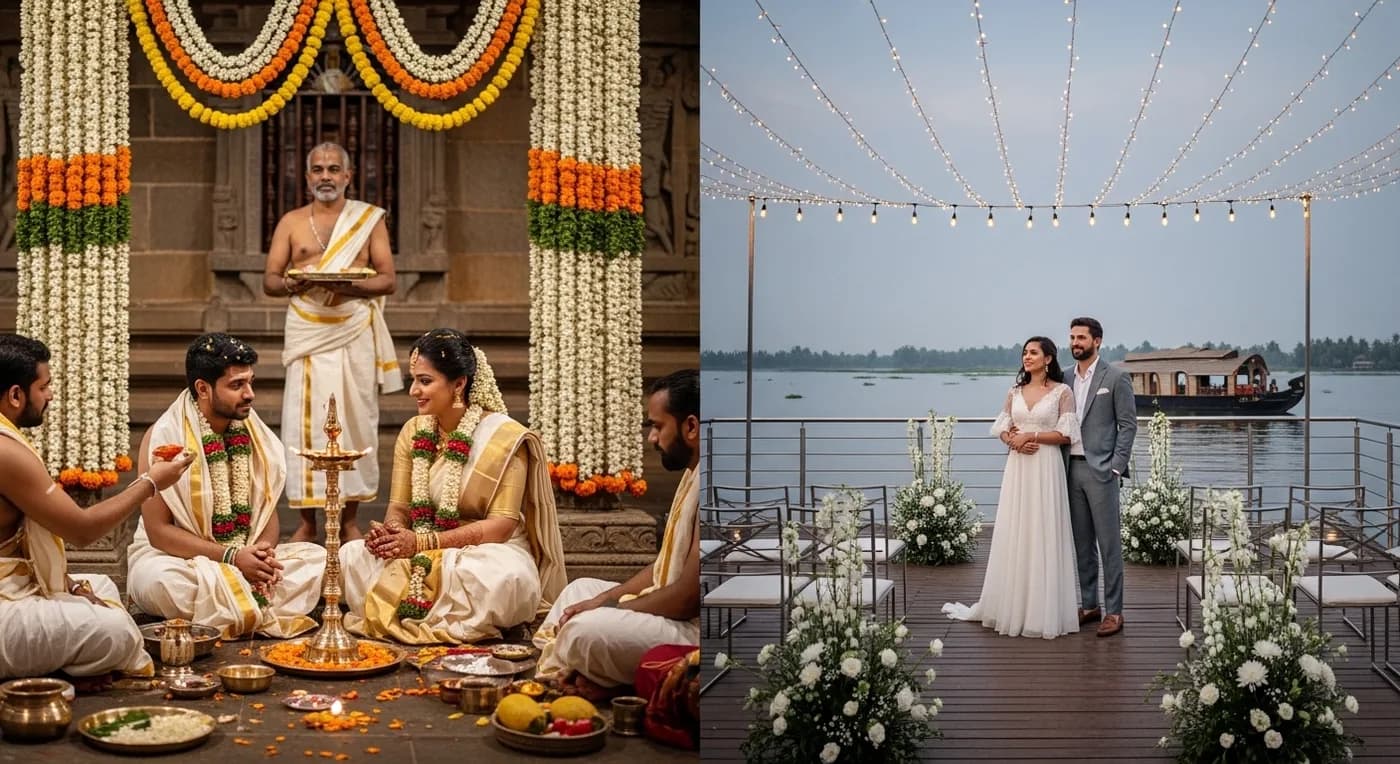
Traditional vs Destination Kerala Wedding: Which Is Right for You?
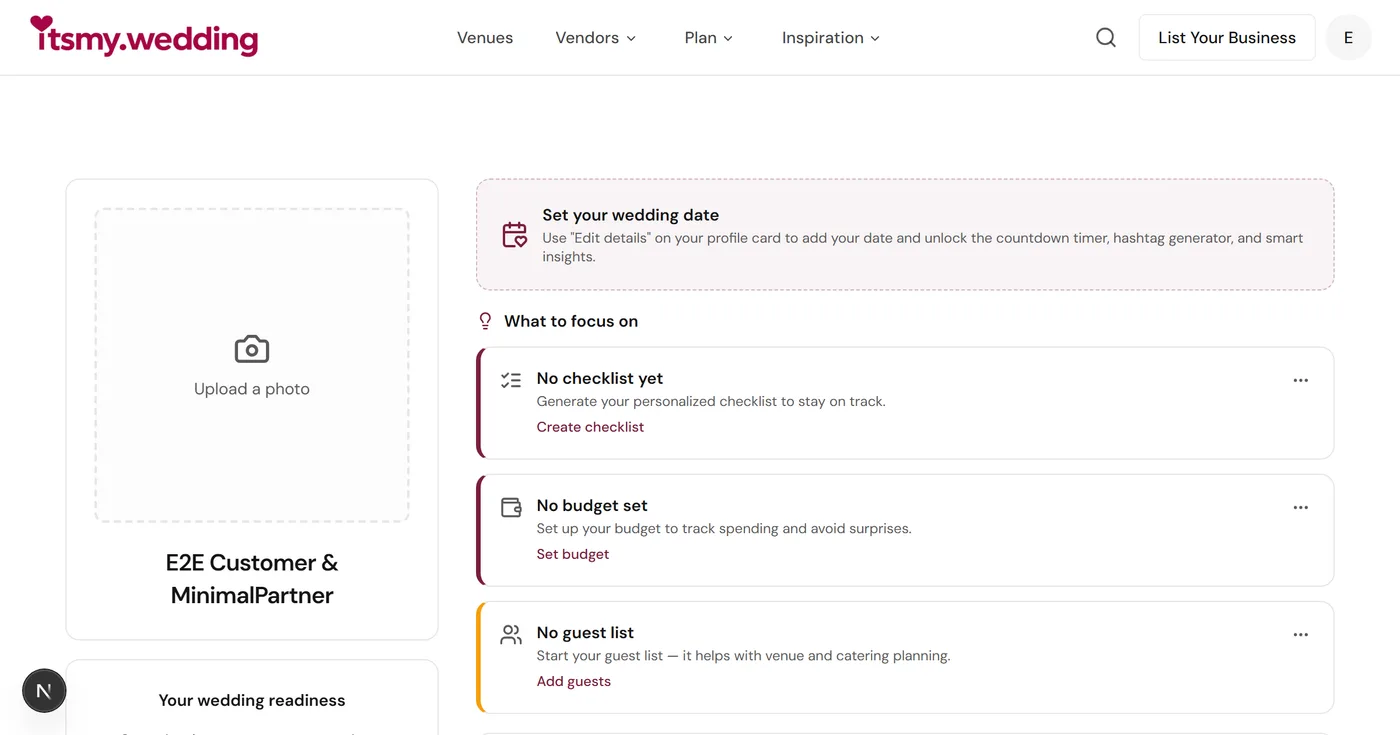
Best Free Wedding Planning Tools in 2026: The Complete Guide
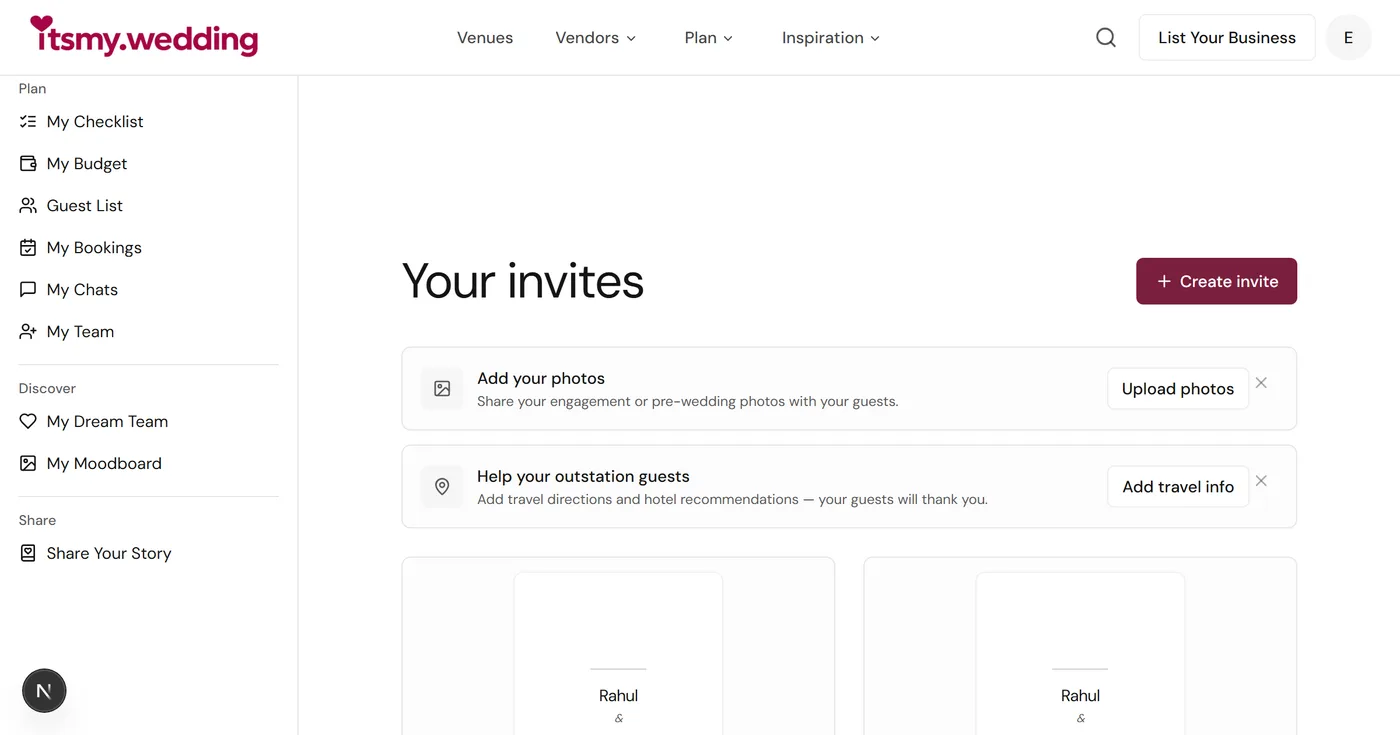
Kerala Wedding E-Invite Guide: Templates, Wording & Tools for 2026
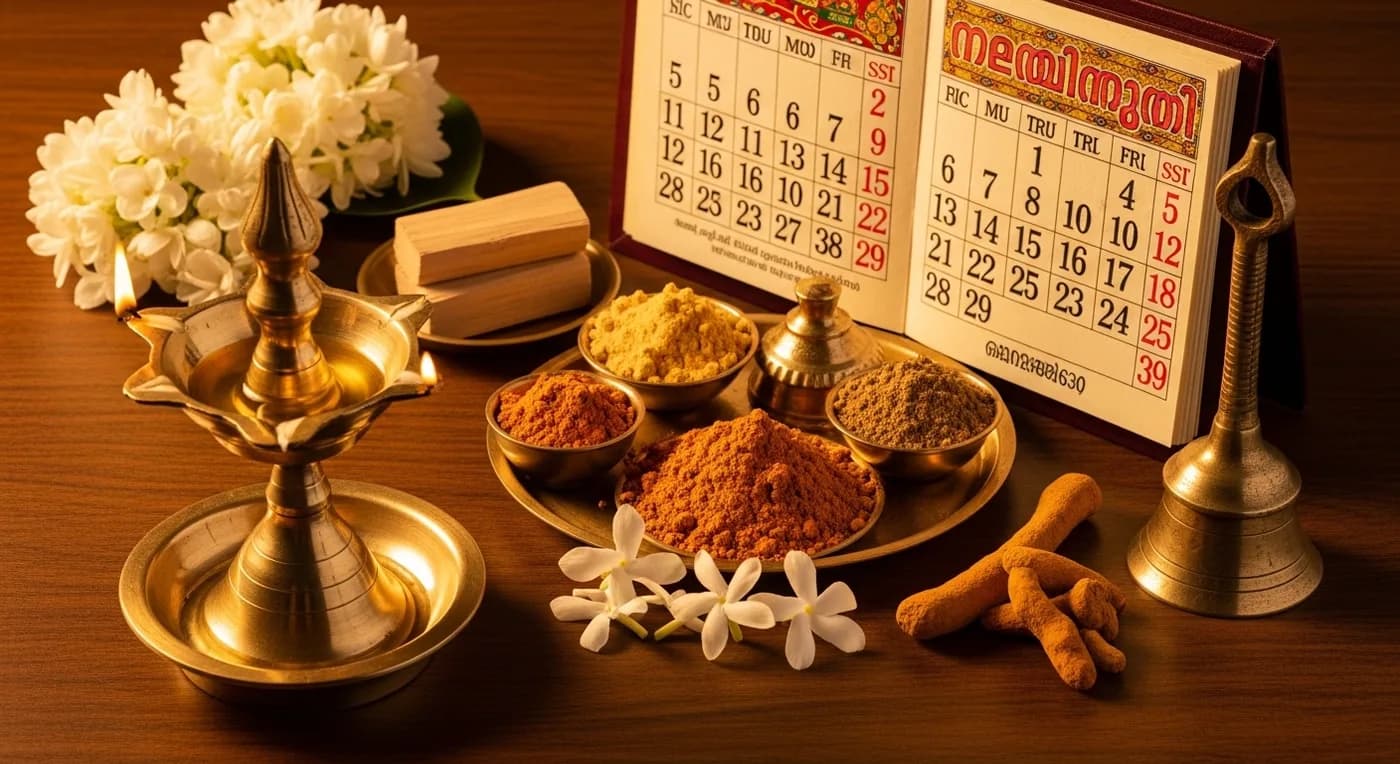
Kerala Muhurtham Dates 2026–2027: Auspicious Days
Still planning?
Get quotes from India's best vendors
Tell us what you're planning and we'll match you with verified photographers, venues, decorators, and more.
Get free quotes