
Kerala Muslim Wedding: ₹8-60L Budget & Planning Checklist
₹8-60 lakh Kerala Muslim wedding — budget breakdown, Malabar feast menu, venue picks & month-by-month planning checklist for 2026.

Kerala Wedding Traditions Writer
Fathima Zahra is a traditions writer who specializes in Muslim and Mappila wedding customs of Kerala.
On this page
A Kerala Muslim wedding in 2026 costs ₹8–60 lakh depending on guest count and style, spanning the Mailanchi henna night, Nikah ceremony, and Walima feast. Most families host 500–1,000 guests, with food and venue together accounting for 30–40% of the total budget (IBEF; Grand View Research, 2024). This guide covers every planning decision — from the first budget conversation to the final Sulaimani chai.
Quick Answer
Quick answer: A Kerala Muslim wedding costs ₹8-60 lakh in 2026. Budget split: venue (25-35%), catering/Malabar feast (20-30%), bridal gold (15-25%), decor (10-15%), photography (5-10%). Plan 8-10 months ahead for peak season.
Note
Pricing methodology: All cost figures in this guide reflect 2026 market rates based on itsmy.wedding planning data and vendor conversations across Kozhikode, Malappuram, Kochi, and Kannur. Actual costs vary by district, guest count, season, and vendor selection. Use the Cost Calculator for a personalised estimate.
What Makes a Kerala Muslim Wedding Unique?
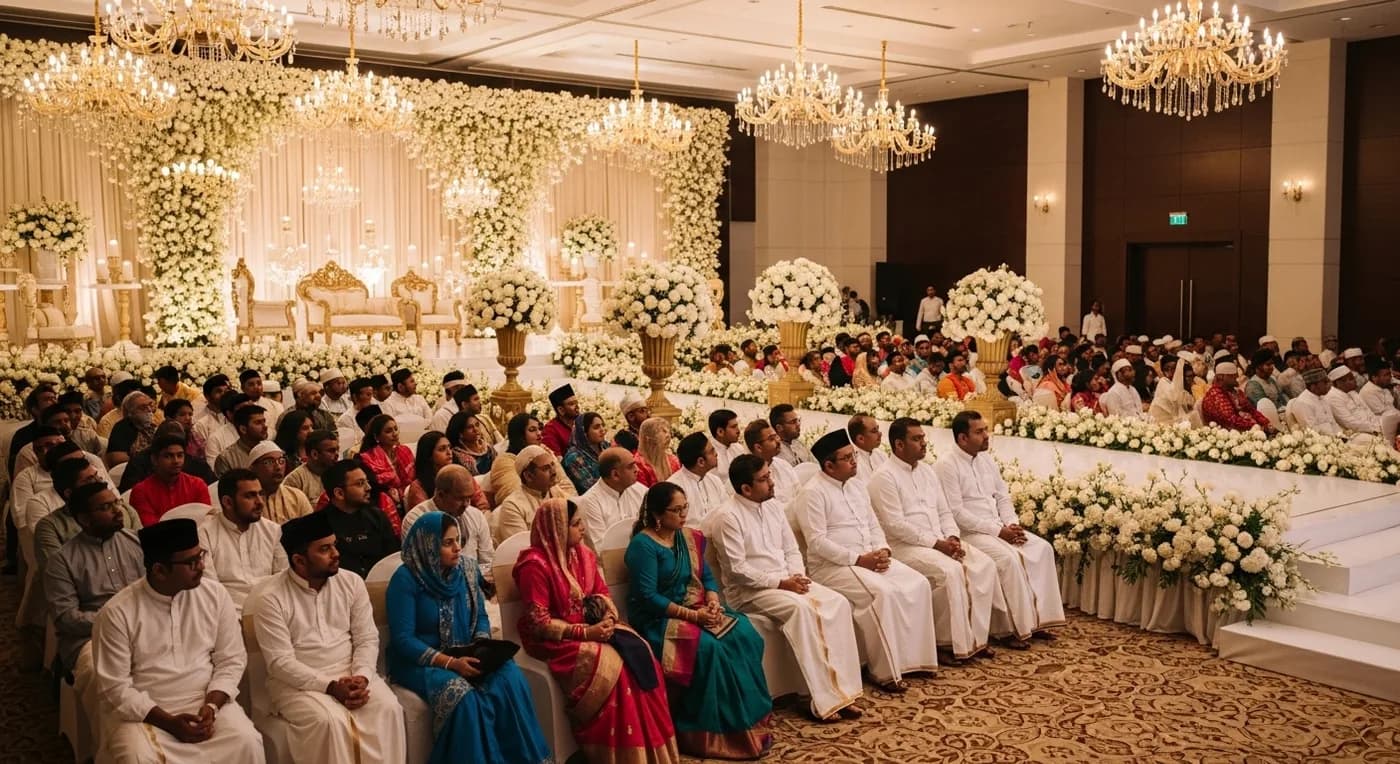
Growing up in Kozhikode, I attended my first Malabar Muslim wedding before I could walk. The aroma of Thalassery biryani rising from massive copper vessels, the rhythmic clapping of an Oppana circle, the sight of a bride adorned in layers of Malabar gold — these sensory memories never fade. No other wedding tradition in South India replicates this experience at such scale.
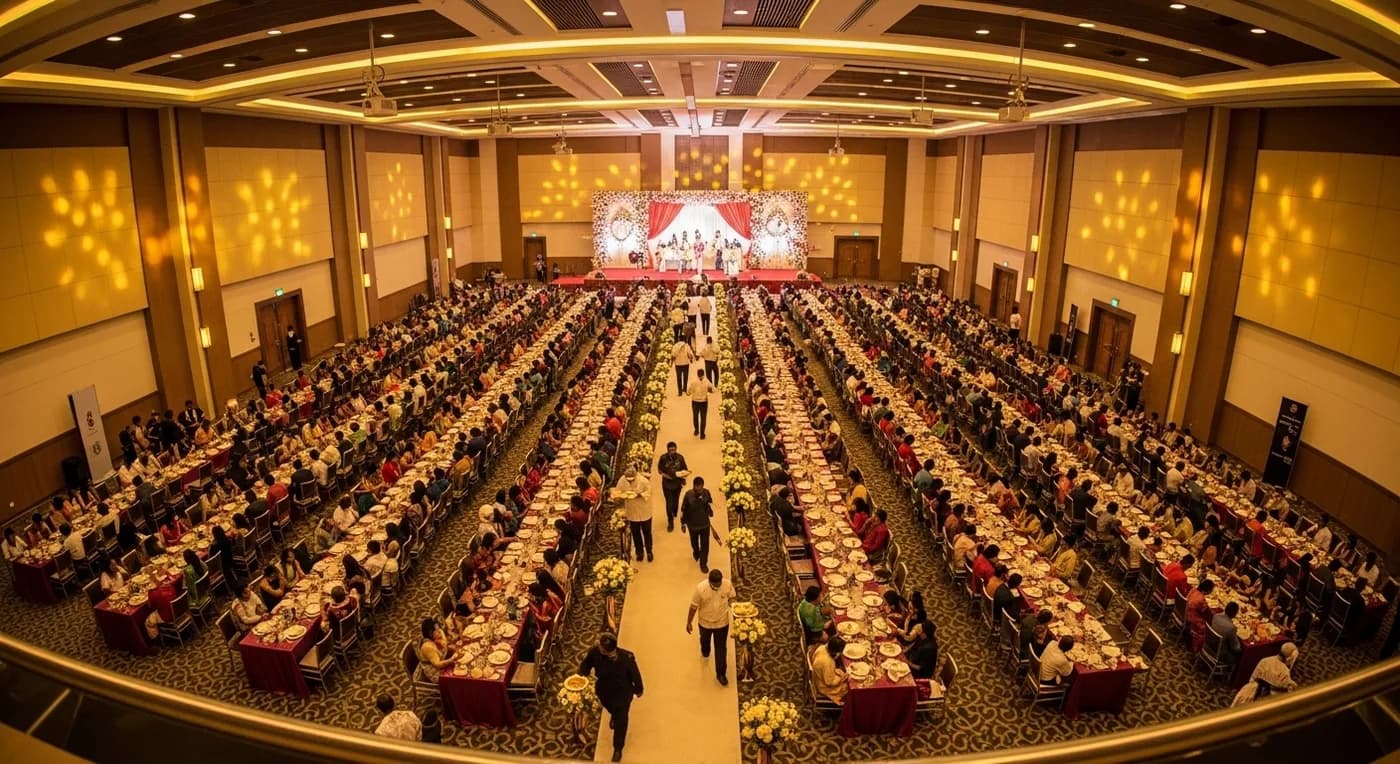
Kerala Muslim weddings in the Malabar heartland — Kozhikode, Malappuram, Kannur, and Kasaragod — operate at a scale that feels extraordinary anywhere else in India. The national average is 330-420 guests (WedMeGood, 2025). A typical Malabar celebration hosts 500 to 1,000. The average Indian wedding budget stands at ₹39.5 lakh (WedMeGood, 2025), with food and venue together accounting for roughly 30-40% of the spend. Malabar families often push food costs higher — because in this culture, how you feed your guests defines your family's honour.
The Indian wedding industry stands at ₹10.79 lakh crore, and Malabar's contribution punches well above its population share. But scale alone does not define these weddings.
What truly sets them apart is the Kalyana Samithi (wedding committee). Family members, neighbours, and community elders divide every task from venue booking to guest transport. This is a community undertaking, and understanding that reality is the first step to planning one well.
This guide is your logistics playbook. For Nikah rituals, Oppana traditions, and Mailanchi customs, our Malabar Muslim Nikah Guide covers every ceremony in detail. Here, we focus on decisions, budgets, and timelines. For how Kerala weddings differ across communities, see our Kerala Wedding by Religion Guide. For mixed-community celebrations, our Inter-Faith Wedding Planning Guide is essential reading. For the broader North Kerala wedding landscape across all communities, our Malabar wedding planning guide covers venues, costs, and traditions region-wide.
How Do Regional Differences Shape Your Wedding Planning?
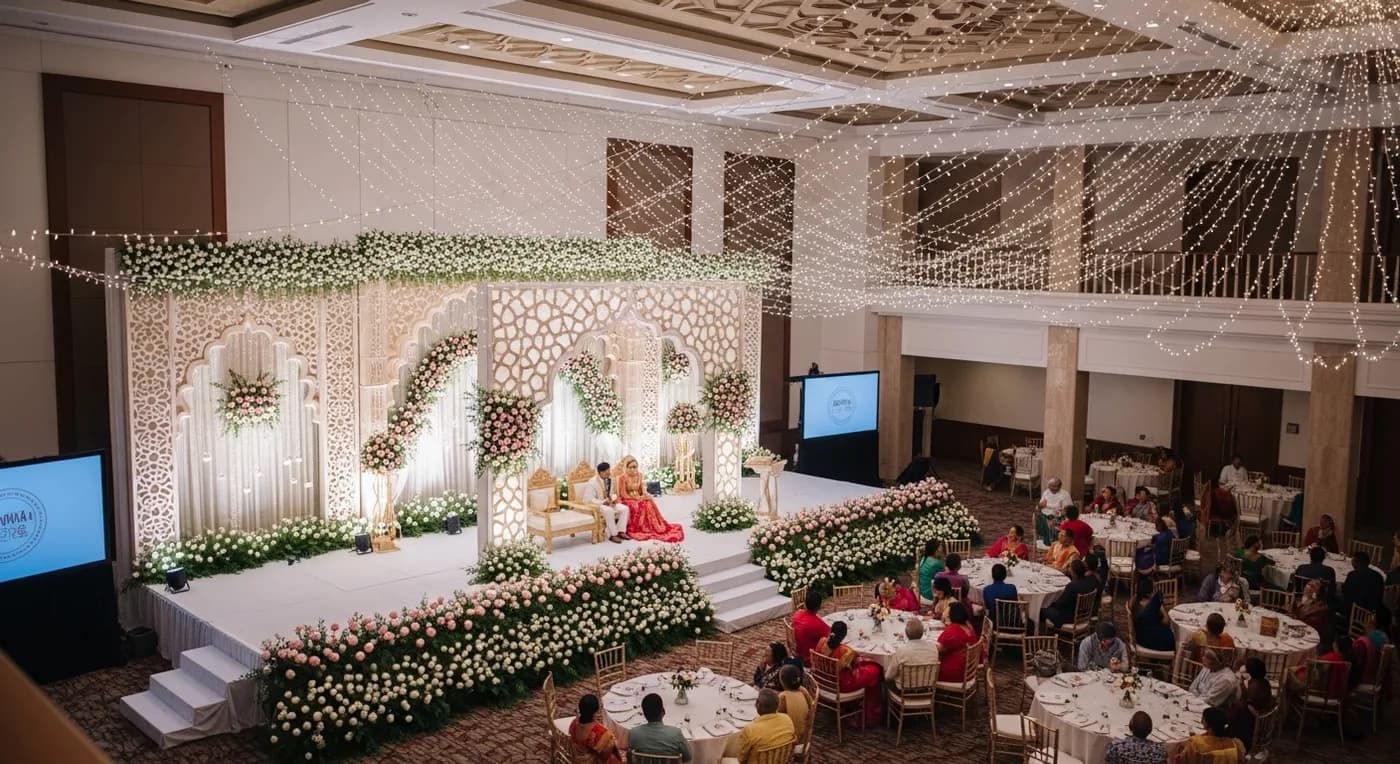
Malabar's heartland districts host 500–1,500 guests per wedding, while South Kerala celebrations average 300–600 — and the cost structure differs accordingly. Not all Kerala Muslim weddings follow the same playbook. Muslims constitute 26.56% of Kerala's population (88.73 lakh) (Census of India, 2011), but the concentration varies sharply by district. The traditions, scale, and vendor ecosystem differ meaningfully between North Kerala's Malabar heartland and the southern districts. Where your wedding falls on this spectrum directly affects your budget, venue requirements, and vendor choices.
North Kerala: The Malabar Heartland (Kozhikode, Malappuram, Kannur, Kasaragod)
This is where the scale is largest, the feasts are most elaborate, and community involvement runs deepest. Malappuram is Kerala's only Muslim-majority district at 70.2%, followed by Kozhikode at 39.2%, Kasaragod at 37.2%, and Kannur at 29.4% (Census of India, 2011). Kozhikode sets the cultural standard. Its wealthy merchant families, with roots in the spice trade and Gulf business, have historically pushed celebrations to their most ambitious.
Malappuram hosts the highest volume of Muslim weddings in the state. Celebrations here are deeply tied to the local Mahall (mosque committee). In contrast, Kannur's weddings lean more theatrical, influenced by the surrounding Theyyam tradition, with bolder colour palettes and more dramatic staging. Meanwhile, Kasaragod blends Malabar customs with Tulu and Kannada influences, creating a subtly different aesthetic that includes Mangalorean coastal cooking at pre-wedding meals.
In North Kerala, expect guest counts of 500-1,500, full Malabar feasts with 15-25 dishes, strong community coordination through the Kalyana Samithi, professional Oppana troupes, and a vendor ecosystem deeply specialised in Muslim wedding traditions. Convention centres along the Kozhikode-Malappuram highway are the dominant venue choice.
South Kerala: Kochi, Thrissur, and Trivandrum
In contrast, Muslim families in South Kerala celebrate with the same religious observances — the Nikah, Mahr, and Walima are identical — but the surrounding scale and customs differ. Guest counts are typically smaller (300-600). The catering often blends Malabar dishes with local Kerala cuisine like sadya elements, and the community coordination structure is less formal.
Specifically, Kochi's cosmopolitan Muslim community often opts for hotel ballrooms and resort venues rather than convention centres. Bridal styling also draws more from pan-Indian trends. Thrissur occupies a middle ground, with families often importing caterers from Kozhikode for the Malabar feast while using local venues.
Note
Planning Tip: If your family is from Malappuram but you are based in Kochi, you will likely need to source your caterer and Oppana troupe from North Kerala while booking a South Kerala venue. Plan for vendor travel and accommodation in your budget — this is a common scenario that catches families off guard.
What Are the Three Core Ceremonies?
Every Kerala Muslim wedding flows through the Mailanchi (henna night), the Nikah (solemnization), and the Walima (reception feast) — with 80–90% of the budget concentrating on the Walima. Additionally, each event has distinct planning requirements. This section gives you the planning essentials for each; for the full cultural and ritual detail, read our Malabar Muslim Nikah Guide.
Mailanchi (Henna Night) — Held the evening before the wedding at the bride's home or a separate venue. The bride's hands and feet are adorned with mehndi while an Oppana circle fills the room with clapping and traditional Mappilapattu songs. Planning requirements: a decorated intimate space (100-300 guests), professional mehndi artists, an Oppana troupe, evening snacks and tea service, and good lighting for photography. Budget: ₹50,000 – ₹2,00,000 for the event setup, excluding mehndi artists and Oppana troupe.

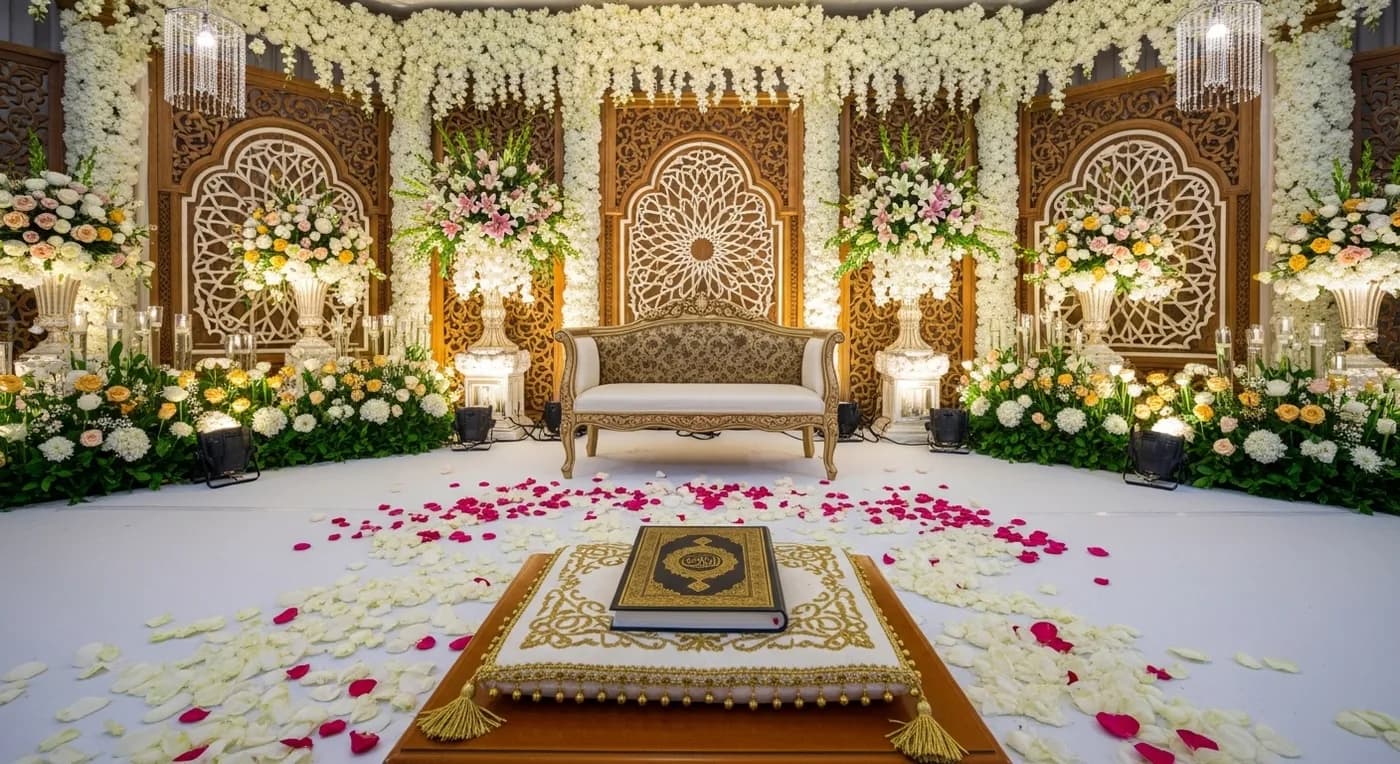
Nikah (Ceremony) — The religious solemnization, conducted by a Qazi at a mosque or the bride's home. The Mahr is declared, Ijab-Qubool is exchanged, and the Nikah-nama is signed. Planning requirements: Qazi coordination, Mahr arrangement, witness availability, legal registration through the local Mahall or municipal office, and transport between the Nikah venue and the Walima hall if they are separate. The ceremony itself is typically 30-60 minutes.
Walima (Reception Feast) — The grand reception, hosted after the Nikah. This is where 80-90% of your budget concentrates. Planning requirements: a venue for 500-1,000+ guests, a caterer capable of producing the full Malabar feast at scale, stage and decor, photography and videography coverage, sound and entertainment, and a day-of coordination plan for managing guest flow through multiple dining batches. For details on the iconic Malabar feast menu, see our Muslim Wedding Catering Guide.
When Should You Start Planning Each Task?
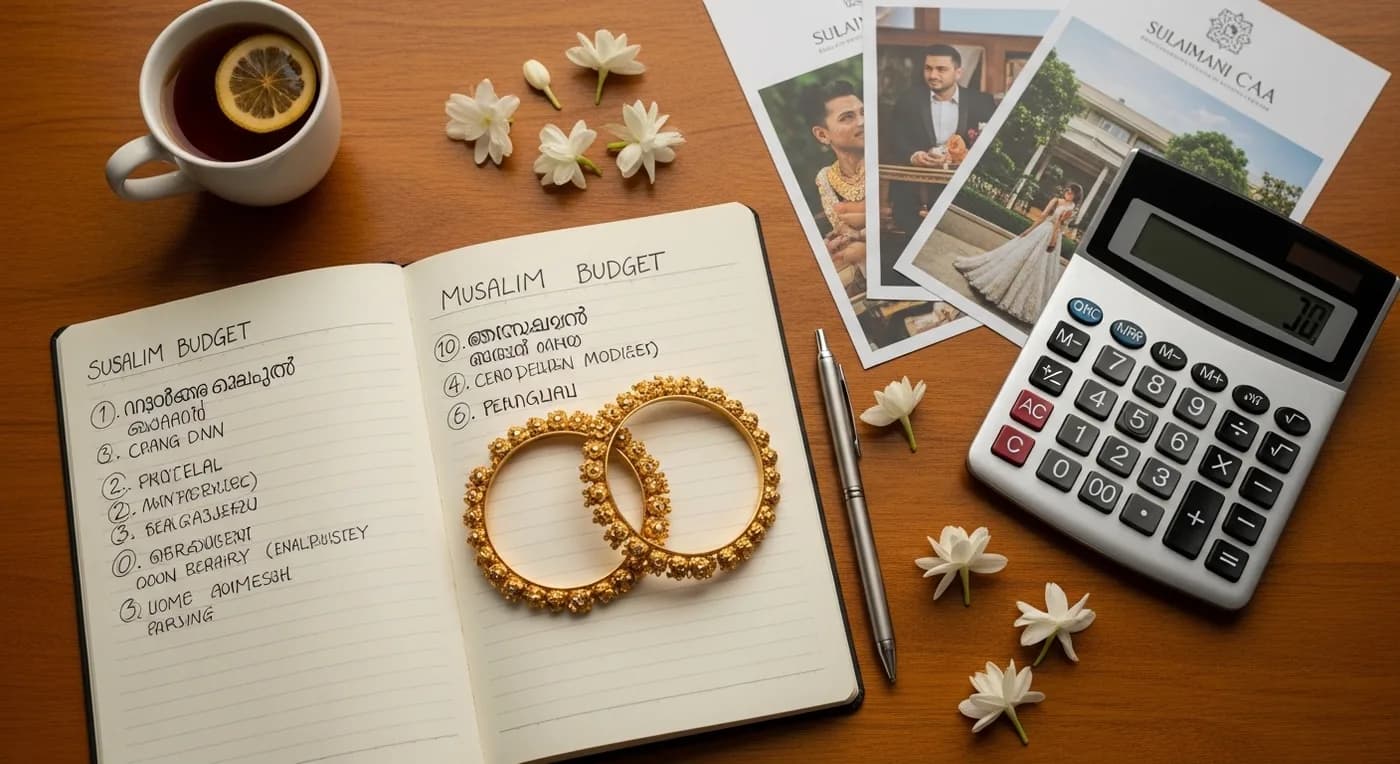
Top caterers in Kozhikode book out 6–8 months ahead during peak season, and prime Saturday venues disappear 10–12 months in advance. The single biggest mistake in Kerala Muslim wedding planning is starting late. Top caterers in Kozhikode book out 6-8 months ahead during peak season. Convention centres along the Kozhikode-Malappuram corridor can be unavailable 10-12 months before prime Saturday dates. CAIT estimates that 4.6 million weddings across India generated ₹6.5 lakh crore during the November-December 2025 season, and Malabar's share of that volume means intense competition for the best vendors.
Here is the decision sequence that experienced Malabar families follow:
| Timeline | Milestone | Key Actions |
|---|---|---|
| 12-10 months | Foundation | Set total budget, fix date (consult Islamic calendar — avoid Ramadan unless preferred), book venue, form Kalyana Samithi |
| 10-8 months | Core vendors | Book caterer (conduct tastings), begin bride's gold jewellery shopping, shortlist photographer/videographer |
| 8-6 months | Attire & decor | Start bridal outfit sourcing (designer pieces need 3-4 months), book decorator, finalize stage concept |
| 6-4 months | Entertainment & guests | Book Oppana troupe, compile guest list, order invitations (physical + digital), arrange outstation guest accommodation |
| 4-2 months | Fine-tuning | Menu tasting with caterer, bridal makeup trial, Mailanchi artist booking, confirm all vendor contracts |
| 2-1 months | Final coordination | Submit final guest count to caterer and venue, distribute invitations, coordinate Mahr arrangement, brief wedding committee |
| Final week | Execution | Day-of schedule for all vendors, emergency kit prep, final Kalyana Samithi coordination meeting |
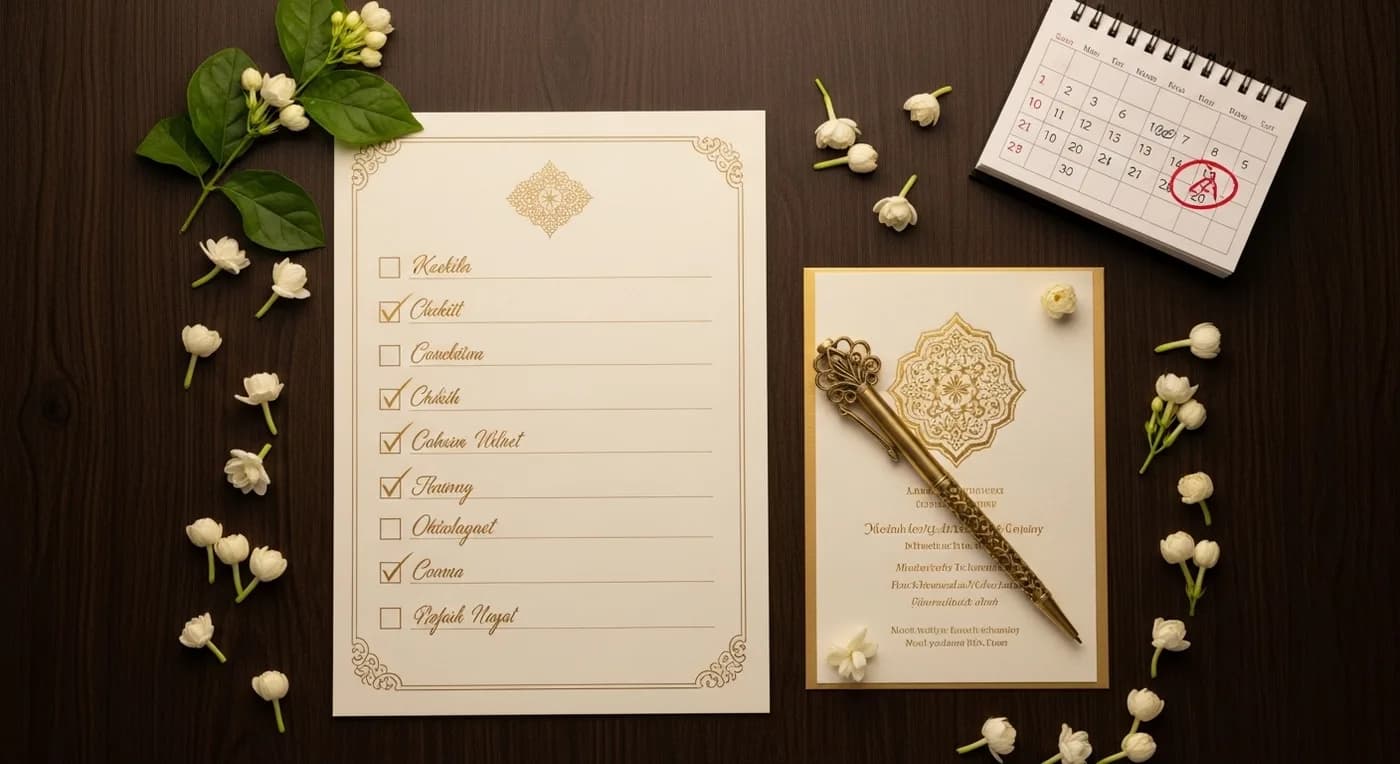
For a comprehensive, printable version of this timeline with Muslim-wedding-specific tasks that generic checklists miss — mosque/Qazi coordination, Oppana booking windows, Islamic calendar awareness — see our Kerala Muslim Wedding Checklist.
Important
Ramadan Awareness for 2026-2027: Ramadan is expected around late February to late March in 2027. If you are planning a wedding in early 2027, confirm the exact dates early and discuss with your family whether to schedule before, during, or after Ramadan. Many caterers and venues adjust their operations during this month.
How Much Does a Kerala Muslim Wedding Cost?
Catering and bridal gold together consume 50–60% of the typical mid-range budget — accept these proportions early and plan around them. Two factors shape the budget more than anything else: the scale of the guest list (500-1,000+ is the norm, not the exception) and the investment in bridal gold jewellery (often the single largest line item after catering). Our detailed Muslim Wedding Cost Breakdown covers every category in depth. Here is the executive summary across three tiers.
| Category | Budget (₹8-15L) | Mid-Range (₹20-35L) | Premium (₹40-60L) |
|---|---|---|---|
| Guest count | 300-400 | 500-700 | 800-1,200 |
| Venue (Nikah + Walima) | ₹1,50,000 – ₹2,50,000 | ₹3,00,000 – ₹5,00,000 | ₹5,00,000 – ₹8,00,000 |
| Catering (Malabar feast) | ₹4,00,000 – ₹7,00,000 | ₹8,00,000 – ₹14,00,000 | ₹14,00,000 – ₹25,00,000 |
| Bridal attire + gold jewellery | ₹2,00,000 – ₹4,00,000 | ₹4,00,000 – ₹8,00,000 | ₹8,00,000 – ₹15,00,000 |
| Photography + videography | ₹75,000 – ₹1,50,000 | ₹1,50,000 – ₹3,00,000 | ₹3,00,000 – ₹6,00,000 |
| Decor + stage + flowers | ₹1,00,000 – ₹2,00,000 | ₹2,50,000 – ₹4,00,000 | ₹4,00,000 – ₹8,00,000 |
| Oppana + entertainment | ₹30,000 – ₹80,000 | ₹80,000 – ₹2,00,000 | ₹2,00,000 – ₹4,00,000 |
| Invitations + miscellaneous | ₹75,000 – ₹1,50,000 | ₹2,00,000 – ₹4,00,000 | ₹4,00,000 – ₹6,00,000 |
| Total | ₹8,00,000 – ₹15,00,000 | ₹20,00,000 – ₹35,00,000 | ₹40,00,000 – ₹60,00,000 |
Notice the dominance of catering and gold. The WedMeGood 2024-2025 report places jewellery at 37.1% and catering at 20% of the average Indian wedding budget. In Malabar Muslim weddings, where feasts are more elaborate and gold sets heavier, these two categories together can account for 50-60% of the total spend. This is not overspending. Rather, it reflects deeply held cultural values around hospitality and the bride's financial security through gold ownership. In practice, smart budgeting starts by accepting these proportions and building the rest of the plan around them.
Tip
Gold Timing Strategy: Gold prices can swing dramatically — 22-karat gold ranged from ₹7,750/gram in early 2025 to over ₹12,800/gram by late 2025, a variation of over ₹5,000 per gram (GoldPriceZ, IBJA rates). Malabar families who start jewellery shopping 8-10 months ahead and buy in stages during price dips can save several lakhs on the bridal set. Track daily rates at your local Malabar Gold or Kalyan Jewellers branch.
For a full line-item breakdown with per-plate catering costs, regional price comparisons, and money-saving strategies, read our Muslim Wedding Cost in Kerala guide. For broader Kerala wedding budgeting context, our Kerala Wedding Budget Guide compares costs across all communities and traditions.
Looking for Wedding Planners in Kozhikode?
Tell us what you need and get quotes from verified wedding planners
What Should You Look for in a Muslim Wedding Venue?
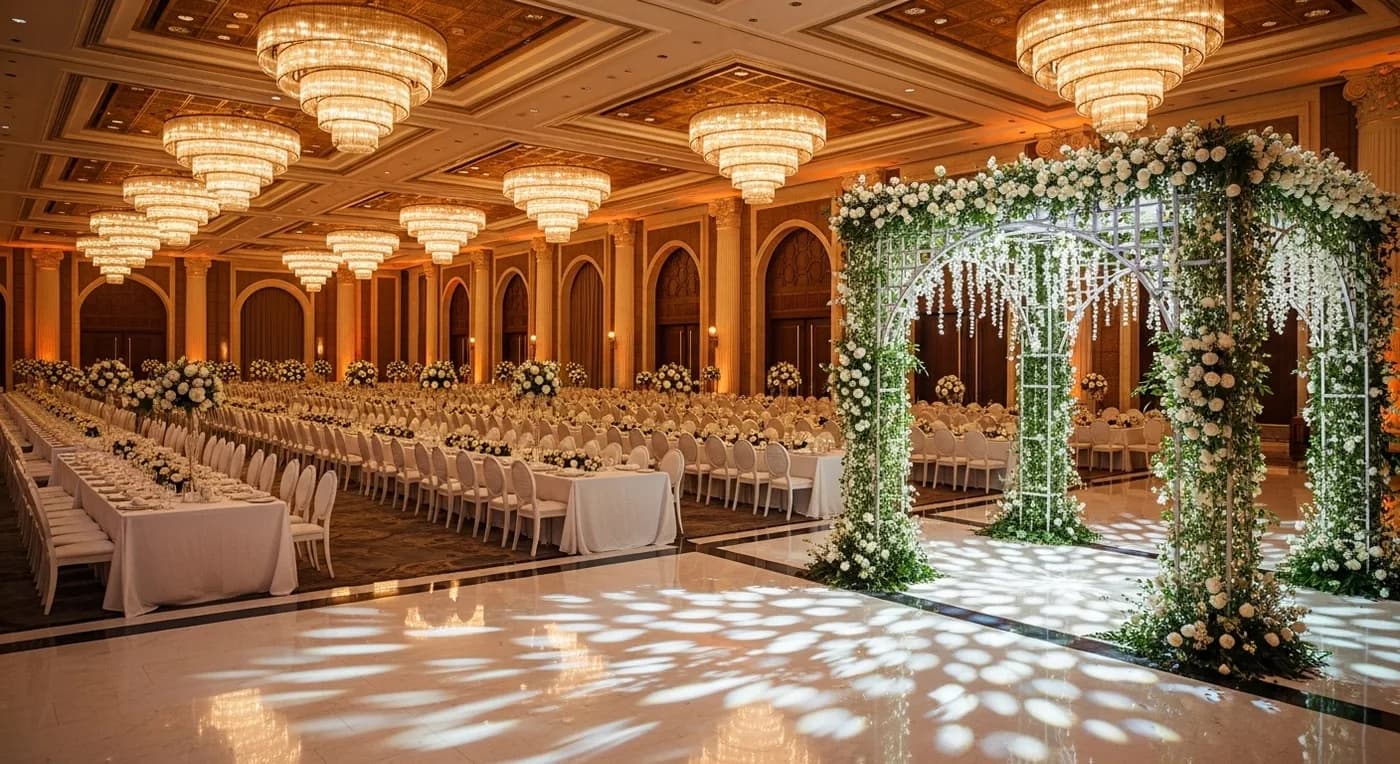
Choosing a venue for a Kerala Muslim wedding is not the same as choosing one for a 200-guest reception. The requirements are specific. Getting them wrong creates cascading problems on the day. In my experience, venue mistakes are the hardest to fix — every other vendor decision depends on getting this right. Our full Muslim Wedding Venues Guide covers venue options district by district. Here is the framework for making this decision.
The Non-Negotiable Checklist
Every Muslim wedding venue must meet these criteria:
- Capacity for 500-1,000+ seated guests — Seated dining in batches of 150-250, not standing or cocktail-style. For example, a 700-guest Walima needs space to seat at least 200 per batch comfortably.
- Proximity to a mosque — If the Nikah is at a mosque and Walima elsewhere, travel time should be under 20 minutes.
- Commercial-grade kitchen facilities — Your caterer needs space for wood-fired biryani vessels, multiple burner stations, and extensive prep areas.
- Ample parking (200+ vehicles) — A 700-guest wedding generates 150-250 vehicles.
- Separate areas for ceremony and dining — Stage, reception, and dining must flow logically without competing for space.
- Generator backup — Full-capacity, not partial. Power cuts during the Walima can ruin feast service.
Venue Types at a Glance
| Venue Type | Capacity | Price Range (Per Day) | Best For |
|---|---|---|---|
| Convention centres (Kozhikode/Malappuram) | 800-2,000 | ₹1,50,000 – ₹5,00,000 | Large-scale Malabar weddings |
| Hotel ballrooms | 300-700 | ₹2,00,000 – ₹6,00,000 | Premium, smaller celebrations |
| Open-air grounds with pandal | 500-1,500+ | ₹1,00,000 – ₹3,00,000 | Rural/semi-urban weddings |
| Mosque-adjacent community halls | 300-600 | ₹30,000 – ₹1,00,000 | Budget-friendly, traditional |
Tip
Peak Season Warning: November through February is the prime wedding season in Kerala, with top venues booking 12-18 months in advance (Scenario Weddings, 2025). Convention centres on the Kozhikode bypass and Malappuram's event hall corridor fill up fastest for Saturday dates. If your date is flexible, Thursday or Sunday weddings can save 20-30% on venue costs and dramatically improve vendor availability.
How Do You Plan the Perfect Malabar Wedding Feast?
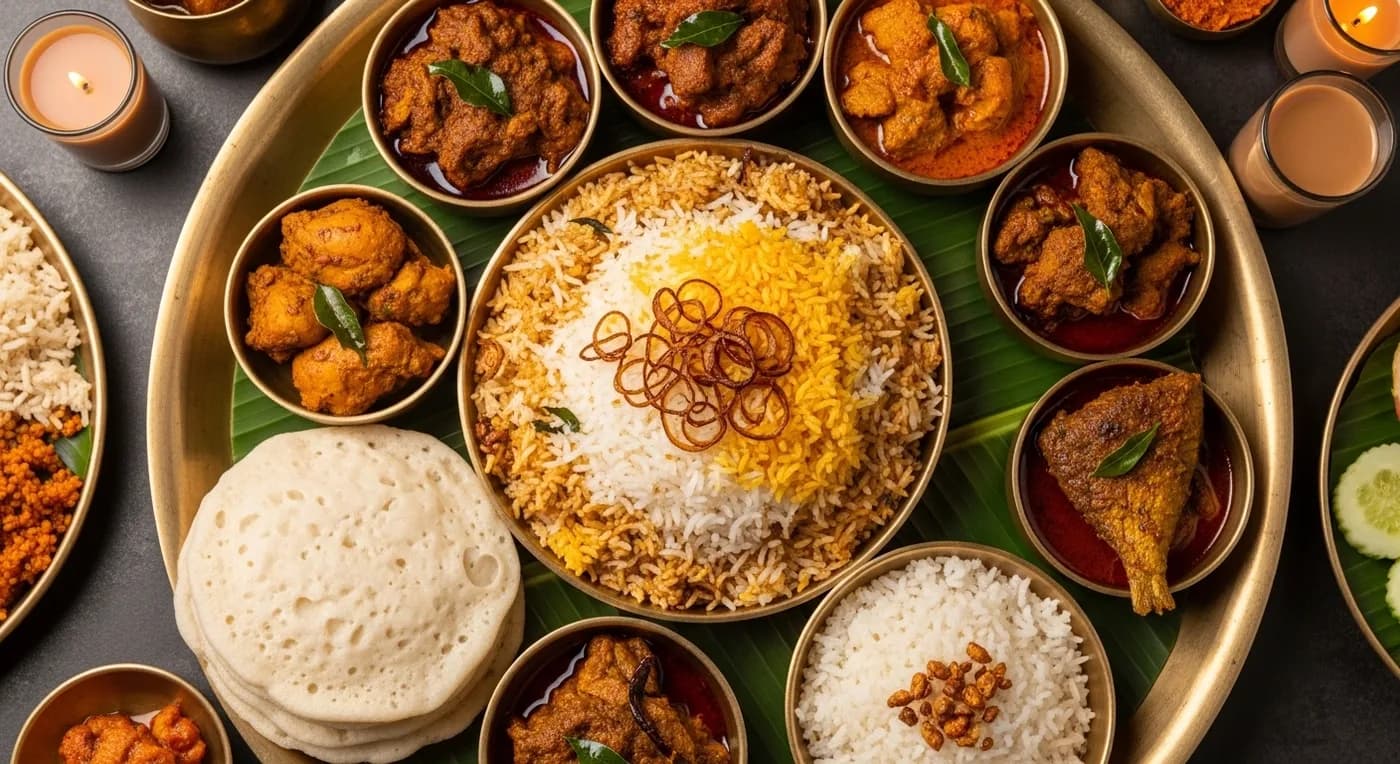
The Malabar feast is the single most talked-about element of any Kerala Muslim wedding. Your family's reputation rests, in part, on how well you feed 700 people. From the weddings I have helped coordinate in Kozhikode, the biryani is always what guests remember first — and judge hardest. This is the category where you should not compromise.
The Core Menu
A standard Malabar wedding feast includes:
- Thalassery Biryani — Kaima or Jeerakasala rice (not basmati), layered with spiced chicken or mutton, slow-cooked in massive copper vessels. This is the dish guests judge first.
- Pathiri varieties — Soft rice-flour flatbread in multiple forms (plain, mutta, nei, irachi), served with rich curries.
- Neychoru — Fragrant ghee rice with whole spices, paired with roast preparations.
- Meat preparations — Chicken roast, mutton curry, mutton fry, and (in Malappuram and Kozhikode) beef ularthiyathu.
- Seafood — Fish curry and fish fry at coastal weddings in Thalassery, Kannur, and Kasaragod.
- Desserts — Muttamala (egg-yolk threads), Firni, halwa varieties, and fruit salad with ice cream.
- Sulaimani — Sweet spiced black tea, the essential finale to every Malabar meal.
A typical feast runs 15-25 dishes per sitting. While standard Kerala non-veg catering starts at ₹300-550 per plate (EventsManagementKerala, 2025), a full Malabar wedding feast with premium ingredients and traditional preparation runs ₹800 – ₹1,500 per plate, in line with national premium catering rates of ₹1,000-2,500 (VenueLook, 2025). For a 700-guest wedding with batch serving, you will need a caterer experienced in managing 3-4 dining rotations over 2-3 hours.
Caterer Selection Priorities
- Ask for Muslim wedding experience — A 700-guest Malabar feast is fundamentally different from a 300-guest reception.
- Taste the actual biryani master's work — Many caterers subcontract biryani preparation. Confirm who cooks at your wedding.
- Get itemised quotes from three caterers — Compare rice quality, meat sourcing, dish count, and staff-to-guest ratios.
- Confirm kitchen logistics with the venue — Caterer and venue must agree on kitchen access, timing, and waste management before you sign either contract.
For menu variations, per-plate costs by region, vegetarian options, and batch-serving logistics, read our Muslim Wedding Catering Guide.
How Does the Kalyana Samithi System Actually Work?
A well-run Kalyana Samithi can replace a ₹1–5 lakh professional planner — but only if every member owns a defined role. One of the most powerful planning tools available to Kerala Muslim families is the Kalyana Samithi — a wedding committee that distributes the logistical burden across trusted family members and community elders. This is not a vague "let the family help" arrangement. Instead, it is a structured coordination system with assigned roles and clear responsibilities. Having coordinated weddings across Malabar for over a decade, I can say that a well-organised Samithi is the difference between a smooth event and a chaotic one.

Traditional Kalyana Samithi Structure
| Role | Responsibility | Typical Member |
|---|---|---|
| Head Coordinator | Overall timeline, vendor liaison, final decisions | Senior uncle or family elder |
| Finance | Budget tracking, vendor payments, gift register | Trusted family accountant or businessman |
| Venue & Logistics | Venue setup, parking, signage, generator, power | Technically minded relative or friend |
| Catering Liaison | Menu finalization, kitchen coordination, batch timing | Family member with hospitality experience |
| Guest Management | Invitation tracking, seating, VIP handling, accommodation | Socially connected family member |
| Mailanchi Coordination | Henna night setup, Oppana troupe liaison, evening snacks | Bride's close female relatives |
| Nikah Coordination | Qazi liaison, mosque/home preparation, Mahr logistics | Religiously knowledgeable elder |
| Transport | Guest pickup, outstation travel, day-of vehicle management | Family member with vehicle access |
Modernising the System
In 2026, the most effective Kalyana Samithis supplement traditional in-person coordination with:
- A dedicated WhatsApp group for the committee with clear naming conventions and pinned task lists
- A shared spreadsheet (Google Sheets works well) for budget tracking, guest RSVPs, and vendor contact details
- Task assignment tools — even a simple shared checklist on the itsmy.wedding planning hub keeps everyone accountable
The Kalyana Samithi is what allows Malabar families to execute 800-guest weddings without professional planners. For families who lack a large local network — diaspora families returning from the Gulf, intercity couples, or nuclear families — hiring a professional planner is a sound investment. For 500+ guest logistics, our Guest Management Guide covers flow planning and day-of coordination. Gulf-returnee couples planning from Dubai, Doha, Muscat, or Riyadh should also read our plan a Kerala wedding from UAE and Gulf NRI playbook for corridor-specific timelines and document workflows.
Looking for Venues in Malappuram?
Tell us what you need and get quotes from verified venues
What Should You Know About Bridal Styling and Photography?
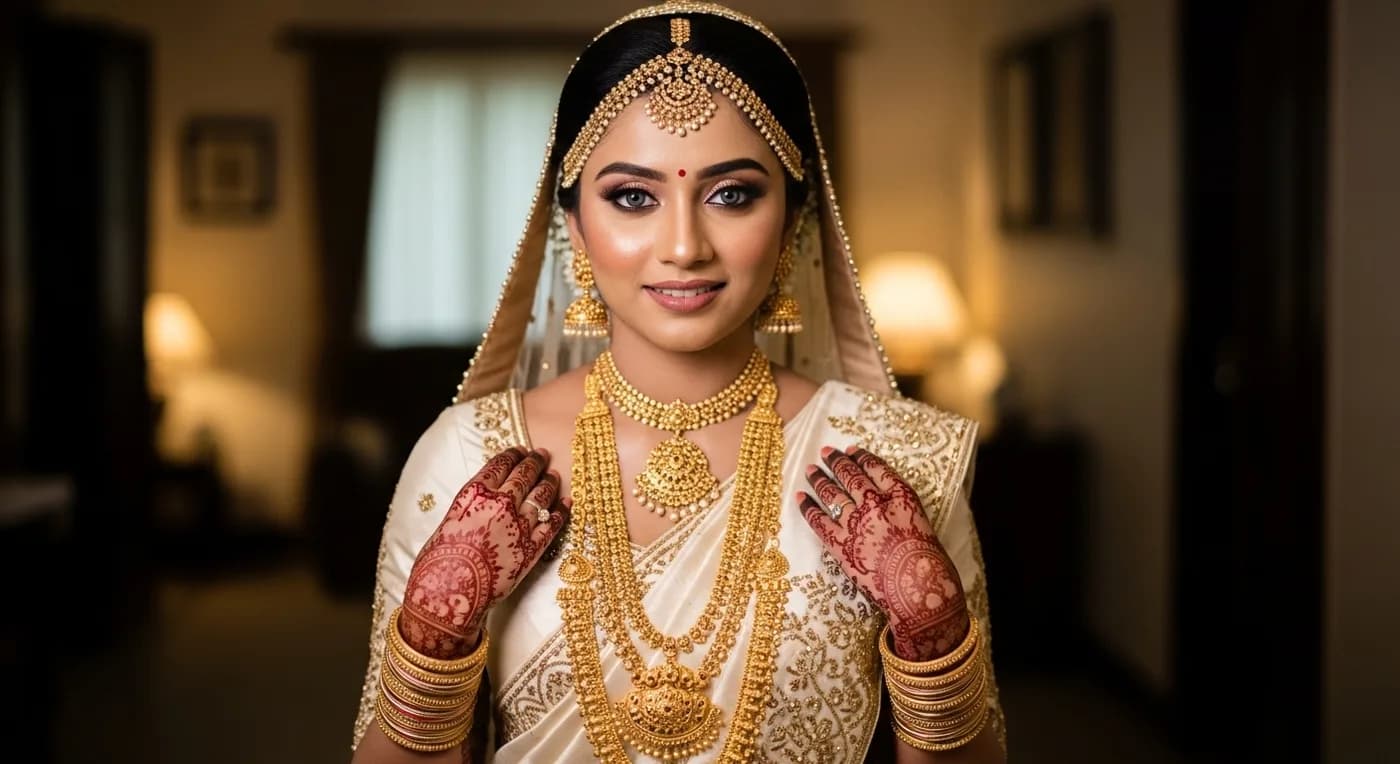
Most Malabar brides follow a two-look tradition — heritage gold for the Nikah, contemporary styling for the Walima. Kerala Muslim bridal styling follows a two-look tradition: a rich, traditional ensemble with heavy Malabar gold (Manga Mala, Palakka Mala, Karimani Mala, Jimikki) for the Nikah, and a contemporary outfit for the Walima. In 2026, brides across Kozhikode and Malappuram are blending heritage gold with modern silhouettes — pastel Shararas, embellished Kaftans, and contemporary Lehengas. For attire details, jewellery budgeting, hijab-friendly styling, and groom's ensembles, see our Kerala Muslim Bridal Look Guide.
Additionally, photography at Muslim weddings requires specific cultural sensitivity: family preferences around Nikah coverage (some prefer minimal photography inside the mosque), the need for female photographers in women-only sections, and modesty-aware framing for hijab-wearing guests. For shot lists, pricing, and portfolio evaluation, our Muslim Wedding Photography Guide covers the full process. For decoration guidance, see our Muslim Wedding Decoration Guide.
How Do Wedding Costs and Traditions Vary by District?
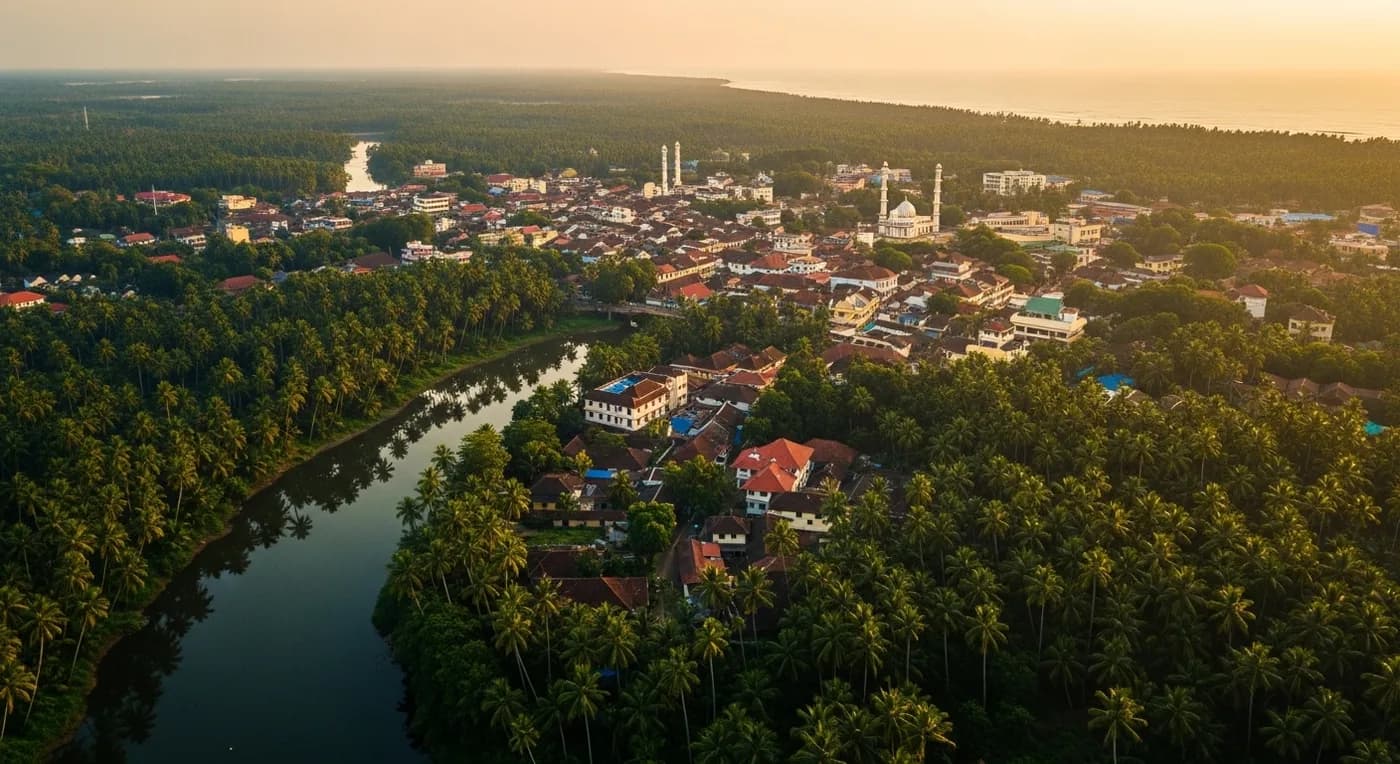
Mid-range budgets swing from ₹15 lakh in Kasaragod to ₹40 lakh in Kozhikode — district choice alone can shift your total by 30–50%. Every Kerala district has its own wedding personality. Here is a concise planning reference for the seven districts where Muslim weddings are most common.
Kozhikode (Calicut)
The cultural capital of Malabar Muslim weddings. Highest budgets, most elaborate feasts, strongest caterer ecosystem. Convention centres along the bypass road and beach-facing venues near Kappad are premium choices. Biryani masters here are the gold standard — other districts routinely hire Kozhikode caterers. Tailoring houses on S.M. Street offer the widest bridal and groom attire selection. Typical mid-range budget: ₹25,00,000 – ₹40,00,000.
Malappuram
Highest volume of Muslim weddings in Kerala. Community-driven through the Mahall committee. Guest counts are largest (700-1,500), but per-guest costs are lower thanks to neighbourhood kitchens and family volunteers. Towns like Tirur, Ponnani, and Perinthalmanna each have distinct micro-traditions. Typical mid-range budget: ₹20,00,000 – ₹35,00,000.
Kannur
Slightly more theatrical aesthetic, influenced by the Theyyam tradition. Menus lean toward seafood. Bold colour palettes — jewel tones, dramatic lighting — are more common than in Malappuram. Vendor ecosystem is strong but smaller than Kozhikode's. Typical mid-range budget: ₹20,00,000 – ₹35,00,000.
Kasaragod
Blends Malabar customs with Tulu and Kannada influences. Celebration scale is more moderate. Cuisine includes Mangalorean coastal elements. The aesthetic is quieter and more intimate. Typical mid-range budget: ₹15,00,000 – ₹30,00,000.
Kochi
Cosmopolitan, smaller guest counts (300-600). Hotel ballrooms and resorts replace convention centres. Caterers blend Malabar specialities with Kerala and Continental options. Typical mid-range budget: ₹20,00,000 – ₹35,00,000.
Thrissur
Middle ground between Malabar and South Kerala styles. Families often import Kozhikode caterers while using local venues. Guest counts average 400-700. Typical mid-range budget: ₹18,00,000 – ₹32,00,000.
Trivandrum
Smallest Muslim wedding market among major districts but growing. Most contemporary in style, with smaller guest lists. Hotels and resorts dominate. Typical mid-range budget: ₹15,00,000 – ₹30,00,000.
Common Questions About Kerala Muslim Weddings
How much does a Muslim wedding cost in Kerala?
Guest count is the single biggest cost driver. A smaller celebration under 400 attendees runs ₹8–15 lakh, while most Malabar families hosting 500–700 guests land in the ₹20–35 lakh range. Grand events exceeding 800 guests push toward ₹40–60 lakh. Specifically, catering and bridal gold together account for over half the total spend. See our Muslim Wedding Cost Guide for line-item detail.
What are the main ceremonies in a Kerala Muslim wedding?
Three events define the celebration. The Mailanchi is an intimate henna evening with the Oppana dance circle. The Nikah follows as a brief but sacred solemnization before a Qazi, where the Mahr and Ijab-Qubool seal the marriage. The Walima closes the celebration with a large-scale feast — and absorbs the lion's share of the budget. For ceremony-by-ceremony ritual detail, see our Malabar Muslim Nikah Guide.
How many guests attend a typical Kerala Muslim wedding?
Geography determines scale. Malabar's core districts — Kozhikode, Malappuram, Kannur — routinely see celebrations of 500 to over 1,000 attendees, driven by extended community expectations. However, families in Kochi, Thrissur, or Trivandrum typically host 300–600 guests. Our Guest Management Guide covers invitation planning and batch-serving strategy.
When is the best time to have a Muslim wedding in Kerala?
The November–February window delivers ideal weather but intense vendor competition — secure your venue and caterer 10–12 months in advance. Meanwhile, the June–September monsoon period offers lower pricing at the cost of rain risk. Additionally, always consult the Islamic calendar, since Ramadan and Eid periods reshape vendor availability across the state.
How is a Malabar Muslim wedding different from other Kerala weddings?
Scale and tradition set Malabar celebrations apart. Where the national average wedding hosts 330–420 guests, Malabar families regularly feed 500–1,000+. The feast features 15–25 dishes at ₹800–1,500 per plate, brides wear 80–200+ grams of heritage gold, and the Oppana dance tradition is unique to this community. For example, the volunteer-driven Kalyana Samithi coordination model has no equivalent in other Kerala wedding traditions.
What venues work best for Muslim weddings in Kerala?
Six requirements are non-negotiable: seated batch-dining capacity for 500–1,000+ guests, proximity to a mosque for the Nikah, commercial-grade kitchen infrastructure, parking for 200+ vehicles, distinct ceremony and dining zones, and full-capacity generator backup. Convention centres along the Kozhikode–Malappuram corridor remain the most popular choice. Our Muslim Wedding Venues Guide provides district-by-district options.
Do I need a wedding planner for a Kerala Muslim wedding?
Your family network determines the answer. In conversations with Kozhikode caterers this season, I have heard that families with a strong local Kalyana Samithi rarely need a professional planner. However, diaspora families returning from the Gulf, nuclear families, or intercity couples typically benefit from professional support at ₹1,00,000 – ₹5,00,000.
What is a Kalyana Samithi?
Picture an organised volunteer team where every member owns a specific responsibility — finances, venue logistics, catering liaison, guest flow, or ceremony coordination. Rather than informal offers to help, this is a structured committee with clear accountability. In 2026, most effective Samithis pair in-person coordination with WhatsApp groups and shared spreadsheets, enabling Malabar families to execute 800+ guest celebrations without hired planners.
Start Planning Your Kerala Muslim Wedding
A Kerala Muslim wedding is one of the most ambitious celebrations any family undertakes — hundreds of guests, a feast that must live up to generations of expectation, and a timeline that demands precision. The good news: every Malabar family before you has done it, and the community infrastructure to support you exists. Start with your budget and your date, form your Kalyana Samithi, and work through the vendor decisions in the order this guide lays out.
Your next steps:
- Set your total budget using our Muslim Wedding Cost Breakdown
- Book your venue using our Venue Selection Guide
- Download our Month-by-Month Muslim Wedding Checklist
- Explore bridal and groom styling in our Bridal Look Guide
- Plan your feast with our Malabar Catering Guide
- Understand ceremony traditions in our Malabar Muslim Nikah Guide
- For Gulf-based families: Plan a Kerala Wedding from UAE/Gulf — attestation timeline, AED budgeting, and on-ground coordination
Tip
Start your planning today. Our AI Wedding Checklist generates a personalised timeline that includes Muslim wedding-specific tasks — Qazi coordination, Oppana booking, Mahr arrangement, and Islamic calendar awareness. Estimate your full budget with the Cost Calculator.
Topics
Muslim wedding KeralaKerala Muslim wedding planningNikah planning KeralaMalabar wedding guideMuslim wedding cost KeralaKozhikode weddingExplore more
Frequently Asked Questions
1How much does a Muslim wedding cost in Kerala?
2What are the main ceremonies in a Kerala Muslim wedding?
3How many guests attend a typical Kerala Muslim wedding?
4When is the best time to have a Muslim wedding in Kerala?
5How is a Malabar Muslim wedding different from other Kerala weddings?
6What venues work best for Muslim weddings in Kerala?
7Do I need a wedding planner for a Kerala Muslim wedding?
8What is a Kalyana Samithi?
Continue reading
Related Articles
Muslim Wedding Cost in Kerala: Full Budget Breakdown for 2026
Muslim Wedding Venues Kerala: Best Halls & Pricing 2026
Kerala Muslim Wedding Checklist: Month-by-Month Planning Timeline for 2026
Kerala Muslim Wedding: Managing 500+ Guests
Kerala Muslim Bridal Look: Attire, Gold & Styling 2026
Malabar Muslim Nikah: ₹15-35L Rituals, Vendors & Costs (2026)
Still planning?
Get quotes from India's best vendors
Tell us what you're planning and we'll match you with verified photographers, venues, decorators, and more.
Get free quotes