
Plan a Kerala Wedding from UAE & Gulf: NRI Guide (₹12–35L)
Plan a Kerala wedding from UAE, Saudi, Qatar, or Oman: short-haul advantage, Malabar venues, Dubai-Kerala split celebrations, paperwork, and ₹12-35L Gulf NRI budget for 2026.

Kerala Wedding Traditions Writer
Fathima Zahra is a traditions writer who specializes in Muslim and Mappila wedding customs of Kerala.
On this page
For UAE, Saudi, Qatar, and Oman-based Malayali couples planning a Kerala wedding, plan eight to ten months out, budget ₹12-35 lakh for a 400-900 guest celebration, and use the short-haul advantage to split your mehndi in the Gulf from the nikah or muhurtham in Kerala. The Kerala Migration Survey 2023 puts 38.6% of Kerala's 2.2 million emigrants in the UAE alone, with 80.5% across the Gulf.
Quick Answer
A Gulf NRI Kerala wedding is a three-trip planning problem, not a one-trip one. Gulf Malayalis fly home two or three times during planning — engagement, fittings, and the wedding itself — and often split the mailanchi across Dubai and Kozhikode. Budget ₹12-35 lakh for 400-900 guests across mailanchi, nikah or muhurtham, and walima or reception. The single biggest trap is hiring a Dubai event planner who has never executed in Malabar.
Note
Pricing methodology: Cost ranges in this guide come from itsmy.wedding vendor pricing data across Kozhikode, Malappuram, Kannur, Ernakulam, and Kottayam, collected in Q4 2025 and Q1 2026. Currency references use 2026 indicative rates (AED ≈ ₹23, SAR ≈ ₹22.5, QAR ≈ ₹23, OMR ≈ ₹218, USD ≈ ₹84). Gulf exchange rates drift within narrow bands because AED, SAR, QAR, and OMR are all pegged to the US dollar.
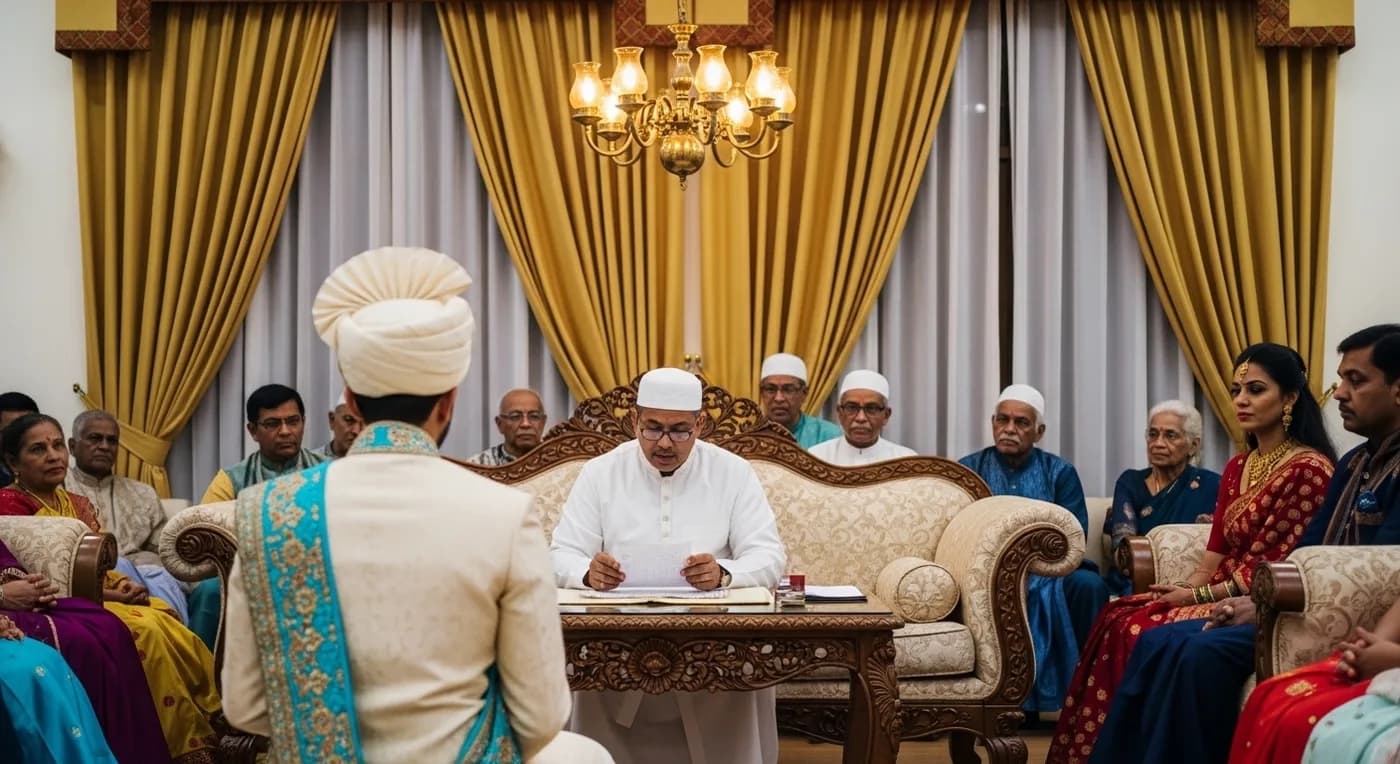
At a nikah I covered in Malappuram last December, the groom landed in Kozhikode (Calicut) at 6:30 AM on a Doha-CCJ flight, was in the mehndi touch-up room by 9, and stood under the nikah canopy at 11:30. His cousin from Riyadh didn't make it — a visa renewal held him up — so he joined the walima on WhatsApp video from a Saudia lounge. That's a Gulf Malayali wedding in 2026. This guide pairs with our NRI South Indian wedding complete guide for the pan-South-India baseline.
Why 38.6% of Kerala emigrants live in the Gulf — and how that shapes wedding planning
The Kerala Migration Survey 2023 (IIMAD) counts 2.2 million Kerala emigrants, with 38.6% in the UAE and 80.5% across the Gulf Cooperation Council countries. They sent back ₹2.16 lakh crore in remittances, and Kerala holds roughly 21% of all NRI deposits in Indian banks. Gulf News reported in 2014 that 90% of the Kerala diaspora is based in the Gulf — a figure that still broadly holds today.
These numbers shape how Kerala vendors price and schedule. A Kozhikode biryani caterer expects half his walima bookings from Gulf-return families. A Kochi jeweller schedules stock runs around Ramadan and Eid. The RBI remittance bulletin puts total FY25 inward remittances at $135.46 billion — Kerala's wedding economy still runs primarily on Dirham, Riyal, and Rial inflows.
What's the short-haul advantage Gulf NRIs have over USA and UK NRIs?
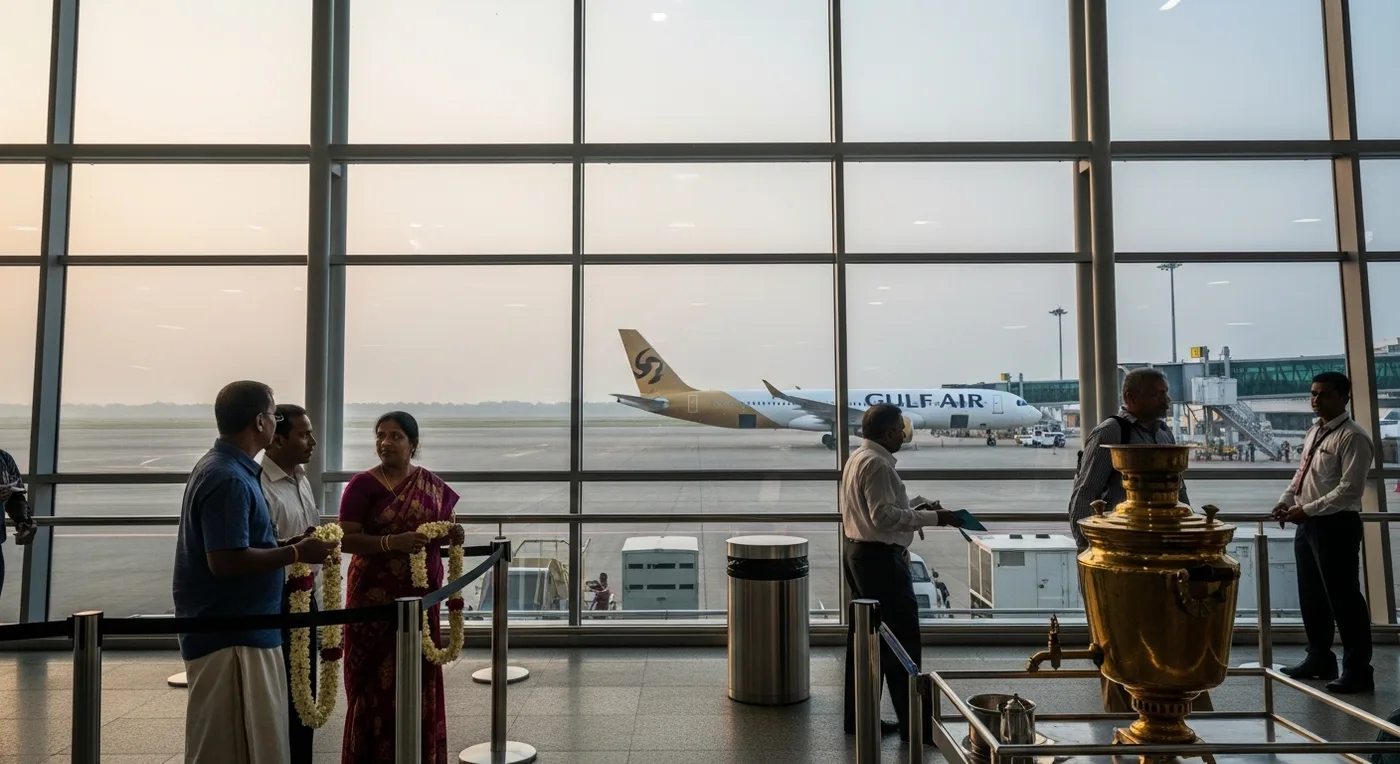
Dubai-to-Kozhikode direct flights run three to four hours. Doha to Kochi (Cochin), Muscat to Thiruvananthapuram (Trivandrum), and Riyadh to Calicut all sit in the three-to-five-hour band. The Indian eVisa processes in three to five business days for foreign in-laws.
A USA-based couple plans one scouting trip and one wedding trip. A Gulf-based couple typically plans three: engagement or nischayam, fittings and tastings, then the wedding. I've watched dozens of Gulf returnees juggle split celebrations where the bride flies to Kochi for blouse fittings on a Thursday and is back at her Dubai desk by Sunday morning.
Tip
Book your Gulf-Kerala flights in pairs across the planning window, not one at a time. Most Malayalis who plan three trips spend 20-30% less on airfare by booking the engagement flight and the wedding flight together in one PNR through Emirates, Etihad, flydubai, Air India Express, or IndiGo. It also gives you flexibility to flip dates if the muhurtham shifts by a week.
A family in Jeddah I've worked with built their 2025 calendar around the Saudia schedule to Kochi: March nischayam, August kasavu and gold run, November nikah. Total airfare per person came under ₹90,000 across three round trips — about what a single San Francisco-Kochi return costs in December.
Which Kerala districts are favored by Gulf returnees?
The Malabar belt absorbs most Gulf returnee weddings. Kozhikode (Calicut), Malappuram, Kannur, and Kasaragod are the four northern districts where UAE, Saudi, Qatar, and Oman migration has been strongest for five decades. Calicut International Airport (CCJ) is the default arrival point and handles direct traffic from Dubai, Sharjah, Abu Dhabi, Doha, Muscat, Riyadh, Jeddah, and Dammam.
Central Kerala is the second zone. Ernakulam (Kochi/Cochin), Thrissur, and Kottayam pull Gulf families with ancestral homes there, or who want a destination resort finish at Kumarakom or Alleppey. Cochin International Airport (COK) handles the widest spread of Gulf routes. Southern Kerala — Thiruvananthapuram (Trivandrum) and Kollam — sees fewer Gulf weddings.
District choice is almost always family-driven — if your grandfather's tharavad is in Tirurangadi, you marry in Malappuram. Air-conditioned auditoriums and biryani-first banquet halls dominate Malabar; backwater resorts cluster around Kumarakom, Alleppey, and Kochi. Our Malabar wedding planning guide has the full breakdown.
Looking for Venues in Kozhikode?
Tell us what you need and get quotes from verified venues
How do you plan multi-country celebrations: mehndi in Dubai, nikah in Kerala?
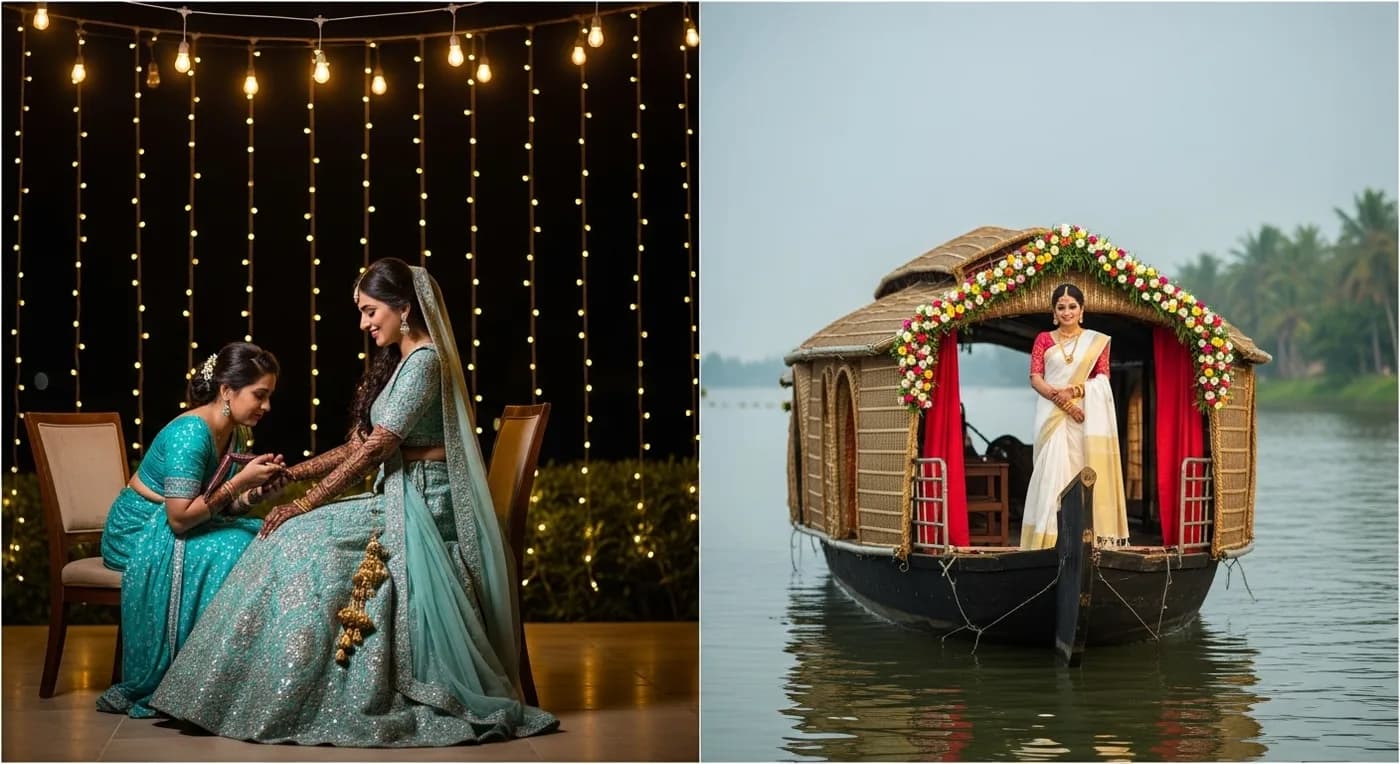
Split celebrations are the norm for UAE-based Malayali families. The cleanest format runs a mailanchi night in Dubai, Sharjah, or Abu Dhabi two to three weeks before the Kerala wedding, followed by the nikah, walima, muhurtham, or reception in Kozhikode, Malappuram, or Kochi. The bride's Gulf circle celebrates with her without needing visas or Kerala accommodation bookings.
A workable split: month eight, lock both venues in parallel. Month six, freeze the Dubai mehndi artist and Kozhikode Oppana troupe. Month three, coordinate henna stain timing between both artists. Month two, finalise UAE-to-Kerala travel. Month one, execute.
The Dubai leg typically runs AED 8,000-40,000 for a 60-150 guest mehndi, plus henna artist (AED 1,500-5,000), photographer (AED 2,000-8,000), and Malabar catering from UAE-based Kerala caterers (AED 80-180 per head). Budget it separately from your Kerala total.
Important
Do not assume your Kerala vendors will coordinate with your Dubai vendors. They won't. You need to be the bridge. I've seen three weddings in the past two years where the Dubai henna artist used a fresh-stain design, assuming the wedding was the next day, and the Kerala bride showed up at her nikah with henna that had oxidised past the photogenic window. Brief both artists on the exact date gap and request the darker, slower-maturing cone if you're more than ten days out.
For the full Malabar nikah ritual sequence including Oppana, mailanchi, and walima, read our Malabar Muslim nikah guide. For the broader planning baseline, the Muslim wedding Kerala planning guide is the pillar.
What paperwork do UAE, Saudi, Qatar, and Oman NRIs need?
Gulf NRI paperwork has three layers: home-country exit, Indian entry, and Kerala registration. The common mistake is assuming the UAE documents you use day-to-day cover what Kerala registrars ask for.
Start with an Emirates ID or iqama valid through the wedding date. Any UAE-issued document you want Kerala to accept — a no-objection certificate, employer letter, or prior marriage annulment — must be attested first by the UAE Ministry of Foreign Affairs (MOFA), then by the Indian consulate in Abu Dhabi or Dubai. Saudi, Qatar, and Oman have parallel MOFA chains. The GAMCA medical is not required for weddings.
OCI card holders carry the OCI booklet and linked passport. Foreign in-laws need an eVisa. Kerala-origin NRIs with expired passports should consult NORKA.
Important
The 30-day Special Marriage Act trap: If you plan to register your marriage under the Special Marriage Act in Kerala — which many inter-community and some NRI couples do — both parties must file a notice in person at the marriage registrar's office exactly 30 days before the ceremony. There is no online filing, no acceleration for Gulf NRIs, and no workaround. For Gulf-based couples, this usually means either an extra flight to Kerala one month before the wedding, or filing at the very start of your on-ground window and choosing a muhurtham at least 30 days later. The PRS India NRI marriage bill tracker explains the legislative context. For the full walkthrough, see our NRI marriage registration in South India legal playbook.
OCI spouse eligibility kicks in only after two years of registered marriage for non-Indian-origin spouses, which is why some Gulf couples start the registration clock early. The MEA marriages to overseas Indians booklet is the official reference.
How do Kerala Muslim, Syrian Christian, and Hindu Gulf returnees plan differently?
Gulf returnees split three ways across Kerala's major communities, and the playbooks are genuinely distinct.
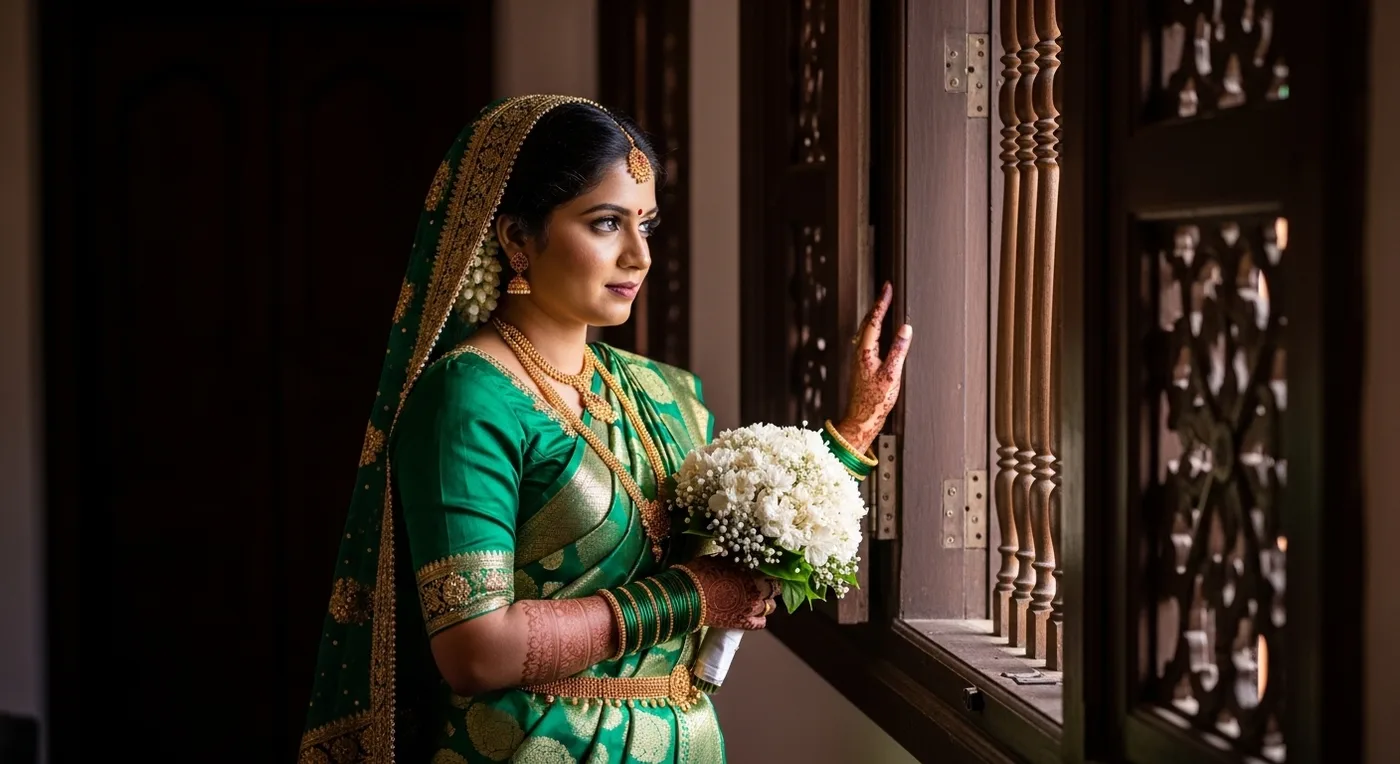
Kerala Muslim families — the biggest Gulf-return cohort — run the nikah-and-walima format: mailanchi, nikah with a qazi, mahr, ijab-qubool, then a walima feast of Thalassery biryani, pathiri, and meat dishes for 500-1,500 guests. Vendors cluster in Kozhikode, Malappuram, Kannur, and Kasaragod, and the calendar respects Ramadan and Eid windows strictly. See our Malabar Muslim nikah guide for the full ritual walkthrough.
Syrian Christian Malayali families — especially from Kottayam, Pala, Thiruvalla, and Chengannur — run a church-first ceremony followed by a sadhya reception. Orthodox, Jacobite, Syro-Malabar, and Marthoma denominations each have different booking windows and Pre-Cana requirements. Some Pre-Cana modules can be done through UAE parishes in Dubai or Doha, but the final session usually happens at the Kerala parish. Our Syrian Christian Malayali NRI wedding guide covers denomination logistics.
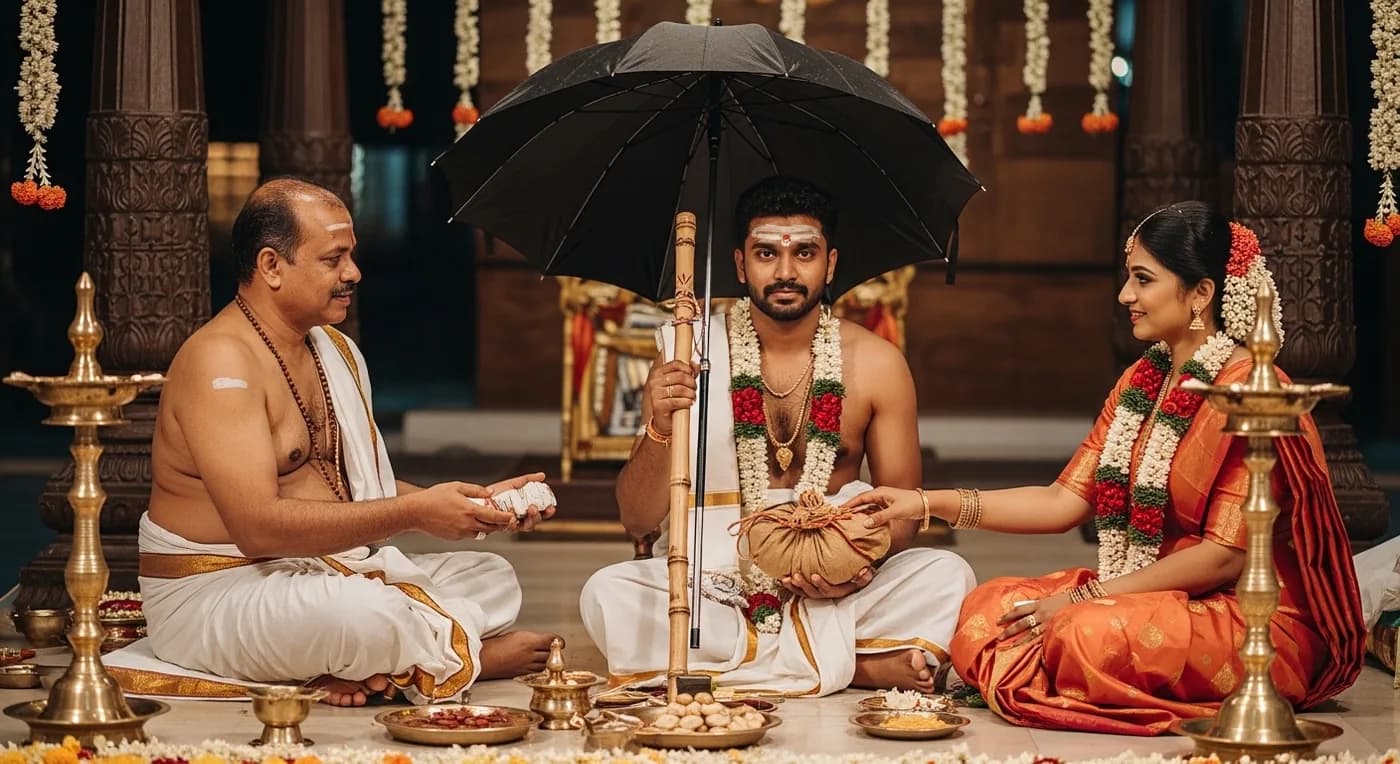
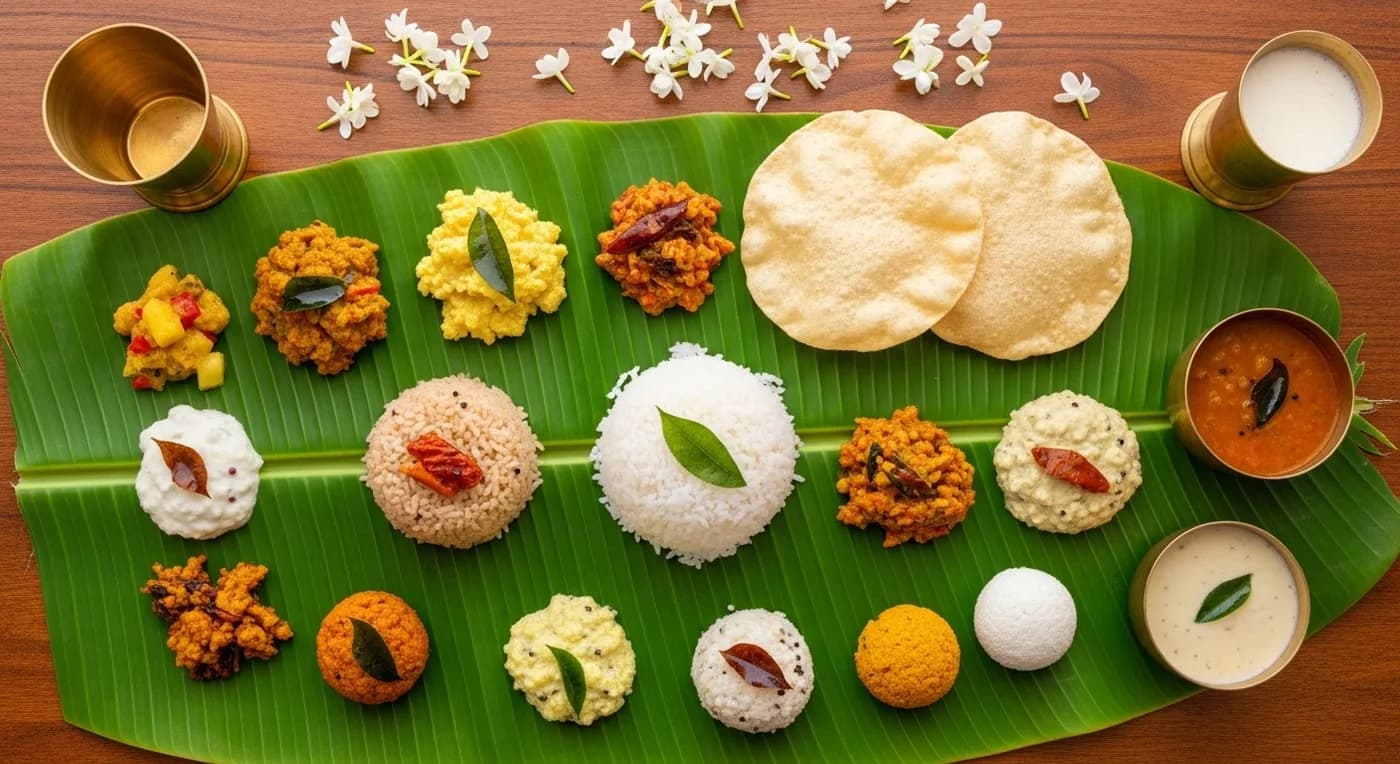
Kerala Hindu Gulf returnees run the muhurtham-and-reception format with a priest, nilavilakku-lit mandapam, and sadhya on banana leaves. Ernakulam, Thrissur, and Palakkad are the core districts. Vendor overlap with the Muslim and Christian tracks is limited, so a community-matched planner saves weeks of wrong-direction conversations.
Looking for Caterings in Kochi?
Tell us what you need and get quotes from verified caterings
How much does a Gulf Malayali Kerala wedding cost in AED, SAR, QAR, and OMR?
A Gulf Malayali Kerala wedding typically costs ₹12,00,000 – ₹35,00,000 for 400-900 guests across mailanchi, nikah or muhurtham, and walima or reception. That translates to roughly AED 52,000-152,000, SAR 53,000-155,000, QAR 52,000-152,000, or OMR 5,500-16,000 at 2026 indicative rates. The spread is wider than other Kerala NRI cohorts because Malabar walimas routinely cross 800 plates, and because gold — tied to the mahr — swings the total by several lakhs on a single day's rate move.
Typical breakdown for a 600-guest Malabar wedding. Venue and decor: ₹2,50,000 – ₹8,00,000. Catering: ₹4,00,000 – ₹12,00,000. Photo and video: ₹1,50,000 – ₹5,00,000. Bridal attire and makeup: ₹1,00,000 – ₹4,00,000. Gold and mahr: ₹3,00,000 – ₹15,00,000. Music and Oppana troupe: ₹40,000 – ₹1,50,000. Transport and hotel blocks: ₹80,000 – ₹3,00,000.
The Grand View Research India Wedding Services Market report values the Indian wedding market at $103.93 billion in 2024 with a 14.3% CAGR through 2030; the WedMeGood Annual Wedding Industry Report 2024-2025 tracks the same curve. Gulf families should also plan around the Liberalised Remittance Scheme $250,000 annual cap, and use an NRE account to avoid double taxation. See our NRI wedding budget in USD, GBP and AED for the full currency breakdown.
What are the common mistakes Gulf NRIs make?
Three mistakes come up in almost every Gulf Malayali wedding I cover, and they're all expensive.
First, assuming Kerala vendors match Dubai turnaround speeds. A Dubai florist quotes in two hours and delivers on a Friday night. A Malappuram florist takes three days to quote, wants to meet in person, and won't deliver outside his catchment. The expectation mismatch derails timelines — build in 2-3x more vendor response buffer than you would for a Dubai event.
Second, hiring Dubai event planners who have never executed in Malabar. Dubai companies are world-class at Jumeirah ballroom weddings, but running a Kerala leg from a WhatsApp group hits a wall — no biryani caterer rotations, no Malappuram Friday traffic knowledge, no Oppana troupe contacts, no Kozhikode goldsmith relationships. Hire a Kerala-based planner for the on-ground leg.
Third, over-budgeting for Dubai-style decor that doesn't translate. A ₹6-lakh floral arch that looks spectacular at a JW Marriott ballroom looks out of place in a Calicut auditorium built for biryani, Oppana, and community celebration. The best Gulf-return weddings lean into Kerala aesthetics — jasmine, nilavilakku, banana leaves, kasavu.
Tip
Ask your Kerala planner to send you three photos from recent Gulf-return weddings they've executed in your exact district (Kozhikode, Malappuram, Kannur, Ernakulam, or wherever you're marrying). Not Dubai-style decor, not Udaipur palace mood boards, not Pinterest scrapes — real past clients. If they can't produce those, they are not the right planner for your wedding.
Is a destination wedding at Kumarakom or Bekal worth it for Gulf-based couples?
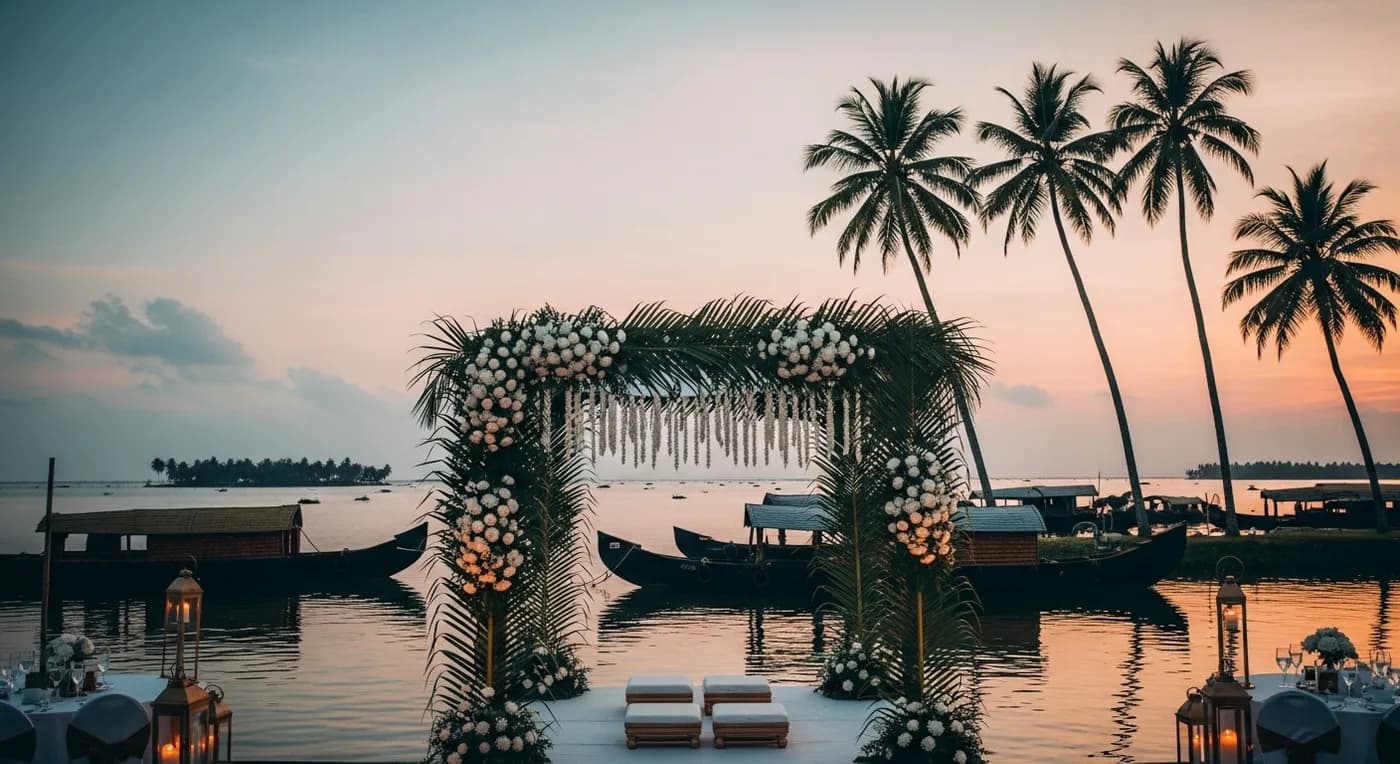
Destination resort weddings in Kumarakom, Bekal, or Alleppey are worth it in three situations: when the family's ancestral home is too small or remote; when you want hotel-style comfort for non-Malayali friends flying in from the UAE or West; or when you want the backwaters aesthetic no Malabar auditorium can match.
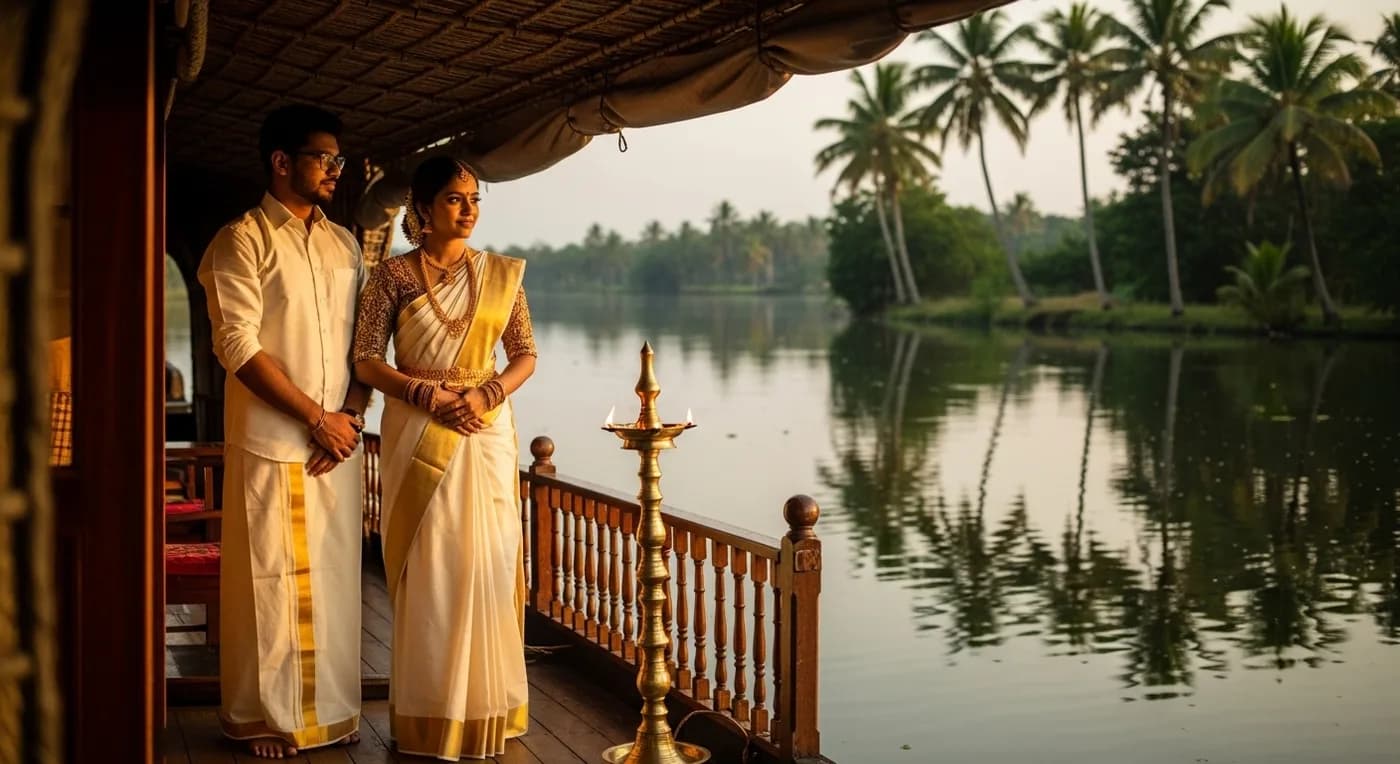
They layer roughly ₹8,00,000 – ₹15,00,000 on top of the core budget, putting the total 25-40% higher than the same wedding in a Kozhikode or Kochi hall. Kumarakom gives you Vembanad Lake frontage; Bekal Fort in Kasaragod gives a fort-and-beach finish; Alleppey houseboats work for weddings under 80 guests but rarely for a full Malabar walima.
If you're marrying 400+ Malabar community guests who mostly live within a two-hour drive of your home village, a pure destination wedding can feel disconnected from the community that raised you. Many Gulf-return families split the difference: a village walima for 600 guests, and a smaller resort reception at Kumarakom or Bekal for close family flying in from Dubai, Doha, or Riyadh. For per-head destination economics, see destination wedding cost Kerala; for mixed guest logistics, see guest logistics and accommodation.
FAQs
How far in advance should I book Kozhikode or Kochi venues for a peak-season Gulf wedding?
Book eight to ten months ahead for the November-to-February peak. Calicut auditoriums and Kochi banquet halls fill first because Gulf return traffic concentrates around Eid, Christmas, and school holidays. Kumarakom and Bekal resort Saturday muhurtham dates in December and January are typically gone twelve months out. Outside peak (March to June), six months is enough. Monsoon weddings in July-September carry the lowest rates but real weather risk for outdoor functions. Always get the cancellation policy in writing — Gulf work visa delays can force date shifts.
Do Gulf Malayalis pay Indian income tax on wedding gifts from family?
No. Wedding gifts received from relatives — parents, grandparents, siblings, spouse's relatives — are fully exempt from Indian income tax with no upper threshold, including cash, gold, jewellery, and property. Gifts from non-relatives are exempt up to ₹50,000 per year, but wedding gifts are exempt even above that when received around the marriage date. Keep paper records of large transfers, because banks in both countries may flag high-value wedding movements for KYC. If you're moving salary from a UAE or Saudi account to India, the Liberalised Remittance Scheme $250,000 annual cap applies.
What's the best way to carry wedding gold from UAE to Kerala?
A passenger returning after at least six months abroad can carry gold into India duty-free up to 20 grams (₹50,000 limit) for men and 40 grams (₹100,000 limit) for women as ornaments. Beyond those limits, customs duty applies — typically 12.5% basic plus surcharges — and the gold must be declared at Calicut or Cochin airport. Most Gulf Malayali families split wedding gold between UAE purchases (Dubai Gold Souk rates) and Kerala purchases (traditional designs, no customs). Carry original UAE invoices and declare anything above the free allowance. Undeclared seizure penalties are not worth risking on your wedding flight.
The takeaway
A Kerala wedding planned from the UAE, Saudi Arabia, Qatar, or Oman is a fundamentally different exercise from one planned from Boston or London. Use the short-haul advantage, plan three trips instead of one, split your mailanchi across Dubai and Kozhikode if it fits your family, and hire locally in Kerala for the on-ground leg.
Start at eight to ten months out. Lock CCJ or COK flights in pairs. Respect the 30-day Special Marriage Act window. Budget ₹12,00,000 – ₹35,00,000. A wedding at home, in the district your family comes from, surrounded by 600 people who've watched you grow up, is what the Gulf years have always been saving for.
For the pan-NRI baseline, see NRI South Indian wedding complete guide. For paperwork, the NRI marriage registration in South India playbook is the most important read. For currency breakdowns, see NRI wedding budget in USD, GBP and AED.
Looking for Wedding Planners in Kozhikode?
Tell us what you need and get quotes from verified wedding planners
Topics
plan kerala wedding from uaenri wedding dubai keralagulf malayali weddingkerala wedding from saudi qatar omanmalabar muslim nri weddingkozhikode nri weddinggulf returnee kerala weddingExplore more
Frequently Asked Questions
1How long does it take to plan a Kerala wedding from the UAE?
2Can I have my mehndi in Dubai and wedding in Kerala?
3What documents do UAE NRIs need for a Kerala marriage registration?
4How much does a Malabar Muslim wedding cost for a Gulf family?
5Is Kozhikode or Kochi better for a Gulf-return wedding?
6Can a Dubai-based event planner handle a Kerala wedding?
Continue reading
Related Articles
NRI South Indian Wedding Guide: Kerala, Tamil Nadu, Karnataka
NRI South Indian Wedding Budget: ₹15–40L in USD, GBP, AED
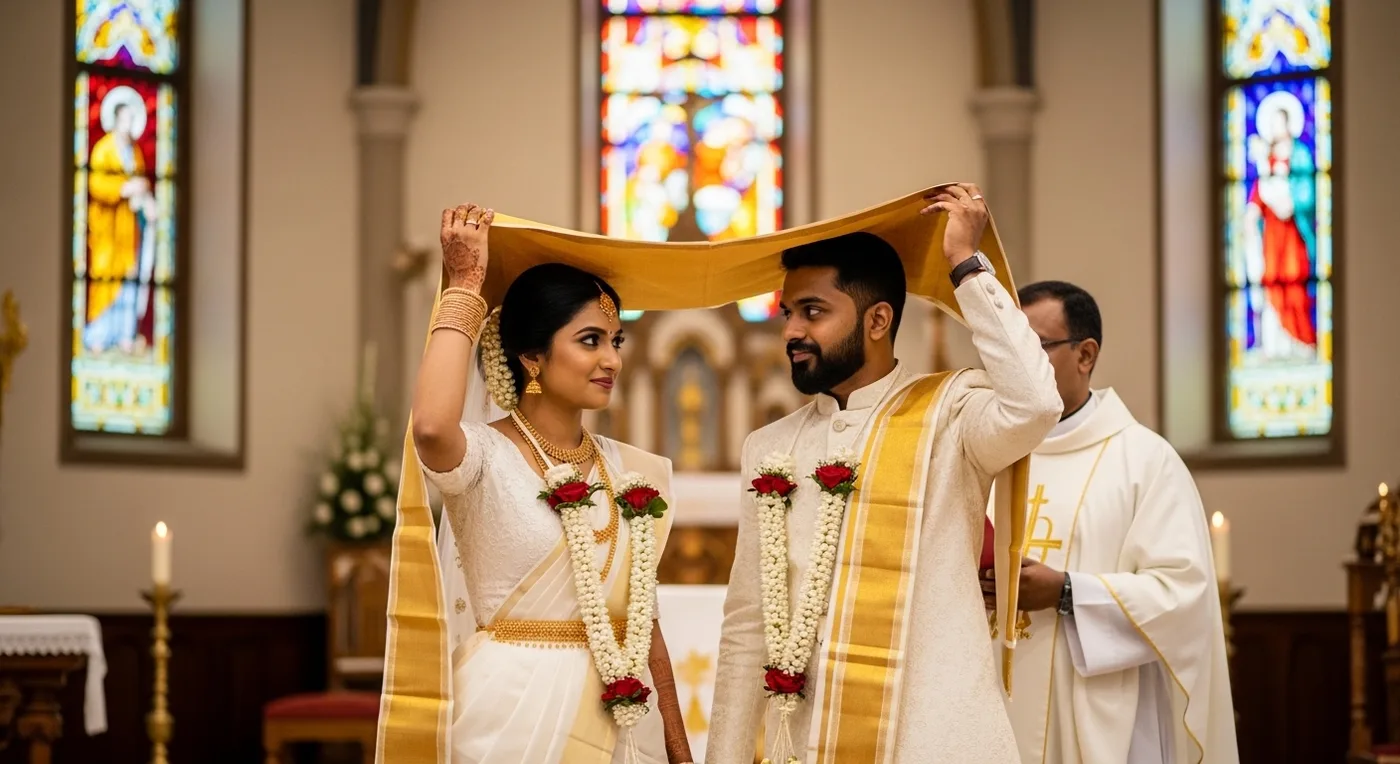
Syrian Christian Malayali NRI Wedding: Kerala Church Guide
14-Day NRI Wedding Trip to Kerala: Hour-by-Hour Playbook
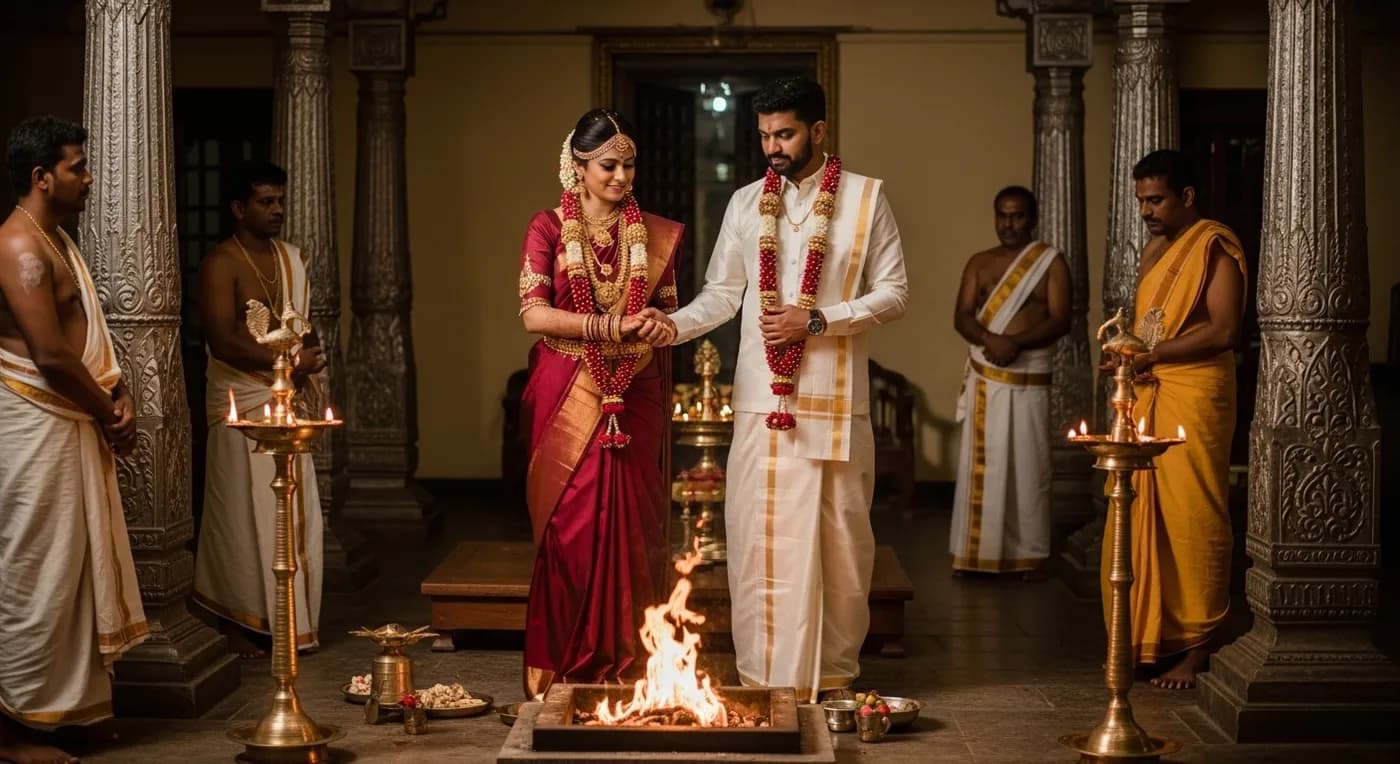
Tamil Brahmin NRI Wedding: Rituals, Translations & Logistics

Plan a Kerala Wedding from the USA: NRI Playbook (₹15–40L)
Still planning?
Get quotes from India's best vendors
Tell us what you're planning and we'll match you with verified photographers, venues, decorators, and more.
Get free quotes