
South Indian Temple Weddings: Complete Planning Guide for 2026
Plan a south Indian temple wedding across 12+ venues in Kerala, Tamil Nadu, Karnataka & AP — costs from ₹15,000, booking steps, rituals.

Cultural Heritage Writer
Sujata Iyer is a cultural heritage writer specializing in the rich tapestry of South Indian wedding traditions.
On this page
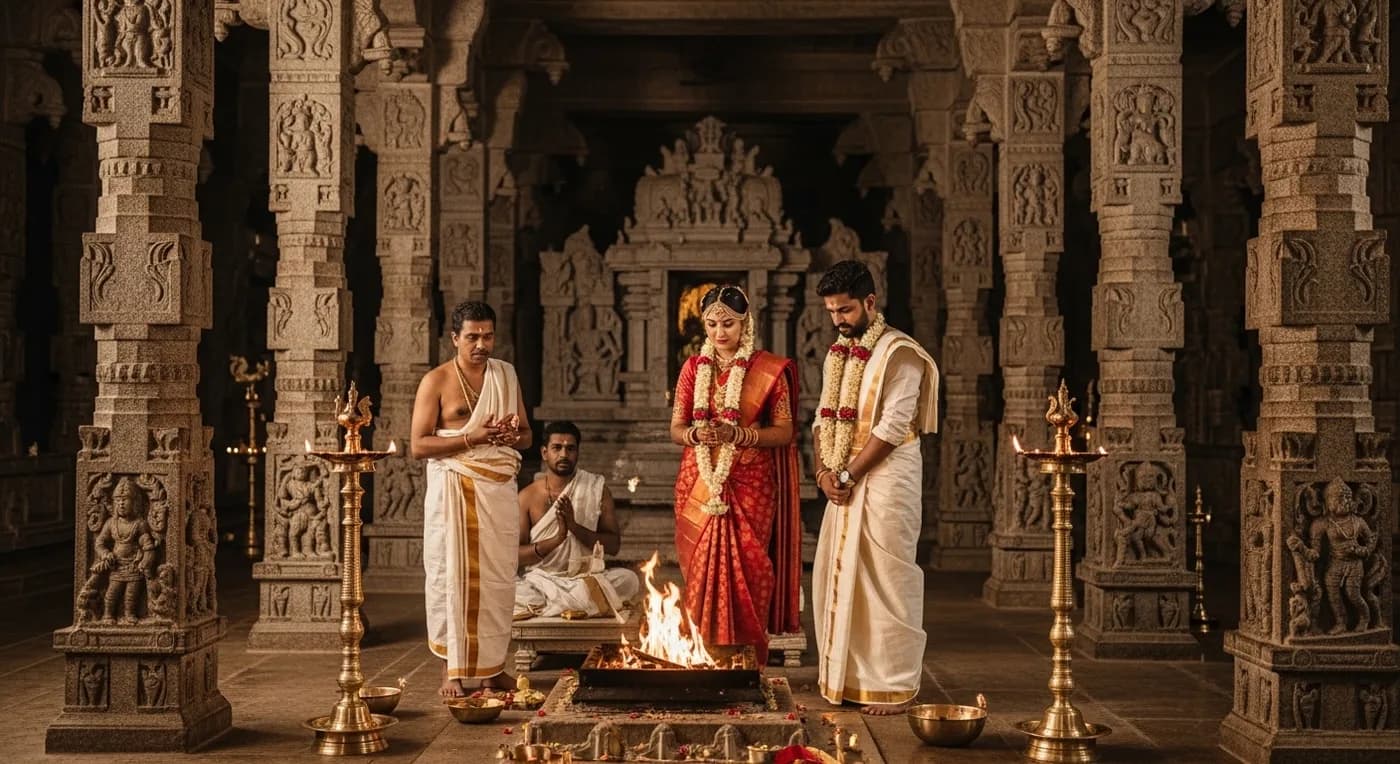
South Indian temple weddings start from ₹15,000 for a simple ceremony and range up to ₹2,00,000 for elaborate celebrations at premium temples. Over 12 historic temples across Kerala, Tamil Nadu, Karnataka, and Andhra Pradesh offer couples a sacred alternative to conventional hotel weddings — at a fraction of the cost, with the divine as witness.
Quick Answer
Quick answer: South Indian temple weddings start from ₹15,000 for a simple ceremony and range up to ₹2,00,000 for elaborate celebrations at premium temples. Over 12 historic temples across Kerala, Tamil Nadu, Karnataka, and Andhra Pradesh offer couples a sacred alternative to conventional hotel weddings — at a fraction of the cost, with the divine as witness.
Note
Pricing methodology: Cost ranges in this guide are based on vendor pricing data from the itsmy.wedding marketplace and published industry reports, collected in Q4 2025 – Q1 2026.
Temple weddings across south India have seen a remarkable surge in interest. According to StayVista's 2026 wedding trends report, searches for temple wedding destinations have increased by 340% in the current season. The shift is driven by couples seeking authenticity over extravagance — a ceremony where the fire burns in the same mandapam where it has burned for centuries, where the deity presides not as a photograph but as the actual murthi in the sanctum.
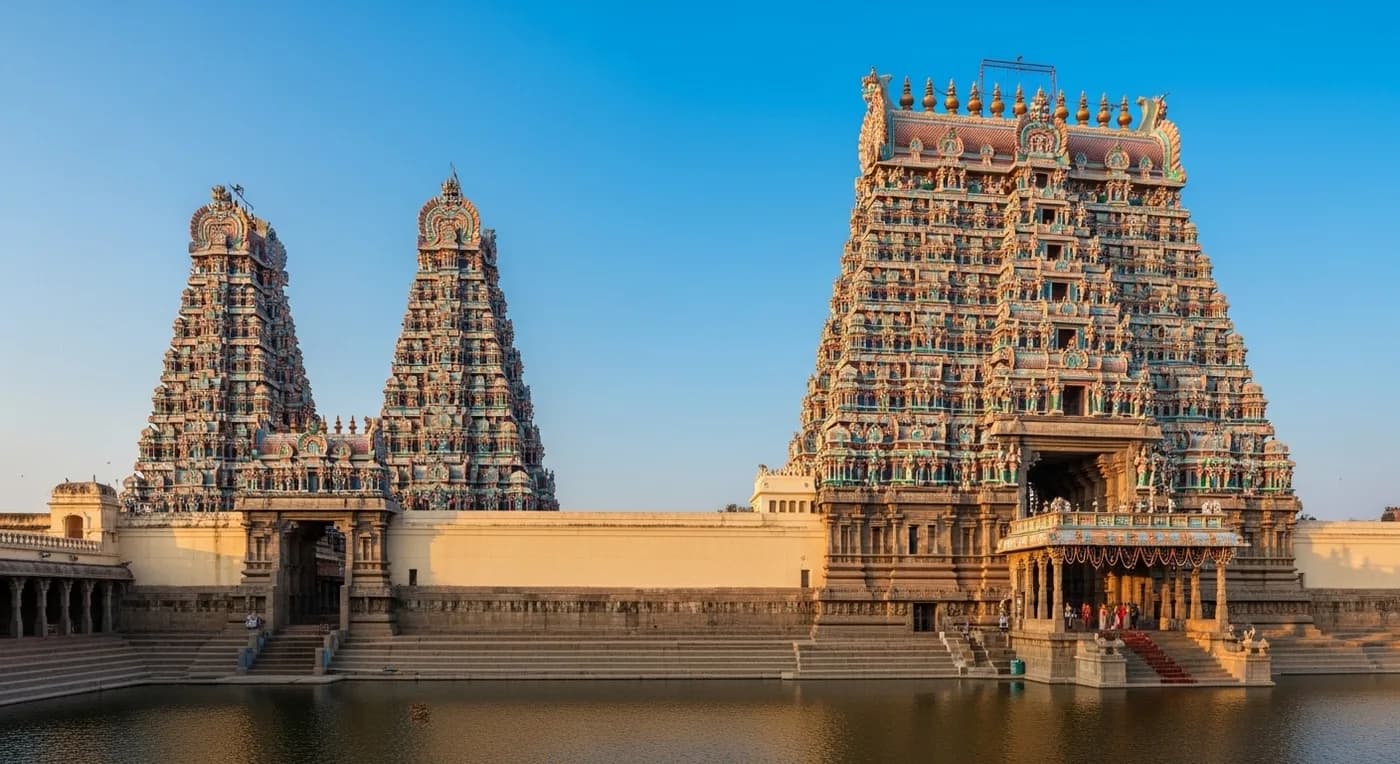
Having covered temple weddings across four south Indian states over the past decade, I can say this: no two temple weddings feel alike. A Guruvayur wedding moves with the disciplined cadence of a temple that conducts thousands of ceremonies each year. A wedding at Madurai's Meenakshi Temple unfolds beneath gopurams that Nayak kings built to pierce the sky. A Dharmasthala ceremony in Karnataka carries the quiet generosity of a tradition that feeds every guest for free. The architecture, the rituals, the very air inside these spaces shapes the wedding into something that a banquet hall simply cannot replicate.
I accompanied a Thrissur family to Srirangam last year — the grandmother had married there in 1974 and wanted the same for her granddaughter. Watching three generations walk through the same seven prakarams brought home why temple weddings endure. It is not nostalgia. It is continuity.
This guide covers the major temples, how they differ, what they cost, and the practical steps to plan a temple wedding in south India.
Why Are South Indian Temple Weddings Gaining Popularity?
Three forces are converging. First, cost — the average Indian wedding costs ₹15-25 lakh according to PNB MetLife's 2025 analysis, while a complete temple wedding including reception can stay under ₹2 lakh. Second, aesthetics — Dravidian temple architecture photographs better than any decorator's backdrop. The carved pillars, oil lamps, and stone mandapams create visuals that couples increasingly prefer over LED-lit stages. Third, meaning — according to a WeddingWire India 2025 trends survey, 43% of couples now prioritise "meaningful ceremonies" over "grand celebrations," and temple weddings are the purest expression of that shift.
Note
The practical benefits are significant too. Temple weddings enforce simplicity — most temples ban DJs, elaborate decorations, and catering inside the premises. For families who want to keep things meaningful without the pressure of competitive wedding spending, the temple's own rules become a welcome boundary.
Which Are the Best Temples for Weddings in South India?
Across four states, over a dozen temples actively conduct wedding ceremonies. Each has its own character, denominational tradition, and practical logistics. Here is a comparison of the major venues:
| Temple | State | Deity | Cost Range | Capacity | Booking Lead Time | Photography |
|---|---|---|---|---|---|---|
| Guruvayur | Kerala | Lord Krishna | ₹25,000 – ₹50,000 | 100-200 | 30 days via online portal | Temple photographer only |
| Meenakshi Temple | Tamil Nadu | Goddess Meenakshi | ₹25,000 – ₹50,000 | 100-150 | 3-4 weeks | Restricted in sanctum |
| Kamakshi Amman | Tamil Nadu | Goddess Kamakshi | ₹5,000 – ₹25,000 | 100-300 | 2-3 months | Allowed, no flash |
| Varadharaja Perumal | Tamil Nadu | Lord Vishnu | ₹10,000 – ₹30,000 | 200-500 | 2-3 months | Allowed in mandapam |
| Brihadeeswarar | Tamil Nadu | Lord Shiva | ₹10,000 – ₹25,000 | 100-300 | 1-2 months | Heritage restrictions |
| Srirangam Ranganathaswamy | Tamil Nadu | Lord Vishnu | ₹10,000 – ₹30,000 | 100-200 | 2-3 months | Outer mandapam only |
| Dharmasthala Manjunath | Karnataka | Lord Manjunatha | ₹5,000 – ₹15,000 | 500+ (mass weddings) | 3-6 months | Allowed |
| Chamundeshwari | Karnataka | Goddess Chamundi | ₹5,000 – ₹20,000 | 100-200 | 1-2 months | Allowed |
| Sri Krishna, Udupi | Karnataka | Lord Krishna | ₹5,000 – ₹15,000 | 50-150 | 1-2 months | Allowed |
| Padmanabhaswamy | Kerala | Lord Vishnu | ₹15,000 – ₹40,000 | 50-100 | 2-3 months | Restricted |
| Tirupati Tirumala | Andhra Pradesh | Lord Venkateswara | ₹15,000 – ₹50,000 | 100-300 | 6-12 months | Limited |
| Mahabaleshwar, Gokarna | Karnataka | Lord Shiva | ₹5,000 – ₹15,000 | 30-80 | 1 month | Allowed |
Tip
For detailed guides on individual temples, see our Meenakshi Temple wedding guide, Karnataka temple weddings guide, and Srirangam temple wedding guide.
How Do Temple Wedding Rituals Differ Across South Indian States?
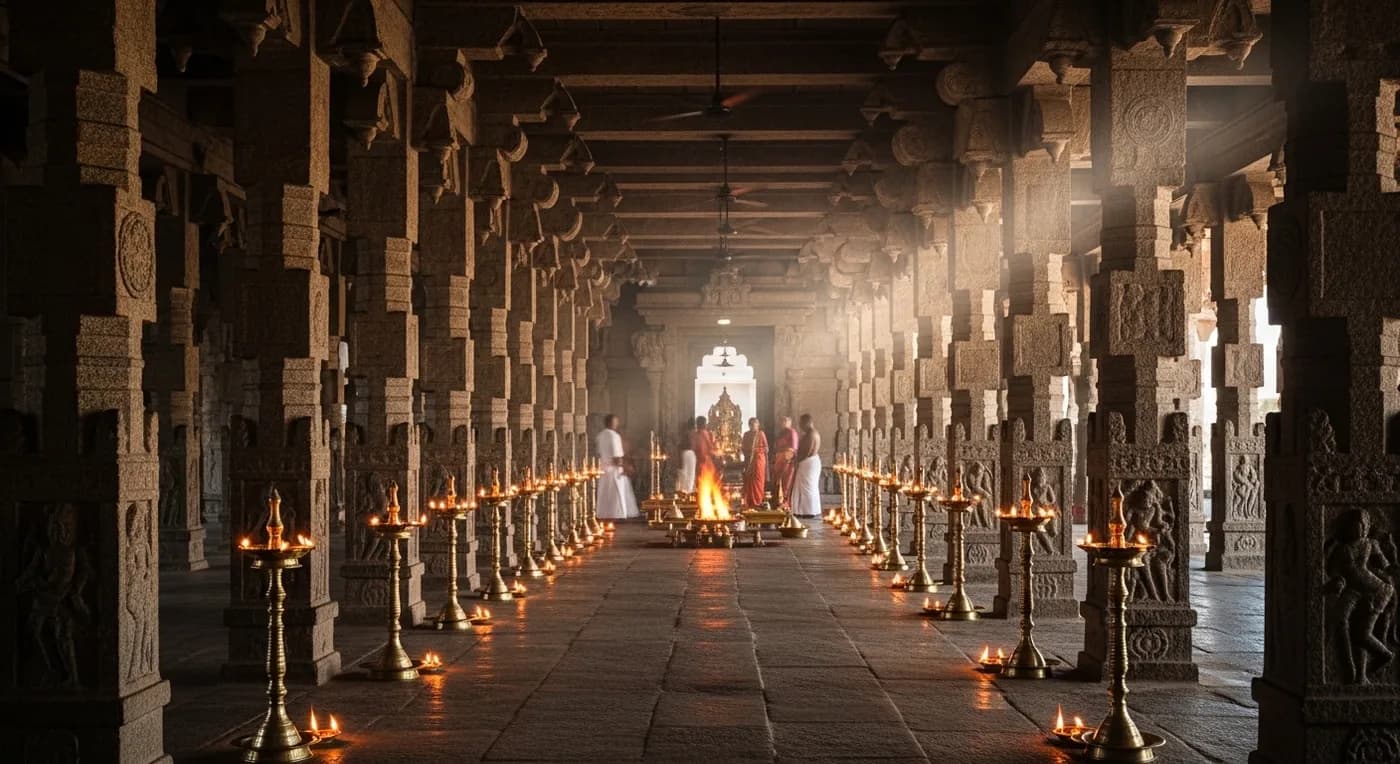
The core of every Hindu wedding is the same — the tying of the sacred thread (mangalsutra, thali, or minnu depending on region) at the auspicious muhurtham. But the surrounding rituals vary significantly by state and community.
Kerala
Kerala Hindu weddings are distinctive for their brevity. The central act is thalikettu — tying the minnu (a gold pendant on a thread) around the bride's neck. Many Kerala traditions, particularly Nair weddings, historically omitted the fire ritual (homam) entirely. Today, some families include it, but the ceremony remains shorter than Tamil or Kannada weddings — often under 90 minutes. At Guruvayur Temple, ceremonies follow a strict schedule controlled by the Devaswom Board, with time slots allocated to the minute.
Tamil Nadu
Tamil weddings follow the full Vedic sequence and are the most elaborate of the four states. The key moments include kasi yatrai (the groom pretends to leave for Kashi, is persuaded back by the bride's family), maalai matruthal (exchange of garlands), kanyadaanam (giving away of the bride), muhurtham (tying the mangalsutra at the exact auspicious moment — the most sacred instant of the ceremony), and saptapadi (seven steps around the sacred fire). Nadaswaram and thavil musicians are essential — their melodies have accompanied Tamil weddings for centuries. Total ceremony duration: 2-4 hours.
Karnataka
Karnataka wedding rituals vary significantly by region. Coastal Tulu weddings include unique elements like dhare (a ritual water pouring) and kanyadaanam with specific Tulu mantras. Mysore-region Iyengar and Iyer weddings follow standard Vedic format similar to Tamil Nadu. North Karnataka Lingayat weddings have their own distinct sequence centred on the ishtalinga. At Dharmasthala, the temple's Jain administration conducts Hindu weddings with an emphasis on communal harmony — all guests are served free meals regardless of background.
Andhra Pradesh
Telugu weddings share much of the Vedic structure with Tamil ceremonies but add distinctive elements like jeelakarra bellam (cumin and jaggery paste placed on the couple's heads), talambralu (showering each other with rice), and madhuparkam (a honey-based offering to the groom). At Tirupati, the ceremony is compressed to accommodate the temple's massive footfall — the Tirumala Tirupati Devasthanams conducts over 10,000 weddings annually according to its administrative reports.
Important
What Does a South Indian Temple Wedding Cost?
Temple weddings are dramatically cheaper than conventional Indian weddings. Here is how costs break down:
| Cost Component | Kerala (Guruvayur) | Tamil Nadu (Meenakshi) | Karnataka (Dharmasthala) |
|---|---|---|---|
| Temple/booking fee | ₹25,000 – ₹50,000 | ₹15,000 – ₹20,000 | ₹5,000 – ₹10,000 |
| Priest dakshina | ₹5,000 – ₹10,000 | ₹3,000 – ₹5,000 | ₹2,000 – ₹5,000 |
| Nadaswaram/music | ₹5,000 – ₹15,000 | ₹3,000 – ₹4,000 | ₹3,000 – ₹8,000 |
| Photography | ₹15,000 – ₹30,000 | ₹10,000 – ₹25,000 | ₹10,000 – ₹25,000 |
| Pooja materials | ₹3,000 – ₹8,000 | ₹2,000 – ₹5,000 | ₹2,000 – ₹5,000 |
| Hall/reception (nearby) | ₹50,000 – ₹2,00,000 | ₹30,000 – ₹1,50,000 | ₹20,000 – ₹1,00,000 |
| Total range | ₹1,00,000 – ₹3,00,000 | ₹60,000 – ₹2,00,000 | ₹40,000 – ₹1,50,000 |
For a detailed cost breakdown, see our temple wedding cost comparison across south Indian states and the Kerala temple wedding cost guide.
Looking for Wedding Planners in Chennai?
Tell us what you need and get quotes from verified wedding planners
How Do You Book a Temple Wedding in South India?
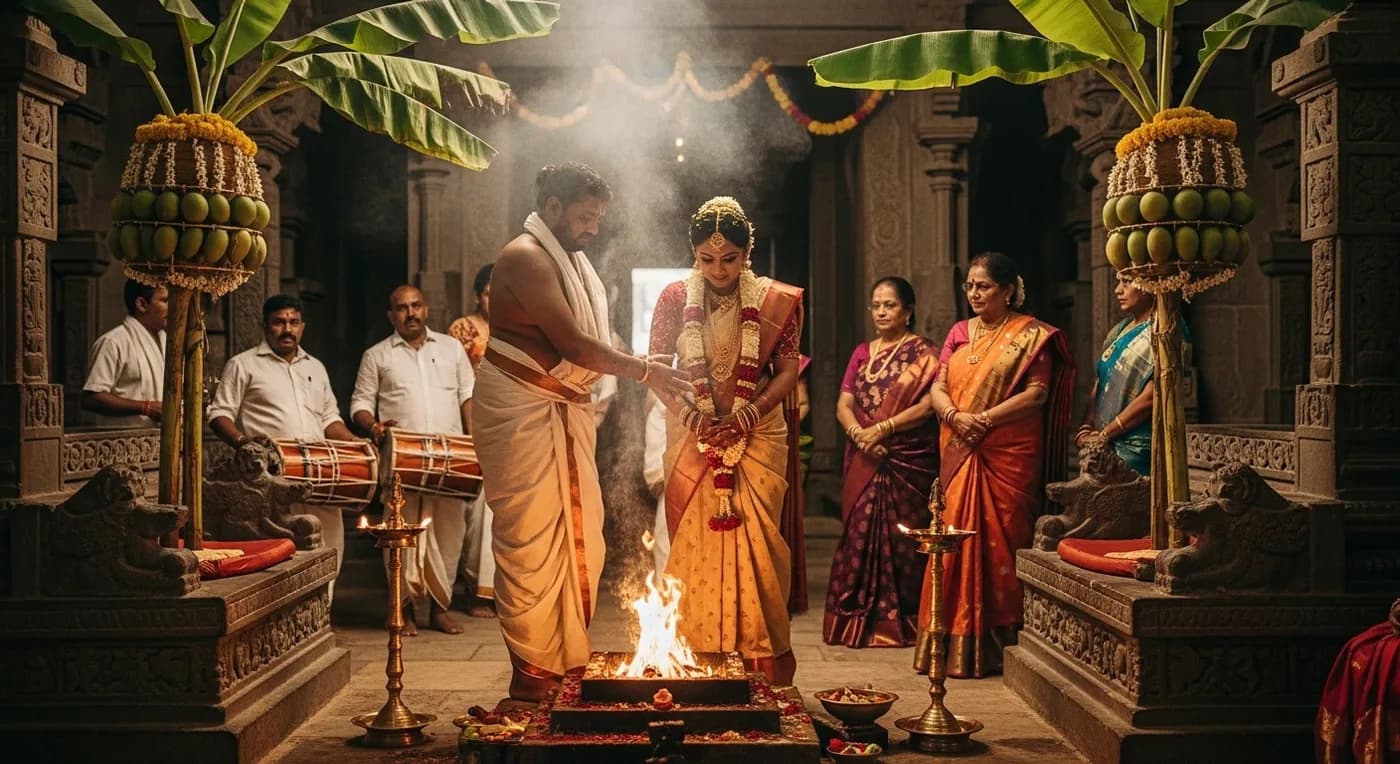
The booking process varies by temple, but follows a general pattern:
Step 1: Choose your temple and confirm availability. Contact the temple office (phone or in person — most temples do not have online booking for weddings, with Guruvayur being a notable exception). Confirm that your preferred muhurtham date and time slot are available.
Step 2: Collect and submit the application. Most temples provide a marriage application form. You will need Aadhaar cards of the couple and parents, unmarried certificates from the Tahsildar or Village Administrative Officer, community/caste certificates, and age proof. Some temples require additional documents — Meenakshi Temple asks for notarized parental consent, while Guruvayur requires a Hindu faith certificate.
Step 3: Pay fees and confirm. Temple fees are typically paid at the temple office counter. You will receive a confirmation receipt with your date, time slot, and mandapam allocation.
Step 4: Coordinate logistics. Arrange the priest (some temples assign their own), musicians (nadaswaram/thavil), photography permissions, and pooja materials. The temple office can usually provide a list of authorised vendors.
Step 5: Arrive early on the day. Most temple weddings happen before noon. Arrive at least 1-2 hours before the muhurtham to complete formalities, set up, and ensure all materials are in place.
Tip
What Should You Wear to a South Indian Temple Wedding?
Dress codes at south Indian temples are strict and non-negotiable. Here are the state-wise norms:
Kerala: Men wear the traditional mundu (white or cream, with a gold kasavu border for weddings). Shirts are removed inside most temple sanctums — men wear the mundu bare-chested or with an angavastram (upper cloth). Women wear the Kerala kasavu saree (cream with gold border) or any silk saree. Gold jewellery — particularly the traditional choker necklace, long chain, and jhumkas — is customary.
Tamil Nadu: Grooms typically wear a veshti (dhoti) in white or cream with a silk angavastram. Brides wear the Kanchipuram silk saree — this is non-negotiable in most Tamil families. The silk saree's colour, weight, and border pattern carry cultural significance. Guests should wear sarees or formal dhotis. Western formal wear is generally acceptable for guests in outer temple areas but not inside the mandapam.
Karnataka: Norms vary by region. Coastal Karnataka grooms may wear a panche (Tulu-style dhoti). Mysore-region weddings follow Tamil dress norms. The Ilkal saree or Mysore silk are popular choices for brides depending on the family's regional identity.
Across all states: Remove footwear before entering temple premises. Avoid black clothing (considered inauspicious). Leather items should be left outside. Modest coverage of shoulders and knees is expected of all guests.
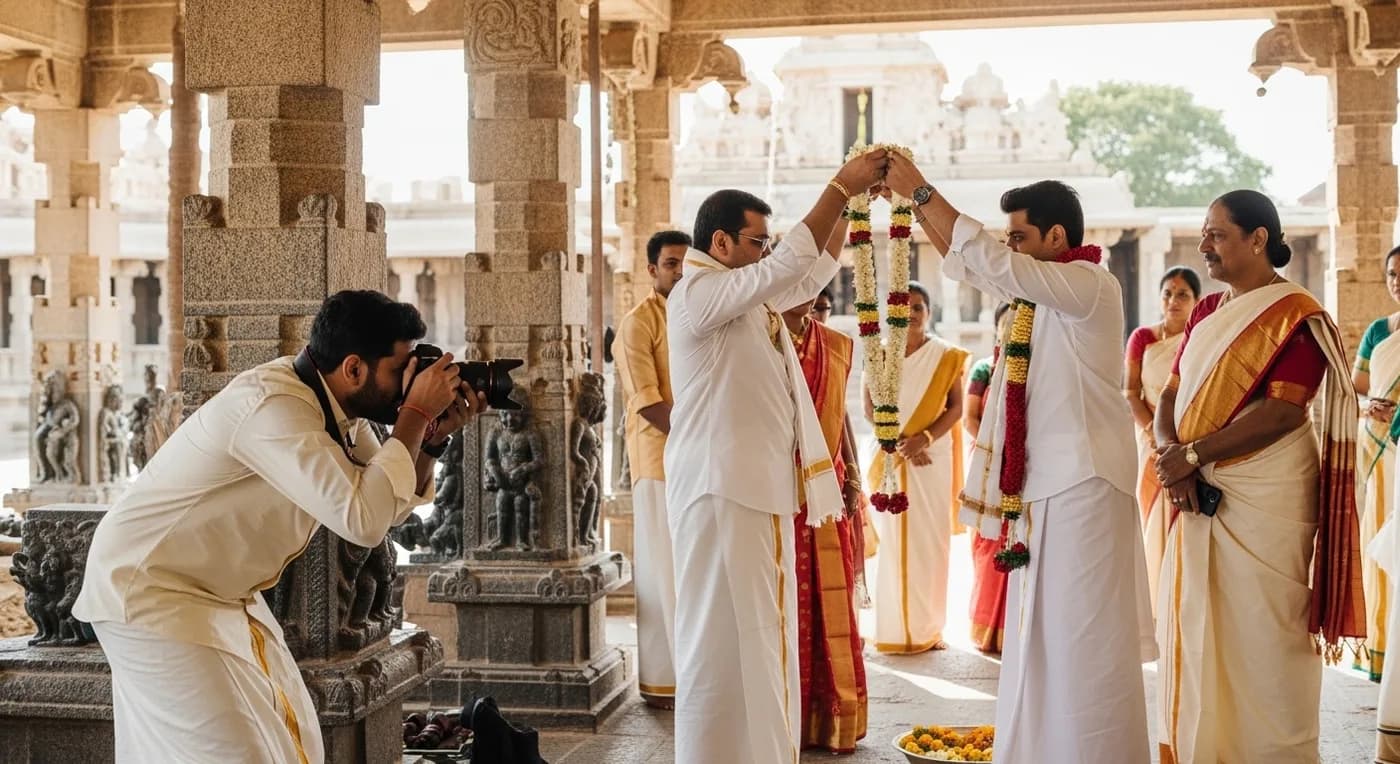
What Are the Photography Rules at South Indian Temples?
Photography is the single biggest variable across temples. Rules range from total restriction to open access:
- Most restrictive: Guruvayur Temple — only authorised temple photographers allowed, no personal cameras
- Moderately restrictive: Meenakshi Temple, Padmanabhaswamy, Tirupati — personal photographers allowed but no flash, tripods, or drones inside sanctum areas
- Relatively open: Most Karnataka temples, Kanchipuram temples — photography allowed in outer mandapams and during ceremonies, with basic courtesy rules
For a comprehensive temple-by-temple breakdown with practical tips for photographers, see our temple wedding photography guide.
Looking for Photographers in Madurai?
Tell us what you need and get quotes from verified photographers
How Do You Handle Logistics for an Out-of-State Temple Wedding?
Many couples choose a temple outside their home state — a Tamil family marrying at Guruvayur, a Kerala family choosing Tirupati, or an NRI couple selecting Meenakshi Temple. Here is what to plan:
Accommodation: Book guest accommodation 3-6 months ahead, especially during peak wedding season (November-February). Most temple towns have a mix of dharamshalas (temple guesthouses at ₹500 – ₹2,000 per night), budget hotels (₹1,500 – ₹3,000), and premium options (₹5,000 – ₹15,000). Temple towns like Guruvayur and Tirupati have dozens of options within walking distance.
Travel: Identify the nearest airport and railway station. Guruvayur is 90 km from Kochi airport. Meenakshi Temple is 12 km from Madurai airport. Srirangam is 8 km from Trichy airport. Arrange group transport if you have 50+ guests travelling from another city.
Reception venue: Since most temples do not allow catering or elaborate setups inside premises, reception is always a separate event. Book a nearby marriage hall, hotel banquet, or community hall. Many temple towns have halls specifically catering to temple wedding receptions — they understand the flow and can time meals to follow the ceremony.
Local coordinator: For out-of-state weddings, hiring a local wedding coordinator familiar with the specific temple's procedures saves enormous stress. They handle vendor coordination, document submission, and day-of logistics. Budget ₹15,000 – ₹50,000 for a coordinator.
Food considerations: Each state has distinct wedding cuisine. Kerala serves the traditional sadya on banana leaves. Tamil Nadu serves a multi-course vegetarian meal. Karnataka's cuisine varies by region — coastal Mangalore and Mysore-style are quite different. If your guests are from another state, brief them on what to expect or arrange a menu that bridges both traditions. I once helped a Bangalore family plan a Guruvayur wedding where half the guests had never eaten a Kerala sadya — we printed a small card explaining the banana leaf layout, and it became one of the most talked-about parts of the wedding.
Note
Choosing the Right Temple: A Decision Framework
If the comparison table above feels overwhelming, use this simplified framework:
-
Start with denomination. Vaishnavite families: Srirangam, Tirupati, or Varadharaja Perumal. Shaivite families: Brihadeeswarar, Ekambareswarar, or Gokarna. All denominations: Guruvayur, Kamakshi Amman, or Dharmasthala.
-
Consider guest count. Under 100 guests: Gokarna, Kailasanathar, or Udupi. 100-300: Most temples work. Over 300: Dharmasthala (mass wedding infrastructure) or Varadharaja Perumal (96-pillar mandapam holds 500).
-
Factor in family origins. A temple in your family's home district carries generations of emotional resonance. Many families return to the same temple where their parents and grandparents married — this continuity is itself a form of worship.
-
Budget honestly. If you need the ceremony under ₹50,000 all-inclusive, Karnataka temples offer the best value. If ₹1-2 lakh is comfortable, you have the full range of options.
-
Check accessibility. Tirupati and Guruvayur involve significant travel logistics. Kanchipuram (72 km from Chennai) and Srirangam (8 km from Trichy airport) are more accessible for guests flying in.
Common Questions About South Indian Temple Weddings
Is a temple wedding legally valid in India?
Yes. A Hindu temple wedding is legally valid under the Hindu Marriage Act, 1955. The religious ceremony serves as solemnization. You must register the marriage at the local sub-registrar's office within 30 days using the temple's marriage certificate as proof.
Can we have a reception at the temple itself?
Most temples do not allow receptions, catering, or elaborate setups inside premises. Receptions are held separately at nearby marriage halls, hotels, or community centres. The temple ceremony is focused purely on the sacred rituals.
What happens if it rains on the wedding day?
South Indian temples have covered mandapams and pillared halls — the ceremony happens indoors within the temple structure. Rain does not affect the actual ceremony. However, outdoor photography and guest movement may be impacted. This is another reason to prefer the November-February window when monsoon is over.
Do temples provide priests, or do we bring our own?
Most temples assign their own priests for wedding ceremonies — the fee is included in the temple's marriage package. If you want a specific family priest to participate, discuss this with the temple office in advance. Some temples allow visiting priests to co-officiate.
Can we invite non-Hindu guests?
Non-Hindu guests are welcome at the reception and in the outer temple areas. Entry to the inner sanctum during the ceremony may be restricted to Hindus at some temples (Guruvayur strictly enforces this). Inform your non-Hindu guests in advance so they know what to expect and are not caught off guard.
What paperwork do we need for a temple marriage?
Every temple requires Aadhaar cards for the couple and parents, plus an unmarried certificate from the local Tahsildar or Village Administrative Officer. Beyond that, requirements diverge — Guruvayur needs a Hindu faith certificate, Meenakshi Temple demands notarized parental consent, and inter-caste couples at some temples may need a Police NOC. Always call the temple office 3-4 months ahead to confirm the exact document list.
When should we start planning a temple wedding?
For popular temples like Guruvayur or Tirupati, begin 6-12 months ahead — peak-season muhurtham slots fill fast. Mid-tier temples like Kanchipuram or Srirangam need 2-3 months of lead time. Karnataka temples are the most flexible, with some accepting bookings just one month out. Start with the muhurtham date selection, then work backwards from there.
Planning a temple wedding? Browse wedding vendors in your city — from photographers who specialise in temple ceremonies to makeup artists who understand traditional bridal looks.
Topics
south indian temple weddingtemple wedding planning guidebest temples for wedding south indiatemple wedding costtemple wedding ritualshindu temple weddingsacred wedding venues indiaExplore more
Frequently Asked Questions
1Which is the best temple for a wedding in south India?
2How much does a south Indian temple wedding cost?
3Can anyone get married at a south Indian temple?
4What documents are needed for a temple wedding in south India?
5What is the best time of year for a temple wedding in south India?
6Are photographers allowed inside south Indian temples during weddings?
7How do temple wedding rituals differ between Kerala, Tamil Nadu, and Karnataka?
Continue reading
Related Articles
Meenakshi Temple Wedding in Madurai: Cost, Booking & Complete Guide
Karnataka Temple Weddings: 5 Sacred Venues from Dharmasthala to Chamundi Hills
South Indian Temple Wedding Costs Compared: Kerala vs Tamil Nadu vs Karnataka
Best Season for South India Destination Weddings: Month-by-Month Western Ghats Guide
Destination Wedding Cost in South India 2026: 5-Tier Budget Guide
Destination Wedding in South India: Complete 2026 Planning Guide
Still planning?
Get quotes from India's best vendors
Tell us what you're planning and we'll match you with verified photographers, venues, decorators, and more.
Get free quotes