
Kerala Wedding Traditions Explained: Rituals, Meaning & Modern Adaptations
Kerala wedding traditions across Hindu, Christian, and Muslim communities explained. Covers thalikettu, nikah, church rites, and sadya with 20+ dishes.

Cultural Heritage Writer
Sujata Iyer is a cultural heritage writer specializing in the rich tapestry of South Indian wedding traditions.
On this page
Kerala wedding traditions centre on three major communities: Hindu weddings feature the thalikettu (tying of the sacred thread) at an astrologically chosen muhurtham; Christian weddings follow the church ceremony with a reception sadya; Muslim nikah ceremonies emphasise the mahr and communal feast. Across all communities, the nilavilakku (brass oil lamp), floral mandapam, and banana-leaf sadya are shared cultural hallmarks.
Quick Answer
Quick answer: Kerala weddings across Hindu, Christian, and Muslim communities share three cultural markers — the nilavilakku (brass oil lamp), jasmine garlands, and the banana-leaf sadya feast. Hindu weddings centre on the thalikettu ritual at the astrologically fixed muhurtham; Christian weddings on the church ceremony and Minnukettu or Manthrakodi; Muslim nikah on the Qazi-officiated contract and Walima feast.
Kerala's wedding culture is one of the most richly textured in India, shaped by a heritage that Kerala Tourism's cultural heritage portal describes as a unique blend of Dravidian, colonial, and maritime influences. Across Hindu, Christian, and Muslim communities, weddings in Kerala share a deep reverence for family, tradition, and celebration — while each community brings its own distinct rituals, attire, and customs. Whether you are planning your own Kerala wedding or attending one as a guest, understanding these traditions adds meaning to every moment.
This guide explains the core traditions across all three major communities in Kerala, what to expect during each ceremony, and how modern couples are thoughtfully adapting these customs for contemporary celebrations.
Shared Cultural Motifs Across Communities
Before diving into community-specific rituals, it is worth noting the cultural threads that run through all Kerala weddings:
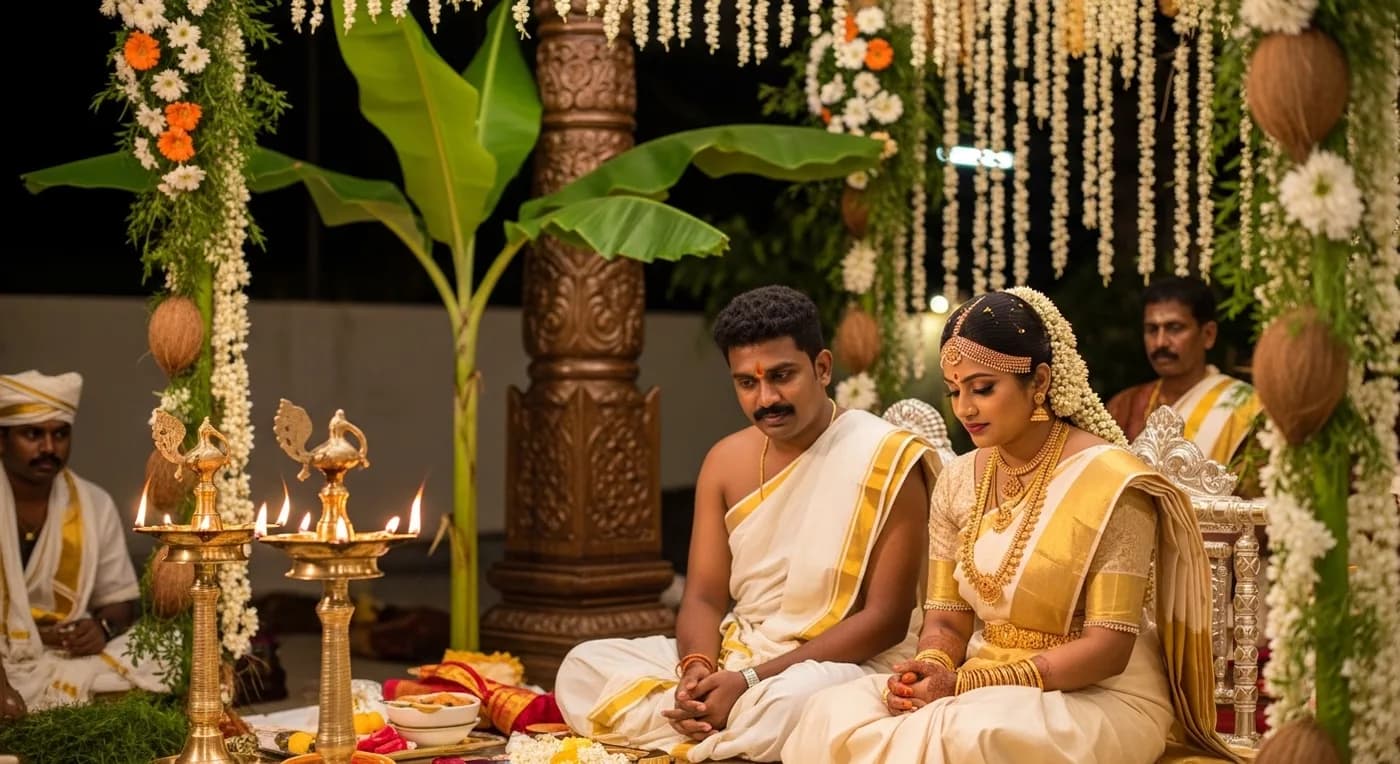
- Nilavilakku (oil lamps): The traditional brass oil lamp is lit at the start of nearly every Kerala wedding, symbolising light, prosperity, and divine blessing. It appears across Hindu, Christian, and Muslim celebrations.
- Jasmine and coconut motifs: Jasmine garlands (malli) are central to bridal adornment and venue decoration. Coconut fronds, flowers, and brass elements are used in mandapam and stage design across all communities.
- Banana leaf feasts: The sadya — a vegetarian feast served on banana leaf — is the most iconic communal element. While Hindu weddings almost always feature a sadya, many Christian and Muslim families also include it alongside their own culinary traditions.
- Family-centred ceremonies: In all Kerala communities, weddings are deeply family affairs. With CAIT reporting 4.6 million weddings and ₹6.5 lakh crore in spending during the November-December 2025 season alone, the communal, family-driven nature of Indian weddings remains unchanged even as budgets grow. Elders play central roles in rituals, blessings, and decision-making throughout the celebration.
Hindu Kerala Wedding Traditions
The traditional Hindu Kerala wedding, or Kalyanam, is known for its understated elegance — white and gold attire, brass lamps, temple flowers, and a ceremony centred around the sacred muhurtham. For a detailed overview of each ritual and its significance, WeddingWire India's Kerala Hindu wedding guide provides an accessible reference.
Nischayam (Engagement)
The Nischayam is the formal engagement ceremony where both families meet, exchange rings, and officially confirm the marriage. It is typically held at the bride's home, a temple hall, or an auditorium in Thrissur, Ernakulam, or Palakkad. This is often when the wedding date is formally announced to the wider family.
Muhurtham (Auspicious Time)
The muhurtham is the astrologically chosen moment for the central wedding rituals. A jyothishi (astrologer) examines the couple's horoscopes and the Panchangam to select the most favourable time — see our muhurtham dates for 2026–2027 for a calendar of auspicious windows. The entire ceremony is structured around this precise window, and delays are taken seriously — especially at temple weddings where time slots are strictly managed.
Tip
Kanyadaanam (Giving Away the Bride)
The bride's father formally gives her away to the groom in the presence of the priest and family elders. This is a solemn ritual that symbolises trust and the transfer of responsibility.
Thalikettu (Tying the Sacred Thread)
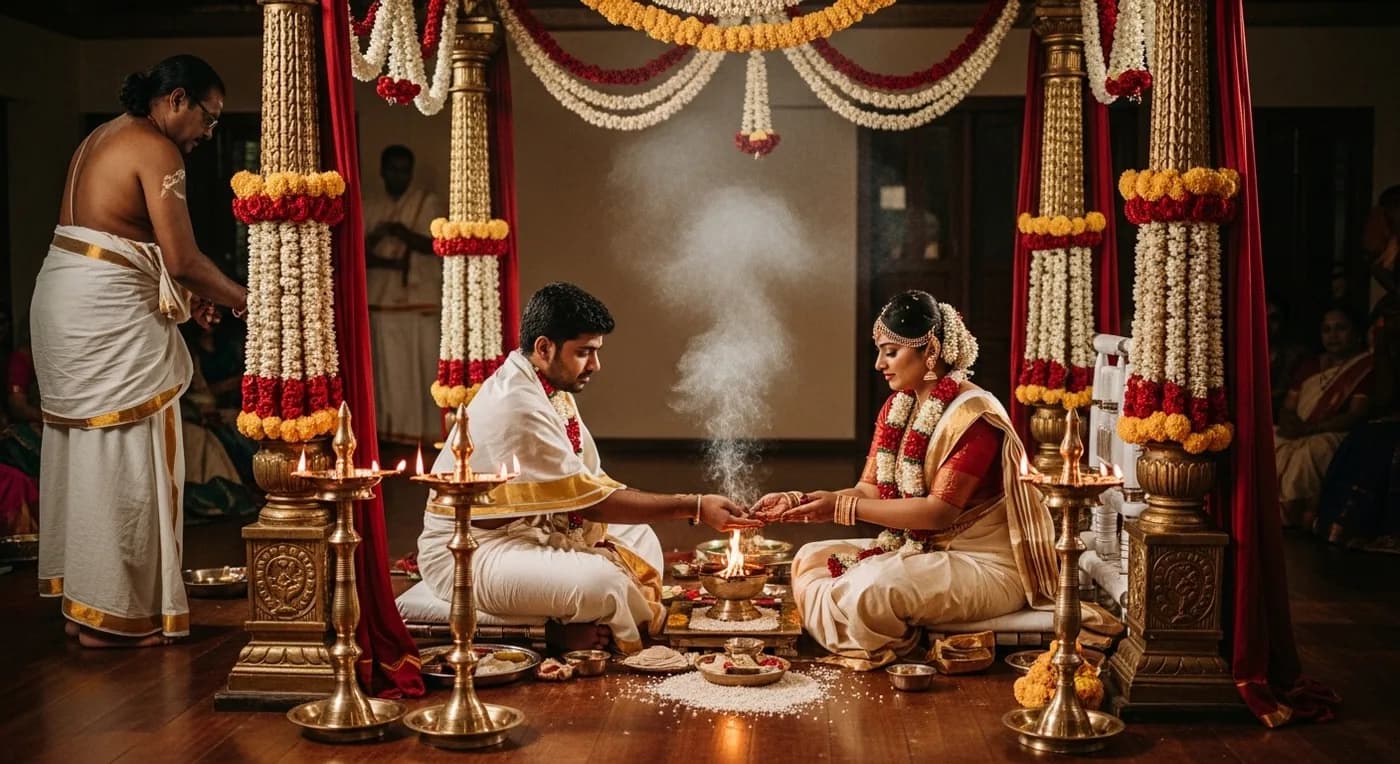
The thalikettu is the most significant moment of a Hindu Kerala wedding. The groom ties the thali (mangalsutra) around the bride's neck at the exact muhurtham. This ritual takes place on the mandapam, typically decorated with jasmine, lotus, banana stems, and brass lamps.
Pudamuri (Gifting the Wedding Sari)
The groom presents the bride with a traditional kasavu sari — the iconic white and gold Kerala wedding sari. The pudamuri symbolises the groom's commitment to providing for the bride and is one of the most photographed moments of the ceremony. While the bride's attire follows this tradition, grooms today have more choices — see our groom attire: mundu vs sherwani guide for a comparison.
Exchange of Garlands
Both partners exchange jasmine and floral garlands, symbolising mutual acceptance and respect. In some communities, this is done playfully, with family members lifting the couple to see who garlands the other first.
For a complete hour-by-hour timeline of how these Hindu rituals unfold from 4 AM to 10 PM, see our Kerala wedding ceremony sequence.
Sadya (Wedding Feast)
The sadya served on banana leaf is the cultural centrepiece. In an Indian wedding industry valued at ₹10.79 lakh crore, catering remains the single largest expense across all communities — and in Kerala, the sadya defines the standard. A full traditional sadya includes over 20 dishes: rice, sambar, avial, olan, thoran, pachadi, erissery, and multiple varieties of payasam. The quality of the sadya is how many guests judge the wedding.
Looking for Caterings?
Tell us what you need and get quotes from verified caterings
Christian Kerala Wedding Traditions
Kerala's Syro-Malabar, Syro-Malankara, and Latin Catholic communities each have their own liturgical traditions, but Christian weddings in Kerala generally share a reverent church ceremony followed by a festive reception. WeddingWire India's Kerala Christian wedding guide offers a helpful overview of the common elements across these denominations.
The Church Ceremony
The wedding is conducted as a full Mass in the parish church, with readings from Scripture, the exchange of vows, blessing and exchange of rings, and communion. Church bookings in popular parishes across Kottayam, Ernakulam, and Thrissur should be made 6 to 12 months ahead.
Mantrakodi (Wedding Sari)
In Syro-Malabar tradition, the groom presents the bride with a mantrakodi — a wedding sari — during the ceremony, similar to the Hindu pudamuri. This is a cherished moment that bridges the church ceremony with Kerala's broader cultural traditions.
Reception and Feast
The post-ceremony reception is often a grand celebration at a convention centre or hotel. While many families include a traditional sadya, Christian receptions in Kerala also feature multi-course sit-down meals or elaborate buffets. The pandal (decorated stage) is a focal point for blessings and family photographs.
Cultural Blends
Modern Christian couples in Kerala increasingly incorporate local aesthetic elements — jasmine garlands, brass lamps, banana leaf motifs, and traditional gold jewellery — creating a beautiful blend of church tradition and Malayali heritage.
Looking for Venues in Kochi?
Tell us what you need and get quotes from verified venues
Muslim Kerala Wedding Traditions
Muslim weddings in Kerala, particularly in the Malabar region (Kozhikode, Malappuram, Kannur), are vibrant community celebrations with their own distinct customs and culinary traditions.
Nikah (Marriage Contract)
The Nikah is the formal marriage contract, typically conducted at a mosque or the bride's family home, officiated by a Qazi (Islamic judge). The Mahr — a bridal gift from the groom to the bride — is agreed upon and announced during the ceremony. The Nikah is usually a relatively brief and solemn ceremony attended by close family and community witnesses.
Walima (Reception Feast)
The Walima is the reception feast hosted by the groom's family, celebrating the marriage with the wider community. In Kerala, the Walima is known for its exceptional food — Malabar biryani, pathiri, various meat and fish preparations, and an array of traditional sweets.
Community Involvement
Muslim weddings in Kerala are deeply community-oriented. Extended family, neighbours, and mosque congregation members play active roles in planning, preparation, and celebration. The scale of hospitality is a point of pride.
Local Variations
While core Islamic traditions remain consistent, Kerala Muslim weddings incorporate distinctly Malayali elements — traditional decor styles, local floral arrangements, and banana leaf accompaniments alongside the main feast.
Adapting Traditions for Modern Weddings
Many contemporary Kerala couples are finding thoughtful ways to honour traditions while adapting them for modern comfort and personal expression.
- Shorten lengthy rituals if guest comfort is a concern, especially during humid or hot conditions. Discuss with your priest or officiant which elements are essential and which can be condensed.
- Combine ceremonies for interfaith families — some couples hold a brief church ceremony followed by a smaller Hindu muhurtham, allowing both families' traditions to be honoured.
- Respect venue restrictions at temples: check dress codes (modest and traditional attire), photography rules, and timing constraints well in advance.
- Personalise within tradition — add a pre-wedding mehendi or haldi that is not traditional to every Kerala community, incorporate contemporary decor alongside brass and jasmine, or write personal vows to complement formal rituals.
Note
Etiquette for Guests
If you are attending a Kerala wedding, these practical notes will help:
- Dress code: Modest and comfortable fabrics for temple ceremonies. Women typically wear saris or salwar suits; men wear mundu or formal attire. Avoid black at traditional Hindu ceremonies. For a complete guide, see what to wear to a Kerala wedding as a guest.
- Gifts: Cash envelopes are customary and appreciated. Gold gifts are traditional for close family. Check with the family if specific expectations apply.
- Timing: Arrive early for the muhurtham — it happens at a precise astrological time and will not wait. The ceremony itself is usually brief.
- Behaviour during rituals: Remain quiet and respectful. Follow the lead of family members for when to stand, sit, or participate.
- Food: If offered sadya, eat with your right hand. The banana leaf has a specific layout for dishes — observe others or ask a family member for guidance.
Common Questions About Kerala Wedding Traditions Explained
What is the significance of nilavilakku in a Kerala wedding?
The nilavilakku (oil lamp) symbolises light, wisdom, and divine blessing. It is traditionally lit by family elders at the beginning of auspicious ceremonies to mark the start of something sacred. The lamp is ubiquitous across Hindu, Christian, and Muslim celebrations in Kerala.
Is sadya mandatory at a Kerala wedding?
Sadya is traditional and very common across all communities, but it is not strictly mandatory. Modern couples sometimes choose buffet or mixed menus, especially at destination weddings. However, most families — and certainly most guests — consider a well-executed sadya to be an essential part of the Kerala wedding experience.
Can I photograph inside temples during a Kerala wedding?
It depends entirely on the temple. Some temples allow still photography with restrictions on timing, location, and dress code. Others restrict cameras entirely during the ceremony. Always check with the temple office at least a month before the wedding to understand the specific rules.
What is a muhurtham and why is it so important?
A muhurtham is an astrologically chosen auspicious time for the key wedding rituals. In Hindu Kerala weddings, the thalikettu (tying of the sacred thread) must happen at this precise moment. The muhurtham is determined by consulting an astrologer who examines both partners' horoscopes and the Panchangam (traditional almanac).
Do all Kerala weddings have the same rituals?
No. Hindu, Christian, and Muslim weddings in Kerala each have distinct ceremonies, though they share cultural motifs like oil lamps, jasmine garlands, and communal feasts. Even within the same religion, rituals vary by community (for example, Nair vs. Namboodiri Hindu traditions, or Syro-Malabar vs. Latin Catholic Christian ceremonies). For a deeper community-by-community comparison, see our Kerala wedding by religion guide, our Nair wedding guide, and our Syrian Christian wedding planning guide.
Further Reading
Explore our detailed guides for specific traditions:
- Kerala Wedding Ceremony Sequence — hour-by-hour timeline from 4 AM to 10 PM
- Steps in a Traditional Kerala Wedding — a practical step-by-step walkthrough
- How to Plan a Kerala Wedding — the complete planning guide
- Kerala Wedding Budget Guide — costs and budget allocation
Tip
Planning a traditional wedding? Our AI Wedding Checklist generates a personalised timeline that includes all the rituals and ceremonies for your specific tradition. Estimate your full budget with the Cost Calculator.
Topics
kerala wedding traditions explainedKerala wedding ritualsKerala Hindu wedding ritualsKerala Christian wedding traditionsKerala Muslim weddingnilavilakkumuhurthamExplore more
Frequently Asked Questions
1What is the significance of nilavilakku in a Kerala wedding?
2Is sadya mandatory at a Kerala wedding?
3Can I photograph inside temples during a Kerala wedding?
4What is a muhurtham?
Continue reading
Related Articles
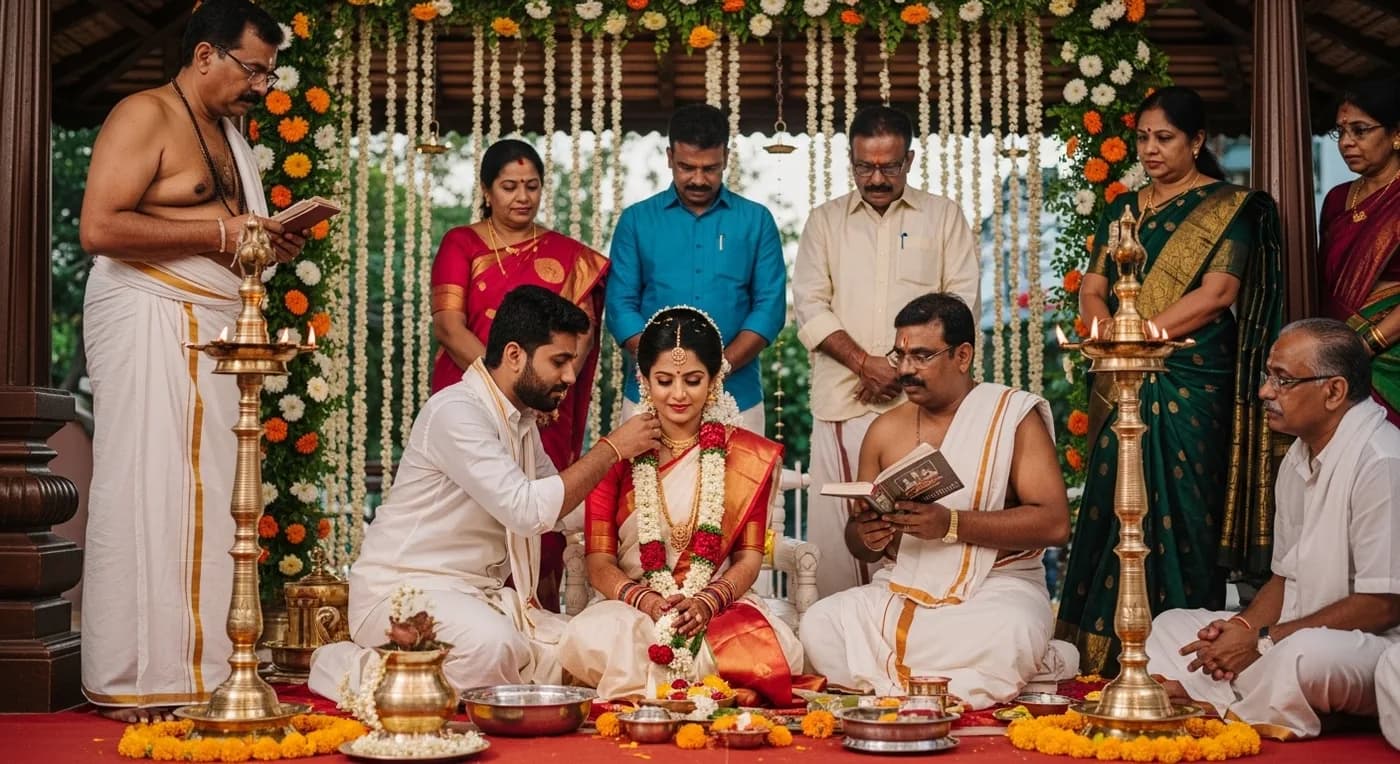
Steps in a Traditional Kerala Wedding: Rituals and Practical Notes
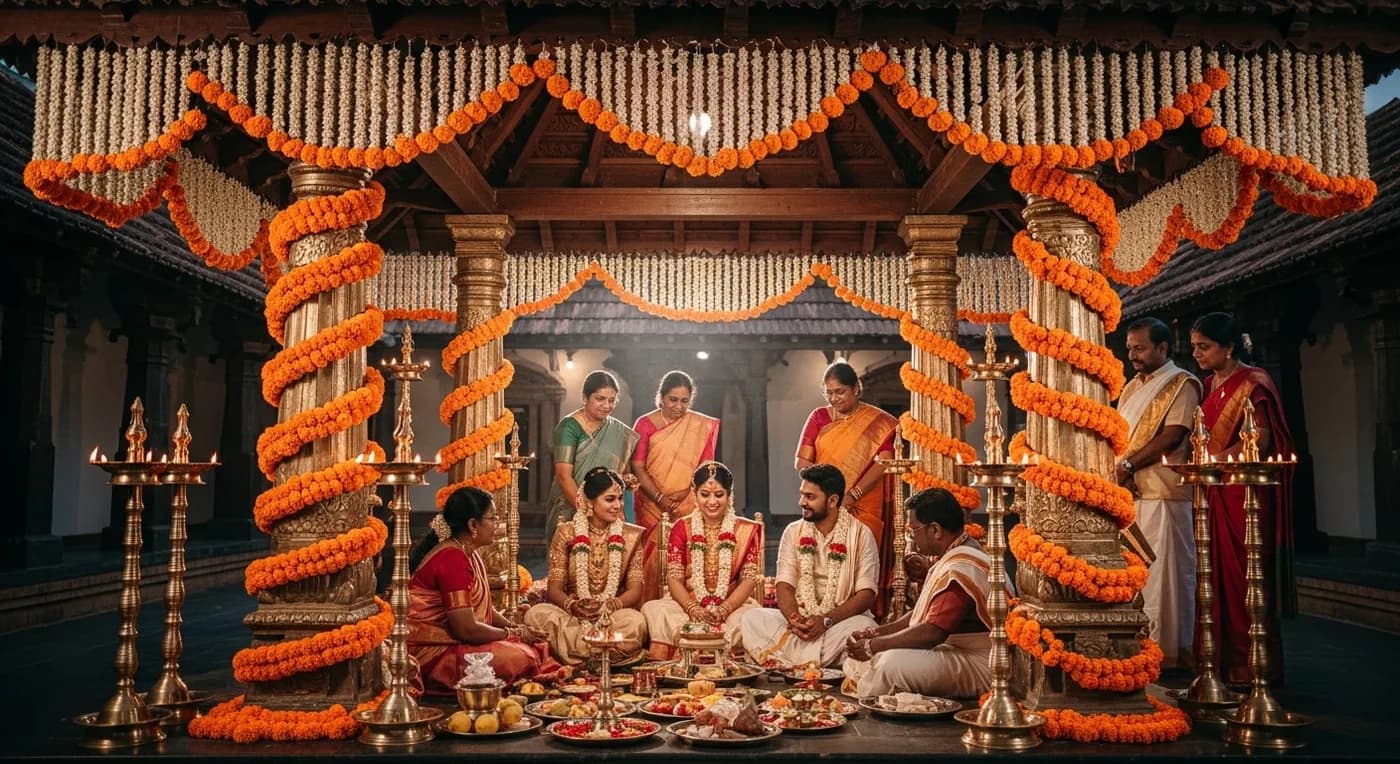
How to Plan a Kerala Wedding: The Complete 2026 Guide
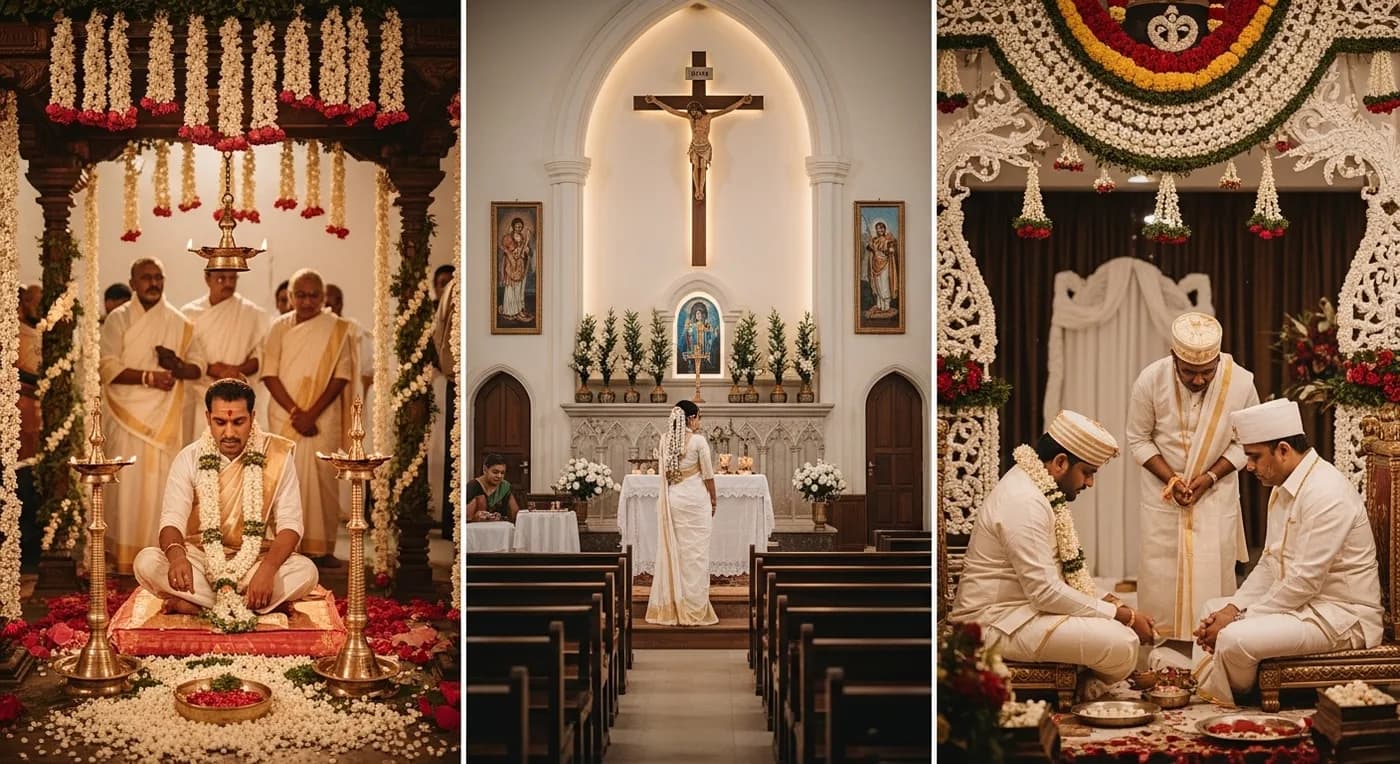
Kerala Wedding by Religion: Hindu, Christian & Muslim
Kerala Nair Wedding: Complete Guide to Rituals, Checklist & Costs in 2026
Best Season for South India Destination Weddings: Month-by-Month Western Ghats Guide
Destination Wedding Cost in South India 2026: 5-Tier Budget Guide
Still planning?
Get quotes from India's best vendors
Tell us what you're planning and we'll match you with verified photographers, venues, decorators, and more.
Get free quotes