
What to Wear to a Kerala Wedding: The Complete Guest Dress Code Guide
What to wear to a Kerala wedding as a guest — kasavu sarees from ₹1,500, mundu for men, plus Hindu, Christian, and Muslim dress codes fully explained.

Wedding Stylist & Beauty Editor
Meera Menon is a wedding stylist and beauty editor with over seven years of experience in the Kerala bridal industry.
On this page
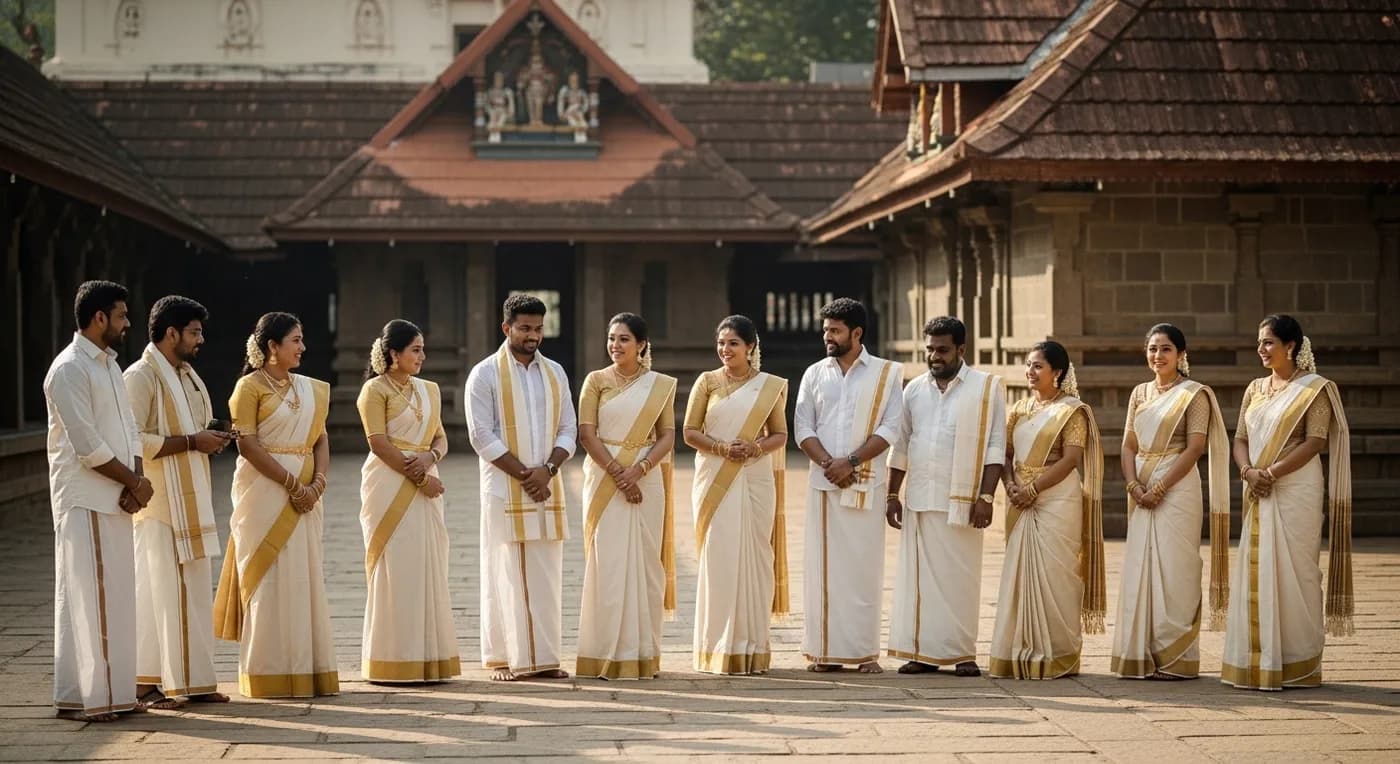
For a Hindu Kerala wedding, women should wear a kasavu saree (cream with gold border, ₹1,500–25,000) and men a white mundu with shirt — the most culturally correct guest attire. Dress codes shift by community: white is acceptable at Hindu ceremonies but reserved for the bride at Christian weddings. Muslim weddings require full-coverage modest clothing for both genders.
Quick Answer
You have received an invitation to a Kerala wedding, and alongside the excitement comes a question that bothers every guest who has not attended one before: what do I wear? With India hosting 4.6 million weddings in the Nov–Dec 2025 season alone, the chances of receiving a Kerala wedding invite are higher than ever. Kerala weddings — part of India's ₹10.79 lakh crore wedding industry — carry a distinct dress culture that differs meaningfully from weddings in North India, Maharashtra, or anywhere else in the country. The colour conventions are different. The level of formality shifts between the ceremony and reception. And the rules change — sometimes significantly — depending on whether you are attending a Hindu, Christian, or Muslim celebration.
Getting your outfit right matters, not because anyone will turn you away at the door, but because dressing appropriately is a form of respect. It tells the family you understand their traditions. It makes you comfortable in the crowd rather than self-conscious. And frankly, a well-chosen outfit in the Kerala context — a crisp kasavu saree, a perfectly starched mundu — photographs beautifully against the backdrop of oil lamps, banana leaves, and jasmine garlands that define these celebrations.
This guide covers everything: what to wear for each community's wedding, what to avoid, seasonal and venue-specific considerations, and where to shop — whether you are buying in Kerala or ordering online. For a deeper understanding of the rituals you will witness, read our Kerala Wedding Traditions Explained guide. It will give context to the ceremony and help you appreciate why certain dress codes exist.
Hindu Wedding Guest Attire
Hindu weddings in Kerala — whether Nair, Namboothiri, Ezhava, or any other community — have a visual identity that is unmistakable. The palette is predominantly white and gold, the silhouette is traditional, and the overall aesthetic values elegance over excess. This is not a celebration where you compete to be the most colourfully dressed person in the room. Restraint is the mark of good taste.
Note
For Women: The Kasavu Saree
The kasavu saree — a cream or off-white handloom saree with a gold (kasavu) border — is the single most appropriate outfit for a female guest at a Hindu Kerala wedding. Nothing else says "I belong here" quite like it. The kasavu saree is Kerala's cultural signature, and wearing one as a guest is a gesture of respect that the family will notice and appreciate.
How to style it: Pair with a matching or contrasting blouse in gold, maroon, or green. Traditional Kerala blouses are short-sleeved with a round or square neckline, but modern cuts — elbow sleeves, boat necks, slight backwork — are perfectly acceptable. Gold jewellery is the natural companion: a simple chain or necklace, jhumka earrings, and bangles. You do not need heavy temple jewellery — that territory belongs to the bride and close family. A jasmine gada (string of jasmine flowers) in the hair is a beautiful, optional touch that is culturally on point.
Where to buy: Authentic handloom kasavu sarees start at 1,500 to 3,000 for a basic cotton version. Silk kasavu sarees with heavier gold borders run 5,000 to 25,000 depending on the zari content and weave quality. Balaramapuram, near Trivandrum, is the historic handloom centre. Kuthampully in Thrissur district is another traditional weaving village. In cities, Jayalakshmi, Seematti, Kalyan Sarees, and South India Shopping Mall carry extensive kasavu collections.
Can you wear colour? Yes. While kasavu (white and gold) is the most traditional choice, coloured sarees — particularly in shades of gold, green, maroon, pink, or blue with kasavu borders — are completely appropriate. What you want to avoid is anything too loud, heavily sequined, or overtly Bollywood. A silk saree in muted jewel tones is elegant. A heavily embellished lehenga in neon pink will feel out of place.
Tip
For Men: Mundu and Shirt
The traditional male attire at a Hindu Kerala wedding is the mundu — a white or cream dhoti-style garment worn around the waist — paired with a white or cream shirt. This combination is the Kerala equivalent of a suit and tie at a Western wedding: formal, clean, and culturally correct.
Double mundu vs single mundu: For weddings, the double mundu (neriyathu or veshti with a second cloth draped over the shoulder or folded at the waist) is more formal. A single mundu is fine for the reception or less formal events. Young men who find the mundu uncomfortable can opt for cream or white trousers with a formal shirt — this is acceptable, though traditional families notice and prefer the mundu. For a groom deciding between these options, our groom attire: mundu vs sherwani guide compares styles, costs, and cultural fit.
What to pair it with: A well-pressed white or cream full-sleeve shirt is standard. Kurtas in white, cream, or light gold work well. Avoid printed shirts, dark colours, or anything with a casual cut. Footwear should be leather sandals (kolhapuri chappals are classic) or formal shoes — not flip-flops or sneakers.
Gold accessories: Men traditionally wear minimal jewellery at Kerala weddings — perhaps a ring or a thin gold chain. Watches are fine. A sandalwood paste mark on the forehead (chandanam) is common at Hindu ceremonies and completely optional for guests.
For the Reception
Hindu wedding receptions in Kerala are slightly less formal than the morning ceremony. Women can shift to coloured sarees, churidars, or even well-tailored salwar kameez. Men can swap the mundu for formal trousers and a blazer or a kurta-pyjama set. The key is to remain well-groomed and respectful — this is still a family celebration, not a cocktail party.
Christian Wedding Guest Attire
Christian weddings in Kerala follow a different dress code, shaped primarily by church etiquette and a generally more Western-influenced aesthetic. The ceremony takes place inside a church, which imposes specific modesty requirements. The reception that follows is typically more relaxed and festive.
Church Ceremony: Modesty is Key
Kerala churches — whether Syrian Catholic, Marthomite, CSI, or Latin Catholic — expect guests to dress modestly. This is non-negotiable and applies equally to men and women.
For women:
- Shoulders must be covered. Sleeveless tops and spaghetti straps are not appropriate inside the church. Carry a shawl or dupatta if your outfit is sleeveless — you can drape it during the ceremony and remove it at the reception.
- Hemlines should fall below the knee. Midi and full-length outfits are safest.
- Necklines should be conservative. Avoid deep V-necks or plunging necklines.
- Sarees (any colour except white), salwar kameez with dupatta, and formal long dresses or midi dresses all work well. A pastel silk saree is an excellent choice — elegant, modest, and photo-ready.
For men:
- Full-length trousers with a collared shirt or formal kurta. No shorts, no half-sleeves in some stricter parishes.
- A blazer or suit jacket is appropriate for evening or formal church weddings but not mandatory.
- Leather shoes preferred. Sandals are acceptable but sneakers are not.
Important
Colour guidance: Rich colours work well at Christian weddings — deep blues, emerald greens, maroons, dusty pinks, and corals are all safe and elegant. Pastels are lovely for daytime ceremonies. Black is generally acceptable for evening receptions but many families consider it inauspicious for the church ceremony itself — when in doubt, ask or avoid it.
Reception: More Relaxed
Christian wedding receptions in Kerala are often held at hotels, convention centres, or outdoor venues. The atmosphere is celebratory and the dress code loosens. Women can wear cocktail-length dresses, trendy sarees, or contemporary Indo-Western outfits. Men can opt for smart casual — a well-fitted shirt with chinos, a linen suit, or a modern kurta. The formality level generally matches the venue: a five-star hotel reception warrants more polish than a community hall gathering.
For a deeper understanding of what happens during a Kerala Christian wedding ceremony, our Christian Wedding Rituals in Kerala guide walks through the full order of events.
Muslim Wedding Guest Attire
Muslim weddings in Kerala, particularly in the Malabar region spanning Kozhikode, Malappuram, Kannur, and Kasaragod, have a dress culture rooted in modesty and celebration. The nikah ceremony is a religious event where conservative attire is expected, while the reception (walima) is more festive and allows for richer, more expressive clothing.
For the Nikah Ceremony
For women:
- Full-length outfits that cover arms to the wrists and legs to the ankles. Long-sleeved salwar kameez, floor-length anarkalis, and sarees with full-coverage blouses are all appropriate.
- A dupatta or scarf draped over the head is customary during the nikah, particularly if the ceremony is held in a mosque or prayer hall. Even if you do not normally cover your hair, carrying a scarf to drape loosely shows cultural sensitivity.
- Bright, celebratory colours — greens, blues, reds, pinks, and golds — are welcome and encouraged. This is a joyous occasion, and colourful dress reflects that.
- Avoid anything sheer, tight-fitting, or revealing. The emphasis is on modesty without sacrificing elegance.
For men:
- A formal kurta-pyjama set or sherwani is the most common choice. White, cream, or pastel shades are popular for the nikah.
- Mundu with a jubba (a longer tunic-style top) is the traditional Malabar option and is deeply appropriate in Kozhikode and Malappuram settings.
- A prayer cap (topi) is not required for non-Muslim guests but wearing one if offered is a respectful gesture during the nikah.
For the Walima (Reception)
The walima is typically a grand affair, and guests dress to match the occasion. Women wear their finest — heavily embroidered anarkalis, sharara sets, lehengas, or rich silk sarees. Gold jewellery is common and appreciated. Men opt for sherwanis, Nehru jackets with formal trousers, or richly textured kurtas. This is the event where opulence is welcome — the Malabar wedding tradition celebrates abundance in every form, including dress.
Looking for Makeup Artists in Kozhikode?
Tell us what you need and get quotes from verified makeup artists
Seasonal and Weather Considerations
Kerala's tropical climate — shaped by the southwest monsoon that the IMD tracks annually — should inform your outfit choices as much as cultural convention does. What works in December will leave you drenched in June.
November to February (Peak Wedding Season)
This is the most comfortable period. Temperatures range from 25 to 32 degrees Celsius with low humidity. Silk sarees, layered outfits, and heavier fabrics are all manageable. This is also the season where you can comfortably wear a blazer or shawl for an evening reception without overheating. If you are attending an outdoor ceremony — a temple wedding, a beach event, or a garden reception — evenings can be pleasantly cool, particularly in Wayanad, Munnar, and the hill districts.
March to May (Pre-Monsoon Heat)
Temperatures climb to 33 to 37 degrees, and humidity rises. Opt for lighter fabrics — cotton sarees, linen kurtas, and breathable weaves. A heavy Banarasi silk saree that feels regal in December will feel like a furnace in April. Cotton kasavu sarees are ideal for this period. For men, a cotton mundu is infinitely more comfortable than a polyester-blend trouser in the heat.
June to September (Monsoon)
Monsoon weddings are common in Kerala and carry their own beauty, but they require practical wardrobe adjustments. Avoid long trailing fabrics that will soak up puddle water. Choose darker colours that do not show water stains — a white kasavu saree splashed with mud is a bad start to any wedding. Synthetic or blended fabrics that dry quickly are more practical than pure silk. Carry a compact umbrella, and wear footwear that can handle wet floors — heeled sandals on a rain-slicked marble temple floor are an accident waiting to happen.
Tip
Venue-Appropriate Choices
Where the wedding takes place should shape your outfit just as much as the community and season.
Temple Weddings
Conservative and traditional. Women should opt for sarees over Western wear. Ensure your outfit covers shoulders and knees — many temples restrict entry for guests in revealing clothing. Remove leather items (belts, bags) if the ceremony is inside the temple sanctum. Footwear is removed at the entrance, so choose something easy to slip on and off. Our temple wedding guide has more detail on what to expect.
Resort and Hotel Weddings
These are typically more relaxed and contemporary. Indo-Western outfits, cocktail dresses (with appropriate coverage), and fashion-forward saree drapes all work. The setting allows for more personal style expression. If the event involves a poolside reception or garden dinner, factor in the terrain — stiletto heels and grass do not mix.
Beach Weddings
Dress for sand and wind. Long, flowing fabrics will catch the breeze beautifully but also catch on everything else. A lighter saree in cotton or georgette, or a comfortable anarkali in a breathable fabric, is more practical than a heavy silk outfit. Skip the stilettos entirely — flats, wedge sandals, or bare feet are the only sensible options on sand. If the ceremony is at sunset, bring a light shawl for when the sea breeze picks up after dark. For more on beach wedding logistics, our beach wedding guide for Alappuzha covers venue-specific details.
Convention Centre and Auditorium Weddings
These are the most common large-scale Kerala wedding venues, particularly in Thrissur, Kochi, and Trivandrum. Air conditioning means you can wear heavier fabrics comfortably. The indoor setting is forgiving — you do not need to worry about wind, rain, or sand. This is where a beautiful silk saree or a well-tailored sherwani gets its moment to shine.
Colour Dos and Don'ts: A Quick Reference
| Colour | Hindu Wedding | Christian Wedding | Muslim Wedding |
|---|---|---|---|
| White / Off-white | Excellent (kasavu tradition) | Avoid (bride's colour) | Acceptable for men; women prefer colour |
| Red | Good for reception | Good | Excellent |
| Gold | Excellent | Good | Excellent |
| Black | Avoid at ceremony; OK at reception | OK at evening reception; avoid at church | Avoid at nikah; OK at walima |
| Pastels | Good | Excellent | Good |
| Bright colours | Good for reception | Good | Excellent — encouraged |
| Green | Good | Good | Particularly welcome |
What NOT to Wear
Some choices are universally inappropriate across all Kerala wedding types:
- Jeans and T-shirts — A Kerala wedding is a formal family event. Casual Western wear reads as disrespectful regardless of the community.
- Very short dresses or skirts — Anything above mid-thigh is inappropriate at any Kerala wedding, and will draw uncomfortable attention.
- Heavy Western cocktail wear — A bodycon dress, a backless gown, or a plunging neckline suit might work at a Mumbai nightclub-themed reception, but they will feel jarring at a Kerala family celebration.
- Overly bridal outfits — Do not outshine the bride. Avoid heavy bridal lehengas, excessive gold embroidery on red fabric, or the kind of outfit that makes people do a double-take wondering if you are the bride. This is universal wedding etiquette, but it bears repeating.
- Athletic or casual footwear — Sneakers, flip-flops, and sports sandals are out of place. Invest in formal sandals or dress shoes.
Shopping Guide: Where to Buy
In Kerala
- Balaramapuram (Trivandrum) — The handloom capital. Factory outlets sell kasavu sarees directly from weavers at wholesale prices. Cotton kasavu from 1,500; silk from 5,000.
- Kuthampully (Thrissur) — Another traditional weaving village with cooperative showrooms. Known for set-mundu (matching mundu and upper cloth).
- Jayalakshmi Silks — Branches across Kerala. Wide range from budget kasavu to premium silk. Reliable quality.
- Seematti (Kochi) — One of the largest textile showrooms in South India. Enormous collection spanning every budget.
- Kalyan Sarees — Multiple locations. Strong in both traditional kasavu and contemporary designer collections.
- Parthas (Kozhikode) — Popular in Malabar for both men's and women's traditional wear.
For Men
- Ramraj Cotton — The go-to for mundus across Kerala. Double mundus with kasavu border start at 800. Cotton shirts and jubba available.
- Muthoot Textiles — Formal mundus and matching shirts in coordinated sets.
- Raymond and Louis Philippe — For men who prefer trousers and formal shirts over traditional wear.
Online Options
- Kerala State Handloom Cooperative (keralahandloom.com) — Authentic handloom kasavu sarees with government quality certification.
- Myntra and Ajio — Filter for "kasavu saree" or "Kerala saree" for a range of options from budget to premium. Check reviews carefully.
- Nalli Silks online — Reliable for quality silk sarees in traditional South Indian styles.
Rental Options for Men
If you are attending a single Kerala wedding and do not want to invest in traditional wear, rental options exist in all major cities. Wedding wear rental shops in Kochi (MG Road area), Thrissur (Swaraj Round), and Trivandrum (near Chalai market) rent mundu-shirt sets for 500 to 1,500 per day including the set-mundu, shirt, and sometimes accessories. This is a practical option for out-of-state guests attending their first Kerala wedding.
Looking for Makeup Artists in Kochi?
Tell us what you need and get quotes from verified makeup artists
Quick Outfit Formulas by Event
For guests who want a straightforward answer without reading the full guide:
Hindu morning ceremony: Kasavu saree + gold jewellery (women) | White mundu + cream shirt (men)
Hindu evening reception: Coloured silk saree or dressy salwar kameez (women) | Kurta-pyjama or formal trousers with shirt (men)
Christian church ceremony: Modest coloured saree or salwar kameez, shoulders covered (women) | Full trousers + collared shirt or kurta (men)
Christian reception: Saree, cocktail-length dress, or Indo-Western outfit (women) | Smart casual to semi-formal (men)
Muslim nikah: Full-coverage salwar kameez or saree + head scarf (women) | Kurta-pyjama or mundu-jubba (men)
Muslim walima reception: Rich anarkali, sharara, or dressy saree (women) | Sherwani or Nehru jacket set (men)
Use our wedding checklist to keep track of all your preparation tasks, including outfit planning, in the weeks before the event.
Common Questions About What to Wear to a Kerala Wedding
Can I wear white to a Kerala wedding?
It depends entirely on the community. At Hindu Kerala weddings, white and off-white kasavu is the most traditional and culturally appropriate guest attire — you will be in excellent company wearing a cream kasavu saree with a gold border. At Christian weddings, white is reserved for the bride and should be avoided by guests. At Muslim weddings, white is acceptable for men's attire but women typically choose colourful outfits. When in doubt about the specific community's expectations, ask the person who invited you — Keralites appreciate the thoughtfulness of the question.
What should a man wear to a Kerala wedding?
For a Hindu ceremony, a white or cream mundu with a matching shirt or kurta is the gold standard. For receptions across all communities, formal trousers with a pressed shirt, a kurta-pyjama set, or a well-fitted sherwani are all appropriate. A blazer or Nehru jacket adds formality for evening events. Avoid jeans, shorts, casual T-shirts, and sneakers at any Kerala wedding event. If you are unfamiliar with wearing a mundu, practice at home or ask a friend from Kerala to help — there is a specific folding technique, and a badly tied mundu is worse than no mundu.
Is there a dress code for church weddings in Kerala?
Yes, and it is taken seriously. Covered shoulders and knees are the baseline for both men and women. Women should avoid sleeveless tops, deep necklines, and mini-length hemlines inside the church. A dupatta or shawl can cover exposed shoulders during the ceremony. Men should wear full-length trousers with a collared shirt — half-pants and casual tees are not appropriate. The reception after the church ceremony is more relaxed, but the church portion requires clear modesty. When in doubt, err on the conservative side — you can always adjust at the reception.
Where can I buy a kasavu saree in Kerala?
Balaramapuram near Trivandrum is the handloom heartland — factory outlets sell cotton kasavu sarees starting at 1,500 to 3,000 and silk versions from 5,000 upward. Kuthampully in Thrissur district is another traditional source. In cities, Jayalakshmi Silks, Seematti (Kochi), and Kalyan Sarees carry extensive collections across all price points. Online, the Kerala State Handloom Cooperative store offers authenticated handloom sarees with government certification. For last-minute shopping, every major Kerala city has textile showrooms within a 15-minute drive of any wedding venue.
What should I wear to a Kerala Muslim wedding?
Modesty is the guiding principle. Women should choose outfits that cover arms to the wrists and legs to the ankles — long-sleeved salwar kameez, anarkalis, or sarees with full-coverage blouses. A scarf or dupatta draped over the head is customary during the nikah ceremony; carry one even if you do not normally cover your hair. Bright, celebratory colours are encouraged. Men wear formal kurta-pyjama, sherwani, or the traditional Malabar mundu with jubba. For the walima reception, dress more lavishly — this is the celebratory feast and opulence is welcome.
Further Reading
For context on the ceremonies you will witness, our Kerala Wedding Traditions Explained guide covers rituals across Hindu, Christian, and Muslim communities. If you are attending a Hindu ceremony, the Steps in a Traditional Kerala Wedding guide explains each step in detail. And for couples planning their own wedding, our How to Plan a Kerala Wedding guide is the comprehensive starting point.
Topics
what to wear to a kerala weddingkerala wedding guest dress codekasavu sareekerala wedding attiremundu and shirtwedding guest outfit Keralakerala christian wedding dress codeExplore more
Frequently Asked Questions
1Can I wear white to a Kerala wedding?
2What should a man wear to a Kerala wedding?
3Is there a dress code for church weddings in Kerala?
4Where can I buy a kasavu saree in Kerala?
5What should I wear to a Kerala Muslim wedding?
Continue reading
Related Articles
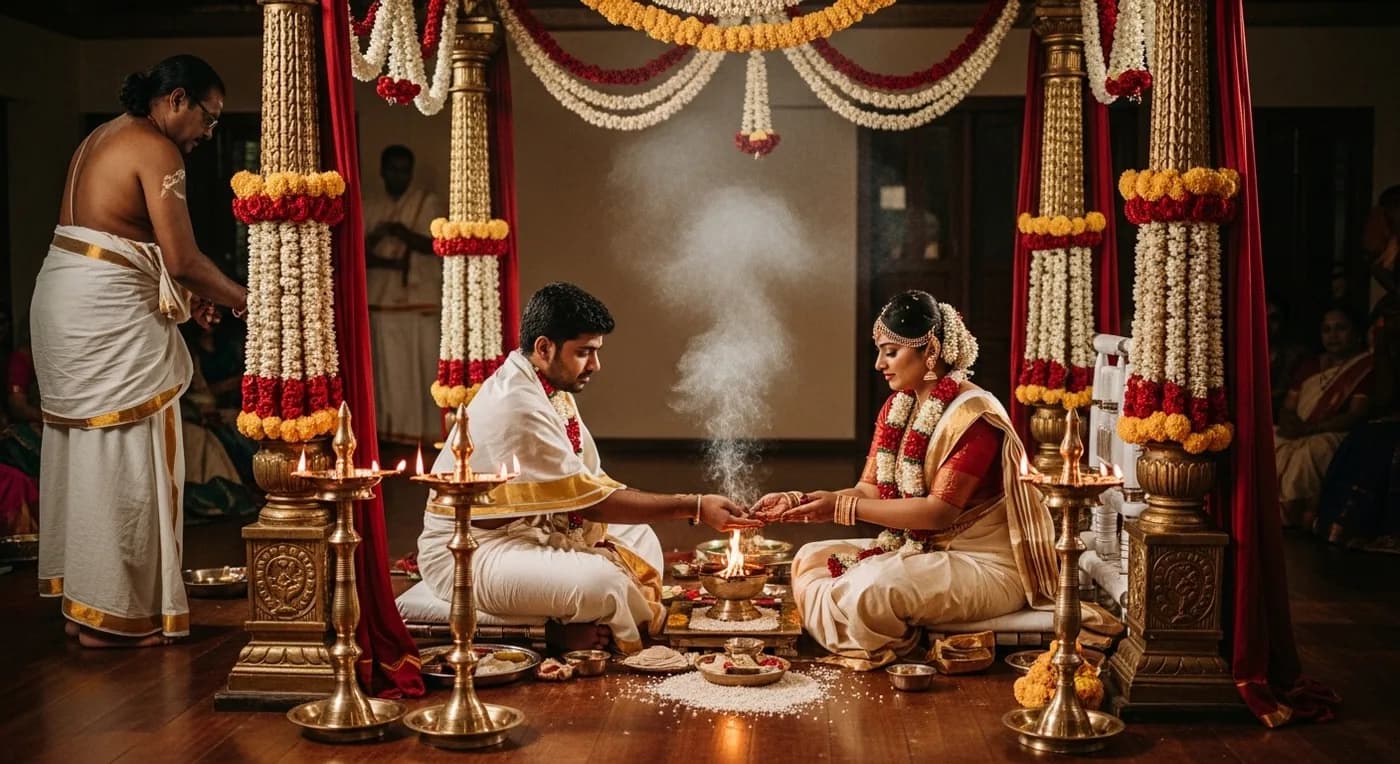
Kerala Wedding Traditions Explained: Rituals, Meaning & Modern Adaptations
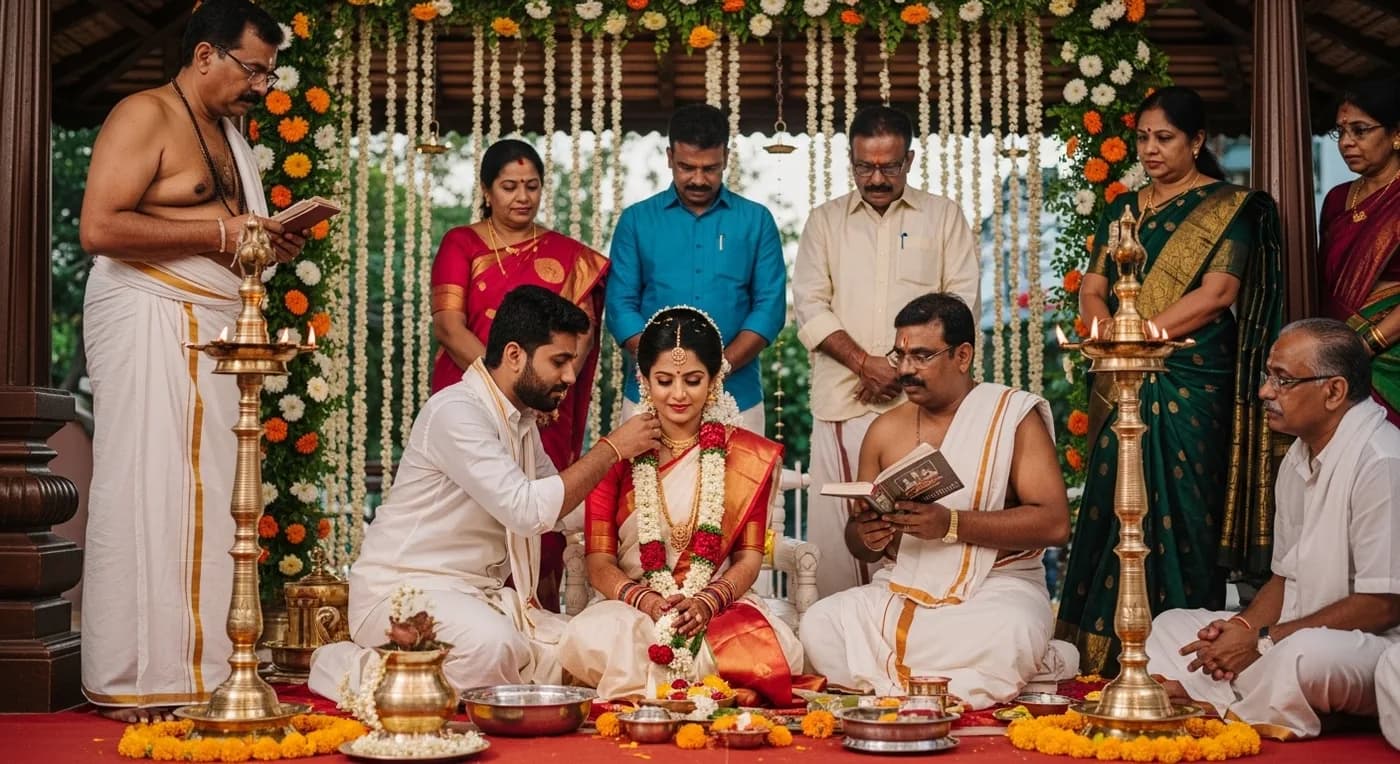
Steps in a Traditional Kerala Wedding: Rituals and Practical Notes
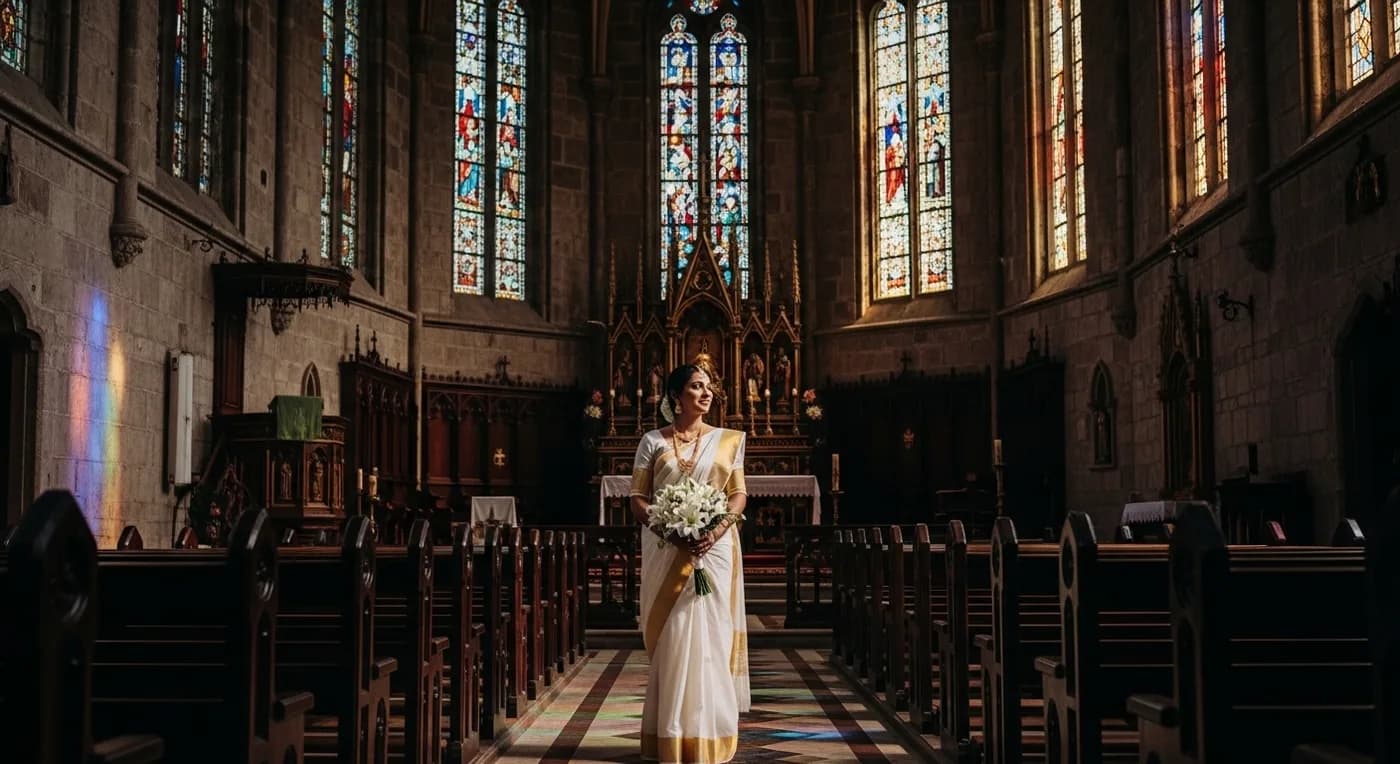
Kerala Christian Wedding Traditions: A Complete Guide to Rituals and Customs
Best Season for South India Destination Weddings: Month-by-Month Western Ghats Guide
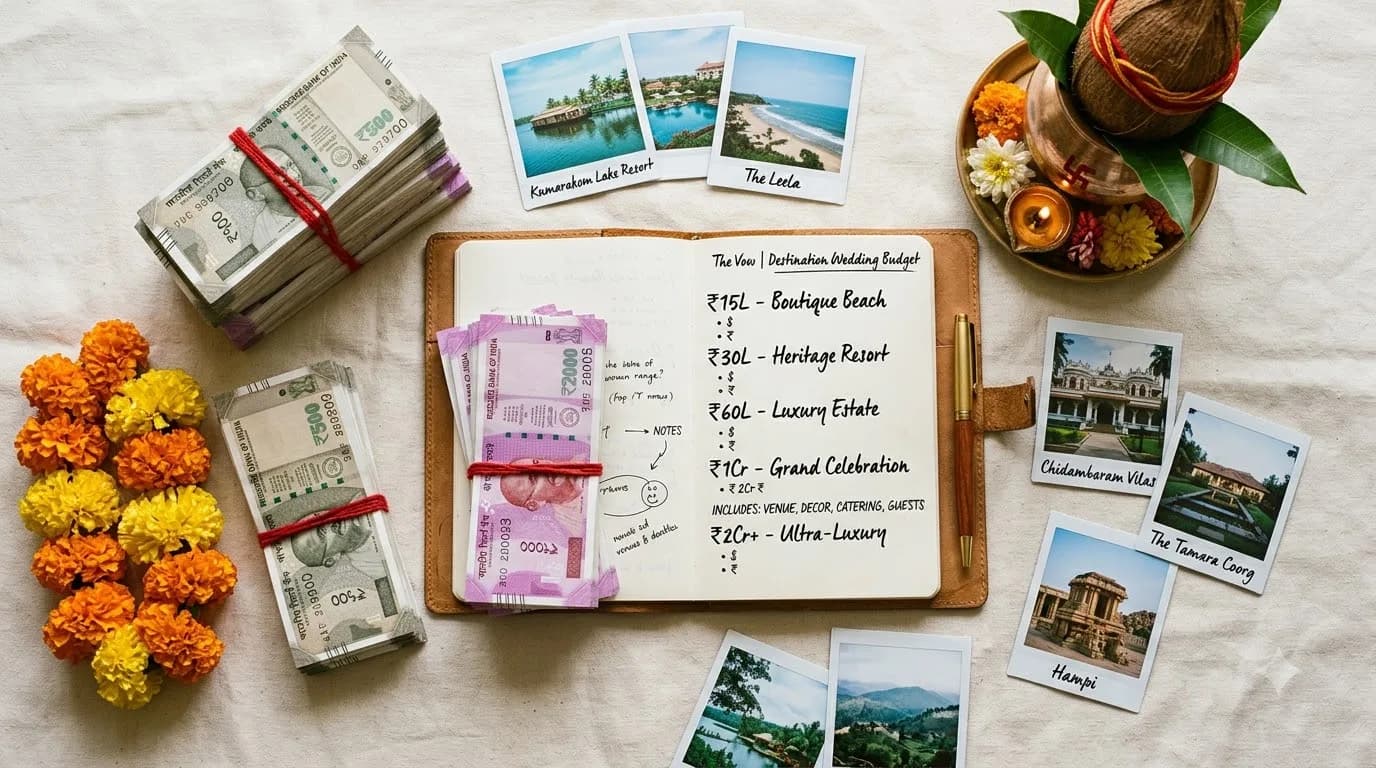
Destination Wedding Cost in South India 2026: 5-Tier Budget Guide
Destination Wedding in South India: Complete 2026 Planning Guide
Still planning?
Get quotes from India's best vendors
Tell us what you're planning and we'll match you with verified photographers, venues, decorators, and more.
Get free quotes