
Steps in a Traditional Kerala Wedding: Rituals and Practical Notes
A traditional Kerala wedding spans 6–8 hours with rituals from nilavilakku lighting to thalikettu. Step-by-step guide with timing and vendor coordination.

Cultural Heritage Writer
Sujata Iyer is a cultural heritage writer specializing in the rich tapestry of South Indian wedding traditions.
On this page
A traditional Kerala Hindu wedding ceremony takes 1–2 hours for the core rituals, but the full day spans 6–8 hours. The sequence moves from nilavilakku lighting through kanyadaanam, thalikettu (tying the thali at the exact muhurtham), pudamuri (the wedding sari ceremony), garland exchange, and elder blessings — followed by sadya and an evening reception.
Quick Answer
Quick answer: A traditional Kerala Hindu wedding follows 9 steps: nilavilakku lighting → kanyadaanam (bride given away) → thalikettu (thali tied at muhurtham) → pudamuri (wedding sari gifted) → garland exchange → vedic mantras and vows → elder blessings → sadya on banana leaf → evening reception. The thalikettu at the exact muhurtham is the single most critical moment — build in 30–45 minutes of buffer.
This guide walks through the typical sequence of a traditional Kerala Hindu wedding ceremony — ideal for couples, family coordinators, and wedding planners who need to create smooth logistics while preserving the integrity and beauty of each ritual. With India's wedding industry valued at ₹10.79 lakh crore, Kerala's traditional ceremonies remain among the most culturally distinctive in the country.
For a broader overview of traditions across all communities (Hindu, Christian, Muslim), see our Kerala Wedding Traditions guide. For the full day-of timeline — including vendor coordination, sadya, and reception — see our Kerala wedding ceremony sequence.
Pre-Ceremony Preparations
Before the wedding day, several important steps must be completed:
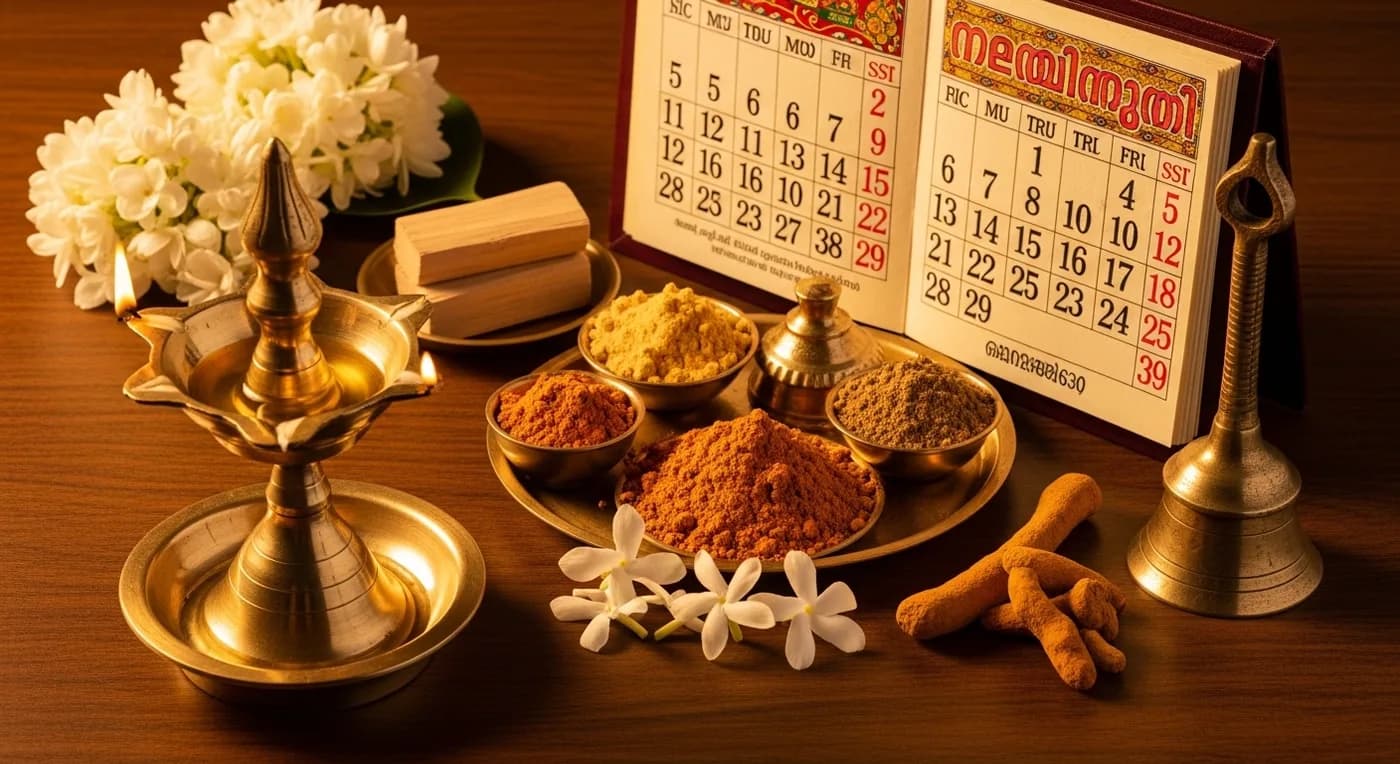
- Muhurtham confirmation: The astrologer or priest confirms the precise auspicious time — consult our muhurtham dates for 2026–2027 to plan around the most sought-after windows. Share this with all vendors and family members — the entire day revolves around this moment.
- Nischayam (engagement): The formal engagement ceremony where both families exchange rings and confirm the marriage. Often held weeks or months before the wedding.
- Ritual materials preparation: Arrange jasmine garlands (malli), coconut fronds, nilavilakku (brass oil lamps), sacred thread (thali), kasavu sari for pudamuri, and mandapam decoration materials.
- Venue and priest coordination: For temple weddings in Guruvayur, Thrissur, or Ernakulam, confirm the assigned priest, timing slot, and any specific temple rules for decor and photography.
Tip
Step 1 — Arrival and Welcoming Rituals
The wedding day begins early, typically by 5 to 6 AM for venue setup and preparation.
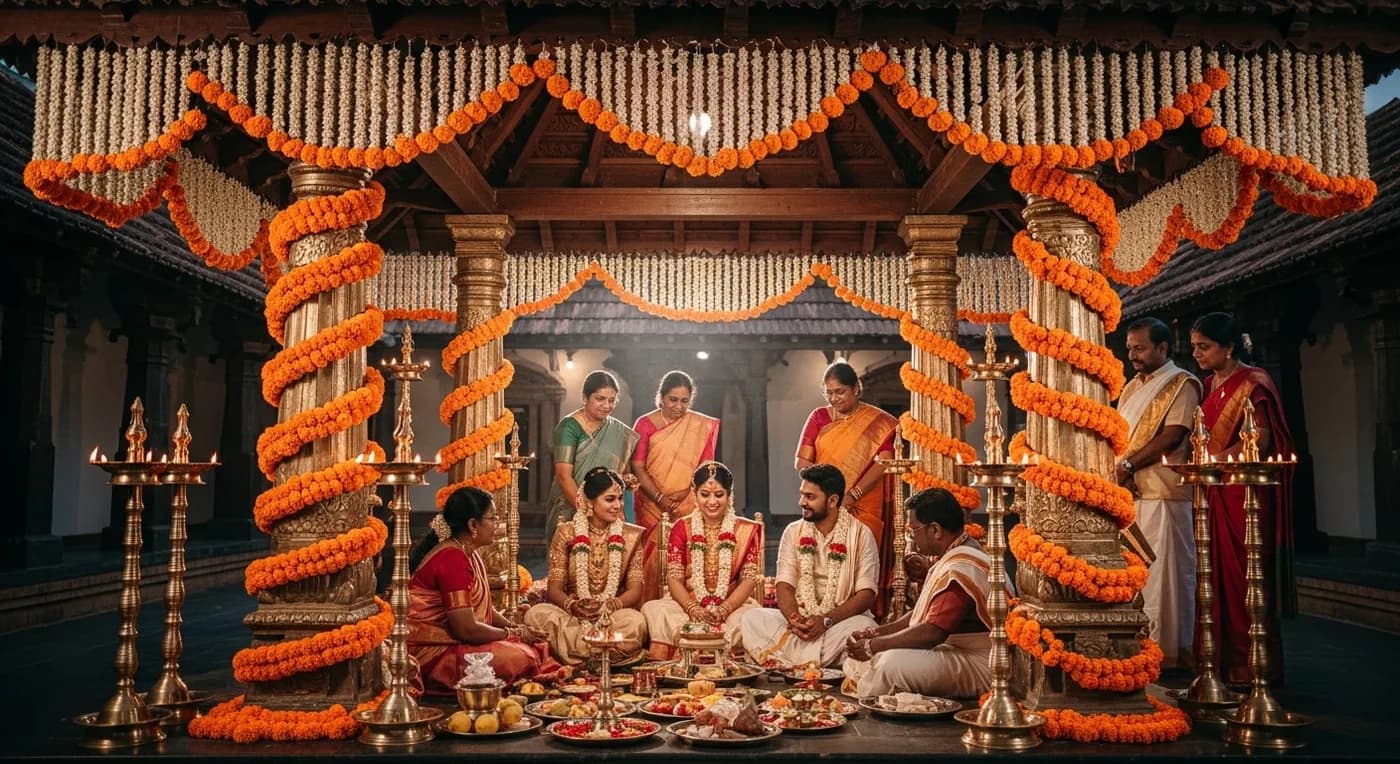
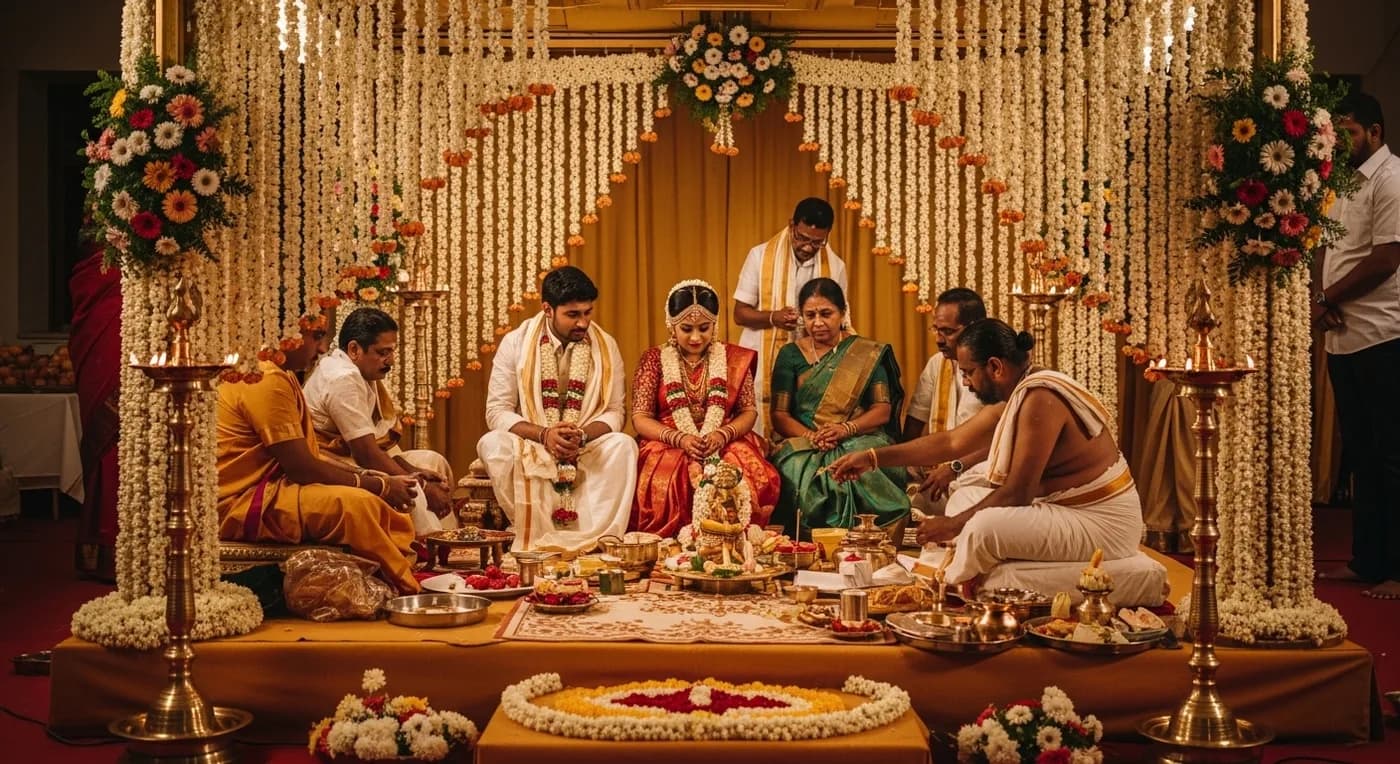
- Venue preparation: Decorators set up the mandapam with jasmine, lotus, banana stems, and brass elements. Caterers begin kitchen preparations for the sadya.
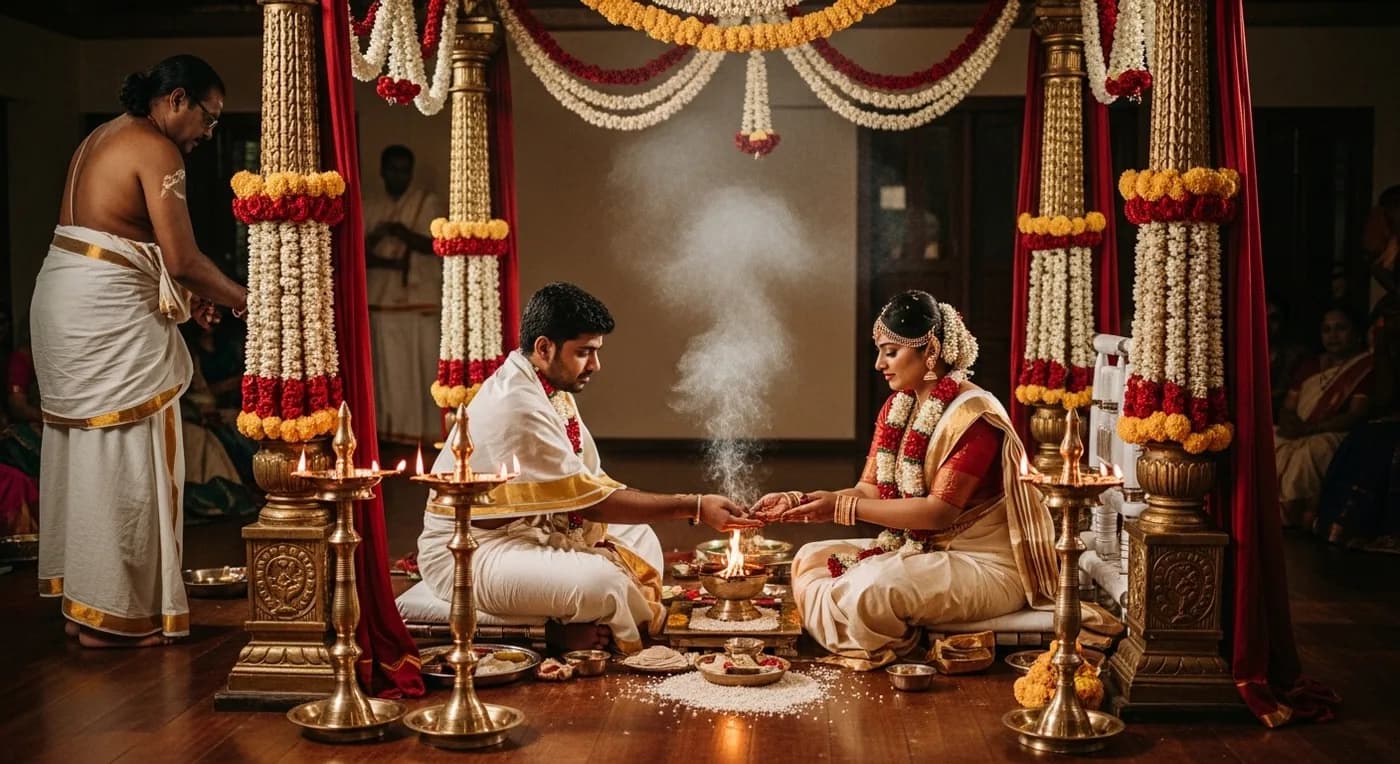
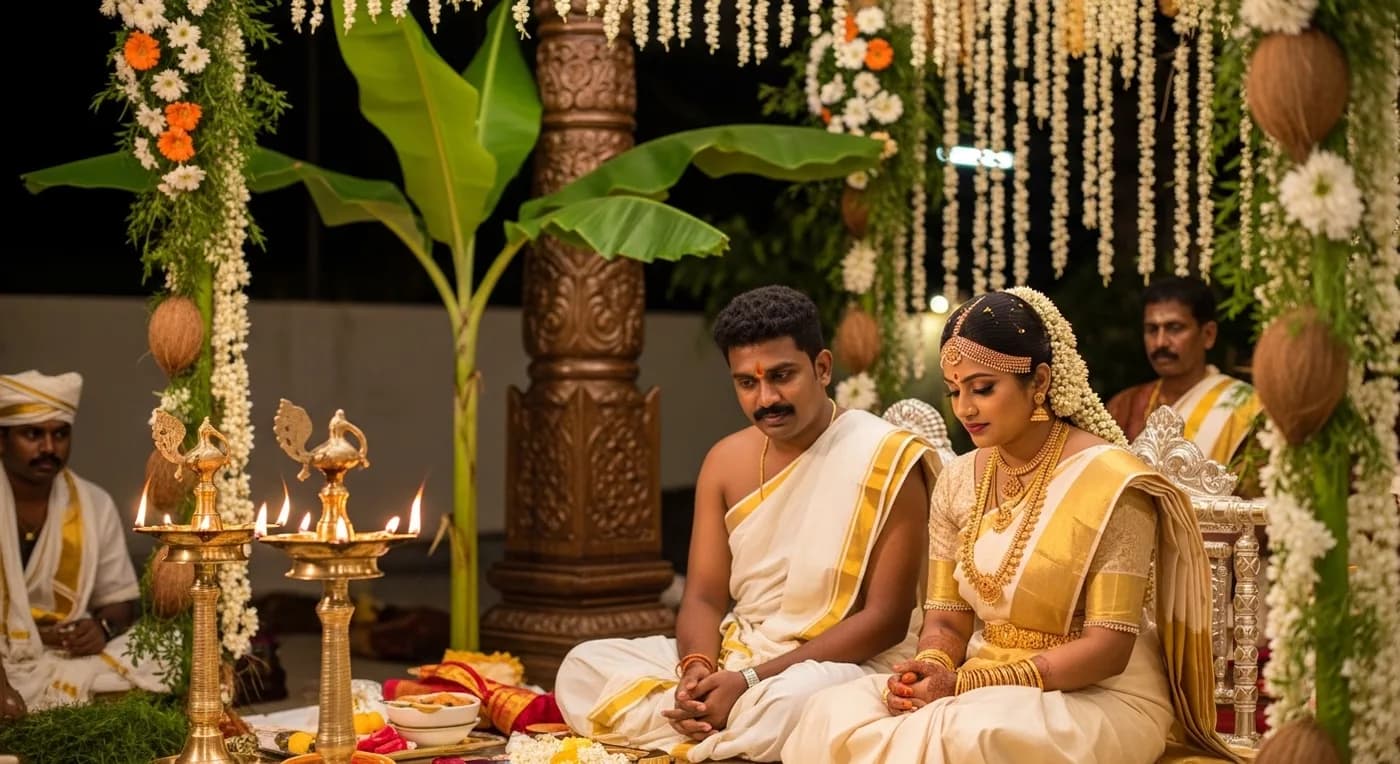
- Nilavilakku lighting: Family elders light the traditional brass oil lamps to mark the beginning of auspicious proceedings. This is a deeply symbolic moment — the lamp represents light, wisdom, and divine blessing.
- Bride and groom preparation: Both get ready separately — the bride in traditional kasavu attire with jasmine hair garlands and gold jewellery, the groom in mundu (or veshti) with angavastram.
Step 2 — Kanyadaanam (Giving Away the Bride)
The bride's father formally gives her away to the groom in the presence of the priest and assembled family elders. This ritual carries deep emotional significance — it symbolises the family's trust in the groom and the formal transition of the bride into a new family.
The priest conducts ritual prayers and mantras during this step. Guests are expected to be seated and respectful during this time.
Step 3 — Thalikettu (Tying the Sacred Thread)
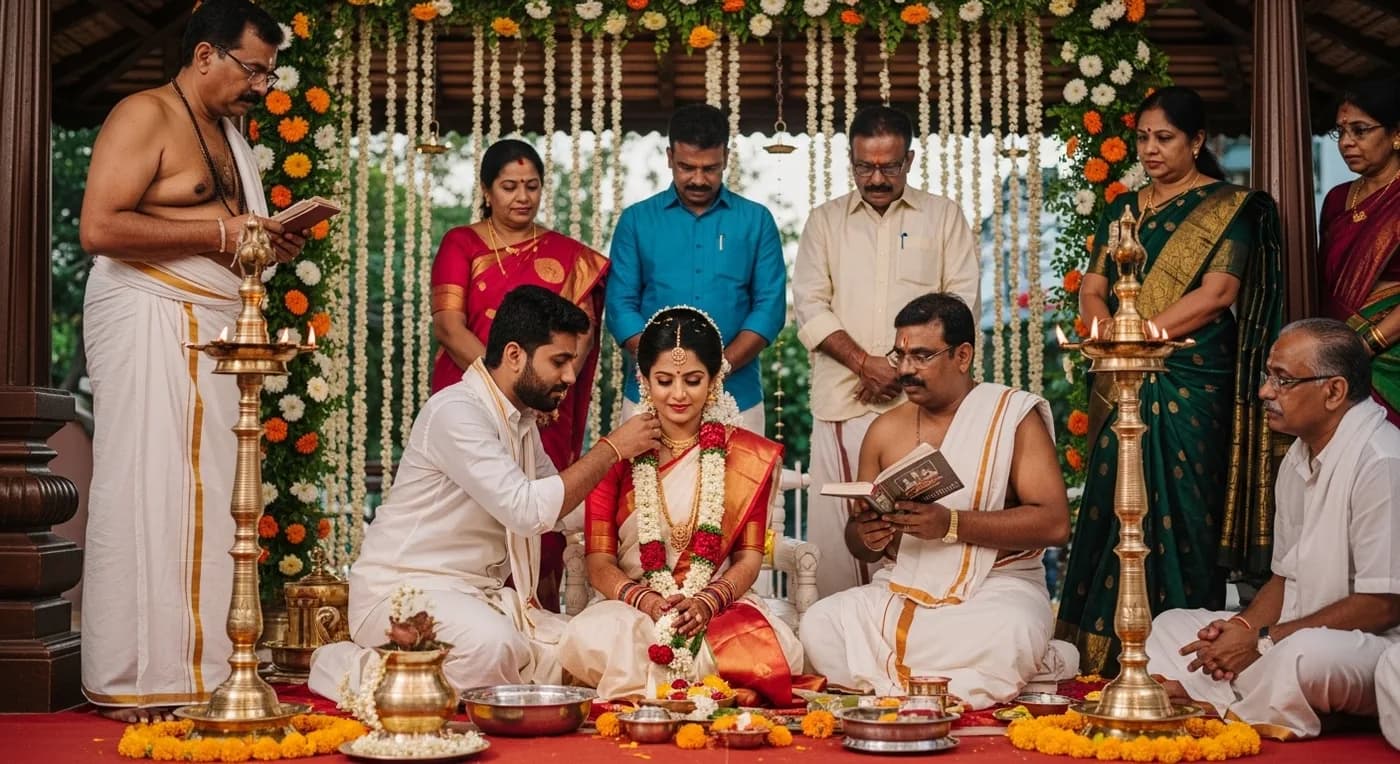
The thalikettu is the single most important moment of a Kerala Hindu wedding. At the exact muhurtham — the astrologically determined auspicious time — the groom ties the thali (mangalsutra / sacred thread) around the bride's neck.
This takes place on the mandapam, usually accompanied by:
- Vedic mantras recited by the priest
- The rhythmic beating of traditional drums (chenda or nadaswaram music)
- Family members gathered closely around the couple
Important
Step 4 — Pudamuri (Gifting the Wedding Sari)
The groom presents the bride with a new kasavu sari — the iconic white and gold wedding sari of Kerala. The pudamuri symbolises the groom's commitment to the bride and is one of the most photographed and emotionally resonant moments of the ceremony.
In some families, the bride changes into this sari before the remaining rituals. In others, the presentation itself is the ceremonial moment.
Step 5 — Exchange of Garlands (Maalai Maatruthal)
Both partners exchange jasmine and floral garlands, symbolising mutual acceptance, respect, and love. This is often one of the lighter, more joyful moments of the ceremony — in some communities, family members playfully lift the couple to see who can garland the other first.
Step 6 — Vedic Mantras and Sacred Vows
The priest recites mantras and the couple participates in sacred vows. The specific mantras and their length vary by community (Nair, Namboodiri, Ezhava traditions each have variations), but the core purpose is seeking divine blessing for the union. For a detailed look at how Nair ceremonies differ, see our Nair wedding guide.
Step 7 — Aashirwaadam (Blessings)
Elders from both families bless the couple, often placing hands on their heads and offering words of wisdom and good wishes. Ceremonial gifts — gold, silk, or cash — are presented during this step.
This is typically followed by family group photographs before the sadya.
Step 8 — Sadya (Communal Feast)
The sadya is served on banana leaf to all guests — a vegetarian feast of over 20 dishes including rice, sambar, avial, olan, thoran, pachadi, erissery, and multiple varieties of payasam. According to a WedMeGood survey of over 2,000 couples, catering is consistently one of the top three wedding expenses, and in Kerala the sadya is what most guests remember about the wedding.
Tip
Looking for Caterings?
Tell us what you need and get quotes from verified caterings
Step 9 — Post-Ceremony Events
After the sadya, the rest of the day typically includes:
- Couple portraits: Schedule these for golden hour (late afternoon) if your venue has beach, backwater, or garden settings. Kerala's natural beauty — its backwaters, beaches, and lush greenery — makes Kochi and Alappuzha venues especially photogenic at this time.
- Family photographs: Coordinate group shots with both sides of the family.
- Guest rest and tea: Allow a quiet period for guests to rest, especially elderly attendees.
- Evening reception (if planned): A more relaxed celebration with music, lighting, and often a non-vegetarian dinner menu.
Looking for Photographers?
Tell us what you need and get quotes from verified photographers
Practical Notes for Smooth Rituals
Timing
- Allow an extra 30 to 45 minutes around the muhurtham for natural delays
- Test microphone and sound systems before the ceremony — temples and older halls often have acoustic challenges
- Confirm floral delivery times with the florist the day before
Seating
- Guarantee shaded, easy-access seating for elderly guests near the mandapam
- Keep the front rows reserved for immediate family and the priest
- Ensure clear sightlines to the mandapam for photographers
Sound and Communication
- Test mic systems at the venue — some temples have strict rules about amplification
- Assign one family member to manage guest arrivals and seating
- Keep the coordinator's phone number visible to all vendors
Attire Guide
| Person | Traditional Attire |
|---|---|
| Bride | Kasavu sari (white and gold), jasmine garlands, gold jewellery |
| Groom | Mundu or veshti with angavastram; some modern grooms opt for a simple suit at destination weddings |
| Guests | Modest, comfortable fabrics — cotton or linen blends ideal for Kerala's humidity |
Looking for Makeup Artists?
Tell us what you need and get quotes from verified makeup artists
Vendor Checklist for the Ceremony
- Decorator: Mandapam design, temple-appropriate decor, banana stem and floral arrangements
- Florist: Jasmine garlands, bridal hair flowers, mandapam flowers — confirm delivery by 5 AM
- Photographer: Temple-experienced (familiar with lighting, timing, and photography restrictions)
- Caterer: Sadya preparation, serving on time, banana leaf and accompaniment setup
- Sound: Microphone and speaker setup (if permitted at the venue)
- Coordinator: Family liaison, vendor timing, guest management
Looking for Decorators?
Tell us what you need and get quotes from verified decorators
Common Questions About Steps in a Traditional Kerala Wedding
How long does a traditional Kerala wedding ceremony take?
The core ceremony — from the first prayers through thalikettu, pudamuri, garland exchange, and blessings — typically takes 1 to 2 hours. However, the full event including setup, guest arrival, ceremony, sadya, and photography spans 6 to 8 hours from early morning through afternoon.
What should the bride wear to a traditional Kerala wedding?
The bride traditionally wears a kasavu sari — the iconic white and gold Kerala sari — accessorised with jasmine garlands in her hair, gold jewellery (earrings, necklace, bangles), and traditional bindis. The groom presents the wedding sari (pudamuri) during the ceremony itself.
Do I need to hire a specific priest for a Kerala temple wedding?
For temple weddings, the temple typically assigns a priest from their roster. For home or auditorium ceremonies, families hire their own thanthri or temple priest. Either way, confirm availability at least 3 months before the wedding and discuss the full ritual sequence, timing, and any special family customs.
What happens if we miss the muhurtham time?
Missing the muhurtham is considered inauspicious in most families. This is why building buffer time (30 to 45 minutes before the scheduled time) is critical. In practice, most priests will accommodate small delays, but the ceremony should start as close to the muhurtham as possible.
Further Reading
- Kerala Wedding Ceremony Sequence — hour-by-hour timeline from 4 AM to 10 PM
- Kerala Wedding Traditions Explained — rituals across Hindu, Christian, and Muslim communities
- Kerala Wedding Checklist — complete printable planner
- How to Plan a Kerala Wedding — the full planning guide
Tip
Planning a traditional wedding? Our AI Wedding Checklist generates a personalised timeline that includes all the rituals and ceremonies for your specific tradition. Estimate your full budget with the Cost Calculator.
Topics
steps in a traditional Kerala weddingkerala wedding rituals step by stepkerala marriage ceremony stepsthalikettumuhurthamkerala weddingExplore more
Frequently Asked Questions
1How long does a traditional Kerala wedding ceremony take?
2What should the bride wear to a traditional Kerala wedding?
3Do I need to hire a specific priest for a Kerala temple wedding?
Continue reading
Related Articles
Kerala Wedding Traditions Explained: Rituals, Meaning & Modern Adaptations
How to Plan a Kerala Wedding: The Complete 2026 Guide
Kerala Muhurtham Dates 2026–2027: Auspicious Days
Kerala Nair Wedding: Complete Guide to Rituals, Checklist & Costs in 2026
Kerala Wedding Ceremony: Hour-by-Hour Sequence (4 AM-10 PM)
Best Season for South India Destination Weddings: Month-by-Month Western Ghats Guide
Still planning?
Get quotes from India's best vendors
Tell us what you're planning and we'll match you with verified photographers, venues, decorators, and more.
Get free quotes