
Kerala Wedding Ceremony: Hour-by-Hour Sequence (4 AM-10 PM)
Kerala wedding ceremony from 4 AM to 10 PM — hour-by-hour timeline covering muhurtham, thalikettu, sadya & reception. Plan your day.

Senior Wedding Planner
Priya Nair is a senior wedding planner based in Kochi with over eight years of experience coordinating Hindu, Christian, and destination weddings across Kerala.
On this page
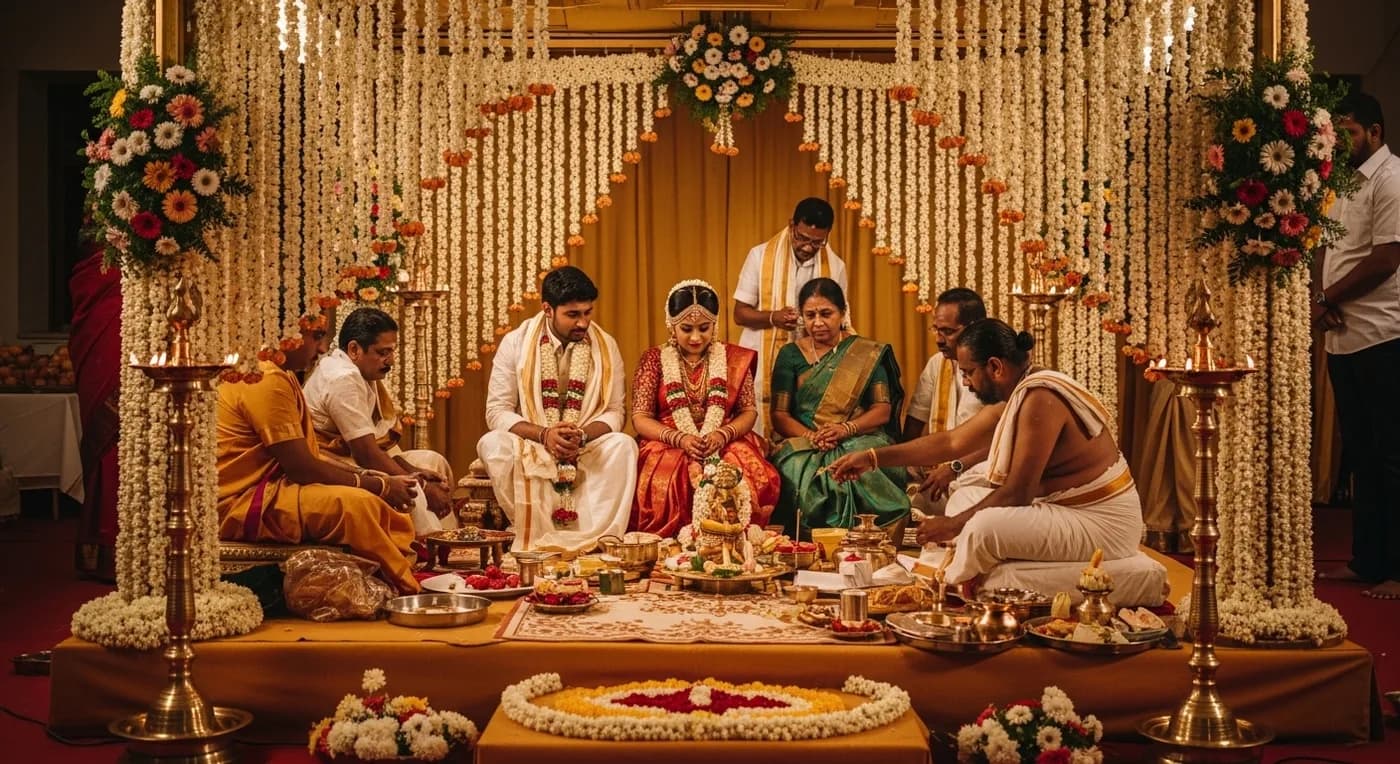
A Kerala Hindu wedding ceremony spans 4 AM to 10 PM, though the core rituals — nilavilakku, kanyadaanam, thalikettu — take just 60–90 minutes. The muhurtham most commonly falls between 10 AM and 12:30 PM. The sadya follows at 12:30–2:30 PM, and the evening reception runs 6–9 PM. Christian and Muslim ceremonies follow distinct community-specific sequences.
Quick Answer
Quick answer: A Kerala Hindu wedding runs from 4 AM to 10 PM. Key moments: Ganapathi Pooja (4 AM), bride prep (5 AM), Muhurtham/Thalikettu (10 AM-12:30 PM), Sadya feast (12:30 PM), and Reception (6-10 PM).
Understanding the full Kerala wedding ceremony sequence is essential whether you are planning your own celebration or attending one as a guest. Kerala weddings follow a structured flow rooted in centuries of tradition, and knowing what happens at each stage helps everyone — the couple, families, vendors, and guests — be in the right place at the right time. As part of India's massive wedding economy — valued at ₹10.79 lakh crore and projected to reach ₹24 lakh crore by 2030 per IBEF — Kerala's ceremonies continue to set the standard for cultural richness and precision.
This guide walks you through the complete sequence of a Kerala wedding day, hour by hour, from the earliest morning preparations to the final moments of the evening reception. We cover the Hindu ceremony in full detail, followed by the sequences for Christian and Muslim celebrations, so you can plan with confidence regardless of your community. For a broader comparison of how ceremonies differ across faiths, see our Kerala wedding by religion guide.
For a broader look at the rituals themselves and their cultural significance, see our companion guide on Kerala wedding traditions explained.
The Full-Day Timeline: Hindu Kerala Wedding
A traditional Hindu Kerala wedding is an all-day event. The ceremony itself may last only an hour, but the surrounding preparations, feasts, and celebrations fill the day from before sunrise to well after dark. Below is a representative timeline based on a mid-morning muhurtham — the most common scheduling in districts like Thrissur, Ernakulam, and Palakkad.
| Time | Event | Location |
|---|---|---|
| 4:00 – 5:00 AM | Bridal preparation begins | Bride's home or hotel |
| 5:30 – 6:30 AM | Groom's preparation and family gathering | Groom's home or hotel |
| 7:00 – 8:00 AM | Venue setup finalised, vendor check-in | Wedding venue |
| 8:00 – 9:00 AM | Guest arrival, breakfast service | Venue entrance hall |
| 9:30 AM | Groom's party arrives at venue | Main entrance |
| 10:00 AM | Nilavilakku lighting | Mandapam |
| 10:15 AM | Kanyadaanam | Mandapam |
| 10:30 AM | Thalikettu at muhurtham | Mandapam |
| 10:45 AM | Pudamuri | Mandapam |
| 11:00 AM | Garland exchange | Mandapam |
| 11:15 AM | Blessings from elders | Mandapam |
| 11:30 AM – 1:00 PM | Group photographs | Photo area |
| 12:30 – 2:30 PM | Sadya (wedding feast) | Dining hall |
| 3:00 – 4:00 PM | Rest and transition | Private rooms |
| 5:00 – 6:00 PM | Reception stage setup | Reception hall |
| 6:00 – 9:00 PM | Evening reception | Reception hall |
| 9:00 – 10:00 PM | Send-off | Venue exit |
Tip
Pre-Dawn: Preparations (4:00 – 7:00 AM)
The Kerala wedding day begins long before any guest arrives. In Kozhikode, Kottayam, and across the state, wedding mornings follow a similar pattern of quiet, focused preparation.
Bridal Preparation
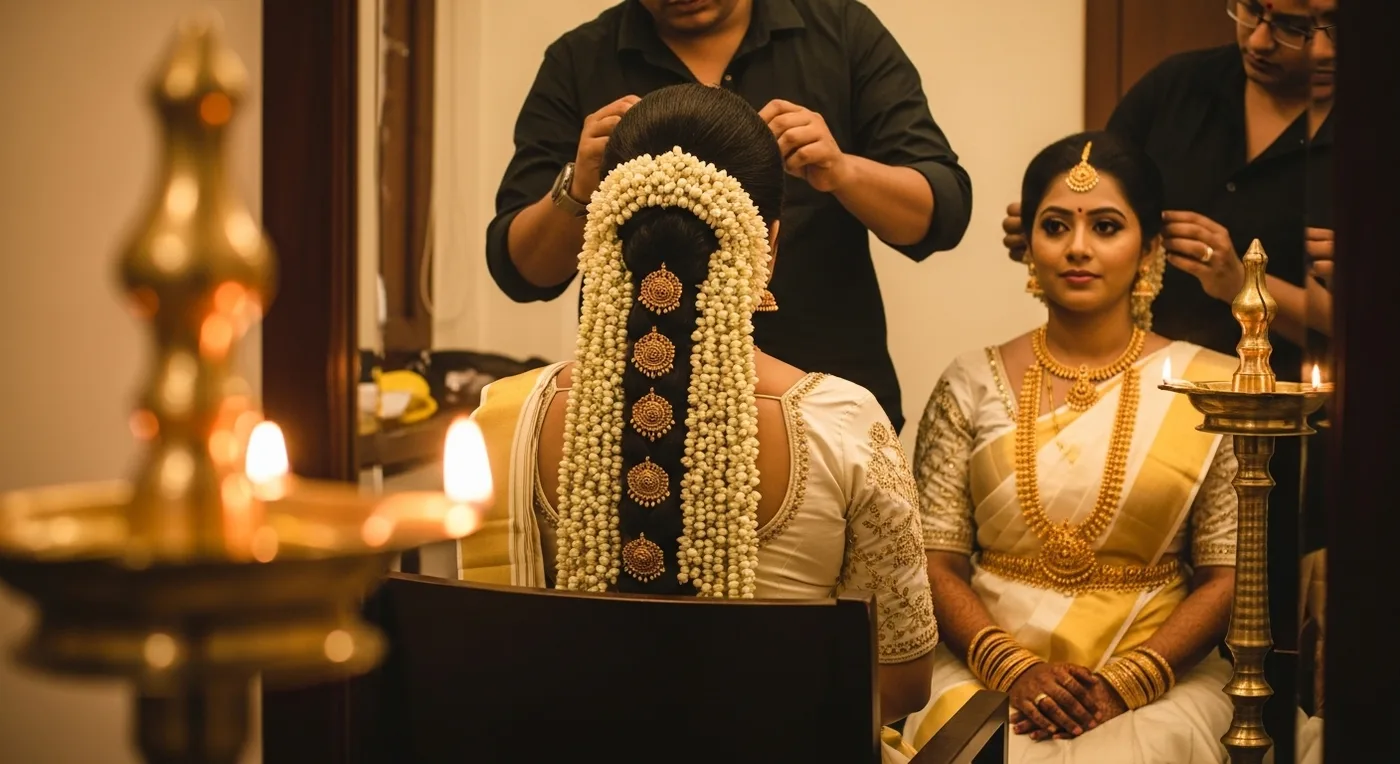
The bride's day starts earliest — typically around 4 AM. Professional makeup and hairstyling for a traditional Kerala bridal look typically takes two to three hours. The classic look involves a centre-parted hairstyle adorned with fresh jasmine (malli poo), gold jewellery including the traditional manga mala and kaasu mala, and the iconic white-and-gold kasavu sari or mundum neriyathum.
Looking for Makeup Artists?
Tell us what you need and get quotes from verified makeup artists
Groom's Preparation
The groom's preparation is simpler but no less important. The traditional attire is a freshly starched mundu with a gold-bordered kasavu upper cloth, paired with a silk shawl. In some Namboodiri and Nair traditions, the groom may also wear specific religious marks on the forehead.
Venue Finalisation
While the couple prepares, the venue team completes the final setup. Decorators arrange the mandapam with banana stems, coconut fronds, brass lamps, and floral arches. The catering team begins the sadya preparation — a process that starts even earlier, often at 2 or 3 AM for large weddings.
Looking for Decorators?
Tell us what you need and get quotes from verified decorators
Morning Arrival and Gathering (7:00 – 9:30 AM)
Guests begin arriving at the venue between 7:00 and 9:00 AM. In Kerala, punctuality for the ceremony itself is expected — the muhurtham waits for no one — but there is generally a relaxed gathering period beforehand.
Peak-season venues across Kerala are in high demand, especially during the November-February wedding window. Most venues in Ernakulam, Thiruvananthapuram, and Thrissur serve a light breakfast to early arrivals: tea, coffee, puttu-kadala, or snack platters. This is also when the photography team captures pre-ceremony candids of the family, decorations, and venue details.
The groom's party (baraatis or maapillai veettukaar) typically arrives in a coordinated group around 9:00 to 9:30 AM. Their arrival is an important moment — they are formally received by the bride's family with garlands, sandalwood paste, and traditional welcome gestures.
Tip
The Ceremony: Core Rituals (10:00 – 11:30 AM)
This is the heart of the Kerala wedding ceremony sequence. The core rituals follow a precise order, and each one builds on the last. The entire sequence typically takes 60 to 90 minutes.
1. Nilavilakku (Lighting the Lamp)
The ceremony opens with the lighting of the nilavilakku — the traditional brass oil lamp. Senior female members of both families light the lamp together, symbolising the merging of two families and inviting divine blessings. This marks the formal beginning of the wedding ceremony.
The nilavilakku is placed at the centre of the mandapam, and its steady flame is maintained throughout the rituals. In temples across Guruvayur and Thrissur, the temple's own lamps may serve this purpose.
2. Kanyadaanam (Giving Away the Bride)
The bride's father formally gives her hand to the groom in the presence of the officiating priest and family elders. In this ritual, the father places the bride's hand in the groom's, often with sanctified water flowing over their joined hands. This is a deeply emotional moment that represents the father's trust and the formal commencement of the marital bond.
3. Thalikettu at the Muhurtham (Tying the Sacred Thread)
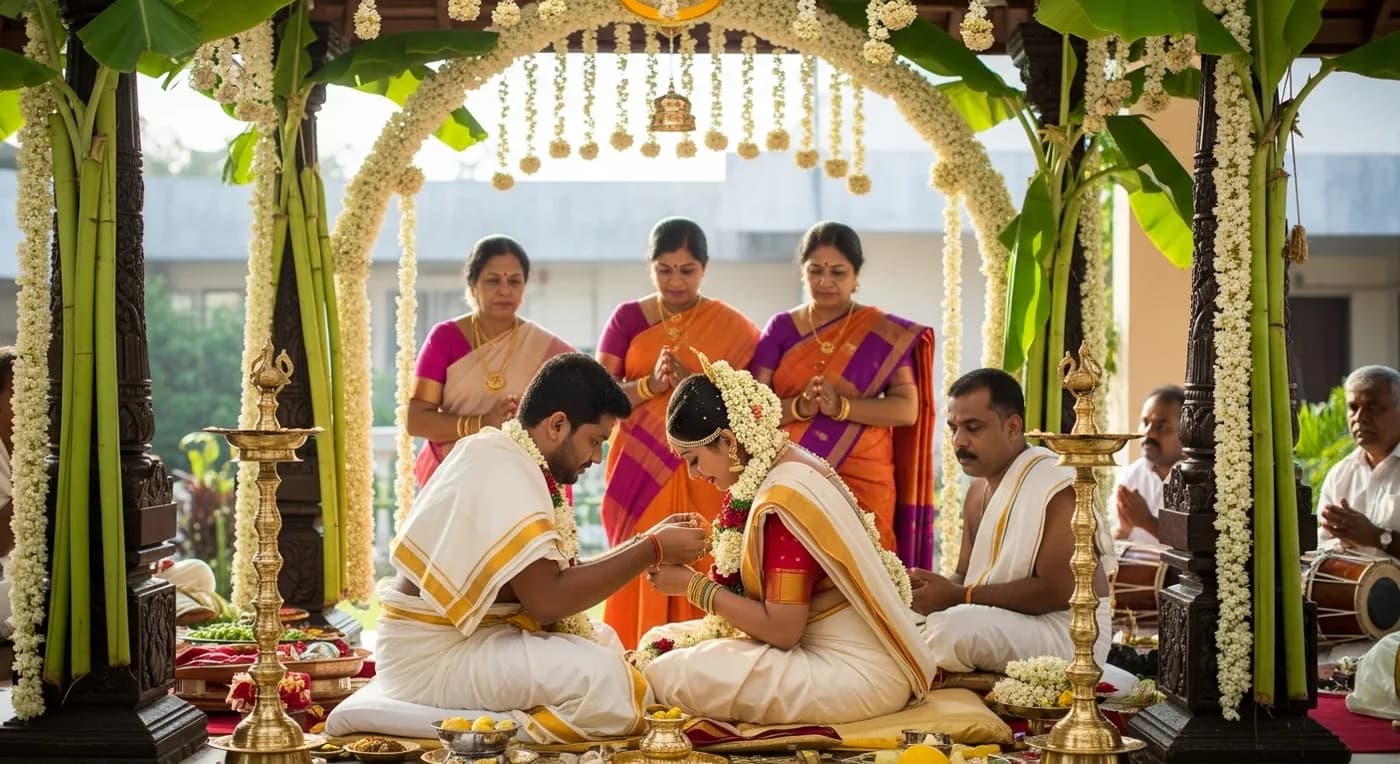
The thalikettu is the single most important moment of the entire wedding day. At the exact muhurtham — the astrologically determined auspicious second — the groom ties the thali (sacred marriage thread, also called mangalsutra) around the bride's neck.
The priest chants Vedic mantras, and the nadaswaram (traditional wind instrument) plays at full volume to mark the moment. Guests may shower flower petals or rice grains on the couple. Once the thali is tied, the couple is considered married.
Important
4. Pudamuri (Gifting the Wedding Sari)
Immediately after the thalikettu, the groom presents the bride with a new kasavu sari — the pudamuri. This gesture symbolises the groom's commitment to caring for the bride. In many families, the bride briefly steps away to change into the gifted sari before returning for the remaining rituals.
5. Mala Maattal (Exchange of Garlands)
The couple exchanges floral garlands — typically jasmine and rose — signifying mutual acceptance and respect. This is often the most joyful and lighthearted moment of the ceremony. Family members sometimes lift the couple on their shoulders to create a playful competition over who garlands the other first. Photographers love this moment, and it consistently produces the most lively images of the day.
6. Ashirvaadam (Blessings)
The final stage of the ceremony is the ashirvaadam — blessings from elders. Starting with the oldest family members and proceeding through relatives and close friends, each person places their hands on the couple's heads and offers their wishes. This can take 15 to 30 minutes depending on the size of the family.
Tip
Post-Ceremony: Photographs and Sadya (11:30 AM – 2:30 PM)
Group Photographs
After the blessings, the couple moves to the designated photo area for formal group photographs. A skilled photographer will have a pre-planned shot list: immediate family, extended family groups, college friends, and the couple alone. In large Nair and Namboodiri weddings in Palakkad and Thrissur, the group photograph session alone can take 45 minutes to an hour.
Looking for Photographers?
Tell us what you need and get quotes from verified photographers
The Sadya (Wedding Feast)
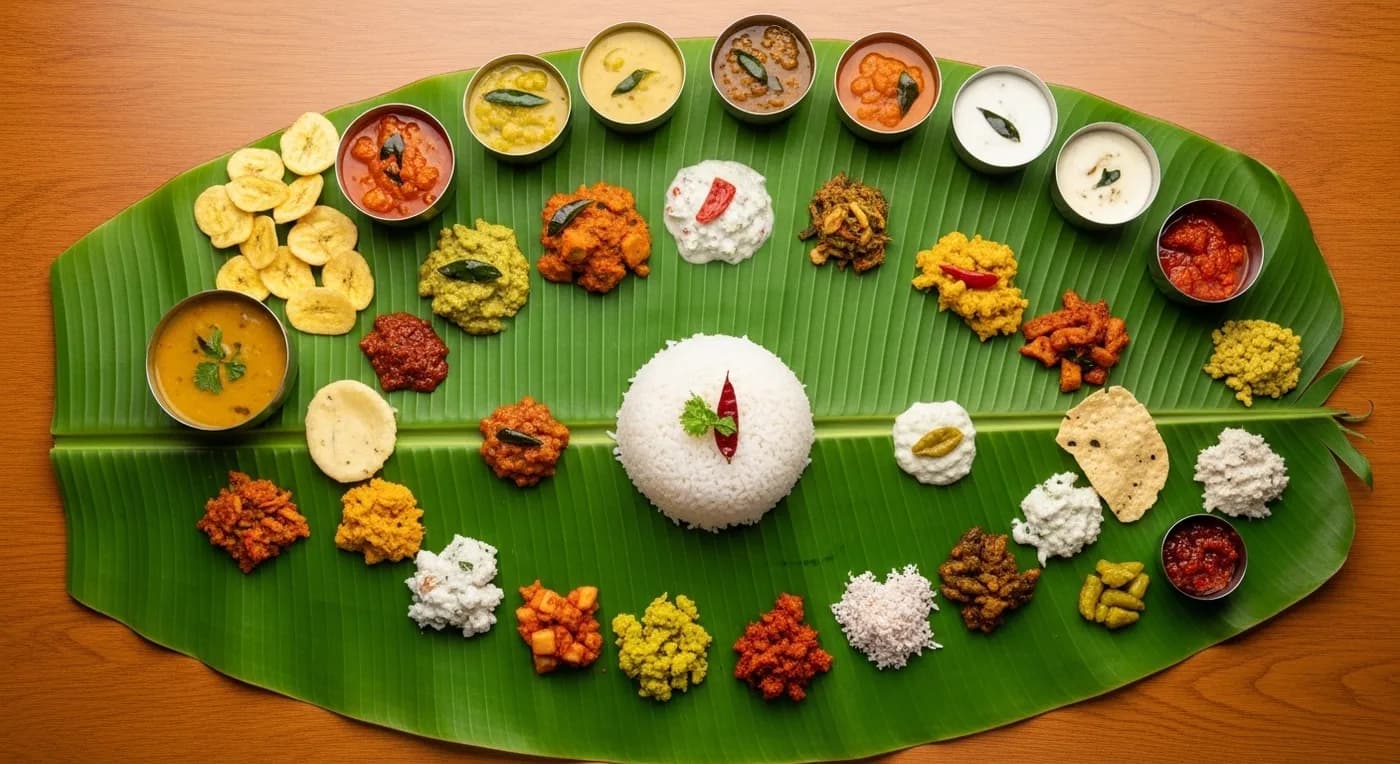
The sadya is the culinary centrepiece of the Kerala wedding ceremony sequence. Served on fresh banana leaves, a traditional wedding sadya features 24 to 28 dishes arranged in a specific layout. The sequence of serving follows its own protocol: pickles and papadam first, then side dishes, followed by rice, sambar, rasam, and finally payasam (dessert).
The sadya is served in multiple sittings, with the bride and groom's families typically eating in the first batch. For weddings with 500 or more guests — common in Malappuram, Thrissur, and Kottayam — the catering team is usually prepared to serve three or four sittings back to back.
| Sadya Serving Schedule | Guests |
|---|---|
| 12:00 – 12:30 PM | Immediate family and elders |
| 12:30 – 1:15 PM | Extended family and VIPs |
| 1:15 – 2:00 PM | General guests (first batch) |
| 2:00 – 2:30 PM | General guests (second batch) |
Looking for Caterings?
Tell us what you need and get quotes from verified caterings
Afternoon Transition (2:30 – 5:00 PM)
The afternoon is a deliberate pause in the day's events. After the intensity of the morning ceremony and the sadya, the couple and families rest, refresh, and prepare for the evening reception.
During this window, the bride typically changes into a more elaborate outfit — often a richly embroidered sari or lehenga for the reception stage. The groom may change into a suit or sherwani. The decoration team transforms the reception hall, and the DJ or live music setup is tested.
This transition period is also when the couple and photographer can capture intimate portraits, often using the golden afternoon light in the venue gardens. Some of the most treasured wedding photographs come from this quiet window between the ceremony and reception.
Evening Reception (5:00 – 10:00 PM)
The evening reception is the social celebration that complements the morning's religious ceremony. It is typically held at the same venue or a nearby convention centre or hotel banquet hall.
Stage Programme
The reception follows a structured programme:
| Time | Activity |
|---|---|
| 5:00 – 6:00 PM | Stage setup, sound check, couple arrives |
| 6:00 – 6:15 PM | Welcome address and lamp lighting |
| 6:15 – 7:00 PM | Formal guest reception on stage |
| 7:00 – 7:30 PM | Speeches and felicitations |
| 7:30 – 8:30 PM | Entertainment (music, dance performances) |
| 8:30 – 9:30 PM | Dinner service |
| 9:30 – 10:00 PM | Cake cutting, final photographs, send-off |
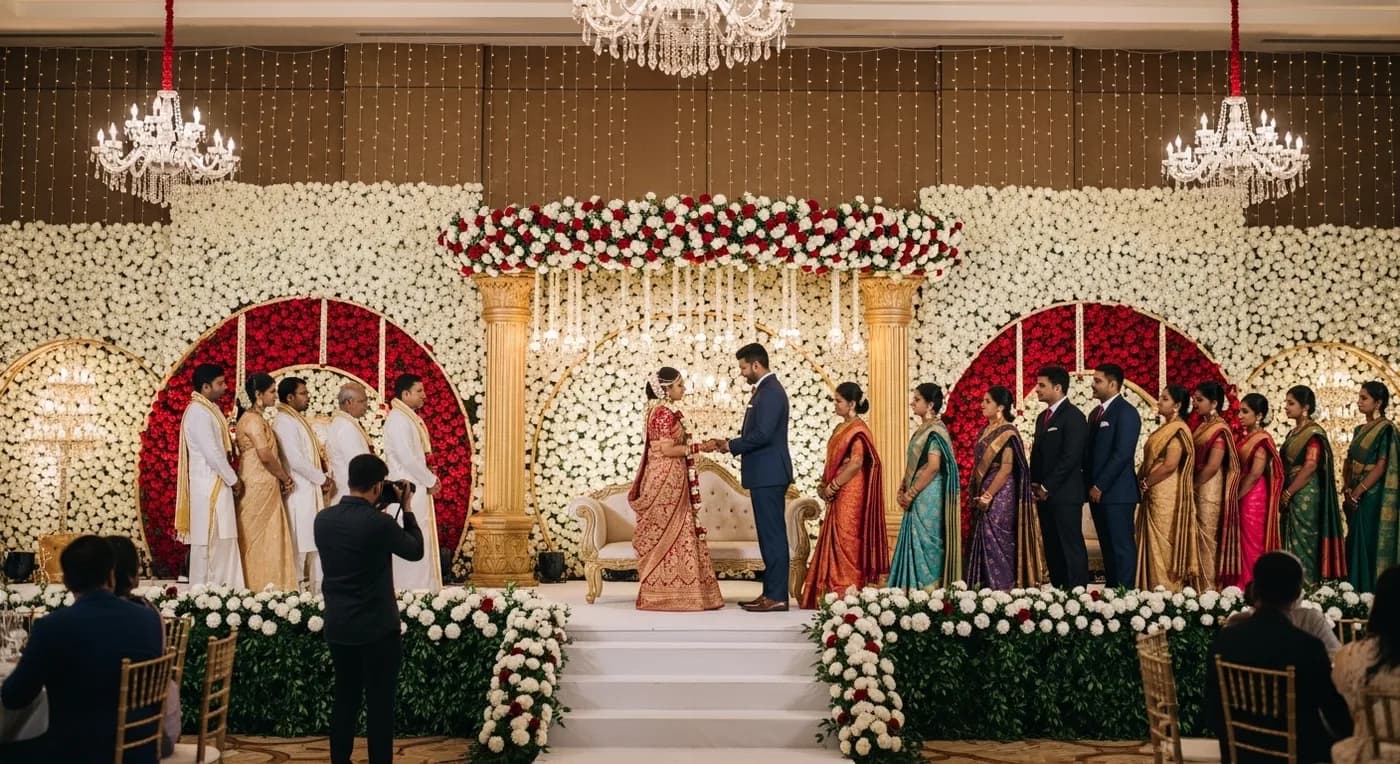
The reception is where distant relatives, professional contacts, and community members pay their respects. Guests approach the stage, greet the couple, offer gifts (typically cash envelopes), and pose for a photograph. A good reception photographer can typically capture 300 to 500 individual guest photos in an evening.
Christian Kerala Wedding Ceremony Sequence
Christian weddings in Kerala follow a different but equally structured sequence. The centre of the celebration is the church ceremony, with the reception as a separate event.
Typical Timeline
| Time | Event |
|---|---|
| 7:00 – 8:00 AM | Bridal and groom preparation |
| 9:00 – 9:30 AM | Arrival at church |
| 9:30 – 11:00 AM | Church ceremony (Holy Mass, vows, ring exchange, mantrakodi) |
| 11:00 – 11:30 AM | Church exit photographs |
| 12:00 – 2:00 PM | Lunch reception at hall or hotel |
| 4:00 – 5:00 PM | Couple changes for evening reception |
| 6:00 – 10:00 PM | Evening reception with dinner |
The church ceremony in Syro-Malabar parishes in Kottayam and Ernakulam typically includes a full Holy Mass lasting about 90 minutes. The exchange of vows, blessing and exchange of rings, and the gifting of the mantrakodi (wedding sari) happen within the liturgy. The priest's homily addresses the couple directly, and the congregation participates through hymns and responses.
Unlike Hindu ceremonies where the muhurtham dictates timing, Christian ceremonies follow the church's scheduled Mass time. However, parish churches in popular wedding months (November to February) book up quickly, so securing your date 6 to 12 months ahead is essential.
Muslim Kerala Wedding Ceremony Sequence
Muslim weddings in Kerala, especially in the Malabar region covering Kozhikode, Malappuram, and Kannur, are known for their warmth, community spirit, and exceptional food.
Typical Timeline
| Time | Event |
|---|---|
| 8:00 – 9:00 AM | Groom's family preparation |
| 9:30 – 10:00 AM | Nikah ceremony at mosque or bride's home |
| 10:00 – 10:30 AM | Signing of marriage contract, Mahr announcement |
| 11:00 AM – 1:00 PM | Walima feast (groom's family hosts) |
| 4:00 – 5:00 PM | Bride's preparation for reception |
| 6:00 – 10:00 PM | Evening reception and dinner |
The Nikah is the religious core of the ceremony — a solemn contract conducted by the Qazi in the presence of witnesses from both families. The Mahr (bridal gift) is formally agreed upon and announced. The ceremony itself is relatively brief, often lasting 20 to 30 minutes.
The Walima feast that follows is legendary in Kerala's Malabar region. Malabar biryani, pathiri, neychoru, various meat and fish preparations, and an extraordinary array of sweets make the Walima one of the most anticipated meals in any Kerala wedding calendar.
Planning Tips for Every Ceremony Type
Regardless of community, these practical principles apply to every Kerala wedding ceremony sequence:
-
Build the schedule around the fixed point. For Hindu weddings, that is the muhurtham. For Christian weddings, the church Mass time. For Muslim weddings, the Nikah appointment. Every other event works outward from that anchor.
-
Add buffer time. Kerala weddings almost always run 15 to 30 minutes behind schedule. Build this cushion into your timeline rather than fighting it.
-
Coordinate vendor arrivals separately. Your photographer, decorator, and caterer each need different setup windows. Send each vendor a customised schedule showing only their relevant timings.
-
Designate a family coordinator. One trusted person from each side of the family should have the full timeline and the authority to keep things moving.
-
Brief guests on the muhurtham. For Hindu weddings, make it clear on the invitation or through family channels that the ceremony starts at a specific time and will not be delayed.
For a comprehensive planning checklist, see our step-by-step Kerala wedding planning guide.
Common Questions About Kerala Wedding Ceremony
How long does a typical Kerala Hindu wedding ceremony last?
The core ceremony — from nilavilakku lighting to the completion of blessings — takes about 60 to 90 minutes. However, the full Kerala wedding ceremony sequence, including preparations, sadya, and reception, spans an entire day. Most families should plan for activity from 4 AM through 10 PM.
What time does the muhurtham usually happen?
The muhurtham is set by an astrologer based on the couple's horoscopes and varies by date. Most commonly it falls between 10:00 AM and 12:30 PM, but some muhurthams are as early as 6:00 AM or as late as early afternoon. Our muhurtham dates for 2026–2027 lists the most auspicious windows. Confirm the exact time with your family astrologer well in advance so every vendor can plan accordingly.
Can we rearrange the order of rituals in a Kerala wedding?
The core ritual sequence — nilavilakku, kanyadaanam, thalikettu, pudamuri, garland exchange, and blessings — follows a fixed religious order and should not be rearranged. However, surrounding events like the reception programme, entertainment, photo sessions, and dinner service can be scheduled flexibly to suit your venue and guest count.
What is the difference between the ceremony and the reception?
The ceremony is the religious ritual portion of the wedding — the muhurtham, thalikettu, and formal blessings — usually held in the morning at a temple, hall, or mandapam. The reception is a separate social celebration held in the afternoon or evening, featuring a decorated stage, music or entertainment, formal guest greetings, and dinner. Many Kerala weddings hold both on the same day at the same venue.
How early should guests arrive for a Kerala wedding?
For Hindu weddings, guests should arrive at least 30 minutes before the muhurtham. For Christian weddings, arrive 15 minutes before the Mass begins. For Muslim weddings, confirm the Nikah time with the family and arrive on time. In all cases, the ceremony will proceed on schedule regardless of guest arrivals.
Further Reading
Explore our detailed guides for planning your Kerala wedding:
- Steps in a Traditional Kerala Wedding — a ritual-by-ritual walkthrough
- How to Plan a Kerala Wedding — the complete planning guide from engagement to reception
- Kerala Wedding Traditions Explained — meanings behind every ritual across all communities
- Planning from the USA? Plan a Kerala Wedding from USA — visa, paperwork, and a 14-day on-ground itinerary for NRI couples
- Planning from the Gulf? Plan a Kerala Wedding from UAE/Gulf — Emirates-attestation timelines and budget translated to AED
Tip
Plan smarter with free tools — generate a personalised timeline with our AI Wedding Checklist, estimate costs with the Wedding Cost Calculator, or create a stunning digital invitation in minutes.
Topics
Kerala wedding ceremony sequencekerala wedding ritualswhat happens at a kerala weddingkerala wedding order of eventsmuhurtham timingkerala sadyathalikettukerala wedding ceremony stepskerala hindu wedding ceremonyExplore more
Frequently Asked Questions
1How long does a typical Kerala Hindu wedding ceremony last?
2What time does the muhurtham usually happen at a Kerala wedding?
3Can we rearrange the order of rituals in a Kerala wedding?
4What is the difference between the ceremony and the reception at a Kerala wedding?
5How early should guests arrive for a Kerala wedding?
Continue reading
Related Articles
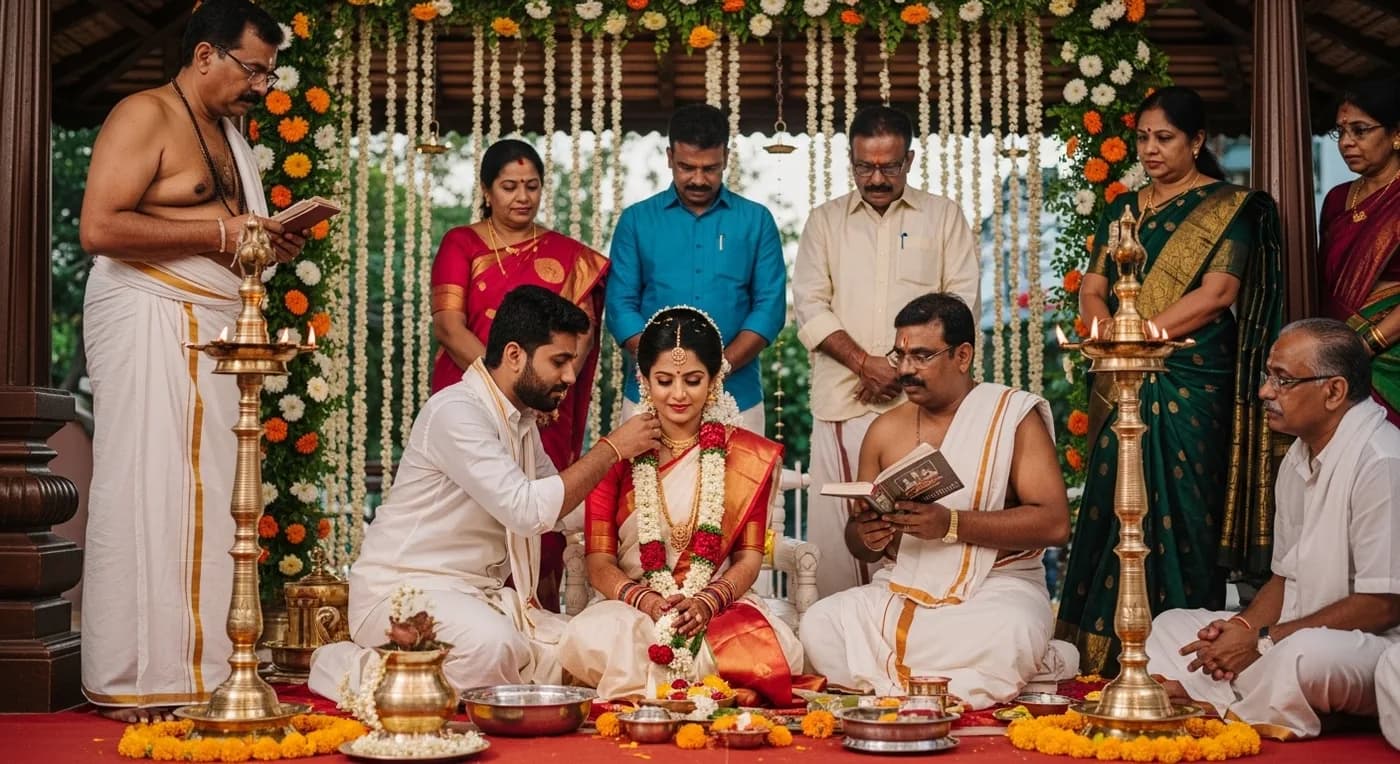
Steps in a Traditional Kerala Wedding: Rituals and Practical Notes
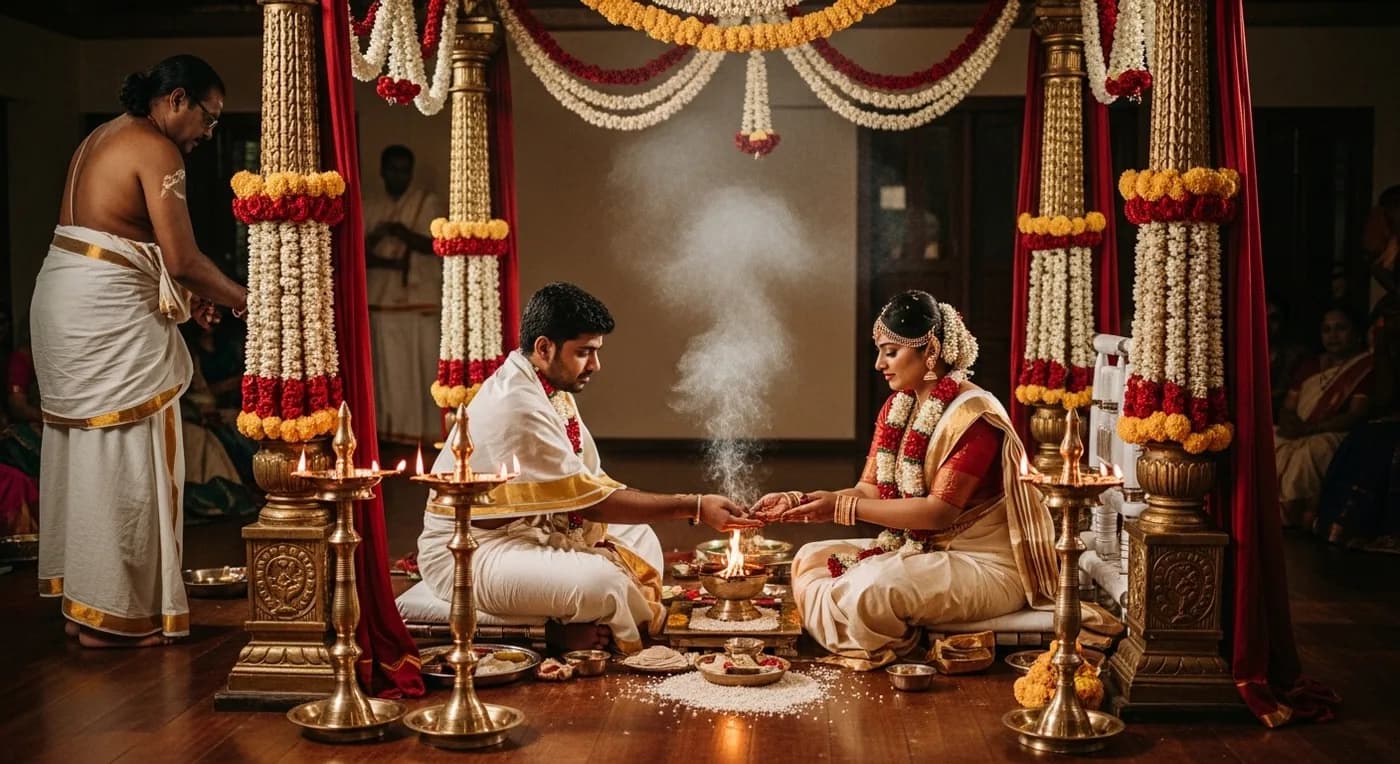
Kerala Wedding Traditions Explained: Rituals, Meaning & Modern Adaptations
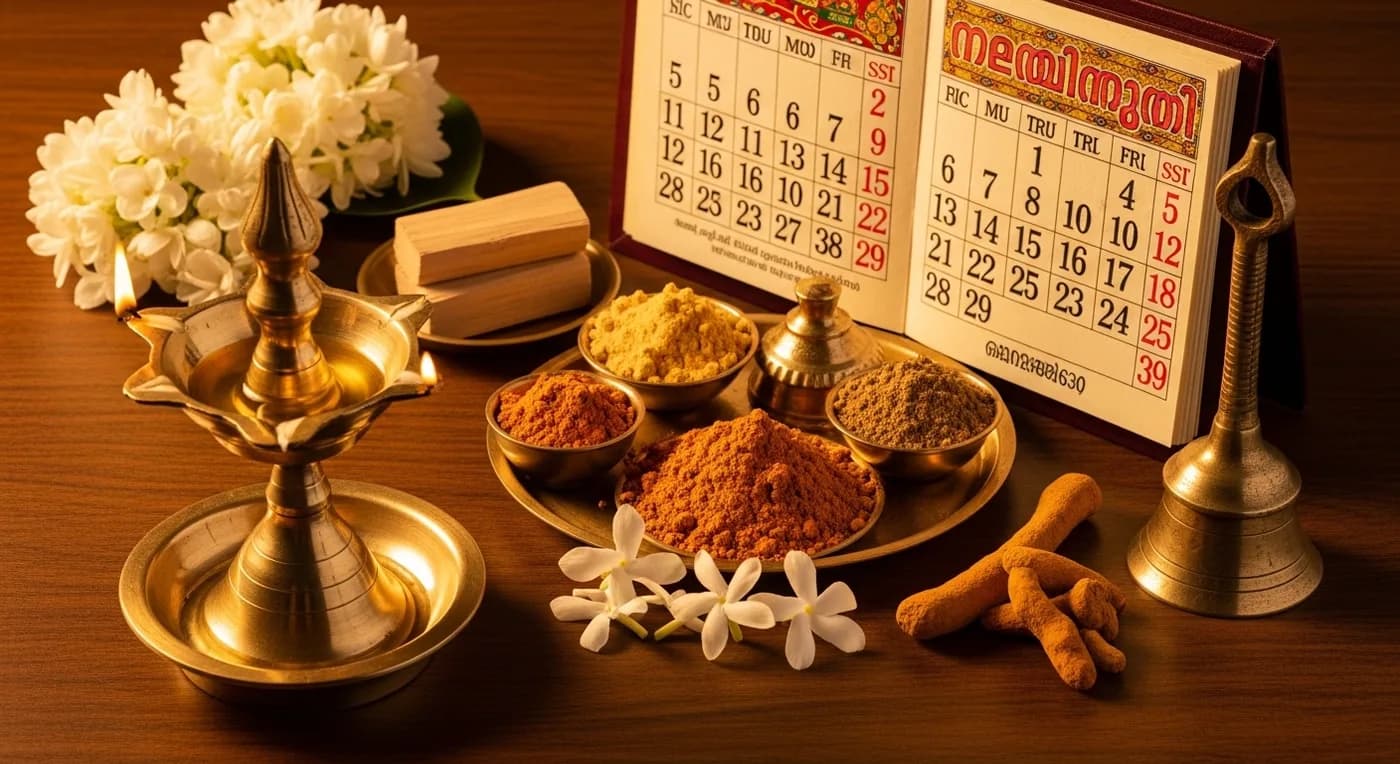
Kerala Muhurtham Dates 2026–2027: Auspicious Days
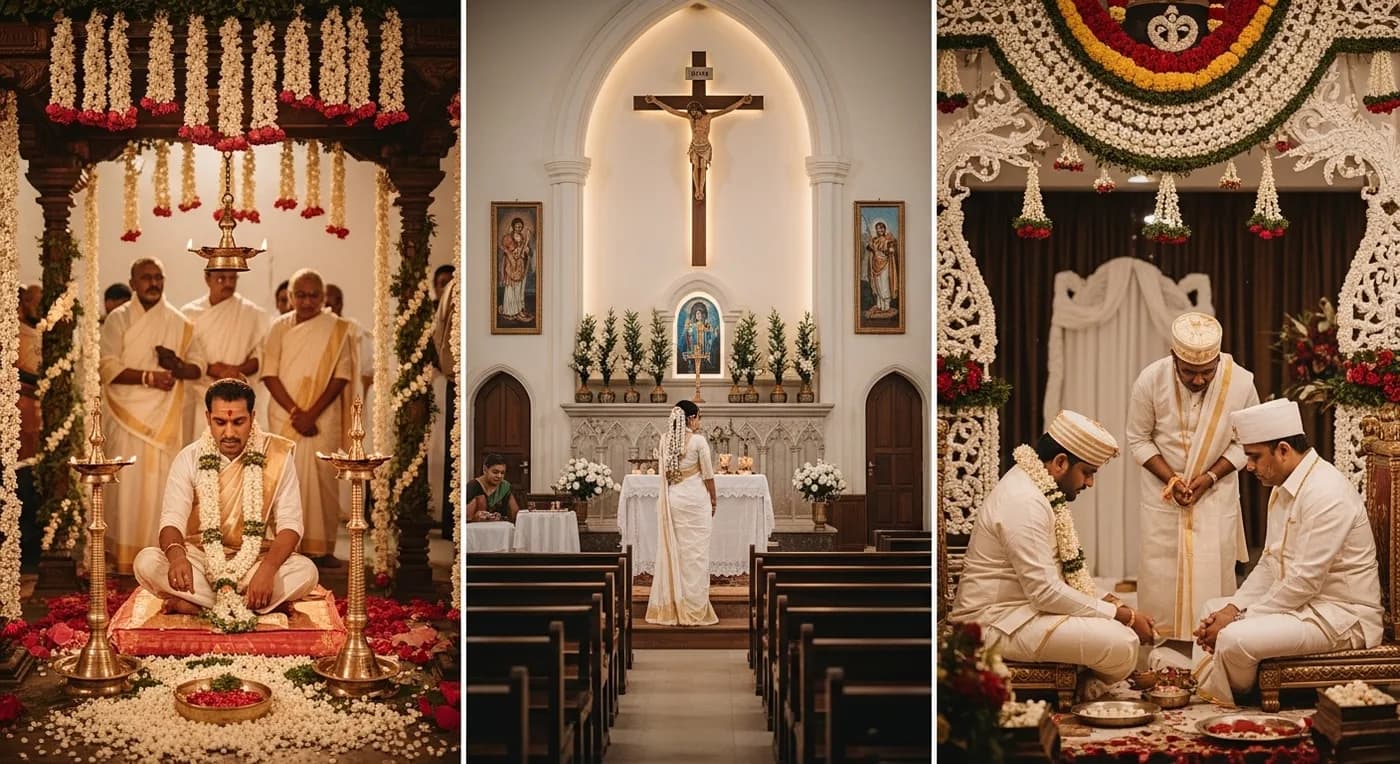
Kerala Wedding by Religion: Hindu, Christian & Muslim
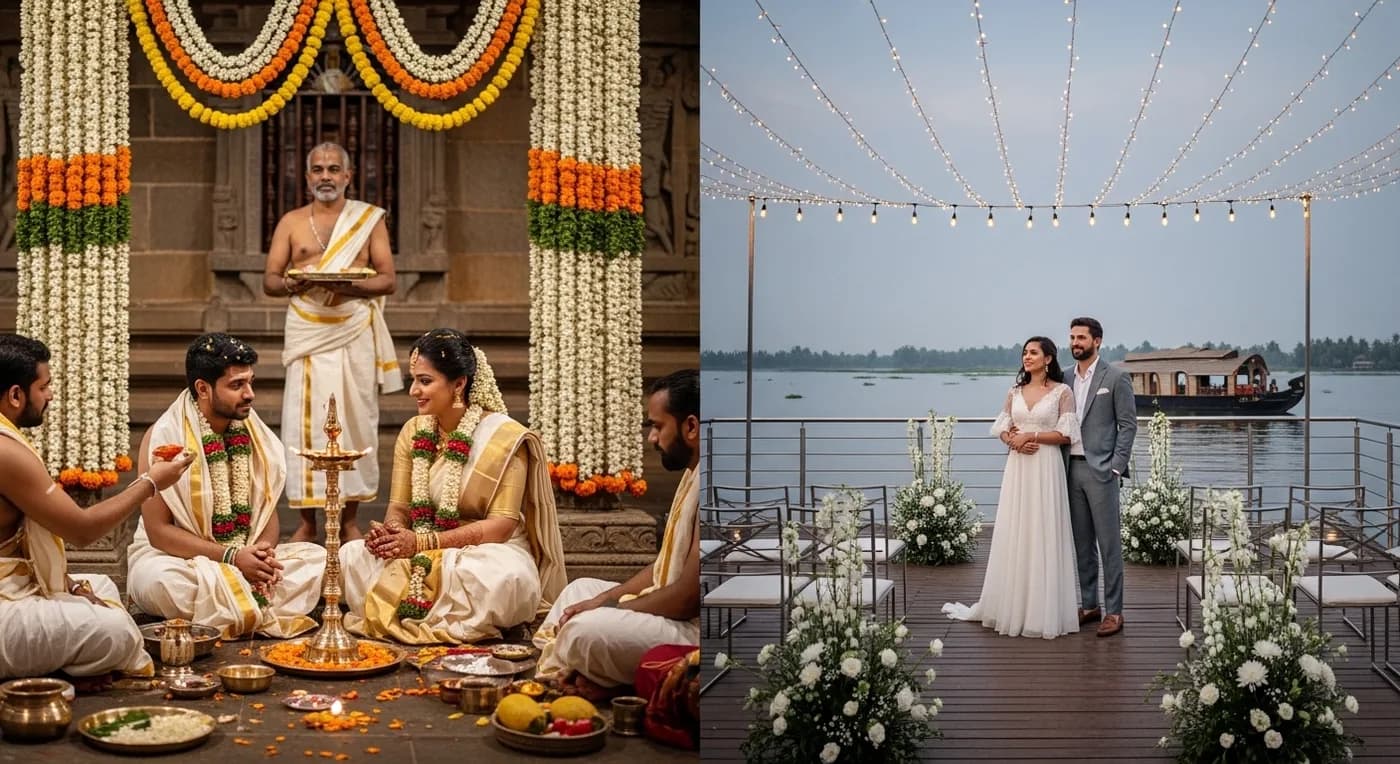
Traditional vs Destination Kerala Wedding: Which Is Right for You?
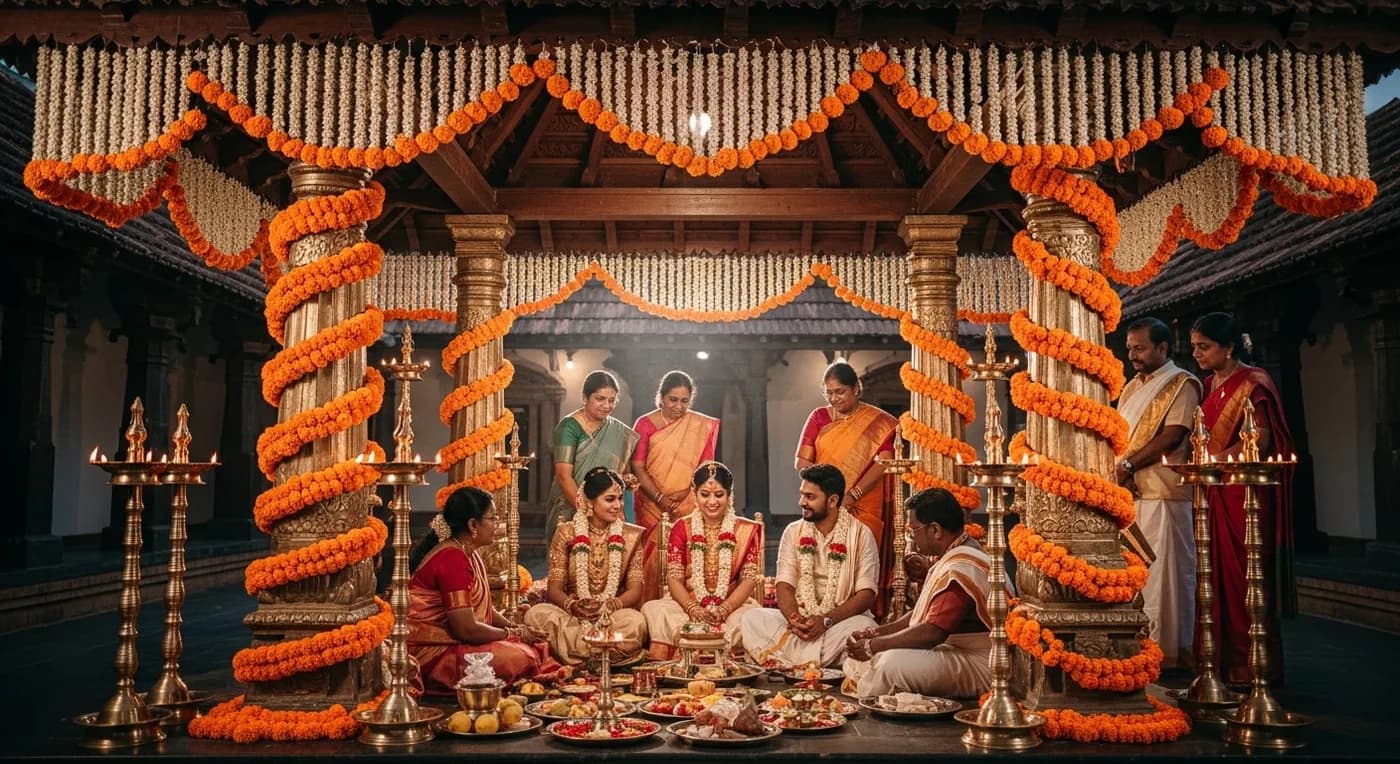
How to Plan a Kerala Wedding: The Complete 2026 Guide
Still planning?
Get quotes from India's best vendors
Tell us what you're planning and we'll match you with verified photographers, venues, decorators, and more.
Get free quotes