
Kerala Wedding E-Invite Guide: Templates, Wording & Tools for 2026
Complete guide to creating Kerala wedding digital invitations — templates for Hindu, Christian and Muslim ceremonies, Malayalam wording, RSVP tracking, and platform comparison.

Senior Wedding Planner
Priya Nair is a senior wedding planner based in Kochi with over eight years of experience coordinating Hindu, Christian, and destination weddings across Kerala.
On this page
Kerala couples can create a professional digital wedding invitation in under 5 minutes using free e-invite builders with Kerala-specific templates, Malayalam wording, and built-in RSVP tracking. Digital invitations cost ₹0–₹15,000 compared to ₹15,000–₹50,000 for 500 printed cards, and reach guests instantly via WhatsApp.
Quick Answer
The Kerala wedding invitation has always been more than logistics — it is the family's first public declaration of the celebration. In 2026, that declaration increasingly arrives on a phone screen rather than in a postbox. According to the WedMeGood Annual Wedding Industry Report 2025–2026, 54% of Indian couples now prefer digital invitations over traditional paper, and 60% use WhatsApp as their primary channel for sharing wedding details with guests.
This guide walks you through everything you need to create a Kerala wedding e-invite that respects tradition while embracing convenience — from religion-specific wording templates to platform comparisons and RSVP tracking setup. If you are mapping out your full wedding timeline, our Kerala wedding planning guide covers every milestone from muhurtham booking to the reception.
Why Kerala Couples Are Switching to Digital Invitations
Digital invitations have moved from a pandemic workaround to a deliberate first choice for Kerala couples. The shift is driven by cost, speed, and the state's near-universal WhatsApp adoption — with India home to over 850 million WhatsApp users, the largest market globally. A digital invite lands in every guest's pocket within seconds, regardless of whether they live in Thrissur or Toronto.
Note
The Cost Equation
The financial case is straightforward. Traditional printed wedding cards in Kerala cost ₹30–₹100 per card depending on material and design, according to ShadiWish's wedding cost survey. For a 500-person guest list, that means ₹15,000–₹50,000 on printing alone — before courier charges for outstation relatives. A premium digital invitation with video animation, RSVP tracking, and multilingual text costs ₹2,000–₹15,000 as a one-time expense, with no per-guest cost. Free platforms bring that number to zero.
Speed and Reach
A printed card takes 2–3 weeks to design, proof, and print, plus another week for distribution. A digital invite can be designed, reviewed, and shared within a single afternoon. For Kerala's NRI community — families spread across the Gulf, UK, US, and Australia — a WhatsApp broadcast delivers the invitation instantly rather than relying on international post that takes 7–14 days.
Environmental Awareness
With receptivity to paperless weddings at 45% among Indian couples, environmental considerations are influencing the choice. A 500-card print run uses significant paper, ink, and packaging. For couples already choosing eco-friendly wedding trends, digital invitations are a natural extension of that philosophy.
Note
What to Include in a Kerala Wedding E-Invite
A Kerala wedding e-invite must contain every element a traditional printed card would, plus interactive features that digital formats enable. The specific content varies by religion, but the structural framework is consistent across Hindu, Christian, and Muslim ceremonies.
Essential Elements (All Traditions)
Every Kerala e-invite should include: both families' names in the culturally correct hierarchy, the couple's full names, ceremony date and time, venue name with a Google Maps link, event schedule (ceremony, reception, sadya or dinner timing), dress code if applicable, and an RSVP mechanism — either a button, a link, or a phone number.
Bilingual text in Malayalam and English is standard across all Kerala communities. For detailed wording conventions across all three traditions, our wedding invitation wording guide provides ready-to-use templates.
Hindu E-Invite Specifics
Open with a Sanskrit shloka — "Sri Ganeshaaya Namah" is the most common. List the groom's family first (for the wedding ceremony). Include the muhurtham time with nakshatra details if your family observes this tradition. Add "Followed by Sadya" to set meal expectations. For Nair and Namboodiri families, the tharavad name carries significant cultural weight and should not be omitted.
Christian E-Invite Specifics
Begin with a biblical verse — 1 Corinthians 13:4 is the most popular in Kerala. List the bride's family first, following the convention that the bride's family hosts. Include the church name, the officiating priest, and separate timings for the church ceremony and reception venue. Denomination-specific conventions apply — Syrian Catholic, Latin Catholic, Jacobite, Mar Thoma, and CSI families each have subtle differences in format.
Muslim E-Invite Specifics
Open with "Bismillahir Rahmanir Raheem" in Arabic calligraphy — this is non-negotiable. Include a Quranic verse (Surah Ar-Rum 30:21 is most commonly used). Follow the patrilineal naming convention traditional in Malabar families. List the nikah and walima as separate events with their own venues and timings. Some families include the Hijri date alongside the Gregorian date.
Tip
How to Create Your Kerala Wedding E-Invite
Creating a professional digital invitation takes five steps. The process is the same regardless of which platform you choose, though the specific tools differ.
Step 1: Choose Your Template
Select a template that matches your ceremony type — Hindu, Christian, or Muslim. Look for designs that include Kerala-specific motifs: nilavilakku (traditional lamp), elephants, pookalam (flower rangoli), coconut palms, or kasavu (gold border) patterns. Avoid generic "Indian wedding" templates that use North Indian design elements (baraat motifs, Rajasthani patterns) — they will look out of place for a Kerala celebration.
Step 2: Add Your Wording
Enter your ceremony details following the religious conventions outlined above. Use formal Malayalam for the primary text and clear English for the secondary text. Have at least two family elders review the wording before finalising — name hierarchy and titles matter deeply in Kerala wedding culture. For ready-to-use wording across all three traditions, refer to our detailed wording templates.
Step 3: Include Interactive Elements
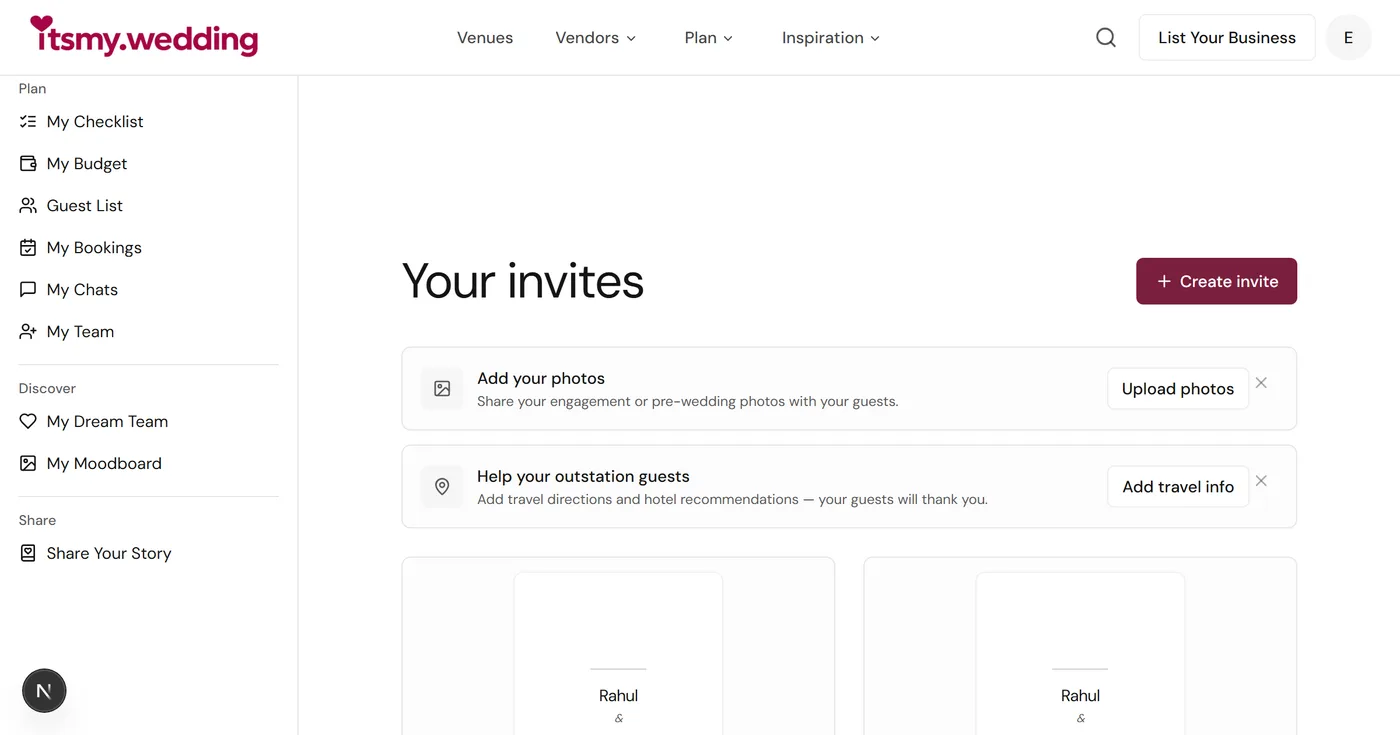
This is where digital invitations outperform paper. Add a Google Maps link to your venue (essential in Kerala, where multiple venues share identical names), a tap-to-call number for the event coordinator, a link to your wedding website or planning page, and an RSVP button that lets guests confirm attendance with a single tap. Start designing your invitation with built-in interactive elements on itsmy.wedding.
Step 4: Preview and Test
Preview the invitation on multiple screen sizes. The most common viewing device is a smartphone held vertically — design for that format first. Test that all links work, that Malayalam and Arabic text renders correctly, and that the RSVP mechanism functions. Send the preview to three trusted people (one tech-savvy, one elderly relative, one friend with an older phone) before broadcasting.
Step 5: Share via WhatsApp Broadcast
Use WhatsApp's broadcast list feature — not a group. A broadcast sends the invitation as a private message to each recipient, preserving the personal feel. Add a brief personal line before the invitation link: "Dear [Name], we would be so happy to have you with us on our special day." This small touch transforms a mass message into a personal invitation.
Best E-Invite Platforms for Kerala Weddings
Not all e-invite platforms are built equally for Kerala weddings. The key differentiators are Kerala-specific template availability, Malayalam language support, RSVP tracking, and WhatsApp optimisation. Here is how the major platforms compare.
| Feature | itsmy.wedding | WedMeGood | Canva | Desievite |
|---|---|---|---|---|
| Kerala-specific templates | Yes — Hindu, Christian, Muslim | Limited regional options | No (generic Indian) | Yes — Malayalam templates |
| Malayalam text support | Full support with fonts | Limited | Manual text entry | Full support |
| RSVP tracking | Built-in with dashboard | Basic | No | Basic |
| WhatsApp optimisation | Auto-sized for sharing | Manual download | Manual download | Optimised |
| Video invitations | Yes | Yes | No (static only) | Yes |
| Google Maps integration | Embedded in invite | No | No | No |
| Guest list management | Full — linked to planning dashboard | Separate tool | No | Basic |
| Cost | Free (premium from ₹499) | ₹500–₹5,000 | Free (Pro from ₹500/month) | Free–₹2,000 |
Canva offers the most design flexibility if you want to build a completely custom invitation from scratch, but it produces static images with no RSVP capability and no Kerala-specific templates, as noted in Fotify's 2026 platform comparison. WedMeGood has a large template library with premium designs but limited Malayalam support and regional customisation. Desievite offers free Malayalam invitation cards optimised for WhatsApp, making it a solid budget option.
For couples who want Kerala-specific templates, bilingual support, RSVP tracking, and guest management in one place, create your free Kerala wedding e-invite on itsmy.wedding.
Note
Design your wedding e-invite
A beautiful digital invitation you can share on WhatsApp in minutes.
Malayalam Wording Templates for Digital Invitations
Digital invitations follow the same wording conventions as printed cards but favour conciseness — guests read them on phone screens, not framed on a mantelpiece. Below are formal and contemporary templates for each tradition, optimised for digital delivery.
Hindu — Formal Digital
|| ശ്രീ ഗണേശായ നമഃ ||
ദൈവാനുഗ്രഹത്താലും മുതിര്ന്നവരുടെ ആശിര്വാദത്താലും
ശ്രീ [അച്ഛന്റെ പേര്] & ശ്രീമതി [അമ്മയുടെ പേര്] [തറവാട് പേര്], [സ്ഥലം]
തങ്ങളുടെ പുത്രന് / പുത്രിയുടെ [പേര്]
വിവാഹം
[പങ്കാളിയുടെ പേര്] [പങ്കാളിയുടെ കുടുംബ വിവരങ്ങള്]
മുഹൂര്ത്തം: [തീയതി], [സമയം] വേദി: [വേദിയുടെ പേര്] — [Google Maps Link]
സദ്യ തുടര്ന്ന്
സാന്നിധ്യം അഭ്യര്ത്ഥിക്കുന്നു
Hindu — Contemporary Digital
ശുഭം
[മണവാളന്റെ പേര്] & [മണവാട്ടിയുടെ പേര്]
ഞങ്ങളുടെ വിവാഹത്തിലേക്ക് നിങ്ങളെ സ്നേഹപൂര്വ്വം ക്ഷണിക്കുന്നു
[തീയതി] | [സമയം] [വേദി] — [Google Maps Link]
RSVP: [Link]
Christian — Formal Digital
യേശുവിന്റെ നാമത്തില്
"സ്നേഹം ദീര്ഘമായി ക്ഷമിക്കുന്നു; ദയ കാണിക്കുന്നു" — 1 കൊരിന്ത്യര് 13:4
Mr. [വധുവിന്റെ അച്ഛന്] & Mrs. [വധുവിന്റെ അമ്മ] [ഇടവക / സ്ഥലം]
Mr. [വരന്റെ അച്ഛന്] & Mrs. [വരന്റെ അമ്മ] [ഇടവക / സ്ഥലം]
വിവാഹ കുര്ബാന [തീയതി] | [സമയം] [പള്ളിയുടെ പേര്] — [Google Maps Link]
സ്വീകരണം [സമയം] | [വേദി] — [Google Maps Link]
RSVP: [Link]
Muslim — Formal Digital
بسم الله الرحمن الرحيم
അല്ലാഹുവിന്റെ അനുഗ്രഹത്താല്
[വരന്റെ കുടുംബം] & [വധുവിന്റെ കുടുംബം]
[വരന്റെ പേര്] & [വധുവിന്റെ പേര്] എന്നിവരുടെ നിക്കാഹ് ചടങ്ങിലേക്ക് താങ്കളെ ആദരപൂര്വ്വം ക്ഷണിക്കുന്നു
നിക്കാഹ്: [തീയതി] | [സമയം] [വേദി] — [Google Maps Link]
വലീമ: [തീയതി] | [സമയം] [വേദി] — [Google Maps Link]
താങ്കളുടെ സാന്നിധ്യവും പ്രാര്ത്ഥനയും അഭ്യര്ത്ഥിക്കുന്നു
For complete printed-card wording with full explanations of naming conventions, title usage, and sub-community variations, our Kerala wedding invitation wording guide covers every nuance.
RSVP Tracking and Guest Management
The biggest advantage of a digital invitation over paper is the ability to track who has seen the invite, who has confirmed, and who has not responded. In Kerala, where average guest lists run to 300+ people and RSVP culture is weak (expect only 30–40% to respond unprompted, based on itsmy.wedding couple data), a tracking system saves hours of follow-up phone calls.
What RSVP Tracking Gives You
A built-in RSVP system lets you see total confirmed guests in real time, track dietary requirements (vegetarian, non-vegetarian, or Jain for sadya planning), identify guests who have not responded so you can follow up selectively, and generate accurate headcounts for your caterer. This directly impacts your sadya catering costs — the difference between planning for 300 and 350 guests can mean ₹50,000 or more in food costs.
How to Set Up RSVP on Your E-Invite
On itsmy.wedding, RSVP tracking is built into every invitation. When guests open the invitation link shared via WhatsApp, they see a "Confirm Attendance" button. Their response flows into your guest list dashboard, where you can filter by event (ceremony, reception, or both), track plus-ones, and export the list for your caterer and venue coordinator.
Follow-Up Strategy
Send the initial invitation 6–8 weeks before the wedding. Follow up with a reminder 2 weeks before. For guests who still have not responded, a personal phone call from a family member 1 week before is the Kerala-standard approach — and far more effective than another digital reminder. Your wedding checklist should include RSVP follow-up milestones at each of these intervals.
Tip
Collect RSVPs on WhatsApp
Guests reply in a tap, and your counts update per event automatically.
E-Invite Etiquette: Who Still Gets a Paper Card?
Digital invitations are practical, but Kerala wedding culture has not gone fully paperless. Certain people expect — and deserve — a physical card delivered personally. Knowing where to draw the line prevents hurt feelings and preserves family harmony.
Always Send a Printed Card To
Elder relatives (grandparents' generation). Ammachi and Appuppan expect a card in hand. For many in this generation, the physical card is an announcement they show to neighbours, place on the mantelpiece, and keep as a memento. A WhatsApp message does not serve the same social function.
Community and religious leaders. The parish priest, the imam, the temple trustee, the local panchayat member — these individuals receive invitations as a mark of respect. A printed card, preferably hand-delivered by a family elder, signals that their presence is specifically valued.
Close family on both sides. Uncles, aunts, and first cousins typically receive printed cards even if they have already been informed digitally. The card is a formality, but it is a formality that matters.
Employers and senior colleagues. If your workplace culture is traditional — particularly in government offices, banks, or established Kerala businesses — a physical card hand-delivered to your manager's desk is still the expected protocol.
Digital-Only Is Fine For
Friends and peers, especially those under 40. Colleagues in tech companies, startups, and multinational firms. Acquaintances and extended social circles. All out-of-state and international guests (for whom digital is more practical regardless of age).
The Hybrid Approach
The most common strategy in Kerala in 2026 is hybrid: print 50–100 cards for the must-have-paper list, and send digital invitations to everyone else. This typically costs ₹3,000–₹8,000 for printing (a fraction of a full 500-card run) while covering 100% of your guest list digitally. For a deeper comparison of costs and conventions across formats, read our digital vs paper invitations guide.
Note
Common Questions About Kerala Wedding E-Invite
Is it acceptable to send only digital wedding invitations in Kerala?
For younger guests and colleagues, digital-only is perfectly acceptable in 2026. However, for elderly relatives, community leaders, and close family members, a printed card is still culturally expected. The safest approach is a hybrid strategy — printed cards for 50–100 key people and digital for everyone else. This covers your cultural obligations while keeping costs low and distribution instant for the majority of your guest list.
How much does a Kerala wedding e-invite cost?
Basic e-invite platforms are free or cost under ₹500. Premium animated video invitations with custom music, multiple event pages, and professional motion graphics range from ₹2,000 to ₹15,000 depending on complexity. Platforms like itsmy.wedding offer free e-invite creation with RSVP tracking, WhatsApp sharing, and QR code generation — no design skills required. Compare that to ₹15,000–₹50,000 for 500 printed cards with envelopes, and the savings are significant.
What should a Kerala wedding e-invite include?
Include both families' names in proper hierarchy (groom's family first for Hindu, bride's family first for Christian), the couple's full names, ceremony date and muhurtham time, venue name with a Google Maps link, dress code if any, an RSVP mechanism, and the event schedule covering ceremony, reception, and sadya or dinner timing. Bilingual text in Malayalam and English is standard across all communities. A contact number for day-of coordination is a useful addition that printed cards rarely include.
Can I add RSVP tracking to my Kerala wedding e-invite?
Yes. Most modern e-invite platforms include built-in RSVP tracking. On itsmy.wedding, guests can RSVP directly from the invitation link shared via WhatsApp. You can track responses in real time, manage guest counts by event (ceremony vs reception), note dietary preferences, and send automated reminders to non-responders — all from your planning dashboard.
Which e-invite platform is best for Kerala weddings?
For Kerala-specific templates with Malayalam support, itsmy.wedding and Desievite are strong options. Canva offers more design flexibility but lacks Kerala-specific templates and RSVP tracking. WedMeGood has a large template library but limited regional customisation. Choose based on whether you need cultural specificity and guest management (itsmy.wedding, Desievite) or pure design freedom (Canva).
Next Steps
Your invitation sets the tone for your entire wedding. Whether you go fully digital, fully printed, or hybrid, the key is getting the wording right, the design culturally appropriate, and the logistics seamless. Here is where to go from here:
- Create your free Kerala wedding e-invite with built-in RSVP and WhatsApp sharing
- Start designing your invitation using Kerala-specific templates
- Use the wedding planning checklist to map invitations into your broader timeline
- Browse detailed wording templates for all three Kerala traditions
Topics
Kerala wedding e-invitedigital wedding invitation Keralawedding e-invite makerKerala wedding invitation onlineMalayalam wedding invitation digitalExplore more
Frequently Asked Questions
1Is it acceptable to send only digital wedding invitations in Kerala?
2How much does a Kerala wedding e-invite cost?
3What should a Kerala wedding e-invite include?
4Can I add RSVP tracking to my Kerala wedding e-invite?
5Which e-invite platform is best for Kerala weddings?
Continue reading
Related Articles
Digital vs Paper Wedding Invitations in Kerala: The 2026 Guide
Wedding Invitation Wording Guide: Kerala Hindu, Christian & Muslim Templates
Kerala Wedding Checklist: Complete Printable Planner for 2026
Best Free Wedding Planning Tools in 2026: The Complete Guide

Best Season for South India Destination Weddings: Month-by-Month Western Ghats Guide
Destination Wedding Cost in South India 2026: 5-Tier Budget Guide
Still planning?
Get quotes from India's best vendors
Tell us what you're planning and we'll match you with verified photographers, venues, decorators, and more.
Get free quotes