
Digital vs Paper Wedding Invitations in Kerala: The 2026 Guide
Digital vs paper wedding invitations in Kerala: hybrid strategy costs ₹20,000-35,000 for 500 guests. Compare costs, etiquette, and platforms for 2026.

Senior Wedding Planner
Priya Nair is a senior wedding planner based in Kochi with over eight years of experience coordinating Hindu, Christian, and destination weddings across Kerala.
On this page
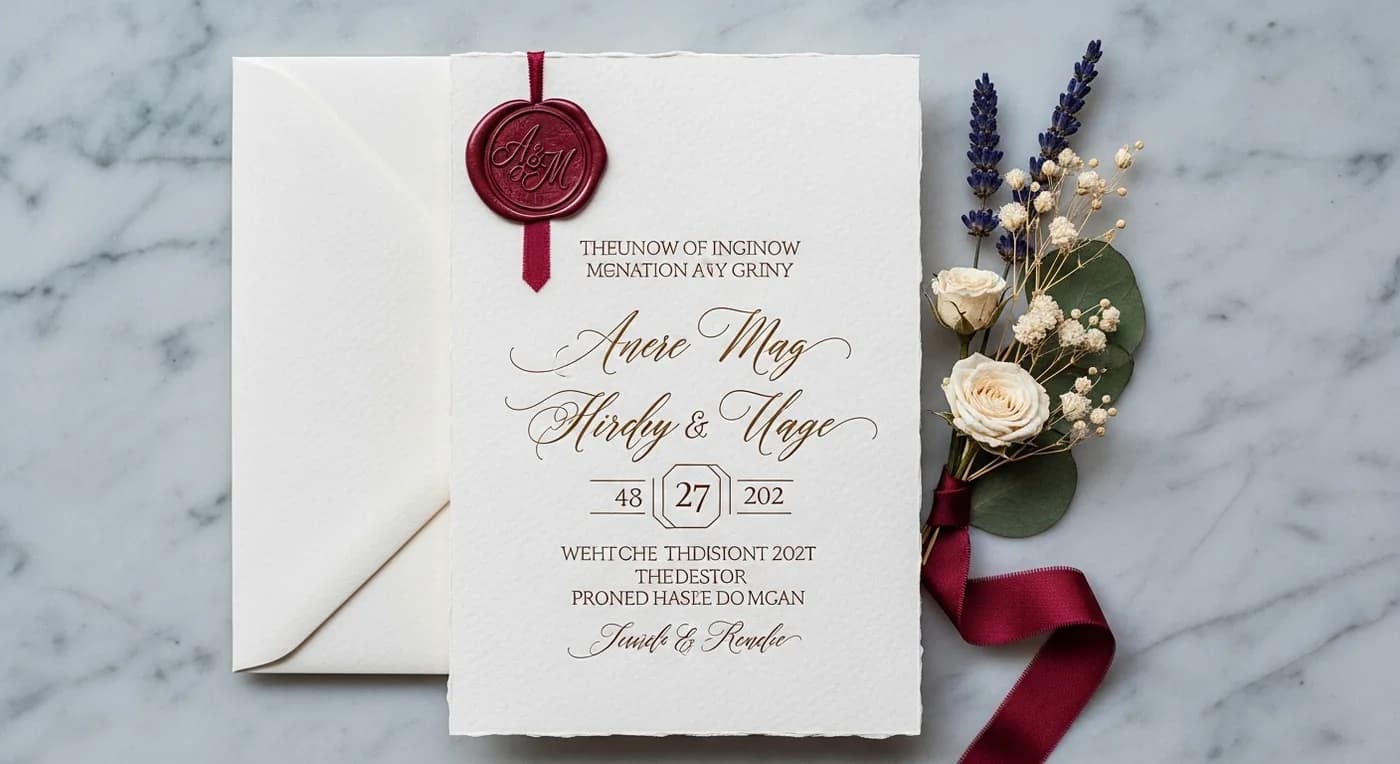
A hybrid invitation strategy — printed cards for 50–100 key people plus digital for the rest — costs ₹20,000–₹35,000 for a 500-guest Kerala wedding. Paper-only runs ₹15,000–₹50,000; digital design costs just ₹2,000–₹15,000 with unlimited distribution. Guests over 55 still expect a physical card; those under 30 prefer digital. Send formal cards 4–6 weeks before the wedding.
Quick Answer
With 4.6 million weddings generating ₹6.5 lakh crore in spending during peak season alone, the invitation is the first touchpoint in a massive industry. Every Kerala couple planning a wedding in 2026 faces the same quiet tension: tradition says you hand-deliver an ornate printed card to every family elder, complete with gold foil and the careful arrangement of both families' names in the correct order. Practicality says you design a beautiful graphic, record a thirty-second video, and forward it to 400 people on WhatsApp in under a minute. Both approaches have genuine merit, and neither is going away anytime soon.
The truth is that wedding invitations in Kerala carry weight far beyond logistics. They are the first impression your guests receive of the celebration ahead — a signal of taste, respect, and family standing. Getting the invitation strategy wrong can mean anything from a grandparent feeling overlooked to a colleague showing up on the wrong day. This guide walks you through every dimension of the decision: the cultural stakes, the real costs, the platforms available, and the hybrid strategy that most Kerala couples in 2026 are finding to be the smartest path forward.
The Cultural Context: Why Invitations Matter in Kerala
In most parts of India, a wedding invitation is a formality. In Kerala, it is a social act with deep significance. The invitation card — kudipathram in some communities — represents the family's first public declaration of the wedding. It communicates not just the date and venue, but the family's values, their aesthetic sensibility, and crucially, the degree of respect they hold for each recipient.
For detailed wording conventions across Hindu, Christian, and Muslim communities — including family name hierarchy and bilingual formatting — see our Kerala wedding invitation wording guide. This cultural weight exists because of how invitations have traditionally been delivered. In Kerala, printed cards were never simply posted in the mail. A senior family member — often the father, an uncle, or a respected elder — would personally visit the homes of close relatives, neighbours, and community figures to hand-deliver the card. This practice, which continues in 2026 across Thrissur, Palakkad, Kozhikode, and much of rural Kerala, turns the invitation into a social ritual. The visit includes tea, conversation, and an implicit acknowledgment that the recipient matters enough to warrant a personal journey.
Note
Kerala Custom: In traditional Kerala families, the invitation is personally hand-delivered by a family member — often the father or uncle. This personal touch is considered a mark of respect, especially for elders and community leaders. In 2026, this practice continues for the inner circle while digital handles the wider guest list.
Expectations around invitations also vary by community. In Hindu families, the card traditionally features the nilavilakku (brass lamp), Lord Ganesha, or temple motifs, and the wording follows a specific hierarchy — the groom's family name first or the bride's, depending on who is hosting. Christian wedding invitations in Kerala typically feature a cross or church imagery, often with bilingual text in Malayalam and English, and are distributed after the formal church banns are read. Muslim wedding invitations in the Malabar region tend toward elegant green and gold colour schemes with Quranic verses, and the nikah timing is prominently featured.
According to WeddingWire India's data, the average Indian wedding hosts 330 guests — and in Kerala, that number typically exceeds 500, according to industry patterns observed on itsmy.wedding. Generational expectations add another layer. Guests above 55 generally expect a physical card — many view a digital-only invitation as careless or disrespectful. Guests between 30 and 55 are comfortable with either format but appreciate a printed card for close relationships. Guests under 30 often prefer digital invitations and find them more practical, especially when they include venue maps and RSVP links. Urban couples in Kochi and Trivandrum lean more digital; families in Kannur, Malappuram, and the Palakkad-Thrissur belt tend to maintain stronger paper traditions.
Paper Invitations: Options and Pricing
Despite the digital shift, printed wedding cards remain a thriving industry in Kerala. Thrissur is the traditional hub for wedding printing, with dozens of established shops along Swaraj Round and M.G. Road that have served Kerala families for generations. Kochi's Edappally and Kaloor areas offer more contemporary design studios, while Trivandrum has a growing cluster of boutique stationery designers catering to modern aesthetics.
Note
Here is what you can expect across the main categories of printed invitations in 2026:
Basic Printed Cards
The standard single-card-in-envelope format remains the most common choice for large guest lists. These typically feature offset printing on 250-300 GSM card stock with a matching envelope. You get a choice of one to three colours and standard design templates. Cost: 15 to 30 rupees per piece, including the envelope. For a 500-guest wedding, this works out to 7,500 to 15,000 rupees.
Premium Designer Cards
A step up in materials and design. These use textured papers (linen, handmade cotton rag, or shimmer stock), metallic foil stamping (gold, rose gold, or silver), custom illustrations, and sometimes letterpress or embossed printing. Many couples in Ernakulam and Trivandrum now commission local graphic designers for bespoke artwork. Cost: 50 to 150 rupees per piece. For 300 cards, expect 15,000 to 45,000 rupees.
Box Invitations
The luxury end of Kerala wedding stationery. These are elaborate packages — a printed card nestled inside a decorative box that includes sweets, dry fruits, chocolates, or small gifts. Popular for very close family and VIP guests. Designs range from velvet-lined boxes with gold clasps to hand-painted wooden cases. Cost: 200 to 500 rupees per piece. Most couples order only 25 to 75 of these for their innermost circle.
Scroll Invitations
A niche format that carries a regal, traditional feel. Printed on thick card or fabric, rolled and tied with ribbon or cord, and delivered in a cylindrical tube. More common in North Kerala and among families with a taste for heritage aesthetics. Cost: 100 to 300 rupees per piece.
Eco-Friendly Options
Sustainability-conscious couples are increasingly choosing seed paper (embedded with flower or herb seeds that guests can plant), recycled handmade paper, or plantable cards. These carry a meaningful environmental message without sacrificing visual quality. Several Kochi-based studios now specialise in this category. Cost: 30 to 80 rupees per piece.
| Invitation Type | Per-Piece Cost (INR) | Cost for 500 Guests | Includes |
|---|---|---|---|
| Basic printed card | 15 - 30 | 7,500 - 15,000 | Card + envelope, 1-3 colour print |
| Premium designer card | 50 - 150 | 25,000 - 75,000 | Textured paper, foil stamping, custom design |
| Box invitation | 200 - 500 | 1,00,000 - 2,50,000 | Decorated box, card, sweets/dry fruits |
| Scroll invitation | 100 - 300 | 50,000 - 1,50,000 | Scroll, ribbon, cylindrical packaging |
| Eco-friendly card | 30 - 80 | 15,000 - 40,000 | Seed paper or recycled stock, envelope |
Add 3,000 to 8,000 rupees for India Post or courier delivery for outstation guests, and another 2,000 to 5,000 for design iterations if you are working with a custom designer rather than choosing from a printer's catalogue.
Looking for Invitationss in Kochi?
Tell us what you need and get quotes from verified invitationss
Digital Invitations: Platforms and Features
Digital invitations in 2026 have matured well beyond a flat image forwarded on WhatsApp. The options now range from free DIY solutions to fully produced video invitations and custom wedding microsites. Here is the landscape:
WhatsApp Forwards
Still the most common method for reaching a large Kerala guest list quickly. You design or commission a static image or short video and send it via broadcast lists. The cost is essentially zero beyond the design fee (if you hire a designer). The limitation is that there is no RSVP tracking, no interactivity, and a generic forward can feel impersonal — especially to older relatives who may wonder why they did not receive a "proper" card.
Custom Video Invitations
This category has exploded in Kerala over the past two years. Couples commission animated or filmed invitation videos — ranging from simple motion graphics with the couple's names and details to elaborate cinematic trailers featuring pre-wedding footage, drone shots of the venue, and Malayalam voiceovers. Videographers in Kochi, Kozhikode, and Trivandrum now offer invitation video packages as a standalone service. Cost: 3,000 to 15,000 rupees depending on length, complexity, and whether live footage is included.
Digital Design Platforms
Several platforms offer templates and customisation tools specifically for Indian weddings:
- Canva — Extensive free and premium templates. Good for couples comfortable with DIY design. Kerala-specific templates are limited but growing.
- Paperless Post — Premium feel with elegant animations. Strong RSVP tracking. Limited Malayalam support.
- WedMeGood — India-focused platform with built-in wedding website, RSVP, and vendor discovery. Good regional template selection.
- Shaadi Saga — Similar to WedMeGood with a focus on real wedding inspiration alongside digital invite tools.
- Desievite and Evite — Budget-friendly options with basic RSVP functionality and a wide library of Indian designs.
Custom Wedding Websites
The most comprehensive digital option. A dedicated website (usually on a subdomain like anjaliwedssidharth.itsmy.wedding) that includes the invitation itself, the full event schedule, Google Maps integration for the venue, accommodation suggestions for outstation guests, a photo gallery, the couple's story, and an integrated RSVP form. Some couples also add a gift registry or a meal preference selector. Cost: 5,000 to 15,000 for a custom-designed site; free to 2,000 on template-based platforms.
| Platform | Cost (INR) | RSVP Tracking | Map Integration | Customisation | Kerala Templates |
|---|---|---|---|---|---|
| WhatsApp forward | Free (design only) | No | No | High (custom design) | N/A |
| Canva | 0 - 2,000 | No | No | High | Limited |
| Paperless Post | 3,000 - 8,000 | Yes | Yes | Medium | Few |
| WedMeGood | 2,000 - 5,000 | Yes | Yes | Medium | Good |
| Shaadi Saga | 1,500 - 4,000 | Yes | Yes | Medium | Moderate |
| Custom wedding website | 5,000 - 15,000 | Yes | Yes | Full | Custom |
| Custom video invitation | 3,000 - 15,000 | No | No | Full | Custom |
Tip
The WhatsApp Strategy: Create a broadcast list (not group!) for digital invitations. Include a short personal message before the invite image/video. Kerala families appreciate the personal touch — a generic forward feels impersonal.
The Smart Hybrid Strategy
For most Kerala weddings in 2026, the answer is not digital or paper — it is both, deployed strategically based on the relationship with each guest. This hybrid approach respects cultural expectations where they matter most while leveraging the convenience and cost efficiency of digital tools for the broader guest list.
Here is the three-tier framework that works for the majority of Kerala families:
Tier 1: Printed and Hand-Delivered
Recipients: Parents, grandparents, close aunts and uncles, the couple's siblings, religious leaders (parish priest, temple thanthri, or imam), community elders, and immediate neighbours of both families.
Method: Premium or standard printed cards, personally delivered by a family member with a brief visit. This is non-negotiable in most Kerala families — it is the tier where cultural expectations are strongest and the emotional stakes are highest.
Volume: Typically 50 to 100 cards.
Cost per person: 30 to 150 rupees (card) plus the time investment of personal visits.
Tier 2: Printed and Posted or Courier-Delivered
Recipients: Extended family members, family friends, parents' colleagues, neighbours who are slightly less close, and business associates of the family.
Method: Standard or basic printed cards sent via India Post or courier. A personal phone call or WhatsApp message alongside the card adds warmth.
Volume: Typically 100 to 200 cards.
Cost per person: 20 to 50 rupees (card) plus 10 to 30 rupees (postage/courier).
Tier 3: Digital with a Personal Message
Recipients: The couple's friends, colleagues, college and school networks, acquaintances, social media connections, and any remaining guests.
Method: A well-designed digital invitation (static image, video, or wedding website link) sent via WhatsApp broadcast list with a short personal message. For closer friends, a one-on-one message rather than a broadcast feels more genuine.
Volume: Unlimited — this is where digital shines. Could be 200 to 500 or more recipients at essentially zero marginal cost.
Cost per person: Near zero once the design/video is created.
Hybrid Cost Analysis for a 500-Guest Wedding
| Tier | Recipients | Method | Cost Per Person (INR) | Total Cost (INR) |
|---|---|---|---|---|
| Tier 1 — Hand-delivered | 75 guests | Premium printed card, personal visit | 50 - 150 | 3,750 - 11,250 |
| Tier 2 — Posted | 150 guests | Standard printed card, posted | 30 - 80 | 4,500 - 12,000 |
| Tier 3 — Digital | 275 guests | WhatsApp / wedding website | 0 - 10 | 0 - 2,750 |
| Design and production | — | Video, website, print design | Flat fee | 5,000 - 15,000 |
| Total | 500 guests | Hybrid | — | 13,250 - 41,000 |
For most couples, the hybrid approach lands between 20,000 and 35,000 rupees — a small fraction of the national average wedding cost of ₹29.6 lakh, yet significantly less than going all-paper at premium quality, while still honouring every cultural obligation.
₹20,000 – ₹50,000Kerala-Specific Etiquette: Who Must Get a Paper Card
This is where many couples stumble. In the excitement of designing a beautiful digital invite, it is easy to overlook the list of people for whom a printed card is not just preferred — it is expected. Failing to send a physical card to certain individuals can create real social friction, and in Kerala's tightly knit community networks, word travels fast.
The non-negotiable paper card list:
- Grandparents and elder relatives on both sides — This is the absolute baseline. A grandparent who receives only a WhatsApp forward will feel it deeply, even if they do not say so directly.
- Religious leaders — The parish priest, temple thanthri, mosque imam, or any spiritual figure connected to the family. These individuals often play a role in the ceremony itself.
- Community leaders and local figures — Panchayat members, neighbourhood association heads, and family-connected public figures. The invitation is a gesture of social acknowledgment.
- Immediate neighbours — Especially in smaller towns across Alappuzha, Kottayam, and Pathanamthitta, neighbours are practically extended family. A printed card, ideally hand-delivered, is standard.
- Close family friends of both sets of parents — These are the people who have been present at every family milestone. A digital invite feels like a downgrade.
- Senior colleagues and the boss (older generation) — For parents' professional circles, particularly if the colleague is above 50, a printed card signals formality and respect.
Language and Wording
Kerala wedding invitations are frequently bilingual — Malayalam and English. The Malayalam text appears on the main card (or the left page of a folded card), while English text appears alongside or on the reverse. For families in Malabar, some cards include Malayalam, English, and Arabic or Urdu.
The naming convention matters. In Hindu invitations, the hosting family's name (typically the groom's family for the wedding and the bride's family for the reception) appears at the top. Christian invitations usually list the bride's family first. Muslim invitations follow the hosting family convention similar to Hindu cards but with Islamic invocations at the top.
Important
Etiquette Pitfall: In many Kerala communities, NOT sending a printed card to a close family member or elder is considered a serious social slight. When in doubt, print. The cost of 50 extra cards (1,500-5,000) is negligible compared to the family politics it prevents.
Design Elements for Kerala Wedding Invitations
Whether you are designing a printed card or a digital invitation, the visual language of your invitation communicates cultural identity, personal taste, and the tone of the celebration. Kerala has a rich visual vocabulary to draw from, and the best invitations in 2026 blend traditional motifs with contemporary design sensibility.
Traditional Motifs
- Nilavilakku (brass lamp): The most iconic Kerala wedding symbol. Represents light, prosperity, and auspiciousness. Used across Hindu and some Christian invitations.
- Elephants: Caparisoned elephants evoke the grandeur of Kerala's temple festivals and are a popular motif for larger-format invitations.
- Temple gopuram: Particularly relevant for temple weddings or Hindu ceremonies with strong traditional roots.
- Lotus and jasmine: Floral motifs that reference the natural abundance of Kerala and the flowers central to wedding decor.
- Banana leaf: Subtle and elegant, representing the sadya and hospitality.
- Kettuvallam (houseboat): Increasingly used for backwater destination weddings or couples with a connection to Kerala's waterways.
Community-Specific Design Cues
- Hindu invitations: Gold and cream colour palettes, lamp and temple motifs, Om or Ganapathi symbols, kasavu (gold-bordered) patterns.
- Christian invitations: White and gold or ivory tones, cross or church imagery, biblical verse, sometimes incorporating the specific church architecture (like Basilica of Our Lady of Dolours in Thrissur or St. Mary's Cathedral in Ernakulam).
- Muslim invitations: Green and gold colour schemes, crescent and star motifs, bismillah calligraphy, geometric arabesque patterns. Invitations from the Malabar region often feature distinctive calligraphic styles.
2026 Design Trends
The Kerala invitation design scene in 2026 is moving in several clear directions:
- Minimalist elegance: Clean layouts with generous white space, a single motif (often a fine-line illustration of a lamp or floral element), and restrained typography. This trend is especially strong in Kochi and among younger couples.
- Watercolour illustrations: Hand-painted or digitally rendered watercolour scenes — backwater landscapes, temple facades, floral borders — that give the invitation an artistic, one-of-a-kind quality.
- Illustrated portraits: Custom illustrations of the couple in traditional attire, rendered in a soft, editorial style. These work beautifully on both printed cards and digital formats.
- Vintage Kerala aesthetic: Inspired by mid-century Malayalam typography and mural art, combining traditional colour palettes with retro design sensibilities.
- Malayalam calligraphy as design element: Rather than treating Malayalam text as purely functional, designers are using ornamental Malayalam calligraphy as the centrepiece of the invitation design — a trend that resonates deeply with families who value linguistic identity.
Timeline: When to Send What
Timing your invitations correctly prevents two common problems: sending too early (guests forget the details by the wedding day) and sending too late (guests have already committed to other plans for that date). Kerala weddings often cluster around auspicious dates, which means your guests may be juggling multiple wedding invitations in a short window.
Six months before the wedding: Finalize the guest list with both families. This step takes longer than most couples expect. Each set of parents will have their own additions, and in Kerala, guest lists commonly grow by 20 to 30 percent once extended family members are consulted (based on itsmy.wedding planning data). Lock the list before you begin any design work.
Four months before: Commission or begin designing printed cards. If you are working with a custom designer, allow three to four rounds of revisions. If ordering from a printing shop in Thrissur or Kochi, confirm paper stock, print quality, and delivery timelines. Also begin designing your digital invitation (static, video, or website).
Three months before: Send digital save-the-dates to destination or outstation guests who need to book travel. This is especially important for NRI relatives and friends in other Indian states.
Six to eight weeks before: Begin hand-delivery of printed cards to close family and elders. This is when the personal visits happen — allow enough time for the social rounds, which can take multiple weekends depending on how geographically spread the family is.
Four to six weeks before: Post or courier remaining printed cards to extended family and family friends who are not in hand-delivery range.
Three to four weeks before: Send digital invitations to friends, colleagues, and the wider guest list via WhatsApp broadcast lists, email, or your wedding website link.
Two weeks before: Follow up with anyone who has not responded. In Kerala, expect only 30 to 40 percent of guests to formally RSVP — the rest will either simply show up or not (based on itsmy.wedding couple data). Personal phone calls from a parent or the couple are the most effective follow-up method.
Tip
The Guest List Rule: Finalize your guest list BEFORE designing invitations. In Kerala, guest lists often grow by 20-30% once both families start adding names. Order 10-15% extra printed cards to accommodate last-minute additions.
RSVP Management: Tracking Responses in Kerala
RSVP culture in Kerala is, to put it honestly, unreliable. Most guests do not formally respond — they either attend or they do not, and you find out on the day. This is not rudeness; it is simply how social events have traditionally worked in Kerala, where weddings are open invitations and precise headcounts were historically less critical because the sadya is served on banana leaves and can scale somewhat flexibly.
In 2026, however, caterers, venue managers, and planners need reasonably accurate numbers. Here is how to bridge the gap:
Digital RSVP tools: Platforms like WedMeGood, Paperless Post, and custom wedding websites offer built-in RSVP forms. These work well for younger, digitally comfortable guests. Share the RSVP link in your digital invitation and make it as frictionless as possible — name, number attending, and meal preference should take under thirty seconds to complete.
QR codes on paper invitations: Print a small QR code on the back of your physical card that links to your online RSVP form or wedding website. This bridges the paper-digital divide and gives printed-card recipients an easy way to confirm attendance.
WhatsApp Business for tracking: Some organised couples set up a WhatsApp Business account for the wedding, using it to send invitations, receive RSVPs, and share event updates. The broadcast list and labelling features help track who has responded.
Managing the reality of low response rates: Even with all these tools, expect 30 to 40 percent formal RSVP response at best. For catering estimates, use this rule of thumb: of the total invited, assume 70 to 80 percent attendance for close family events (like the ceremony and sadya) and 50 to 60 percent for evening receptions. Follow up personally — a phone call from a parent — with the 50 most important non-responders two weeks before the event.
Tracking meal preferences: If your wedding includes both a traditional sadya and a multi-cuisine dinner, or if you need to account for veg and non-veg preferences, include this question in your RSVP form. For printed card recipients who do not RSVP online, have a family member gather this information during follow-up calls.
Managing plus-ones and children: Be explicit on the invitation about whether the invite extends to the family or just the named individuals. In Kerala, this is a sensitive area — many guests assume they can bring their entire household. If you need to limit numbers (especially for seated dinners or intimate venues), a polite note on the card or a specific "number of seats reserved" field on the digital RSVP helps set expectations.
Common Mistakes to Avoid
After fifteen years of observing Kerala wedding planning, these are the invitation-related mistakes that come up again and again:
1. Sending digital invitations to elders who do not use smartphones. It sounds obvious, but it happens constantly. A couple designs a stunning video invitation, sends it to the entire family WhatsApp group, and assumes the job is done. Meanwhile, an elderly great-aunt in Palakkad who uses a basic phone never sees it. Always cross-reference your digital list against who actually uses WhatsApp.
2. Misspelling names — especially in Malayalam transliteration. A misspelt name on a wedding card is noticed and remembered. When printing cards with Malayalam text, have a fluent Malayalam reader (not just a native speaker — someone who reads regularly) proofread every name. Transliterations between English and Malayalam are particularly prone to subtle errors.
3. Wrong venue details or missing map links. Double and triple-check the venue name, address, and landmark references. For digital invitations, always include a Google Maps link — not just the venue name, because Kerala has dozens of "Hotel Aishwarya" and "Kalyana Mandapam" venues. For printed cards, include at least the nearest landmark and road name.
4. Sending too early or too late. Cards sent three months ahead for a local wedding get buried under other mail and forgotten. Cards sent ten days before feel like an afterthought. The four-to-six-week window for printed and three-to-four-week window for digital are the sweet spots.
5. Not ordering enough printed cards. The "extra uncle" problem is a Kerala universal. You will invariably discover — after the cards are printed — that someone's cousin's family of four was left off the list, or that your parents' childhood friend from Kollam must absolutely receive a card. Order 10 to 15 percent more than your list requires.
6. Using a group message instead of a broadcast list. Sending a wedding invitation in a WhatsApp group is impersonal and creates the awkwardness of replies and reactions from strangers. Use a broadcast list, which sends the message individually to each recipient's chat.
7. Inconsistent information across formats. When you are running both paper and digital invitations, ensure the venue name, timings, dress code, and event sequence are identical across all formats. A surprising number of couples update the digital invite after printing the paper card and create conflicting information.
Important
The Name Check: Before sending any invitation to print, have three different family members review the guest names — one from the groom's side, one from the bride's side, and one neutral party. Name errors on a printed card cannot be corrected after the fact and will be noticed.
Common Questions About Digital vs Paper Wedding Invitations in Kerala
Is it acceptable to send only digital wedding invitations in Kerala?
For younger guests and colleagues, digital-only is perfectly acceptable in 2026. The social norms have shifted enough that no one under 40 thinks twice about receiving a well-designed WhatsApp invitation or wedding website link. However, for elderly relatives, community leaders, and close family members, a printed card is still culturally expected across Kerala — whether you are in urban Kochi or rural Wayanad. The safest approach is a hybrid strategy: printed cards for 50 to 100 key people and digital for everyone else. This respects tradition where it matters while keeping your costs and logistics manageable.
How much do wedding invitations cost in Kerala?
Paper invitations range from 15 to 30 rupees per card for basic designs to 100 to 500 rupees for premium or box invitations, plus postage. For a 500-guest paper-only approach, budget 15,000 to 50,000 rupees depending on card quality. Digital invitations cost 2,000 to 15,000 rupees for the design with unlimited distribution. A hybrid approach — where you print 150 to 250 cards and go digital for the rest — typically costs 20,000 to 35,000 rupees total for a 500-guest wedding, making it the most cost-efficient strategy that still honours cultural expectations.
When should I send Kerala wedding invitations?
The timeline depends on the format. Send digital save-the-dates three to four months before the wedding for destination guests or NRI relatives who need to book flights. Formal printed invitations should go out four to six weeks before the wedding — earlier and people forget, later and they have made other plans. Digital invitations can be sent three to four weeks before. For close family, personal hand-delivery of printed cards six to eight weeks ahead is the traditional Kerala custom, and the social rounds involved in these visits take time. Start early enough to visit everyone without rushing.
What should a Kerala wedding invitation include?
Essential elements include: both families' names in the correct hierarchical order, the couple's names, the date and day, the time (including specific muhurtham timing if applicable), the venue name with a clear address or map reference, dress code suggestions (if any), an RSVP contact number, and the event schedule — ceremony timing, sadya or meal timing, and reception details. Digital invitations should additionally include a Google Maps link to the venue, parking information, accommodation suggestions for outstation guests, and a link to an RSVP form. If the wedding spans multiple events (mehndi, ceremony, reception), list each with its own timing and venue.
Can I include RSVP tracking with Kerala wedding invitations?
Yes, and it is increasingly recommended. Digital platforms like WedMeGood, Paperless Post, and WhatsApp Business offer built-in RSVP tracking that gives you a real-time dashboard of confirmed, declined, and pending responses. For paper invitations, print a QR code on the card that links to an online RSVP form — this bridges the gap between physical and digital tracking. However, be prepared for reality: in Kerala, expect only 30 to 40 percent of invited guests to formally RSVP through any channel. For the remaining guests, personal phone follow-ups from family members two weeks before the event are the most effective way to get a headcount.
Further Reading
If you found this guide useful, these related articles will help you plan the rest of your Kerala wedding with the same level of detail:
- How to Plan a Kerala Wedding — The complete step-by-step planning guide for 2026.
- Kerala Wedding Checklist — A timeline-based checklist to keep every task on track.
- Kerala Wedding Budget Guide — Detailed cost breakdowns across every category, including invitations.
Looking for Invitationss in Thrissur?
Tell us what you need and get quotes from verified invitationss
Tip
Plan smarter with free tools — generate a personalised timeline with our AI Wedding Checklist, estimate costs with the Wedding Cost Calculator, or create a stunning digital invitation in minutes.
Topics
wedding invitations Keraladigital wedding invitationpaper wedding card Keralawedding invitation costKerala wedding etiquettee-invitation weddingExplore more
Frequently Asked Questions
1Is it acceptable to send only digital wedding invitations in Kerala?
2How much do wedding invitations cost in Kerala?
3When should I send Kerala wedding invitations?
4What should a Kerala wedding invitation include?
5Can I include RSVP tracking with Kerala wedding invitations?
Continue reading
Related Articles
How to Plan a Kerala Wedding: The Complete 2026 Guide
Kerala Wedding Checklist: Complete Printable Planner for 2026
Kerala Wedding Budget Guide: 2026 Cost Breakdown
Kerala Wedding E-Invite Guide: Templates, Wording & Tools for 2026
Create a Wedding E-Invite in 5 Minutes: Step-by-Step
Best Season for South India Destination Weddings: Month-by-Month Western Ghats Guide
Still planning?
Get quotes from India's best vendors
Tell us what you're planning and we'll match you with verified photographers, venues, decorators, and more.
Get free quotes