
Best Season for South India Destination Weddings: Month-by-Month Western Ghats Guide
Pick the right month for your South India destination wedding. Rainfall, temperature, peak/off-peak pricing, and the underused September window.

Senior Wedding Planner
Priya Nair is a senior wedding planner based in Kochi with over eight years of experience coordinating Hindu, Christian, and destination weddings across Kerala.
On this page
The best months for a South India destination wedding are November and December, with daytime temperatures at 22°C–28°C and clear skies across the Western Ghats. The September shoulder window delivers 25–35% off peak pricing without serious monsoon risk, and July monsoon weddings at covered-mandap venues run 40–50% below peak.
Quick Answer
The best months for a South India destination wedding are November and December, with daytime temperatures at 22°C–28°C and clear skies across the Western Ghats. The September shoulder window delivers 25–35% off peak pricing, and July monsoon weddings at covered-mandap venues run 40–50% below peak.
Note
Pricing methodology: All seasonal pricing indices in this guide reflect 2026 venue and vendor rates collected from itsmy.wedding partner properties across Kerala, Karnataka and Tamil Nadu hill stations, cross-checked against the WedMeGood Annual Wedding Industry Report 2025–2026 and resort rate cards published April–November 2025. Rainfall and temperature ranges are aggregated from IMD seasonal data and the Kraftstar South India seasonal guide. The 100% peak baseline is the November–December weekend rate; all discounts are computed against that.
A Kerala Planner's View Across All Four Seasons
Having coordinated weddings in every Kerala season since 2014 — across Munnar, Wayanad, Kovalam, Bekal and Kumarakom — the date question is the one I have the strongest opinions about. Couples come convinced they want December because that is what their cousin had; half the time the right answer for their budget is February or September.
The most expensive mistake I see couples make on dates is treating "destination wedding season" as a single block. South India is not Goa. We have eight micro-climates between Coorg and Kanyakumari, and the same week can be peak at one venue and off-season 200 km away. A late-October date that is risky in Munnar is perfect in Coorg. A March date that bakes in Pondicherry is gentle in Ooty.
When Is the Best Month to Get Married in South India?
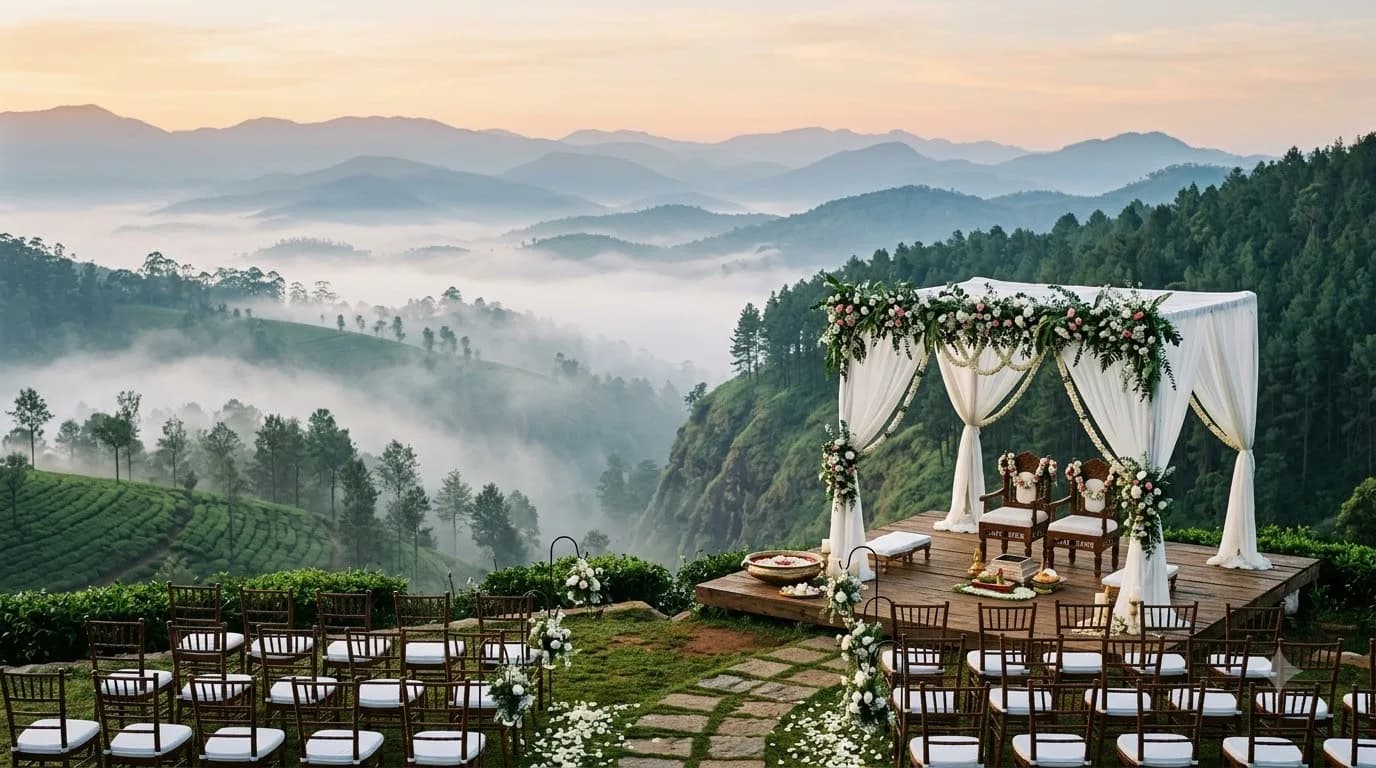
November and December are the headline answer. Across the Western Ghats interior — Coorg, Munnar, Wayanad, Kodaikanal (locally: Kodai), and Ooty (officially Udhagamandalam) — these months deliver 22°C–28°C days, 8°C–14°C nights, holding post-monsoon greenery, and rainfall under 50mm. Coastal venues like Pondicherry, Kovalam and Bekal sit at 24°C–30°C with humidity dropping from October.
October enters peak but carries residual northeast monsoon risk in TN coastal venues until mid-month. January matches November with cooler nights — couples either love it (bonfires) or struggle (uncovered cocktails). February holds the weather while pricing eases 10–15%.
The Kraftstar city-by-city wedding guide confirms November-January as the universal sweet spot. Kerala Tourism's destination wedding portal markets October-February as the showcase season for backwater and hill events.
Looking for Wedding Planners in Kochi?
Tell us what you need and get quotes from verified wedding planners
What Makes October to February the Peak Season?
Peak weather is genuinely consistent across the Western Ghats. Daytime highs run 22°C–28°C in hill stations and 26°C–30°C on the coast, rainfall under 80mm per month. The northeast monsoon affects TN coastal venues through the second half of October — plan TN-coast weddings from mid-November onwards.
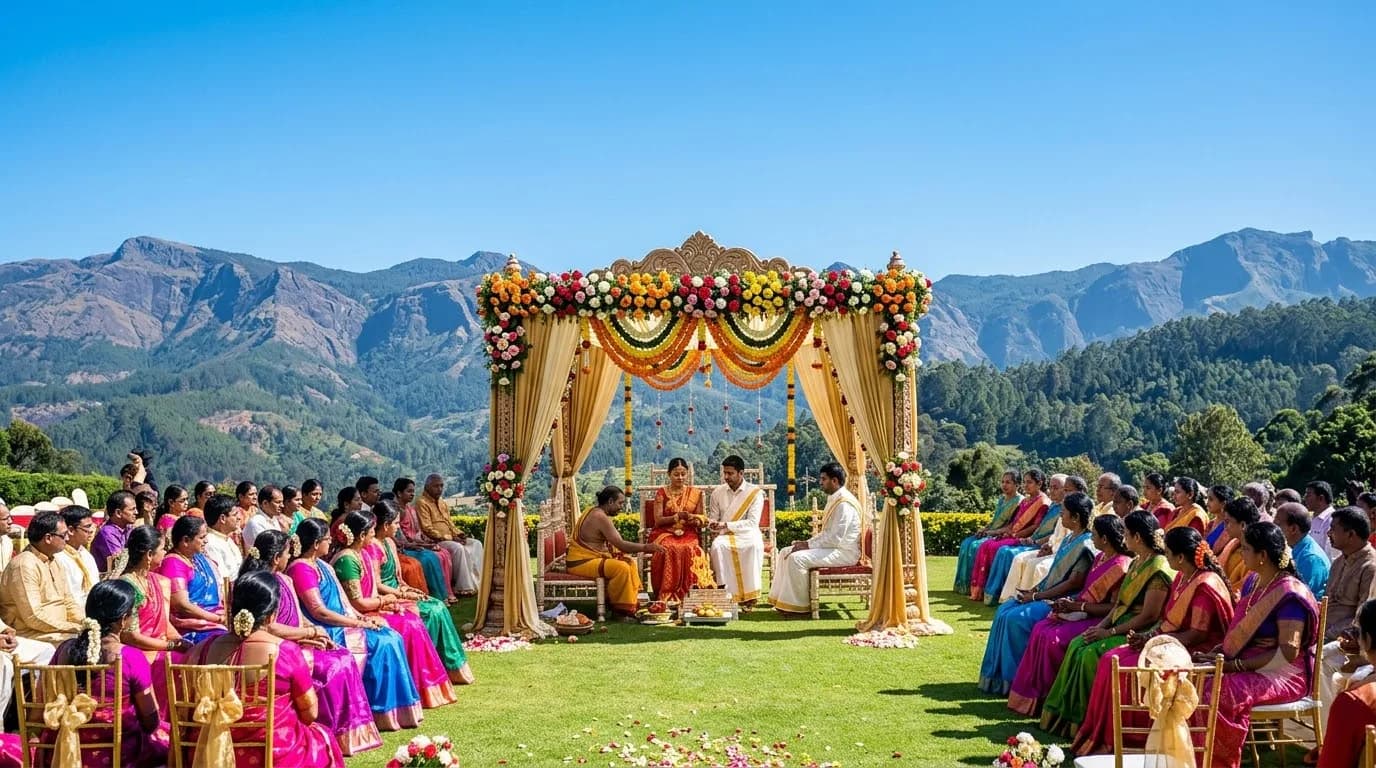
The WedMeGood Annual Wedding Industry Report 2025–2026 shows November-December capturing the largest share of destination bookings nationally. The weeks that book first:
- Second weekend of December — long-weekend friendly, the "perfect" date.
- Last weekend of November — past Diwali, schools still in session.
- New Year week (Dec 28–Jan 3) — 20–25% holiday surcharge.
- Christmas week (Dec 22–26) — 15–20% surcharge at Bekal and Kumarakom.
- Republic Day weekend — strong long-weekend pull for North Indian guests.
Important
Book peak weekends 9–12 months out. Vythiri Village, Tea County Munnar, and Niraamaya Kumarakom routinely close 2027 November-December dates by April 2026. Top photographers — Stories by Joseph Radhik, Plush Affairs, Weva — close peak dates 12+ months ahead.
The range above reflects mid-tier 150-guest 3-day peak weddings at premium hill station and backwater venues — see the South India destination wedding cost guide for 2026 for full tier breakdowns.
Is March to May Workable Despite the Heat?
March-May is the season most planners write off, and that is wrong. Coastal and lowland venues do become unworkable — Pondicherry hits 32°C–36°C, Kovalam 30°C–34°C at 80% humidity. But the five core Western Ghats hill stations stay genuinely pleasant: Ooty 18°C–25°C, Kodaikanal 16°C–24°C, upper Coorg 18°C–26°C, Munnar above 1,500m 17°C–25°C. Only Wayanad's 700m Vythiri properties start feeling warm by mid-April.
What you gain is a 30–40% pricing drop. The Tea County Munnar package that quotes ₹52L in November runs ₹32L in April. Top photographers and decor teams locked-out in peak open up. April and early May still photograph beautifully, but late May feels pre-monsoon humid in Wayanad and lower Coorg.
For couples on tighter budgets who want hill-station aesthetics without monsoon risk, mid-March to mid-April is the most underrated window. See the hill station wedding comparison for South India for elevation detail by venue.
When Does a Kerala Monsoon Wedding Actually Work?
The southwest monsoon arrives around June 1, peaks through July, weakens through August. Western Ghats interiors receive 400–900mm rainfall per month, with Munnar and Wayanad taking the heaviest hits. Outdoor weddings are not viable, but covered-mandap venues are — and quietly trending among photographers and intimate-wedding couples.
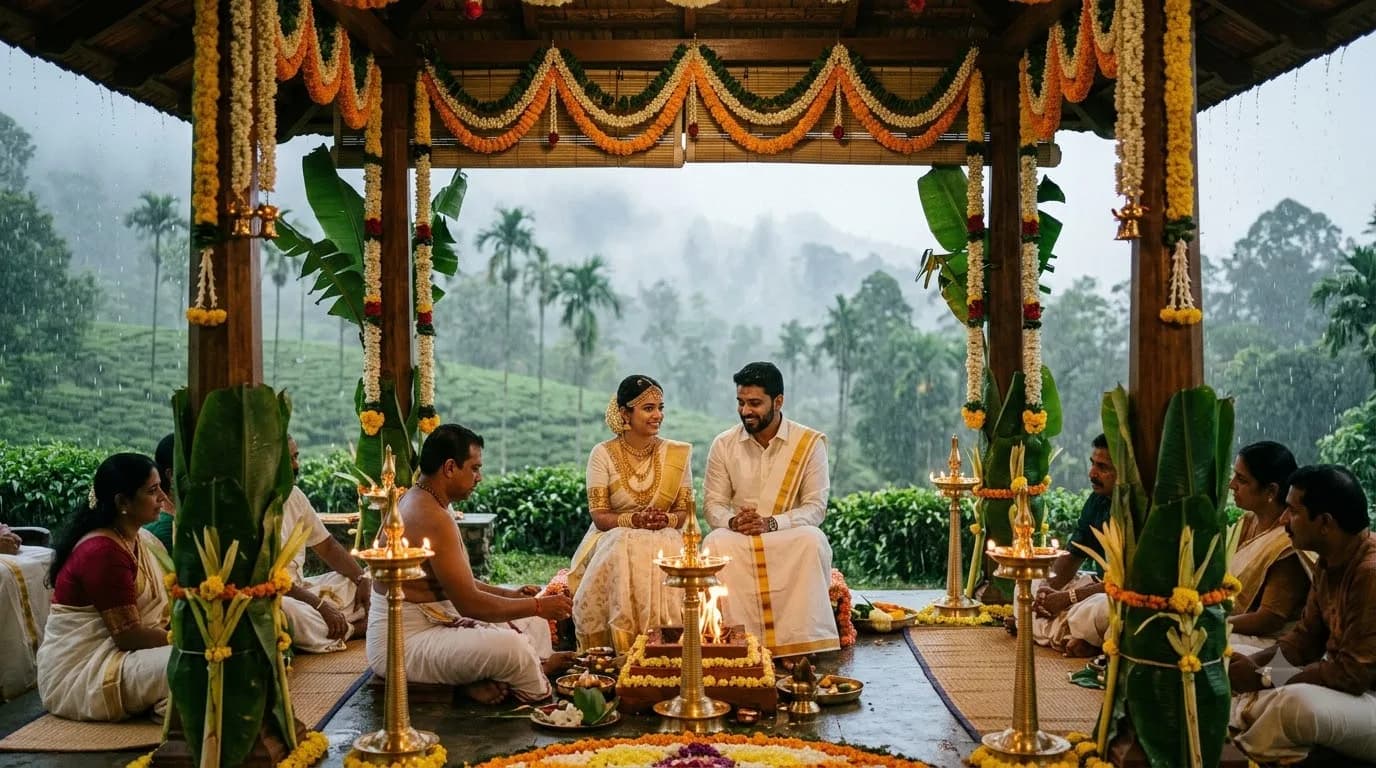
Vythiri Village actively markets monsoon weddings — covered banquet halls, glass-roofed conservatories, 1,500-guest indoor capacity. Niraamaya Kumarakom and Taj Bekal have similar covered backwater-view halls. The Kraftstar South India seasonal guide flags monsoon as a niche-but-real option.
What works: indoor mandap with rain-soundtrack ambience, glass conservatory sangeets with mist outside, boutique 50–80 guest weddings where covered halls feel intimate. What does not: open-air ceremonies, lawn cocktails, beach functions, 200+ guest events, or tight 2-day itineraries with no buffer for monsoon flight delays into Kochi and Calicut.
Pricing is the argument: 40–50% below peak. A ₹58L December package lands at ₹30L–₹35L in July. The Kerala backwater wedding guide covers monsoon-suitable venues in detail.
Why Is September the Underused Shoulder Window?
September is the most underused window in the South India wedding calendar. The southwest monsoon weakens through the first two weeks, the northeast monsoon does not begin until mid-October, and the Western Ghats sit at peak post-monsoon greenery.
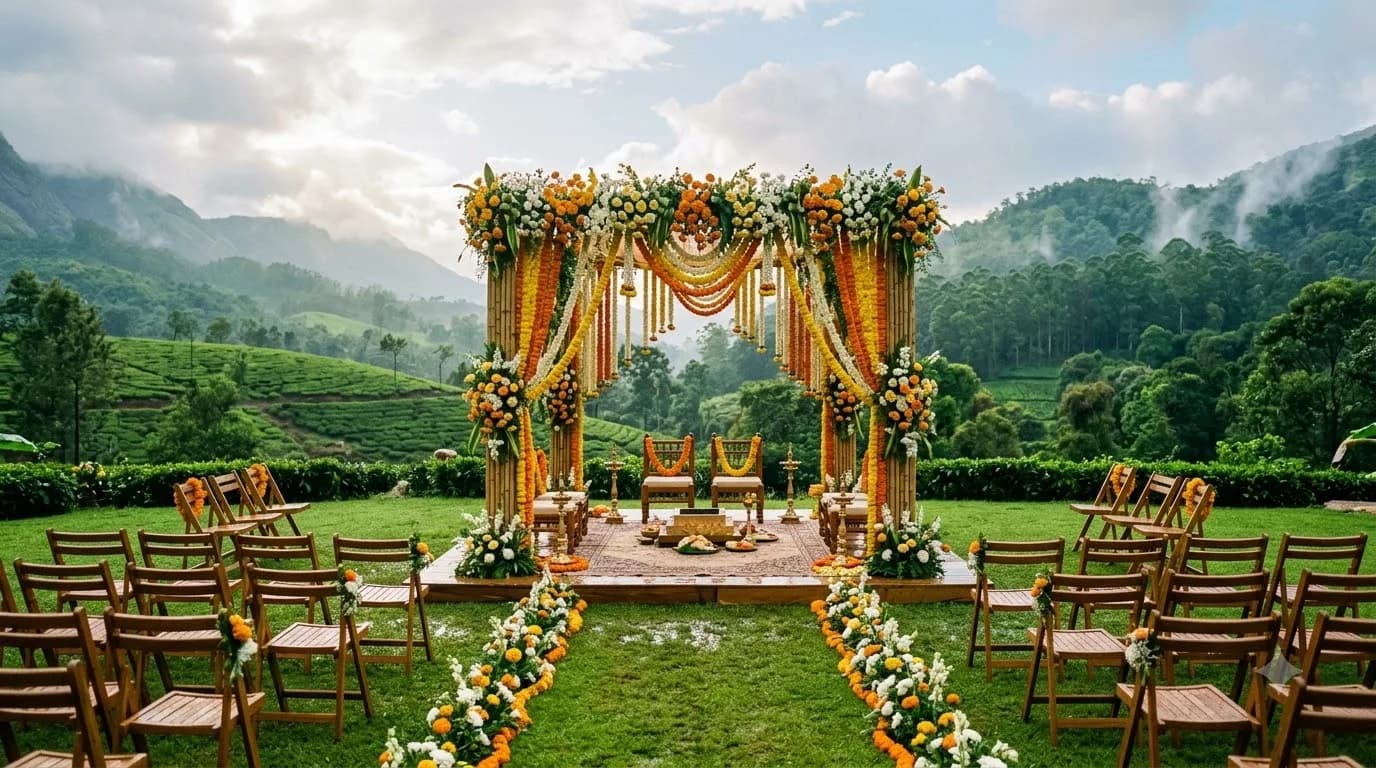
Daytime temperatures across Coorg, Munnar, Wayanad, Kodaikanal and Ooty run 18°C–24°C with brief afternoon showers rather than continuous rain. Resort rates run 25–35% below peak. The September wedding I coordinated last year at Vythiri ran ₹38L versus the ₹52L peak quote six weeks later — and the photographs were among my strongest of 2025.
Tip
The September Onam constraint. Kerala's harvest festival Onam falls in late August or early September, with peak Thiru Onam day between August 30 and September 12 depending on the lunar calendar. For 7–10 days around it, Kerala planners, venue staff, photographers, decor teams and caterers are at family-festival capacity. Avoid the Onam week. Target the third or fourth weekend of September — peak post-monsoon weather, full vendor availability, 25–35% off peak.
For 2026, Thiru Onam falls on August 26 (September is largely clear). For 2027 it falls September 14 — target the September 18–19 and 25–26 weekends.
How Do Conditions Compare Month-by-Month Across 5 Hill Stations?
The matrix below maps month-by-month conditions across the five core Western Ghats hill stations.
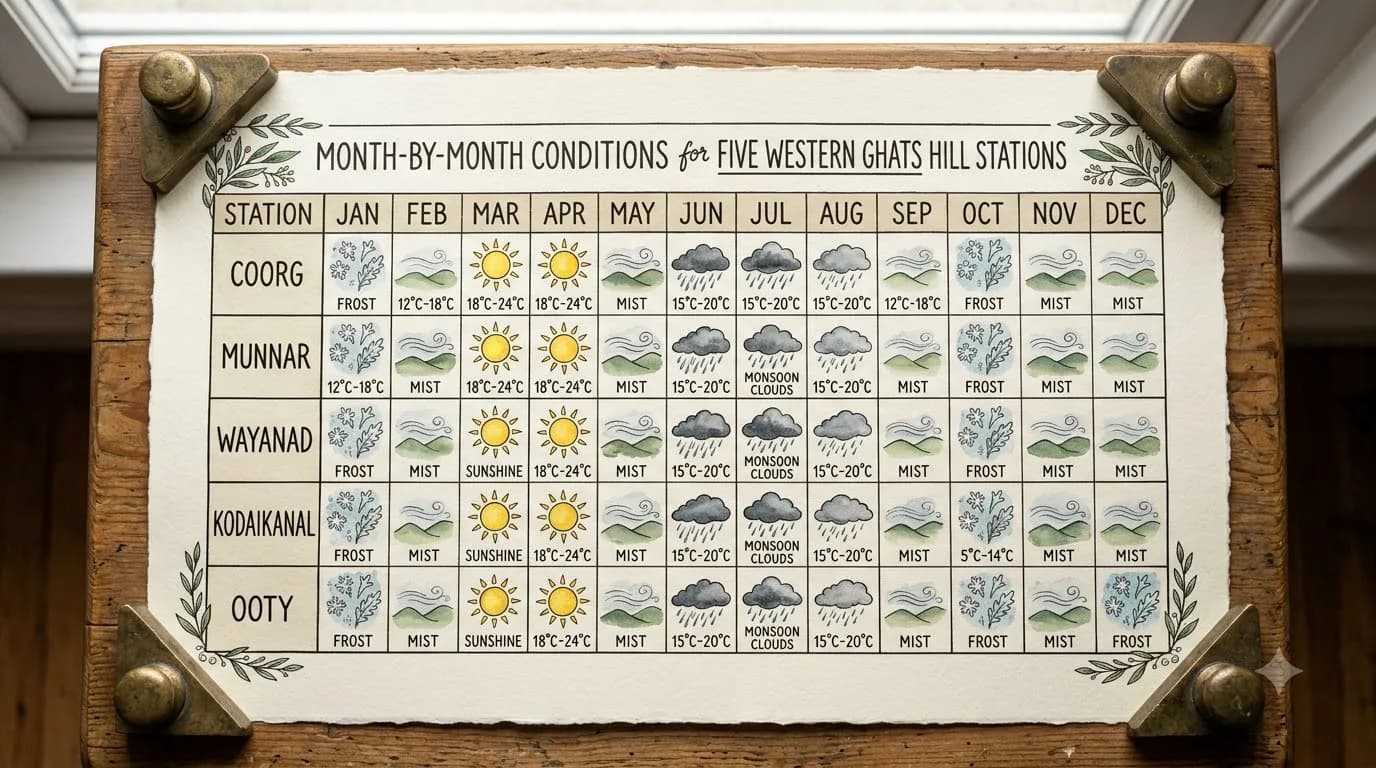
| Hill Station | Jan | Feb | Mar | Apr | May | Jun | Jul | Aug | Sep | Oct | Nov | Dec |
|---|---|---|---|---|---|---|---|---|---|---|---|---|
| Coorg (Kodagu) | ☀️ Peak | ☀️ Peak | ⛅ Mild | ⛅ Mild | ⛅ Warm | 🌧️ Heavy | 🌧️ Heavy | 🌧️ Heavy | ⛅ Shoulder | ☀️ Peak | ☀️ Peak | ☀️ Peak |
| Munnar | ☀️ Peak | ☀️ Peak | ⛅ Mild | ⛅ Mild | ⛅ Warm | 🌧️ Heavy | 🌧️ Heavy | 🌧️ Heavy | ⛅ Shoulder | ⛅ Mixed | ☀️ Peak | ☀️ Peak |
| Wayanad | ☀️ Peak | ☀️ Peak | ⛅ Mild | ⛅ Warm | ⛅ Warm | 🌧️ Heavy | 🌧️ Heavy | 🌧️ Heavy | ⛅ Shoulder | ☀️ Peak | ☀️ Peak | ☀️ Peak |
| Kodaikanal (Kodai) | ☀️ Peak | ☀️ Peak | ⛅ Mild | ⛅ Mild | ⛅ Mild | 🌧️ Wet | 🌧️ Wet | ⛅ Shoulder | ⛅ Shoulder | 🌧️ NE Mons | ☀️ Peak | ☀️ Peak |
| Ooty (Udhagamandalam) | ☀️ Peak | ☀️ Peak | ⛅ Mild | ⛅ Mild | ⛅ Mild | 🌧️ Wet | 🌧️ Wet | ⛅ Shoulder | ⛅ Shoulder | 🌧️ NE Mons | ☀️ Peak | ☀️ Peak |
Two patterns matter. Kodai and Ooty receive a second October hit from the northeast monsoon that Coorg and Munnar avoid — for October, lean Coorg or Munnar. August in Kodai and Ooty is shoulder-worthy because the southwest monsoon weakens earlier on the TN side. The Kodaikanal, Ooty, Wayanad, Coorg and Munnar destination wedding guides cover venue-specific nuances.
How Does Seasonality Affect Venue and Vendor Pricing?
South India seasonal pricing follows a four-tier index across most premium properties.
| Pricing tier | Months | Index vs peak | 150-guest 3-day total |
|---|---|---|---|
| Peak holiday | Dec 22–Jan 3 | 115–125% | ₹52L–₹70L |
| Peak standard | Oct-end through Jan, ex-holidays | 100% (baseline) | ₹45L–₹60L |
| Shoulder | Sep, Feb | 65–75% | ₹30L–₹42L |
| Off-season summer | Mar–May (hill stations) | 60–70% | ₹28L–₹38L |
| Off-season monsoon | Jun–Aug (covered venues) | 50–60% | ₹24L–₹32L |
The range above reflects shoulder and off-season packages. Vendor pricing splits similarly with two deviations: photographers run a steeper 20–30% peak surcharge (inventory caps at one wedding per weekend), and in-house catering is the flattest line at 5–10%.
Festival Blackout Dates 2026-27
Windows where Kerala and TN planners, venue staff and vendors are at family-festival capacity. Avoid even if rates appear soft.
| Festival | 2026 Dates | 2027 Dates | Impact |
|---|---|---|---|
| Onam (Thiru Onam) | Aug 26, 2026 | Sep 14, 2027 | Kerala vendors at 7–10 day capacity around it |
| Diwali week | Nov 8, 2026 | Nov 7, 2027 | Pan-South India vendor congestion, decor + flower price spikes |
| Christmas week | Dec 22–26, 2026 | Dec 22–26, 2027 | Bekal/Kumarakom resorts charge 15–20% holiday premium; Christian-tradition vendors at capacity |
| New Year week | Dec 28, 2026 – Jan 3, 2027 | Dec 28, 2027 – Jan 3, 2028 | All venues at 20–25% holiday premium; book 12+ months out |
For deeper cost detail, see the South India destination wedding cost guide for 2026.
Looking for Wedding Planners?
Tell us what you need and get quotes from verified wedding planners
Common Questions About South India Wedding Seasons
Which weekend in November or December books out first?
The second weekend of December consistently books first across premium Western Ghats venues — it sits in the long-weekend sweet spot, falls past Diwali, lands before Christmas-week pricing, and offers the most stable peak weather. The last weekend of November runs a close second. For 2027 dates, both weekends are typically gone from Vythiri Village, Tea County Munnar and Niraamaya Kumarakom by April-May 2026. If you are date-flexible, target the first weekend of December or the third weekend of November — same weather, 2–4 weeks of additional booking runway.
Is the northeast monsoon a real risk for Tamil Nadu hill stations?
Yes, October weddings at Kodaikanal and Ooty carry northeast monsoon risk that Coorg and Munnar largely avoid. The northeast monsoon hits the eastern slopes from mid-October through early December, peak in the last two weeks of October. Kodai and Ooty receive 200–350mm October rainfall versus 80–150mm at same elevations on the Kerala side. For October weddings I push couples to Munnar or Coorg unless committed to a TN venue — and even then, target the first ten days of October or wait until the second half of November.
How early should we book for a peak-season wedding?
Book peak November-December weekends 9–12 months ahead for top-tier Western Ghats venues, 12–14 months ahead if you want a top photographer like Stories by Joseph Radhik, Plush Affairs or Weva. For September and February dates, 6–8 months is usually enough. For summer or monsoon, 4–5 months. The bigger constraint is photographer availability — premium resorts have 2–4 wedding-grade venues, but a top photographer shoots one wedding per weekend. Lock photography first, venue second, decor third for peak dates.
What happens if it rains during my non-monsoon wedding?
Even in peak season, a 1-in-10 chance of unseasonal rain exists, and your venue's wet-weather plan matters more than the season. Premium Western Ghats venues have covered backup setups that absorb a function on 2-hour notice. What I do every wedding regardless of season: walk the wet-weather plan with the venue manager 30 days out, confirm covered backup capacity matches actual guest count (some "covered mandaps" hold 80 not 200), keep decor modular enough to shift indoors. October and February carry slightly higher unseasonal-rain risk than November-December.
Can we mix seasons across a multi-day wedding?
Most South India destination weddings stay within one venue and a 2–3 day window, so seasonal mixing rarely matters. Couples building 5–7 day NRI trips do face it. A common itinerary: Kochi heritage day (coastal, 26°C–30°C), Munnar 2-day mountain wedding (18°C–24°C), Kumarakom backwater closing day (28°C–30°C). In peak season this works seamlessly. In shoulder or off-season, the temperature differential stretches to 12–15°C — guest packing guidance becomes critical. See the 14-day NRI wedding trip Kerala guide for multi-leg detail.
The single thing I tell every new couple about dates: peak-season is correct for most weddings, but not for most budgets. The couples who walk away happiest weighed the calendar honestly — peak when the budget supported it, September shoulder when the math made sense, monsoon when intimacy mattered more than spectacle. Start with the pillar destination wedding South India guide and the hill station wedding comparison, then layer in the 2026 cost guide.
Topics
best season destination wedding south indiakerala wedding seasonmonsoon wedding south indiawestern ghats wedding weathersouth india wedding monthbest month wedding keralaoff-season destination weddingExplore more
Frequently Asked Questions
1When is the best month to get married in South India?
2Can you have a wedding in Kerala during monsoon?
3What is the cheapest month to host a destination wedding in South India?
4Is September a good month for a hill station wedding?
5How does season affect venue and vendor pricing in South India?
Continue reading
Related Articles
Destination Wedding in South India: Complete 2026 Planning Guide
Coorg vs Munnar vs Wayanad vs Kodaikanal vs Ooty: Hill Station Wedding Comparison 2026
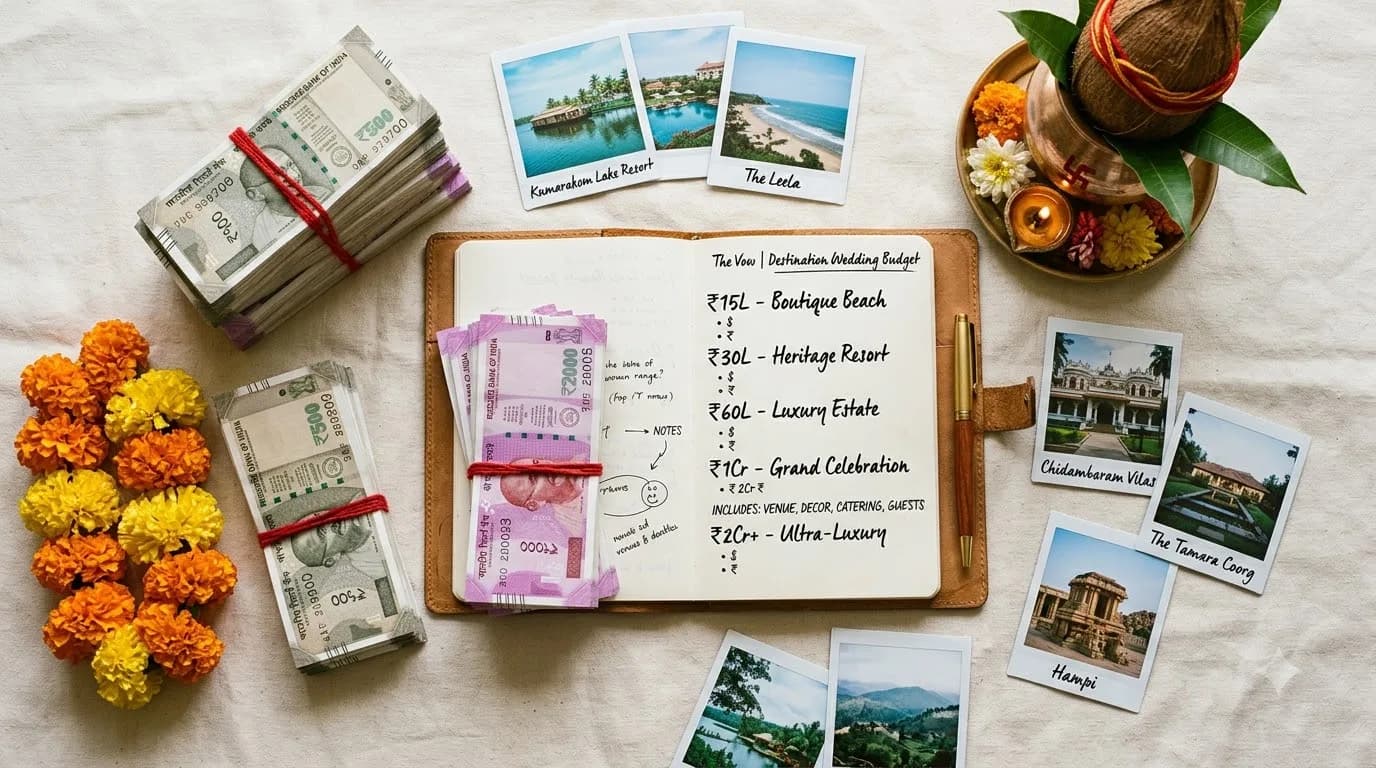
Destination Wedding Cost in South India 2026: 5-Tier Budget Guide
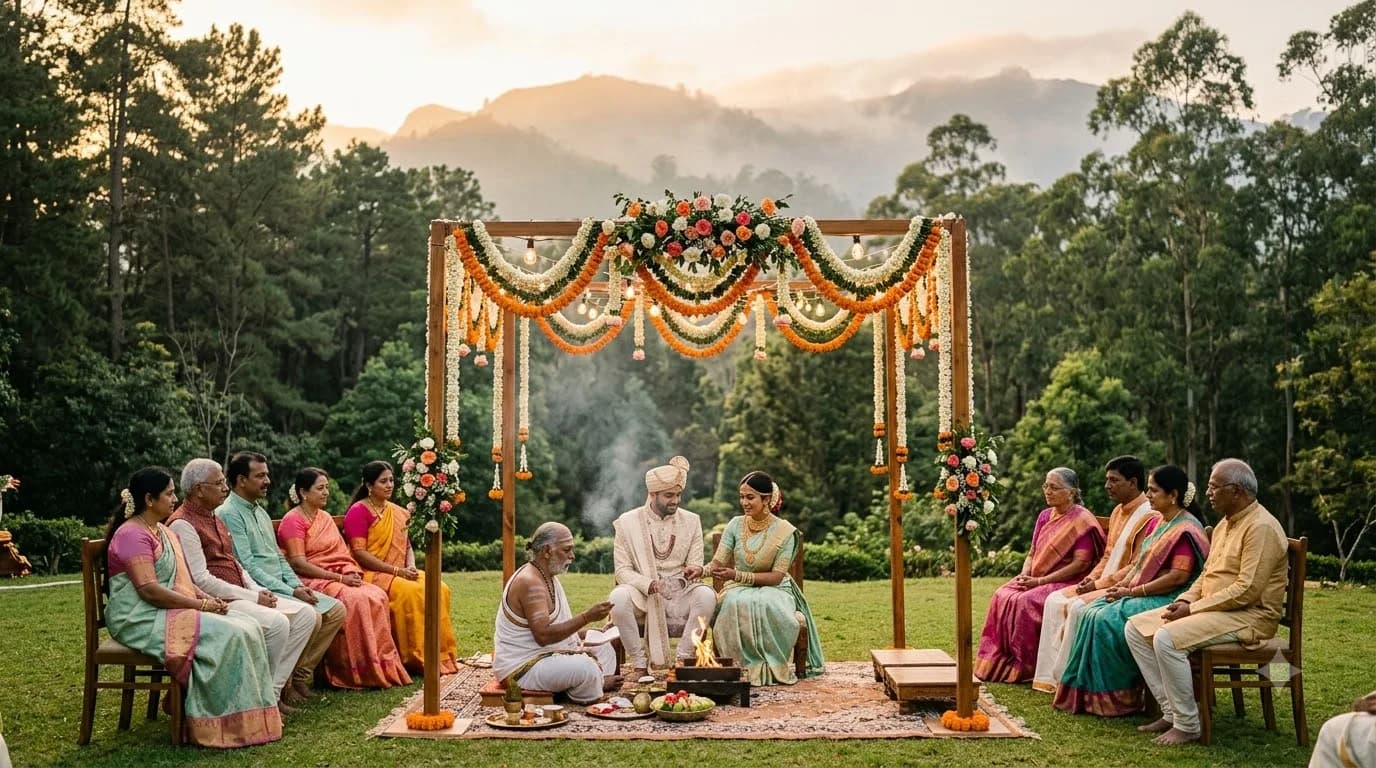
Kodaikanal Destination Wedding: Complete 2026 Planning Guide
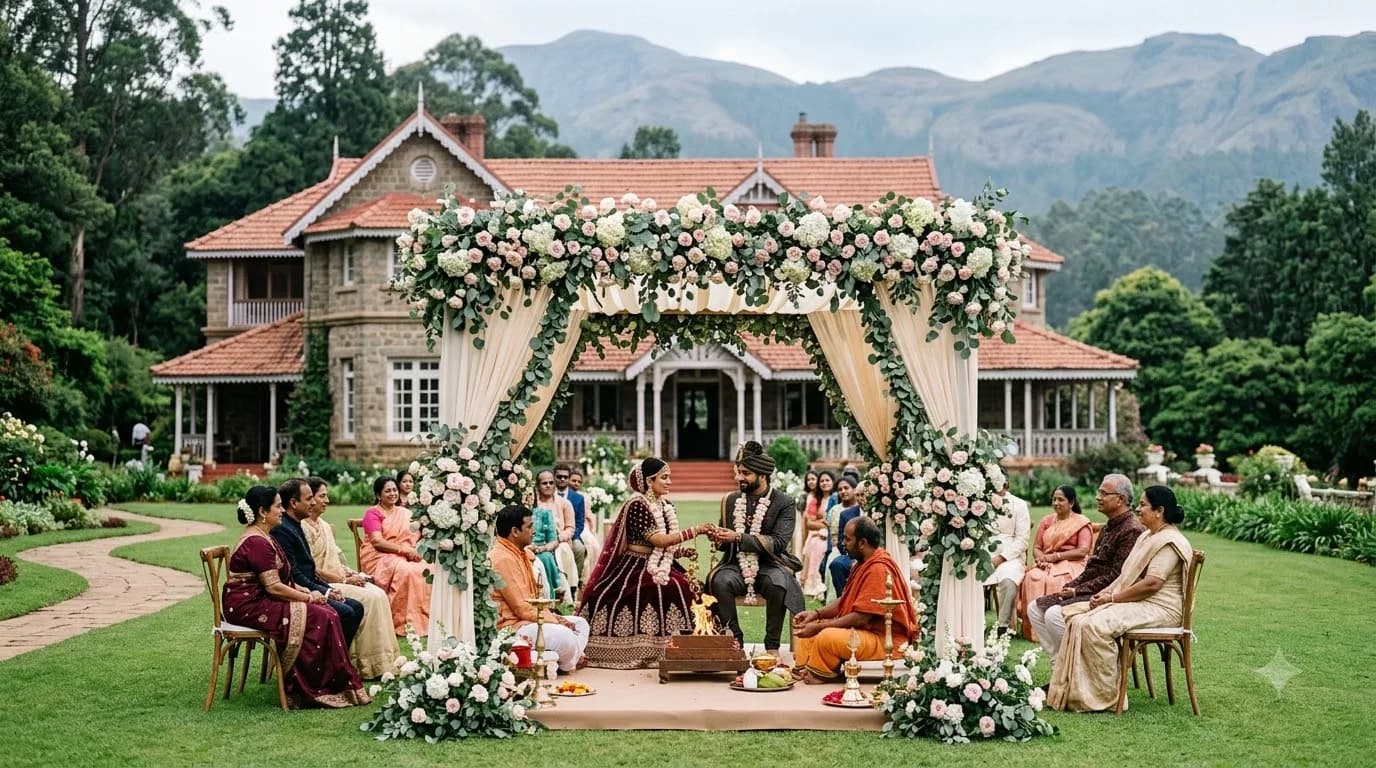
Ooty Destination Wedding: 2026 Standalone Planning Guide
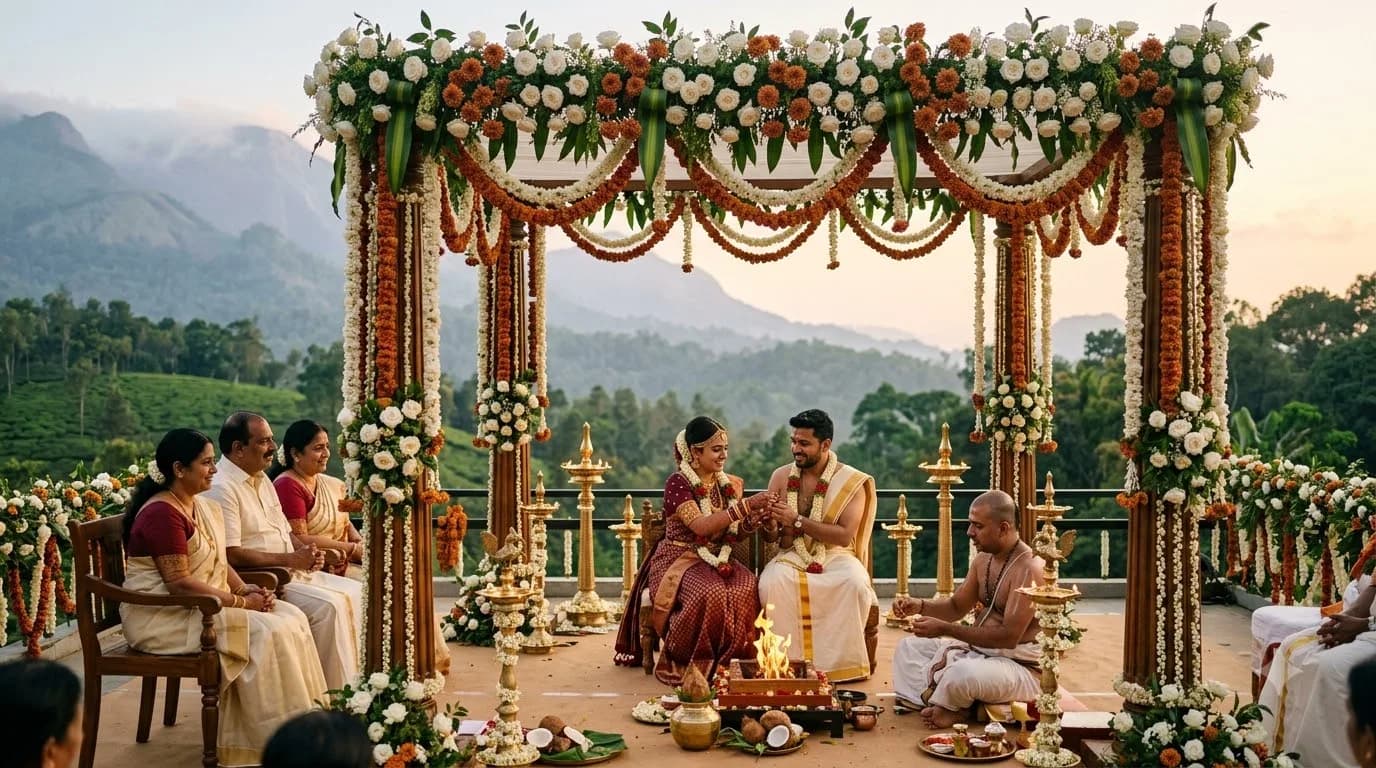
Wayanad Destination Wedding: 2026 Planning, Venues & Cost Guide
Still planning?
Get quotes from India's best vendors
Tell us what you're planning and we'll match you with verified photographers, venues, decorators, and more.
Get free quotes