
Muslim Wedding Photography Kerala: Costs & Booking 2026
Find the right photographer for your Kerala Muslim wedding — cultural sensitivity guidelines, ceremony shot lists, photography styles, pricing tiers, and booking tips for Nikah and Walima coverage.

Kerala Wedding Traditions Writer
Fathima Zahra is a traditions writer who specializes in Muslim and Mappila wedding customs of Kerala.
On this page
Muslim wedding photography in Kerala costs ₹75,000–₹6 lakh depending on coverage scope, with most families spending ₹1.5–3 lakh for a 2–3 day package covering Mailanchi, Nikah, and Walima. Multi-day coverage adds 20–30% over standard single-day rates, and cultural sensitivity — particularly during the Nikah ceremony and women-only segments — is the most important factor when selecting your team.
Quick Answer
Quick answer: Budget ₹1.5–3 lakh for a full 2–3 day package (Mailanchi, Nikah, Walima). Ask specifically about Oppana coverage experience and how the team handles women-only segments. Book 4–6 months ahead for peak-season Malabar dates; the best cultural-specialist photographers in Kozhikode and Malappuram fill early.
Note
Pricing methodology: Photography package rates in this guide reflect 2026 market rates based on pricing benchmarks from WedMeGood and direct studio conversations across Kozhikode, Malappuram, Kannur, Thrissur, and Kochi. Actual rates vary by studio, package scope, and season.
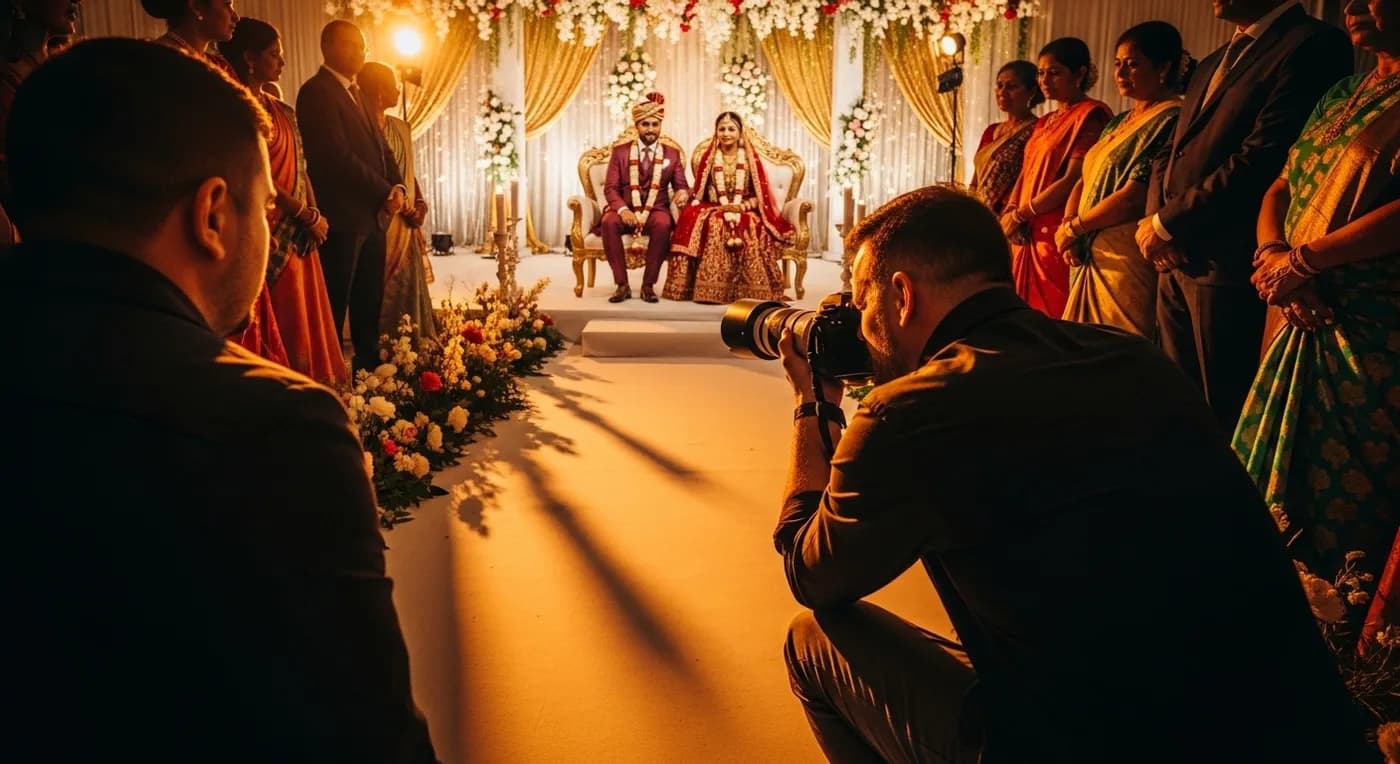
India's wedding photography market is valued at over ₹28,000 crore and growing at 15–20% annually, driven by rising demand for cinematic coverage and social media content. Choosing the right photographer for a Kerala Muslim wedding is not simply a question of budget or style. It is a decision that requires cultural understanding. A Malabar wedding spans multiple days and multiple emotional registers — the intimate femininity of the Mailanchi night, the sacred solemnity of the Nikah, the grand communal spectacle of the Walima feast — and each demands a different photographic approach. The photographer who excels at capturing a high-energy Oppana circle may not instinctively know when to lower their camera during the Nikah dua. The videographer who produces stunning drone footage of a convention centre exterior may struggle with the warm, low-light intimacy of a home-based henna ceremony.
This guide covers every aspect of finding, evaluating, and booking the right photography team for your Kerala Muslim wedding in 2026. For the complete planning roadmap — timelines, venue selection, and ceremony logistics — see our Muslim Wedding Kerala Planning Guide. For Nikah rituals and Oppana traditions, our Malabar Muslim Nikah Guide covers every ceremony in detail. For a full budget breakdown including photography allocations by tier, see the Muslim Wedding Cost Guide.
What Cultural Sensitivities Should Your Photographer Understand?
From coordinating photography teams at weddings across Kozhikode and Malappuram, I can confirm that this is not optional expertise — it is the foundation of the entire engagement. A photographer working a Malabar Muslim wedding in Kozhikode, Malappuram, Kannur, or anywhere in Kerala must understand the following before they set foot at your event.
The Nikah Is a Sacred Moment, Not a Photo Opportunity
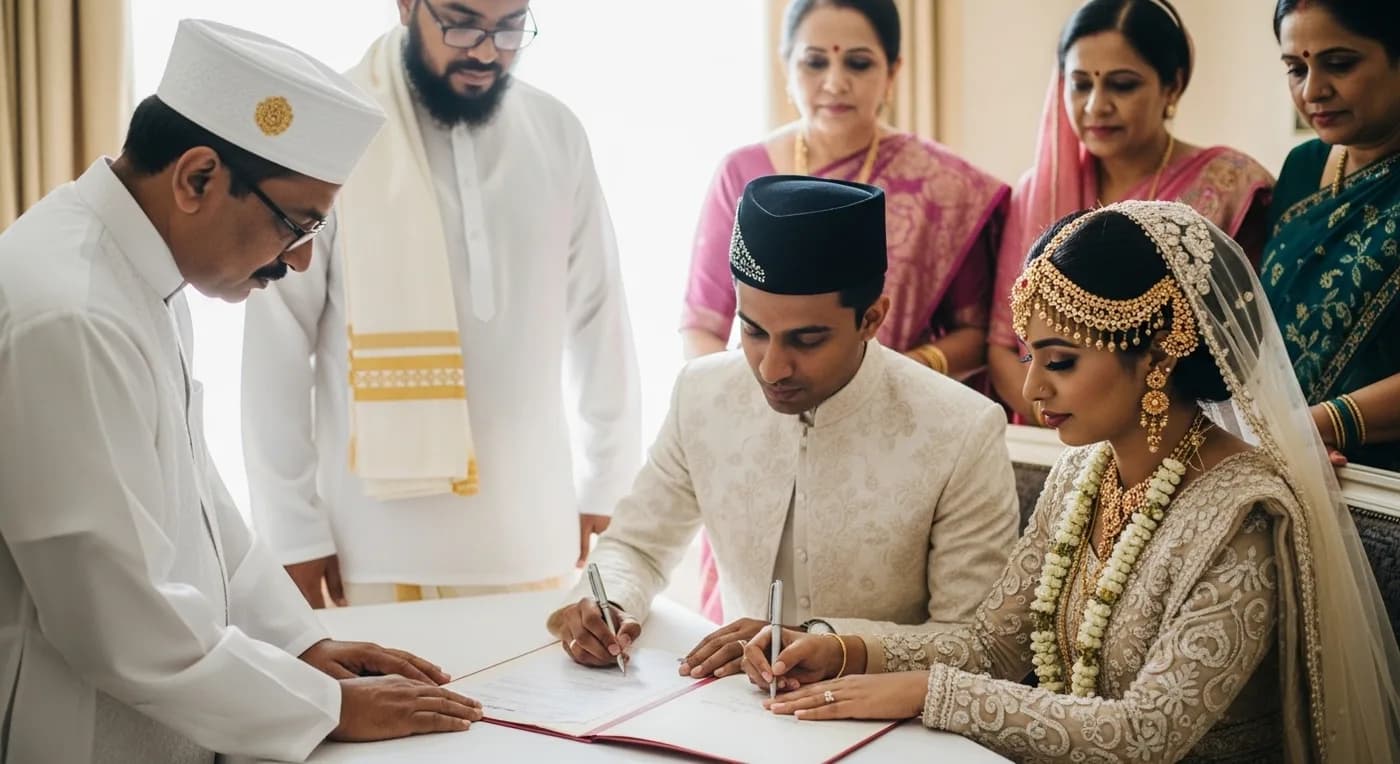
The Nikah ceremony — the religious solemnization of the marriage — is the most important moment of the entire celebration. It is presided over by a Qazi, involves the recitation of Quranic verses, and carries the full weight of an Islamic religious covenant. Some families welcome full photographic coverage inside the mosque or ceremony hall. Others prefer minimal or no photography during the actual Nikah proceedings.
However, there is no universal rule. The only correct approach is to ask the family directly, ideally during the initial consultation, and respect their answer completely. If photography is permitted, the photographer should work with a single body and a silent shutter, staying at the periphery of the gathering. Flash is almost never appropriate. Movement through the seated guests during the Qazi's khutbah is disrespectful. The best Nikah photographs come from photographers who understand that stillness and restraint produce more powerful images than proximity and aggression.
Gender Considerations at the Mailanchi
The Mailanchi night is traditionally a women-centred celebration. While mixed-gender Mailanchi events have become common in urban Kozhikode and parts of Kannur, many families in Malappuram, Kasaragod, and semi-urban areas maintain the all-women tradition for at least the core Oppana and henna segments.
Specifically, for these families, having a male photographer moving through the gathering — even one who is technically skilled — creates discomfort that undermines the relaxed, joyful atmosphere the event is designed to create. The solution is straightforward: either hire a female photographer for the Mailanchi night or ensure your team includes a female second shooter who handles the women-only segments independently.
Note
Discuss this early. During your first meeting with any photography team, ask directly: "How do you handle the Mailanchi night when our family prefers women-only segments?" Their answer will tell you immediately whether they have real Malabar wedding experience or are approaching your event generically.
The Oppana Demands Speed and Instinct
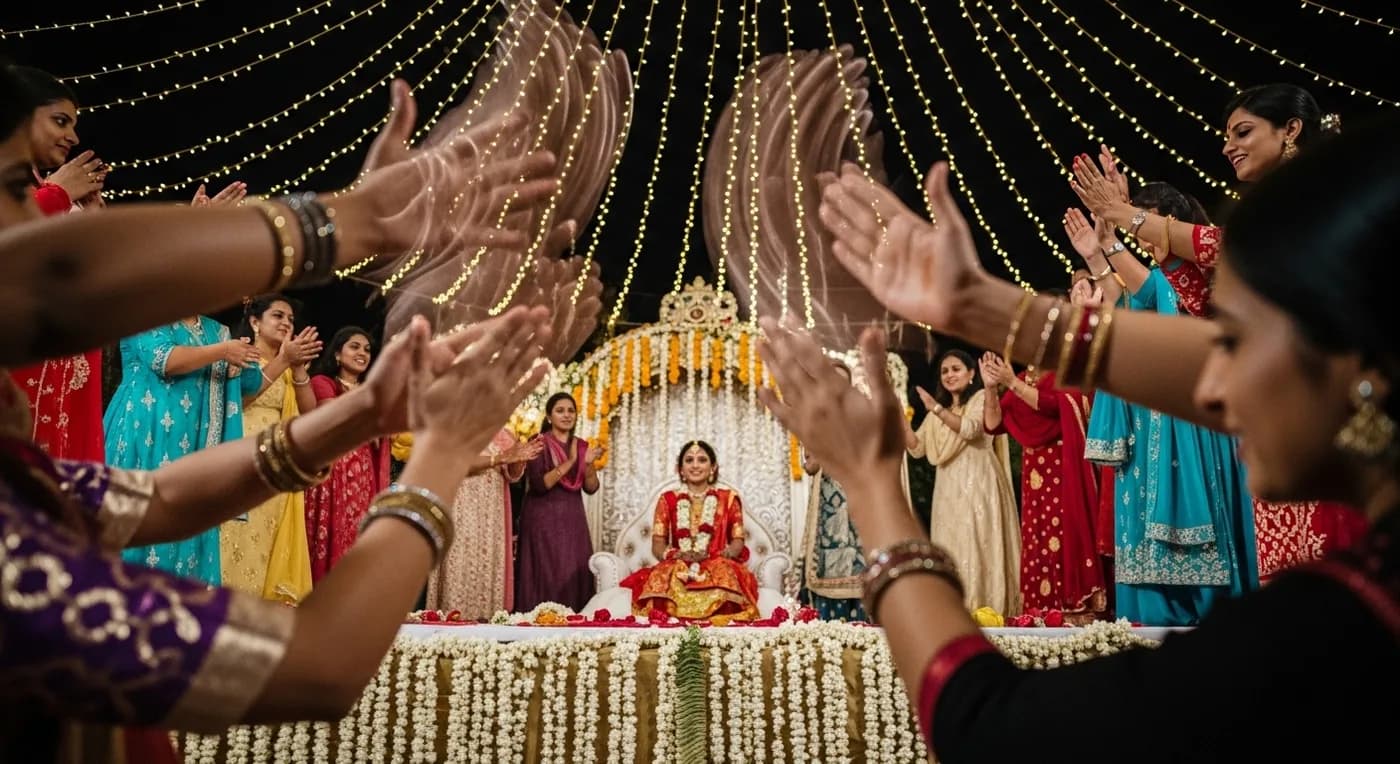
The Oppana dance — the rhythmic clapping, singing, and movement that circles the bride during the Mailanchi — is one of the most photogenic moments in any Kerala wedding tradition. It is also one of the hardest to capture well. The clapping accelerates, the circle shifts, expressions change in fractions of a second, and the warm mixed lighting of a typical Mailanchi venue adds technical complexity. A photographer who shoots Oppana well has almost certainly done it many times before. Ask to see Oppana-specific images in their portfolio — not just one or two, but a full sequence that shows they can track the energy from the slow opening songs through the crescendo.
Family Dynamics and Guest Comfort
Kerala Muslim weddings, particularly in the Malabar heartland, host 500 to 1,000 or more guests. Not every guest is comfortable being photographed. Elderly relatives, guests in niqab, and those who simply prefer privacy deserve respect. A professional team should know to avoid close-up shots of guests who signal discomfort, to ask before photographing small children, and to never publish or display images of identifiable guests without family approval. This is not a restriction on creativity — it is basic professional ethics applied to a specific cultural context.
What Shots Should Be on Your Muslim Wedding Photography Checklist?
A single missed moment — the Nikah signing, the Oppana crescendo, the grandmother's blessing — cannot be recreated. A comprehensive Muslim wedding photography checklist ensures no important moment goes uncaptured across the 2–3 day celebration. Share this list with your photographer during the planning consultation.
Mailanchi Night
The Mailanchi is the most emotionally rich event — intimate, warm, and fast-paced once the Oppana begins.
- Venue transformation — the pandal or hall before guests arrive, floral details, lighting setup, the decorated peetham
- Bride's preparation — getting ready, outfit details, the moment she first sees the venue
- Mehndi application — close-ups of the artist's hands at work, intricate pattern details on the bride's hands and feet
- Oppana performance — wide shots of the full circle, the bride's expressions at centre, individual clapping hands, the energy of the group from above
- Bride on the peetham — formal and candid shots with the floral backdrop and gold jewellery
- Family moments — mother with the bride, sisters, grandmothers, childhood friends, emotional interactions
- Guest interactions — Sulaimani service, dinner, laughter, group conversations
- Mehndi on guests — friends and cousins getting their henna done
Tip
Lighting preparation matters. The Mailanchi happens in the evening under mixed warm lighting — fairy lights, brass lamps, and LEDs all competing. Ask your photographer how they handle this. Experienced Malabar wedding photographers bring portable LED panels that complement the existing warm tones rather than overpowering them with harsh flash.
Nikah Ceremony
The Nikah is brief (30–60 minutes) but every moment carries weight. The margin for error is zero — there are no retakes.
- Venue setup — mosque interior or decorated ceremony space, Quran placement, seating arrangement
- Groom's arrival — procession if applicable, entrance with family, greetings at the door
- Qazi and witnesses — the religious officiant and formal witnesses in position
- Ijab-Qubool — the proposal and acceptance; the groom's expression as he says "Qubool hai"
- Nikah-nama signing — the marriage contract being signed by the groom, the bride's Wali, and witnesses
- Mahr presentation — the formal announcement and handover of the bridal gift
- Family blessings — parents, grandparents, and elders blessing the couple, emotional embraces
- Dua and prayers — the concluding prayers by the Qazi, hands raised in supplication
- Distribution of dates and sweets — the communal celebration that follows the ceremony
Walima Feast and Reception
The Walima is the largest event — 500 to 1,200 guests, elaborate decor, and hours of activity. This is where a second or third photographer earns their fee.
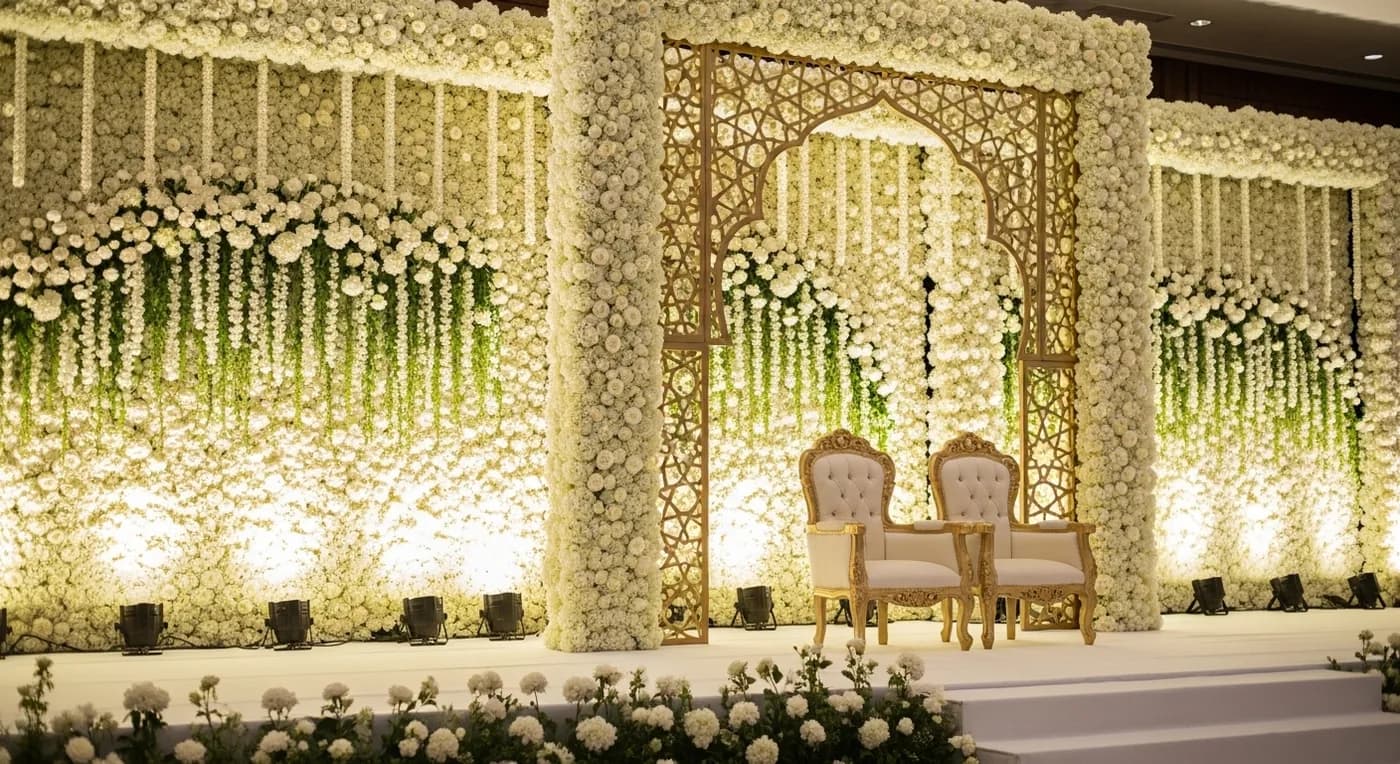
- Venue and decor — the full stage setup, floral installations, entrance arches, table settings, LED walls
- Feast preparation — behind-the-scenes shots of biryani cooking in copper vessels, pathiri being rolled, the kitchen spectacle
- Couple's entrance — the grand arrival, duff procession if applicable, guest reactions
- Stage moments — the couple receiving guests, family photographs, candid interactions from the stage
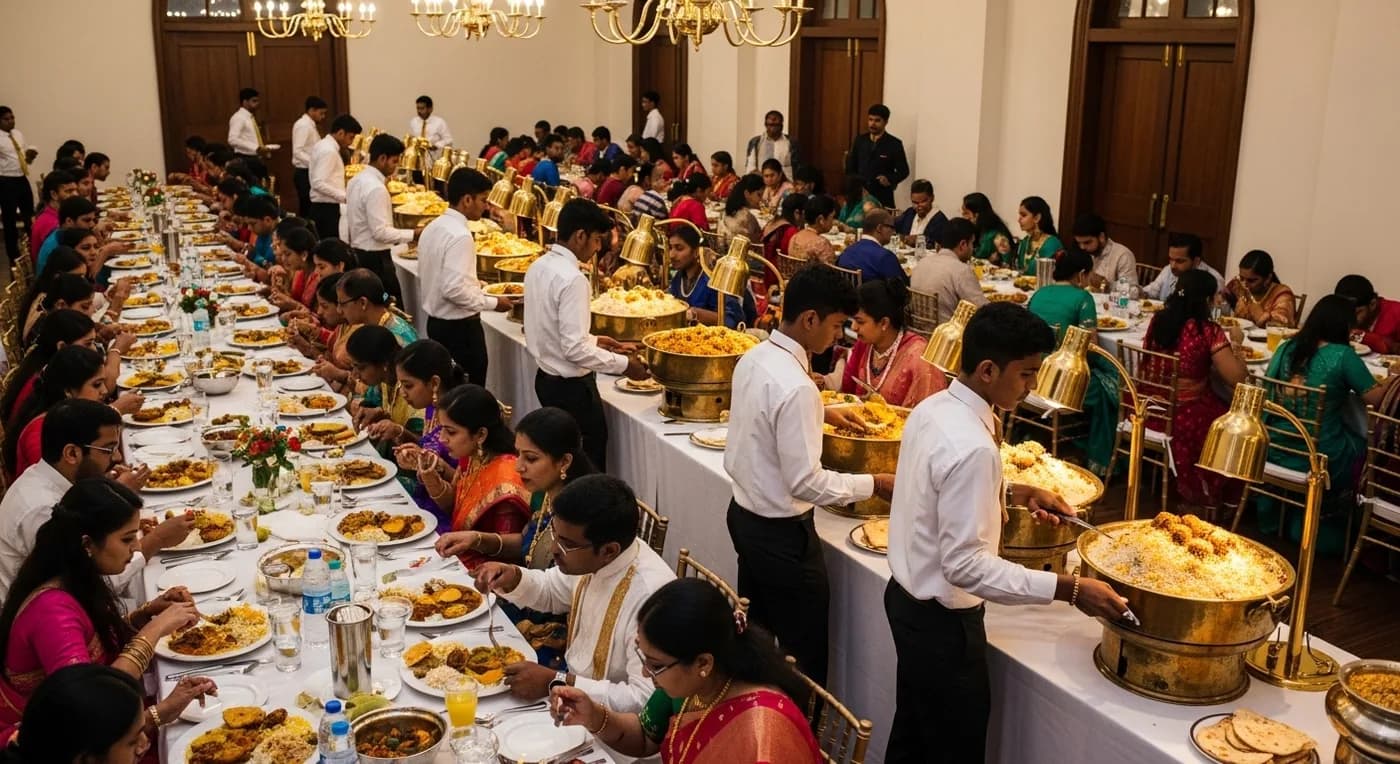
- Walima feast spreads — the banana-leaf layout, biryani service, the colours and textures of 20+ dishes
- Batch dining atmosphere — the panthi system in action, servers moving through the hall, guests eating together
- Couple portraits — formal and candid, typically shot during a break between reception segments or at golden hour
- Hanthakashu (gift) moments — guests presenting gifts, the register being maintained
- Departure — the couple leaving, farewell moments, the bride with her family
Looking for Photographers in Kozhikode?
Tell us what you need and get quotes from verified photographers
Which Photography Style Works Best for a Muslim Wedding?
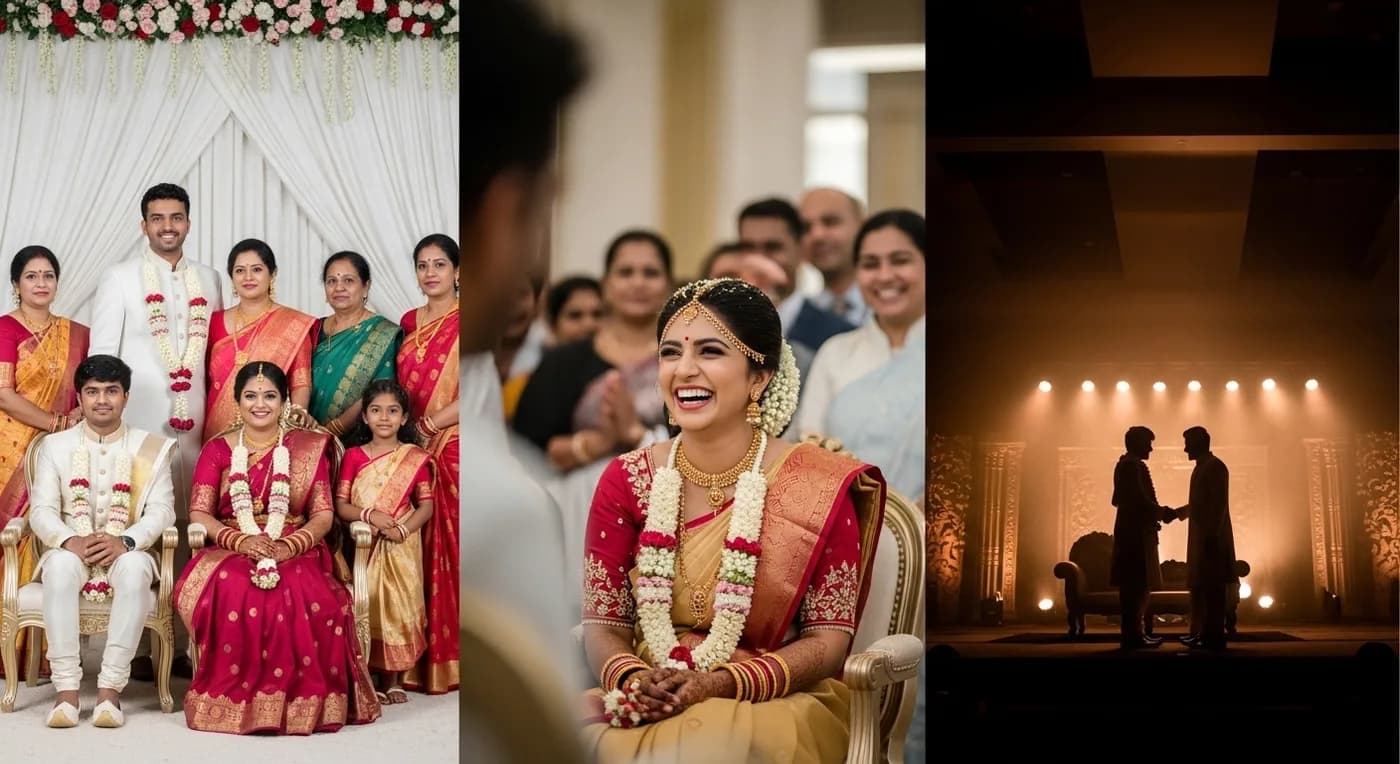
The best Malabar wedding photographers blend three styles — candid documentary, traditional posed, and cinematic editorial — because no single approach covers every moment. Different photography styles suit different moments of a Muslim wedding. Understanding these distinctions helps you choose the right approach — or the right combination — for your celebration.
| Style | Approach | Best For | Considerations for Muslim Weddings |
|---|---|---|---|
| Traditional Posed | Formal group photographs, staged couple portraits, structured family shots | Family group photos at the Walima, formal couple portraits, stage photography | Essential for the large family documentation that Malabar families value. However, relying solely on this style misses the candid emotion of Oppana and Mailanchi. |
| Candid Documentary | Unobtrusive shooting, real moments as they happen, minimal direction | Oppana performance, Mailanchi preparations, Nikah ceremony, feast atmosphere, emotional family moments | The ideal primary style for Muslim weddings. Allows the photographer to capture genuine emotion without disrupting sacred or culturally sensitive moments. Requires excellent low-light skills for evening Mailanchi coverage. |
| Cinematic / Editorial | Dramatic lighting, carefully composed frames, magazine-quality output | Couple portraits, bridal detail shots, venue and decor documentation, pre-wedding shoots | Produces stunning individual images but requires time and cooperation from subjects. Best used for specific planned segments rather than live ceremony coverage. |
The recommended approach: Most experienced Malabar wedding photographers blend all three styles — candid documentary as the default throughout the events, traditional posed for the essential family groups at the Walima, and cinematic/editorial for couple portraits and bridal details. If a team can only work in one style, you will have gaps.
Videography Coverage
Over 80% of Kerala Muslim families now book video alongside photography, making it a standard expectation rather than an add-on. Video has become as important as photography for many Kerala Muslim families. The Oppana performance, the biryani preparation spectacle, and the Walima atmosphere all translate powerfully to film.
Types of Video Coverage
Highlight reel (3–5 minutes) — A tightly edited cinematic summary of the entire wedding, set to music. This is the most shared format — ideal for WhatsApp and social media. Cost as an add-on: ₹30,000 – ₹75,000.
Full ceremony film (15–30 minutes) — A narrative edit covering every major moment across all events. Includes natural audio, speeches, and ambient sound. This is the keepsake that families watch years later. Cost: ₹60,000 – ₹1,50,000.
Same-day edit — A 3–5 minute film edited and screened at the Walima reception, typically covering the Mailanchi and Nikah from the previous day or earlier that day. Adds a "premiere" moment to the reception that guests love. Cost as an add-on: ₹20,000 – ₹50,000.
Drone coverage — Aerial footage of the venue exterior, large outdoor Walima setups, and procession shots. Increasingly popular for convention centre weddings in Kozhikode and Malappuram where the scale of the event — often set against backdrops featured on Kerala Tourism's destination pages — is impressive from above. Cost: ₹10,000 – ₹30,000 for 2–4 hours.
Important
Drone regulations apply. Drone flights in India require DGCA registration and compliance with the Drone Rules, 2021 and adherence to local airspace rules. Indoor Nikah ceremonies are not suitable for drones. Some venues — particularly those near airports or military installations in Kannur and Kozhikode — may have restricted airspace. Confirm permissions with your videographer and venue before committing to drone coverage.
Combined Photo-Video Packages
Industry data from WeddingWire India confirms that combined photo-video packages save couples 15–25% on average. Hiring a single studio for both photography and videography is almost always more cost-effective and better coordinated than hiring separate vendors. Combined teams communicate during the event, avoid getting in each other's frames, and deliver a consistent visual style across both formats. Expect savings of ₹20,000 – ₹60,000 compared to booking separately.
How Much Does Muslim Wedding Photography Cost in Kerala?
Photography typically consumes 10–15% of a Kerala Muslim wedding budget, making it the third-largest line item after catering and gold. Muslim weddings in Kerala typically require multi-day coverage — Mailanchi evening, Nikah day, and Walima — which means standard single-day packages rarely suffice. According to pricing benchmarks on WedMeGood, Kerala wedding photography rates have risen 15–20% over the past two years, driven by equipment upgrades and growing demand for cinematic video. A 2024 survey by the Wedding Photographers Association of India (WPAI) found that 68% of South Indian couples now consider photography their top non-food spending priority, up from 41% in 2019. The following tiers reflect realistic 2026 market rates across Kozhikode, Malappuram, Kannur, Thrissur, and Kochi.
₹75,000 – ₹6,00,000Budget Tier: ₹75,000–₹1.5 Lakh
| What You Get | Details |
|---|---|
| Team size | 1 photographer + 1 videographer |
| Coverage | 2 days (Mailanchi + Nikah/Walima), 8–10 hours per day |
| Style | Candid with traditional group shots |
| Deliverables | 400–600 edited photos + highlight reel (3–5 min) |
| Album | Not included (add ₹5,000 – ₹15,000) |
| Pre-wedding shoot | Not included |
Best for: Budget-conscious families in Malappuram and Kasaragod planning celebrations with 300–500 guests. At this tier, you are typically hiring a competent local studio with solid Malabar wedding experience but without the premium branding of established names.
Mid-Range Tier: ₹1.5–3 Lakh
| What You Get | Details |
|---|---|
| Team size | 2 photographers + 1–2 videographers |
| Coverage | 2–3 days (full Mailanchi + Nikah + Walima), 10–12 hours per day |
| Style | Primarily candid documentary with traditional group shots and editorial couple portraits |
| Deliverables | 800–1,200 edited photos + cinematic highlight reel + full ceremony video |
| Album | Basic premium album included (40–60 pages) |
| Pre-wedding shoot | Often included or available at discounted add-on rate |
| Extras | Online gallery for sharing with family |
Best for: In my experience, this is the sweet spot for the majority of mid-range Muslim weddings in Kozhikode, Malappuram, Kannur, and Thrissur. This tier delivers professional candid coverage, strong video output, and the multi-day stamina needed for a full Malabar celebration. Studios at this level typically have established portfolios with dozens of Muslim wedding galleries.
Premium Tier: ₹3–6 Lakh
| What You Get | Details |
|---|---|
| Team size | 3–4 photographers + dedicated video crew (2–3 people) |
| Coverage | Full multi-day coverage (Mailanchi + Nikah + Walima + any additional events) |
| Style | Cinematic editorial with documentary coverage; creative direction for couple sessions |
| Deliverables | 1,200+ edited photos + cinematic wedding film (15–30 min) + highlight reel + same-day edit |
| Album | Premium lay-flat coffee-table album + parent copies |
| Pre-wedding shoot | Full styled pre-wedding shoot included |
| Extras | Drone coverage, online gallery, second album for in-laws, behind-the-scenes footage |
Best for: Large-scale celebrations in Kozhikode with 800+ guests, destination Malabar weddings in Kochi or Thrissur, and families who consider photography a priority investment. Premium teams bring creative direction, sophisticated colour grading, and the capacity to cover a 1,000-guest Walima without missing a single important moment.
Looking for Photographers in Malappuram?
Tell us what you need and get quotes from verified photographers
How to Evaluate a Muslim Wedding Photography Portfolio
A stunning general portfolio does not guarantee competence at a Malabar wedding — ask for complete Muslim wedding galleries, not curated highlights. Photographers I recommend to clients consistently note that their Malabar wedding work differs substantially from their general portfolio. Not every portfolio that looks impressive is the right fit for a Malabar wedding. Here is what to examine specifically.
Look for Malabar wedding experience. Ask to see complete galleries from Muslim weddings they have shot — not just their ten best images. A photographer who has covered Oppana, navigated gender-separated segments, and worked the mixed lighting of a Mailanchi night will show it in their work. If they cannot produce at least 3–5 complete Muslim wedding galleries, they are learning on your event.
Check their Oppana coverage. The Oppana is the single best litmus test for Malabar wedding photography skill. Look for images that capture the rhythm — the blur of clapping hands, the bride's still composure at centre, the circle of women seen from a slight elevation, the emotion on faces mid-song. Static, posed images of the Oppana suggest the photographer did not understand the event.
Examine low-light quality. The Mailanchi evening and indoor Nikah are both low-light environments. Look for images that are warm and richly toned without excessive grain or harsh flash shadows. If their Mailanchi photos look flat, washed out, or overly noisy, their equipment or technique is not adequate for these conditions.
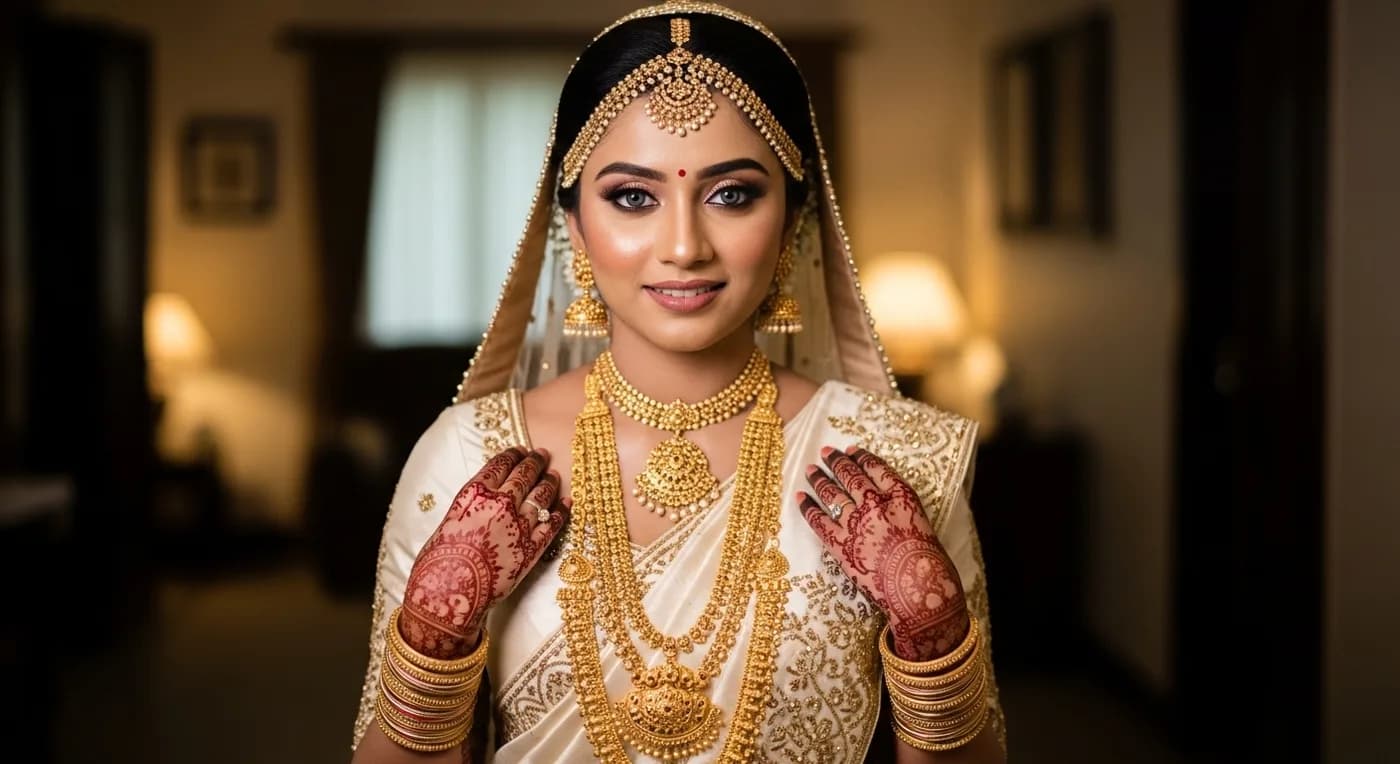
Assess their couple portrait work. Kerala Muslim couple portraits carry their own aesthetic — brides in heavy gold and richly embroidered outfits, hijab styling that must be handled with elegance, Malabar architectural backdrops in Kozhikode or natural settings in Wayanad. Look for portraits that feel authentic to the culture rather than generic wedding imagery.
Review their full wedding film, not just the reel. If you are hiring for video, ask to watch a complete 15+ minute wedding film from a Muslim wedding. The reel shows their editing skills; the full film reveals whether they can sustain a narrative across a multi-day celebration with the sensitivity each event demands.
Questions to Ask Before Booking
Eight targeted questions will reveal whether a photographer truly understands Malabar weddings or is approaching yours generically. These questions separate experienced Malabar wedding photographers from those who will struggle with the cultural and logistical demands of your event.
- How many Muslim weddings have you covered in the past year? Look for at least 5–10 if they claim to specialise.
- Who will handle the women-only segments of the Mailanchi? If they do not have a female team member or do not acknowledge the question's importance, that is a concern.
- Have you worked at our venue before? Familiarity with the venue's lighting, layout, and best angles saves time and produces better results.
- What is your approach during the Nikah ceremony? The right answer acknowledges the solemnity and mentions asking the family for specific guidance.
- How do you handle the panthi dining system at the Walima? This reveals whether they understand the batch-serving logistics of a large Malabar feast.
- What is your backup plan if the lead photographer is unavailable? Established studios have backup shooters. Solo freelancers often do not.
- What are the delivery timelines? Standard is 4–8 weeks for photos and 8–12 weeks for video. Get this in writing.
- What is the payment schedule? Standard practice is 25–50% advance with the balance on or after the wedding. Avoid teams that demand 100% upfront.
Red Flags
- No contract or written agreement. Non-negotiable. Every professional team provides a clear contract detailing deliverables, timelines, cancellation terms, and payment schedule.
- No Muslim wedding experience. A photographer who asks you to explain what Oppana is during the consultation is not ready for your event.
- Unrealistically low pricing. A "full Muslim wedding photo + video + drone + album" package at ₹20,000 – ₹30,000 signals untrained assistants, outdated equipment, or both.
- Vague delivery timelines. "We will deliver when ready" is unacceptable.
- No female team member available. For a traditional Malabar wedding with gender-separated segments, this is a functional gap.
- Heavy watermarks on delivered images. You are paying for the photos. Subtle branding on a shared gallery is standard; large watermarks on your personal copies are not.
How Should You Handle Social Media and Privacy With Your Photographer?
Agree on image usage rights before the wedding, not after your photographer posts without permission. This is a conversation many families forget to have — and regret later. Kerala Muslim families vary widely in their comfort with social media exposure, and your photographer needs clear direction before the wedding, not after images are posted.
Discuss these points during the booking consultation:
- Can the photographer post images on their Instagram, website, or portfolio? Many studios rely on wedding images for marketing. Some families are happy to allow this; others are not. Agree on this explicitly.
- Are there specific guests who should not be photographed or whose images should not be shared publicly? In families where some women prefer not to appear in publicly shared images, the photographer must know this in advance.
- Do you want images shared on WhatsApp groups before the full gallery is delivered? Some families love instant sharing; others want to control which images are seen first.
- Who owns the raw files? Most photographers retain raw files and deliver edited images only. If raw file access matters to you, negotiate this upfront — it may cost extra.
Tip
Put it in the contract. Verbal agreements about social media and privacy are easily forgotten. Include a specific clause in your photography contract stating which images can be shared publicly, whether the photographer needs approval before posting, and what happens if boundaries are crossed. This protects both parties.
Common Questions About Muslim Wedding Photography Kerala
How much does Muslim wedding photography cost in Kerala?
Three broad tiers define the market. A two-person crew handling a couple of days will run ₹75,000 – ₹1,50,000, while established studios deploying candid and traditional shooters across every event typically fall in the ₹1,50,000 – ₹3,00,000 range. At the top end, cinematic teams with drone operators, same-day editing suites, and four or more photographers command ₹3,00,000 – ₹6,00,000. The multi-day nature of Malabar celebrations — Mailanchi, Nikah, and Walima stretched across 48–72 hours — pushes rates 20–30% beyond what a single-event wedding would cost. Location also influences pricing: Kozhikode and Kochi studios carry a brand premium, whereas equally capable teams in Malappuram and Kasaragod often deliver comparable quality for less. For a full breakdown of how photography fits into the overall budget, see our Muslim Wedding Cost Guide.
What should a photographer know about Muslim wedding ceremonies?
A skilled Malabar wedding photographer recognises that each event has its own emotional register. During the Nikah, they work silently from the periphery — no flash, no movement through seated guests — and shoot only with the family's explicit consent. At the Mailanchi, they navigate gender-sensitive segments by deploying a female team member for all-women Oppana and henna segments. The Oppana itself demands fast burst shooting in warm, mixed lighting. At the Walima, they manage crowd-scale photography across 500–1,000+ guests while respectfully avoiding close-ups of anyone who signals discomfort. For full ceremony details, read our Malabar Muslim Nikah Guide.
What shots should be in a Muslim wedding photography checklist?
A comprehensive shot list spans three distinct events. During the Mailanchi, prioritise close-ups of the henna artist's hands at work, wide-angle captures of the Oppana circle in motion, and the bride's quiet moment on the decorated peetham. For the Nikah, the non-negotiable frames are the groom's expression during Ijab-Qubool, the pen touching paper for the Nikah-nama signing, and the Mahr being formally presented — all shot without flash from the periphery. The Walima demands the widest lens: sweeping stage compositions, the vivid colour of banana-leaf feast spreads, kitchen spectacles with copper biryani vessels steaming, the controlled rhythm of batch dining, and golden-hour couple portraits. Do not overlook the Hanthakashu gift-giving and the emotional farewell — these are the frames families revisit for decades. Walk your photographer through every item during the planning consultation.
Should I hire separate photographers for Mailanchi and Nikah?
One team can cover both events if they offer multi-day packages, which is the most common and cost-effective approach. However, some families hire a dedicated female photographer specifically for the Mailanchi night to ensure women guests are fully comfortable during the Oppana and henna segments. If your family maintains the all-women Mailanchi tradition — common in Malappuram and Kasaragod — discuss this with your photography team during the first consultation. Many established studios in Kozhikode and Kannur already include female photographers in their Muslim wedding team roster.
Is drone photography allowed at Muslim weddings in Kerala?
Aerial footage adds cinematic scale to large outdoor Walima events and grand convention centre entrances, and it has become a popular add-on for Kozhikode and Malappuram celebrations. That said, every drone operator must hold valid DGCA registration and fly within local airspace regulations — venues near Kannur or Kozhikode airports, or close to military zones, may fall inside restricted fly zones. Indoor Nikah ceremonies are never suitable for drone use. Confirm all permissions with your videographer and venue manager several weeks before the wedding to avoid last-minute complications.
Start Your Photographer Search Today
Your Muslim wedding photographs will be the lasting record of your Mailanchi celebrations, the sacred Nikah moment, and the grand Walima feast. Finding a photographer who combines technical excellence with genuine cultural understanding is the single most important decision in this category.
Your next steps:
- Browse photographer portfolios and shortlist 3–5 teams with proven Malabar wedding experience
- Schedule consultations and ask the questions outlined above — their answers will reveal their real expertise
- Read the complete Muslim Wedding Kerala Planning Guide for the full decision timeline
- Plan your look with our Kerala Muslim Bridal Look Guide — your photographer will need to know your styling direction
- Coordinate with your decoration team to ensure the stage and venue design photograph well
Tip
Book early for peak season. The November–February wedding season in Kozhikode, Malappuram, and Kannur sees the highest demand for experienced Muslim wedding photographers. Book 8–10 months ahead for premium teams, and 6–8 months for mid-range studios. Use our AI Wedding Checklist to track every booking deadline, and manage your photography budget in real time with the Budget Manager.
Topics
Muslim wedding photography KeralaNikah photographywedding photographer KozhikodeMuslim wedding videography KeralaMalabar wedding photographyExplore more
Frequently Asked Questions
1How much does Muslim wedding photography cost in Kerala?
2What should a photographer know about Muslim wedding ceremonies?
3What shots should be in a Muslim wedding photography checklist?
4Should I hire separate photographers for Mailanchi and Nikah?
5Is drone photography allowed at Muslim weddings in Kerala?
Continue reading
Related Articles
Kerala Muslim Wedding Decoration 2026: Nikah to Walima
Kerala Muslim Bridal Look: Attire, Gold & Styling 2026
Muslim Wedding Cost in Kerala: Full Budget Breakdown for 2026
Best Season for South India Destination Weddings: Month-by-Month Western Ghats Guide
Destination Wedding Cost in South India 2026: 5-Tier Budget Guide
Destination Wedding in South India: Complete 2026 Planning Guide
Still planning?
Get quotes from India's best vendors
Tell us what you're planning and we'll match you with verified photographers, venues, decorators, and more.
Get free quotes