
Kerala Muslim Bridal Look: Attire, Gold & Styling 2026
Complete styling guide for Kerala Muslim brides — Nikah and reception attire, Malabar gold jewellery sets, hijab-friendly looks, makeup tips, and groom styling for 2026.

Kerala Wedding Traditions Writer
Fathima Zahra is a traditions writer who specializes in Muslim and Mappila wedding customs of Kerala.
On this page
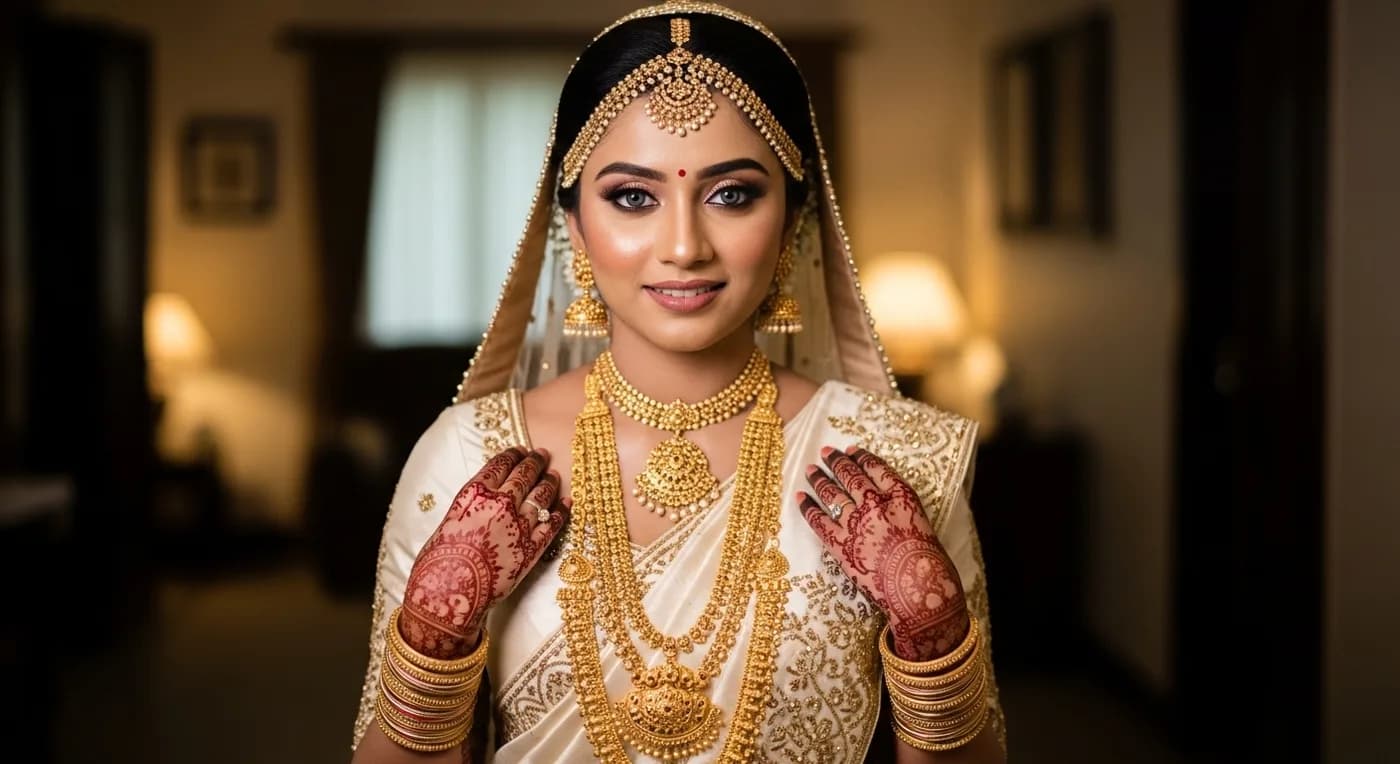
A Kerala Muslim bride's look centres on two distinct presentations — a traditional Nikah ensemble with full Malabar gold weighing 80–200 grams (₹5,00,000 – ₹15,00,000) and a contemporary reception outfit with lighter styling. The gold jewellery set — Manga Mala, Palakka Mala, Karimani Mala, and Elakkathali — is the visual centrepiece, representing both adornment and the bride's personal financial asset.
Quick Answer
Quick answer: A Malabar bridal gold set (80–200 grams) costs ₹5–15 lakh at 2026 rates. The Nikah look features heavy silk or brocade in ivory or pastels with full gold; the Walima look shifts to a contemporary lehenga or gown with lighter jewellery. Start outfit sourcing 6–8 months ahead; book your bridal MUA 4–6 months out.
Note
Pricing methodology: Gold jewellery cost ranges in this guide are calculated at 2026 market rates based on IBJA daily rate data. Outfit and MUA pricing reflects industry patterns from Kozhikode and Malappuram bridal boutiques and studios. Actual costs vary by gold price fluctuations, designer, and styling choices.
Having styled dozens of Malabar brides over the years, I can say that few bridal traditions in India carry the visual weight of a Malabar Muslim bride walking into her Nikah. The layers of gold catching light across her collarbone, the deep lustre of silk or brocade fabric against her skin, the careful draping of a dupatta that frames her face — every element is the result of months of planning, family discussion, and generational knowledge. In Kozhikode, Malappuram, Kannur, and across Kerala's Muslim communities, the bridal look is not merely aesthetic. It is a statement of family heritage, cultural identity, and the bride's own taste navigating centuries of tradition.
This guide covers every dimension of the Kerala Muslim bridal look for 2026 — from Nikah attire and reception outfits to the individual pieces of a Malabar gold set, hijab-friendly styling approaches, makeup strategy, groom coordination, and the regional differences that shape bridal aesthetics across North and South Kerala. For the broader wedding planning framework, see our Muslim Wedding Kerala Planning Guide. For ceremony rituals and Oppana traditions, our Malabar Muslim Nikah Guide covers every custom in detail. For budget allocation across all wedding categories, the Muslim Wedding Cost Guide breaks down every line item.
Why Do Malabar Brides Prepare Two Distinct Looks?
The Kerala Muslim wedding unfolds across multiple events — the Mailanchi henna night, the Nikah ceremony, and the Walima reception — and the bride's look transforms with each occasion. But the most significant distinction is between the Nikah and Walima presentations, which represent two fundamentally different aesthetic philosophies.
The Nikah look is rooted in tradition. This is the ceremony witnessed by family elders, the Qazi, and the community. The outfit tends toward heavy silk or brocade, the gold is at its maximum, and the styling — head covering, modest silhouette, formal draping — reflects the sacred nature of the occasion. In Malappuram and the interior towns of Kozhikode district, the Nikah look has barely changed in decades: ivory or gold silk, full Malabar gold set, dupatta covering the head, and an understated makeup palette that lets the jewellery speak.
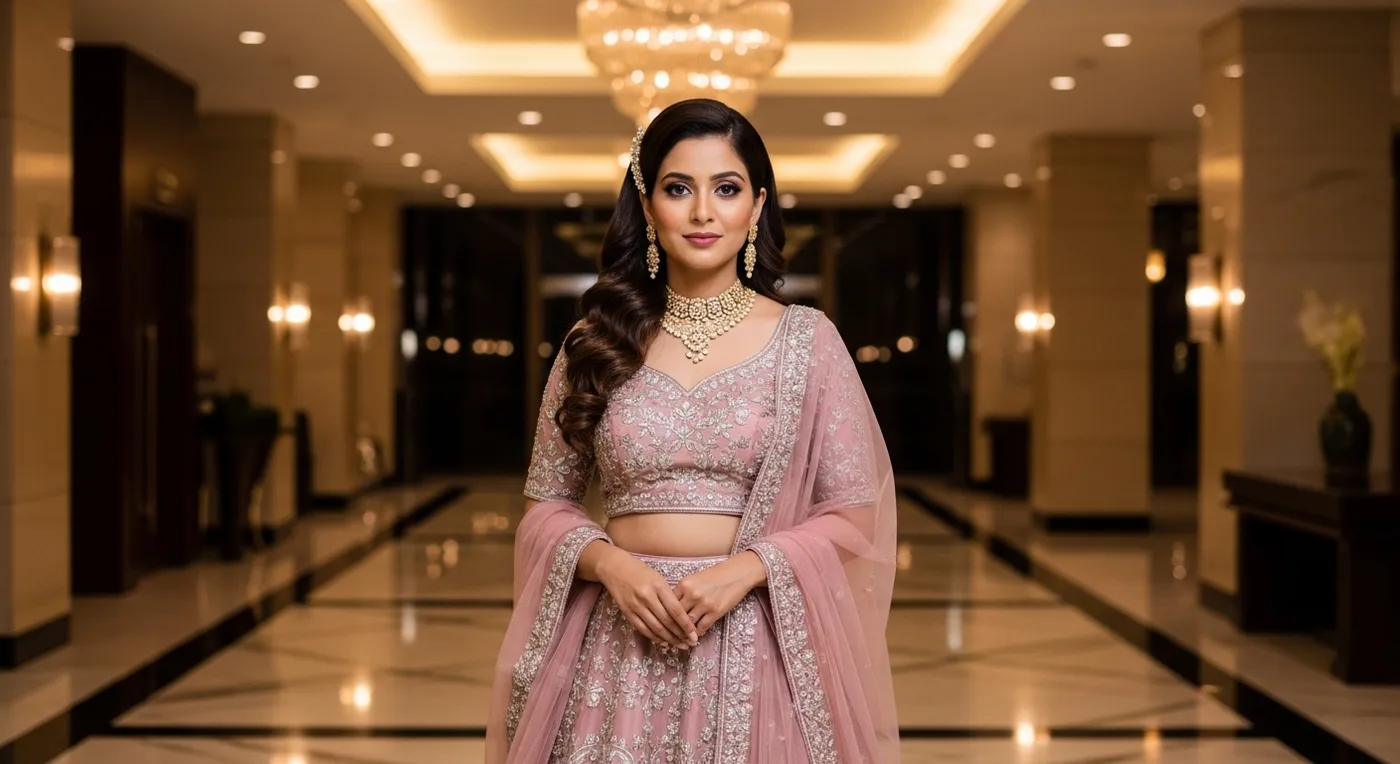
The reception (Walima) look is where personal expression takes over. The outfit shifts to contemporary silhouettes — lehengas, gowns, Indo-Western fusion pieces — the jewellery becomes lighter and more curated, and the makeup moves toward the glamorous end of the spectrum. This is the event photographed most extensively, the event where the couple's personal style is on display, and the event where trends from Kochi's cosmopolitan bridal scene merge with Malabar tradition.
Specifically, understanding this two-look structure is the foundation of every styling decision that follows. Budget, timeline, vendor selection, and jewellery allocation all flow from the reality that most Kerala Muslim brides are planning not one look but two.
Note
Planning Timeline: Start bridal outfit sourcing 6-8 months before the wedding. Designer pieces — particularly custom shararas and lehengas — require 3-4 months for stitching. Jewellery shopping should begin 8-10 months ahead to take advantage of gold price dips. Book your bridal makeup artist 4-6 months in advance, especially during November-February peak season.
What Does a Kerala Muslim Bride Wear for the Nikah?
The Nikah outfit is the most culturally significant garment a Malabar bride wears. It must balance visual grandeur with modesty, support the weight of heavy gold jewellery, and hold its structure through hours of ceremonies, photography, and family greetings. Choosing the right fabric, colour, and silhouette is not a fashion decision — it is a logistical one.
Fabrics That Work
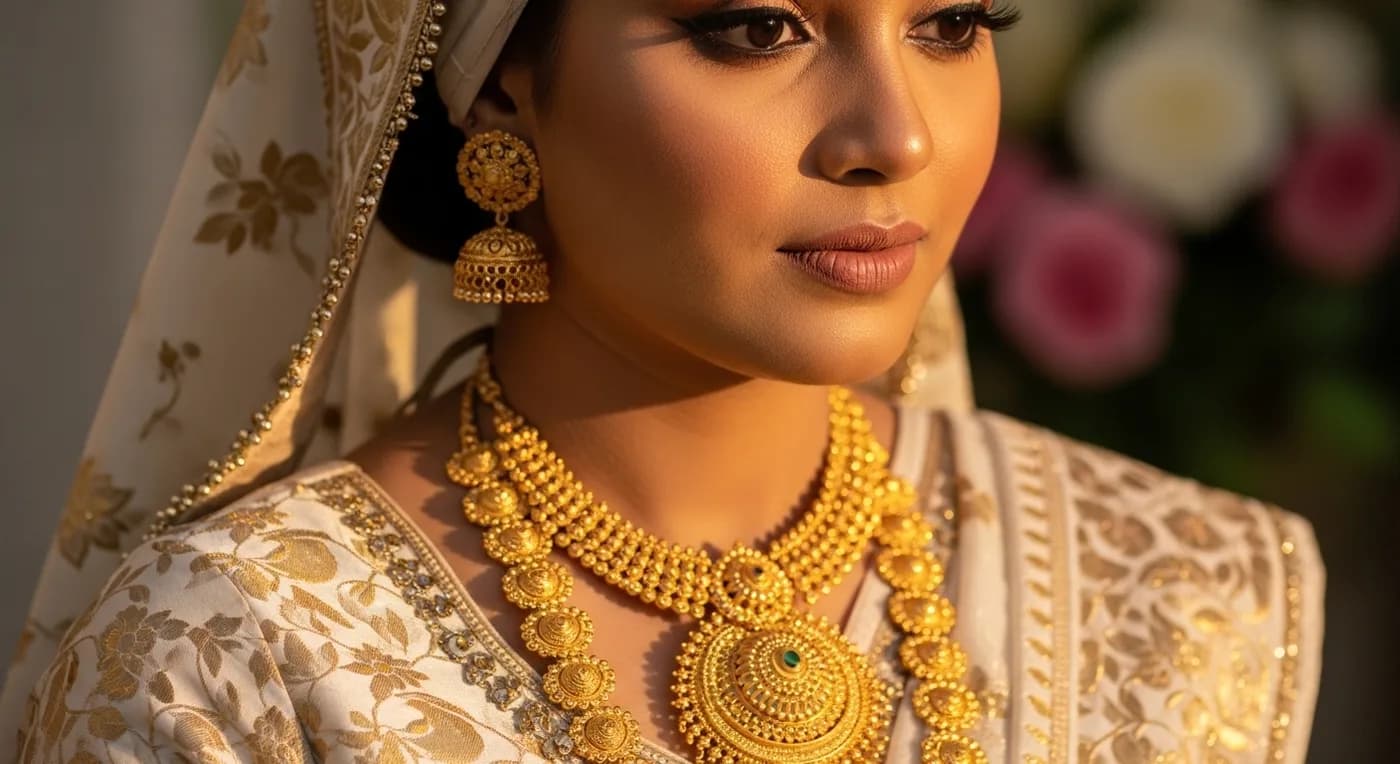
The Kozhikode brides I have worked with consistently prefer heavy silk, and for good reason. Heavy silk (Kanjivaram or Banarasi) remains the gold standard for Nikah attire in Kerala. The weight of silk provides structure that supports layered gold necklaces without bunching or pulling, and the natural sheen photographs beautifully under both indoor and outdoor lighting. Kanjivaram silk, with its rich zari work and substantial body, is the most popular choice among Kozhikode and Malappuram brides. Banarasi silk offers finer weaving with intricate motifs — roses, paisleys, and geometric patterns woven directly into the fabric.
Additionally, brocade is the other traditional favourite, particularly for families with North Indian or Hyderabadi connections. Heavy brocade fabric with gold or silver thread work creates an opulent surface that complements heavy jewellery without competing with it. Many Kasaragod brides choose brocade as a nod to the region's historical trade connections.
Tissue and organza have emerged as 2026 favourites for brides who want a lighter feel without sacrificing formality. Tissue fabric — a blend of silk and metallic threads — creates an ethereal shimmer that works exceptionally well under stage lighting. Organza overlays on silk bases offer dimension and movement that photograph dramatically. This shift toward lighter, layered fabrics mirrors the broader bridal trend documented in The Knot's 2025 Global Wedding Report, which found that 40% of brides now prioritise comfort-driven fabrics alongside visual impact.
Colour Palette
The traditional Malabar bridal palette centres on ivory and gold — a combination that provides the most flattering backdrop for yellow-gold jewellery. Ivory silk with gold zari border remains the most timeless choice and the one least likely to look dated in photographs decades from now.
However, pastels have gained significant ground since 2023. Blush pink, mint green, powder blue, and lavender are now regularly seen at Nikah ceremonies in Kochi, Thrissur, and urban Kozhikode. The key consideration with pastels is jewellery contrast — lighter fabrics require careful matching to ensure gold pieces stand out rather than blend into the outfit.
Rich jewel tones — emerald green, royal blue, deep maroon — are making a strong return in 2026, particularly in Kannur and Kasaragod where bolder colour choices have always been part of the local aesthetic. These colours work particularly well with antique-finish gold and Palakka Mala's green stone settings.
In contrast, red — while dominant in North Indian Muslim bridal traditions — is less common at Kerala Nikah ceremonies. Some brides choose red for the Mailanchi night outfit or as a reception lehenga, but it is not the default Nikah colour in the Malabar tradition.
Silhouettes
Set-mundu with blouse is the most traditional option — a two-piece ensemble with a draped lower garment and a fitted blouse, paired with a dupatta or veil. This silhouette is deeply rooted in Kerala's sartorial identity and remains the choice of families in Malappuram's interior towns and rural Kozhikode district. The blouse is typically full-sleeved with heavy embroidery at the collar, cuffs, and waistline.
Meanwhile, the sharara has become the dominant Nikah silhouette in urban Malabar. The wide-legged trousers paired with a shorter kurti and dupatta offer comfort, modesty, and visual drama in equal measure. Designer shararas with heavy mukaish (metallic embroidery) or dabka work along the hemline and dupatta border are the current preference in Kozhikode's bridal boutiques.
Embroidered kaftan is the relaxed-luxury option gaining traction among brides who prioritise comfort. A floor-length kaftan in embroidered silk or georgette, cinched with a jewelled belt, offers an effortlessly regal silhouette that accommodates heavy jewellery beautifully. This style works particularly well for brides who prefer not to manage a separate dupatta during the ceremony.
Anarkali — the flowing floor-length kurta with fitted bodice — occupies the middle ground between sharara and kaftan. Its vertical lines elongate the silhouette, and the flared skirt provides ease of movement. Heavily embroidered Anarkali suits from Lucknow and Hyderabad designers are popular choices among Thrissur and Ernakulam brides.
Tip
Fabric Test for Kerala Humidity: Before committing to any fabric, wear a swatch pinned inside your clothing for a full day during a humid month. Silk holds up well; certain brocades can feel stifling after two hours. If your wedding is outdoors or in a venue without strong air conditioning, prioritise breathable silks over heavy brocade, and consider a lighter-weight fabric for the reception outfit.
Dupatta and Veil Styling for the Nikah
The dupatta or veil is integral to the Nikah look. It serves both as a modesty covering and as a framing device for the face and jewellery. Three approaches dominate in Kerala:
- Classic dupatta drape — A matching or contrasting dupatta draped over the head, flowing down both shoulders, with one end pinned to the outfit at the waist. This is the most traditional approach and the easiest for photographers to work with.
- Pinned veil — A separate net or organza veil attached to the hairstyle or hijab with jewelled pins, falling behind the shoulders. This creates a bridal silhouette recognisable in any culture while maintaining the traditional head covering.
- Layered arrangement — A shorter dupatta over the head for the Nikah ceremony, replaced by a longer trailing veil for the stage photographs. Many brides switch between the two within the same event.
Reception Look: Contemporary Bridal Styling
The Walima reception is where Malabar brides step into 2026 aesthetics. The shift from the Nikah look is often dramatic — a complete change of outfit, jewellery selection, hairstyle, and makeup intensity. This transformation has become one of the most photographed moments of a Kerala Muslim wedding, with brides investing significant time and budget into making the two looks feel like different worlds.
Reception Outfit Options
Designer lehenga is the most popular reception choice across Kerala's Muslim communities. Brands from Delhi and Mumbai — Sabyasachi, Anita Dongre, Manish Malhotra — have strong penetration in the Malabar bridal market, with brides from Kozhikode and Kochi routinely sourcing outfits from these labels. A bridal lehenga costs ₹80,000 – ₹5,00,000 depending on the designer and customisation level.
Reception gowns in Western silhouettes — fitted bodice, flowing skirt, sometimes with a cape or detachable train — have carved a distinct niche among younger brides in Kochi and Trivandrum. These work best with lighter, more contemporary jewellery and an open hairstyle.
Fusion outfits — a lehenga skirt paired with a crop top and cape, or a structured jumpsuit with a trailing dupatta — represent the experimental edge of Malabar bridal fashion. These outfits are most commonly seen at Kozhikode and Kochi receptions where the couple's personal style takes precedence over convention.
Reception Jewellery
For the reception, a lighter, more curated jewellery approach works best. Where the Nikah demands the full traditional set, the reception allows the bride to choose a statement necklace (often a single Manga Mala or a contemporary choker), coordinating earrings, and a few stacked bangles. Many brides set aside the heavier pieces — Palakka Mala, Karimani Mala, waist chain — and let the outfit itself take centre stage.
Diamond and polki jewellery, rare at the Nikah, frequently appears at receptions. A diamond choker with matching earrings over a pastel lehenga has become a signature Malabar reception look that bridges contemporary elegance with bridal formality.
Looking for Makeup Artists in Kozhikode?
Tell us what you need and get quotes from verified makeup artists
What Gold Jewellery Does a Malabar Muslim Bride Wear?
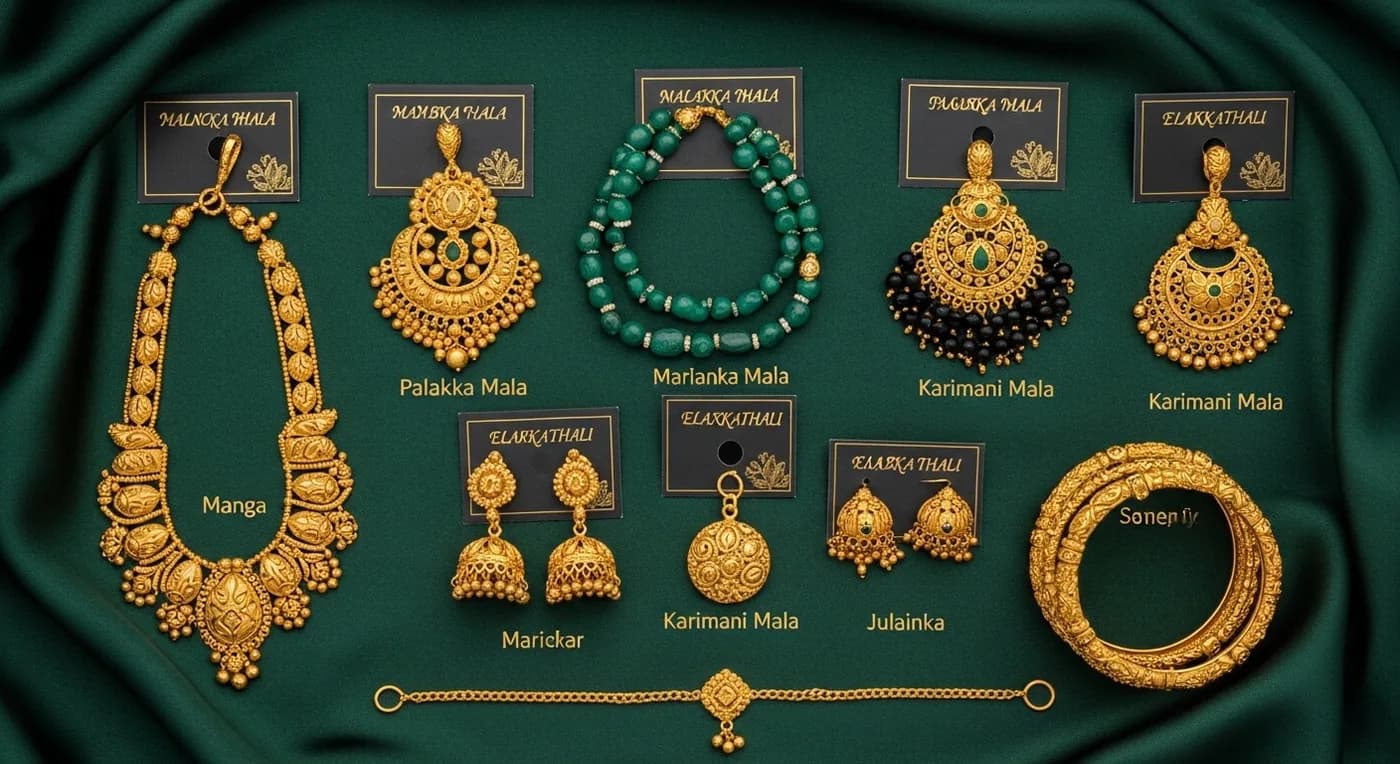
Gold is the heart of the Kerala Muslim bridal look. The Malabar gold set is not an accessory to the outfit — it is the look. Each piece carries cultural significance, and the set as a whole represents the bride's personal wealth, gifted by her family and belonging entirely to her. Understanding each piece — its weight, cost, cultural meaning, and how it fits into the overall ensemble — is essential for every Malabar bride and her family.
Manga Mala (Mango-Motif Necklace)
The Manga Mala is the crown jewel of the Malabar bridal set. Named for its distinctive mango-shaped pendants (manga means mango in Malayalam), this necklace features a series of gold mango motifs strung along a chain, often graduating in size from the clasp to the centre. The mango motif is one of the oldest design elements in Indian jewellery, symbolising fertility, prosperity, and abundance — meanings that make it particularly appropriate for a bridal piece.
A traditional Manga Mala weighs 30-60 grams, costing ₹2,10,000 – ₹4,70,000 at 2026 gold rates (22K at approximately ₹7,000-7,800 per gram, based on current rates tracked by GoodReturns.in). In many families, the Manga Mala is a multi-generational piece — the bride's mother or grandmother's necklace is refashioned with additional mango motifs to increase its length and weight, creating a piece that literally carries family history.
Palakka Mala (Green Stone Necklace)
The Palakka Mala is distinctly Kerala — a gold necklace set with green stones (traditionally emeralds or green glass called palakka) in leaf-shaped or rectangular settings. Established jewellers such as Malabar Gold & Diamonds carry extensive Palakka collections that showcase both traditional and contemporary interpretations of this design. The green against gold creates a colour contrast that is immediately recognisable as a Malabar piece. This necklace is considered auspicious, with the green stones symbolising nature, growth, and new beginnings.
Weight range: 15-35 grams, costing ₹1,05,000 – ₹2,75,000. The Palakka Mala pairs naturally with the Manga Mala — the two necklaces are designed to be layered, with the Palakka sitting slightly higher on the chest and the Manga Mala falling below it. Together, they create the signature layered-necklace profile of a Malabar bride.
Karimani Mala (Black Bead Chain)
The Karimani Mala — a gold chain strung with small black beads (karimani) — is both a bridal piece and a daily-wear item. The black beads are traditionally believed to ward off the evil eye, making this the one piece that most brides continue wearing long after the wedding. Its understated elegance provides visual contrast against the heavier gold pieces.
Weight range: 10-20 grams, costing ₹70,000 – ₹1,56,000. Some families gift the Karimani Mala as a separate engagement or Nikah-day gift from the groom's side, distinct from the main bridal set provided by the bride's family.
Elakkathali (Leaf-Motif Pendant)
The Elakkathali is a large, ornate pendant — typically in a leaf or petal shape — worn on a separate chain. It serves as the focal point of the lower neckline, sitting at the centre of the chest between the layered necklaces above. The pendant is often the most intricate piece in the set, featuring detailed filigree work, kundan settings, or engraved patterns.
Weight range: 10-25 grams, costing ₹70,000 – ₹1,95,000. In Kozhikode's jewellery workshops, the Elakkathali is where the goldsmith's artistry is most visible — families often commission custom designs that incorporate motifs meaningful to the bride or the family's heritage.
Jimikki (Jhumka Earrings)
The Jimikki — Kerala's signature jhumka earring — is the bridal earring of choice across every community in the state, and its importance in the Muslim bridal set is no exception. These dome-shaped, bell-like earrings feature intricate goldwork that catches light with every movement. The Kozhikode-style Jimikki is distinguished by its particularly fine filigree work and the delicate gold chains (mattal) that sometimes extend from the earring to the hairline.
Weight range: 8-20 grams per pair, costing ₹56,000 – ₹1,56,000. Brides typically own two pairs — a heavier set for the Nikah and a lighter, more contemporary pair for the reception.
Bangles (Vala)
Gold bangles are worn in sets of 4 to 12, stacked on both wrists. The number and weight vary by family tradition — families in Malappuram tend toward higher counts (8-12 bangles per wrist), while Kochi brides may choose 4-6 statement pieces. Traditional bangles feature embossed or engraved patterns; contemporary options include stone-set or enamel-work designs.
Weight range: 15-40 grams for a set, costing ₹1,05,000 – ₹3,12,000. Bangles are among the most rewearable pieces in the bridal set, making them a practical investment alongside their ceremonial role.
Aravanki and Odiyanam (Armlet and Waist Chain)
The Aravanki (upper arm ornament) and Odiyanam (waist chain or hip belt) complete the traditional set. The Odiyanam, worn over the outfit at the waist, is particularly striking at Nikah ceremonies where it defines the silhouette over draped fabrics. Not every Malabar bride wears both pieces — the Odiyanam is more common in premium sets, while the Aravanki has become less universal in 2026.
Combined weight range: 10-25 grams, costing ₹70,000 – ₹1,95,000.
Total Gold Investment
| Set Level | Total Weight | Estimated Cost (2026) | Typical Profile |
|---|---|---|---|
| Essential set | 80-120g | ₹5,00,000 – ₹9,00,000 | Budget-conscious families; South Kerala brides; family-sourced heirlooms supplement new pieces |
| Traditional set | 120-160g | ₹9,00,000 – ₹12,00,000 | Mid-range Malabar weddings; the most common weight range in Kozhikode and Malappuram |
| Premium set | 160-200g+ | ₹12,00,000 – ₹15,00,000 | Prominent Kozhikode families; Gulf-returned community; full display sets |
Important
Gold Prices Fluctuate Significantly: The cost ranges above are based on 2026 rates of ₹7,000-7,800 per gram for 22K gold, as reported by the India Bullion and Jewellers Association (IBJA). Gold prices can swing ₹500-1,500 per gram across a year. On a 150-gram set, a ₹500/gram movement translates to ₹75,000. Start tracking prices 8-10 months before the wedding and buy in stages during dips. For detailed buying strategies, read our Bridal Jewellery Buying Guide.
Rental vs Purchase: A Practical Consideration
Not every family can or should purchase 150+ grams of new gold. Renting ceremonial pieces — particularly the heavier items like the Odiyanam, Aravanki, and even supplementary necklaces — has become a mainstream practice across Kerala. Rental costs run 3-5% of the gold value per event, which means a 50-gram supplementary set worth ₹3.5 lakh can be rented for ₹10,000 – ₹18,000.
The practical approach many Malabar families take in 2026: purchase the core pieces that the bride will wear regularly (Manga Mala, Karimani Mala, bangles, Jimikki) and rent the ceremonial-only pieces (Odiyanam, Aravanki, supplementary display necklaces) that serve no purpose after the wedding day. This hybrid strategy can reduce the total gold spend by 20-30% without visibly diminishing the bridal look. For a full rent-vs-buy analysis, see our Bridal Jewellery Buying Guide.
How Do Muslim Brides Style Hijab for Weddings in Kerala?
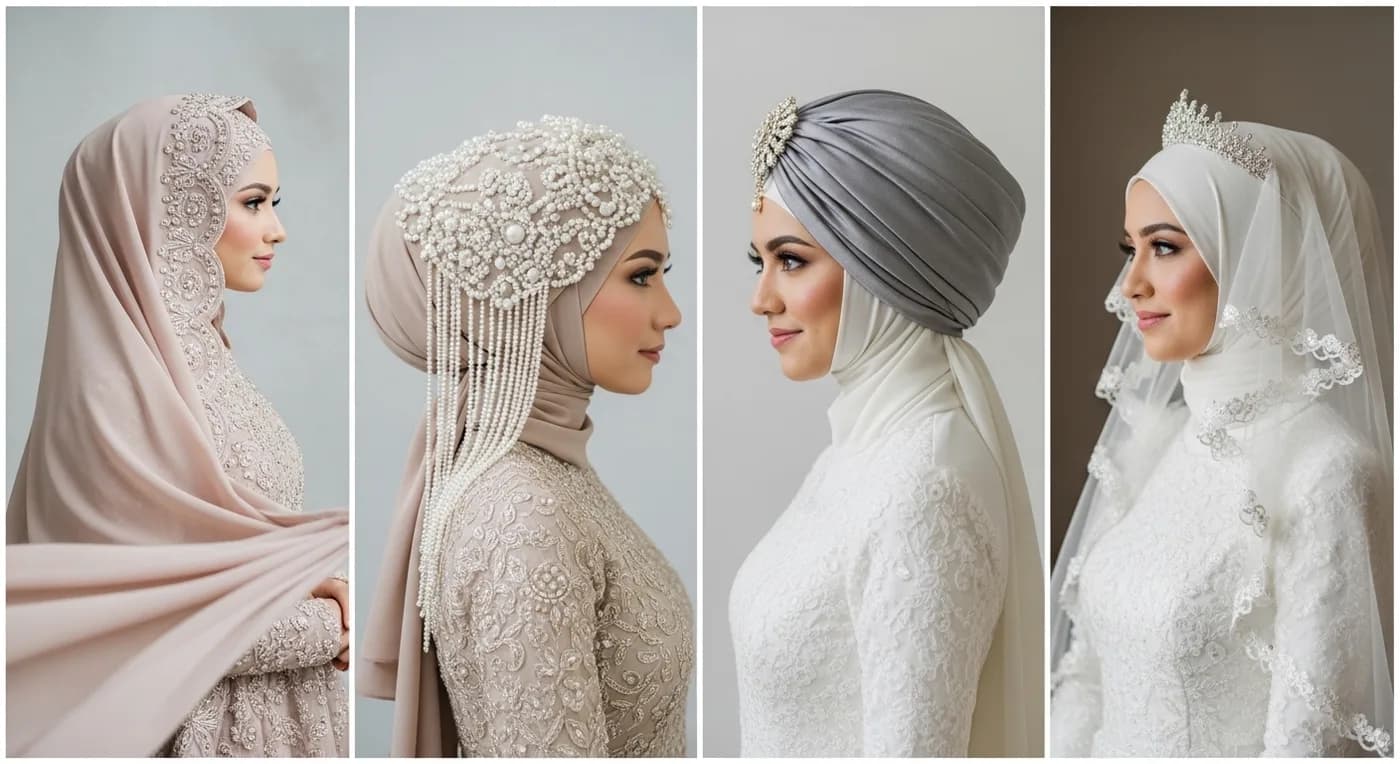
Hijab styling for weddings is an art form in its own right, and Malabar brides who wear hijab daily bring a sophistication to bridal head-covering that most non-hijabi bridal stylists do not fully understand. The goal is not to hide the hijab but to integrate it seamlessly into the bridal presentation — making the covering feel like an intentional design element rather than an afterthought.
Styling Approaches
Draped dupatta over hijab is the most traditional approach. A coordinating or contrasting dupatta is arranged over the hijab, pinned at strategic points to create volume and frame the face. The dupatta fabric should complement both the hijab material and the outfit — a silk dupatta over a jersey hijab creates a beautiful texture contrast. This style works with every Nikah outfit silhouette and is the easiest for photographers to light evenly.
Embellished hijab cap with trailing fabric is the 2026 statement choice. A structured cap — often in matching fabric with pearl, crystal, or sequin embellishment — sits over the hijab, with a long trail of fabric cascading down the back. This creates a dramatic bridal silhouette that rivals any veil and provides a defined frame for the face that photographs exceptionally well from every angle.
Turban-style wrap with jewelled pins offers a more sculpted, fashion-forward look. The fabric is wrapped in structured folds around the head, secured with ornate pins or brooches that double as additional jewellery. This style works particularly well with minimalist outfits and contemporary jewellery, making it a popular reception choice among Kochi and Trivandrum brides.
Layered veil arrangement — a base hijab covered by a shorter ceremony veil, with a longer trailing veil added for photography — provides maximum versatility within a single event. The ceremony veil is removed after the Nikah for a different look at the reception, without the bride needing to re-style her hijab entirely.
Finding the Right Stylist
Working with bridal teams at Kozhikode weddings has taught me that not every bridal makeup artist in Kerala has experience with hijab bridal styling. When booking your MUA, ask specifically about their hijab portfolio. Request to see at least five examples of hijab bridal work — not just general bridal looks. A stylist experienced in hijab bridal looks will understand fabric weight, pinning techniques that hold through hours of wear, and how to create volume and shape without compromising coverage. In Kozhikode and Malappuram, several MUAs specialise exclusively in Muslim bridal styling, and their understanding of the cultural nuances — when the dupatta must cover the head, when it can be shifted for photographs — is invaluable.
How Should Bridal Makeup Differ Between the Nikah and Reception?
The two-look tradition extends to makeup. The Nikah and reception demand different intensities, different colour approaches, and sometimes different makeup artists altogether.
The Nikah Makeup Approach
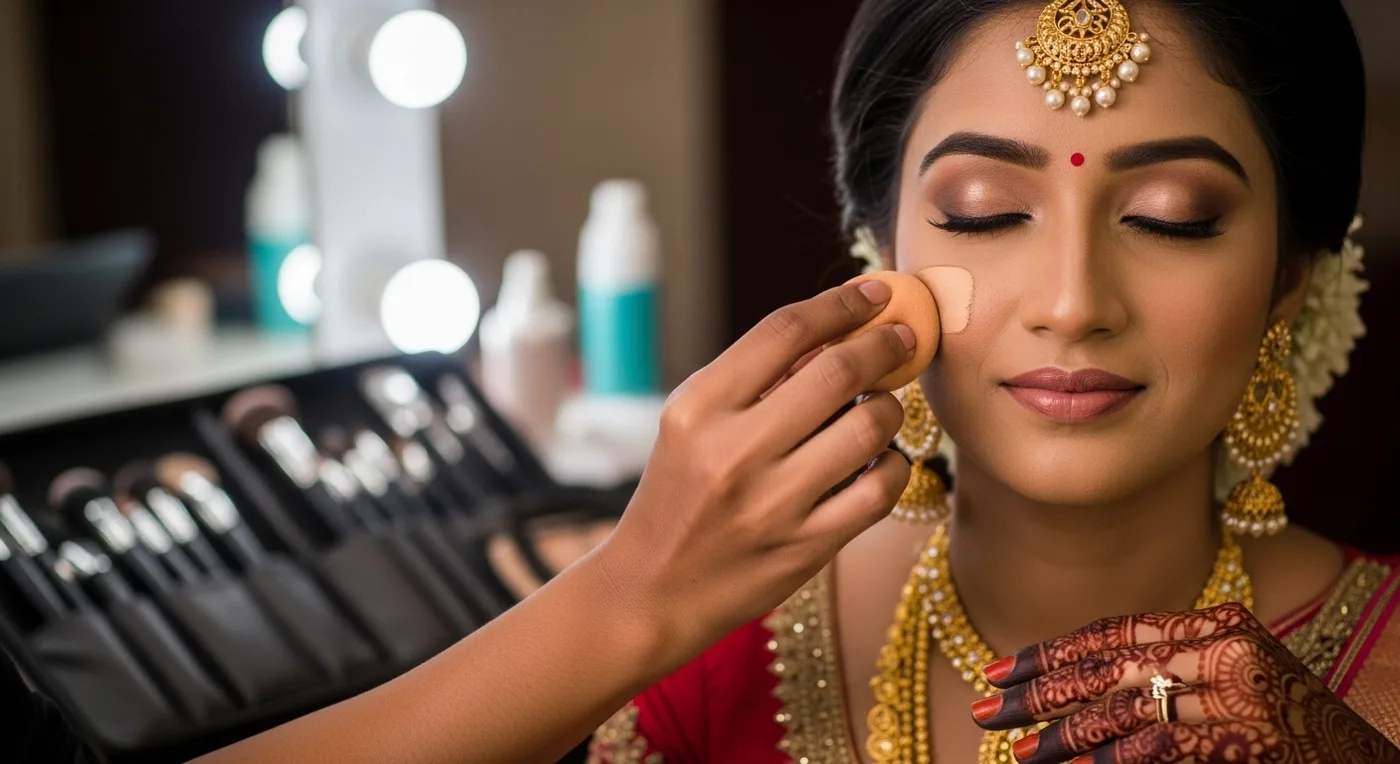
Nikah makeup is about enhancing the bride's natural features without competing with the gold jewellery. The typical Nikah makeup palette in Malabar weddings centres on flawless, luminous skin, soft definition around the eyes (kohl-lined but not heavily smoky), groomed and natural brows, nude or soft pink lips, and a light contour that defines without dramatically altering the face shape.
The rationale is practical as well as aesthetic. Heavy gold jewellery creates its own visual drama — adding heavily contoured, smoky-eyed makeup creates a visual overload that does not photograph well and can look overwhelming in person. The best Malabar bridal MUAs understand this balance instinctively: the gold speaks, and the makeup supports.
A professional Nikah bridal makeup session — including skin prep, HD or airbrush foundation, eye makeup, and setting — runs ₹15,000 – ₹40,000 in Kozhikode and Malappuram. Kochi-based artists with a pan-Kerala clientele charge ₹25,000 – ₹60,000.
The Reception Makeup Approach
The reception allows — and often demands — a shift toward glamour. With lighter jewellery and a contemporary outfit, the makeup can take centre stage. Smoky eyes in bronze, copper, or deep brown tones that complement gold jewellery without clashing, bold lip colour (berry, wine, or classic red), stronger contouring for defined stage and photography lighting, and shimmer highlighter on cheekbones and the bridge of the nose are all appropriate for the reception.
Many brides book the same MUA for both events but brief them explicitly on the two different intensities. If your budget allows, a touch-up session between the Nikah and reception — to transition from the natural look to the glam look — takes 45-60 minutes and typically costs ₹5,000 – ₹15,000 as an add-on.
Choosing Your Makeup Artist
For a thorough guide to finding and evaluating bridal MUAs in Kerala, including trial sessions, contract terms, and what to bring to your trial, read our Bridal Makeup Guide. The specific advice for Muslim brides: prioritise an artist who has documented experience with Malabar Muslim weddings. They will understand the gold-first aesthetic of the Nikah, the dupatta and hijab interaction with the hairstyle and face framing, and the cultural moments — like the precise time photographs are taken after the Nikah signing — where the look must be at its absolute best.
Looking for Makeup Artists in Malappuram?
Tell us what you need and get quotes from verified makeup artists
How Should the Groom's Look Coordinate With the Bride's?
The groom's look at a Kerala Muslim wedding deserves more thought than it often receives. The couple is photographed together for hours, displayed on a shared stage, and remembered as a visual pair. A groom whose outfit clashes with or underwhelms the bride's presentation creates an imbalance that no amount of post-processing can fix.
Nikah Groom Attire
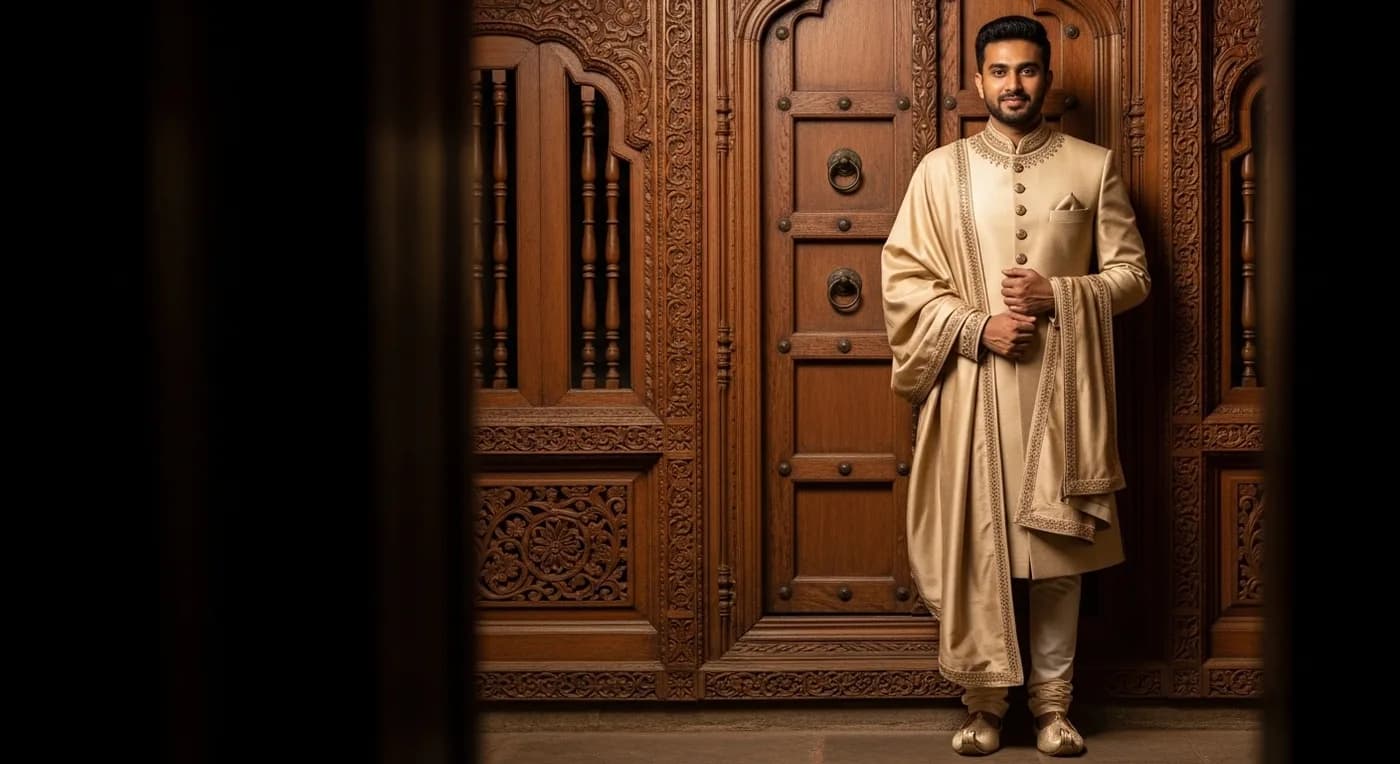
Sherwani is the dominant Nikah choice for Muslim grooms in Kerala. A well-fitted sherwani in ivory, gold, beige, or soft pastels — coordinating with (not matching) the bride's outfit — provides the formality the ceremony demands. The fabric should be manageable in Kerala's humidity: raw silk and silk-linen blends outperform heavy velvet or thick brocade. Custom-tailored sherwanis from established boutiques in Kochi, Kozhikode, or sourced from Hyderabad and Lucknow cost ₹25,000 – ₹1,00,000.
Jubba with mundu is the traditional alternative, chosen by grooms who want a distinctly Kerala identity rather than a pan-Indian one. A white or cream jubba (long tunic) paired with a crisp kasavu mundu projects understated elegance that photographs beautifully and honours the local tradition. This option is more common in Malappuram and rural Kozhikode.
Groom accessories — a matching pocket square, embroidered mojari shoes, a brooch or cufflinks — should coordinate with the bride's colour palette without being overly matchy. For an in-depth exploration of every groom attire option, fabric recommendation, and shopping guide by district, read our Groom Attire Guide: Mundu vs Sherwani.
Reception Groom Look
The reception groom look mirrors the bride's shift toward the contemporary. A three-piece suit, an Indo-Western bandhgala jacket with trousers, or a lighter kurta-churidar combination all work depending on the formality of the reception venue and the bride's outfit. Many grooms in 2026 invest in a single statement piece — a Nehru jacket in a textured fabric, or a tuxedo with a pocket square matching the bride's lehenga colour — that creates the visual coordination photographs demand.
How Does Bridal Style Differ Across Kerala's Districts?
The Malabar bridal look is not monolithic. Meaningful aesthetic differences exist between districts, shaped by local wealth patterns, community traditions, and the influence of specific jewellers and designers.
Kozhikode
Kozhikode sets the trend for Malabar Muslim bridal style. The city's wealthy merchant families and its proximity to cosmopolitan influences (Dubai flights, exposure to international fashion) create a bridal aesthetic that balances tradition with refinement. Kozhikode brides tend toward curated gold sets — fewer but heavier statement pieces rather than maximum volume. Outfit choices lean contemporary within the traditional framework: a sharara from a named designer rather than a generic silk ensemble. The Kozhikode bridal aesthetic is best described as restrained opulence — every piece is carefully chosen, and the overall effect is polished rather than maximalist.
Malappuram
Malappuram is Kerala's Muslim wedding capital by volume, and its bridal aesthetic reflects the community's emphasis on tradition and display. Gold sets here trend heavier — 150-200+ grams is standard for mid-range celebrations — and the full traditional set including Odiyanam and Aravanki is worn more consistently than in other districts. Outfit choices are often more traditional: heavy silk over contemporary shararas, deeper colours over pastels, and full dupatta coverage at the Nikah. There is a warmth and unrestrained celebration in the Malappuram bridal presentation that photographs with a particular kind of joy.
Kannur and Kasaragod
Kannur brides bring a slightly bolder colour palette — influenced, some say, by the surrounding Theyyam tradition with its dramatic reds and golds. Bridal outfits in Kannur are more likely to feature rich jewel tones, and stage decor coordinates more aggressively with the bridal colour scheme. Kasaragod, with its Tulu and Kannada border influences, introduces subtle differences in jewellery design — slightly different pendant shapes, occasional Mangalorean goldwork motifs — that distinguish its brides from the Kozhikode-Malappuram mainstream.
South Kerala (Kochi, Thrissur, Trivandrum)
Muslim brides in South Kerala draw from a broader aesthetic pool. The influence of pan-Indian bridal trends is stronger, hijab styling tends to be more experimental, designer lehengas replace traditional silk more frequently, and the gold sets are lighter (80-120 grams is typical). Kochi brides, in particular, often hire MUAs and stylists from the general Kerala bridal market rather than Muslim-specialist professionals, creating looks that are cosmopolitan and trend-forward.
Regional Style Comparison at a Glance
| Region | Bridal Style | Gold Weight | Colour Preference | Budget Range |
|---|---|---|---|---|
| Kozhikode | Curated, designer-forward; fewer but heavier statement pieces; restrained opulence | 100–160g | Ivory, soft pastels, occasional jewel tones | ₹25,00,000 – ₹40,00,000 |
| Malappuram | Traditional maximalist; heavy silk, full dupatta coverage, full bridal set including Odiyanam and Aravanki | 150–200g+ | Ivory, gold, deep traditional tones | ₹20,00,000 – ₹35,00,000 |
| Kannur & Kasaragod | Bold colour palette; Kannur influenced by Theyyam reds and golds; Kasaragod shows Tulu/Mangalorean goldwork motifs | 120–170g | Rich jewel tones — emerald, maroon, royal blue | ₹18,00,000 – ₹30,00,000 |
| South Kerala (Kochi, Thrissur, Trivandrum) | Cosmopolitan, pan-Indian trend-driven; designer lehengas over silk; experimental hijab styling | 80–120g | Pastels, contemporary neutrals, blush, powder blue | ₹15,00,000 – ₹30,00,000 |
2026 Trend Forecast
Several shifts are defining the Kerala Muslim bridal look this year:
Pastel Nikah outfits have moved from trend to mainstream, a shift that mirrors the broader pastel movement documented by Vogue India's bridal fashion coverage. Ivory remains dominant, but one in three Kozhikode brides is now choosing a soft pastel for the Nikah — a shift unthinkable five years ago. Dusty rose, sage green, and powder blue lead the palette.
Curated gold over maximum gold. Younger brides, even from families that can afford 200+ gram sets, are choosing 100-130 grams of carefully selected statement pieces over the traditional approach of maximum weight. The aesthetic priority has shifted from abundance to intentionality.
Hijab-forward styling. Rather than styling the hijab to mimic a non-hijabi bridal veil, 2026 brides are leaning into distinctly hijab-centric bridal looks — structured caps, turban wraps, and embellished hijab pieces that are designed as the focal point rather than a covering to be minimised.
Groom-bride colour coordination has become far more intentional. Couples are planning their outfits as a paired visual statement, often working with the same designer or stylist to ensure their stage presence is harmonised without being overly matched.
Heirloom gold revival. Rather than purchasing entirely new sets, families are investing in refashioning grandmother's and great-grandmother's gold into contemporary designs — preserving the gold's sentimental weight while updating the aesthetic. Kozhikode's heritage jewellers report a significant increase in redesign commissions over the past two years.
Mehndi as personal narrative. Bridal mehndi at Mailanchi nights is evolving from standard patterns to personalised storytelling — the couple's love story, meaningful locations, family symbols woven into the henna design. For a complete guide to mehndi styles and booking artists, see our Kerala Wedding Mehndi Guide.
Common Questions About Kerala Muslim Bridal Look
What gold jewellery does a Malabar Muslim bride wear?
The signature Malabar bridal ensemble features layered necklaces — the mango-motif Manga Mala sits at the lowest tier, the green-stone Palakka Mala rests above it, and the black-bead Karimani Mala adds protective symbolism. An ornate Elakkathali pendant anchors the centre of the chest. Completing the look are Jimikki jhumka earrings, stacked gold bangles on both wrists, and — for premium sets — an Odiyanam waist chain and Aravanki armlet. Depending on family tradition and budget, the total gold weight lands anywhere between 80 and 200 grams.
What does a Kerala Muslim bride wear for the Nikah ceremony?
The Nikah calls for a formal, modesty-conscious outfit that can support the visual weight of heavy gold. Popular choices include Kanjivaram or Banarasi silk in ivory and gold tones, designer shararas with mukaish embroidery, or embroidered kaftans with jewelled belts. The head is covered — typically with a matching silk dupatta draped over the hair or hijab — and the overall silhouette emphasises richness of fabric over skin exposure. Pastel shades like blush pink and sage green are gaining ground among younger brides in 2026.
How do Muslim brides style hijab for weddings in Kerala?
Four approaches dominate Malabar bridal hijab styling. The classic draped dupatta layered over the hijab is the most traditional and the easiest for photographers to light evenly. Structured embellished caps with trailing fabric create a dramatic bridal silhouette suited to stage photography. Turban-style wraps with jewelled pin accents offer a sculpted, fashion-forward look for receptions. Finally, layered veil arrangements — a shorter ceremony covering swapped for a longer trailing veil for photos — give maximum versatility within a single event.
What is the difference between Nikah and reception bridal looks?
The two presentations serve different emotional registers. At the Nikah, the focus is on heritage — heavy silk or brocade, maximum gold, a covered head, and understated makeup that lets the jewellery command attention. For the Walima reception, personal expression takes over: the outfit shifts to a designer lehenga, gown, or fusion piece, the jewellery is pared back to a curated statement necklace and earrings, and the makeup intensifies with smoky eyes and bold lips. Most Malabar brides budget for a complete outfit and jewellery change between events.
How much does a Malabar bridal gold set cost in 2026?
At current 22K rates of roughly ₹7,000–7,800 per gram, an essential bridal set weighing 80–120 grams runs ₹5–9 lakh, while a full premium set at 160–200+ grams can reach ₹12–15 lakh. However, many families adopt a practical hybrid strategy — purchasing the everyday-wearable core pieces (Manga Mala, Karimani Mala, bangles, Jimikki) and renting ceremonial-only items like the Odiyanam and Aravanki. This approach can trim the total gold outlay by 20–30% without visibly diminishing the bridal presentation.
Topics
Muslim bridal look KeralaMalabar wedding jewelleryNikah bridal dressMuslim bride gold Keralahijab bridal stylingExplore more
Frequently Asked Questions
1What gold jewellery does a Malabar Muslim bride wear?
2What does a Kerala Muslim bride wear for the Nikah ceremony?
3How do Muslim brides style hijab for weddings in Kerala?
4What is the difference between Nikah and reception bridal looks?
5How much does a Malabar bridal gold set cost in 2026?
Continue reading
Related Articles
Muslim Wedding Cost in Kerala: Full Budget Breakdown for 2026
Muslim Wedding Photography Kerala: Costs & Booking 2026
Kerala Muslim Wedding Decoration 2026: Nikah to Walima
Best Season for South India Destination Weddings: Month-by-Month Western Ghats Guide
Destination Wedding Cost in South India 2026: 5-Tier Budget Guide
Destination Wedding in South India: Complete 2026 Planning Guide
Still planning?
Get quotes from India's best vendors
Tell us what you're planning and we'll match you with verified photographers, venues, decorators, and more.
Get free quotes