
Tamil Wedding Traditions: Rituals, Meaning & Modern Adaptations
A Tamil wedding features 12 distinct rituals — from Kasi Yatra to thali tying — in a 2–3 hour muhurtham window. Full step-by-step guide with modern tips.

On this page
A Tamil wedding features approximately 12 distinct rituals — from the playful Kasi Yatra to the sacred Mangalya Dharanam (thali tying) — unfolding within a precise muhurtham window, sometimes as narrow as 12 minutes. The core ceremony takes 2–3 hours; the full wedding day spans 6–8 hours starting as early as 5 AM. Aadi (Jul–Aug) and Margazhi (Dec–Jan) are traditionally avoided for weddings.
Quick Answer
Quick answer: A Tamil wedding features approximately 12 distinct rituals — from the playful Kasi Yatra to the sacred Mangalya Dharanam (thali tying) — unfolding within a precise muhurtham window, sometimes as narrow as 12 minutes. The core ceremony takes 2–3 hours; the full wedding day spans 6–8 hours starting as early as 5 AM. Aadi (Jul–Aug) and Margazhi (Dec–Jan) are traditionally avoided for weddings.
Note
Pricing methodology: Cost ranges in this guide are based on vendor pricing data from the itsmy.wedding marketplace and published industry reports, collected in Q4 2025 – Q1 2026.
A Tamil wedding is one of South India's most elaborately structured marriage ceremonies, governed by the precise timing of the muhurtham (auspicious moment) and rich in symbolism drawn from Vedic scripture and centuries of Dravidian cultural expression. The core ceremony features approximately a dozen distinct rituals — from the dramatic Kasi Yatra to the deeply sacred Mangalya Dharanam (thali tying) — and typically unfolds between 5 and 9 AM, with the entire wedding day spanning six to eight hours.
Whether you are a couple preparing for your own Tamil wedding, a guest wanting to understand the rituals you will witness, or a vendor seeking cultural fluency, this guide walks you through every ceremony step by step, explains its meaning, and explores how modern couples in Chennai (formerly Madras) and across Tamil Nadu are adapting these ancient customs for 2026 celebrations. For a broader view of planning logistics, venue options, and budgeting, see our Chennai wedding planning guide.
The Role of Muhurtham: Why Timing Is Everything
No element of a Tamil wedding carries more weight than the muhurtham. This is not a suggestion or a preference — it is the immovable foundation around which every other decision is built. The muhurtham is a precise window, sometimes as narrow as twelve minutes, during which the thali must be tied around the bride's neck. Miss it, and the marriage is considered incomplete.
How Muhurtham Is Calculated
A family purohit (priest) or jyothishar (astrologer) examines both partners' jathakam (horoscopes), cross-referencing their birth stars (nakshatram), planetary positions, and the Tamil panchangam (almanac). The result is a specific date and an exact time — often in the predawn or early morning hours. A muhurtham of 6:12 AM means the thali must be tied at that precise minute, not 6:15 AM.
Why Dawn Ceremonies
The most auspicious muhurtham times overwhelmingly fall between 5 AM and 9 AM. This is rooted in Vedic astrology's emphasis on the Brahma Muhurtham (the period roughly 96 minutes before sunrise) and early morning hours as times of spiritual clarity. For the bride's family, this means arriving at the kalyana mandapam (wedding hall) as early as 3 or 4 AM to complete preparatory rituals before the main ceremony begins.
Note
The Panchangam and Auspicious Months
The Tamil calendar designates certain months as highly favourable for weddings — Thai (January-February), Panguni (March-April), Vaikasi (May-June), and Aippasi (October-November) are considered the most auspicious. The month of Aadi (July-August) is traditionally avoided for weddings and other new beginnings, as is Margazhi (December-January), a month reserved for devotion and spiritual practice. The concentration of weddings into auspicious months creates intense competition for venues and vendors, with pricing premiums of 20 to 40 percent during peak periods. According to CAIT, 4.6 million weddings generated ₹6.5 lakh crore in spending during the November–December 2025 season alone, and Tamil Nadu is one of the largest contributors to this economic activity.
Pre-Wedding Ceremonies
The days and weeks before a Tamil wedding are filled with rituals that prepare the couple, sanctify the home, and formally bind the two families together.
Nicchayathartham (Engagement)
The Nicchayathartham is the formal engagement ceremony where both families meet — traditionally at the bride's home or a temple — and the match is publicly confirmed. The groom's family presents the bride with a silk saree, fruits, and jewellery. The couple exchanges rings, and the wedding date (muhurtham) is formally announced. In practical terms, the Nicchayathartham is when the wedding becomes official in the eyes of the community — once this ceremony is done, breaking the engagement carries serious social consequences.
Panda Kaal Muhurtham (Erecting the Sacred Wedding Post)
The Panda Kaal is a ritual unique in its physical and symbolic significance. A decorated wooden post — the panda kaal — is erected at the wedding venue, marking the space as sacred ground for the marriage. This typically happens a day or two before the wedding. The post is anointed with turmeric and kumkum, and prayers are offered to invoke divine blessings. The Panda Kaal transforms the venue from a secular space into a consecrated ceremonial site.
Nalangu (Turmeric and Haldi Ceremony)
The Nalangu is one of the most joyful pre-wedding events. Turmeric paste is applied to the bride and groom at their respective homes by married women from the family (sumangalis). Beyond its cosmetic purpose — turmeric is a natural skin brightener and antiseptic — the Nalangu is believed to purify the couple before the sacred union. The ceremony is accompanied by singing, teasing, and playful games between the bride's and groom's sides, making it one of the most photographed pre-wedding events.
Sumangali Prayers
Married women from the family gather to perform prayers invoking blessings for the couple's married life. The presence of sumangalis (women whose husbands are living) is considered essential at every auspicious ceremony — their participation is believed to transfer marital prosperity and good fortune to the new couple. These prayers are typically accompanied by the distribution of betel leaves, areca nuts, turmeric, and kumkum.
Wedding Day Rituals Step by Step
The main ceremony is a carefully choreographed progression, each ritual building upon the last. Understanding the sequence transforms the experience from a series of unfamiliar actions into a coherent, deeply meaningful narrative.
Kasi Yatra: The Groom's Theatrical Departure
The Kasi Yatra is one of the most entertaining and philosophically rich rituals in any Indian wedding tradition. After arriving at the mandapam, the groom suddenly announces — with exaggerated solemnity — that he has decided to renounce worldly life and embark on a pilgrimage to Kasi (Varanasi) to pursue spiritual study and asceticism. He picks up an umbrella, a walking stick, a fan, and a small bundle containing provisions, and begins walking away from the wedding hall.
The bride's father intercepts him, sometimes dramatically blocking his path. He persuades the groom that the grihastha ashrama (householder's life) is equally noble and spiritually fulfilling, and offers his daughter's hand in marriage as an inducement to return. The groom, suitably convinced, turns back.
While this ritual draws laughter and cheering from guests, its philosophical weight is substantial. It represents the Hindu ashrama system's recognition that there are multiple valid paths to fulfilment — and that choosing married life is a conscious, honourable decision rather than a default. The groom is not simply accepting marriage; he is deliberately choosing it over renunciation.
Tip
Maalai Maatral: The Garland Exchange
The Maalai Maatral (garland exchange) is one of the most spirited moments in a Tamil wedding. The bride and groom attempt to garland each other with elaborate jasmine and flower garlands, while family members playfully lift them on their shoulders to make it harder for the other to reach. The crowd cheers, the nadaswaram builds to a crescendo, and the energy in the hall reaches its peak.
On the surface, it is a joyful game. Symbolically, the Maalai Maatral represents the couple's mutual acceptance of each other — by placing a garland around each other's necks, they are publicly declaring their willingness to enter this union. The competitive element adds levity to what is otherwise a solemn morning, and it is often the moment when guests who have been sitting quietly through Vedic chanting come alive.
Oonjal: The Swing Ceremony
The Oonjal (swing ceremony) is one of the most visually distinctive Tamil wedding rituals. The couple is seated together on a decorated swing — often adorned with flowers and mango leaves — and gently rocked by female relatives while married women sing traditional Tamil songs (Oonjal Paattu). Elders pass a tray with a lit lamp around the couple to ward off the evil eye.
The Oonjal serves multiple purposes: it is a moment of calm between the energetic Maalai Maatral and the solemn rituals that follow, it allows the couple a brief shared moment amid the ceremony's intensity, and the songs sung by the elders carry blessings and advice for married life. In many families, the Oonjal songs have been passed down through generations — the same verses the couple's grandmothers heard at their own weddings.
Kanyadaanam: Giving Away the Bride
The Kanyadaanam is among the most emotionally charged moments of any Hindu wedding. The bride's father formally gives his daughter's hand to the groom, signifying his trust and the transfer of responsibility. The bride sits on her father's lap, and the father pours sacred water over both their hands while Vedic mantras are chanted.
For many families, this is the moment that brings tears — the father publicly acknowledging that his daughter is beginning a new chapter. The mantras express a prayer that the groom will treat the bride as an equal partner in dharma (duty), artha (prosperity), and kama (love).
Mangalya Dharanam: The Thali Tying
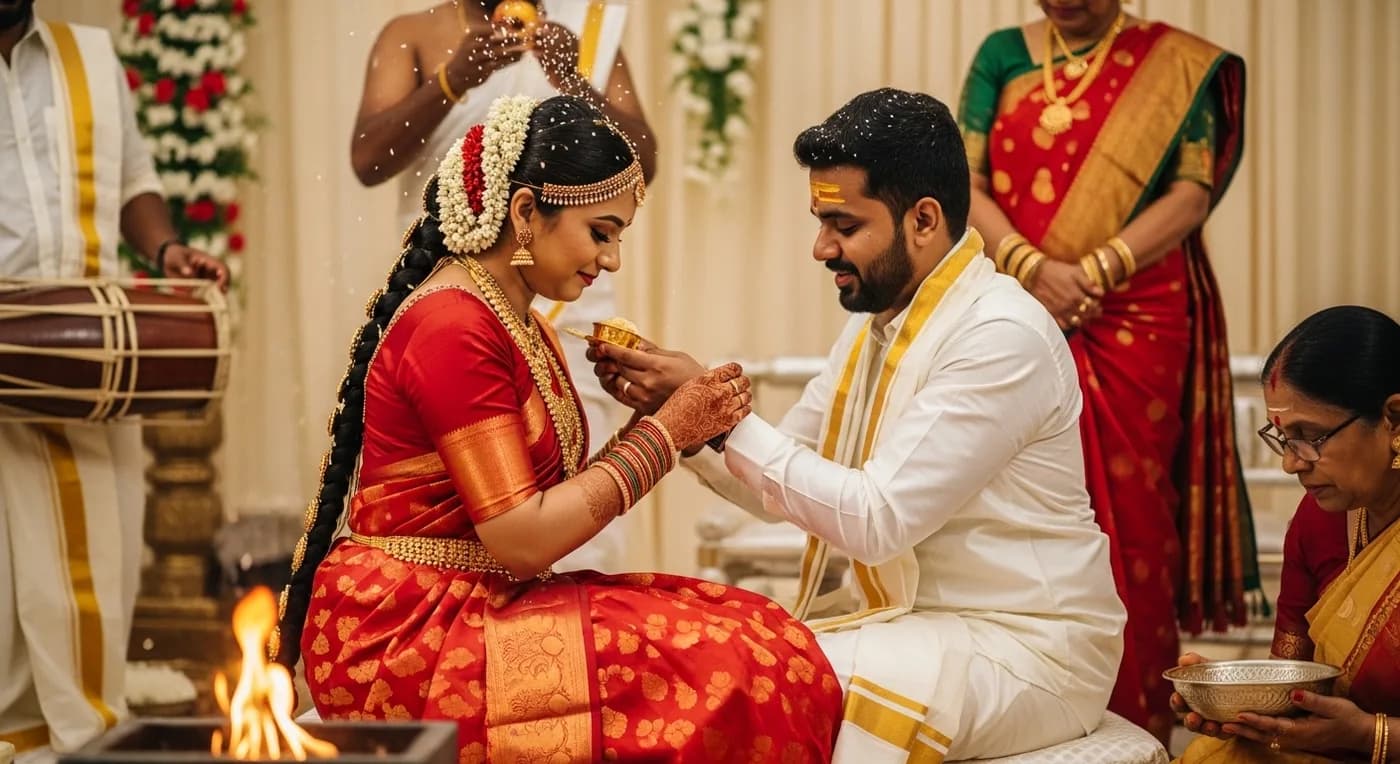
The Mangalya Dharanam — the tying of the thali (sacred gold pendant on a yellow thread) — is the single most important moment of a Tamil wedding. Everything else leads to this. The entire ceremony structure exists to build toward the exact muhurtham second when the groom ties the thali around the bride's neck.
As the muhurtham moment arrives, the nadaswaram (the long, penetrating wind instrument) builds to its most powerful crescendo, the thavil (double-headed drum) matches its intensity, and the hall erupts in sound. For a breakdown of nadaswaram ensemble and reception entertainment pricing, see our wedding entertainment cost in Chennai guide. The groom ties three knots in the thali thread — the first knot representing their commitment to each other, the second their commitment to their families, and the third their commitment to the divine. The bride's sister often assists with the second and third knots.
The thali itself carries deep significance. In Tamil tradition, it typically features two gold disc pendants — one from each family — strung on a saffron-yellow thread. The design of these discs varies by community: Iyer families may use a specific Shiva-oriented design, Iyengar families a Vishnu motif, and other communities their own distinctive patterns. In the Kongu Nadu region around Coimbatore, the Kongu Gounder wedding tradition follows an entirely different path — community elders officiate instead of priests, and all rites are conducted in Tamil without Vedic hymns. For many Tamil women, the thali is the most sacred piece of jewellery they will ever wear.
Saptapadi: The Seven Steps
The Saptapadi (seven steps around the sacred fire) gives the marriage its formal validity. The couple walks together around the agni (sacred fire), taking seven steps, each accompanied by a specific vow:
- Nourishment — May we provide for each other's sustenance
- Strength — May we grow strong together in body and mind
- Prosperity — May we be blessed with wealth and abundance
- Happiness — May we share joy and contentment
- Progeny — May we be blessed with children
- Longevity — May we walk this path for a lifetime
- Friendship — May we remain companions and confidants above all
After the seventh step, the marriage is considered eternally sealed. The Saptapadi is common across Hindu wedding traditions, but the specific mantras and vow interpretations differ between Tamil sub-communities.
Arundhati Darshan: Gazing at the Star
In the final ritual of the ceremony, the newly married couple is guided to look at the Arundhati star (Alcor, a faint star near Mizar in the constellation Ursa Major). Arundhati is revered in Hindu tradition as the ideal wife — a symbol of devotion, constancy, and partnership. By gazing at her star together, the couple invokes her qualities as a blessing for their own marriage.
In practice, since Tamil weddings happen in the early morning hours, the star is sometimes visible in the predawn sky. When it is not visible — particularly at indoor venues — the ritual is performed symbolically, with the couple looking in the star's direction or at a representation of it.
Post-Wedding Traditions
The wedding does not end with the ceremony. Several important traditions follow, each marking a new phase in the couple's shared life.
Grihapravesham: Entry Into the Groom's Home
The Grihapravesham is the bride's formal first entry into the groom's family home. She is welcomed at the threshold with aarti (a lit lamp waved before her) and asked to kick over a small pot of rice with her right foot, symbolising the abundance she brings to her new household. She steps into a plate of kumkum (vermillion) mixed with milk and walks inside, leaving auspicious red footprints. This tradition carries the profound message that the bride is not merely entering a house — she is transforming it into her home.
Samayal Ceremony
The Samayal ceremony involves the bride cooking her first meal in the groom's kitchen, often a simple dish of sweet pongal (rice cooked with lentils, jaggery, and ghee). The ritual signifies her integration into the domestic rhythm of her new family. In modern practice, many families treat this as a symbolic gesture — the bride prepares a single dish with help from her mother-in-law, and the extended family gathers to taste it.
The Evening Reception
While the morning ceremony is ritual, the evening reception is social. This is where extended family, friends, colleagues, and community members gather to congratulate the couple. The reception guest list is often significantly larger than the morning ceremony's, sometimes reaching 1,000 or more. Modern Chennai receptions increasingly feature themed decor, live bands, multi-cuisine buffets, and DJ entertainment — a marked contrast to the Vedic solemnity of the morning. For the latest trends, see our guide to Tamil wedding reception trends 2026.
Looking for Photographers in Chennai?
Tell us what you need and get quotes from verified photographers
Attire and Jewellery
The Bride
The Tamil bride's attire is among the most visually stunning in Indian wedding culture. The centrepiece is the Kanjivaram silk saree — a handwoven masterpiece from the town of Kanchipuram, characterised by rich colours, heavy zari (gold thread) work, and a distinctive contrast border. Our Kanchipuram silk saree buying guide covers how to identify authentic weaves and avoid common pitfalls. While red, maroon, and deep green are the most traditional choices, modern brides are expanding the palette to include mustard, teal, and blush tones.
Some Tamil communities — particularly among Iyer and Iyengar families — have a tradition of the bride wearing a Madisar (nine-yard saree), draped in a distinctive style that passes between the legs. While this was once universal, many modern brides opt for a six-yard Kanjivaram and reserve the Madisar for specific ritual moments.
The jewellery is equally significant. A full Tamil bridal set typically includes the nethi chutti (forehead ornament with a central pendant), jimikki (chandelier earrings), vanki (armlet shaped like a serpent), oddiyanam (gold waist belt), multiple necklace layers including the muthu maalai (pearl strand) and kemp (ruby-studded) sets, and heavy gold bangles. Temple jewellery — gold ornaments inspired by the carvings of Chola and Pallava-era temples — dominates the aesthetic. For couples drawn to the sacred setting itself, our guide to temple weddings in Kanchipuram covers ceremonies at Kamakshi Amman, Varadharaja Perumal, and Ekambareswarar temples.
Fresh jasmine flowers (malli poo) woven through the hair are essential. The fragrance of jasmine is inseparable from the sensory experience of a Tamil wedding.
The Groom
The groom traditionally wears a veshti (white or cream silk dhoti) paired with an angavastram (upper cloth draped over one shoulder). For many families, this simple, elegant combination is the only acceptable ceremonial attire. The groom's forehead marking varies by community — vibhuti (sacred ash) for Shaiva traditions, Thiruman Namam (a distinctive V-shaped mark) for Vaishnava families.
Modern grooms often wear a silk shirt with the veshti during the morning ceremony and switch to a designer sherwani or bandhgala suit for the evening reception. This dual approach honours tradition while accommodating contemporary style. For those exploring the differences between community-specific attire, see our detailed Iyer vs Iyengar wedding comparison.
Modern Tamil Weddings: Adapting Tradition for 2026
Tamil wedding traditions are not museum artefacts — they are living practices that evolve with each generation. The most significant modern adaptations reflect practical realities while preserving ritual integrity.
Shorter Ceremonies
The most visible change is duration. A traditional Tamil wedding that once stretched four to five hours is now routinely completed in two to two and a half hours. Families work with the purohit to identify the essential rituals — Kasi Yatra, Maalai Maatral, Kanyadaanam, Mangalya Dharanam, and Saptapadi — and streamline or abbreviate the supporting chants. This is especially common among Chennai couples with guests travelling from other cities who need to accommodate work schedules.
Evening Receptions With Contemporary Elements
While the morning ceremony remains deeply traditional, the evening reception has become a canvas for modern expression. DJ sets, cocktail hours (increasingly common even in traditionally conservative Tamil families), themed decor, photo booths, and live entertainment are now standard at mid-range to premium receptions. The reception has evolved into a celebration that looks very different from the dawn ceremony that preceded it.
Destination Weddings
A growing number of Tamil couples are moving their weddings beyond the traditional kalyana mandapam. Beach venues along the East Coast Road, heritage properties in Pondicherry, and resort-style venues in Mahabalipuram are popular choices. Thanjavur has emerged as a compelling heritage destination — couples can marry inside the 1,000-year-old Brihadeeswarar Temple following Shaiva-Agamic protocols, with unique Chola-era and Maratha traditions found nowhere else in Tamil Nadu. These destination weddings retain the complete ritual structure — muhurtham timing, Vedic chanting, thali tying — but set it against a dramatically different visual backdrop. The challenge is ensuring the purohit, nadaswaram artists, and all ritual materials travel with the wedding.
Important
Preserving What Matters
The most thoughtful modern Tamil weddings are not about removing traditions — they are about understanding which elements carry the deepest meaning and protecting them while letting go of elements that were logistical rather than spiritual. The Kasi Yatra remains because it is philosophically rich and visually compelling. The Oonjal persists because the songs sung during it carry generational memory. The thali tying is non-negotiable. What gets shortened is usually the extended Vedic chanting between major rituals — the connective tissue rather than the bones of the ceremony.
Planning Your Tamil Wedding
A well-planned Tamil wedding requires vendors who understand not just the logistics but the cultural rhythms of the day. A photographer must know that the thali tying happens in a twelve-minute window and there are no second chances. A caterer must understand the sequence and etiquette of banana-leaf service. A decorator must know that the mandapam is not just a stage — it is a consecrated space.
On itsmy.wedding, you can browse verified professionals across Chennai who specialise in Tamil wedding ceremonies — from nadaswaram ensembles who have played thousands of muhurthams to photographers who know exactly where to stand during the Maalai Maatral.
Budget Ranges
Tamil weddings in Chennai span a wide spectrum depending on venue, guest count, and community customs:
- Budget-conscious (community mandapam, 200-400 guests): ₹3,00,000 – ₹8,00,000
- Mid-range (premium hall, 400-800 guests): ₹8,00,000 – ₹20,00,000
- Premium (5-star hotel or destination, 500-1000+ guests): ₹20,00,000 – ₹50,00,000 — significantly above the national average of ₹29.6 lakhs, reflecting larger Tamil wedding guest counts
Looking for Venues in Chennai?
Tell us what you need and get quotes from verified venues
For a comprehensive planning timeline and vendor booking guide, see our Chennai wedding planning guide. To understand the specific differences between Tamil Brahmin sub-community ceremonies, our Iyer vs Iyengar wedding guide provides a detailed comparison.
A Tamil wedding, at its heart, is a ceremony that takes the most significant decision of two people's lives and wraps it in beauty, meaning, and community witness. The nadaswaram's call at dawn, the fragrance of jasmine in the bride's hair, the father's tears at Kanyadaanam, the thunderous energy of the Maalai Maatral, the absolute stillness at the moment of thali tying — these are not merely traditions. They are the language through which Tamil families have expressed love, commitment, and hope for centuries. Planning well through itsmy.wedding ensures that the logistics serve the emotion, never the other way around.
Tip
Start planning your wedding — generate a personalised checklist with our AI Wedding Checklist, estimate your budget with the Cost Calculator, or create a beautiful digital invitation.
Topics
tamil wedding traditionstamil marriage ritualstamil wedding customsthali tying ceremonykasi yatra ritualmadras weddingsExplore more
Frequently Asked Questions
1What are the main rituals in a Tamil wedding?
2How long does a Tamil wedding ceremony take?
3What is the significance of Kasi Yatra in Tamil weddings?
4Why are Tamil weddings held in the morning?
Continue reading
Related Articles
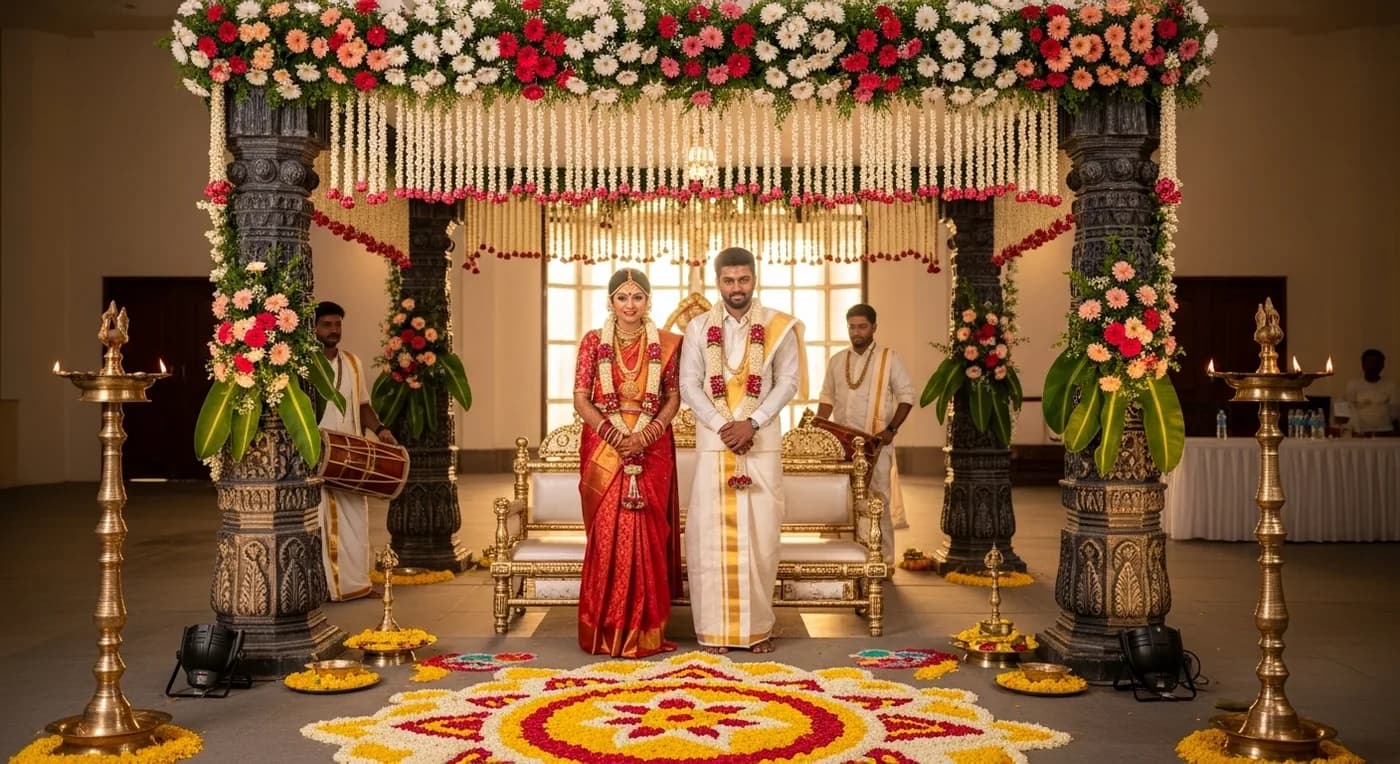
How to Plan a Chennai Wedding: The Complete 2026 Guide
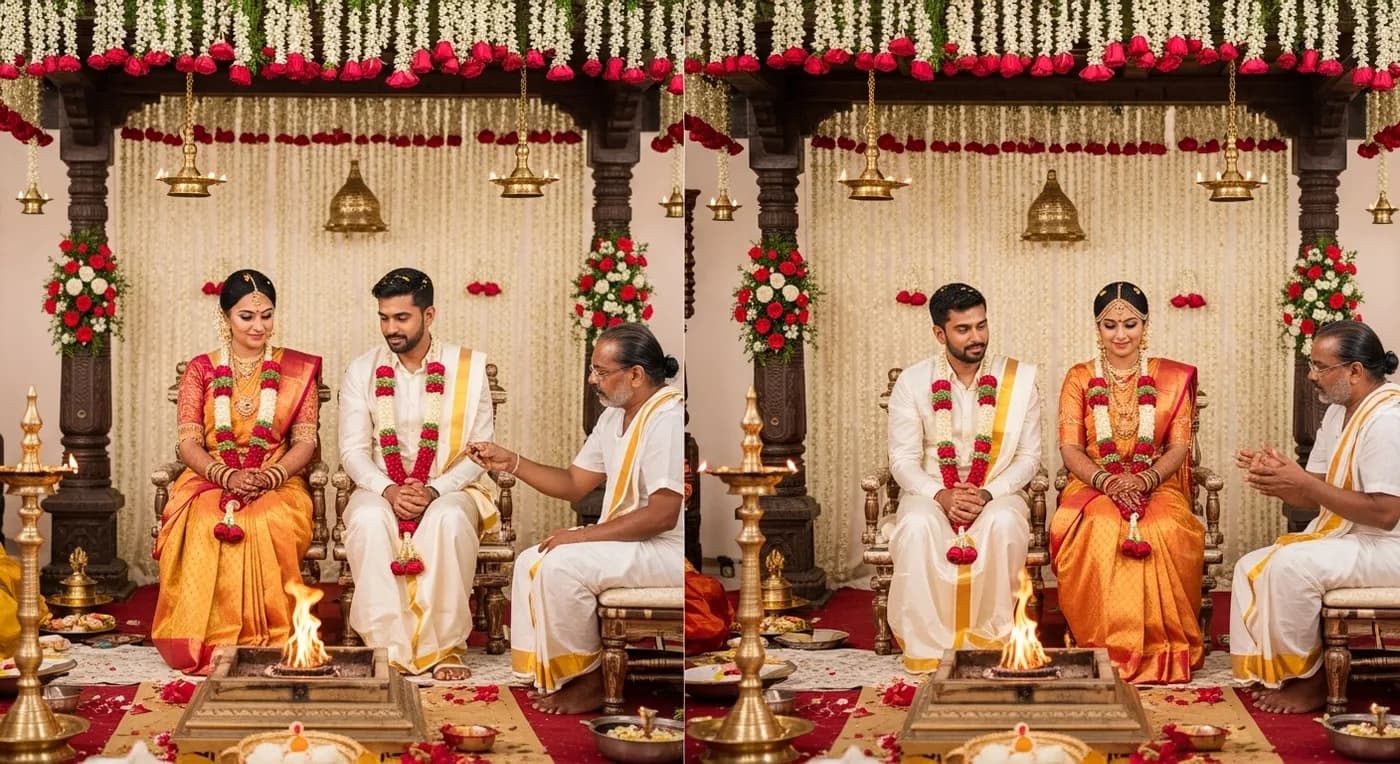
Tamil Brahmin Wedding: Iyer vs Iyengar Rituals Explained
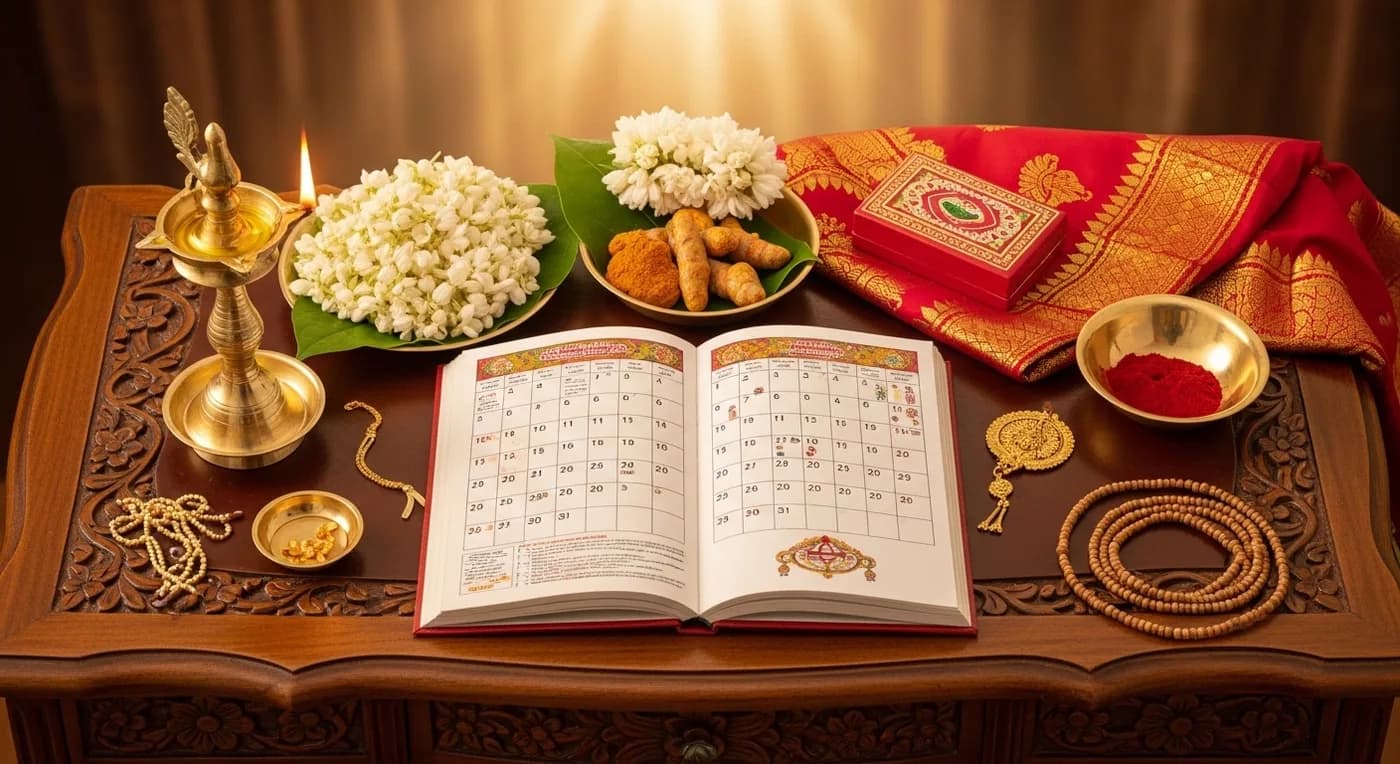
Auspicious Muhurtham Dates for Tamil Weddings in 2026
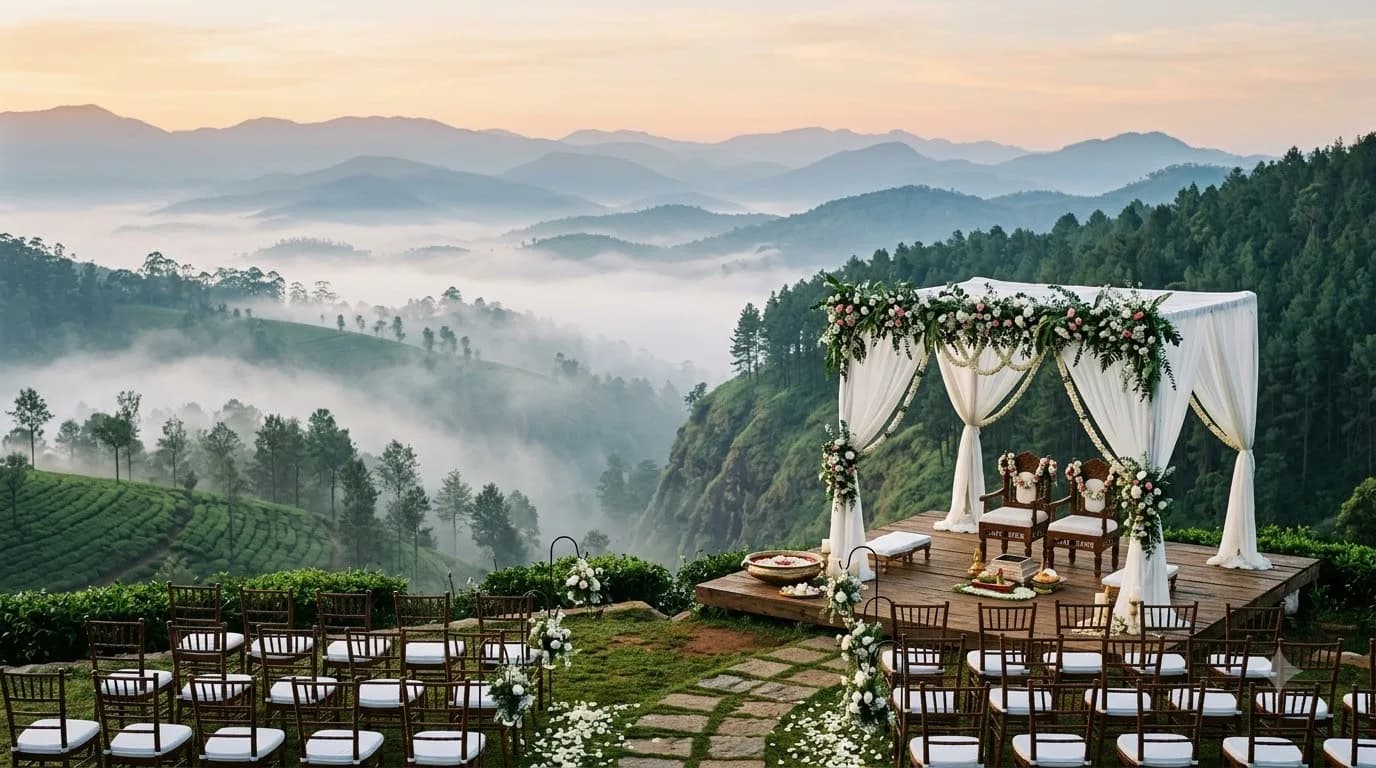
Best Season for South India Destination Weddings: Month-by-Month Western Ghats Guide
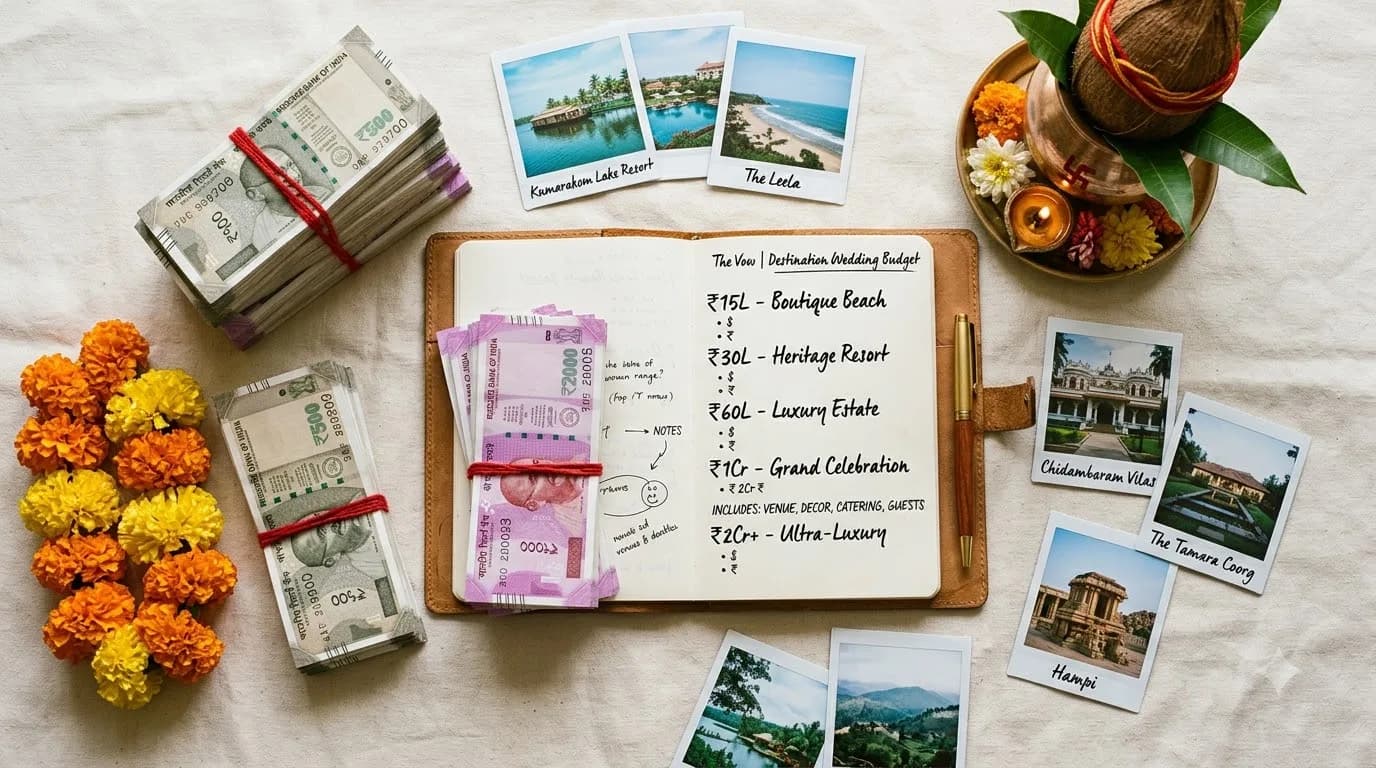
Destination Wedding Cost in South India 2026: 5-Tier Budget Guide
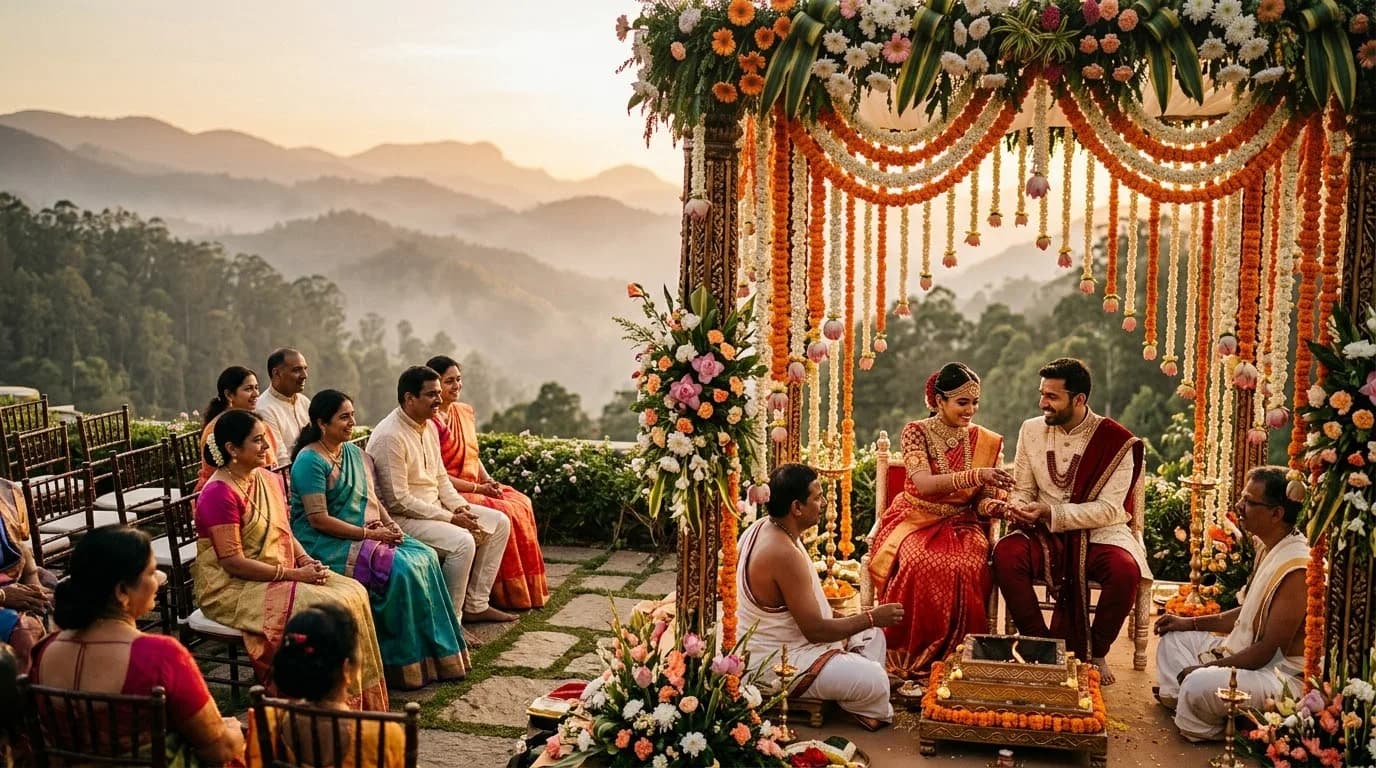
Destination Wedding in South India: Complete 2026 Planning Guide
Still planning?
Get quotes from India's best vendors
Tell us what you're planning and we'll match you with verified photographers, venues, decorators, and more.
Get free quotes