Kanchipuram Silk Saree for Wedding: 2026 Buying Guide
Kanchipuram silk saree for wedding costs ₹8,000-₹5 lakhs+ in 2026. GI tag verification, zari types, T. Nagar shopping guide, community picks.

On this page
A bridal Kanchipuram silk saree costs between ₹30,000 and ₹1.5 lakhs for pure zari options in 2026, with heirloom pieces reaching ₹2–5 lakhs. Budget-friendly tested zari sarees start at ₹8,000. Always verify the GI (Geographical Indication) tag, Silk Mark certification, and korvai hand-join before buying. T. Nagar in Chennai and Kanchipuram town offer the widest selection.
Quick Answer
Quick answer: A bridal Kanchipuram silk saree costs between ₹30,000 and ₹1.5 lakhs for pure zari options in 2026, with heirloom pieces reaching ₹2–5 lakhs. Budget-friendly tested zari sarees start at ₹8,000. Always verify the GI (Geographical Indication) tag, Silk Mark certification, and korvai hand-join before buying.
Note
Pricing methodology: Cost ranges in this guide are based on vendor pricing data from the itsmy.wedding marketplace and published industry reports, collected in Q4 2025 – Q1 2026.
The Kanchipuram silk saree is not a choice for a Tamil bride — it is a given. Whether you are an Iyer bride draping the 9-yard madisar for the first time, an Iyengar bride selecting the rich red with golden zari checks, or a Chettinad bride choosing the bold contrasts your family expects, the Kanjivaram is where your wedding outfit conversation begins and, for most families, where it ends. Within an Indian wedding industry valued at ₹10.79 lakh crore, bridal silk remains one of the most meaningful — and most scrutinised — purchases a family makes.
Having accompanied dozens of brides on their T. Nagar shopping expeditions over the years, I can tell you that the difference between a satisfying purchase and buyer's remorse comes down to knowing what you are looking at. This guide covers everything: realistic 2026 price tiers, how to verify authenticity using GI tags and Silk Mark certification, the difference between pure zari and tested zari, where to shop in Chennai (formerly Madras) and Kanchipuram town, and community-specific preferences for Iyer, Iyengar, and Chettinad brides. For the broader wedding planning context, see our Chennai wedding planning guide and Chennai wedding budget guide. If you are considering hosting the wedding itself in Kanchipuram town, our Kanchipuram wedding planning guide covers venues, temple ceremonies, and costs.
What Makes Kanchipuram Silk Non-Negotiable for Tamil Brides?
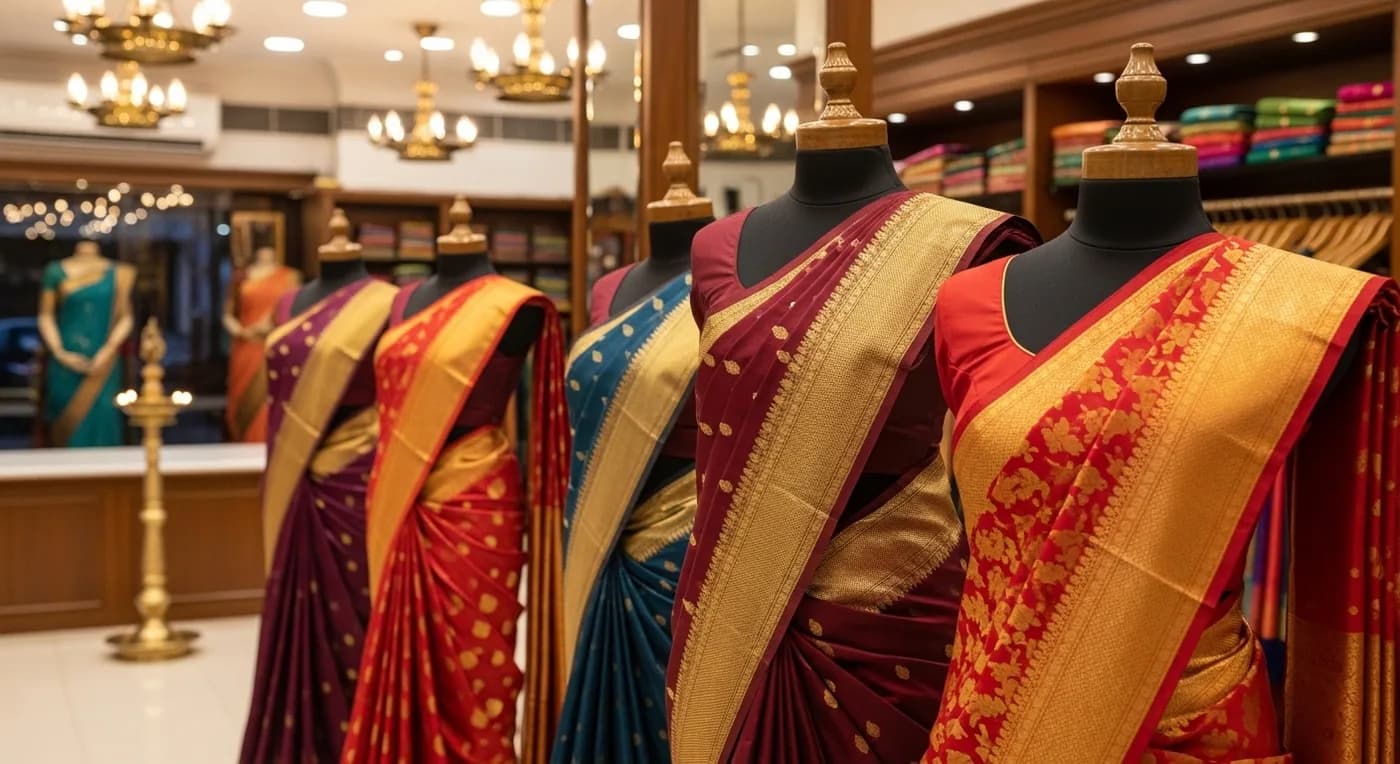
The Kanchipuram silk saree — also called Kanjivaram or Kanchi pattu — has been woven in the temple town of Kanchipuram for over 400 years. The town sits 75 kilometres southwest of Chennai in Tamil Nadu, one of India's largest state economies, and its weavers have historically served the temples and royal courts of the Pallava, Chola, and Vijayanagara dynasties.
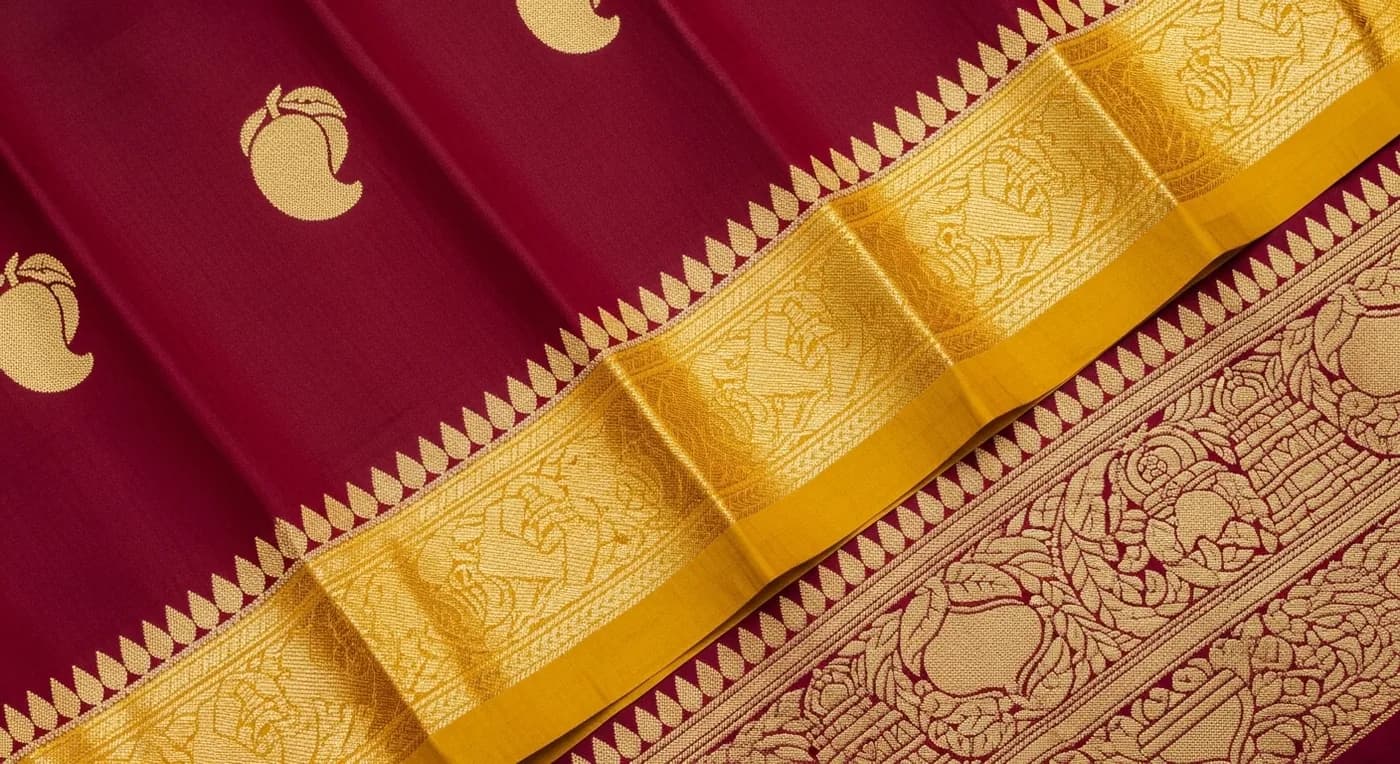
What sets a Kanchipuram saree apart from every other Indian silk is the korvai technique — the body and border are woven separately on the loom and then interlocked by hand using a three-shuttle method. This creates a visible join line that is, paradoxically, the mark of authenticity. The body uses mulberry silk thread, the border carries zari (metallic thread), and the pallu (decorative end piece) is often woven with a different, more elaborate pattern than the body.
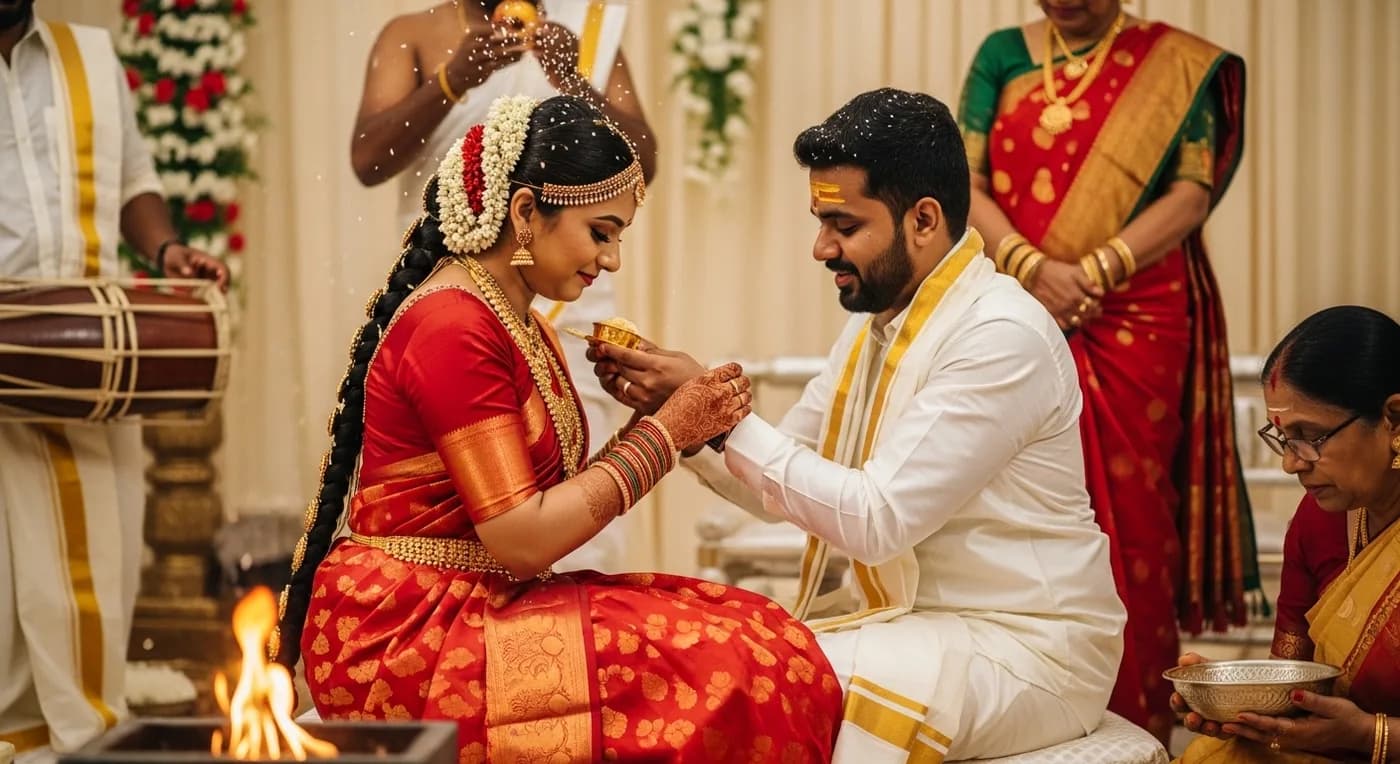
For Tamil families, the bridal Kanchipuram is not just an outfit. It is a vessel of meaning — the bride's family selects and gifts it, the saree she wears during the muhurtham (auspicious moment) is the one she will preserve for decades, and the weight and quality of the silk and zari signal the family's respect for the occasion.
How Much Does a Kanchipuram Silk Saree Cost for a Wedding in 2026?
Price depends on three variables: the type of zari, the weight and quality of the silk, and the complexity of the motifs. Here is a realistic breakdown for 2026.
| Tier | Zari Type | Price Range | Best For |
|---|---|---|---|
| Budget | Half-fine zari or copper zari | ₹8,000 – ₹20,000 | Gift sarees, pre-wedding functions |
| Mid-range | Tested zari (copper base, gold-plated) | ₹20,000 – ₹50,000 | Reception sarees, trousseau sarees |
| Bridal | Pure zari (silver base, gold-plated) | ₹50,000 – ₹1,50,000 | Muhurtham saree, main bridal saree |
| Heirloom | Heavy pure gold zari, custom motifs | ₹1,50,000 – ₹5,00,000 | Statement bridal sarees, family heirlooms |
| Ultra-luxury | Exclusive custom weaves, antique zari | ₹5,00,000 – ₹9,00,000 | Collector pieces, landmark celebrations |
A complete bridal trousseau typically includes the muhurtham saree (the most expensive piece), a reception saree, sarees for pre-wedding functions like the mehendi and sangeet, and gift sarees for the groom's family. Budget ₹1,00,000 – ₹3,00,000 for the bride's full saree collection if you are purchasing 5-8 sarees across tiers.
Tip
Looking for Bridal Wears in Chennai?
Tell us what you need and get quotes from verified bridal wears
How Do You Verify an Authentic Kanchipuram Silk Saree?
The Geographical Indication (GI) tag for Kanchipuram silk was registered in 2005-06 by the Government of India, making it illegal to sell non-Kanchipuram sarees under the Kanchipuram name. But enforcement is imperfect, and the market is flooded with imitations from Surat, Dharmavaram, and even machine-made replicas. Here is how to protect yourself.
The Three Certifications to Check
1. GI (Geographical Indication) Tag
The GI tag, administered by the Intellectual Property India registry, certifies that the saree was woven in the Kanchipuram region using specified standards. According to the Kancheepuram District administration, a GI-certified Kanchipuram saree must contain 57% silver and 0.6% gold in the zari (relaxed to 40% silver and 0.5% gold by the Tamil Nadu state government). Look for the GI label on the packaging or as an attached tag.
2. Silk Mark Certification
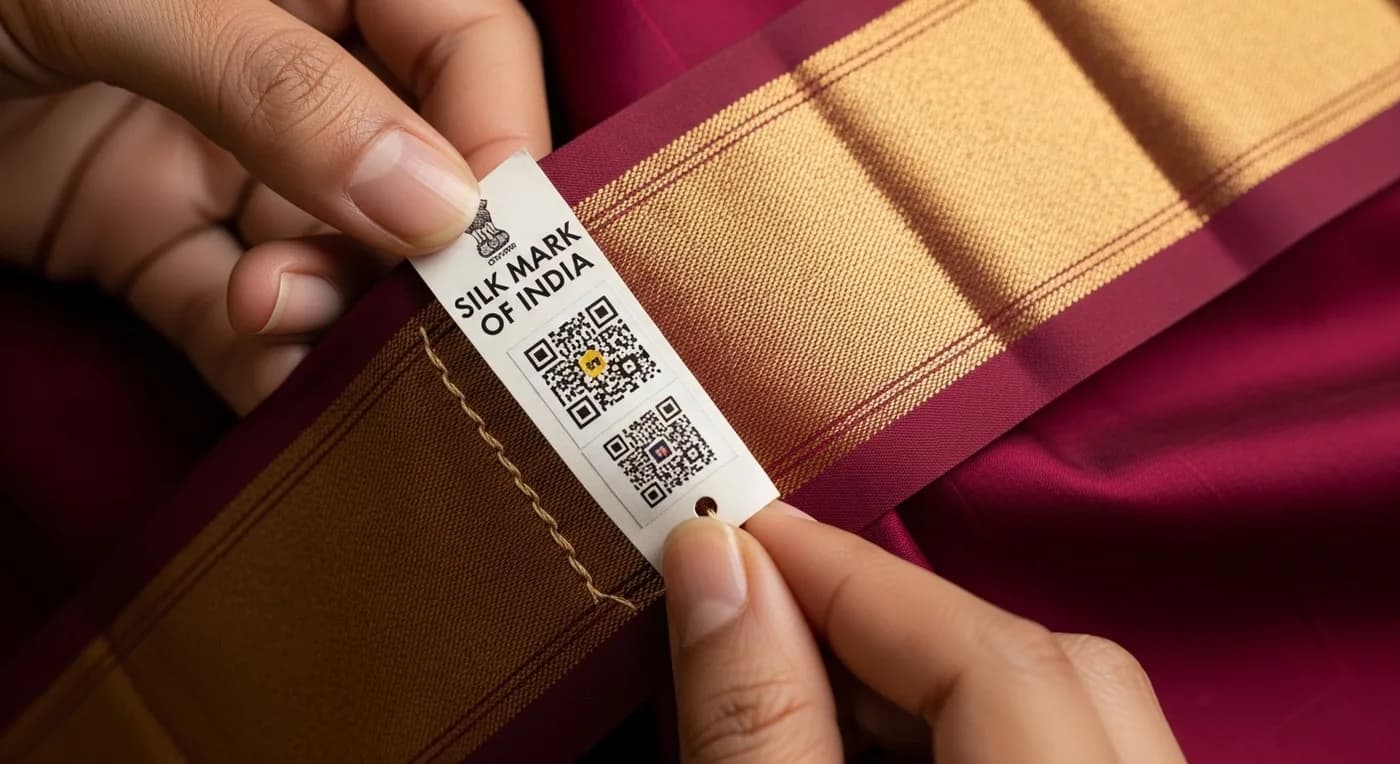
The Silk Mark, launched in 2004 by India's Central Silk Board, guarantees 100% natural silk. Modern Silk Mark labels carry a scannable QR code that reveals the authorised seller's details. The labels are self-destruct stickers — they break apart if removed, preventing reuse on counterfeit products. You can cross-check the serial number on the Silk Mark Organisation of India (SMOI) website before purchasing.
3. Shop Certification
Look for "Silk Mark Authorised User" boards or certificates displayed in the shop. Buying from a registered Silk Mark retailer significantly reduces your risk of encountering fakes.
Five Physical Tests You Can Do In-Store
Weight test: A genuine Kanchipuram silk saree weighs 600-800 grams or more. The border and pallu are noticeably heavier than the body due to the zari content. If the saree feels uniformly light, it may be art silk or a blend.
Burn test: Ask the shopkeeper to let you pull a tiny strand from the edge. Pure mulberry silk burns slowly, smells like burnt hair, and leaves soft crumbling ash. Synthetic fibres melt, smell like plastic, and form hard residue. Genuine silk stops burning the moment you remove the flame — artificial fibres keep burning.
Korvai check: Look at the join between the body and the border. In a genuine Kanchipuram saree, you will see a visible interlocking pattern where the two separately woven pieces are joined by hand. Machine-made sarees have seamless, uniform borders.
Zari scratch test: Gently scratch the zari thread. If you find a red silk core beneath a silver-gold layer, it is genuine pure zari. Artificial zari reveals white or plastic threads underneath.
Sheen test: Pure silk has a natural, soft lustre that changes hue when you tilt the saree under light. Art silk shines uniformly and brightly — almost too bright.
Important
What Is the Difference Between Pure Zari, Tested Zari, and Art Silk?
Understanding zari grades is the single most important skill for a saree buyer. The zari type determines the saree's price, weight, longevity, and future value.
Pure Zari (Jari)
Pure zari is crafted with a silk yarn core, wrapped in real silver wire, and then plated with gold. According to Clio Silks' zari composition guide, this layered construction gives pure zari its characteristic soft feel and heavy weight. Over decades, pure zari develops a subtle antique patina rather than tarnishing — which is why grandmother's sarees still look beautiful. Pure zari sarees start at ₹30,000 – ₹1,50,000 and go significantly higher for heavy bridal pieces.
Tested Zari (Copper Zari)
Tested zari replaces the silver base with copper wire, which is then electroplated with a gold-coloured coating. It is lighter, more affordable, and looks identical to pure zari when new. The catch: tested zari may lose its lustre after several years of use, unlike pure zari which ages gracefully. Tested zari sarees fall in the ₹8,000 – ₹40,000 range. For a saree you plan to wear once or twice — a reception saree, a gift saree — tested zari offers excellent value.
Half-Fine Zari
A middle ground: half-fine zari uses a blend of silver and copper. It costs less than pure zari but holds up better than tested zari over time. Expect prices between ₹10,000 – ₹25,000 for half-fine zari pieces.
Art Silk (Imitation)
Art silk is not silk at all — it is polyester or rayon woven to mimic the look of silk. Art silk sarees are lightweight (300-400 grams versus 600-800+ for genuine silk), have a uniform artificial sheen, and cost a fraction of real Kanchipuram silk. They are fine for casual occasions but have no place in a bridal trousseau. If a "Kanchipuram saree" costs under ₹5,000, it is almost certainly art silk.
Note
Where Should You Shop for Kanchipuram Sarees?
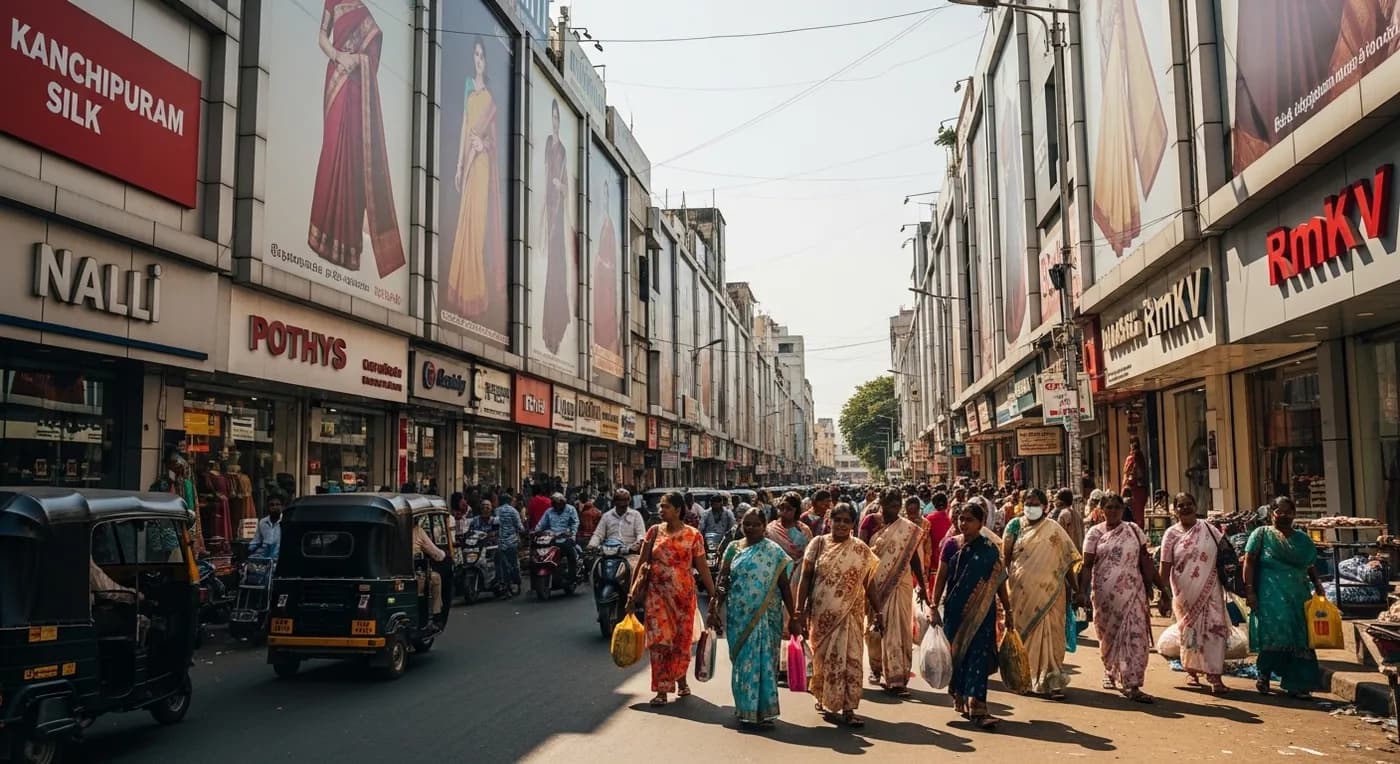
The three shopping destinations for Kanchipuram sarees are T. Nagar in Chennai, Mylapore in Chennai, and Kanchipuram town itself. Each serves a different type of buyer.
T. Nagar, Chennai — The Silk Saree Capital
T. Nagar (Thyagaraya Nagar) is Chennai's most famous shopping district and the undisputed centre of silk saree retail in South India. Within a few blocks along Usman Road and Ranganathan Street, you will find:
-
Nalli Silks — Operating since 1928, Nalli is the most recognised name in Kanchipuram silk. Their T. Nagar flagship is a multi-storey landmark. Expect a wide range across all price tiers with consistent quality control. Bridal sarees here start around ₹25,000 and go well beyond ₹2 lakhs.
-
Kumaran Silks — Located adjacent to Nalli, Kumaran is known for balancing traditional designs with modern colour palettes. Strong on tested zari and mid-range bridal sarees.
-
Palam Silks — Founded by Jeyasree Ravi, daughter of Nalli Kuppuswamy Chettiar, Palam pioneered lightweight Kanchipuram sarees and has created over 50 unique design concepts. Their stores in T. Nagar, Mylapore, and Anna Nagar offer distinctive options for brides who want something different from the standard heavy bridal saree.
-
Sundari Silks — Known for a well-curated collection with a modern sensibility. Their T. Nagar and Adyar showrooms have dedicated bridal sections with sarees arranged by zari type and price tier, making comparison shopping easier.
-
RmKV Silks — A trusted name with a strong reputation for authenticity verification and transparent pricing.
Mylapore, Chennai — Boutique and Heritage Shopping
Mylapore offers a more relaxed shopping experience compared to the crowds of T. Nagar. This is where you find:
-
Tulsi Silks — A boutique silk house in the cultural hub of Mylapore, specialising in handwoven silk sarees with a focus on heritage weaves.
-
Kanchi Weavers — Specialises in Kanjivaram silk with extensive zari work, with a range that includes both affordable and premium options.
Mylapore is ideal for brides who want personalised attention and are willing to spend time understanding the craft. The pace here allows for the kind of detailed conversation about zari types and weave quality that gets lost in the T. Nagar rush.
Kanchipuram Town — Direct from the Source
For the widest selection and the best prices, nothing beats shopping in Kanchipuram itself — a 75-kilometre drive (roughly 2 hours) from Chennai. Here you can:
- Visit weaver cooperatives like the Kanchipuram Silk Weavers' Cooperative Society, where sarees are sold at cooperative rates without retail markup.
- Commission custom bridal sarees directly from master weavers, specifying your exact colour, motif, border width, and zari type. Custom orders take 15-45 days.
- See the weaving process firsthand — many cooperatives and family workshops offer demonstrations on the traditional handloom.
The trade-off is convenience. Kanchipuram town lacks the air-conditioned showroom experience of T. Nagar, and the cooperative system requires patience. But if you have the time and want to invest in the process, this is where your money goes the furthest.
Looking for Bridal Wears in Chennai?
Tell us what you need and get quotes from verified bridal wears
What Should Iyer, Iyengar, and Chettinad Brides Look For?
Community-specific preferences shape every detail of the bridal saree — from the yardage to the colour to the border motifs. Here is what each tradition expects.
Iyer (Smartha Brahmin) Bridal Sarees
The Iyer bride wears the madisar — a 9-yard Kanchipuram silk saree draped in a distinctive trouser-like style that allows for movement during the ceremony. The madisar dates back to the 2nd century BC and carries deep cultural significance. Traditionally, the first time a bride wears the madisar is during her wedding, with help from her future sister-in-law.
Preferred colours: Arakku (deep red), maroon, magenta. The saree gifted by the groom's family (madisar) is traditionally maroon, though modern brides choose from a wider palette.
Pallu direction: Iyer brides drape the pallu over the right shoulder.
Typical budget: ₹40,000 – ₹1,50,000 for the muhurtham madisar, though families investing in a heritage piece may spend more.
For a deeper understanding of Iyer wedding customs, see our Iyer vs Iyengar wedding rituals comparison.
Iyengar (Sri Vaishnava) Bridal Sarees
Iyengar brides also wear the 9-yard madisar, but with key differences from the Iyer tradition.
Preferred colours: Rich red with golden zari checks (the classic Iyengar bridal look), deep maroon with gold. The Vishnu-centric tradition favours warm, auspicious reds.
Pallu direction: Iyengar brides drape the pallu over the left shoulder — a visible marker that distinguishes the two Brahmin traditions.
Design preference: Iyengar bridal sarees tend to feature prominent zari checks (kattam) across the body, rather than solid colours. The temple border (koil gopuram) motif is particularly popular, reflecting the community's devotional orientation.
Vadakalai vs Thenkalai: Within the Iyengar community, the two sub-sects (Vadakalai and Thenkalai) do not differ significantly in saree preferences, though Vadakalai families may favour slightly more elaborate zari work reflecting their emphasis on Vedantic scholarship.
Chettinad (Nattukottai Nagarathar) Bridal Sarees
The Chettinad bride's saree reflects the community's reputation for grandeur and bold aesthetics. Unlike the Brahmin traditions, Chettinad brides wear the standard 6-yard saree.
Preferred colours: Bold, high-contrast combinations — deep maroon with bright green border, mustard with maroon, emerald with gold. The Chettinad aesthetic favours drama over subtlety.
Signature elements: Heavy zari work, wide borders (sometimes up to 6 inches), and the Pattukandangi — handloom silk sarees in vibrant colours that female relatives also wear to signal celebration.
Gold connection: Given the community's famous Thangam Paarkum Vizha (gold-viewing ceremony), the bridal saree is expected to complement extensive gold jewellery. Sarees with heavy gold zari and wide temple borders pair well with the layered necklaces, kammal (earrings), and ottiyanam (hip belt) that define the Chettinad bridal look.
Typical budget: ₹50,000 – ₹2,00,000 — Chettinad families traditionally invest heavily in bridal sarees as part of the overall gold-and-silk display culture.
For the full guide to Nagarathar wedding customs, see our Chettinad wedding traditions guide.
Tip
What About the Groom? A Guide to Wedding Veshti and Panjakajam
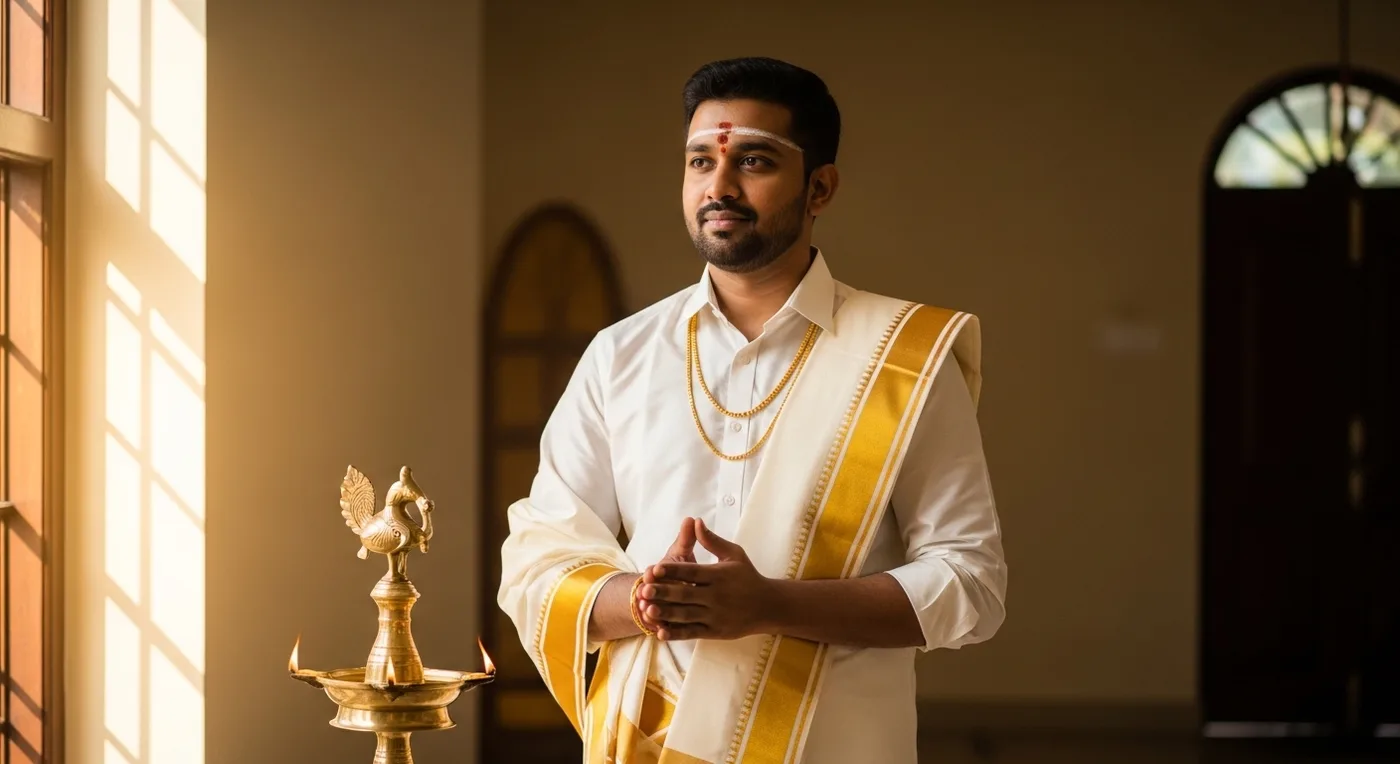
The groom's outfit deserves attention too. The Tamil groom's wedding attire centres on the veshti (dhoti) and angavastram (upper cloth), ideally in matching Kanchipuram silk with zari borders that complement the bride's saree.
The wedding veshti is a pure silk dhoti with a gold or silver zari border. Kanchipuram silk veshti sets — dhoti, angavastram, and sometimes a matching shirt — are available in double-layer pure silk with traditional Kuyil Kann (cuckoo eye) or temple motifs. Expect to pay ₹5,000 – ₹25,000 for a quality wedding silk veshti set.
The panjakajam is the complete five-piece wedding ensemble: veshti, shirt, angavastram, towel, and an additional cloth. For Brahmin weddings, the groom changes into the panjakajam gifted by the bride's family before the ceremony.
Colour coordination: The groom's veshti border should complement — not match exactly — the bride's saree. If the bride wears a maroon saree with gold zari, the groom's veshti might carry a matching gold zari border. Many silk houses offer coordinated bride-groom sets.
Where to buy: The same T. Nagar stores that sell bridal sarees carry men's wedding silk. Ramraj Cotton and Pothys are specialists in men's wedding silk and are Silk Mark certified.
How Many Sarees Does a Tamil Bride Need?
The answer depends on the number of wedding events and family expectations, but here is a typical breakdown:
| Occasion | Saree Type | Typical Budget |
|---|---|---|
| Muhurtham (ceremony) | Heavy Kanchipuram, pure zari, 9-yard for Brahmin brides | ₹50,000 – ₹1,50,000 |
| Reception | Kanchipuram or designer silk, lighter weight | ₹20,000 – ₹60,000 |
| Mehendi / Sangeet | Lighter silk or half-saree, vibrant colours | ₹8,000 – ₹25,000 |
| Nischayathartham (engagement) | Kanchipuram, mid-range | ₹15,000 – ₹40,000 |
| Gift sarees for groom's family | Kanchipuram, tested zari, 3-5 pieces | ₹8,000 – ₹20,000 each |
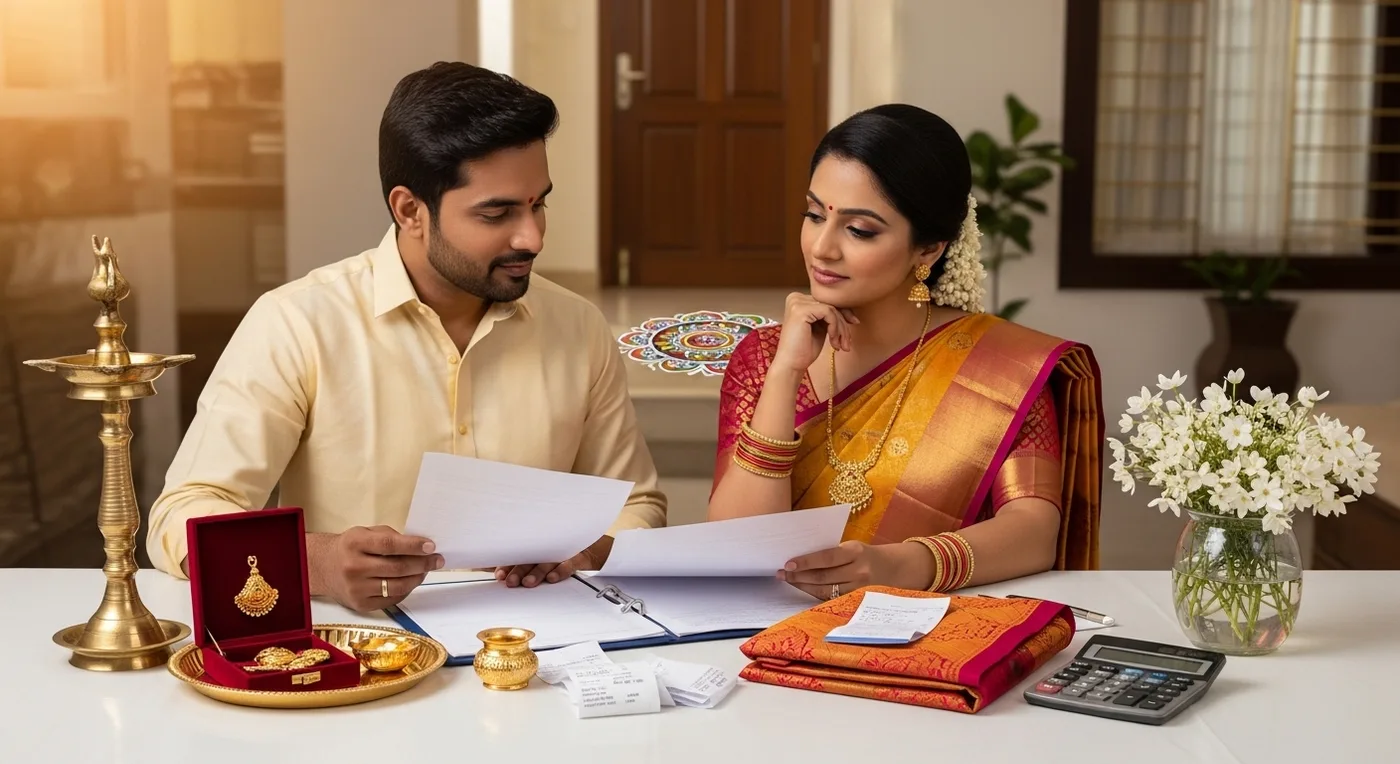
Total bridal saree budget for a mid-range Tamil wedding: ₹1,50,000 – ₹4,00,000 for the complete collection of 5-8 sarees. This is a significant line item in the overall Chennai wedding budget.
When Is the Best Time to Shop for Wedding Sarees?
Timing your saree shopping can save money and ensure you get exactly what you want.
Start 4-6 months before the wedding. Custom-woven bridal sarees require 15-45 days of weaving time, and during peak wedding months (Thai, Panguni, Vaikasi, Aippasi in the Tamil calendar), popular silk houses have backlogs. Starting early gives you time to visit multiple stores, compare zari quality, and commission custom work if needed.
Festival sale periods offer genuine discounts:
- Pongal (January): Major sales across all Chennai silk stores, with discounts of 10-20% on select ranges.
- Navaratri (October): The biggest saree-buying season — stores launch new collections, and competition drives promotional offers.
- Diwali (October-November): Continued festival pricing with end-of-season clearance on older stock.
Off-season advantage: Shopping during Aadi (July-August) — which is avoided for weddings — means quieter showrooms, more attentive staff, and occasional off-season discounts. The saree you buy in Aadi is identical to one bought in Vaikasi — only the shopping experience improves.
Tip
How Should You Care for Your Kanchipuram Silk Saree After the Wedding?
A genuine Kanchipuram silk saree, properly cared for, lasts generations. Here are the essential storage and maintenance rules.
Storage: Wrap each saree in a clean, unbleached muslin cloth — never plastic. Plastic traps moisture and can cause the silk to yellow or develop mould. Store flat, not hanging, to prevent the weight of the zari from stretching the silk over time. Add a few neem leaves inside the muslin to deter insects naturally.
Refold every 3-6 months. Silk develops permanent crease lines if left folded in the same position for years. Refolding along different lines prevents cracking.
Dry cleaning only. Never wash a Kanchipuram silk saree with water or detergent. The zari tarnishes, the silk shrinks, and the colours can bleed. Use a dry cleaner experienced with silk sarees — ask for their silk-specific process.
Air out periodically. Once or twice a year, unfold the saree and let it air in indirect sunlight for a few hours. This prevents mustiness and keeps the silk fibres healthy.
Common Questions About Kanchipuram Silk Saree for Weddings
How much does a bridal Kanchipuram silk saree cost in 2026?
A bridal Kanchipuram silk saree with pure zari costs between ₹30,000 – ₹1,50,000 in 2026. Budget-friendly options with half-fine or tested zari start at ₹8,000 – ₹20,000, while heirloom pieces with heavy pure gold zari and custom weaving can range from ₹2,00,000 – ₹5,00,000 or more.
How do I verify if a Kanchipuram silk saree is authentic?
Check for three certifications: the GI (Geographical Indication) tag confirming Kanchipuram origin, the Silk Mark label from the Central Silk Board with a scannable QR code, and the korvai hand-join between body and border. You can also do a burn test — pure silk smells like burnt hair and leaves soft ash, while synthetic fibres melt and smell like plastic.
What is the difference between pure zari and tested zari?
Pure zari uses a silk yarn base wrapped in real silver and plated with gold — it is heavier, softer, and develops an antique patina over time. Tested zari uses copper as the base metal with gold-coloured electroplating — lighter and affordable but may lose lustre after years. Pure zari sarees start at ₹30,000+, while tested zari options range from ₹8,000 – ₹25,000.
Where is the best place to buy Kanchipuram sarees in Chennai?
T. Nagar is Chennai's silk saree hub, home to Nalli Silks (since 1928), Kumaran Silks, Palam Silks, and Sundari Silks. Mylapore offers boutique options like Tulsi Silks. For the widest range and best prices, visit Kanchipuram town (75 km from Chennai) where weaver cooperatives sell directly without retail markup.
What colour Kanchipuram saree should a Tamil bride wear?
Red, maroon (arakku), and deep magenta are the most auspicious bridal colours across Tamil communities. Iyer brides traditionally wear arakku or deep maroon. Iyengar brides favour rich red with golden zari checks. Chettinad brides often choose bolder contrasts — deep maroon paired with bright green or mustard borders.
Do I need a 9-yard or 6-yard saree for my wedding?
Tamil Brahmin (Iyer and Iyengar) brides traditionally wear a 9-yard madisar for the muhurtham ceremony, with the 6-yard saree reserved for the reception. Non-Brahmin Tamil brides typically wear 6-yard sarees for both. Many modern brides choose a 9-yard for the ceremony and switch to a lighter 6-yard for the reception. Discuss with your family — traditions vary.
When should I start shopping for my wedding Kanchipuram saree?
Start 4-6 months before the wedding. Custom-woven bridal sarees take 15-45 days to complete. During peak wedding months — Thai (Jan-Feb), Panguni (Mar-Apr), Vaikasi (May-Jun), and Aippasi (Oct-Nov) — popular silk houses have longer waiting times. Shopping early gives you time to visit multiple stores and compare quality across T. Nagar, Mylapore, and Kanchipuram town.
The Kanchipuram silk saree carries the weight of Tamil wedding tradition — quite literally. Whether you spend ₹20,000 or ₹2 lakhs, what matters most is that the saree is genuine, the zari is what you paid for, and the colours honour your family's expectations. Shop with knowledge, verify with certifications, and trust the silk to do what it has done for four centuries — make a Tamil bride unforgettable.
For the complete picture of Tamil wedding traditions and how the saree fits into the larger ceremony, start with our Chennai wedding planning guide. Planning your bridal look? Stay tuned for our Chennai bridal makeup artist guide coming soon.
Topics
kanchipuram silk saree weddingbridal kanchipuram sareepattu saree for bridewedding saree shopping chennaisilk saree price range 2026kanjivaram bridal sareeT Nagar silk saree shoppingmadras weddingsExplore more
Frequently Asked Questions
1How much does a bridal Kanchipuram silk saree cost in 2026?
2How do I verify if a Kanchipuram silk saree is authentic?
3What is the difference between pure zari and tested zari in Kanchipuram sarees?
4Where is the best place to buy Kanchipuram sarees in Chennai?
5What colour Kanchipuram saree should a Tamil bride wear?
6Do I need a 9-yard or 6-yard Kanchipuram saree for my wedding?
7When should I start shopping for my wedding Kanchipuram saree?
Continue reading
Related Articles
Tamil Wedding Traditions: Rituals, Meaning & Modern Adaptations
Chennai Wedding Cost in 2026: ₹5–20 Lakhs Full Budget Breakdown
How to Plan a Chennai Wedding: The Complete 2026 Guide
Best Season for South India Destination Weddings: Month-by-Month Western Ghats Guide
Destination Wedding Cost in South India 2026: 5-Tier Budget Guide
Destination Wedding in South India: Complete 2026 Planning Guide
Still planning?
Get quotes from India's best vendors
Tell us what you're planning and we'll match you with verified photographers, venues, decorators, and more.
Get free quotes