
Kongu Gounder Wedding Traditions: Sangam-Era Rituals & Modern Guide
Discover the three-day Kongu Vellalar Gounder wedding — elder-officiated Sangam-era rituals, no Brahmin priest, Tamil-only ceremonies, and modern adaptations in 2026.

Coimbatore Wedding Editor
Vanitha Subramanian is the Coimbatore wedding editor at itsmy.
On this page
A Kongu Vellalar Gounder wedding is a three-day, elder-officiated ceremony rooted in Sangam-era Tamil traditions dating to the 3rd century BCE — with no Brahmin priest, no sacred fire, and no Sanskrit mantras. Three Arumaikaarars (community elders) conduct all rites in Tamil, with mandatory roles for the Navidhan (barber), Vannaan (washerman), and Kammalar (artisan). The Kongu Vellalars are the largest community in Western Tamil Nadu, spanning Coimbatore, Erode, Salem, Tirupur, and Namakkal.
Quick Answer
Quick answer: A Kongu Vellalar Gounder wedding is a three-day, elder-officiated ceremony rooted in Sangam-era Tamil traditions dating to the 3rd century BCE — with no Brahmin priest, no sacred fire, and no Sanskrit mantras. Three Arumaikaarars (community elders) conduct all rites in Tamil, with mandatory roles for the Navidhan (barber), Vannaan (washerman), and Kammalar (artisan). The Kongu Vellalars are the largest community in Western Tamil Nadu, spanning Coimbatore, Erode, Salem, Tirupur, and Namakkal.
Note
Pricing methodology: Cost ranges in this guide are based on vendor pricing data from the itsmy.wedding marketplace and published industry reports, collected in Q4 2025 – Q1 2026.
This is the wedding I grew up watching. My grandfather served as Arumaikaarar at over 150 weddings in our village near Pollachi, and the ceremony he conducted was identical to what Sangam poets described two thousand years ago. That continuity is the defining feature of a Kongu wedding.
Where Brahmin Iyer weddings revolve around Vedic fire rituals, and Chettinad weddings are defined by gold display and mansion grandeur, the Kongu wedding is austere, communal, and deeply Tamil. No intermediary between the couple and the community. Just elders, family, food, and a thali tying that predates every temple tradition in the state.
This guide covers the complete ceremony — pre-wedding omen reading, the three-day structure, essential service-caste roles, food traditions, and modern adaptations. For venues, vendors, and budgets, see our Coimbatore wedding planning guide.
Who Are the Kongu Vellalar Gounders?
The Kongu Vellalars — also called Kongu Vellala Gounders or simply Gounders — are the dominant agricultural community in the Kongu Nadu region of Western Tamil Nadu, spanning Coimbatore (known locally as Kovai), Erode, Salem, Tirupur, Namakkal, Karur, and the Nilgiris.
The community traces its origins to the Sangam era (3rd century BCE to 3rd century CE), when Sangam literature describes the Kongu region as a land of warriors and agriculturalists. Their social organisation centres on the Kootam system — 24 clans functioning independently of the Brahminical gotram, with marriage within the same Kootam strictly prohibited.
The Kongu Vellalars retained their pre-Vedic Tamil traditions through an unbroken continuation — never adopting the Agni Kundam, never incorporating Sanskrit mantras, never requiring a Brahmin priest.
Note
What Makes Kongu Weddings Unique Among Tamil Traditions?
The Kongu ceremony is structurally different from every other Tamil wedding — not just in flavour, but in fundamental architecture.
- No Brahmin priest — three Arumaikaarars (community elders) officiate
- No Agni Kundam — no fire ritual at any stage
- No Vedic hymns — every word spoken is Tamil, not Sanskrit
- Three-day structure — Naal Virundhu (feast), Muhurtha Kaal (preparations), Muhurtham (ceremony)
- Mandatory service-caste roles — Arumaikaarar, Navidhan (barber), Vannaan (washerman), Kammalar (artisan)
- Kootam exogamy — marriage must be outside one's clan among the 24 Kongu Kootams
For context on how these differences compare to the Vedic framework, see our Tamil wedding traditions guide.
What Are the Pre-Wedding Rituals in a Kongu Gounder Wedding?
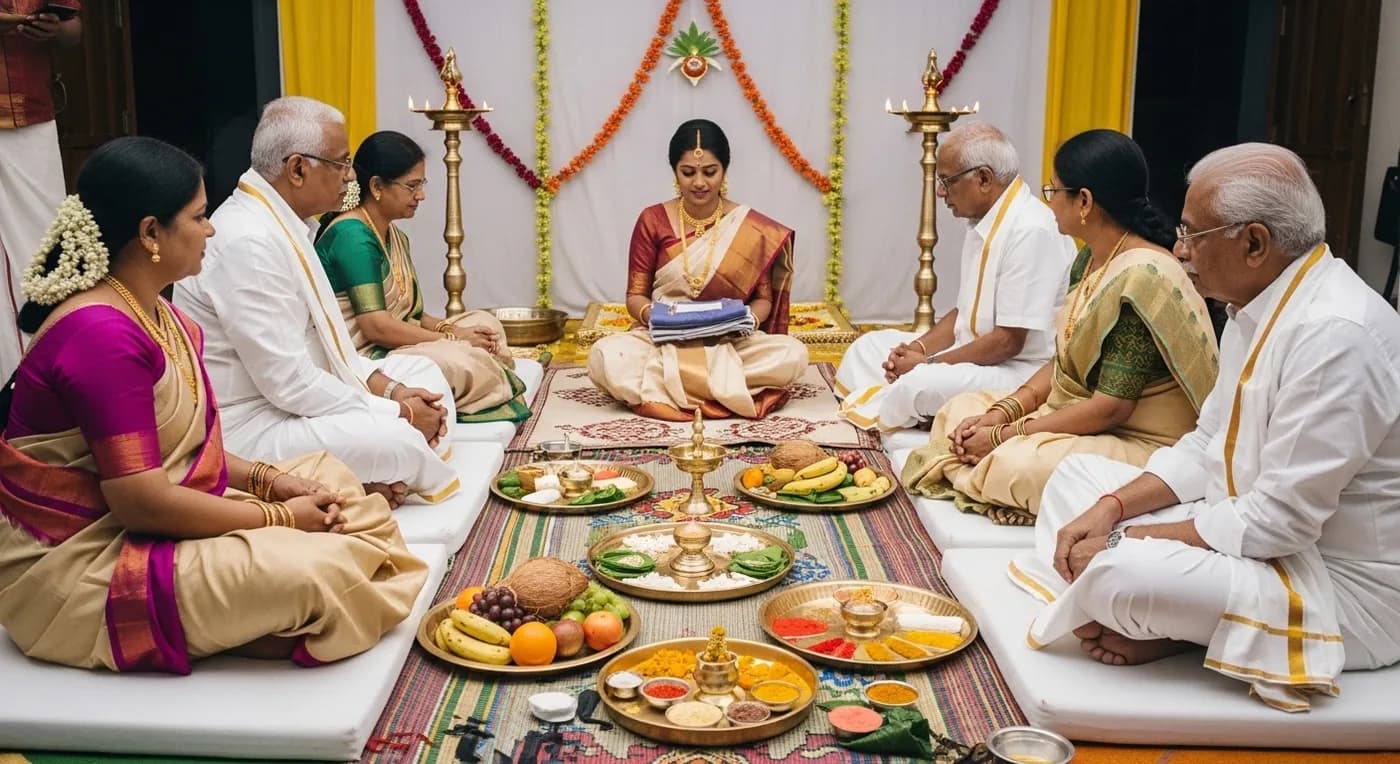
The pre-wedding phase is methodical — compatibility checks, omen readings, and family agreements must all clear before a date is discussed.
Porutham Parthal — The 10-Element Compatibility Check
Families commission a Porutham Parthal — a 10-element horoscope analysis covering Dina, Gana, Mahendra, Stree Deergha, Yoni, Rasi, Rasiyathipathi, Vasya, Rajju, and Vedha Porutham. A minimum of 7 out of 10 matches is required, with Rajju Porutham (longevity) considered non-negotiable. The analysis is done by a community astrologer using the Tamil panchangam — not a temple priest. The match must also be from a different Kootam among the 24 clans.
Sagunam Parthal — The Omen Reading
Once horoscopes match, the groom's family visits the bride's home, observing omens on the journey — a pregnant woman or a pot of water is auspicious; a funeral procession or empty vessel is not. While softened in urban families, many households in the Coimbatore-Erode belt still observe this tradition.
Nichyadhaartham — The Engagement
The Nichyadhaartham is a formal family agreement before community elders. Unlike jewellery-heavy Chennai or Hyderabad engagements, the Kongu engagement centres on exchanging fruits, coconuts, betel leaves, and turmeric. The Arumaikaarar who will officiate is identified at this stage.
Tip
Patni Seer — The Turmeric Bathing
The bride undergoes Patni Seer — turmeric bathing by married women of the family, accompanied by Kongu folk songs. The groom undergoes a parallel ceremony. This purification ritual has clear parallels to Sangam-era descriptions of bridal preparation.
What Happens on Day 1: Naal Virundhu?
The three-day Kongu wedding begins with Naal Virundhu — literally, "the day's feast." This is not a grand public event but an intimate gathering hosted by immediate relatives.
Both families host separate feasts for their closest members — siblings, parents, uncles, aunts, and first cousins. The purpose is practical and emotional: it brings the core family together before the public ceremony and creates space for bonding that gets lost in the larger celebration.
The food at Naal Virundhu is home-cooked by the family, not outsourced to caterers. In my family, my grandmother's kootu recipe was the centrepiece of every Naal Virundhu she hosted, and the women would begin preparations two days in advance.
What Happens on Day 2: Muhurtha Kaal?
Day 2 — Muhurtha Kaal — is the preparation day, and it involves some of the most distinctive rituals in the Kongu tradition.
Pandal Erection
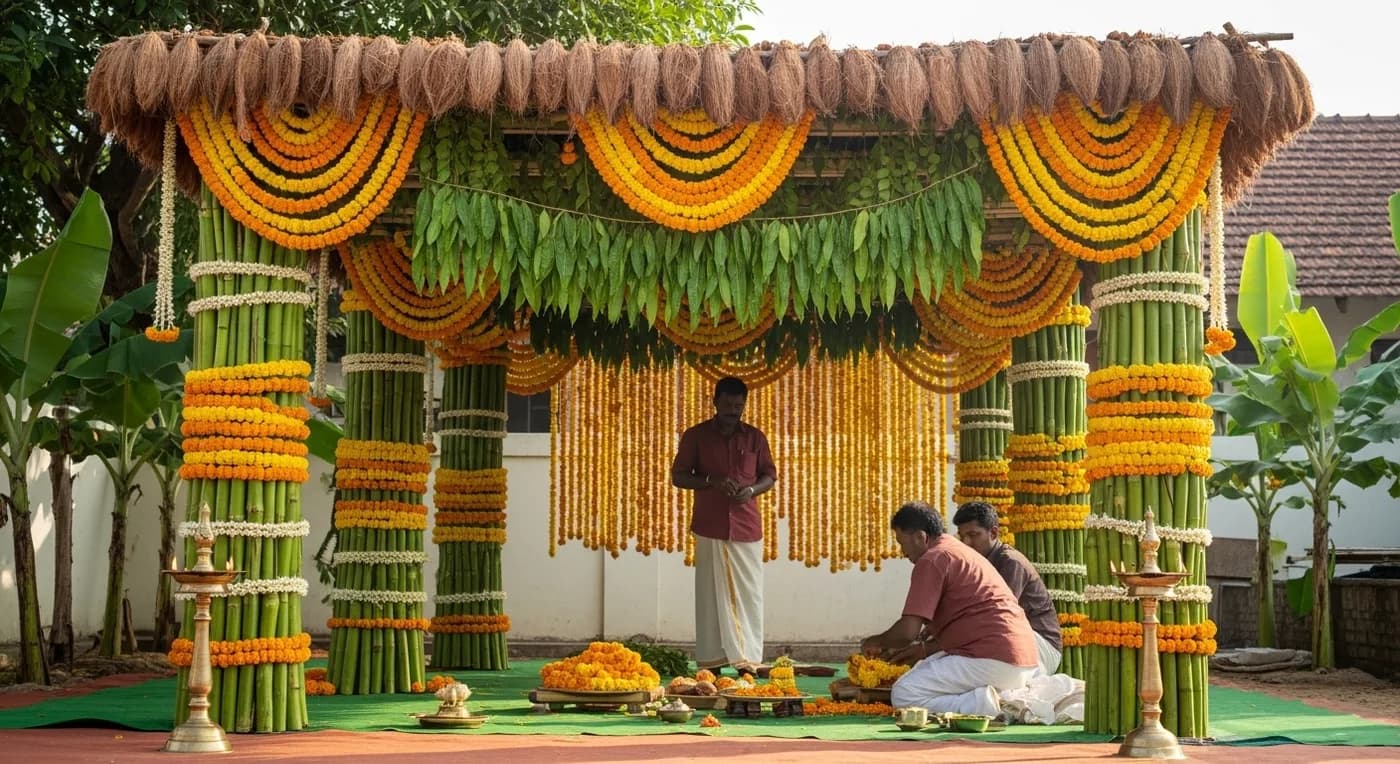
The pandal (canopy) is erected by three Arumaikaarars and the Vannaan — a ritual act, not just construction. The Vannaan has a hereditary right to erect the pandal, and the Arumaikaarars bless each pole as it rises. Traditionally decorated with mango leaves, coconut fronds, and banana trunks, the pandal in 2026 gets a professional decorator's aesthetic layer — but the Vannaan's initial erection remains non-negotiable.
Groom Grooming by the Navidhan
The Navidhan (community barber) grooms the groom while singing Mangala Vaazhthu (blessing songs). In earlier generations, the Navidhan also served as invitation courier, visiting each village home. Many families still have the Navidhan formally "announce" the wedding by visiting key elder households.
Drum Announcement
The Pambai (traditional drum) procession publicly announces the wedding — starting from the groom's home, passing through main streets, and ending at the venue. In urban Coimbatore, this is a brief procession near the venue, accompanied by nadaswaram.
How Does the Day 3 Muhurtham Ceremony Unfold?
Day 3 is the Muhurtham — the core wedding ceremony. This is where everything converges: the Arumaikaarars, the families, the community, and the couple.
The Thali Tying — Mangala Naan
The centrepiece is the Mangala Naan tying — the groom ties a community-specific thali around the bride's neck at the moment announced by the head Arumaikaarar. Three knots: the groom ties the first, his sister ties the remaining two — symbolising the groom's family's acceptance of the bride. The Mangala Vadyams (nadaswaram and thavil) play at peak volume throughout.
Garland Exchange
The Maalai Maatral follows — bride and groom exchange flower garlands three times, without any priestly intermediary. Garlands are traditionally jasmine and chrysanthemum, though modern families add roses and orchids.
New Footwear Gifting
A distinctive Kongu tradition: the bride's family gifts new footwear to the groom after the ceremony, symbolising his journey into new life. The groom's family reciprocates. This exchange, witnessed by the Arumaikaarar, is a public acknowledgment of mutual family obligations.
Mangala Vadyams
The nadaswaram and thavil ensemble is not background music — it is a ritual participant. Musicians play specific ragas for specific moments, and families often book the same ensemble that has played at their weddings for generations.
₹15,000 – ₹75,000 for a professional nadaswaram-thavil ensemble in Coimbatore, depending on the musicians' reputation and the number of events covered across the three days.
Looking for Music & Entertainments in Coimbatore?
Tell us what you need and get quotes from verified music & entertainments
The Essential Roles in a Kongu Wedding
Four roles are structurally essential to a Kongu Gounder wedding. Without any one of them, traditional families consider the ceremony incomplete.
Arumaikaarar — The Officiating Elder
The Arumaikaarar is not a priest — he is a respected community elder with deep knowledge of Kongu marriage customs. Three officiate each wedding: the head Arumaikaarar leads the ceremony, announces the muhurtham, directs the thali tying, and recites Tamil blessings. The other two serve as witnesses. They receive mariyathai (honour gifts) of clothes, fruits, and a cash honorarium — not a commercial fee.
My grandfather became an Arumaikaarar at 55 after being nominated by village elders. He memorised every blessing, every conditional variation — what to do if the groom's father is deceased, which blessings apply to a second marriage. That knowledge was entirely oral, passed through observation and apprenticeship.
Navidhan — The Barber Who Sings
Beyond grooming, the Navidhan sings Mangala Vaazhthu (blessing songs) at key moments, serves as ceremonial announcer, and in some villages still delivers wedding invitations to households. The Navidhan's family has a hereditary claim to serve specific Gounder families — relationships stretching back generations.
Vannaan — The Washerman Who Builds
The Vannaan erects the wedding pandal (both practical and ritual), washes ceremonial clothes, and provides fresh white cloth for specific rituals. Like the Navidhan, the Vannaan's service is hereditary.
Kammalar — The Artisan Who Gifts
The Kammalar crafts specific kitchen items as wedding gifts: a salt box, serving plate, ladle, and 5-compartment spice box (masala petti). These are functional household essentials the bride takes to her new home — the Kammalar's craftsmanship is a public statement of quality.
Important
Kongu Wedding Food Traditions
If the ceremony is the soul of a Kongu wedding, the feast is its heart. Kongu Nadu cuisine is a distinct culinary tradition — different from Chettinad's spice-heavy style, different from the Brahmin vegetarian kitchen, and different from the Malabar coast.
The Kongu Culinary Identity
Kongu cuisine is built on conservative spicing: pepper, jeera, fresh turmeric, and curry leaves with gingelly oil and coconut oil as cooking fats. Where Chettinad cooking throws 15 spices at a dish, Kongu cooking uses 5 — fresh turmeric root, freshly ground pepper, and same-morning vegetables.
The Wedding Feast Menu
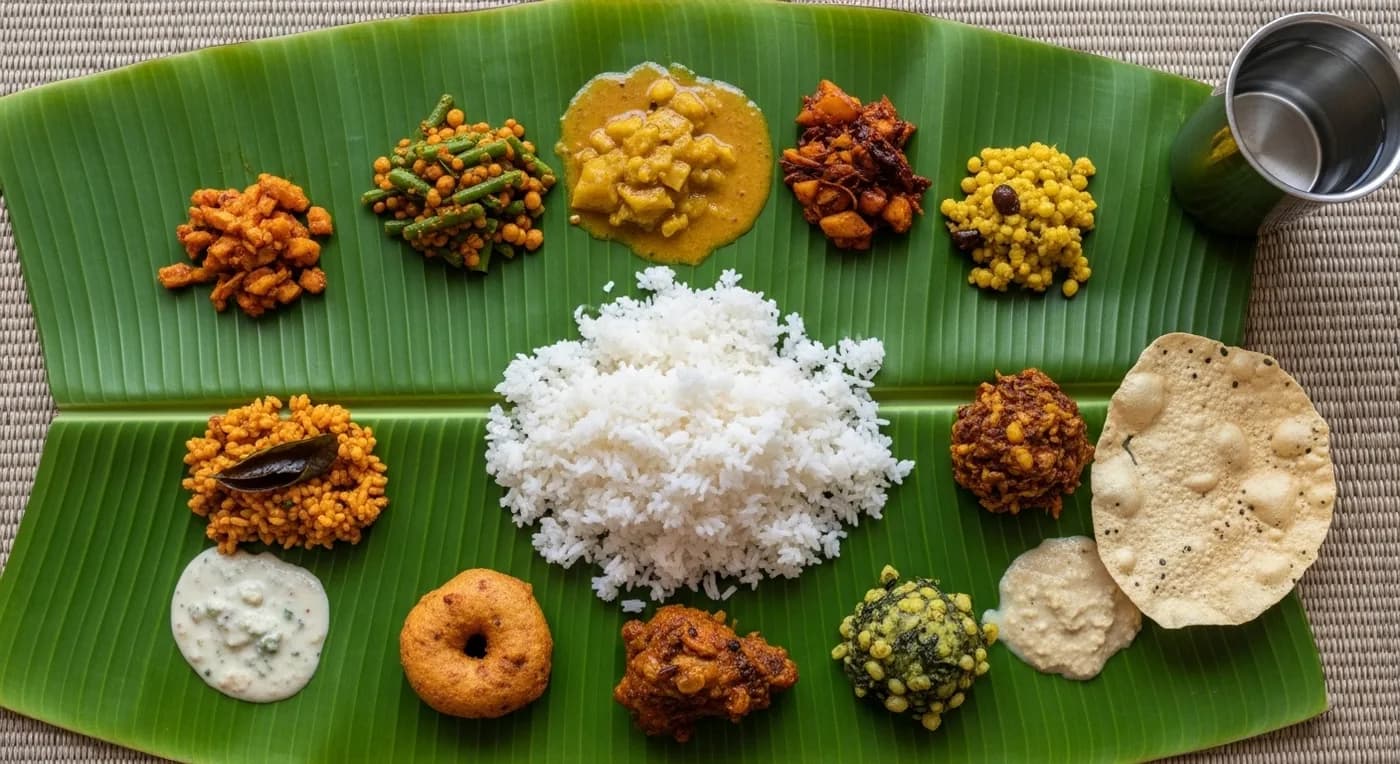
The Kongu wedding banana-leaf meal includes:
Rice Dishes: Arisi paruppu sadam — a rice-and-lentil preparation traced to 4th-century Tamil literary references — is the anchor, served with ghee and vathal kozhambu.
Non-Vegetarian: Nattu kozhi kozhambu (country chicken curry), Pallipalayam kozhi varuval (dry-fried chicken from Pallipalayam village near Namakkal), and mutton kuzhambu for premium weddings.
Vegetarian Essentials: Kootu is mandatory — a mixed vegetable-lentil dish with coconut paste. Pounds kozhambu, poriyal, rasam, and thayir sadam (curd rice) complete the meal.
Sweets: Payasam, adhirasam (jaggery-rice doughnut), and mysurpa (Mysore pak — reflecting proximity to Karnataka).
Guests eat seated in rows on banana leaves, served in strict sequence — pickles first, then vegetables, rice courses, and sweets. A well-run Kongu feast serves 500 guests in under 45 minutes. The Kongu Wedding Food Festival 2024 showcased over 400 dishes from across the region, with food writers noting that Kongu cuisine's restraint — its refusal to over-spice — is what makes it distinctive in a state known for bold flavours.
Looking for Caterings in Coimbatore?
Tell us what you need and get quotes from verified caterings
Kongu Wedding Catering Costs
For a traditional banana-leaf meal at a Coimbatore wedding:
- Vegetarian meal (300-500 guests): ₹250 – ₹450 per plate
- Non-vegetarian meal (300-500 guests): ₹400 – ₹700 per plate
- Premium spread with multiple non-veg items and sweets (500-1,000 guests): ₹600 – ₹1,000 per plate
Many caterers offer a three-day package covering all meals. For a complete breakdown, see our Coimbatore wedding budget guide.
How Are Kongu Weddings Adapting in 2026?
The core Sangam-era rituals remain intact. What is changing is everything around them.
Professional photography is now standard. The challenge for unfamiliar photographers is knowing what to capture — the Arumaikaarar's blessing, the Navidhan's Mangala Vaazhthu, the Kammalar's kitchen items — moments with no equivalent in a Brahmin wedding. Budget ₹30,000 – ₹3,00,000 for photography and videography across the three days.
Modern decorators layer contemporary florals and lighting onto the traditional pandal. The Vannaan still erects the core frame; the decorator transforms it. This hybrid preserves ritual while meeting Instagram-era visual expectations.
Urban families maintain the three-day structure at hotels and convention centres. CODISSIA Trade Fair Complex handles mega-weddings with 3,000+ guests, while intimate Pollachi farmhouses serve 200-500 guests.
NRI families from the Gulf, Singapore, or the US add a reception dinner separate from the traditional three days — the core ceremony remains untouched.
Digital invitations via e-invites supplement the traditional Navidhan-delivered announcement for extended networks.
Note
Other Community Wedding Traditions in Coimbatore
While the Kongu Gounders are dominant, several other community traditions coexist in Coimbatore.
Naidu weddings follow Telugu customs with the Jeelakarra-Bellam (cumin-jaggery) ceremony, blending Telugu and Tamil elements in the feast.
Chettiar (Nagarathar) weddings span up to 6 days, distinguished by the Thangam Paarkum Vizha (gold display) and a 30+ dish feast.
Mudaliar weddings follow a 3-day structure similar to the Gounder tradition but incorporate Vedic elements adopted during the medieval period.
Brahmin Iyer weddings are the clearest contrast — fully Vedic, with Agni Kundam, saptapadi, and Brahmin priest. Coimbatore Iyer weddings tend to be smaller than Chennai equivalents.
Muslim Rowther and Labbai Nikah ceremonies feature the Mehr agreement with Tamil cultural elements, and Walima feasts serving biryani for 1,000+ guests.
Christian (CSI and Catholic) weddings blend church ceremony with the Minnu tying — a Christian adaptation of the thali.
For a comprehensive planning guide covering all these traditions, see our Coimbatore wedding planning guide.
Common Questions About Kongu Gounder Wedding Traditions
What makes Kongu Gounder weddings different from other Tamil weddings?
No Brahmin priest, no sacred fire, no Vedic hymns — community elders (Arumaikaarar) officiate entirely in Tamil across a three-day ceremony with mandatory service-caste participation. Per KalyanShastra, this is one of the oldest surviving non-priestly wedding formats in South India.
What is Porutham Parthal in a Kongu wedding?
A 10-element horoscope compatibility check — Dina, Gana, Mahendra, Stree Deergha, Yoni, Rasi, Rasiyathipathi, Vasya, Rajju, and Vedha Porutham. A minimum of 7 out of 10 matches is required, and the match must be outside the same Kootam (clan).
What food is served at a Kongu Gounder wedding?
Kongu Nadu specialities on banana leaf: arisi paruppu sadam, nattu kozhi kozhambu, Pallipalayam kozhi varuval, kootu (mandatory), and pounds kozhambu. Per WeddingWire India, regional food traditions are the top priority for 78% of South Indian couples when selecting caterers.
How much does a Kongu Gounder wedding in Coimbatore cost?
Between ₹3,00,000 – ₹25,00,000 depending on venue and guest count. Per WeddingBazaar, multi-day weddings in South India average 30-40% higher than single-day ceremonies. The national average is ₹29.6 lakhs per WeddingWire India, placing mid-range Kongu weddings below the national average.
Can non-Gounder families attend a Kongu wedding?
Yes. Kongu weddings are community celebrations open to guests from all backgrounds. The ceremony is in Tamil, making it accessible to all Tamil speakers. Per Tamil Nadu Tourism, the Kongu Nadu region's cultural events are among the most accessible community traditions in Western Tamil Nadu.
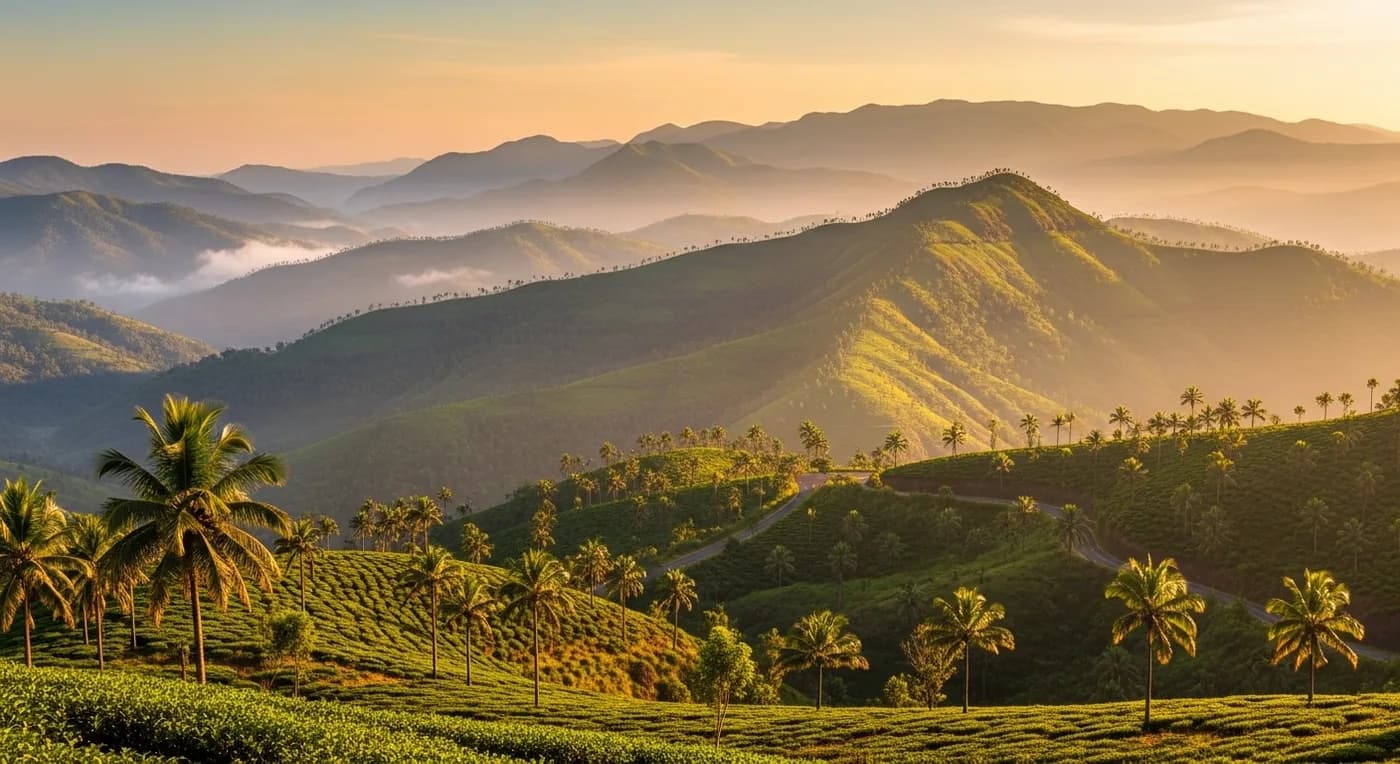
A Kongu Vellalar Gounder wedding is not a spectacle — it is a statement that a community's identity can survive two millennia without being absorbed or replaced. The Arumaikaarar speaks the same Tamil blessings his predecessors spoke when the Sangam poets were still writing. The Navidhan still sings. The Vannaan still builds. The Kammalar still crafts. If you are planning one, honour that. Keep the three days, the elders, and the feast.
Tip
Topics
kongu gounder wedding traditionskongu vellalar weddinggounder marriage ritualskongu wedding ceremonycoimbatore wedding traditionsarumaikaarar weddingtamil wedding without priestkovai weddingsExplore more
Frequently Asked Questions
1What makes Kongu Gounder weddings different from other Tamil weddings?
2Who officiates a Kongu Vellalar Gounder wedding?
3What is Porutham Parthal in a Kongu wedding?
4What food is served at a Kongu Gounder wedding?
5When should Kongu Gounder weddings not be held?
6What is the role of the Navidhan in a Kongu wedding?
7How much does a Kongu Gounder wedding cost in Coimbatore?
Continue reading
Related Articles
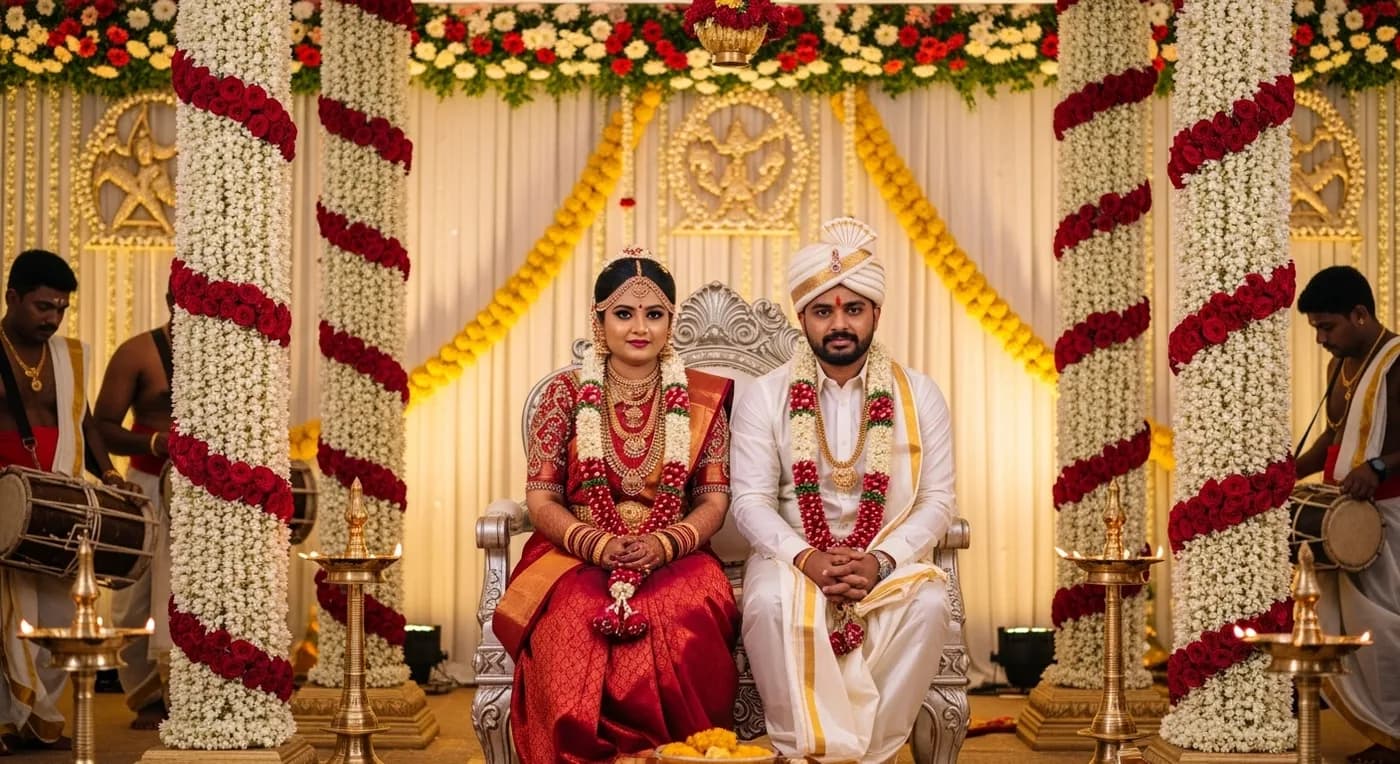
Coimbatore Wedding Planning: ₹5-30L Guide (2026)
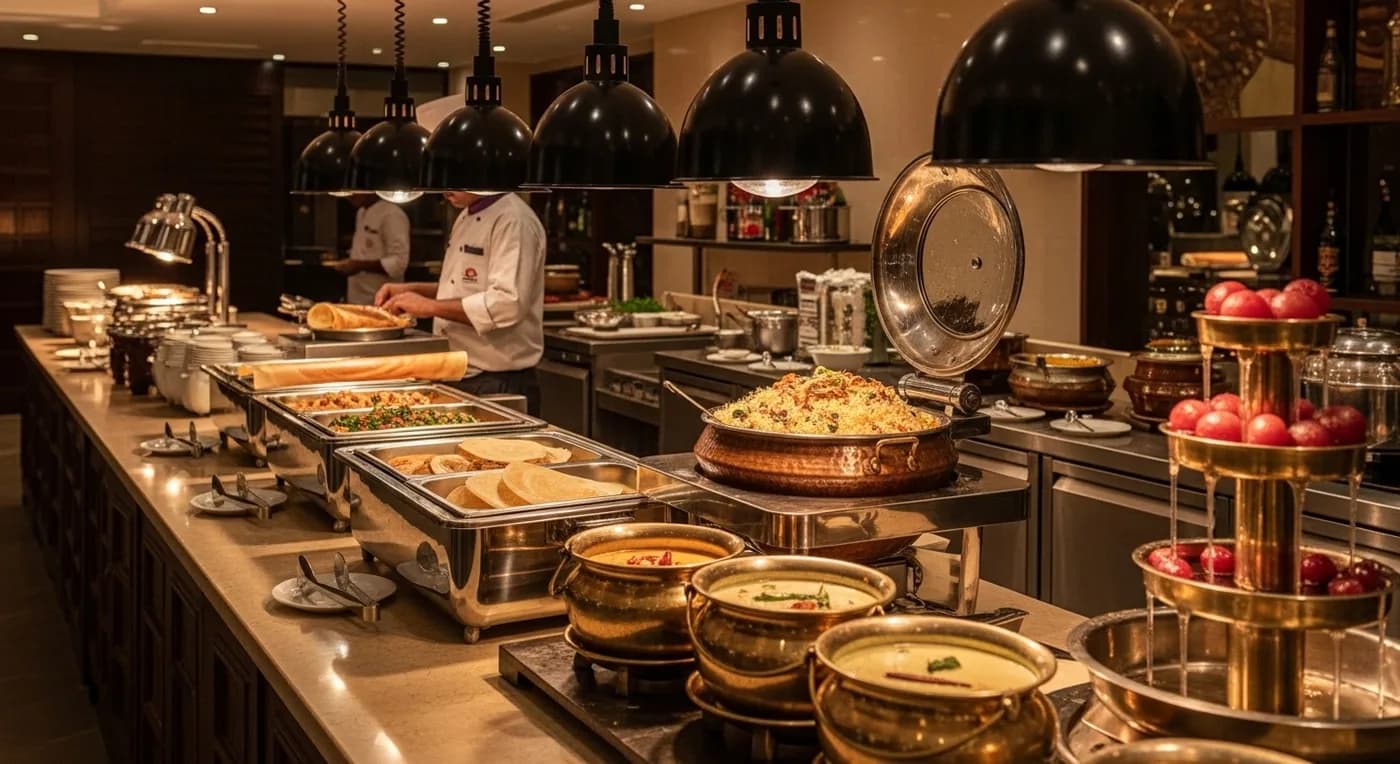
Best Wedding Caterers in Coimbatore: Kongu Cuisine & Multi-Cuisine
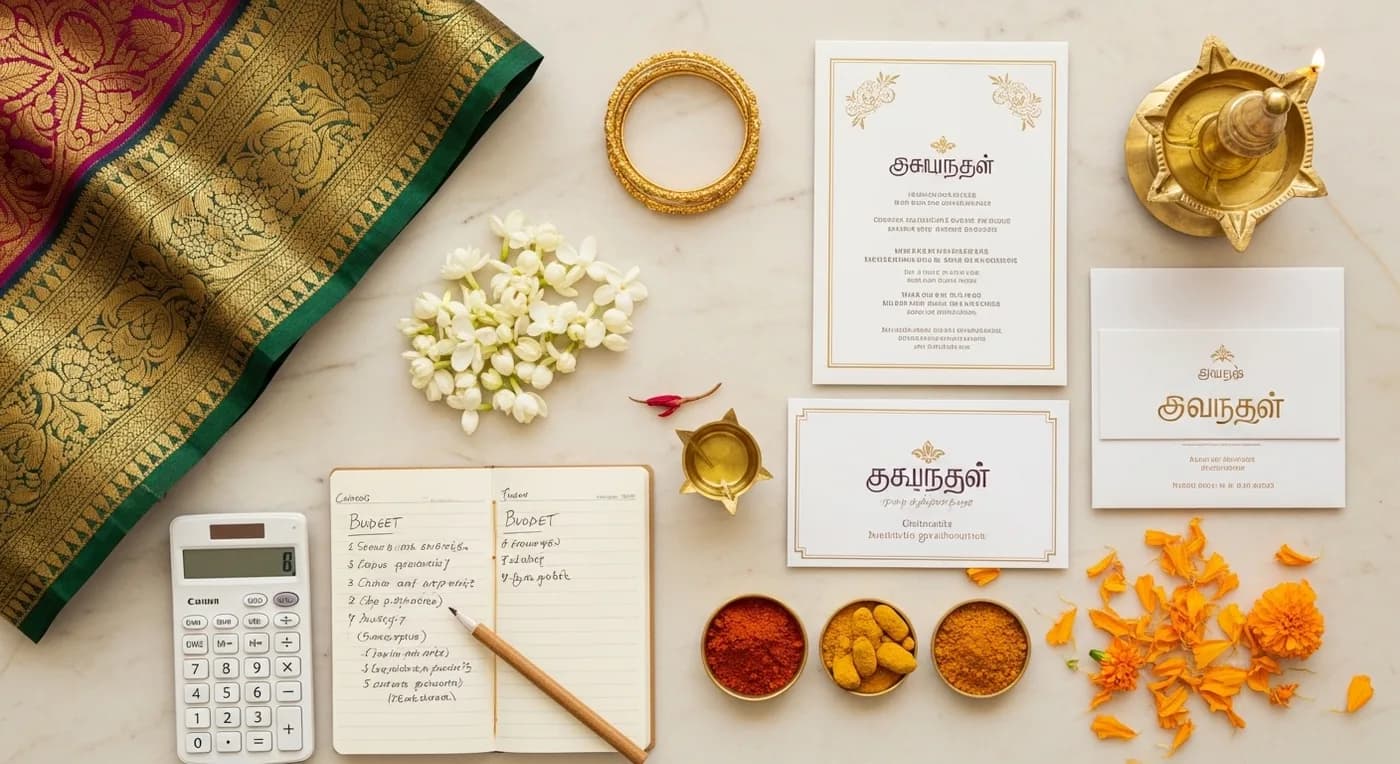
Coimbatore Wedding Budget: Realistic 2026 Cost Breakdown
Best Season for South India Destination Weddings: Month-by-Month Western Ghats Guide
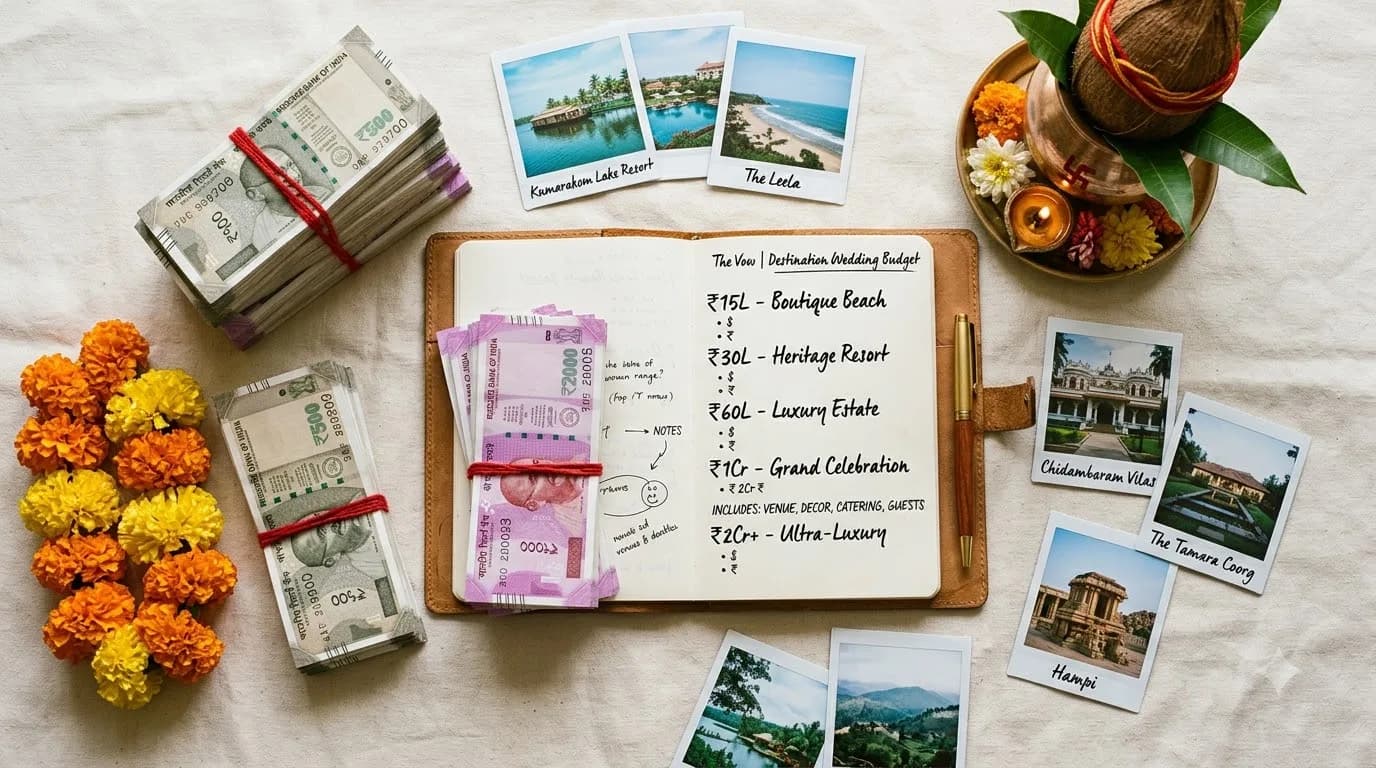
Destination Wedding Cost in South India 2026: 5-Tier Budget Guide
Destination Wedding in South India: Complete 2026 Planning Guide
Still planning?
Get quotes from India's best vendors
Tell us what you're planning and we'll match you with verified photographers, venues, decorators, and more.
Get free quotes