
Thanjavur Wedding Traditions: Chola Heritage & Maratha Customs
Explore Thanjavur's unique wedding traditions blending 1,000-year-old Chola temple customs with 300-year-old Maratha rituals. Guide to Antharpat, Navra-Navri, and regional Tamil ceremonies.

On this page
Thanjavur wedding traditions are unlike any other in Tamil Nadu — a rare fusion of 1,000-year-old Chola temple customs and 300-year-old Maratha rituals from the city's Nayak and Maratha rulers. Key ceremonies include the Antharpat (cloth barrier), Halkund Thenchna (turmeric grinding), and the use of Marathi terminology like Navra and Navri alongside Tamil rites.
Quick Answer
Quick answer: Thanjavur wedding traditions are unlike any other in Tamil Nadu — a rare fusion of 1,000-year-old Chola temple customs and 300-year-old Maratha rituals from the city's Nayak and Maratha rulers. Key ceremonies include the Antharpat (cloth barrier), Halkund Thenchna (turmeric grinding), and the use of Marathi terminology like Navra and Navri alongside Tamil rites.
Note
Pricing methodology: Cost ranges in this guide are based on vendor pricing data from the itsmy.wedding marketplace and published industry reports, collected in Q4 2025 – Q1 2026.
I attended my first Thanjavur Maratha wedding expecting a standard Tamil ceremony and was captivated by the Antharpat — the moment the cloth drops and the couple locks eyes is pure cinema. That single ritual captures what makes Thanjavur different: a city where two great cultural traditions have been marrying each other for three centuries, producing something no other place in India can replicate.
Where Chettinad weddings are defined by gold displays and mansion grandeur, Thanjavur weddings layer Maharashtrian customs on top of Tamil Shaivite foundations — and the result is a celebration that speaks two languages simultaneously. This guide covers both traditions in full. For venues, logistics, and costs, see our Thanjavur wedding planning guide.
Why Are Thanjavur Wedding Traditions Different from Other Tamil Weddings?
Thanjavur's wedding traditions are a product of the city's layered cultural history — three dynasties, three centuries of fusion, one ceremony.
Most Tamil Nadu cities have a single dominant cultural identity. Chennai is cosmopolitan. Madurai is Pandyan. Coimbatore is Kongu. Thanjavur absorbed three distinct ruling cultures, each depositing its own customs into the region's social fabric.
The Chola dynasty made Thanjavur their capital in the 9th century. Rajaraja Chola I constructed the Brihadeeswarar Temple in 1010 CE — a UNESCO World Heritage Site that remains the city's spiritual anchor. The Chola contribution to wedding traditions is the temple-centric ceremony: Shaiva-Agamic worship protocols, the centrality of the nadaswaram and thavil, and rituals conducted under procedures continuous for a millennium.
After the Chola decline, the Vijayanagar Empire's Nayak governors administered Thanjavur in the 16th-17th centuries, bridging the Chola legacy with what came next.
In 1674, Venkoji (Ekoji) — half-brother of Shivaji — established Maratha rule over Thanjavur. For nearly two centuries, Maratha rulers governed a Tamil-speaking population, creating the cultural fusion that is the city's defining characteristic. The Maratha community brought the Antharpat ceremony, Marathi terminology, Maharashtrian feast items, and pre-wedding rituals — and these merged with existing Tamil traditions rather than replacing them. The Thanjavur Maratha community today preserves this hybrid identity, speaking Thanjavur Marathi at home while participating fully in Tamil civic life.
Note
What Is the Tamil Hindu Wedding Ceremony in Thanjavur?
The core ceremony follows Tamil Shaivite traditions rooted in the Chola-era temple worship system — with regional variations that distinguish it from Chennai or Madurai weddings.
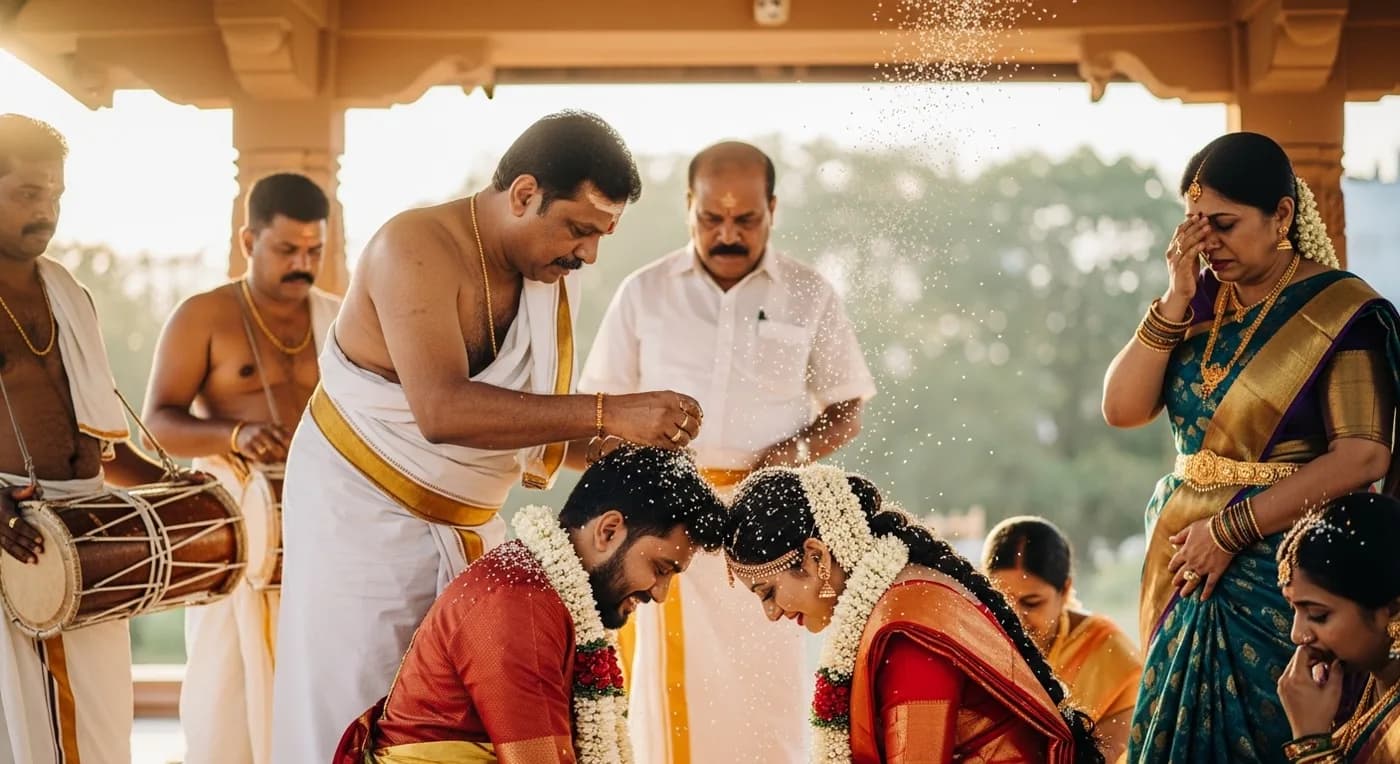
The Tamil Hindu wedding in Thanjavur follows a structured sequence consistent for centuries:
Kasi Yatra — the groom pretends to renounce worldly life and depart for Kasi (Varanasi). The bride's father intercepts him and persuades him to return, offering his daughter's hand. In Thanjavur, this is performed with particular theatrical flair — the groom carries an umbrella, walking stick, and fan while the nadaswaram strikes up a celebratory tune.
Maalai Maatral — bride and groom exchange flower garlands three times, symbolising mutual acceptance. Each side lifts their respective person higher to make the garlanding playfully competitive.
Kanyadanam — the bride's father formally places her hand in the groom's, accompanied by mantras. In Thanjavur ceremonies, the father pours sacred water over the couple's joined hands.
Thali Tying at Muhurtham — at the precise auspicious moment, the groom ties the thali (mangalsutra) around the bride's neck. The nadaswaram reaches its peak, guests shower rice and flowers, and the marriage is sealed.
Saptapadi — the seven steps around the sacred fire. Each step represents a vow — nourishment, strength, prosperity, happiness, progeny, health, and friendship.
The nadaswaram and thavil accompaniment carries particular weight in Thanjavur — the city is historically a centre for these instruments, and wedding musicians here are often from families that have performed at ceremonies for generations. Temple ceremonies at the Brihadeeswarar Temple follow Shaiva-Agamic protocols — a structured liturgical system governing everything from the direction the couple faces to the sequence of offerings. Cauvery delta Brahmins follow the Chozhiya tradition, with differences in mantra pronunciation compared to Chennai counterparts. For the full temple ceremony walkthrough, see our Brihadeeswarar Temple wedding guide.
Looking for Venues in Thanjavur?
Tell us what you need and get quotes from verified venues
What Are the Thanjavur Maratha Wedding Customs?
The Thanjavur Maratha wedding is India's most distinctive cultural fusion — Marathi customs conducted in a Tamil city, by a community that has maintained a dual identity for over 300 years.
The Thanjavur Maratha community descends from the court and soldiers of Shahaji Bhonsle, Venkoji, and their successors who ruled Thanjavur from 1674 to 1855. The community speaks Thanjavur Marathi — distinct from Pune or Mumbai Marathi, inflected with Tamil vocabulary. Their wedding customs are recognisably Maharashtrian but have absorbed Tamil elements over three centuries.
Pre-Wedding Ceremonies
Sakhar Puda — the formal engagement. The groom's family visits the bride's home carrying sugar (sakhar) and betel leaves (vida), symbolising sweetness. Both families exchange gifts and confirm the wedding date — the Maratha equivalent of the Tamil Nichayathartham.
Haldi Kunku — married women gather at the bride's home, applying turmeric (haldi) and vermillion (kunku) on her forehead while offering blessings. The ceremony serves as both a blessing ritual and a social gathering affirming the community's support.
Halkund Thenchna — the turmeric-grinding ceremony and one of the most distinctive Thanjavur Maratha customs. Married women from both families sit together and manually grind fresh turmeric on a stone slab, accompanied by traditional Marathi songs — some devotional, some playful, some carrying advice for married life. Having watched this ceremony in Thanjavur, I can tell you the singing is the highlight — songs passed down through generations in the Thanjavur Marathi dialect, some of which are not found in Maharashtra's wedding tradition.
Mehndi — henna applied to the bride's hands and feet, typically the evening before the wedding, combining the Marathi tradition with the South Indian custom of applying marudhani.
Wedding Day Rituals
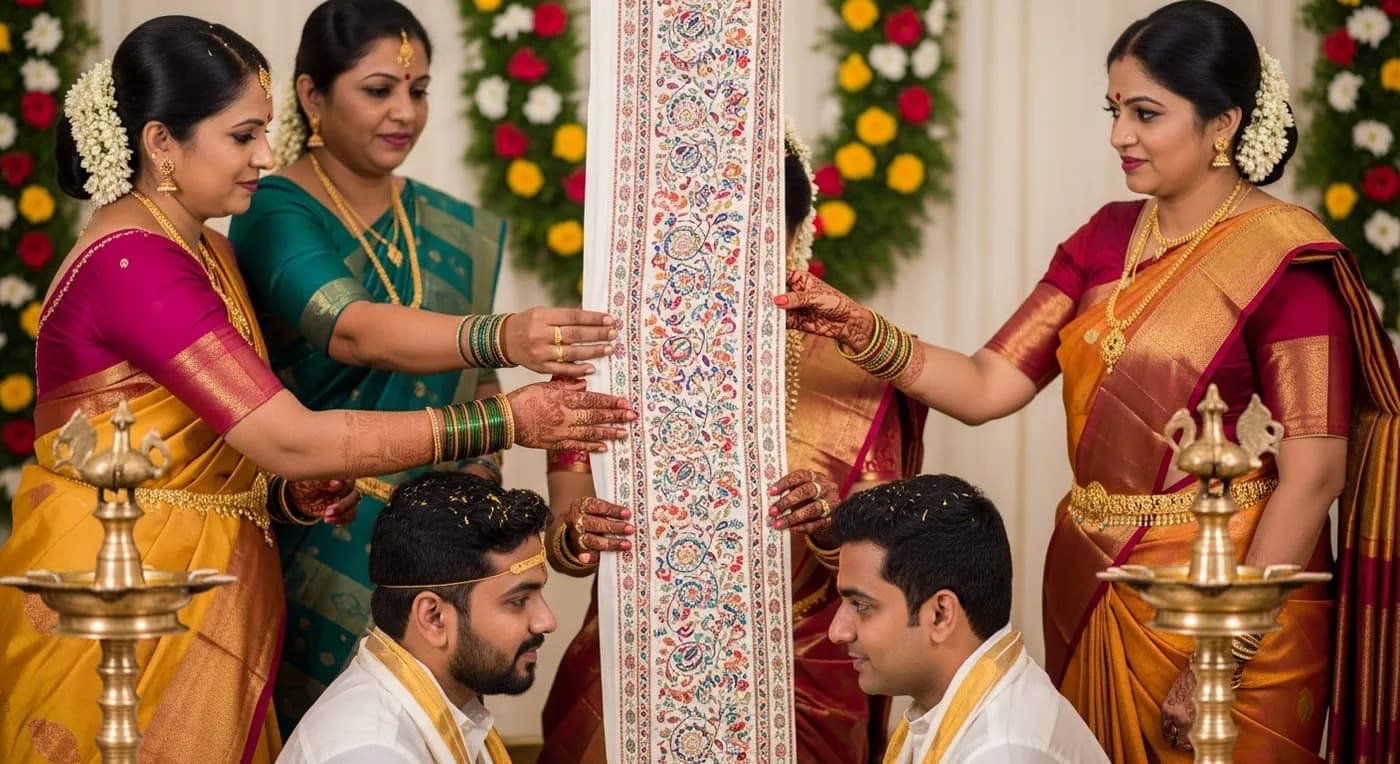
Antharpat — the emotional climax. A silk cloth is held between the bride (Navri) and groom (Navra) by family members. The priest chants mantras as the couple stands on either side, unable to see each other. At the muhurtham moment, the cloth drops — bride and groom see each other simultaneously for the first time in their wedding attire. The crowd erupts, rice (akshata) is showered, and the nadaswaram reaches its crescendo. The Antharpat is the single ritual that most clearly distinguishes a Thanjavur Maratha wedding from any other ceremony in Tamil Nadu.
Kanyadaan — the father places the bride's hand in the groom's while water is poured over their joined hands.
Mangalsutra Tying — the groom ties the mangalsutra around the bride's neck, typically a gold pendant on a thread of black and gold beads.
Saptapadi — the seven steps around the sacred fire, with mantras reflecting the Marathi Brahminical tradition.
Akshata Ceremony — turmeric-tinted rice is showered on the couple by all assembled guests. In Thanjavur Maratha weddings, the entire gathering participates, creating a rain of golden rice.
Post-Wedding Ceremonies
Griha Pravesh — the bride enters the groom's home, kicking a vessel of rice at the threshold (symbolising prosperity) and welcomed by the groom's mother with an aarti.
Pani Grahan — a water ritual where the groom holds the bride's hand over flowing water, symbolising commitment to navigate life together.
Tip
How Does the Wedding Feast Reflect Both Cultures?
The Thanjavur wedding feast is a culinary document of dual heritage — Tamil banana-leaf saapadu served alongside Marathi dishes that arrived 300 years ago and never left.
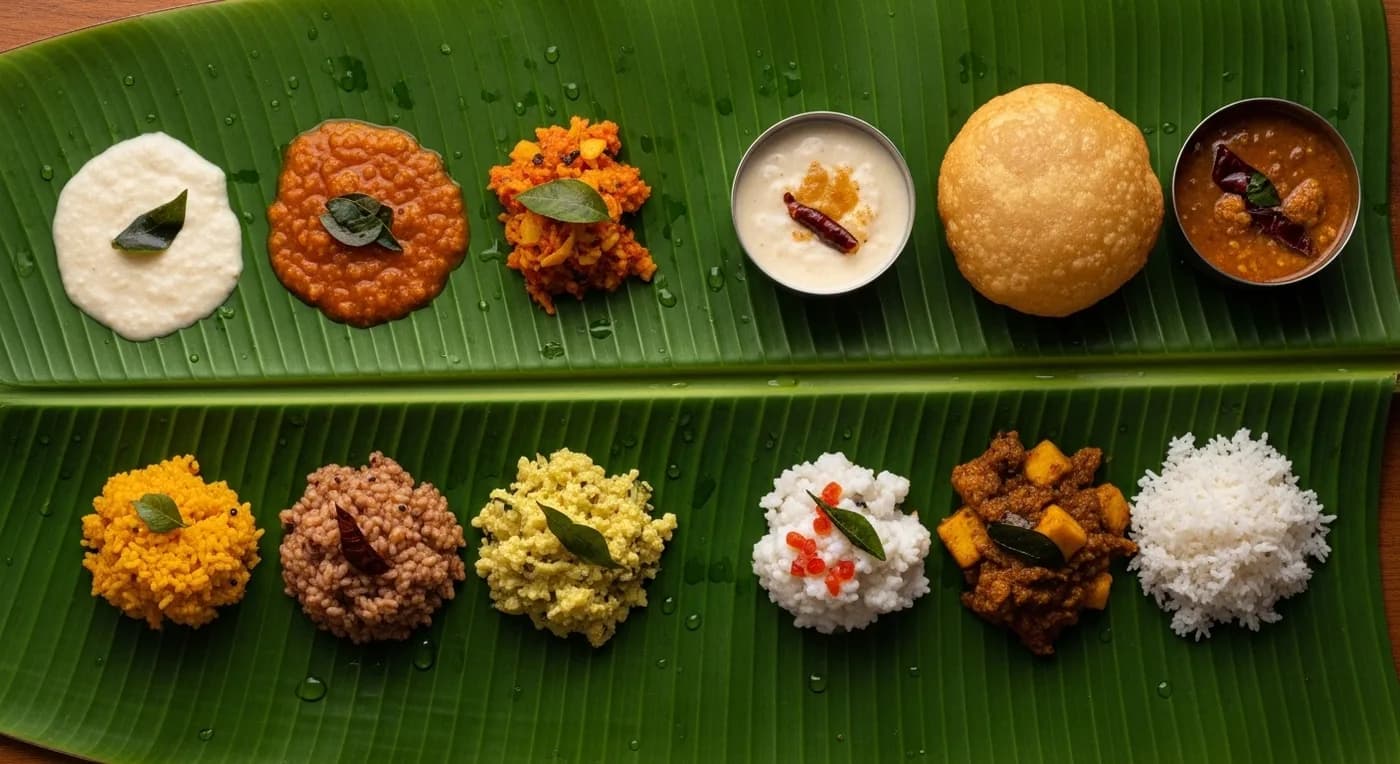
The feast follows the Tamil saapadu format on a banana leaf: sambar, rasam, kootu, poriyal, avial, payasam, and curd rice. Thanjavur's version carries the Cauvery delta's agricultural abundance — local Ponni rice, vegetables from the region's fertile farmland, and a sambar spice profile specific to the area.
At a Thanjavur Maratha wedding, the banana leaf also carries items no Chennai wedding would include:
- Puran Poli — sweet flatbread stuffed with jaggery-chana dal paste, roasted with ghee. Non-negotiable at a Maratha wedding — its presence signals community identity.
- Usal — spiced sprout curry tempered with coconut and curry leaves. The Thanjavur version uses more coconut than a Pune usal.
- Varan Bhat — plain dal over rice with generous ghee. A Marathi staple that has become part of the Thanjavur wedding vocabulary.
- Kosambari — fresh lentil-cucumber salad dressed with lemon and coconut.
The dessert course is where both traditions meet most visibly. Tamil payasam sits on the same leaf as Marathi shrikhand (saffron-cardamom strained yoghurt). Some families serve both puran poli and adhirasam (a Chola-era Tamil sweet), creating a dessert pairing spanning 1,000 years of culinary history. For the full catering guide, see our Thanjavur wedding catering guide.
₹40,000 – ₹1,50,000This range covers catering for 200-500 guests, varying by dish count, non-vegetarian items, and specialist Maratha cooks.
Looking for Caterings in Thanjavur?
Tell us what you need and get quotes from verified caterings
What Role Does Temple Jewellery Play in Thanjavur Weddings?
Temple jewellery originated in the ornaments depicted on Chola-era bronze sculptures and temple carvings — Thanjavur artisans have been crafting these pieces for centuries.
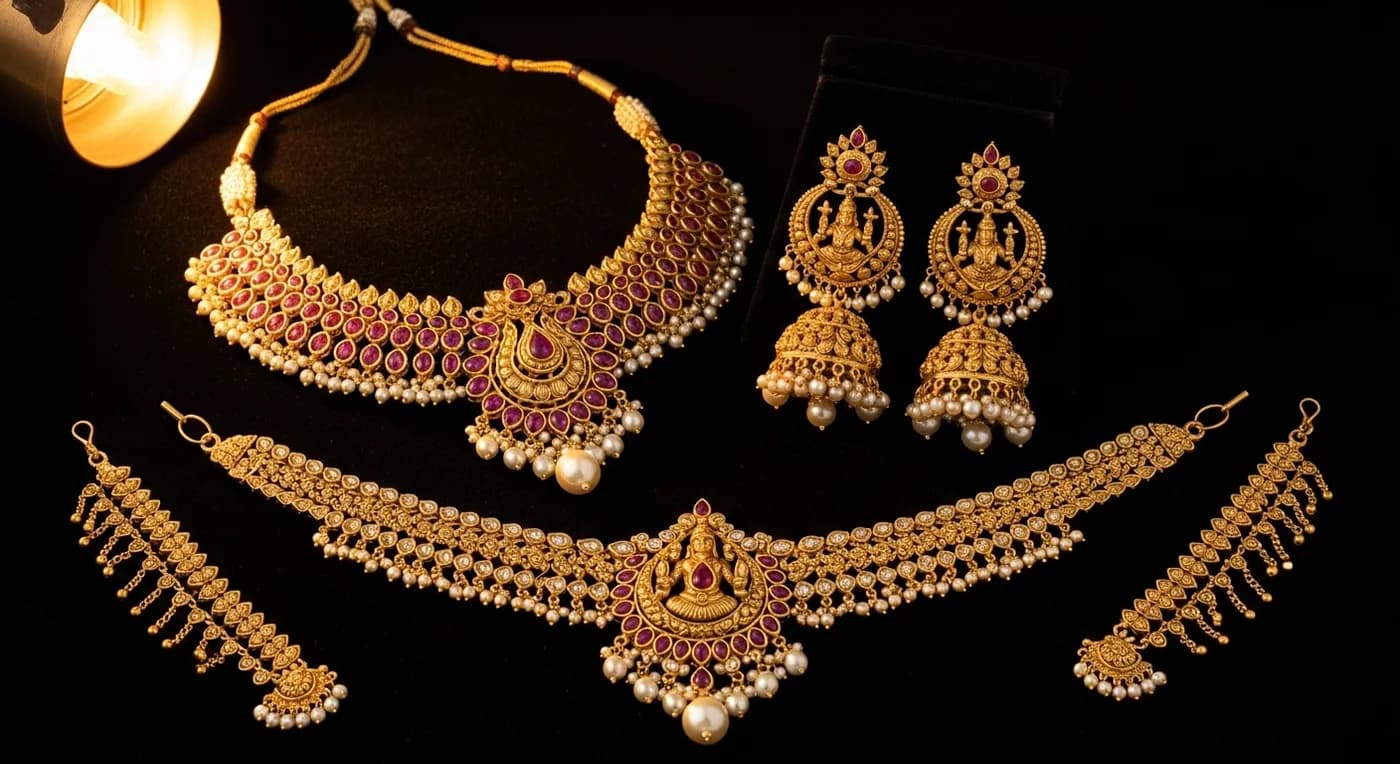
The city's bronze-casting tradition — producing iconic Chola bronzes of Nataraja and Parvathi — directly informed the jewellery designs adorning brides across South India. Motifs from the Brihadeeswarar Temple walls — lotus, peacock, snake, makara — appear on bridal necklaces and armlets today.
Key bridal pieces include the Kemp Necklace (gold set with rubies and emeralds, worn in two or three layers), Jhumka Earrings (dome-shaped, inspired by Chola bronze sculptures), Vanki (V-shaped armlet with Lakshmi or snake motifs, depicted in Sangam-era literature), and the Oddiyanam (broad gold waist belt featuring miniature gopurams and deity figures).
Both Tamil and Maratha brides in Thanjavur wear temple jewellery — it transcends community boundaries as a regional tradition. Covering bridal preparations across Tamil Nadu for six years, I have noticed that a Thanjavur bride's jewellery set has a weight and craftsmanship that stands out even in a state obsessed with gold. A Maratha bride in a nauvari-style drape wears the same kemp necklace and jhumkas as an Iyer bride in a Kanjivaram saree.
With 22K gold at approximately Rs 13,575 per gram (March 2026), Tamil brides in the Thanjavur region typically wear 250 to 300 grams at the ceremony.
₹34,00,000 – ₹41,00,000This represents the approximate gold jewellery investment for 250-300 grams of 22K gold, excluding making charges and stone costs.
How Do Tanjore Painting and Art Appear in Modern Weddings?
Thanjavur's artistic heritage — Tanjore painting, bronze casting, and silk weaving — has moved from museum display to wedding decor.
The Tanjore painting tradition uses gold leaf over a gesso base with semi-precious stones, and received a Geographical Indication (GI) tag in 2007-08. Couples now commission custom Tanjore paintings of family deities as mandapam centrepieces that later serve as heirlooms. Tanjore-style motifs appear on invitation designs, and miniature Tanjore paintings with genuine gold leaf work are popular return gifts.
Thanjavur's bronze-casting workshops produce the kuthuvilakku — the multi-tiered oil lamp anchoring every South Indian mandapam. Nataraja figurines and bronze deepams serve as authentic decor connecting the wedding to the city's heritage.
Thanjavur silk sarees, woven locally, offer an alternative to Kanjivaram — lighter weaves with colour combinations and zari patterns influenced by the Maratha heritage.
₹4,000 – ₹30,000This covers Thanjavur silk sarees from everyday handloom to premium bridal-grade silks with heavy zari.
Important
What Are the Brahmin Regional Differences in Thanjavur?
The Iyer (Shaivite) community in the Cauvery delta follows the Chozhiya tradition — named after the Chola country. Chozhiya Iyer weddings differ from Chennai-area ceremonies in mantra pronunciation, preparatory ritual emphasis, and the Naandi (ancestral invocation). Temple ceremonies are preferred here — the Brihadeeswarar Temple and smaller Chola-era temples are common choices.
Thanjavur's Iyengar (Vaishnavite) community features the Oonjal (swing ceremony) with local variations in songs and sequence. The ceremony emphasises Vishnu and Lakshmi imagery with Divya Prabandham hymns alongside Vedic mantras.
For Tamil wedding customs across all communities, see our Tamil wedding traditions guide.
Common Questions About Thanjavur Wedding Traditions
How long does a Thanjavur Maratha wedding last?
A full Thanjavur Maratha wedding spans two to three days including pre-wedding ceremonies. The core wedding-day ceremony — from the Antharpat to the Saptapadi — takes three to four hours, with the muhurtham timed to an astrologer-determined auspicious moment.
Can non-Maratha couples incorporate Thanjavur elements?
Cultural elements like Tanjore painting decor, bronze lamp arrangements, or the fusion feast format work across communities. The religious rituals — Antharpat, mangalsutra, Halkund Thenchna — are specific to the Maratha community and are best understood as that community's heritage.
What does a Thanjavur Maratha bride wear?
A Thanjavur Maratha bride wears a silk saree in the nauvari (nine-yard) draping style — pleated and tucked between the legs. The colour is typically green or red, green being auspicious in Maharashtrian tradition. Temple jewellery — kemp necklaces, jhumkas, vanki — is worn regardless of community.
Where can I find temple jewellery artisans in Thanjavur?
Established workshops line South Main Street and Kamaraj Nagar. The Poompuhar showroom (Tamil Nadu government handicrafts emporium) carries authenticated pieces. For custom bridal sets, plan four to six months in advance.
What is the significance of bronze oil lamps at Thanjavur weddings?
The kuthuvilakku represents the presence of the divine. In Thanjavur, these lamps are cast in workshops that also produce Chola-style bronze sculptures. Lighting the kuthuvilakku at the ceremony's start invokes prosperity and spiritual blessings. Families often use heirloom lamps passed through generations.
Tip
Start planning your wedding — generate a personalised checklist with our AI Wedding Checklist, estimate your budget with the Cost Calculator, or create a beautiful digital invitation.
Topics
thanjavur wedding traditionschola wedding customsthanjavur maratha weddingtanjore wedding ritualstamil wedding traditions thanjavurExplore more
Frequently Asked Questions
1What is unique about Thanjavur wedding traditions?
2What is the Antharpat ceremony in Thanjavur Maratha weddings?
3What is Halkund Thenchna?
4What food is served at a traditional Thanjavur wedding?
5Do Thanjavur Brahmin weddings differ from Chennai Brahmin weddings?
Continue reading
Related Articles
How to Plan a Thanjavur Wedding: The Complete 2026 Guide
Brihadeeswarar Temple Wedding: The Ultimate Planning Guide
Thanjavur Wedding Catering: Traditional Menu & Top Caterers
Best Season for South India Destination Weddings: Month-by-Month Western Ghats Guide
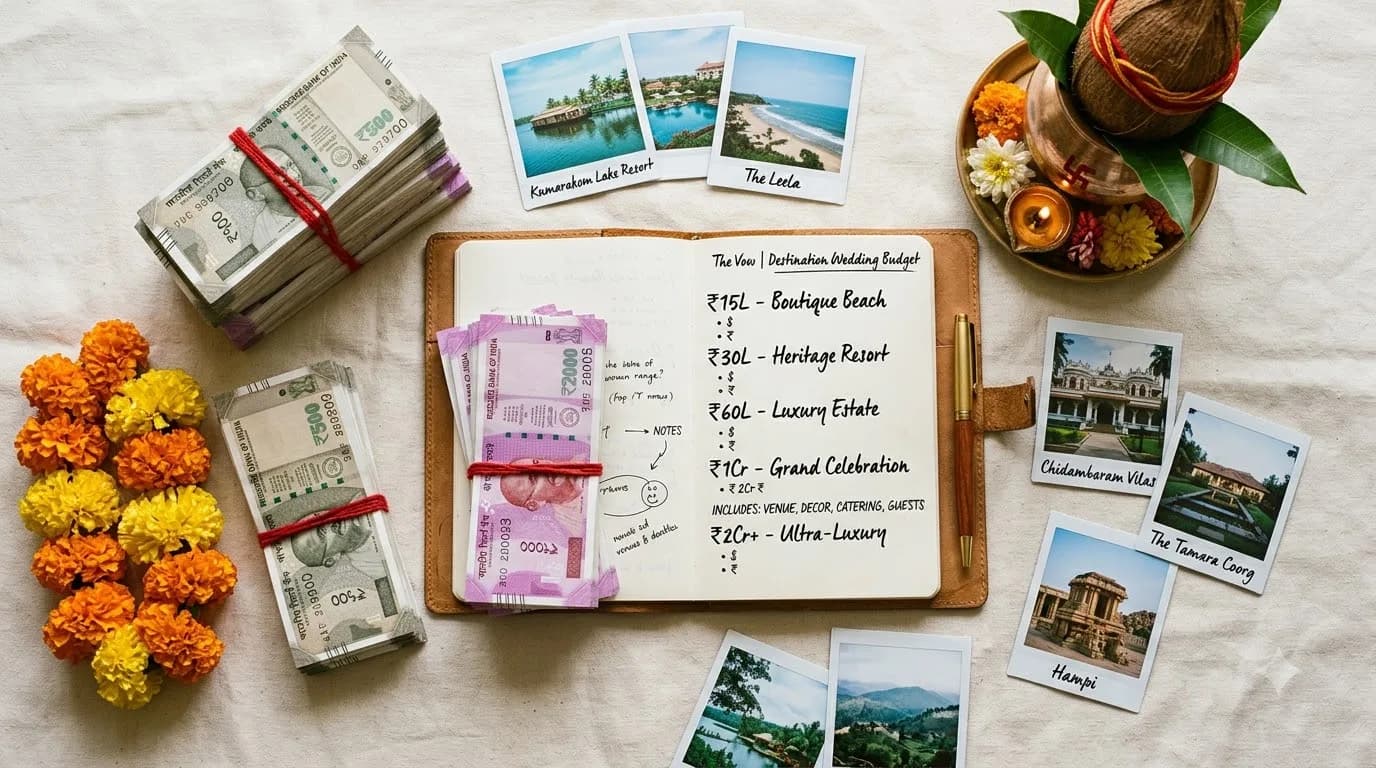
Destination Wedding Cost in South India 2026: 5-Tier Budget Guide
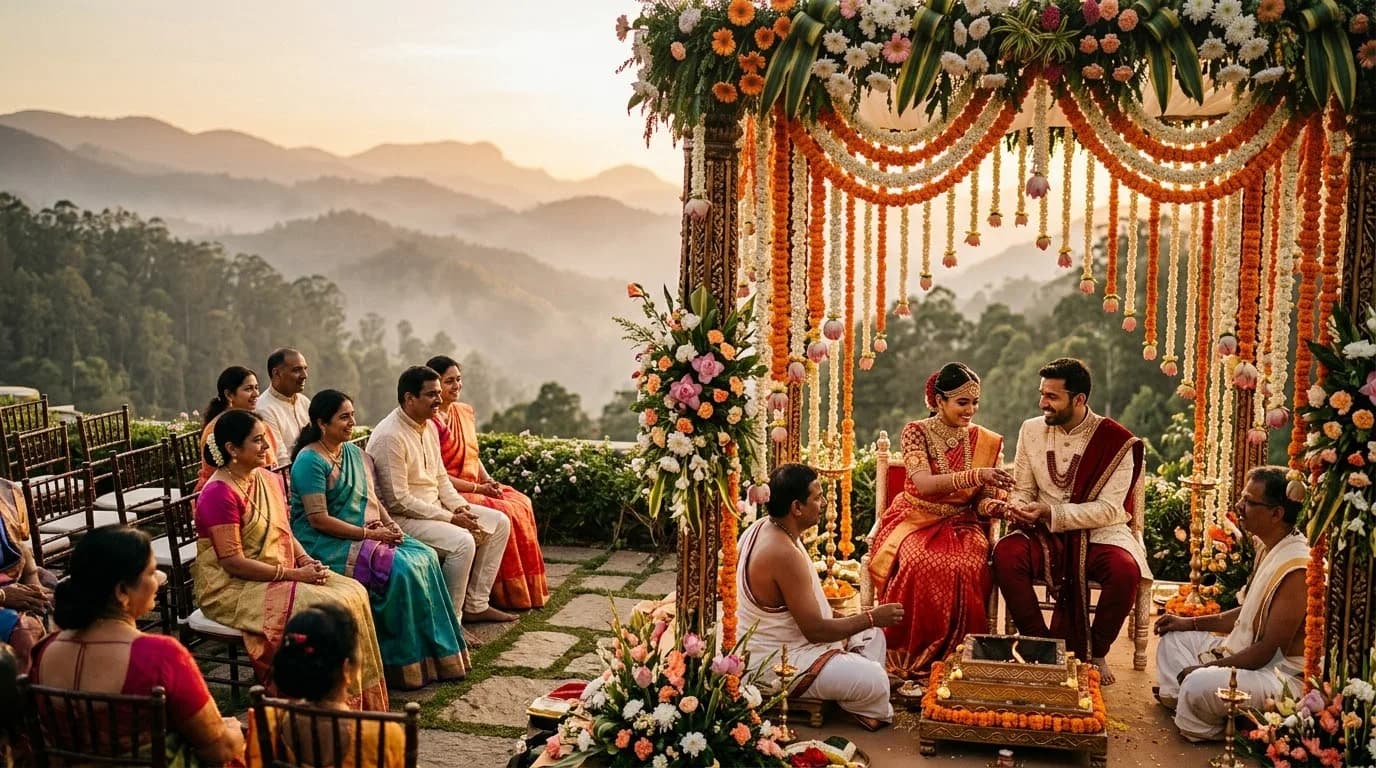
Destination Wedding in South India: Complete 2026 Planning Guide
Still planning?
Get quotes from India's best vendors
Tell us what you're planning and we'll match you with verified photographers, venues, decorators, and more.
Get free quotes