
Chettinad Wedding Traditions: Nattukottai Nagarathar Customs
Chettinad wedding traditions explained — gold display ceremony, 30+ dish feast, and ancestral mansion venues in Karaikudi. Full ritual guide for 2026.

On this page
Chettinad (Nattukottai Nagarathar) weddings are multi-day celebrations held in ancestral mansions, distinguished by the dramatic Thangam Paarkum Vizha — a public gold-display ceremony unique to this community. The legendary Chettinad feast spans 30+ dishes. Traditional ceremonies take place in Kanadukathan and Karaikudi, 430 km from Chennai, in mansions featuring Burmese teak, Italian marble, and Belgian chandeliers.
Quick Answer
Quick answer: Chettinad (Nattukottai Nagarathar) weddings are multi-day celebrations held in ancestral mansions, distinguished by the dramatic Thangam Paarkum Vizha — a public gold-display ceremony unique to this community. The legendary Chettinad feast spans 30+ dishes. Traditional ceremonies take place in Kanadukathan and Karaikudi, 430 km from Chennai, in mansions featuring Burmese teak, Italian marble, and Belgian chandeliers.
Note
Pricing methodology: Cost ranges in this guide are based on vendor pricing data from the itsmy.wedding marketplace and published industry reports, collected in Q4 2025 – Q1 2026.
Nattukottai Nagarathar — commonly known as Chettiars or Nattukottai Chettiars — hold some of South India's most opulent wedding celebrations within an Indian wedding industry valued at ₹10.79 lakh crore, distinguished by multi-day ceremonies in palatial ancestral mansions, the dramatic Thangam Paarkum Vizha (gold-viewing ceremony) where generations of family gold are publicly displayed, and a feast of 30 or more dishes that has earned Chettinad cuisine a reputation as one of the world's great culinary traditions. A Chettinad wedding is not merely a marriage ceremony — it is a declaration of heritage, wealth, and community pride.
This guide walks you through the Nagarathar community's history, the multi-day wedding sequence, the legendary gold display, the feast that defines Chettinad hospitality, and practical advice for planning a Chettinad wedding in 2026. For the broader Tamil wedding framework that underpins the Nagarathar ceremony, see our Tamil wedding traditions guide. For venue and logistics planning in the city, our Chennai wedding planning guide covers the essentials.
The Nagarathar Community: A Legacy of Trade and Grandeur
To understand a Chettinad wedding, you must understand the community that created it. The Nattukottai Nagarathars are a mercantile community with roots in the Sivaganga and Ramanathapuram districts of Tamil Nadu — a region known as Chettinad. Based in Tamil Nadu, one of India's largest state economies, their wealth was built through centuries of international trade, banking, and commerce, with trading networks stretching across Southeast Asia — Burma (Myanmar), Ceylon (Sri Lanka), Malaya (Malaysia), Singapore, and Vietnam.
The Mansions
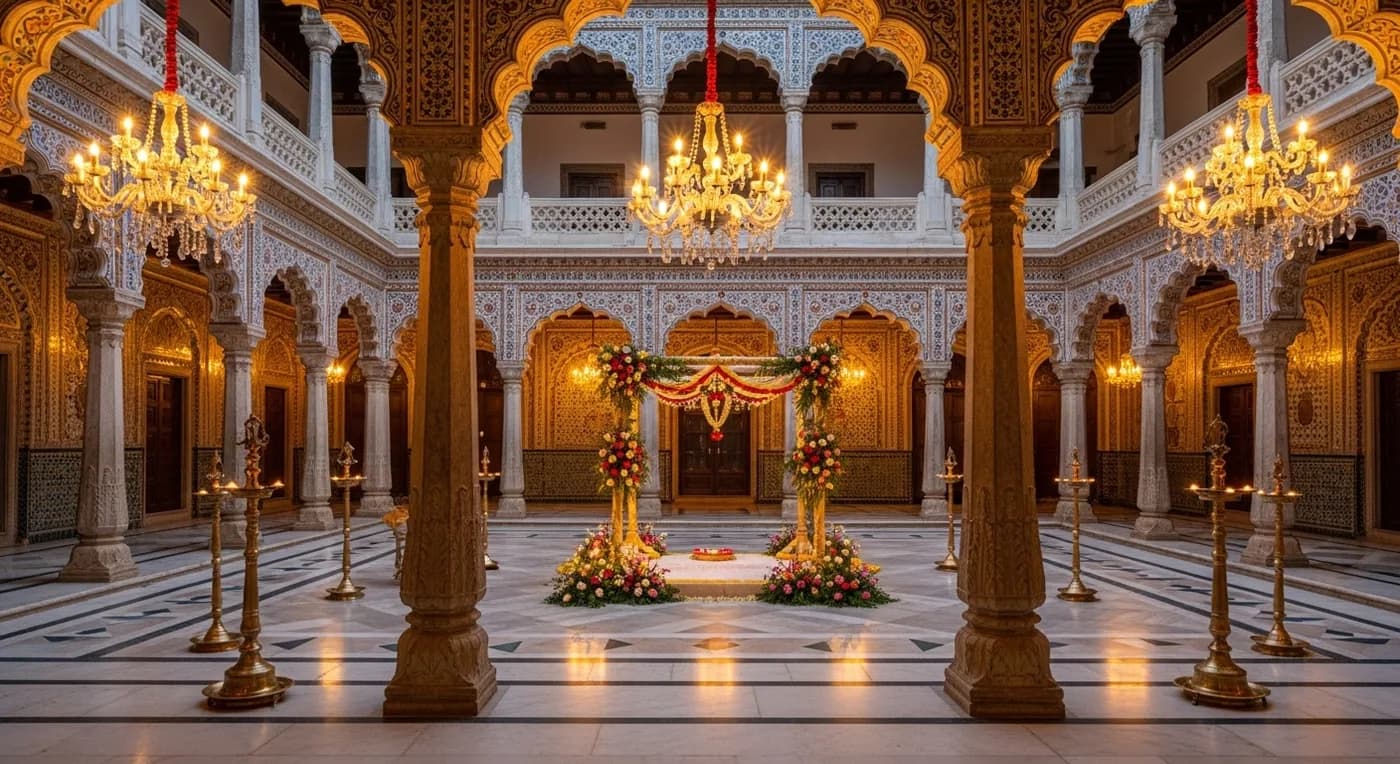
The most visible expression of this wealth is the Chettinad mansion — palatial homes built between the 1850s and 1940s using materials sourced from around the world. Burmese teak pillars, Italian marble floors, Belgian chandeliers, English ironwork, and Athangudi tiles (handmade cement tiles with embedded glass patterns) create interiors of staggering beauty. Towns like Kanadukathan, Karaikudi, Devakottai, Pallathur, and Kothamangalam contain clusters of these mansions — many still owned by Nagarathar families, though some stand vacant as the community has migrated to Chennai (formerly Madras), Bangalore, and abroad.
These mansions were designed not just for daily living but for celebration. Their courtyards (mutram), pillared halls (thinnai), and multiple wings were built to accommodate the large gatherings that Nagarathar culture demands — and the wedding is the grandest gathering of all.
Geographic Identity
Chettinad is a specific geographic region comprising approximately 75 villages in the Sivaganga district. Despite the community's global dispersal, Chettinad remains the spiritual and cultural home. Many families who have lived in Chennai for generations still return to their ancestral village for weddings — a practice that connects the modern celebration to centuries of family history.
Note
The Multi-Day Wedding Sequence
A traditional Chettinad wedding is a multi-day affair, with each day carrying its own rituals, social functions, and feasting. While modern families have compressed some elements, the full celebration typically spans three to four days.
Day 1: Nichayathartham and Gold Preparation
The Nichayathartham (engagement ceremony) formally confirms the match. Both families gather — often at the bride's ancestral mansion — where elders publicly announce the wedding date. Gifts are exchanged between families: silk sarees, fruits, and sweets from the groom's side; gold jewellery and household items from the bride's side. The Nichayathartham is a binding social contract — once announced before the community, the match is considered irrevocable.
Behind the scenes, the bride's family begins the meticulous preparation of the gold that will be displayed at the Thangam Paarkum Vizha. Jewellery accumulated over generations — necklaces, bangles, waist belts, earrings, and gold coins — is cleaned, inventoried, and arranged on display stands. In families with substantial holdings, this preparation can take days.
Day 2: Haldi, Mehndi, and Ladies' Events
The second day is dominated by pre-wedding ceremonies. The Nalangu (turmeric ceremony) purifies the bride and groom at their respective homes. Turmeric paste is applied by married women of the family, accompanied by singing and celebration. In Nagarathar tradition, the Nalangu is particularly elaborate — the bride is adorned with turmeric-infused sandalwood paste and seated in a specially decorated area of the mansion.
The mehndi (henna application) for the bride and female guests is a major social event, often stretching into the evening. Professional mehndi artists create intricate designs on the bride's hands and feet, while the women of the family share stories, advice, and traditional songs. The groom's family may host a separate celebration — music, feasting, and socialising — at their own mansion or a nearby venue.
Day 3: The Muhurtham Ceremony
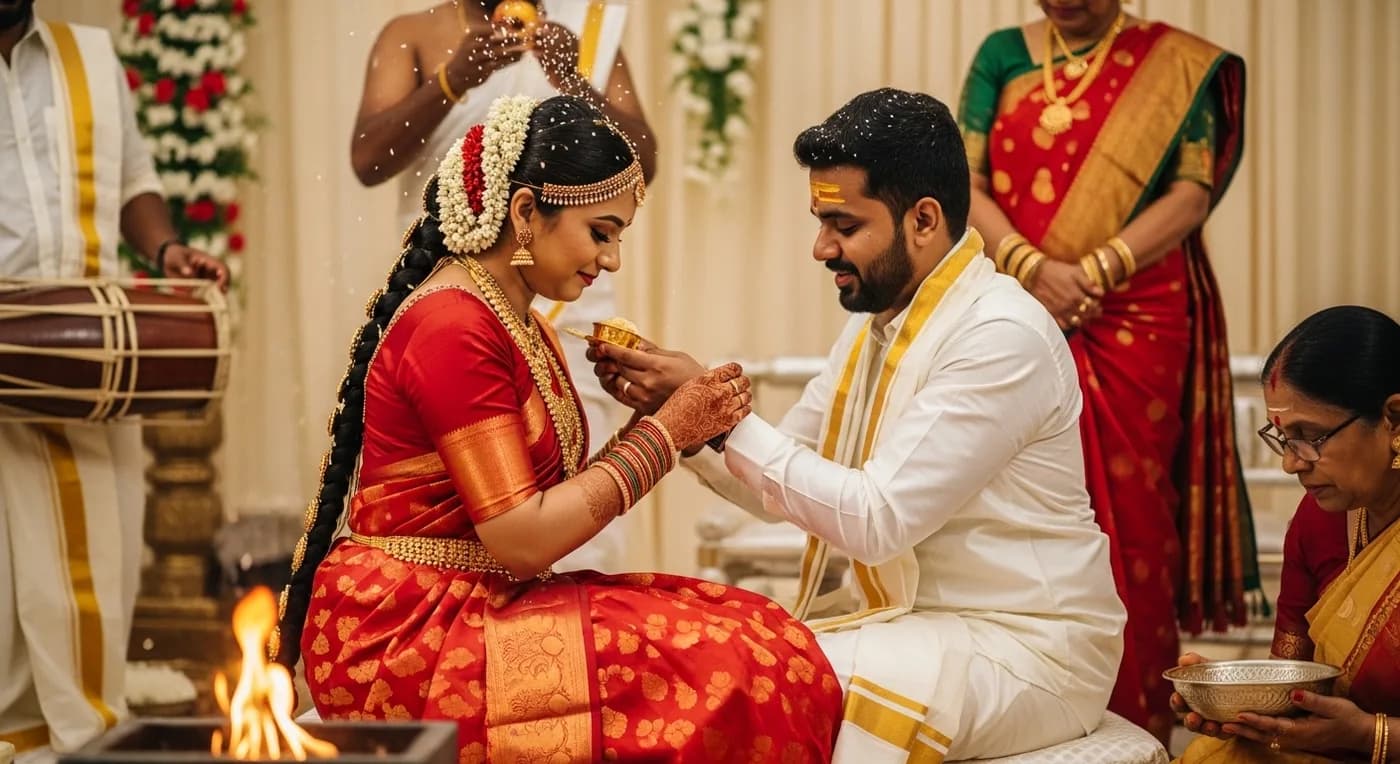
The core wedding ceremony follows the Tamil Hindu ritual structure — Kasi Yatra (groom's theatrical departure), Maalai Maatral (garland exchange), Oonjal (swing ceremony), Kanyadaanam (giving away the bride), Mangalya Dharanam (thali tying at the muhurtham moment), and Saptapadi (seven steps around the sacred fire). For a detailed explanation of each ritual, see our Tamil wedding traditions guide.
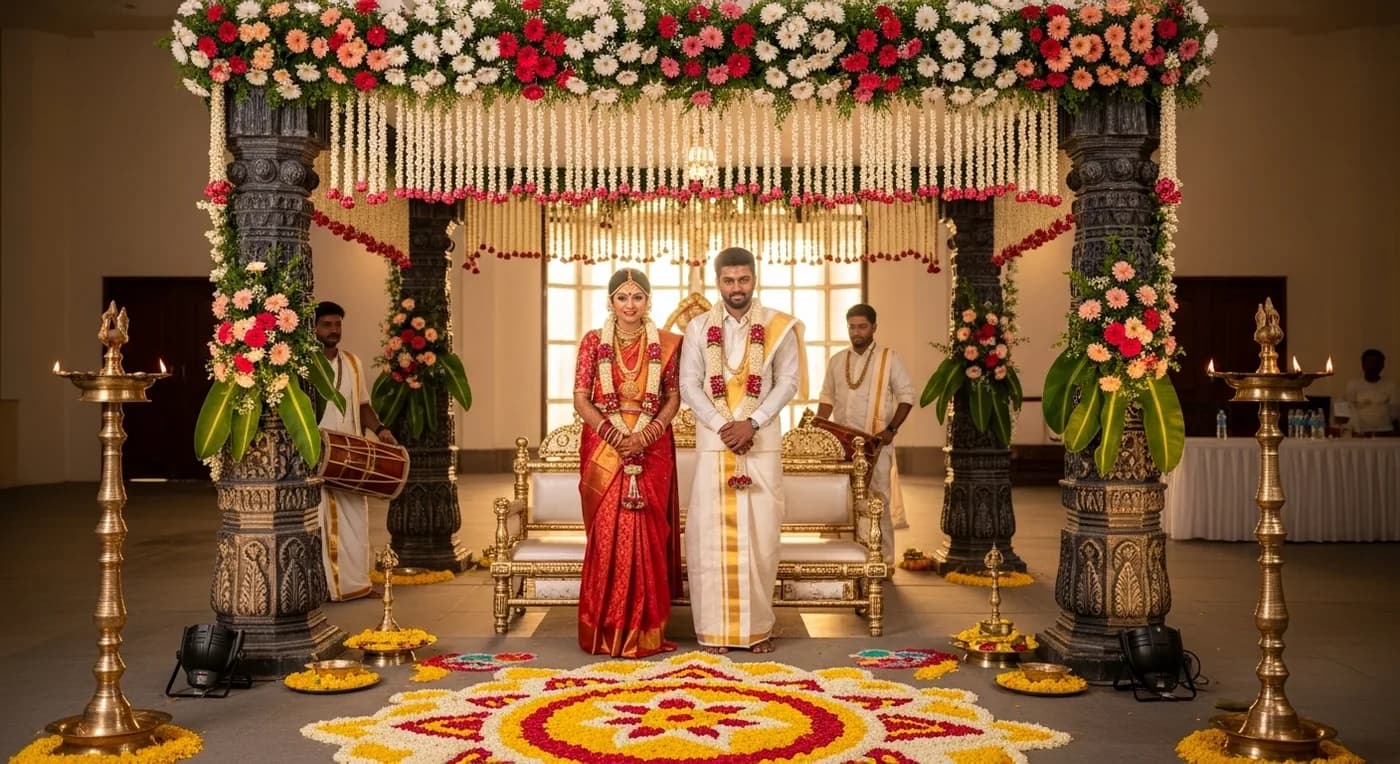
What distinguishes the Nagarathar ceremony is the scale. The mandapam is erected in the mansion's main courtyard, decorated with jasmine, banana trunks, mango leaves, and elaborate floral arrangements. The nadaswaram and thavil ensemble is often of the highest calibre — Nagarathar families are known patrons of Carnatic music. The guest count for the muhurtham ceremony alone can reach 500 to 1,000, with the mansion's expansive layout accommodating the crowd across multiple halls and courtyards.
Day 4: Post-Wedding Ceremonies
The Grihapravesham (bride's entry into the groom's home) follows, along with family prayers, elder blessings, and the formal integration of the bride into her new household. A community feast marks the conclusion of the celebrations.
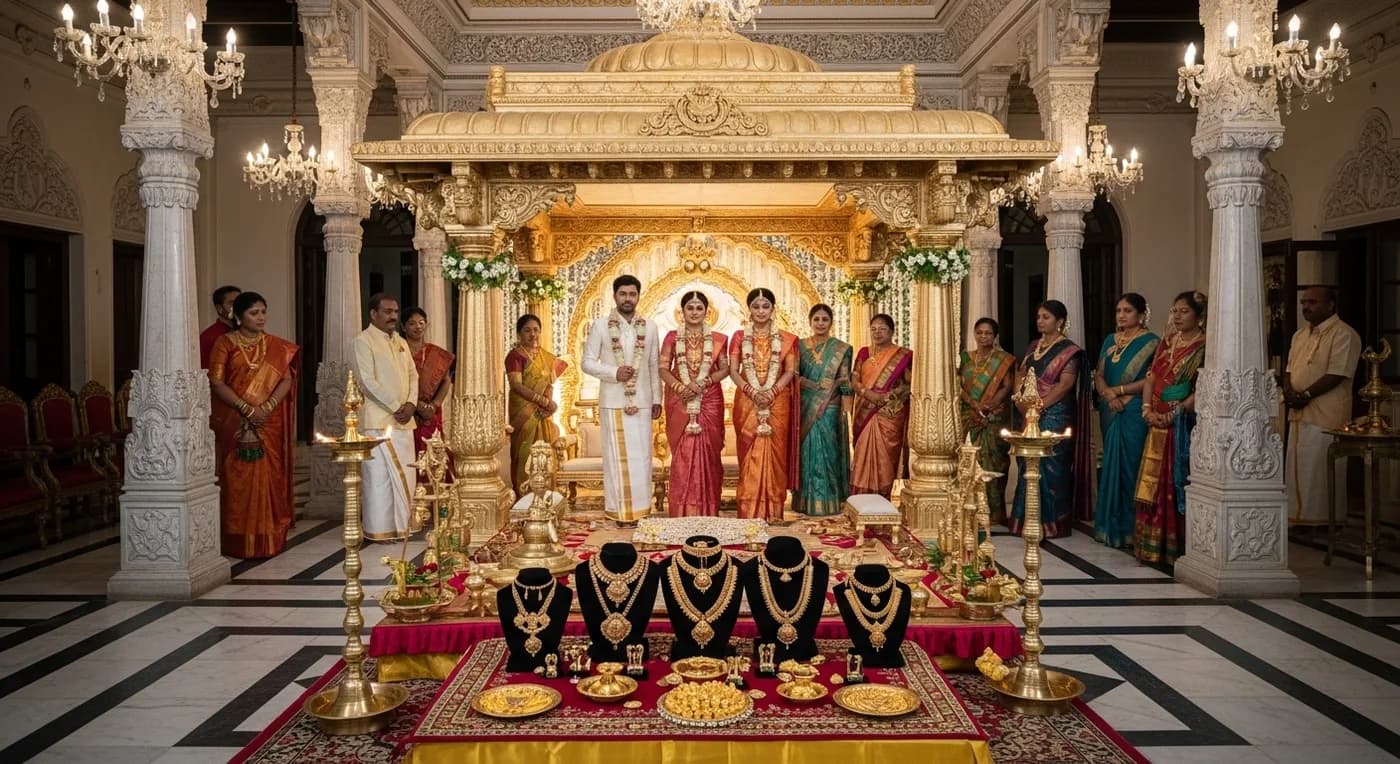
The Gold Display: Thangam Paarkum Vizha
The Thangam Paarkum Vizha — literally, "the ceremony of viewing gold" — is the most distinctive and visually spectacular element of a Chettinad wedding. There is nothing quite like it in any other Indian wedding tradition.
What Happens
Before the wedding ceremony, typically on the first or second day, the bride's family arranges their gold jewellery collection on specially constructed display stands or tables in the mansion's main hall. The gold is laid out systematically — necklaces on one tier, bangles on another, waist belts and earrings arranged for maximum visual impact. The display often includes not just the bride's wedding jewellery but the family's accumulated collection — pieces passed down through three, four, or even five generations.
Guests, family members, and community members file past the display, admiring the collection. Elders can often identify specific pieces — "That oddiyanam belonged to your great-grandmother; she received it in 1923 from the Singapore branch of the family." The gold becomes a tangible record of family history, each piece carrying a story of trade, prosperity, and generational continuity.
Quantities and Significance
In traditional Nagarathar families, the gold displayed can be extraordinary — some displays feature 2 to 5 kilograms of gold or more, representing a family's accumulated wealth over generations. The items typically include the full bridal set (necklaces, bangles, earrings, nose ring, waist belt, forehead ornament, hair ornament), family heirloom pieces, gold coins collected from trade journeys, and specially commissioned pieces for the wedding.
Important
Security Considerations
A practical reality: displaying significant quantities of gold requires security planning. Traditional mansions in Chettinad villages typically have a tight-knit community where everyone knows everyone, providing natural security. For displays held at Chennai venues or hotels, families hire professional security, limit the display hours, and may use locked glass cases for the most valuable pieces. Some families now insure the collection specifically for the wedding event.
The Chettinad Wedding Feast
If there is one element of a Chettinad wedding that has earned a global reputation, it is the food. Chettinad cuisine is recognised by UNESCO-adjacent food heritage organisations as one of India's most significant culinary traditions, and the wedding feast is its ultimate expression.
The Culinary Philosophy
Chettinad cooking is built on freshly ground spices — kalpasi (stone flower), marathi mokku (dried flower pods), star anise, fennel, black pepper, and a proprietary spice blend that varies by family. The cuisine reflects the community's trading history: ingredients like star anise came from Southeast Asia, saffron from trade routes through Rajasthan, and certain cooking techniques show Burmese and Malaysian influence.
What Is Served
A full Chettinad wedding feast includes 30 or more dishes served on a banana leaf:
Non-Vegetarian Highlights: Chettinad chicken curry (the flagship dish — pepper-heavy, deeply spiced), pepper crab, mutton chukka (dry-fried mutton with whole spices), prawn masala, egg curry, and Chettinad-style kozhi biryani (chicken biryani with distinctive spicing).
Vegetarian Preparations: Kuzhi paniyaram (spherical dumplings — sweet and savoury versions), kootu curry (mixed vegetable and lentil), poriyal (dry vegetable stir-fry), rasam, sambar, aviyal, and a range of pickles and chutneys.
Sweets and Desserts: Athirasam (jaggery-rice doughnut — a Chettinad speciality), karupatti halwa (palm jaggery halwa), paal payasam (milk pudding), rava kesari, and adhirasam — each made by specialist cooks who have been preparing these dishes for decades.
Service Style: The feast is served on banana leaves by a team of servers (parivattam) who follow a strict sequence. Guests sit in long rows on the floor of the mansion's dining hall, and the servers move in choreographed waves — pickles and condiments first, followed by vegetables, then rice with sambar, rasam, and finally curd. The non-vegetarian dishes are served separately, often with a second round of rice.
Looking for Caterings in Chennai?
Tell us what you need and get quotes from verified caterings
Attire and Jewellery
The Bride
The Chettinad bride's appearance is among the most visually striking in South Indian wedding culture. The Kanjivaram silk saree — typically nine yards, draped in the Madisar style — is in deep red, maroon, or green with heavy gold zari border work. The fabric quality and zari content are traditionally a point of pride, with some families commissioning custom-woven sarees from Kanchipuram weavers months in advance.
The jewellery is where the Chettinad bride truly stands apart. The full Nagarathar bridal set is one of the most elaborate in any Indian community:
- Oddiyanam (gold waist belt) — the signature piece, often the heaviest individual item, featuring intricate temple-inspired motifs
- Nethi chutti (forehead ornament with a central pendant)
- Multiple necklace layers — typically four or five, including a choker, mid-length temple necklace, long chain, and the thali strand
- Jimikki (chandelier earrings), vanki (armlet), and heavy gold bangles
- Maang tikka or surya-chandra (sun-and-moon) hair ornaments
- Nose ring with chain extending to the ear
The bride's jewellery represents not just beauty but economic history — many pieces are heirloom items that were displayed at the Thangam Paarkum Vizha and have been worn by brides across generations.
The Groom
The Chettinad groom wears a silk veshti with a broad jari (gold thread) border, paired with a silk shirt or jubba (long kurta). A silk angavastram (upper cloth) completes the ensemble. The groom's attire is elegant but deliberately understated compared to the bride's — in Nagarathar tradition, the wedding day belongs to the bride.
Planning a Chettinad Wedding Today
Mansion Booking
If you want an authentic Chettinad wedding, the ancestral mansion is the ideal venue. Many Nagarathar families still hold their ceremonies in the family's village mansion, even if they live in Chennai or abroad. Some mansions have been converted into heritage hotels — such as Visalam in Kanadukathan, The Bangala in Karaikudi, and Chettinadu Mansion — and accept bookings for wedding events.
The logistics of a mansion wedding require careful planning: catering must be arranged locally (Chennai caterers may need to travel with their equipment), guest accommodation in Chettinad is limited (nearby hotels in Karaikudi and Sivaganga supplement the mansion's guest rooms), and transportation from Chennai (approximately 400 kilometres) must be coordinated for the guest list. Couples drawn to heritage Tamil Nadu weddings should also consider Thanjavur — the Chola capital offers a different but equally compelling heritage experience with UNESCO temple ceremonies and unique Maratha-Tamil traditions.
Chennai Alternatives
A growing number of Nagarathar families, particularly those settled in Chennai, hold their weddings at premium hotels — ITC Grand Chola, The Leela Palace, Taj Coromandel — or at large kalyana mandapams in T. Nagar and Mylapore. These venues can accommodate the scale of a Chettinad wedding (800 to 2,000 guests) while providing the infrastructure — kitchens, parking, air conditioning — that ancestral mansions may lack.
Specialist Caterers
The Chettinad wedding feast requires caterers with genuine Nagarathar culinary expertise. The spice blends, cooking techniques, and specific dishes are highly specialised — a generic South Indian caterer will not produce an authentic Chettinad feast. In Chennai, several catering firms are run by Nagarathar families or employ Chettinad-trained cooks who understand the community's culinary standards. When interviewing caterers, ask specifically about their experience with Chettinad weddings and request a tasting of key dishes — particularly the chicken curry, athirasam, and kuzhi paniyaram.
Budget Expectations
Chettinad weddings are among the most expensive in Tamil Nadu, reflecting the community's emphasis on scale, quality, and hospitality:
- Mid-range (Chennai mandapam or mid-tier hotel, 500-800 guests): ₹15,00,000 – ₹30,00,000
- Premium (Chennai 5-star hotel, 800-1500 guests): ₹30,00,000 – ₹50,00,000
- Ultra-premium (ancestral mansion + Chennai reception, 1000-2000+ guests): ₹50,00,000 – ₹1,00,00,000
These ranges cover venue, catering, decoration, music, and photography — placing ultra-premium Chettinad celebrations well above the national average of ₹29.6 lakhs. Jewellery and the gold display are separate — and in many Nagarathar families, the gold investment exceeds the wedding event cost.
Looking for Decorators in Chennai?
Tell us what you need and get quotes from verified decorators
On itsmy.wedding, you can find verified vendors across Chennai who have experience with Chettinad weddings — from caterers who specialise in authentic Nagarathar cuisine to photographers who understand the visual grandeur these celebrations demand.
A Chettinad wedding is one of South India's great cultural experiences. The mansions, the gold, the feast, and the community that gathers to celebrate represent a tradition that is simultaneously ancient and alive — a community that has traded across oceans and returned to its villages to marry under the same roof where generations before them made the same vows. Whether you celebrate in a Kanadukathan mansion or a Chennai ballroom, the essence remains: hospitality without limit, heritage without apology, and love witnessed by a community that has endured for centuries.
Tip
Start planning your wedding — generate a personalised checklist with our AI Wedding Checklist, estimate your budget with the Cost Calculator, or create a beautiful digital invitation.
Topics
chettinad wedding traditionsnagarathar wedding ritualschettinad marriagenattukottai nagarathar weddingchettinad mansion weddingmadras weddingsExplore more
Frequently Asked Questions
1What is unique about Chettinad weddings?
2What is the gold display tradition in Chettinad weddings?
3Where are traditional Chettinad weddings held?
4What food is served at a Chettinad wedding?
Continue reading
Related Articles
How to Plan a Chennai Wedding: The Complete 2026 Guide
Tamil Wedding Traditions: Rituals, Meaning & Modern Adaptations
Heritage Wedding Venues in Tamil Nadu: Palaces & Estates
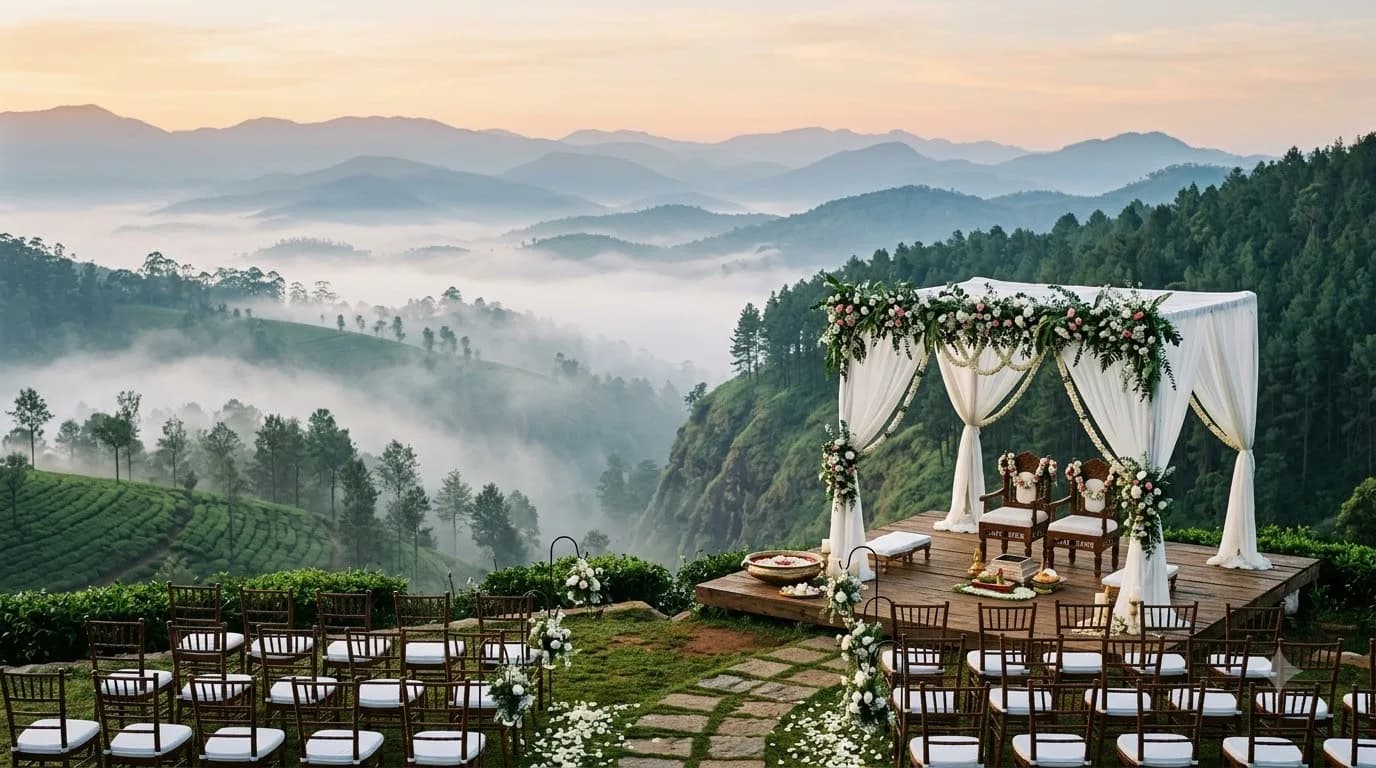
Best Season for South India Destination Weddings: Month-by-Month Western Ghats Guide
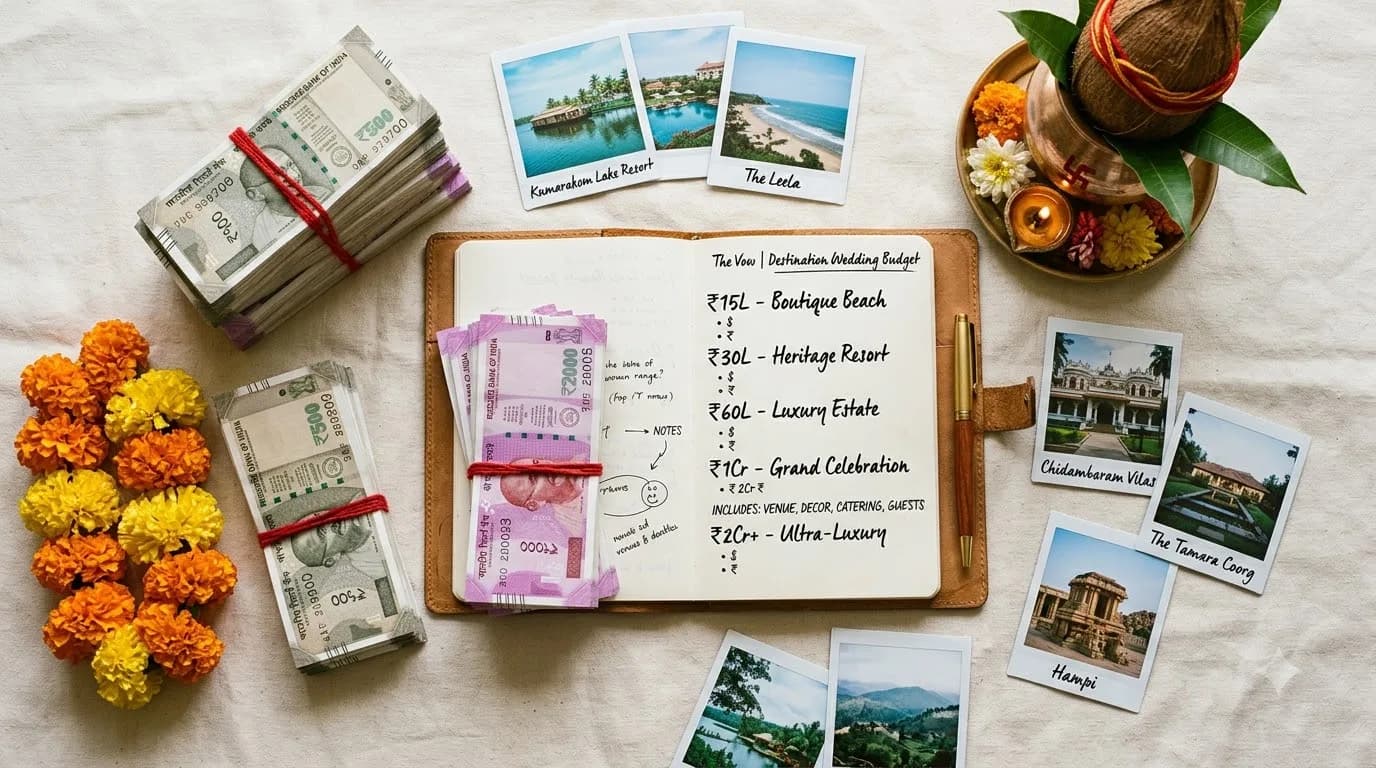
Destination Wedding Cost in South India 2026: 5-Tier Budget Guide
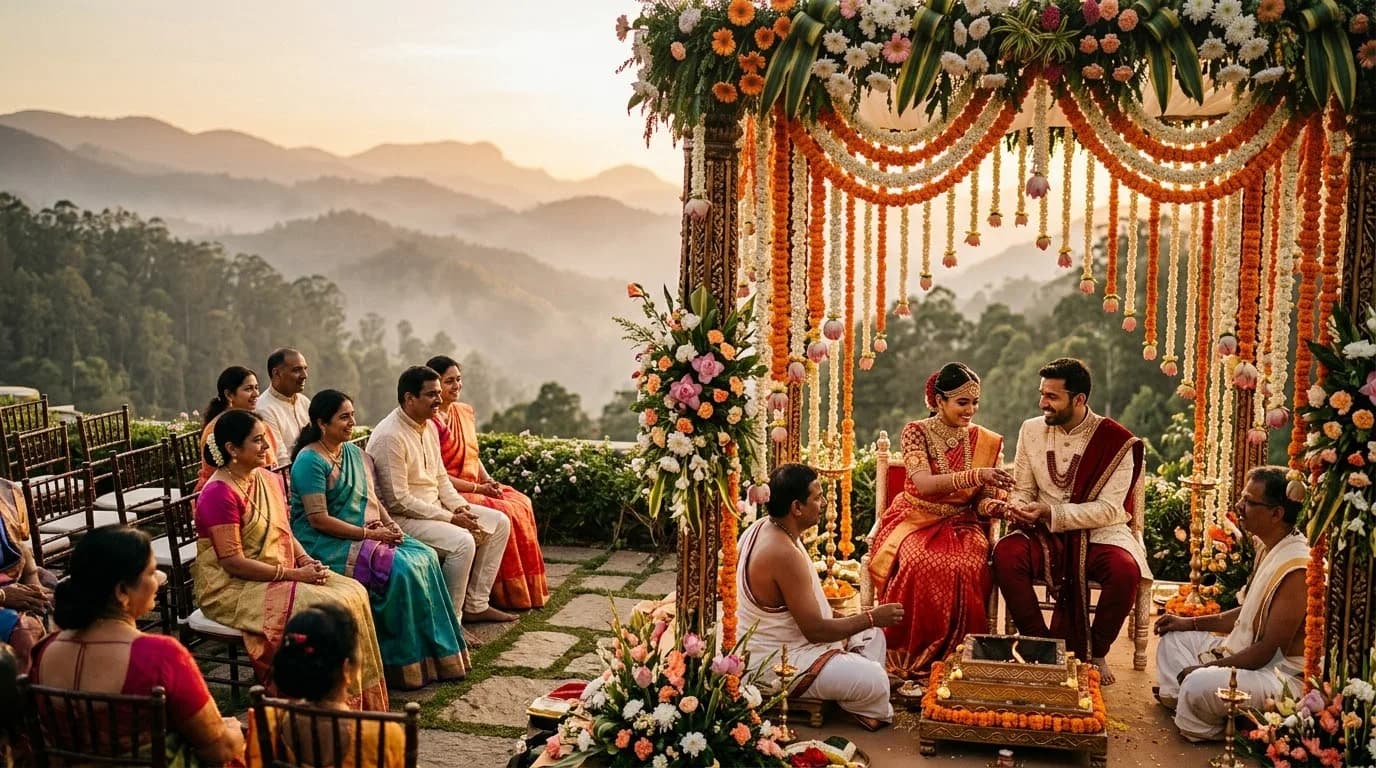
Destination Wedding in South India: Complete 2026 Planning Guide
Still planning?
Get quotes from India's best vendors
Tell us what you're planning and we'll match you with verified photographers, venues, decorators, and more.
Get free quotes