
Lingayat Wedding Rituals: Complete Veerashaiva Guide
Everything about Lingayat (Veerashaiva) wedding rituals — from the Ishtalinga exchange to the simplified Vedic ceremony rooted in Basavanna's egalitarian.

On this page
Lingayat weddings last just 90 minutes to 2 hours — shorter than most Hindu ceremonies — because Basavanna's 12th-century philosophy explicitly valued simplicity over elaborate ritual. The ceremony centres on the Ishtalinga (a personal Shiva linga worn from birth), is officiated by a Jangama priest rather than a Brahmin purohit, and frames bride and groom as equals — no traditional Kanyadaan.
Quick Answer
Quick answer: Lingayat weddings last just 90 minutes to 2 hours — shorter than most Hindu ceremonies — because Basavanna's 12th-century philosophy explicitly valued simplicity over elaborate ritual. The ceremony centres on the Ishtalinga (a personal Shiva linga worn from birth), is officiated by a Jangama priest rather than a Brahmin purohit, and frames bride and groom as equals — no traditional Kanyadaan.
Note
Pricing methodology: Cost ranges in this guide are based on vendor pricing data from the itsmy.wedding marketplace and published industry reports, collected in Q4 2025 – Q1 2026.
Lingayat (Veerashaiva) weddings are rooted in the 12th-century social reform movement led by Basavanna, making them among the most philosophically distinctive Hindu wedding traditions in India. The ceremony is shorter than most — typically 90 minutes to two hours — centres on the Ishtalinga (a personal Shiva linga worn by every Lingayat), and is officiated by a Jangama (a Lingayat priest) rather than a Brahmin purohit. With Lingayats forming one of the largest communities in Karnataka, one of India's most economically significant states, understanding these rituals is essential for anyone planning a wedding in Bangalore (officially Bengaluru) or the broader state. The University of Mysore's Department of Studies in History has extensively documented Basavanna's social reform movement, and the philosophical foundations laid in those scholarly works are visible in every element of the Lingayat wedding ceremony.
The Lingayat approach to marriage reflects Basavanna's core conviction: that devotion to God is personal, that ritual should serve meaning rather than spectacle, and that bride and groom enter the union as equals. This guide covers the complete ceremony — from the philosophical foundations to the step-by-step ritual sequence, attire, regional variations between North Karnataka and Bangalore, and practical planning advice. For the broader Karnataka wedding context, see our Bangalore wedding planning guide.
How Does Basavanna's Philosophy Shape the Wedding?
Basavanna (1134–1196 CE) founded the Lingayat movement as a direct challenge to caste hierarchy and elaborate ritualism, and his 12th-century egalitarian vision shapes every element of a Lingayat wedding today. To understand a Lingayat wedding, you must first understand the man whose philosophy defines it. Basavanna was a social reformer, poet, and statesman from Basavakalyan in present-day Karnataka. His collected vachana literature — devotional prose poems in Kannada — is a literary and philosophical treasure that is studied at universities worldwide and forms the spiritual backbone of the Lingayat ceremony.
Basavanna's core principles were revolutionary for their time and remain distinctive today:
- Rejection of caste hierarchy. Basavanna declared that devotion to Shiva was the only qualification that mattered — not birth, not caste, not occupation. His followers included people from every stratum of society.
- Personal devotion over priestly mediation. Every Lingayat receives an Ishtalinga at birth — a small, smooth Shiva linga encased in a silver container, worn around the neck in a cloth pouch. This is their personal connection to God, requiring no priestly intermediary.
- Simplicity over spectacle. Basavanna's vachanas (prose poems) repeatedly emphasise substance over form. His approach to worship — and by extension, to life ceremonies like marriage — favoured directness, sincerity, and brevity.
These principles directly shape the Lingayat wedding: it is shorter than most Hindu ceremonies, it is officiated by a Jangama rather than a Brahmin, and its central ritual involves the couple's Ishtalingas rather than elaborate fire ceremonies. The bride is not "given away" in the traditional Kanyadaan sense — she enters as an equal partner.
Note
What Are the Pre-Wedding Ceremonies?
Lingayat pre-wedding ceremonies are deliberately simpler than those of many other Hindu communities, reflecting Basavanna's philosophy that substance matters more than spectacle. However, they carry their own warmth and significance.
Nischitartha (Engagement)
The Lingayat engagement is distinguished by the invocation of Lord Shiva and the presence of the Ishtalinga during prayers from the very first formal event. The Nischitartha follows a similar structure to the broader Kannada engagement — both families gather, the priest (in this case, a Jangama) identifies auspicious dates, and the match is formally agreed upon. The groom's family presents the bride with a silk saree, and rings may be exchanged. What distinguishes a Lingayat Nischitartha is the invocation of Lord Shiva and the presence of the Ishtalinga during prayers — Basavanna's spiritual framework is present from the very first formal event.
How Is the Ishtalinga Prepared for the Wedding?
The Ishtalinga — given at birth and worn around the neck for life — is the most sacred personal possession of every Lingayat, and preparing it for the wedding is an act of spiritual readiness. Before the wedding, both the bride's and groom's Ishtalingas are cleaned, consecrated, and prepared for the ceremony. The Ishtalinga is received during the Ishtalinga Deeksha ceremony in infancy and accompanies the individual through every significant life event. Professional pooja kits for Ishtalinga preparation, available from religious supply shops in Jayanagar and Basavanagudi, cost ₹3,000 – ₹8,000 and include the silver casing polish, sandalwood paste, sacred thread, and vibhuti required for the consecration.
Devara Puje
The Devara Puje centres on the Ishtalinga rather than an idol or image — a direct expression of Basavanna's teaching that the divine is personal. A Devara Puje (deity worship) is conducted at both homes, invoking Shiva's blessings for the union. Unlike in Brahminical traditions, this puje is led by a Jangama or by the family's own elder, and the Ishtalinga is the focal point of worship rather than an idol or image.
Community Elder Blessings
In North Karnataka especially, an invitation from the head of the family's affiliated matha carries significant spiritual authority and social weight. In many Lingayat families, respected community elders (mathapathis or heads of Lingayat mathas) are invited to bless the couple before the wedding. Having attended several such blessings at mathas in Basavanagudi and Chamarajpet, I find that the mathapathi's words often blend Basavanna's vachanas with personal counsel for the couple — a deeply moving fusion of philosophy and practical wisdom. These blessings carry significant social weight and are a mark of community endorsement.
How Does the Wedding Ceremony Unfold Step by Step?
The Lingayat wedding ceremony balances Vedic elements — fire ritual, sacred steps — with distinctly Veerashaiva practices like Ishtalinga worship and Jangama officiation, creating a ceremony that is recognisably Hindu but unmistakably Lingayat.
What Is the Jangama's Role?
The Jangama is not a member of a separate priestly caste — in Basavanna's framework, they are a community member devoted to spiritual practice. The Jangama is the Lingayat equivalent of a priest, but the distinction is important. In Basavanna's framework, the Jangama is not a member of a separate priestly caste — they are a community member who has devoted themselves to spiritual practice. The Jangama officiates the ceremony, chants the mantras, and guides the couple through each ritual. Many Jangamas also offer explanations in Kannada alongside the Sanskrit chants, making the ceremony more accessible to the couple and guests.
What Happens During the Ishtalinga Worship?
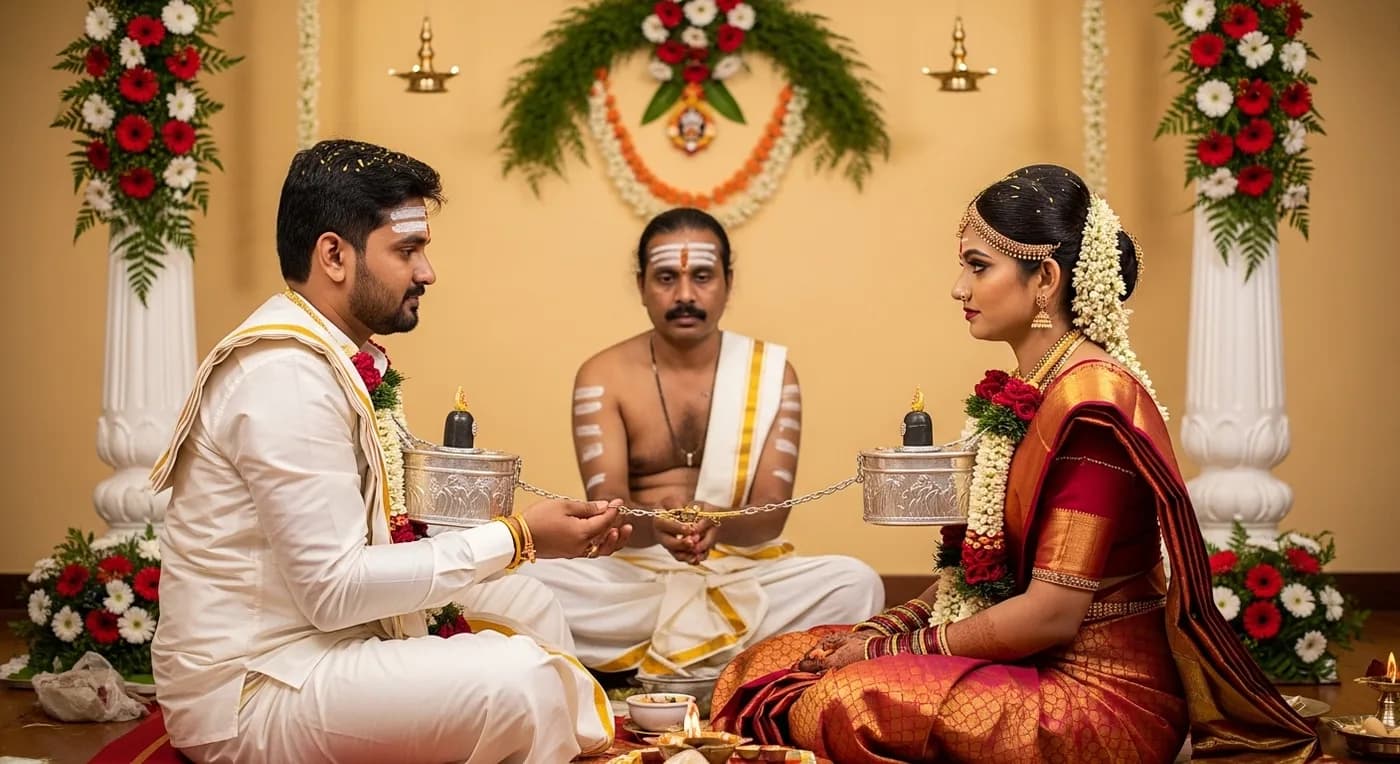
The Ishtalinga puje is the ceremony's most distinctive moment — two individuals, each with their own personal connection to God, merge their spiritual lives. The ceremony's most powerful ritual is the Ishtalinga puje. Both bride and groom take out their Ishtalingas, place them on a small platform, and worship them together. This is a profoundly symbolic act — two individuals, each with their own personal connection to God, are about to merge their spiritual lives. The Jangama guides them through the worship with specific mantras dedicated to Lord Shiva.
This ritual has no equivalent in any other Hindu wedding tradition. It makes visible Basavanna's teaching that spirituality is personal, that each person carries the divine within them, and that marriage is the union of two complete spiritual beings — not the completion of one by the other.
Tip
Mangalsutra Tying
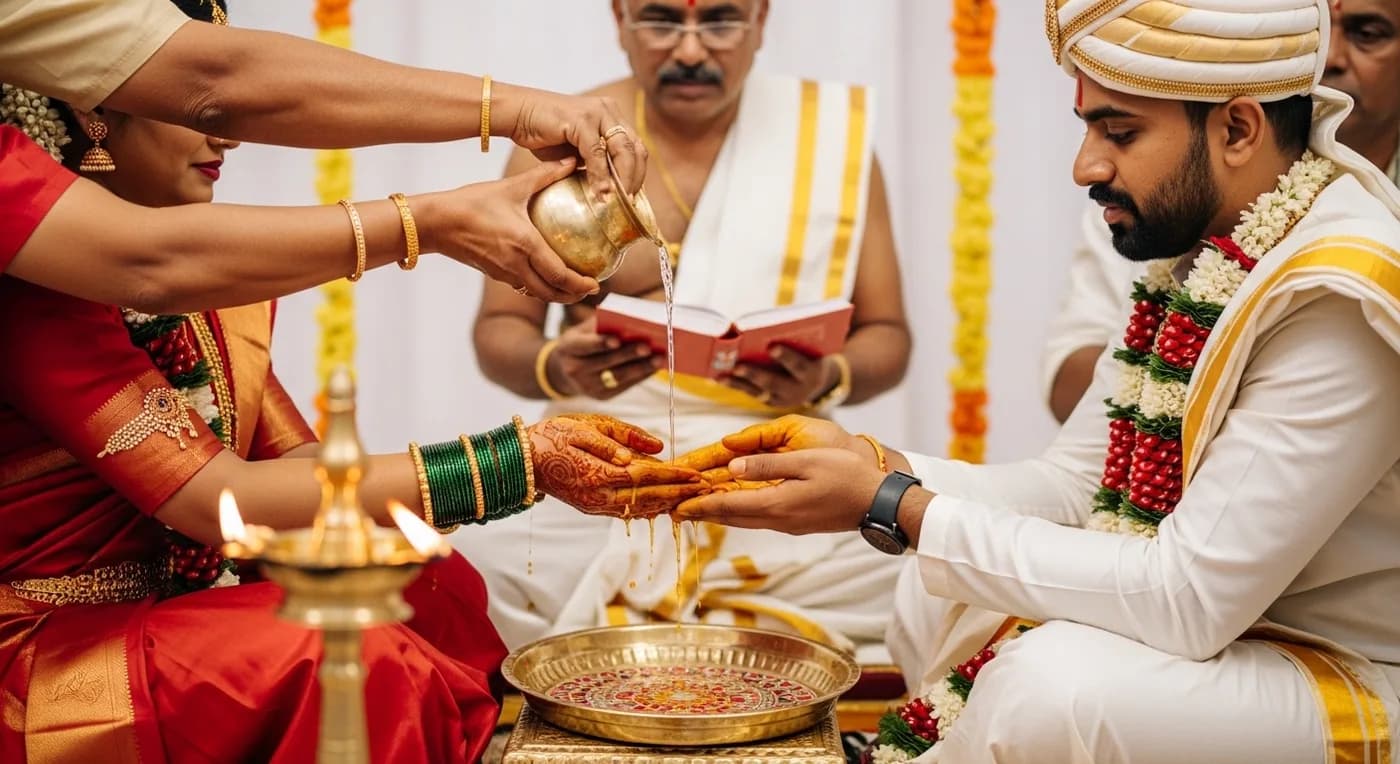
The Lingayat mangalsutra often incorporates a small representation of the Shiva linga in its pendant design, connecting the marital symbol directly to the community's spiritual identity. After the Ishtalinga worship, the groom ties the mangalsutra around the bride's neck. In Lingayat tradition, the mangalsutra often incorporates a small representation of the Shiva linga in its pendant design. The Jangama chants blessings as the three knots are tied — for commitment to each other, to their families, and to their shared spiritual path.
How Is the Saptapadi Different in a Lingayat Wedding?
The Lingayat Saptapadi carries Basavanna's egalitarian imprint — some progressive Jangamas explicitly modify the traditional vows to reflect gender equality. The Saptapadi — seven steps around the sacred fire — is the ritual that formalises the marriage. While this element is shared with many Hindu traditions, the Lingayat Saptapadi carries Basavanna's egalitarian imprint. The seven vows are recited with an emphasis on partnership and mutual respect. Some progressive Jangamas explicitly modify the traditional vows to reflect gender equality — a direct application of Basavanna's philosophy to the ceremony.
The couple circles the agni (sacred fire) together, taking each step deliberately. After the seventh step, they are married — bound by their vows before the fire, the Ishtalinga, the Jangama, and the community.
Community Blessings
The distribution of vibhuti (sacred ash) to all present marks the couple as a new unit within the Shiva-devoted community. The ceremony concludes with blessings from assembled elders and guests. In many Lingayat weddings, vibhuti (sacred ash) is distributed to all present — a signature element of Shaiva worship. The couple receives vibhuti on their foreheads from the Jangama, marking them as a new unit within the Shiva-devoted community.
What Does the Wedding Attire Look Like?
The Bride
Traditionally white and green — colours representing purity and new beginnings — Lingayat bridal attire in Bangalore now embraces the full spectrum of auspicious colours in Ilkal and Dharwad-weave silk sarees. The Lingayat bride's attire has evolved over the decades. Today, many Lingayat brides in Bangalore opt for any auspicious colour — red, maroon, green, or gold — in silk sarees. The Ilkal saree weavers of North Karnataka produce the distinctive kasuti-embroidered silks that many Lingayat families specifically seek for bridal wear.
The Ishtalinga necklace — worn around the neck in its cloth pouch — is the most important element of a Lingayat bride's adornment. It is present before, during, and after the wedding. Beyond the Ishtalinga, the bride wears vibhuti (sacred ash markings) on her forehead and traditional gold jewellery.
Green glass bangles, jasmine flowers in the hair, and kumkum (vermillion) complete the bridal look — elements shared with the broader Kannada bridal tradition.
The Groom
The vibhuti — three horizontal lines of sacred ash on the forehead — is the visual signature of the Lingayat community, and both bride and groom wear it throughout the wedding as a matter of cultural pride. The groom wears a dhoti-kurta in white or cream silk, with a silk shawl or angavastram draped over one shoulder. Like the bride, he wears his Ishtalinga and vibhuti markings. A turban or peta is common, particularly in North Karnataka Lingayat weddings. From the receptions I have attended in Jayanagar and Basavanagudi, I notice that modern Bangalore grooms increasingly opt for a designer kurta-pyjama or even a sherwani for the reception while wearing traditional attire for the ceremony — a practical dual-look approach that honours both the community and personal style.
How Do North Karnataka and Bangalore Celebrations Differ?
Lingayat weddings show striking regional variation — a North Karnataka celebration in Dharwad or Hubli looks and feels markedly different from a streamlined Bangalore event. This reflects the community's geographic spread across the state.
What Defines the North Karnataka Tradition?
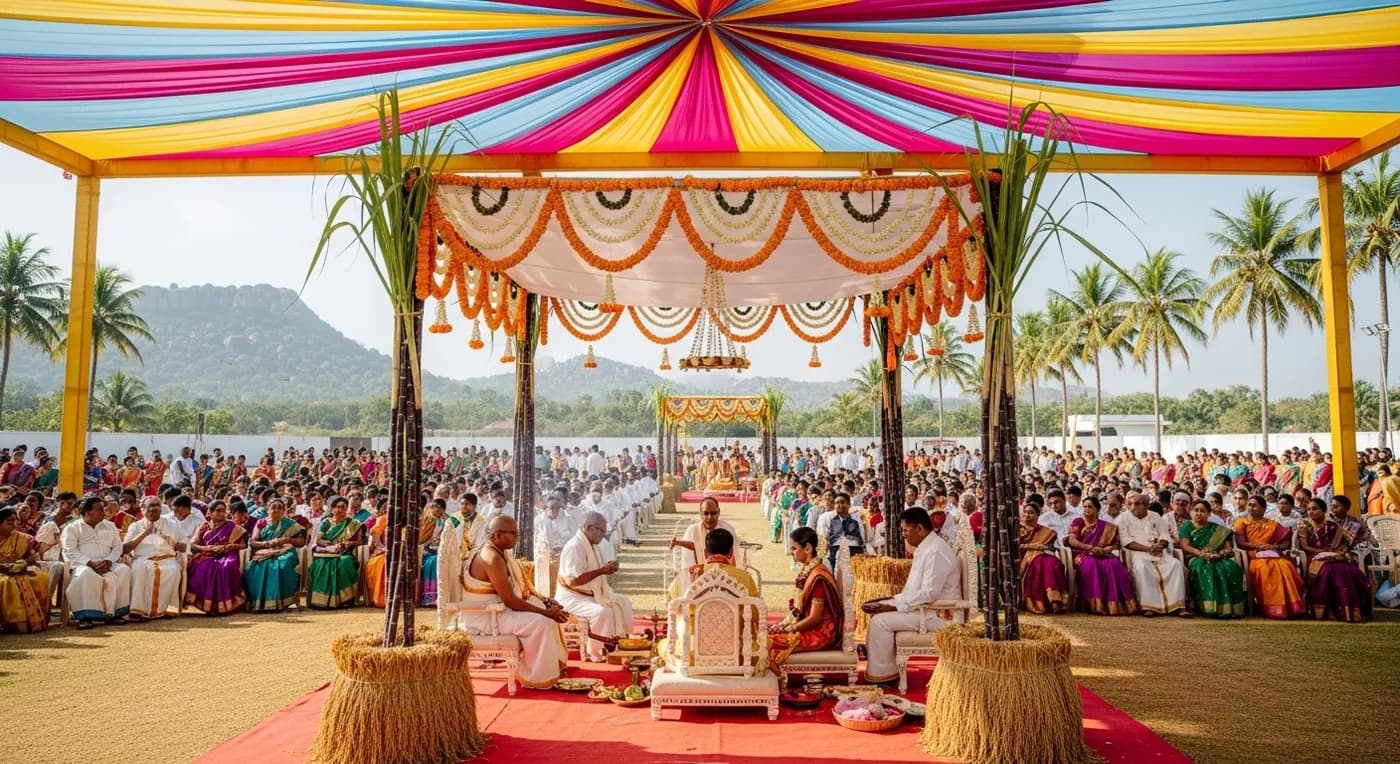
North Karnataka Lingayat weddings are larger, more traditional, and closely tied to the local matha — guest counts of 1,000 to 3,000 are not unusual. In Dharwad, Hubli, Belgaum (Belagavi), Gulbarga (Kalaburagi), and Bijapur (Vijayapura), Lingayat weddings tend to be grand community events. The head of the family's affiliated matha may be invited to bless the couple — institutions like the Siddaganga Matha in Tumkur carry enormous spiritual authority among Lingayats and their endorsement lends significant weight to the occasion.
The food reflects North Karnataka's distinctive culinary identity — Jolada Rotti (sorghum flatbread) is the staple, served with ennegai (stuffed brinjal), shenga chutney (peanut chutney), and hurali saaru (horsegram soup). The feast is often a sit-down pangat (row) meal rather than a buffet, with guests seated on the floor in long rows and served by family members. Lingayat caterers in Bangalore who specialise in authentic North Karnataka meals charge ₹600 – ₹1,200 per plate for a traditional spread, while those offering a hybrid menu with both North Karnataka staples and multi-cuisine buffet items typically charge ₹1,000 – ₹1,800 per plate.
In an industry where 4.6 million weddings happen during peak season, the scale of North Karnataka Lingayat weddings is often substantial — 1,000 to 3,000 guests is not unusual, and the celebration may span two days with separate events for the ceremony, reception, and family meals.
How Has Bangalore Adapted the Tradition?
Bangalore Lingayat weddings are more compact — 300 to 800 guests, single-day events — but the Ishtalinga worship and Jangama officiation remain faithfully preserved. Lingayat weddings in Bangalore tend to be streamlined compared to their North Karnataka counterparts. Venue managers I speak with in Whitefield and Koramangala consistently note that Lingayat ceremony bookings are among the most efficient they handle, with ceremonies rarely running over the allotted two-hour slot. The food shifts to a multi-cuisine buffet that may include North Karnataka staples alongside South Indian, North Indian, and Chinese options.
The ceremony itself remains faithful to Lingayat tradition — the Jangama, the Ishtalinga worship, the Saptapadi — but timing is compressed. Bangalore Lingayat weddings are also more likely to incorporate contemporary elements: professional decor, choreographed reception entertainment, pre-wedding shoots, and cocktail events.
How Should You Plan Your Lingayat Wedding?
How Do You Find a Jangama?
The Jangama is your single most important booking — the right one makes the ceremony accessible, meaningful, and beautifully paced. This is where planning begins. For Bangalore weddings, Lingayat mathas in the city (such as those in Basavanagudi and Chamarajpet) can recommend experienced Jangamas who are adept at conducting ceremonies in both traditional and streamlined formats. If your family is affiliated with a specific matha, consult them first — they will often have a Jangama they regularly work with for weddings.
What Venue Options Work Best?
Lingayat community halls and trust-run kalyana mantapas offer preferential rates to community members and are purpose-built for traditional ceremonies with fire ritual space. These are the natural starting point for venue selection. In Bangalore, the Veerashaiva Lingayat community maintains several well-equipped halls.
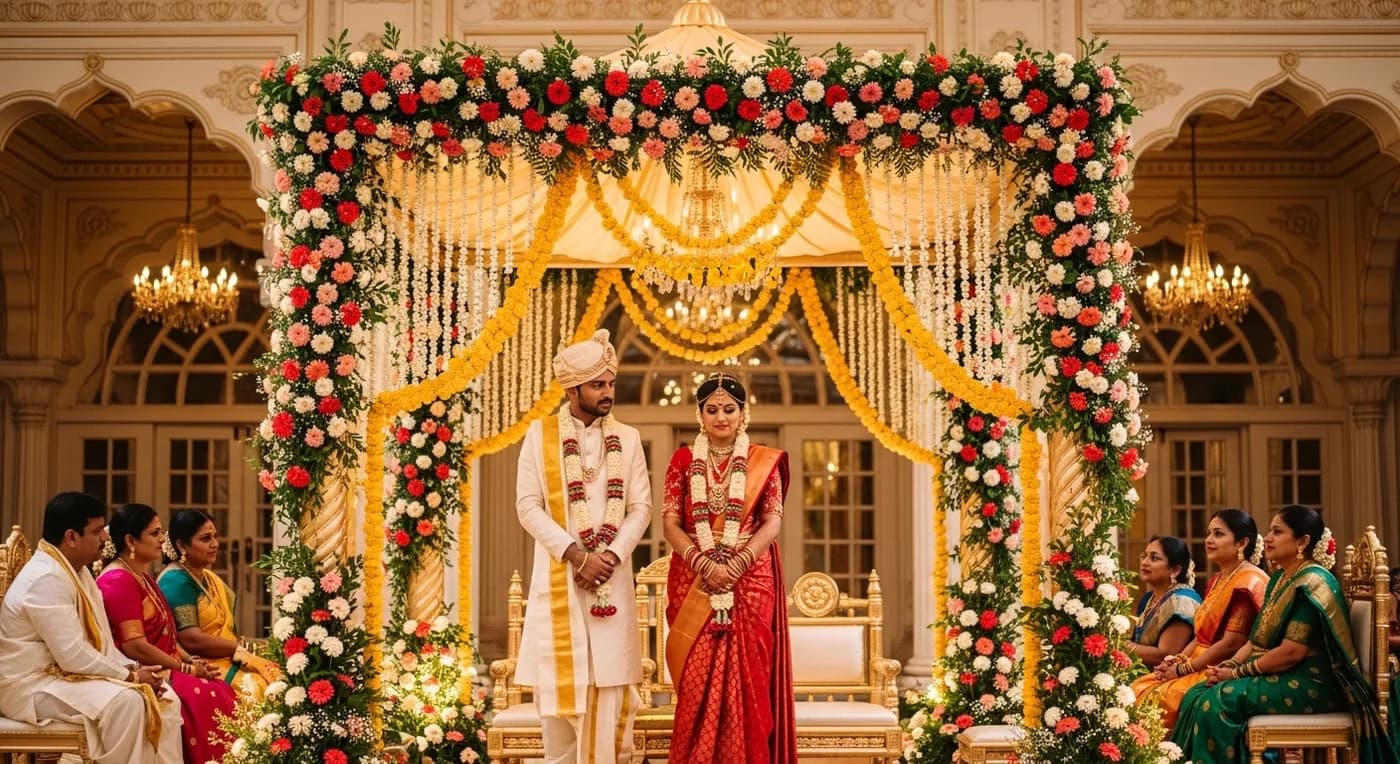
For couples seeking premium venues, farmhouses and hotel ballrooms work equally well — a Lingayat ceremony requires only a mandap area, space for the fire ritual, and seating for guests. The ritual itself is portable and adapts well to any setting.
₹3,00,000 – ₹20,00,000This range covers a Bangalore Lingayat wedding with 300-600 guests, from community halls to premium farmhouse or hotel venues.
Looking for Venues in Bangalore?
Tell us what you need and get quotes from verified venues
How Can Couples Balance Tradition and Modernity?
The Lingayat tradition's philosophical foundation — simplicity, equality, personal devotion — naturally accommodates modern sensibilities, making it one of the easiest Hindu traditions to personalise. This is one of its great strengths. Couples who want a shorter ceremony are not fighting the tradition; they are expressing its core value of substance over spectacle. Couples who want the bride to walk beside the groom rather than behind him are not breaking protocol; they are fulfilling Basavanna's vision of partnership.
Work with your Jangama to identify which elements are essential and which can be adapted. Most Jangamas are open to explaining rituals in Kannada or English alongside the Sanskrit chants, incorporating personal vows, or adjusting the ceremony's pacing for photography. The tradition is robust enough to absorb these adaptations without losing its identity.
What Is the Typical Budget?
Lingayat weddings in Bangalore tend to be competitive against the national average wedding cost of ₹29.6 lakh, thanks to the ceremony's inherent simplicity. Additionally, couples should note that marriage registration in Karnataka is handled through the Kavivaha Mitra portal, and completing registration promptly after the ceremony is advisable. A mid-range Lingayat wedding in Bangalore — ceremony at a community hall or farmhouse, professional photography, traditional and modern catering, standard decor — runs between:
₹5,00,000 – ₹15,00,000Premium celebrations at five-star hotels or palace venues with elaborate decor and entertainment can reach 25 to 40 lakhs.
On itsmy.wedding, you can discover vendors in Bangalore who are experienced with Lingayat wedding customs — photographers who understand the Ishtalinga ceremony's significance, decorators who know how to create a mandap that honours the tradition's simplicity, and caterers who can serve an authentic North Karnataka spread alongside a contemporary buffet.
Looking for Photographers in Bangalore?
Tell us what you need and get quotes from verified photographers
Common Questions About Lingayat Wedding Rituals
Can a non-Lingayat partner participate in the Ishtalinga worship during the ceremony?
In inter-community marriages, the non-Lingayat partner does not have their own Ishtalinga. Most Jangamas handle this gracefully — the ceremony is adapted so that the Lingayat partner performs the Ishtalinga worship individually while the couple jointly participates in the Saptapadi and mangalsutra rituals. Some families arrange for the non-Lingayat partner to receive an Ishtalinga Deeksha before the wedding if they are willing, though this is a personal choice and not a requirement.
How early should we book a Jangama for a Bangalore wedding?
Three to four months before the wedding date is ideal. During peak season (November through February), experienced Jangamas who are comfortable conducting ceremonies in both Kannada and English are particularly sought after. If your family is affiliated with a specific matha, reach out to them first — mathas typically maintain a roster of Jangamas and can match you with one suited to your ceremony style and language preferences.
Are Lingayat weddings strictly vegetarian?
Traditionally, Lingayat families follow a vegetarian diet rooted in Basavanna's teachings on compassion. Most Lingayat wedding feasts in North Karnataka are entirely vegetarian. However, in Bangalore, where guest lists often include friends and colleagues from diverse backgrounds, many families offer a multi-cuisine buffet that includes non-vegetarian options alongside the traditional vegetarian spread. The ceremony itself and the traditional feast items remain vegetarian.
What is the role of the matha in modern Lingayat wedding planning?
The matha serves as a spiritual and logistical anchor. Beyond recommending Jangamas, mathas often provide community halls at subsidised rates, offer guidance on auspicious dates, and lend ceremonial items like large Shiva linga installations for mandap decoration. For families with strong matha affiliations, a blessing from the mathapathi before or during the wedding carries significant social and spiritual weight. In Bangalore, mathas in Basavanagudi and Chamarajpet are the most commonly consulted.
How do Lingayat couples incorporate Basavanna's vachanas into the celebration?
Beyond the Jangama's ceremonial chanting, many couples weave vachana poetry into their wedding in creative ways — printing selected vachanas in the wedding invitation or program booklet, displaying calligraphic vachana excerpts as part of the mandap decor, or having a family elder read a favourite vachana during the blessing ceremony. Some couples also include a brief vachana reading during the reception, framing it as a philosophical reflection on partnership that resonates with guests from all backgrounds.
A Lingayat wedding, at its best, is a living expression of an 800-year-old philosophy — one that says marriage is a union of equals, that devotion matters more than display, and that the divine is present not in elaborate ritual but in the sincerity of two people committing their lives to each other. Basavanna would recognise the ceremony today and, one hopes, approve. For more on Karnataka's diverse wedding traditions, explore our guide to Kannada wedding traditions and our Vokkaliga wedding traditions article.
Tip
Start planning your wedding — generate a personalised checklist with our AI Wedding Checklist, estimate your budget with the Cost Calculator, or create a beautiful digital invitation.
Topics
lingayat wedding ritualsveerashaiva weddinglingayat marriage customsbasavanna weddingkarnataka lingayat weddingbengaluru weddingsExplore more
Frequently Asked Questions
1What is unique about Lingayat wedding rituals?
2What is the Ishtalinga ceremony in Lingayat weddings?
3Do Lingayat weddings have caste distinctions?
4How long is a Lingayat wedding ceremony?
Continue reading
Related Articles
Bangalore Wedding Planning: ₹5-60L Costs & Venues (2026)
Kannada Wedding Traditions: Rituals, Meaning & Modern Twists
Vokkaliga Wedding Traditions: Karnataka's Gowda Community Guide
Best Season for South India Destination Weddings: Month-by-Month Western Ghats Guide
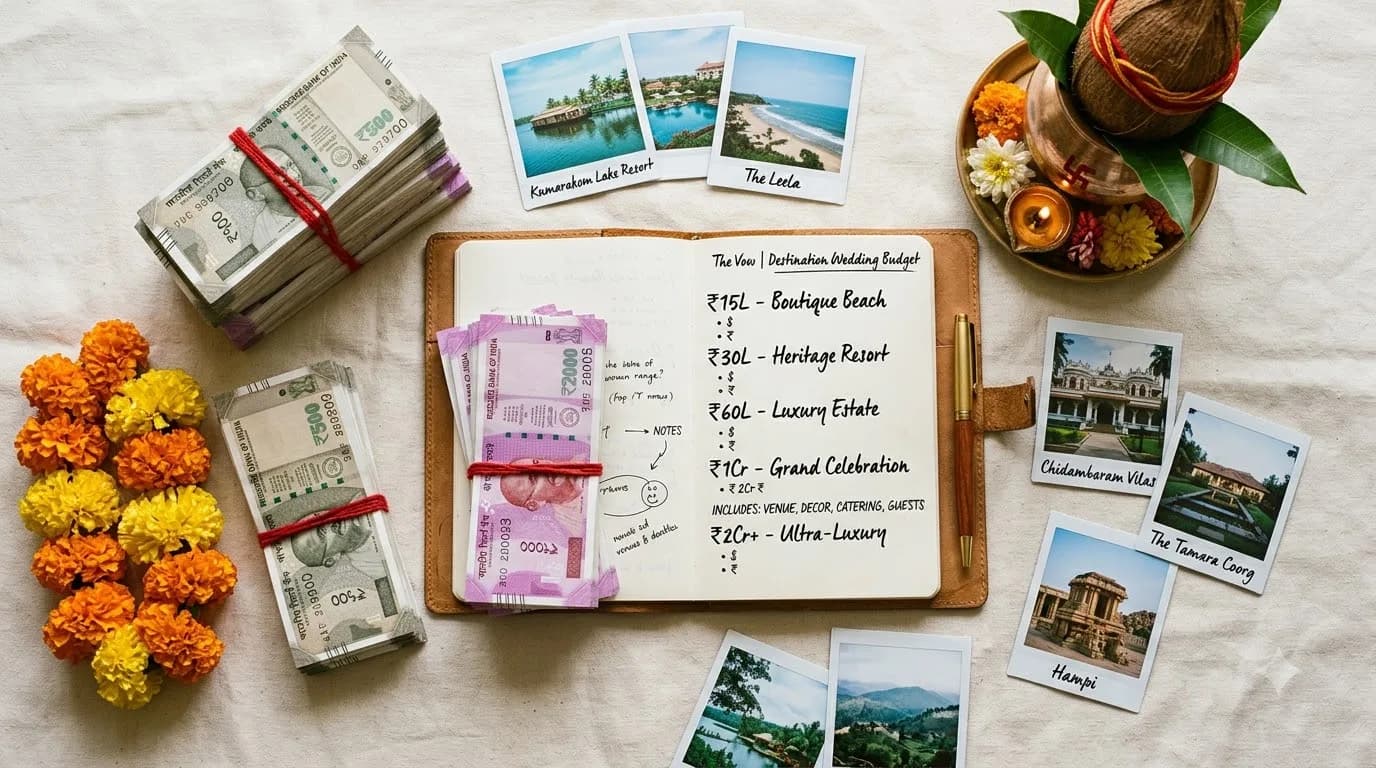
Destination Wedding Cost in South India 2026: 5-Tier Budget Guide
Destination Wedding in South India: Complete 2026 Planning Guide
Still planning?
Get quotes from India's best vendors
Tell us what you're planning and we'll match you with verified photographers, venues, decorators, and more.
Get free quotes