
Kannada Wedding Traditions: Rituals, Meaning & Modern Twists
A complete guide to Kannada Hindu wedding rituals — from Nischitartha to Dhare and Saptapadi. The core ceremony spans 2–3 hours across 2 days in 2026.

On this page
The Dhare ceremony — where sacred water is poured over the couple's joined hands — is the moment that legally and spiritually solemnises a Kannada Hindu wedding. The core ceremony spans 2–3 hours; with pre-wedding rituals (Naandi, Devara Puje) and post-wedding Grihapravesham, celebrations typically unfold over 2 days. The bride wears Ilkal or Mysore silk in red, green, or gold.
Quick Answer
Quick answer: The Dhare ceremony — where sacred water is poured over the couple's joined hands — is the moment that legally and spiritually solemnises a Kannada Hindu wedding. The core ceremony spans 2–3 hours; with pre-wedding rituals (Naandi, Devara Puje) and post-wedding Grihapravesham, celebrations typically unfold over 2 days. The bride wears Ilkal or Mysore silk in red, green, or gold.
Note
Pricing methodology: Cost ranges in this guide are based on vendor pricing data from the itsmy.wedding marketplace and published industry reports, collected in Q4 2025 – Q1 2026.
A Kannada Hindu wedding is Karnataka's most widely practised marriage tradition, combining Vedic rituals with the cultural identity of the Deccan Plateau. Having attended Kannada weddings across Karnataka — from the grand kalyana mantapas of Basavanagudi to intimate temple ceremonies near Dharwad — I can say that no two celebrations are identical, yet every one centres on the same sacred moment: the Dhare. Karnataka has a rich cultural heritage recognised by UNESCO through sites like Hampi and Pattadakal, and the state's wedding traditions draw from that same deep well of Deccan artistry. The ceremony centres on the Dhare — a sacred water-pouring ritual that formally solemnises the union — and typically unfolds over two days, with the core wedding day lasting two to three hours. Bangalore's position as an IT hub has attracted couples from across the country, making the city one of India's fastest-growing urban centres and one of the nation's most vibrant wedding markets. Whether your family hails from Mysore, Dharwad, Mangalore, or Bangalore (officially Bengaluru), this guide walks you through every ritual, its meaning, and how modern couples are thoughtfully adapting these ancient customs for 2026 celebrations.
Kannada weddings share a broad structure with other South Indian Hindu ceremonies — engagement, pre-wedding prayers, the main ceremony with fire rituals and seven steps — but carry distinctive elements that set them apart. The Kashi Yatra (the groom's theatrical pretence of leaving for a life of asceticism), the pouring of Dhare (sacred water over joined hands), and the unmistakable visual language of Ilkal silk, Mysore Peta turbans, and jasmine-laden mandaps make a Kannada wedding immediately recognisable. The Karnataka Folklore University in Shiggaon has documented many of these ritual traditions as part of the state's intangible cultural heritage. For a broader look at how this tradition fits into the Bangalore wedding landscape, see our Bangalore wedding planning guide.
What Happens During the Pre-Wedding Ceremonies?
The days and weeks leading up to a Kannada wedding are rich with rituals that prepare the couple, the families, and the home for the sacred union. These events are not mere formalities — each one carries theological and social significance that the Encyclopaedia of Indian Traditions at the Indira Gandhi National Centre for the Arts has extensively catalogued.
Nischitartha (Engagement and Date-Setting)
The Nischitartha is the formal engagement ceremony and, critically, the occasion on which the wedding date — the muhurtham — is fixed. Both families gather at a temple or the bride's home, where a priest consults the panchangam (almanac) to identify auspicious dates and times. The groom's family presents the bride with a silk saree, fruits, and sweets, and the couple exchanges rings in the presence of elders.
Note
What makes the Kannada engagement distinctive is the emphasis on community witness. It is not a private affair between the couple — both extended families attend, neighbours are invited, and the event functions as a public declaration of intent. For Vokkaliga and Gowda families, the Nischitartha carries additional community-specific customs that set it apart from other Kannada sub-traditions.
Naandi
The Naandi ceremony is a prayer offered to ancestors, seeking their blessings for the wedding. Held one or two days before the wedding, this ritual is performed separately at both the bride's and groom's homes. A priest leads the family in Vedic chants invoking deceased elders, and offerings of food and water are made. The Naandi establishes a spiritual connection between the living celebration and the family lineage.
How Does Devara Puje Sanctify the Ceremony?
On the morning of the wedding day — or the evening before — the family's kuladaiva (family deity) is worshipped in a formal puje (prayer) ceremony. This ritual sanctifies the home and the wedding preparations, and family members seek divine blessings for the couple's married life. In homes with a dedicated prayer room, the Devara Puje can be an intimate, emotionally resonant event with just the immediate family gathered. For example, in many homes I have visited in Malleshwaram and Jayanagar, families arrange elaborate floral decorations around the deity that rival the mandap itself.
What Is the Significance of the Turmeric Ceremony (Arisina)?
The Arisina (turmeric application) ceremony takes place a day or two before the wedding and is one of the most joyful pre-wedding events. Turmeric paste, mixed with oil and sometimes sandalwood, is applied to the bride and groom at their respective homes by married women from the family. Beyond its cosmetic purpose — turmeric is a natural skin brightener — this ritual is believed to ward off evil spirits and purify the couple for the sacred union. However, the emotional significance runs deeper: it is filled with singing, laughter, and affectionate teasing that bonds the families together before the formal ceremony begins.
How Does the Wedding Day Unfold, Ritual by Ritual?
The main ceremony is a carefully sequenced progression from the groom's arrival to the final circumambulation of the sacred fire. Every step has a purpose, and understanding that purpose transforms the experience from a series of unfamiliar actions into a deeply meaningful narrative.
Vara Puje (Welcoming the Groom)
The wedding day begins with the Vara Puje, a formal reception of the groom at the entrance of the wedding hall or mandap. The bride's parents welcome him with aarti (a plate with a lit lamp waved in front of him), wash his feet, and offer him milk and honey. This ritual acknowledges the groom as Vishnu-swaroopa — an embodiment of Lord Vishnu — and establishes him as an honoured guest who is being received into the bride's family.
The groom arrives in procession, typically accompanied by the nadaswaram (a traditional double-reed instrument) and thavil (drum), though many modern Bangalore weddings have replaced these with brass bands or even jazz ensembles.
Why Is the Kashi Yatra So Beloved?
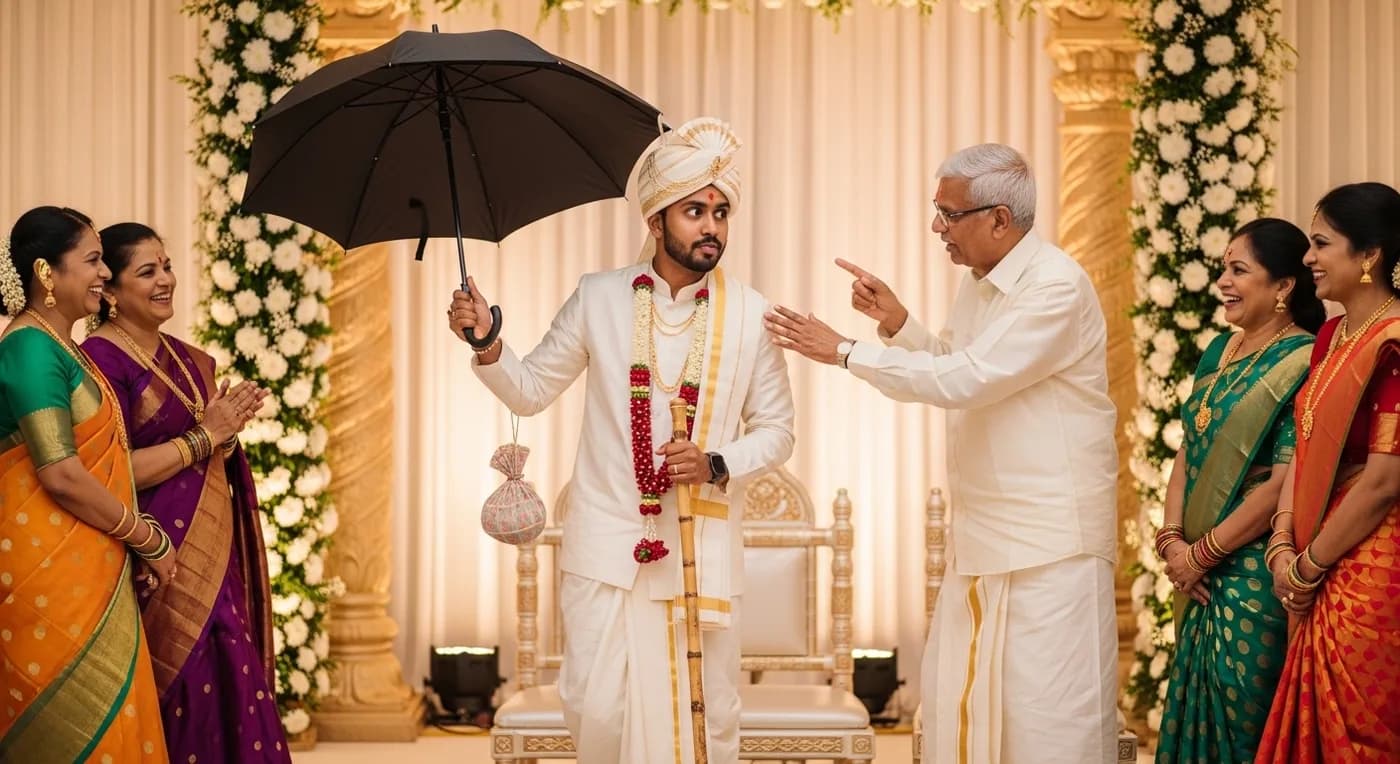
This is one of the most theatrical and endearing moments of a Kannada wedding. After the Vara Puje, the groom suddenly announces — with exaggerated seriousness — that he has decided to renounce worldly life and leave on a pilgrimage to Kashi (Varanasi) to pursue spiritual study. He picks up an umbrella, a walking stick, a fan, and a small bundle of provisions, and begins walking away from the mandap.
The bride's father intercepts him, persuading him that married life is equally noble and spiritually fulfilling. He offers his daughter's hand in marriage and promises to support the groom's grihastha (householder) path. The groom, suitably convinced, returns to the mandap. While this drama draws laughter from guests, it carries a philosophical message about the Hindu ashrama (life stage) system — that the householder's life is a valid and sacred path to fulfilment. The Dharmasthala Manjunatheshwara Temple Trust, one of Karnataka's most revered institutions, has noted the Kashi Yatra as a tradition that reinforces the grihastha ashrama's spiritual value.
Kanyadaan
The Kanyadaan — the giving of the daughter — is one of the most emotionally charged moments. The bride's father places her right hand in the groom's, symbolically entrusting his daughter to his care. Vedic mantras are chanted, and the father expresses his wish that the groom treat his daughter with love, respect, and partnership.
Tip
What Makes the Dhare the Defining Moment?
The Dhare is the defining ritual of a Kannada wedding — the moment the marriage becomes official. It is to a Kannada ceremony what the mangalya dharanam is to a Tamil wedding or the sindoor application is in North Indian traditions.
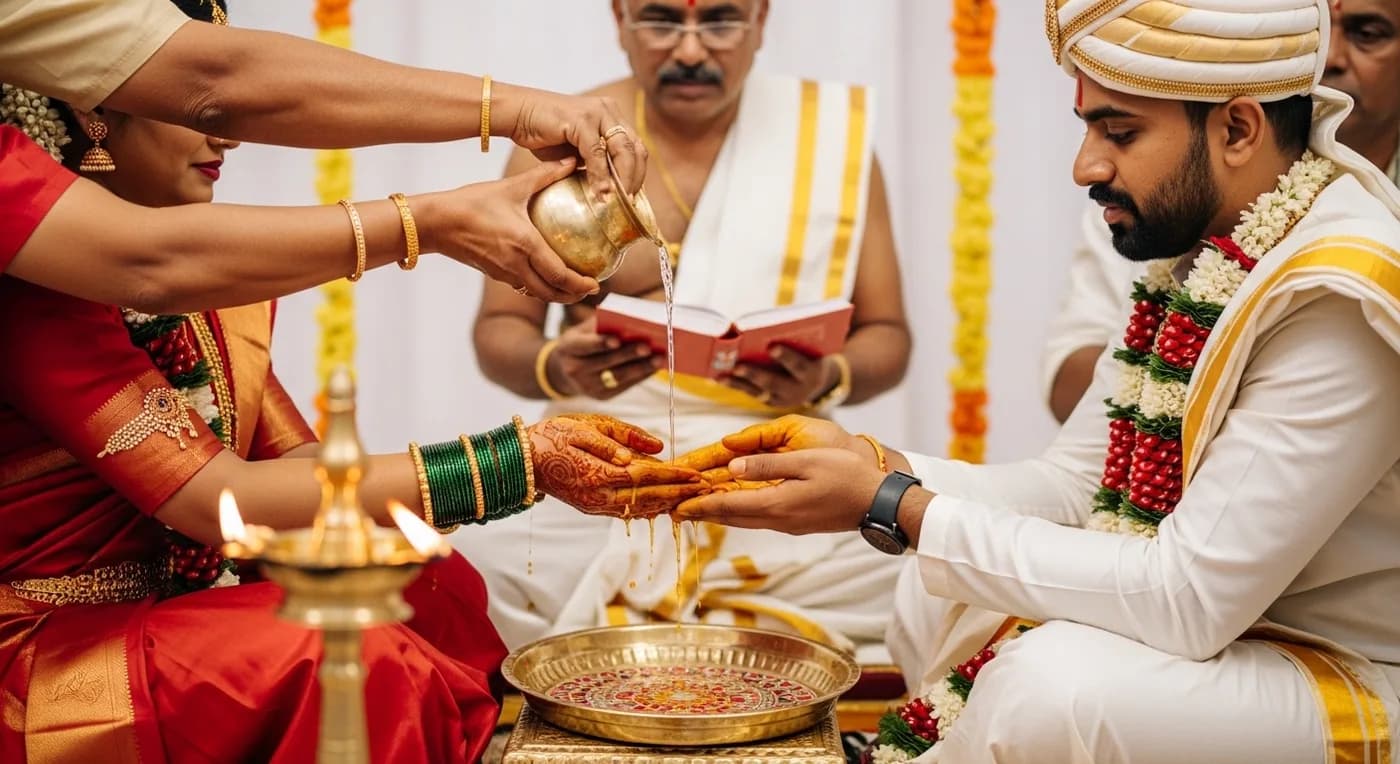
Here is how it unfolds: the bride sits on her father's lap, facing east. The groom faces her, and the couple joins their right hands. The bride's parents (and sometimes other senior relatives) pour a continuous stream of sacred water — dhare — over the couple's joined hands while the priest chants Vedic mantras. The water is drawn from a special vessel, often a kalasha (sacred pot) that has been consecrated during the puje.
The pouring of water symbolises the flow of the bride's family's blessings and the irrevocable transfer of their daughter to a new family. The continuous, unbroken stream represents the wish for an uninterrupted flow of prosperity and harmony in the couple's life together. Many guests consider this the most sacred moment of the ceremony, and a reverential silence often falls over the hall. The planning guide I share with every couple starts with understanding this moment — when you grasp its significance, every other ritual falls into context.
Mangalsutra Tying
Immediately after or during the Dhare, the groom ties the mangalsutra (sacred necklace) around the bride's neck. In Kannada tradition, the mangalsutra typically features two gold pendants — one from the groom's family and one from the bride's — strung on a yellow thread coated with turmeric. The two pendants represent the union of two families. The groom ties three knots, each accompanied by specific mantras: the first knot is for loyalty to each other, the second for devotion to their families, and the third for their connection to the divine.
How Do the Seven Steps (Saptapadi) Seal the Marriage?
The Saptapadi — the seven steps around the sacred fire — is the ritual that gives the marriage legal validity under Hindu customs. The couple walks around the agni (sacred fire) together, taking one step for each of seven vows: nourishment, strength, prosperity, happiness, progeny, longevity, and friendship. Each step is accompanied by a mantra, and the couple pauses after each to affirm their commitment.
In Kannada tradition, the seven steps are sometimes taken around a small heap of rice placed near the fire, with the bride touching it with her right toe at each step. After the seventh step, the couple is considered bound for life. The Department of Kannada and Culture, Government of Karnataka recognises the Saptapadi as one of the traditions that reflects Karnataka's distinct Vedic heritage.
What Happens After the Wedding Ceremony?
Grihapravesham
The Grihapravesham — the bride's first entry into the groom's home — is a joyful post-wedding ritual. The new bride is welcomed at the threshold, where she is asked to kick over a small vessel of rice with her right foot, symbolising the abundance she brings to her new home. She then steps into a plate of kumkum (vermillion) mixed with milk, and walks inside, leaving auspicious red footprints.
Satyanarayana Puja
Many Kannada families perform a Satyanarayana Puja on the day after the wedding. This elaborate prayer, dedicated to Lord Vishnu, is conducted by the couple together — often their first shared religious act as husband and wife. It is believed to ensure divine protection and prosperity for the new household.
Reception
The wedding reception, typically held on the evening of the wedding day or the following day, is the social celebration. While the ceremony is intimate and ritual-heavy, the reception is where the wider community — colleagues, friends, neighbours — come together to congratulate the couple. Bangalore receptions increasingly feature live music, a formal cake-cutting (a modern addition), and multi-cuisine buffets that go well beyond traditional Karnataka fare.
What Does the Couple Wear?
The Bride
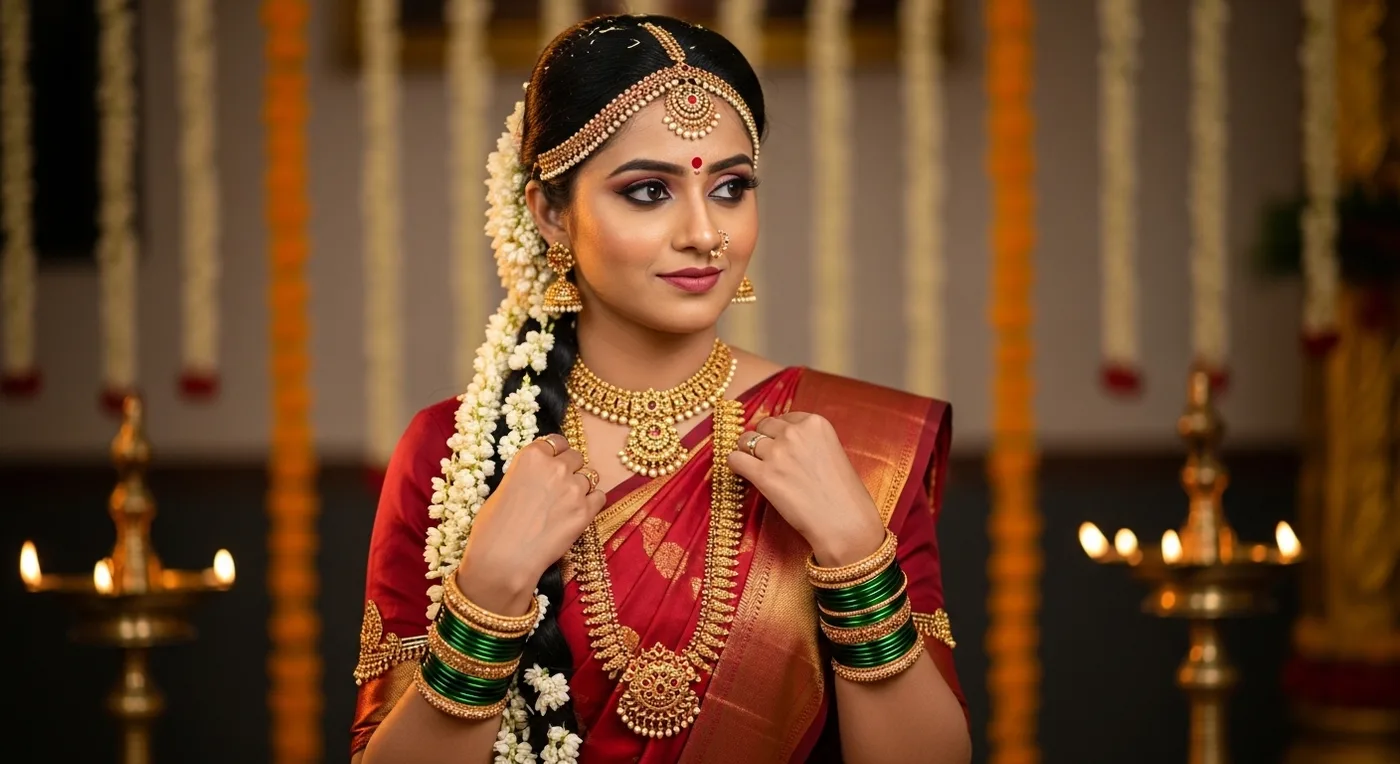
A Kannada bride's attire is a visual celebration of Karnataka's textile heritage. The traditional choice is a Nauvari (nine-yard) silk saree — either an Ilkal saree from northern Karnataka, with its distinctive topi teni (temple-edge) border pattern, or a Mysore silk saree, known for its lustrous zari work and rich colour palette. The Karnataka Handloom Development Corporation actively supports the Ilkal and Mysore silk weaving traditions that produce many bridal sarees.
Auspicious colours dominate: deep red, emerald green, and rich gold are the most popular choices. The saree is draped in the Kannada style, which differs subtly from Tamil or Telugu draping.
The bride adorns herself with temple jewellery — gold ornaments inspired by the carvings of Karnataka's Hoysala and Chalukya temples. Key pieces include the jhumka (chandelier earrings), vanki (armlet), kamarbandh (waist belt), and a nettikalli (forehead ornament). Green glass bangles are essential — they signify the bride's new marital status. Fresh jasmine flowers are woven into the hair, creating a fragrant, cascading garland that is one of the most beautiful visual elements of a Kannada bride's look.
The Groom
The groom wears a panche (dhoti) in white or cream silk, paired with an angavastram (upper cloth draped over one shoulder). The Mysore Peta — Karnataka's distinctive turban — is the crowning element. The Peta is a mark of honour and regional identity, and wearing it at a wedding is a statement of cultural pride. A silk kurta or jubba completes the ensemble.
However, modern grooms in Bangalore often opt for a designer sherwani for the reception while reserving the traditional panche-peta combination for the ceremony itself — a practical compromise that honours tradition while embracing contemporary style.
How Are Modern Couples Adapting Kannada Traditions?
Kannada wedding traditions are evolving thoughtfully, with couples finding ways to honour the ritual structure while adapting to contemporary lifestyles. Budget couples I advise in Koramangala and Indiranagar are often surprised to discover that streamlining does not mean sacrificing meaning — it means distilling the ceremony to its emotional essence.
Shorter, Simplified Ceremonies
The most significant modern adaptation is time. A traditional Kannada wedding that once lasted four to five hours is now routinely completed in two to two-and-a-half hours. Priests work with families to identify the essential rituals — Vara Puje, Kanyadaan, Dhare, Mangalsutra, and Saptapadi — and shorten or abbreviate the supporting chants. This is particularly common in Bangalore, where weekday weddings need to respect guests' professional schedules.
Note
Farmhouse and Destination Settings
While traditional Kannada weddings were held in kalyana mantapas (wedding halls) or temples, a growing number of Bangalore couples are choosing farmhouse venues along Kanakapura Road or destination settings in Coorg, Mysore, and Chikmagalur. For example, the Karnataka State Tourism Development Corporation lists several heritage properties that now double as wedding destinations. These settings allow for personalised decor, outdoor mandaps, and a relaxed multi-day celebration that blends ceremony with hospitality. For a deeper look at destination options, explore our guide to Kodava wedding traditions in Coorg, or see the full destination wedding in Coorg guide for venue pricing and logistics. Couples drawn to the coast should also consider Udupi's beach and temple venues, where Tulu Bunt traditions and Shivalli Brahmin ceremonies add a distinctly coastal Karnataka flavour.
Fusion Decor
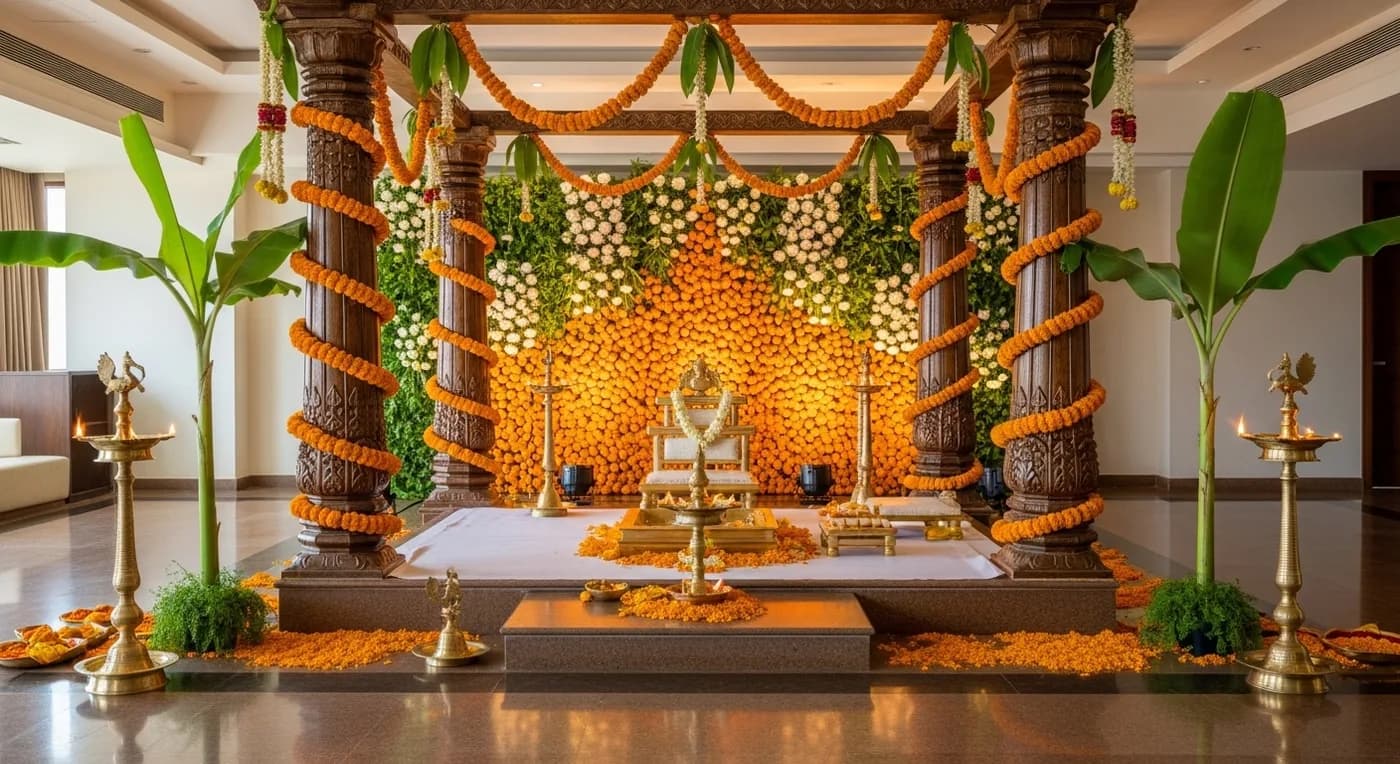
The traditional mandap — a four-pillared structure draped with mango leaves and flowers — is getting creative interpretations. Bangalore couples are incorporating pastel palettes, geometric floral installations, and mixed materials (wood, brass, terracotta) while retaining the essential kalasha (sacred pot) and banana-stalk pillars that define a Kannada mandap. The goal is not to replace tradition but to layer contemporary aesthetics over it. For what this costs in practice, see our wedding decor cost guide for Bangalore.
Photography-Friendly Rituals
Couples are increasingly coordinating with their photographer to ensure rituals are staged for visual impact without compromising their sanctity. This means better lighting at the mandap, slight repositioning during the Dhare so both faces are visible, and designated moments for family portraits between rituals. The best photographers working in the Kannada wedding space understand the ritual flow and know exactly when to move and when to be still. Our wedding photography cost guide for Bangalore covers what to budget for ceremony-specific coverage.
How Should You Plan Your Kannada Wedding?
A well-planned Kannada wedding in Bangalore requires attention to both ritual requirements and logistical details. Here is a practical framework.
Budget Ranges
Kannada weddings in Bangalore span a wide budget spectrum:
- Budget-conscious (kalyana mantapa, 200-300 guests): ₹3,00,000 – ₹8,00,000
- Mid-range (premium hall or farmhouse, 300-500 guests): ₹8,00,000 – ₹20,00,000
- Premium (5-star hotel or palace venue, 500-1000 guests): ₹20,00,000 – ₹50,00,000
Key Vendors You Need
Every Kannada wedding requires a specific set of professionals. A knowledgeable purohit (priest) who can explain rituals to the couple and conduct the ceremony at an appropriate pace is perhaps the most important booking. Beyond the priest, your vendor team should include a photographer experienced with Kannada ceremonies (someone who knows when the Dhare happens and where to position themselves), a decorator who understands mandap traditions, a caterer familiar with Karnataka cuisine, and a nadaswaram-thavil ensemble or equivalent musical accompaniment.
Looking for Photographers in Bangalore?
Tell us what you need and get quotes from verified photographers
When Is the Best Season for a Kannada Wedding?
The most auspicious months for Kannada weddings typically fall between November and February, aligning with the pleasant Bangalore weather and favourable dates on the panchangam. However, this is also peak season, which means higher venue and vendor costs. Couples willing to consider dates in September, October, or March can often secure the same quality vendors and venues at lower rates. The monsoon months of June through August are traditionally avoided, though Bangalore's relatively mild monsoon makes indoor hall weddings perfectly viable even during this period.
Finding the right vendors who understand Kannada wedding traditions makes all the difference. On itsmy.wedding, you can browse verified professionals across Bangalore who specialise in traditional Karnataka ceremonies — from decorators who build authentic mandaps to caterers who serve a proper Mysore-style feast.
Looking for Decorators in Bangalore?
Tell us what you need and get quotes from verified decorators
A Note on Inter-Community Weddings
Bangalore's cosmopolitan character means inter-community weddings are increasingly common. Couples blending Kannada traditions with Tamil, Telugu, North Indian, or non-Hindu customs should work with a priest who is open to adapting the ceremony structure. Many Bangalore purohits are experienced with fusion ceremonies and can suggest graceful ways to incorporate elements from both traditions — perhaps a Kannada Dhare followed by a North Indian phera, or a bilingual ceremony with mantras explained in both Kannada and English. The Karnataka Marriage Registration portal provides information on registering marriages across all communities in the state.
For couples exploring the full range of wedding traditions across Karnataka's communities, our Bangalore wedding planning guide provides a comprehensive overview. You can also explore our guide to the best wedding venues in Bangalore to find a setting that complements your ceremony style.
Common Questions About Kannada Wedding Traditions
What are the key rituals performed during a Kannada Hindu marriage?
The ceremony progresses through Nischitartha (formal engagement), Naandi (ancestral prayers), Devara Puje (deity worship), Vara Puje (groom reception), Dhare (sacred water pouring — the solemnising moment), Kanyadaan (giving of the bride), Mangalsutra tying, and Saptapadi (seven steps around the sacred fire).
How much time does the core Kannada wedding ceremony require?
The main ceremony on the wedding day takes 2–3 hours from the Vara Puje through Saptapadi. When you include the Naandi and Devara Puje held on the previous day, plus the post-wedding Grihapravesham, the full celebration typically spans 2 days.
What traditional outfit does a Kannada bride choose for the ceremony?
A Kannada bride traditionally drapes a Nauvari (9-yard) Ilkal or Mysore silk saree in auspicious shades — red, green, or gold. She complements this with temple jewellery, green glass bangles, and jasmine woven into her hair. The groom pairs a traditional Panche (dhoti) with an Angavastram and a Mysore Peta turban.
Why is the Dhare ritual considered the most important moment?
The Dhare is the instant the marriage becomes spiritually and legally binding. Sacred water is poured in an unbroken stream over the couple's joined hands by the bride's parents while Vedic mantras are chanted. This is the Kannada equivalent of the mangalya dharanam in Tamil weddings — the act that formally solemnises the union.
A Kannada wedding, at its heart, is about community witness, family continuity, and spiritual commitment. The rituals have endured for centuries because they speak to something universal — the desire to begin a shared life with intention, beauty, and blessings. Whether you conduct your Dhare in a centuries-old temple or under a floral mandap at a Bangalore farmhouse, the meaning remains the same. Planning well through itsmy.wedding ensures that the logistics serve the emotion, never the other way around.
Tip
Start planning your wedding — generate a personalised checklist with our AI Wedding Checklist, estimate your budget with the Cost Calculator, or create a beautiful digital invitation.
Topics
kannada wedding traditionskannada marriage ritualskarnataka wedding customsdhare ceremonykannada wedding guidebengaluru weddingsExplore more
Frequently Asked Questions
1What are the main rituals in a Kannada wedding?
2How long does a traditional Kannada wedding ceremony last?
3What does the bride wear in a Kannada wedding?
4What is the Dhare ceremony in Kannada weddings?
Continue reading
Related Articles
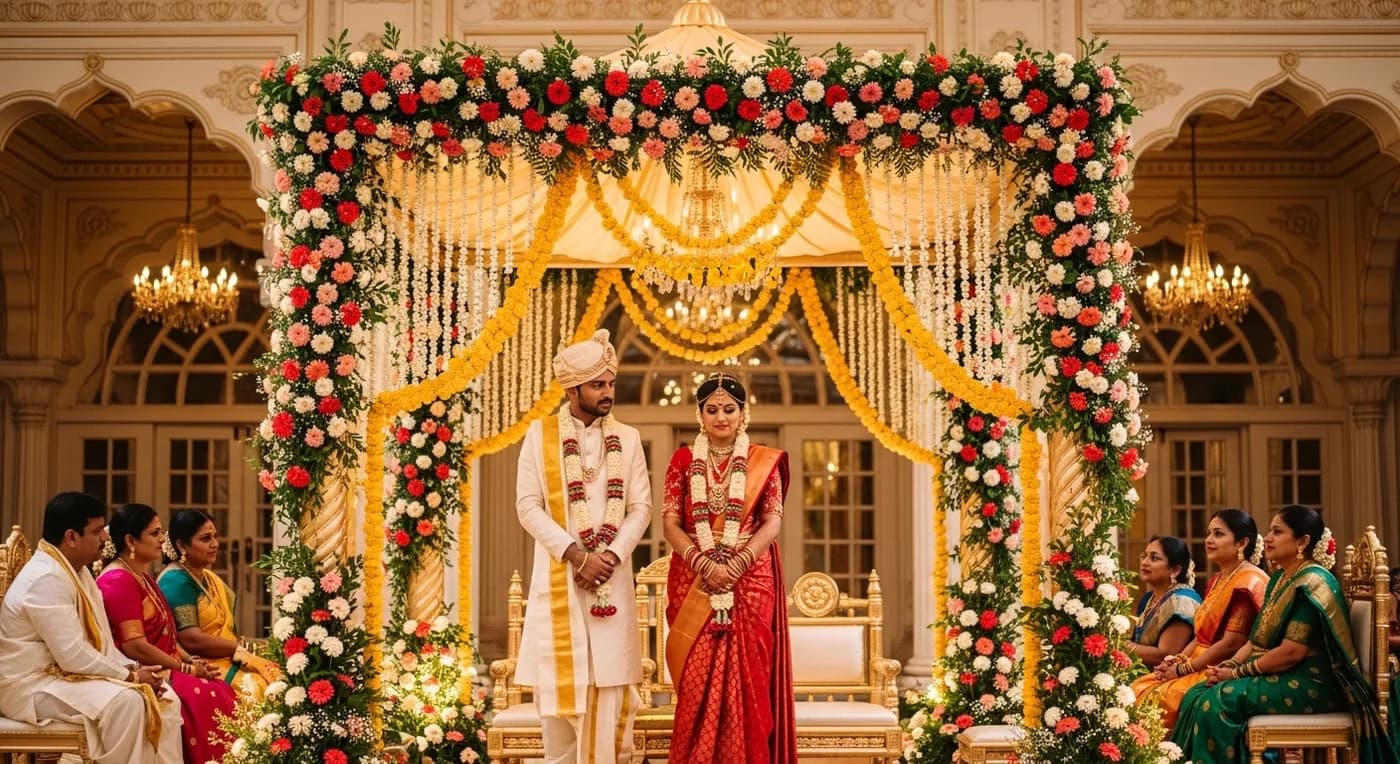
Bangalore Wedding Planning: ₹5-60L Costs & Venues (2026)
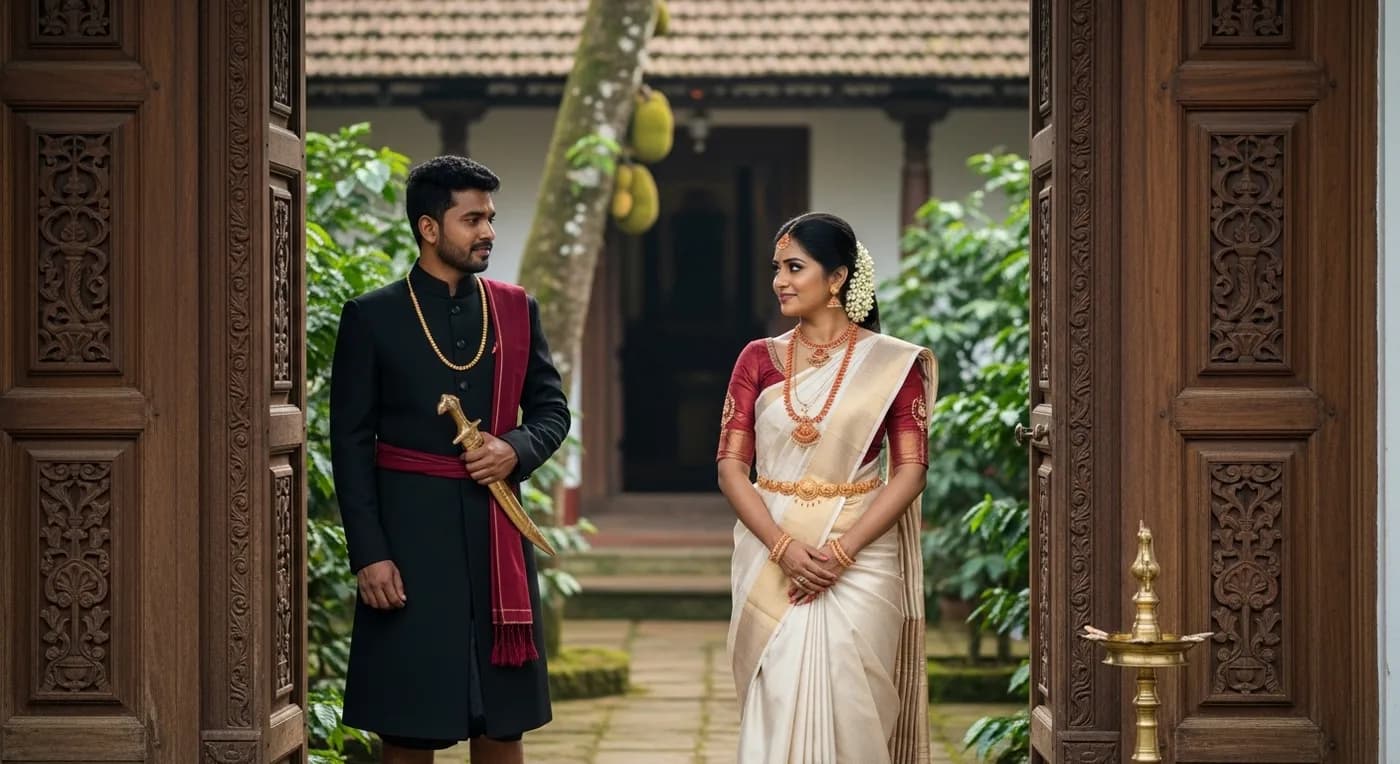
Kodava Wedding Traditions: Coorg's Unique Marriage Customs
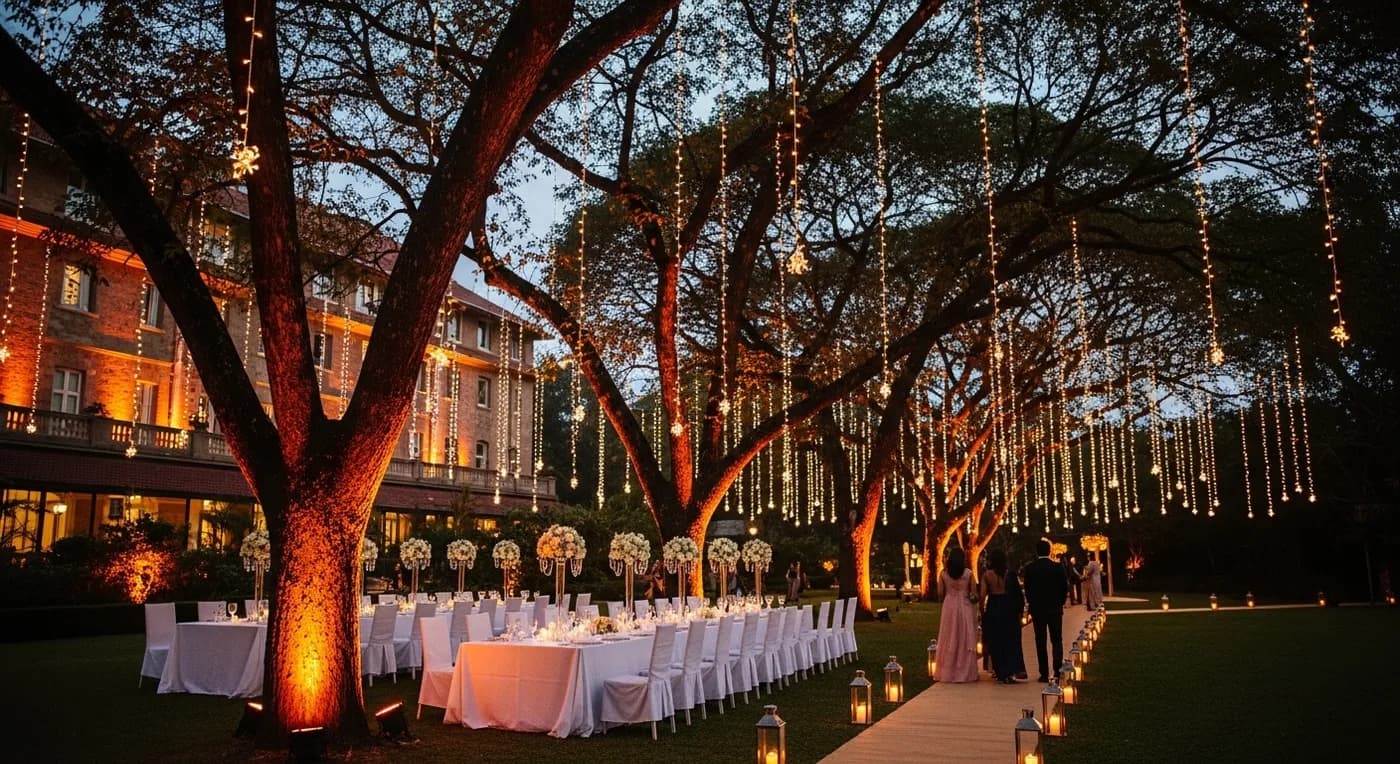
Best Wedding Venues in Bangalore: Complete 2026 Guide
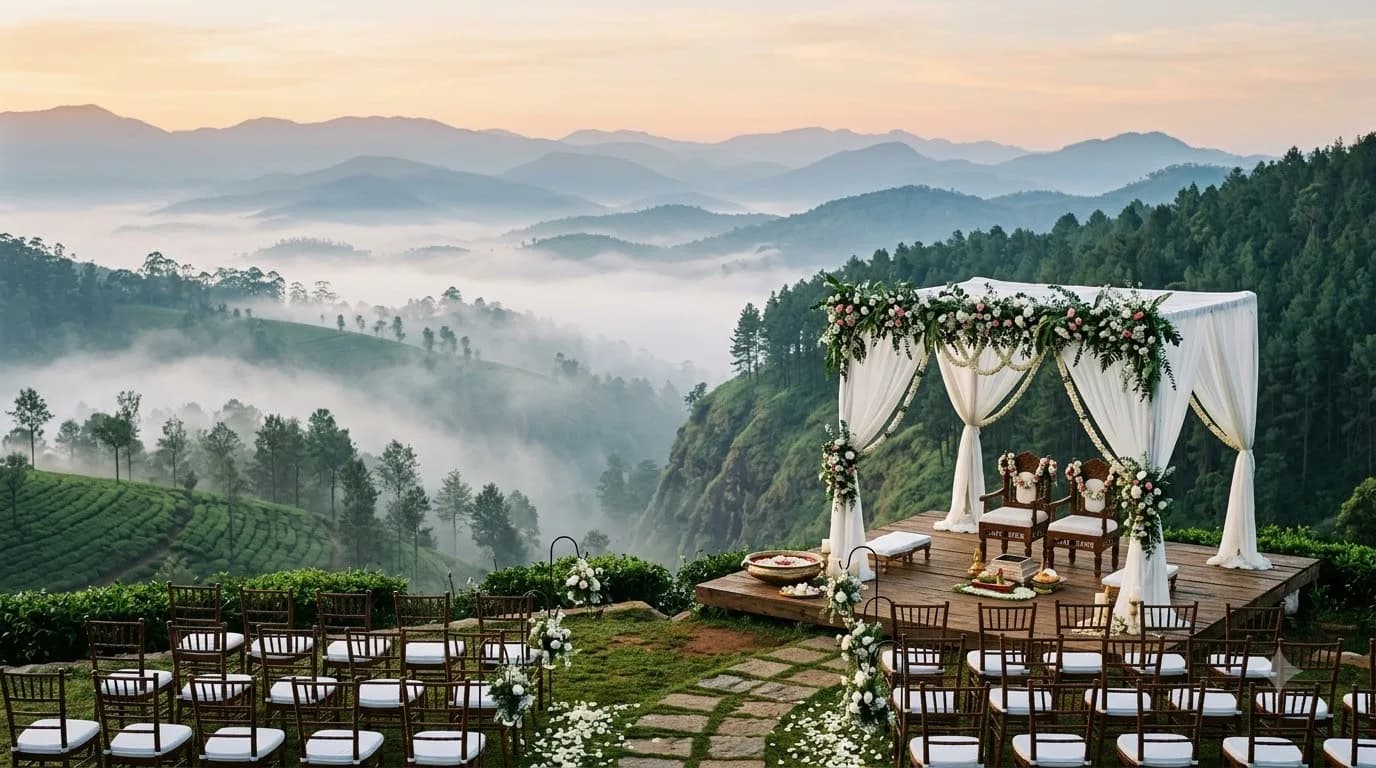
Best Season for South India Destination Weddings: Month-by-Month Western Ghats Guide
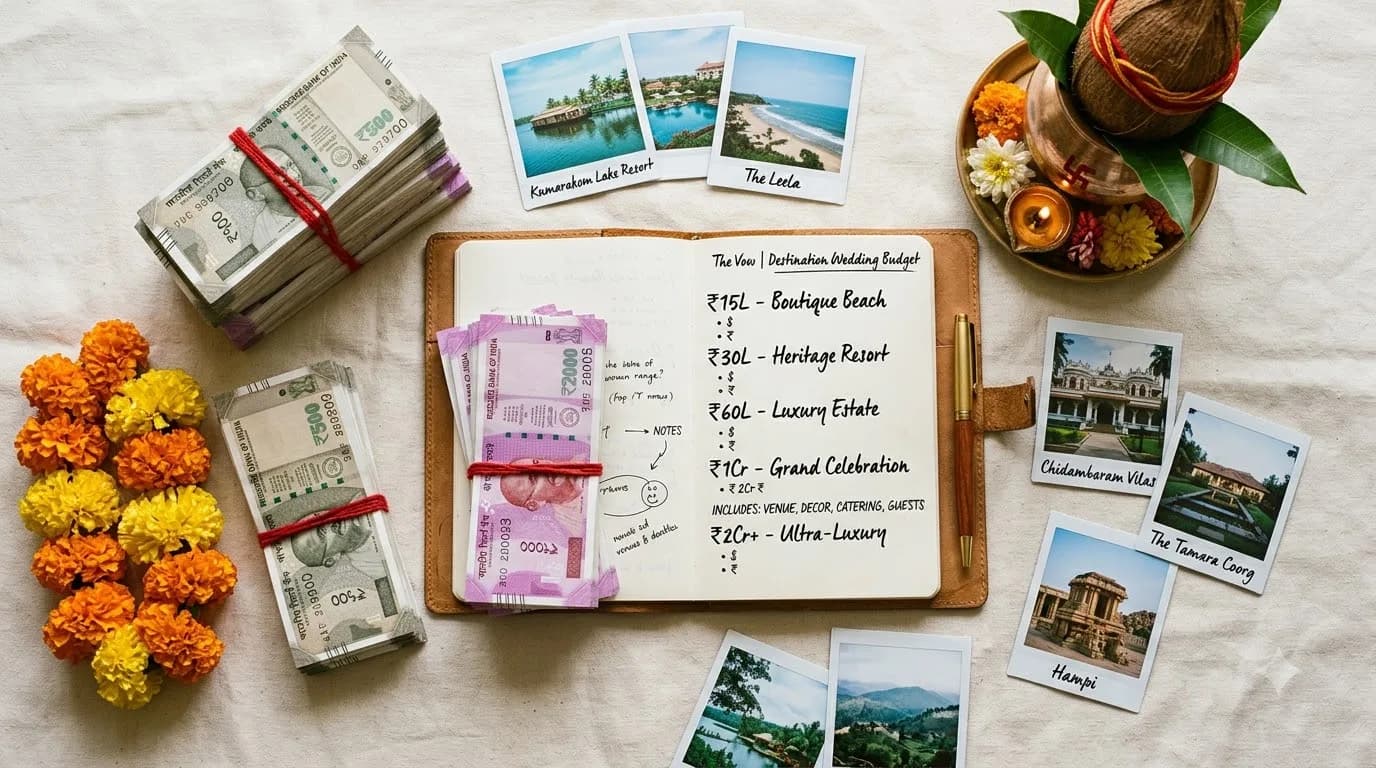
Destination Wedding Cost in South India 2026: 5-Tier Budget Guide
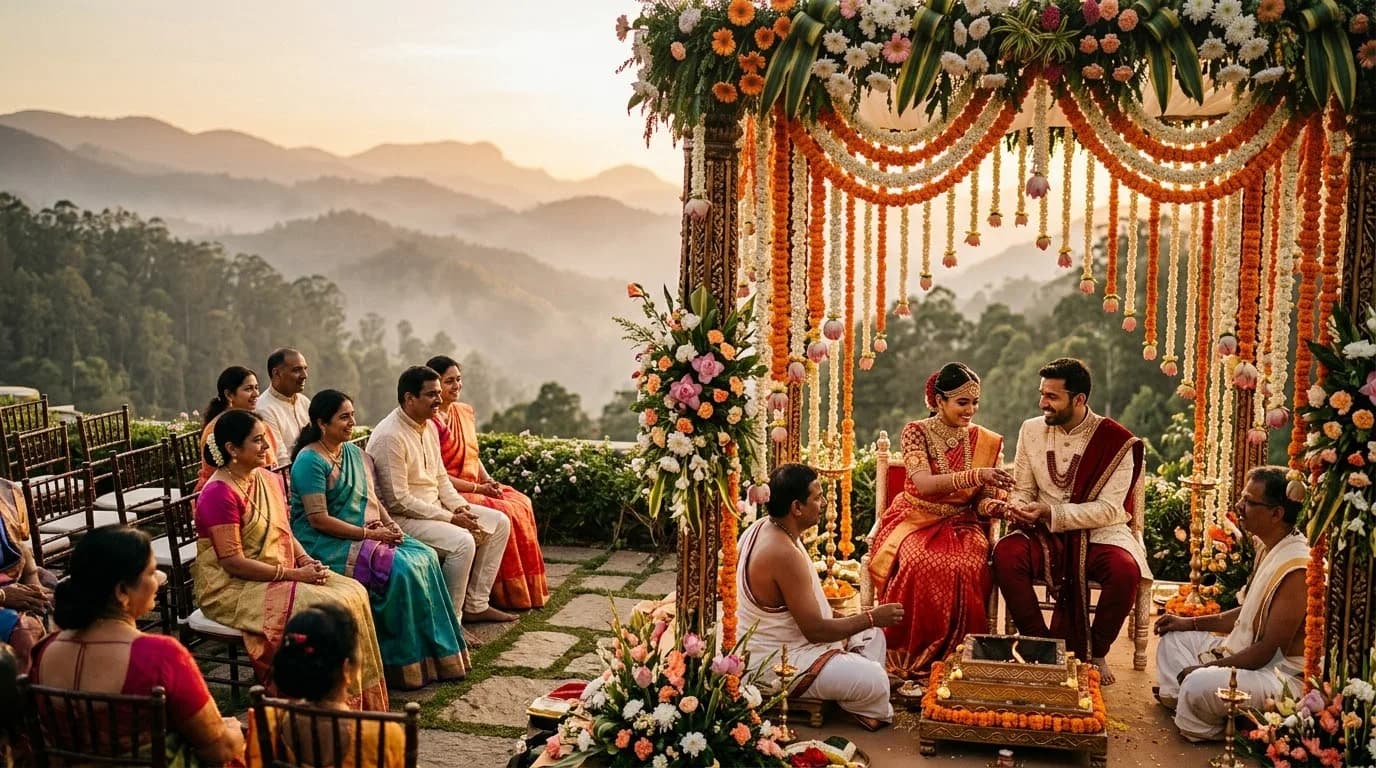
Destination Wedding in South India: Complete 2026 Planning Guide
Still planning?
Get quotes from India's best vendors
Tell us what you're planning and we'll match you with verified photographers, venues, decorators, and more.
Get free quotes