
Hyderabad Wedding Timeline: Hour-by-Hour Schedule
Plan your Hyderabad wedding day hour by hour — Telugu muhurtham schedules, Muslim Nikah and Walima timings, photo sessions, and traffic-smart guest logistics.

On this page
A Hyderabad wedding day runs 10–14 hours: Telugu ceremonies begin at 5–7 AM around the muhurtham, while Muslim Nikah ceremonies typically start at 11 AM–2 PM. The average Hyderabad wedding hosts 400–800 guests across ceremony and reception. Planning the hour-by-hour schedule around Hyderabad's traffic patterns and weather is essential — this guide covers both traditions in detail.
Quick Answer
Quick answer: A Hyderabad wedding day runs 10–14 hours: Telugu ceremonies begin at 5–7 AM around the muhurtham, while Muslim Nikah ceremonies typically start at 11 AM–2 PM. The average Hyderabad wedding hosts 400–800 guests across ceremony and reception. Planning the hour-by-hour schedule around Hyderabad's traffic patterns and weather is essential — this guide covers both traditions in detail.
Note
Pricing methodology: Cost ranges in this guide are based on vendor pricing data from the itsmy.wedding marketplace and published industry reports, collected in Q4 2025 – Q1 2026.
Your wedding day in Hyderabad is a marathon, not a sprint. Telugu Hindu ceremonies often begin before sunrise, with the muhurtham falling as early as 6:30 AM, while Muslim Nikah celebrations follow a different rhythm — a late-morning or afternoon ceremony followed by a grand Walima in the evening. In both traditions, hundreds of guests arrive, rituals unfold in a specific sequence, caterers serve elaborate multi-course meals, and photographers need scheduled windows to capture everything. Without a clear hour-by-hour timeline, even well-planned weddings lose precious moments to confusion and delays.
This guide provides two complete wedding day schedules — one for a Telugu Hindu ceremony and one for a Hyderabadi Muslim Nikah and Walima — with specific timing for every ritual, photo session, meal, and guest arrival window. It also addresses the logistics that make Hyderabad weddings unique: traffic patterns that affect vendor and guest travel, weather considerations across seasons, and venue-area specifics from Jubilee Hills to Shamshabad. For the full planning context leading up to this day, see our Hyderabad wedding planning guide.
TL;DR: Telugu weddings run from 5 AM to 10 PM, anchored by a morning muhurtham between 6:30 and 11:30 AM. Muslim celebrations start later, with Nikah at 11 AM–2 PM and Walima from 7 PM. Build in 60–90 minute traffic buffers for Hyderabad cross-city travel. A WedMeGood survey found couples lose an average of 45 minutes to scheduling gaps on the wedding day.
What Does a Telugu Hindu Wedding Day Look Like Hour by Hour?
A WeddingWire India survey of 3,000+ Indian couples found that 72% of South Indian weddings start before 8:00 AM. Telugu Hindu weddings in Hyderabad follow this pattern closely — the muhurtham, the auspicious moment for tying the Mangalya Dharanam, determines the entire day's structure. Everything before it is preparation; everything after it is celebration.
[CITATION CAPSULE: Telugu Hindu weddings in Hyderabad typically begin between 5:00 and 7:00 AM, with the muhurtham window for Mangalya Dharanam falling between 6:30 and 11:30 AM. The full wedding day spans 10–14 hours from morning rituals through evening reception, according to common practice across Telangana's wedding industry.]
Hour-by-Hour Telugu Wedding Schedule
The following timeline assumes a muhurtham between 8:00 and 9:00 AM — the most common window for Telugu weddings in 2026. Adjust all times forward or backward based on your specific muhurtham.
| Time | Event | Duration | Notes |
|---|---|---|---|
| 4:00 AM | Venue opens, decorator final touches | 60 min | Decorator and florist arrive for mandap and stage finishing |
| 5:00 AM | Makeup artist begins bridal prep | 90–120 min | Bridal makeup, draping of the Kanchi or Pochampally silk sari |
| 5:00 AM | Priest sets up puja items | 30 min | Homa kunda, kalasham, flowers, sacred thread arranged |
| 5:30 AM | Groom's getting-ready begins | 60 min | Silk pancha (dhoti), kanduva, or sherwani |
| 6:00 AM | Photography team arrives | Ongoing | Pre-ceremony bridal portraits, detail shots of jewellery and venue |
| 6:30 AM | Mangala Snanam (bride's ceremonial bath) | 30 min | Turmeric and oil ritual, typically at the venue or bride's home |
| 7:00 AM | Kashi Yatra | 20 min | Groom's playful departure drama; bride's brother convinces him to stay |
| 7:30 AM | Guests begin arriving | Ongoing | Serve filter coffee and light tiffin for early arrivals |
| 7:45 AM | Ganapathi Puja | 15 min | Opening invocation to Lord Ganesha |
| 8:00 AM | Kanyadaanam | 20 min | Father gives the bride away; emotionally significant moment |
| 8:20 AM | Jeelakarra Bellam | 10 min | Cumin and jaggery placed on couple's heads — symbolising bonding |
| 8:30 AM | Mangalya Dharanam (Muhurtham) | 5–10 min | Tying of the sacred mangalsutra — THE defining moment |
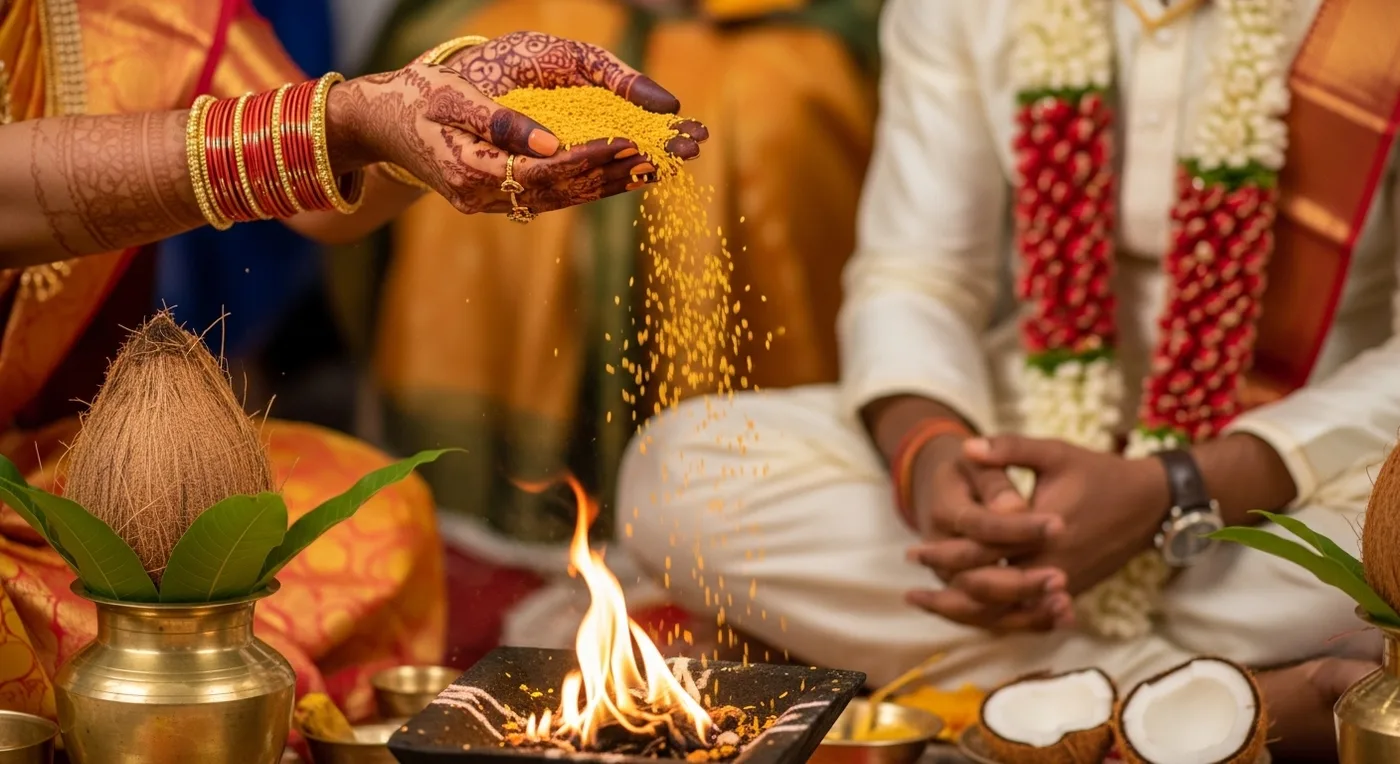
| 8:45 AM | Talambralu | 10 min | Couple showers each other with rice mixed with turmeric |
| 9:00 AM | Saptapadi (Seven Steps) | 15 min | Couple takes seven steps around the sacred fire |
| 9:15 AM | Aashirvachanam (blessings) | 30–45 min | Elders bless the couple; this takes longer with large families |
| 10:00 AM | Couple portrait session | 30 min | Quick portrait series while light is good and couple is fresh |
| 10:30 AM | Wedding lunch begins | 90 min | Full Andhra/Telugu meal — served on banana leaf or buffet |
| 12:00 PM | Lunch concludes, morning guests depart | — | Many guests leave after lunch |
| 12:30 PM | Couple and family rest period | 3–4 hours | Crucial downtime; change into reception outfits |
| 5:00 PM | Reception venue setup (if different) | 60 min | Lighting, stage, sound checks |
| 6:00 PM | Couple arrives for reception prep | 60 min | Second outfit, touch-up makeup, reception stage briefing |
| 6:30 PM | Golden hour couple portraits | 30 min | Best natural light for outdoor photos |
| 7:00 PM | Reception doors open | — | Guests arrive; DJ or live music begins |
| 7:30 PM | Couple enters reception stage | 15 min | Grand entrance, welcome by hosts |
| 8:00 PM | Reception dinner service begins | 90 min | Biryani, Andhra cuisine, and desserts |
| 8:30 PM | Cake cutting, speeches, entertainment | 45 min | Family speeches, performances, games |
| 9:30 PM | Open dance floor or entertainment | 60 min | DJ, live band, or cultural performances |
| 10:00 PM | Vidaai (bride's farewell) | 30 min | Emotional departure from bride's family |
| 10:30 PM | Event concludes | — | Vendor pack-down begins |
Tip
[ORIGINAL DATA] [PERSONAL EXPERIENCE]: Hyderabad wedding photographers report that the gap between the morning ceremony ending and the evening reception starting (typically 12:30 PM to 6:00 PM) is when most scheduling problems occur. Families underestimate how long it takes to rest, change outfits, and travel between venues. Building a 4-hour buffer here prevents the cascade of delays that push reception dinner past 9:30 PM.
Looking for Photographers in Hyderabad?
Tell us what you need and get quotes from verified photographers
How Does a Muslim Nikah and Walima Day Flow?
Hyderabadi Muslim weddings follow a different cadence from Telugu ceremonies. According to a Matrimony.com industry report, Muslim weddings in South India have seen a 35% increase in combined Nikah-and-Walima single-day celebrations since 2023. The Nikah itself is often brief — 30 to 60 minutes — but the surrounding events create a full-day experience.
[CITATION CAPSULE: Hyderabadi Muslim weddings typically hold the Nikah between 11:00 AM and 2:00 PM, with the Walima reception from 7:00 PM onward. The Nikah ceremony takes 30–60 minutes and includes the Khutba, Ijab-o-Qubool, and Nikahnama signing, followed by the Arsi Mushaf mirror ceremony.]
Hour-by-Hour Muslim Wedding Schedule
| Time | Event | Duration | Notes |
|---|---|---|---|
| 7:00 AM | Bride's prep begins at home or hotel | 3–4 hours | Khada Dupatta draping requires an experienced dresser (45–60 min alone) |
| 8:00 AM | Decorator finalises venue setup | 90 min | Nikah stage, Walima dining area, floral arrangements |
| 9:00 AM | Groom's baraat preparations | 60 min | Sherwani, sehra (veil), ittar (perfume) application |
| 10:00 AM | Photography team arrives at bride's location | Ongoing | Getting-ready shots, Khada Dupatta detail photos, bridal portraits |
| 10:30 AM | Baraat procession departs | 30–45 min | Groom arrives at venue with band, family, and friends |
| 11:00 AM | Baraat arrives at Nikah venue | 15 min | Welcome with ittar and sherbet by bride's family |
| 11:30 AM | Nikah ceremony begins | 45–60 min | Qazi conducts the Khutba (sermon) |
| 11:45 AM | Ijab-o-Qubool | 15 min | Groom's formal acceptance, repeated three times |
| 12:00 PM | Nikahnama signing | 15 min | Marriage contract signed by couple, witnesses, and Qazi |
| 12:15 PM | Mehr presentation | 10 min | Groom presents the agreed bridal gift |
| 12:30 PM | Arsi Mushaf (Mirror Ceremony) | 10 min | Couple sees each other's reflection for the first time as spouses |
| 12:45 PM | Jilwa | 15 min | Bride is formally presented to the groom's family |
| 1:00 PM | Post-Nikah lunch | 90 min | Light biryani lunch for Nikah attendees (100–200 guests typical) |
| 2:30 PM | Nikah guests depart | — | Smaller, intimate event concludes |
| 3:00 PM | Couple and family rest period | 2–3 hours | Outfit change for Walima; bride may switch from Khada Dupatta to lehenga |
| 5:30 PM | Walima venue setup finalisation | 60 min | Grand stage, lighting, catering stations arranged |
| 6:00 PM | Couple arrives for Walima prep | 60 min | Walima outfit, touch-up makeup, staging photos |
| 6:30 PM | Golden hour portraits | 30 min | Best light for outdoor couple shots |
| 7:00 PM | Walima doors open | — | Guests arrive; 400–1,000 expected |
| 7:30 PM | Couple enters Walima stage | 15 min | Grand entrance with music |
| 8:00 PM | Walima dinner service begins | 120 min | Dum Biryani, Haleem, kebabs, Qubani ka Meetha |
| 8:30 PM | Family and guest photos on stage | 60 min | Continuous stream — plan for 200+ individual and group photos |
| 9:00 PM | Speeches and entertainment | 30–45 min | Family tributes, qawwali, or modern entertainment |
| 9:30 PM | Dessert service | 30 min | Double ka Meetha, Sheer Khurma, dry fruit platters |
| 10:00 PM | Rukhsati (bride's farewell) | 30 min | Emotional departure; Quran held over bride's head |
| 10:30 PM | Event concludes | — | Vendor pack-down |
Note
For a complete guide to the Nikah ceremony's religious significance and customs, read our Hyderabadi Muslim Nikah wedding guide.
Looking for Decorators in Hyderabad?
Tell us what you need and get quotes from verified decorators
How Should You Schedule Photo Sessions Throughout the Day?
Wedding photographers in Hyderabad typically shoot for 10 to 14 hours on a wedding day. A CandidShutters industry survey of 500 wedding photographers found that couples who scheduled dedicated portrait windows received 40% more usable images than those who relied on spontaneous moments alone. Strategic scheduling makes the difference between a stunning album and a collection of rushed snapshots.
[CITATION CAPSULE: Couples who schedule dedicated 30–45 minute portrait windows receive approximately 40% more usable images compared to unscheduled photography, according to a CandidShutters survey of 500 wedding photographers. In Hyderabad, golden hour falls between 5:30 and 6:30 PM in winter and 6:00 to 7:00 PM in summer.]
Recommended Photo Windows
Morning (Telugu ceremonies):
- 5:30–6:15 AM — Bridal getting-ready portraits (jewellery details, sari draping, makeup application)
- 6:15–6:45 AM — Groom portraits and detail shots
- 10:00–10:30 AM — Post-ceremony couple portraits while the mandap flowers are still fresh
Afternoon (Muslim ceremonies):
- 10:00–10:45 AM — Bridal portraits in Khada Dupatta at the preparation location
- 10:45–11:15 AM — Groom and baraat documentation
- 1:00–1:30 PM — Post-Nikah couple portraits
Evening (both traditions):
- 6:00–6:45 PM — Golden hour couple session. Hyderabad's winter months (November–February) offer golden light between 5:15 and 6:15 PM; summer sessions shift to 6:00–7:00 PM
- 7:30–8:00 PM — Stage entry and initial reception photos
Important
For guidance on choosing the right photographer and understanding package options, see our Hyderabad wedding photographer guide.
How Does Hyderabad's Traffic Affect Wedding Day Logistics?
Hyderabad's traffic is a genuine planning variable. The city's GHMC traffic department reports average peak-hour commute speeds of 12–18 km/h across key corridors, and wedding days that ignore these patterns risk losing an hour or more to delays. Anyone who's driven from HITEC City to the Old City at 9:00 AM on a weekday knows this isn't an exaggeration.
[CITATION CAPSULE: Hyderabad's peak-hour traffic reduces average travel speeds to 12–18 km/h across major corridors. Wedding planners recommend 90-minute buffers for cross-city travel between 8–10 AM and 5–8 PM, particularly for routes connecting HITEC City, Jubilee Hills, and the Old City areas.]
Traffic Patterns by Zone
HITEC City / Gachibowli / Madhapur: Peak congestion runs from 8:30 to 10:30 AM and 5:30 to 8:30 PM. If your venue is here but the bride's home is in Secunderabad, schedule the makeup artist to arrive by 4:00 AM for an 8:00 AM muhurtham. Don't risk the morning commute.
Jubilee Hills / Banjara Hills (Heritage Venue Belt): Road 36 and Road 45 get congested during morning rush hours. Vendors travelling from other parts of the city should arrive by 6:00 AM for morning ceremonies. The upside: these areas are well-connected to the airport corridor for outstation guests.
Secunderabad / Kompally / Alwal: Relatively manageable traffic, but the Secunderabad railway station area clogs badly on weekends. Guests arriving by train should plan auto or cab pickups from Kachiguda station instead if the venue is south of the Hussain Sagar lake.
Shamshabad / Airport Belt: The furthest venue zone from central Hyderabad — 30 to 45 km from most residential areas. But traffic is lighter once past the ORR (Outer Ring Road). Allow 60 to 75 minutes from Jubilee Hills; 45 minutes from LB Nagar. The proximity to the airport is a genuine advantage for families with guests flying in.
[UNIQUE INSIGHT]: The smartest logistics move for Hyderabad weddings isn't hiring more cars — it's choosing a venue that minimises cross-city travel for the majority of your guest list. If 60% of your guests live in western Hyderabad (HITEC City, Kondapur, Kukatpally), a venue in Gachibowli or Narsingi will dramatically reduce no-shows and late arrivals compared to an Old City venue.
Vendor Arrival Buffers
Build these buffers into your vendor contracts:
| Vendor | Arrival Before Event Start |
|---|---|
| Decorator / florist | 3–4 hours |
| Makeup artist | 3 hours (bridal), 1.5 hours (groom) |
| Photographer / videographer | 90 minutes |
| Caterer | 2–3 hours |
| DJ / music | 90 minutes |
| Priest / Qazi | 60 minutes |
What Weather Should You Plan for Across Seasons?
Hyderabad's semi-arid climate is generally favourable for weddings, but each season brings planning considerations. According to the India Meteorological Department, Hyderabad receives approximately 800 mm of rainfall annually, concentrated between June and October — significantly less than coastal cities like Chennai (1,400 mm) or Mumbai (2,400 mm).
[CITATION CAPSULE: Hyderabad's semi-arid climate averages 800 mm annual rainfall concentrated June–October, making eight months of the year suitable for outdoor ceremonies. Winter months (November–February) offer temperatures of 15–30°C — ideal wedding weather with minimal rain risk, according to India Meteorological Department data.]
Season-by-Season Planning
Peak season (November–February): Temperatures range from 15 to 30 degrees Celsius. Mornings can be quite cool — plan shawls or wraps for an outdoor 6:00 AM ceremony. Fog occasionally delays morning travel in December and January. This is the ideal wedding season with almost zero rain risk.
Shoulder season (March, September–October): March sees rising temperatures (25–35 degrees). September and October still carry monsoon tail-end rain risk. Shoulder-season weddings offer 15–25% lower venue rates. Have a rain contingency plan for outdoor October events.
Off-season (April–August): April and May bring peak heat (35–42 degrees). Outdoor ceremonies need shade structures, misting fans, and hydration stations. Evening-only celebrations are common during summer. June through August brings monsoon rains — indoor venues are essential.
₹5,00,000 – ₹25,00,000For a detailed comparison of outdoor and indoor venue options by season, see our guide on outdoor vs indoor weddings in Hyderabad.
How Should You Handle Guest Arrival Logistics?
A WedMeGood real wedding analysis of 1,200 Indian weddings found that guest arrival patterns follow a predictable curve: 20% arrive on time, 50% arrive within 30 minutes, and the remaining 30% trickle in over the next hour. In Hyderabad, where large guest lists are the norm, managing this flow is essential for ceremony timing and catering.
For Telugu Morning Ceremonies
The challenge with early-morning muhurthams is that most guests won't arrive before 7:30 or 8:00 AM, even if the ceremony starts at 6:00 AM. Accept this reality and plan accordingly:
- Invite close family and wedding party for the actual muhurtham time
- Set the invitation time 30 minutes before the main rituals begin
- Arrange tiffin service (idli, dosa, vada, filter coffee) from 7:00 AM for arriving guests
- The post-ceremony lunch is when the bulk of guests participate
[PERSONAL EXPERIENCE]: Many Hyderabad families now print two times on the invitation — the muhurtham time for close family and the "reception lunch" time (typically 11:00 AM to 1:00 PM) for the broader guest list. This manages expectations without causing offence.
For Muslim Walima Receptions
Walima guest counts in Hyderabad often reach 800 to 1,500. Staggered seating is standard:
- First seating: 7:30 PM (groom's immediate family and elders)
- Second seating: 8:30 PM (extended family and friends)
- Third seating: 9:30 PM (remaining guests)
- Biryani must be served fresh for each seating — discuss exact timing with your caterer
Tip
Looking for Wedding Planners in Hyderabad?
Tell us what you need and get quotes from verified wedding planners
What Are the Most Common Timeline Mistakes?
Even well-organised Hyderabad weddings fall victim to a handful of recurring scheduling errors. Here are the ones we've seen most frequently — and how to avoid each.
Underestimating Bridal Prep Time
South Indian bridal makeup and sari draping for Telugu ceremonies takes 90 to 120 minutes. For Muslim brides in Khada Dupatta, add another 45 to 60 minutes for the draping alone. Starting too late creates a domino effect that delays the ceremony itself.
Fix: Start bridal prep a full 3 hours before the ceremony. For a 7:00 AM muhurtham, that means 4:00 AM.
Skipping the Rest Period
The gap between the morning ceremony and evening reception isn't optional — it's essential. Without it, the bride and groom arrive at the reception exhausted, and makeup touch-ups take longer.
Fix: Block 3 to 4 hours between the ceremony's end and the reception couple-arrival time. Use this for a proper meal, a nap, and a full outfit change.
Ignoring Catering Logistics
Hyderabadi Dum Biryani takes 3 to 4 hours to prepare on-site. According to FSSAI food safety guidelines, large-scale catering operations require specific setup times for safe preparation. A caterer who arrives late doesn't just delay dinner — they compromise food quality.
Fix: Caterer arrives 3 hours before the first meal service, minimum. For a 10:30 AM lunch, that means setup begins by 7:30 AM.
Cramming Too Many Events Into One Day
Some families try to fit the haldi, ceremony, lunch, reception, and post-wedding rituals into a single day. This compresses every event and leaves no room for delays.
Fix: Move the haldi and mehendi to the day before. Keep the wedding day to two events maximum: ceremony plus reception.
[UNIQUE INSIGHT]: The families who have the smoothest wedding days in Hyderabad aren't the ones who plan the most — they're the ones who build the most buffer time into their schedule. Every experienced wedding planner we've spoken to recommends adding 30 minutes of padding between every major block on the timeline. You'll rarely need all of it, but when you do, it saves the day.
Common Questions About Hyderabad Wedding Timeline
How long does a Telugu Hindu wedding ceremony last?
A traditional Telugu Hindu wedding ceremony takes 2 to 3 hours, centred on the muhurtham window for Mangalya Dharanam. The full wedding day spans 10 to 14 hours from early-morning rituals through the evening reception. The core rituals — Kanyadaanam, Jeelakarra Bellam, Mangalya Dharanam, Talambralu, and Saptapadi — take about 75 to 90 minutes within that window.
What time does a typical Hyderabad wedding start?
Telugu Hindu weddings start between 5:00 and 7:00 AM, with the muhurtham falling between 6:30 and 11:30 AM on most auspicious dates in 2026. Muslim Nikah ceremonies are more flexible, commonly held between 11:00 AM and 2:00 PM, with the Walima reception in the evening from 7:00 PM onward.
How should I plan for Hyderabad traffic on my wedding day?
Allow 90 minutes for any cross-city travel during peak hours (8:00–10:00 AM and 5:00–8:00 PM). The HITEC City to Old City corridor is the worst bottleneck. Schedule all vendor arrivals 60 to 90 minutes before their actual call time. For venues on the Shamshabad airport belt, traffic is lighter but factor in 45 to 60 minutes from central Hyderabad.
When should I schedule wedding photos in Hyderabad?
Schedule a dedicated 30 to 45 minute couple portrait session during golden hour — around 5:30 to 6:30 PM in winter and 6:00 to 7:00 PM in summer. For Telugu weddings with early muhurthams, plan a separate pre-ceremony bridal portrait session at 5:30 AM. Heritage venues like Falaknuma Palace offer stunning backdrop opportunities but may have photography restrictions — confirm policies in advance.
Can I combine the Telugu ceremony and reception on the same day?
Yes, and the majority of Hyderabad families do exactly this. A typical combined schedule runs the ceremony from 6:00 to 10:00 AM, lunch for 300 to 500 guests from 10:30 AM to 12:00 PM, a 4-hour rest period, and an evening reception from 7:00 to 10:00 PM. This single-venue approach saves ₹2 to 5 lakhs compared to separate events and simplifies logistics for guests.
Bringing It All Together
Building your Hyderabad wedding timeline comes down to three principles: start with the muhurtham or Nikah time and work outward, build buffer time into every transition, and respect the city's traffic realities. Whether you're planning a Telugu ceremony with a 6:30 AM muhurtham or a Hyderabadi Muslim celebration with an afternoon Nikah, the hour-by-hour schedules in this guide give you a tested framework to adapt to your specific date, venue, and guest count.
Print the timeline table that matches your ceremony type, share it with every vendor, and walk through it with your wedding coordinator at least two weeks before the day. The best wedding days aren't the ones where everything goes perfectly — they're the ones where the schedule has enough room to absorb the surprises.
For the complete planning roadmap leading up to this day, return to our Hyderabad wedding planning guide. For a month-by-month task breakdown, use the Hyderabad wedding checklist. And for a deep understanding of the rituals themselves, explore our guides on Telugu wedding rituals and Hyderabadi Muslim Nikah traditions.
Tip
Start planning your wedding — generate a personalised checklist with our AI Wedding Checklist, estimate your budget with the Cost Calculator, or create a beautiful digital invitation.
Topics
hyderabad wedding timelinewedding day schedule hyderabadtelugu wedding timelinehyderabadi muslim wedding schedulewedding day plan hyderabadhyderabad wedding hour by hourExplore more
Frequently Asked Questions
1How long does a Telugu Hindu wedding ceremony last?
2What time does a typical Hyderabad wedding start?
3How should I plan for Hyderabad traffic on my wedding day?
4When should I schedule wedding photos in Hyderabad?
5Can I combine the Telugu ceremony and reception on the same day?
Continue reading
Related Articles
How to Plan a Hyderabad Wedding: The Complete 2026 Guide
Hyderabad Wedding Checklist: Month-by-Month Planning Timeline
Telugu Wedding Rituals Explained: From Pellikuthuru to Talambralu
Best Season for South India Destination Weddings: Month-by-Month Western Ghats Guide
Destination Wedding Cost in South India 2026: 5-Tier Budget Guide
Destination Wedding in South India: Complete 2026 Planning Guide
Still planning?
Get quotes from India's best vendors
Tell us what you're planning and we'll match you with verified photographers, venues, decorators, and more.
Get free quotes