
Telugu Wedding Rituals Explained: From Pellikuthuru to Talambralu
Complete guide to Telugu wedding rituals in 2026: Pellikuthuru, Kanya Daanam, Jeelakarra Bellam, Mangalya Dharanam, Saptapadi, and Talambralu explained step by step.

On this page
A traditional Telugu wedding follows a structured sequence of Vedic rituals spanning 2-3 days, with the Kanya Daanam, Jeelakarra Bellam, Mangalya Dharanam, and Talambralu forming the core ceremony. Each ritual carries deep symbolic meaning rooted in Telugu cultural heritage, whether you're planning in Hyderabad, Vizag, or anywhere in Andhra Pradesh and Telangana.
Quick Answer
Quick answer: A traditional Telugu wedding follows a structured sequence of Vedic rituals spanning 2-3 days, with the Kanya Daanam, Jeelakarra Bellam, Mangalya Dharanam, and Talambralu forming the core ceremony. Each ritual carries deep symbolic meaning rooted in Telugu cultural heritage, whether you're planning in Hyderabad, Vizag, or anywhere in Andhra Pradesh and Telangana.
A Telugu wedding is one of South India's most vibrant and elaborate celebrations. Across Telangana and Andhra Pradesh, the ceremonies blend ancient Vedic traditions with regional customs unique to these Telugu-speaking states. From the emotional Kanya Daanam to the joyful Talambralu shower, each ritual carries centuries of meaning — and knowing what to expect helps you plan the timing, logistics, and photography for your own celebration.
This guide walks through every major ritual in a Telugu wedding, explains its significance, and offers practical planning tips for couples and families preparing for the big day.
What Happens Before the Wedding Day?
Telugu weddings don't begin with the ceremony itself — several pre-wedding rituals set the stage over the days and weeks leading up to the main event.
Nischitartham (Engagement)
The Nischitartham is the formal engagement ceremony where the families officially agree to the marriage. The groom's family visits the bride's home with fruits, sweets, clothes, and jewellery. The date for the wedding (muhurtham) is fixed during this ceremony, often with the guidance of a family priest who consults the panchangam (Hindu almanac) for auspicious dates.
Tip
Pellikuthuru and Pellikoduku
These are parallel pre-wedding ceremonies held separately at the bride's and groom's homes on the day before the wedding.
Pellikuthuru (for the bride) involves:
- Nalugu — Applying a paste of turmeric and oil to the bride's skin, a purification ritual that also gives the skin a golden glow
- Mangala Snanam — A ceremonial bath with turmeric water, symbolising the bride's transition into married life
- Gauri Puja — The bride worships Goddess Gauri (Parvati) seeking blessings for a harmonious married life
Pellikoduku (for the groom) mirrors the bride's rituals:
- Snathakam — A ritual where the groom playfully pretends to renounce worldly life and become a sanyasi (ascetic). The bride's brother or uncle intercepts him and convinces him to return for the wedding. It's one of the lightest and most entertaining moments of the pre-wedding celebrations.
- Kashi Yatra — The groom sets off with an umbrella, walking stick, and packed meals as if leaving for Kashi (Varanasi) to pursue spiritual studies. The bride's family stops him, offering their daughter's hand in marriage as a reason to stay.
Muhurtham Patrikalu (Wedding Invitation)
The formal wedding invitation in a Telugu household is more than a card — it's a ritual. The Muhurtham Patrikalu is distributed after a brief puja, and traditionally the bride's family hand-delivers invitations to close relatives and family elders as a mark of respect. In Hyderabad, printed cards are increasingly supplemented with digital invitations, though the personal delivery tradition remains strong among traditional families.
What Are the Core Telugu Wedding Rituals?
The main wedding ceremony follows a specific sequence of Vedic rituals. Here's each step in the order it occurs.
Vara Puja (Welcoming the Groom)
The ceremony begins with the bride's family formally welcoming the groom and his family at the entrance of the wedding venue. The groom's feet are washed with water and milk — a gesture of respect and hospitality. He's then escorted to the mandapam (wedding stage) while nadaswaram musicians play traditional ragas.
Ganesh Puja and Punyahavachanam
Before the wedding rituals begin, the priest invokes Lord Ganesha — the remover of obstacles — seeking blessings for a smooth ceremony. The Punyahavachanam is a purification ceremony where sacred water is sprinkled on the couple, the families, and the venue to sanctify the proceedings.
Kanya Daanam
Kanya Daanam — literally "the gift of the maiden" — is the most emotionally charged moment of the ceremony. The bride sits on her father's lap, and the father formally gives his daughter's hand to the groom. Water is poured over the joined hands of the bride and groom, witnessed by the priest and assembled guests.
This is when tears flow freely. For the bride's parents, it represents both the fulfilment of a sacred duty and the emotional reality of their daughter beginning a new chapter. Photographers should be positioned to capture this moment from multiple angles — it's the image families treasure most.
Note
Jeelakarra Bellam
This is the uniquely Telugu ritual that distinguishes a Telugu wedding from other South Indian ceremonies. The priest places a paste made of jeelakarra (cumin seeds) and bellam (jaggery) on the couple's heads — first the groom applies it to the bride's head, then the bride applies it to the groom's.
The symbolism is beautiful: cumin and jaggery, once mixed, can never be separated. Just as these two ingredients become one, the couple's lives are now permanently intertwined. It's a subtle but powerful metaphor for the permanence of the marital bond.
Mangalya Dharanam
The Mangalya Dharanam is the defining moment of the marriage — the tying of the Mangalsutra (sacred thread with gold pendants) around the bride's neck by the groom. The groom ties three knots, each representing a different aspect of the marital commitment:
- First knot — The couple's commitment to each other
- Second knot — The families' commitment to support the couple
- Third knot — The divine blessing on the union
The nadaswaram reaches its crescendo during this moment, and guests shower the couple with flower petals and rice. The Mangalsutra is the most visible symbol of marriage for a Telugu woman and is worn daily.
Saptapadi (Seven Steps)
The Saptapadi — seven steps taken together around the sacred fire (agni) — is the legal and spiritual completion of the marriage. Each step represents a vow:
- Step 1 — Nourishment and sustenance
- Step 2 — Strength and mutual support
- Step 3 — Prosperity and wealth
- Step 4 — Happiness and harmony
- Step 5 — Progeny and family
- Step 6 — Health and longevity
- Step 7 — Lifelong friendship and companionship
The seventh step is the most significant — once taken, the marriage is considered irrevocable under Hindu tradition. The priest recites Vedic mantras during each circuit, and the couple tosses puffed rice into the fire as an offering.
Talambralu
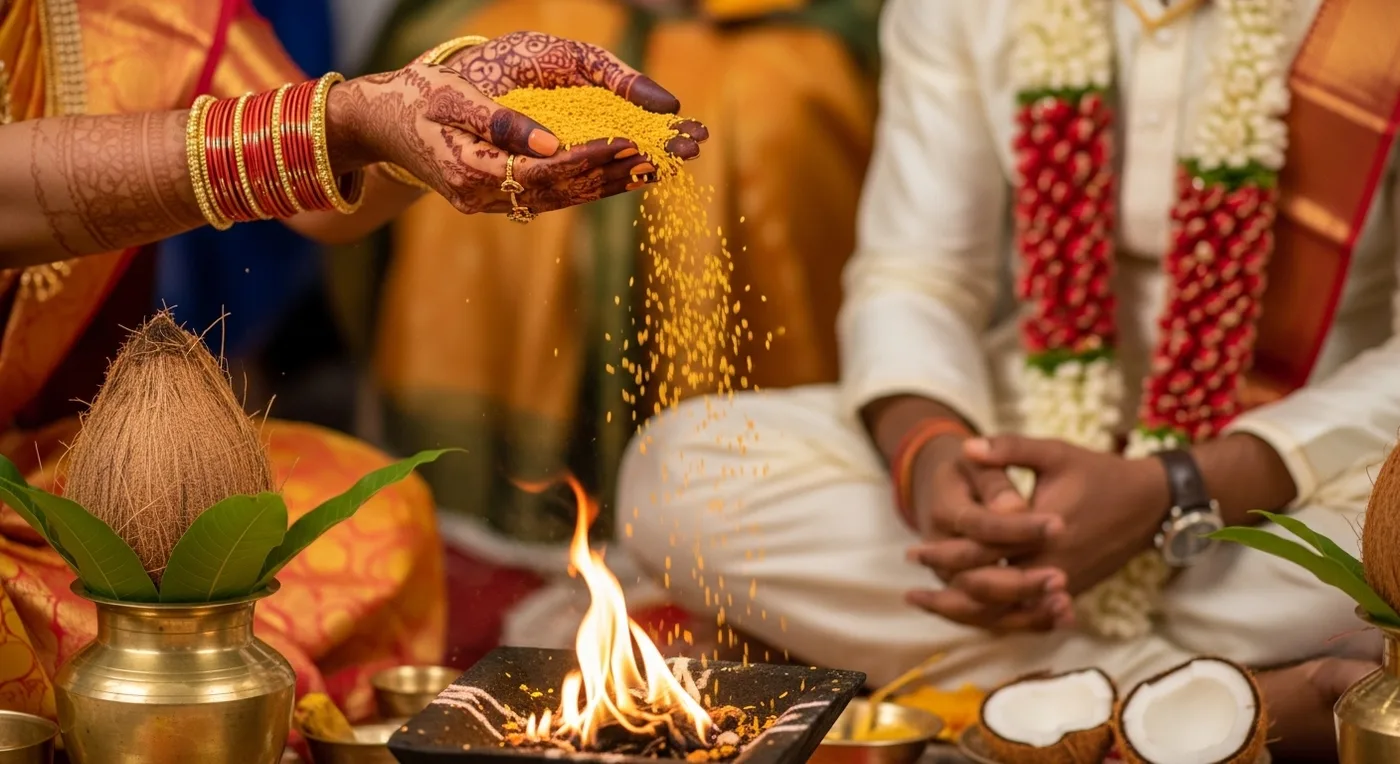
The Talambralu is the joyful climax of the ceremony — and the moment every guest waits for. The bride and groom shower each other with akshintalu (rice grains mixed with turmeric powder), symbolising prosperity and abundance. It's playful, competitive, and often hilarious — family members cheer for "their side" as the couple tries to pour the maximum rice on each other's heads.
This is the most photographed ritual of a Telugu wedding. The golden-tinted rice against the couple's wedding attire creates stunning visuals, and the genuine laughter makes for authentic, unposed shots.
Looking for Photographers in Hyderabad?
Tell us what you need and get quotes from verified photographers
What Happens After the Ceremony?
Arundhati Nakshatram
After the main rituals, the priest directs the couple to look at the Arundhati star (Alcor, a companion star to Mizar in the Ursa Major constellation). Arundhati is revered in Hindu tradition as the ideal wife — devoted, wise, and equal to her husband. Pointing out this star to the newlywed couple symbolises the aspiration for a marriage built on the same virtues.
In practice, this ritual happens at night or is symbolically enacted during daytime ceremonies by directing the couple's gaze skyward while the priest narrates the story of Arundhati and Sage Vasishtha.
Appaginthalu (Bidaai)
The Appaginthalu is the Telugu equivalent of the North Indian Vidaai — the bride's farewell from her parents' home. The bride, now married, leaves with her husband's family. Her parents bless her, and the bride turns back three times to look at her parental home — each glance symbolising gratitude for her upbringing.
It's an emotional moment, often accompanied by traditional songs sung by the women of the family. In Hyderabad, many families now host the Appaginthalu at the venue itself rather than the family home, adapting the tradition to modern logistics.
Gruhapravesham (Welcoming the Bride)
When the bride arrives at the groom's home, she's welcomed with an aarti (lamp ceremony) at the threshold. She enters the home by kicking a pot of rice with her right foot — symbolising that she brings prosperity and abundance to her new family. The groom's mother performs the welcoming rituals and guides the bride into the household.
How Do Andhra and Telangana Customs Differ?
The core Vedic rituals — Kanya Daanam, Jeelakarra Bellam, Mangalya Dharanam, Saptapadi, Talambralu — are identical across Andhra Pradesh and Telangana. As part of India's ₹10.79 lakh crore wedding industry, Telugu weddings represent one of the country's largest regional wedding markets. The differences between the two states show up in three areas:
Pre-wedding customs — Telangana families may incorporate Bathukamma-inspired floral arrangements (the state's iconic flower festival) into the wedding decor. Andhra coastal families sometimes include rituals specific to the fishing and agricultural communities of the region.
Cuisine — Telangana wedding feasts lean toward Hyderabadi influences — biryani, paya, and Deccani sweets alongside traditional Telugu dishes. Andhra weddings, particularly in coastal districts, emphasise seafood, pulihora (tamarind rice), and Andhra-style non-veg preparations that are spicier and tangier than their Telangana counterparts.
Attire — While Kanchi silk is universal, Telangana brides often choose Pochampally Ikat saris (a Telangana-origin weave), while Andhra brides may prefer Mangalagiri or Uppada silk from their respective regions.
Tip
How Should You Plan the Ceremony Timeline?
A well-planned timeline ensures every ritual gets the time and attention it deserves. Here's a suggested schedule for a morning Telugu wedding:
| Time | Ritual | Duration |
|---|---|---|
| 6:00 AM | Venue setup and priest arrival | 30 min |
| 6:30 AM | Ganesh Puja and Punyahavachanam | 20 min |
| 7:00 AM | Vara Puja (groom's welcome) | 15 min |
| 7:15 AM | Kanya Daanam | 20 min |
| 7:35 AM | Jeelakarra Bellam | 10 min |
| 7:45 AM | Mangalya Dharanam (muhurtham time) | 15 min |
| 8:00 AM | Saptapadi | 20 min |
| 8:20 AM | Talambralu | 10 min |
| 8:30 AM | Blessings from elders | 30 min |
| 9:00 AM | Breakfast / reception begins | — |
Important
The muhurtham — the auspicious moment for tying the Mangalsutra — is non-negotiable in its timing. Every other element of the ceremony schedule should be built around this fixed point. Discuss the exact muhurtham with your priest at least a month before the wedding and share the timeline with all vendors, especially your photographer and videographer.
Looking for Decorators in Hyderabad?
Tell us what you need and get quotes from verified decorators
For a complete planning guide covering venues, budgets, and vendors, see our Hyderabad wedding planning guide. If you're building your month-by-month checklist, our Hyderabad wedding checklist covers every milestone from 12 months out to the wedding week.
Tip
Start planning your wedding — generate a personalised checklist with our AI Wedding Checklist, estimate your budget with the Cost Calculator, or create a beautiful digital invitation.
Topics
telugu wedding ritualstelugu wedding ceremonyandhra wedding traditionstelangana wedding customstelugu hindu weddingExplore more
Frequently Asked Questions
1How long does a Telugu wedding ceremony take?
2What is the Jeelakarra Bellam ritual in a Telugu wedding?
3What does the bride wear in a Telugu wedding?
4What is Talambralu and why is it significant?
5What is the difference between Andhra and Telangana wedding customs?
Continue reading
Related Articles
How to Plan a Hyderabad Wedding: The Complete 2026 Guide
Hyderabad Wedding Traditions: Telugu, Muslim & Multi-Faith Customs Explained
Pre-Wedding Rituals in Hyderabad: Mehendi, Haldi & Engagement Customs
Best Season for South India Destination Weddings: Month-by-Month Western Ghats Guide
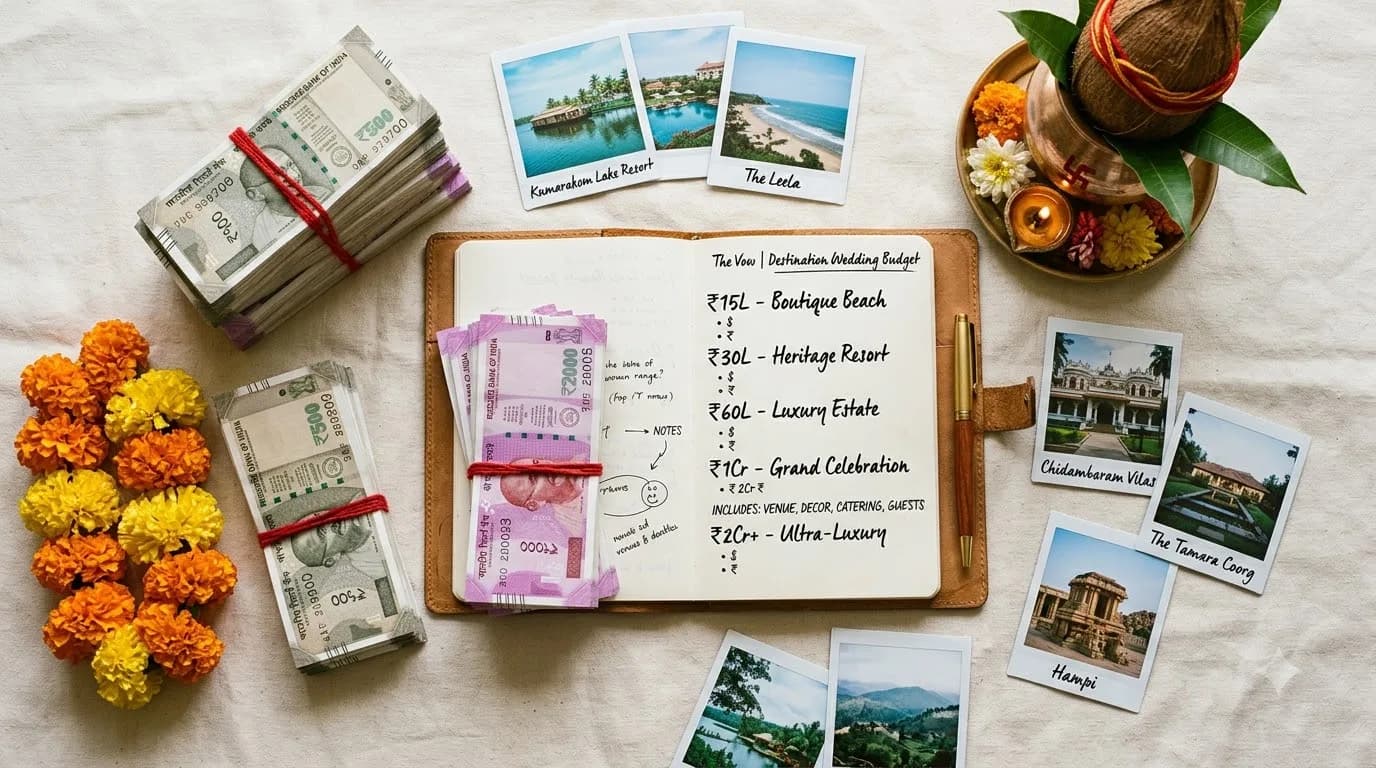
Destination Wedding Cost in South India 2026: 5-Tier Budget Guide
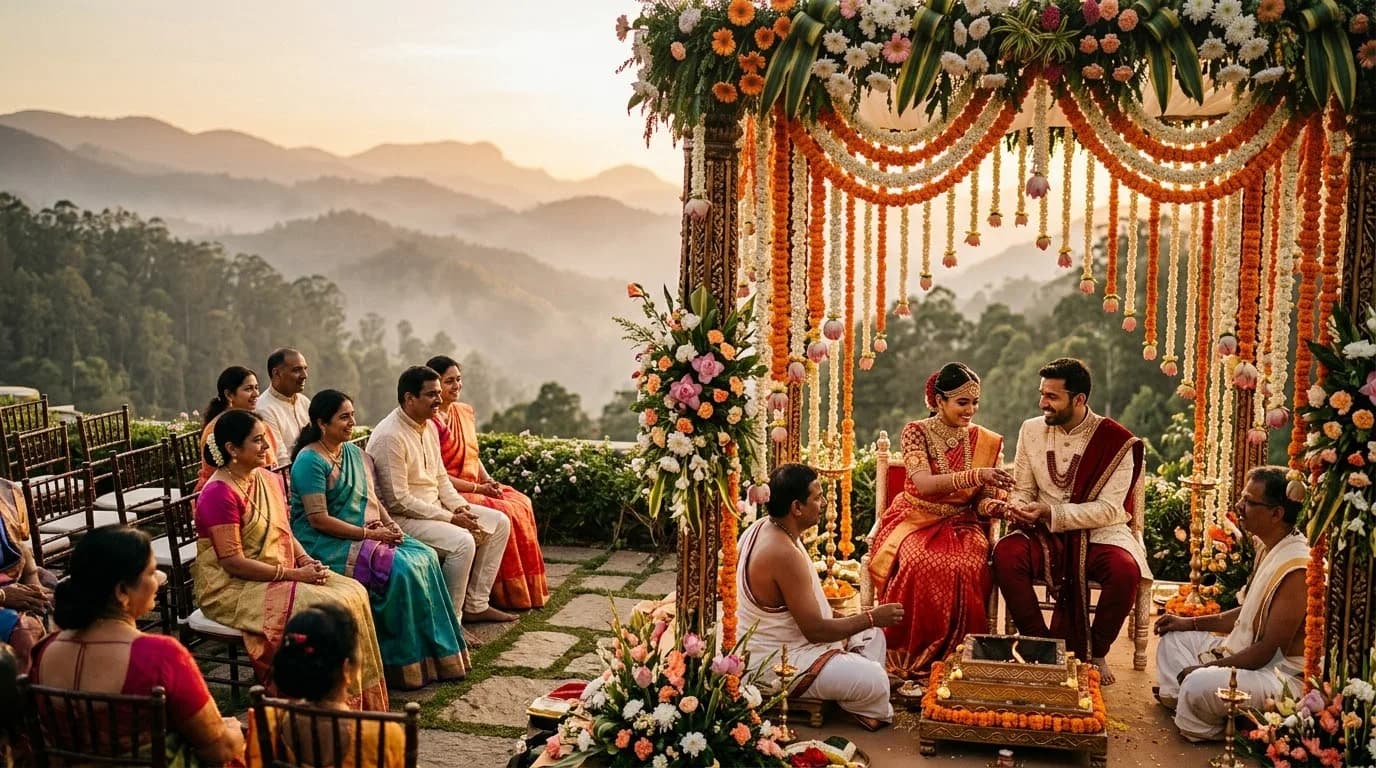
Destination Wedding in South India: Complete 2026 Planning Guide
Still planning?
Get quotes from India's best vendors
Tell us what you're planning and we'll match you with verified photographers, venues, decorators, and more.
Get free quotes