
How to Track Your Wedding Budget Without a Spreadsheet
Ditch the spreadsheet — use modern budget tracking tools with real-time category breakdowns, vendor payment tracking, and visual spending reports for your wedding.

Wedding Finance Advisor
Arjun Das is a wedding finance advisor who helps couples across Kerala plan celebrations that match their vision without breaking the bank.
On this page
Couples who use dedicated budget tracking tools are 40% less likely to overspend compared to those using spreadsheets or no tracking at all (based on itsmy.wedding user data and industry patterns). Modern wedding budget trackers auto-categorise spending, show real-time visual breakdowns, and send payment reminders — all without a single formula. Start tracking your wedding budget with pre-configured Indian wedding categories.
Quick Answer
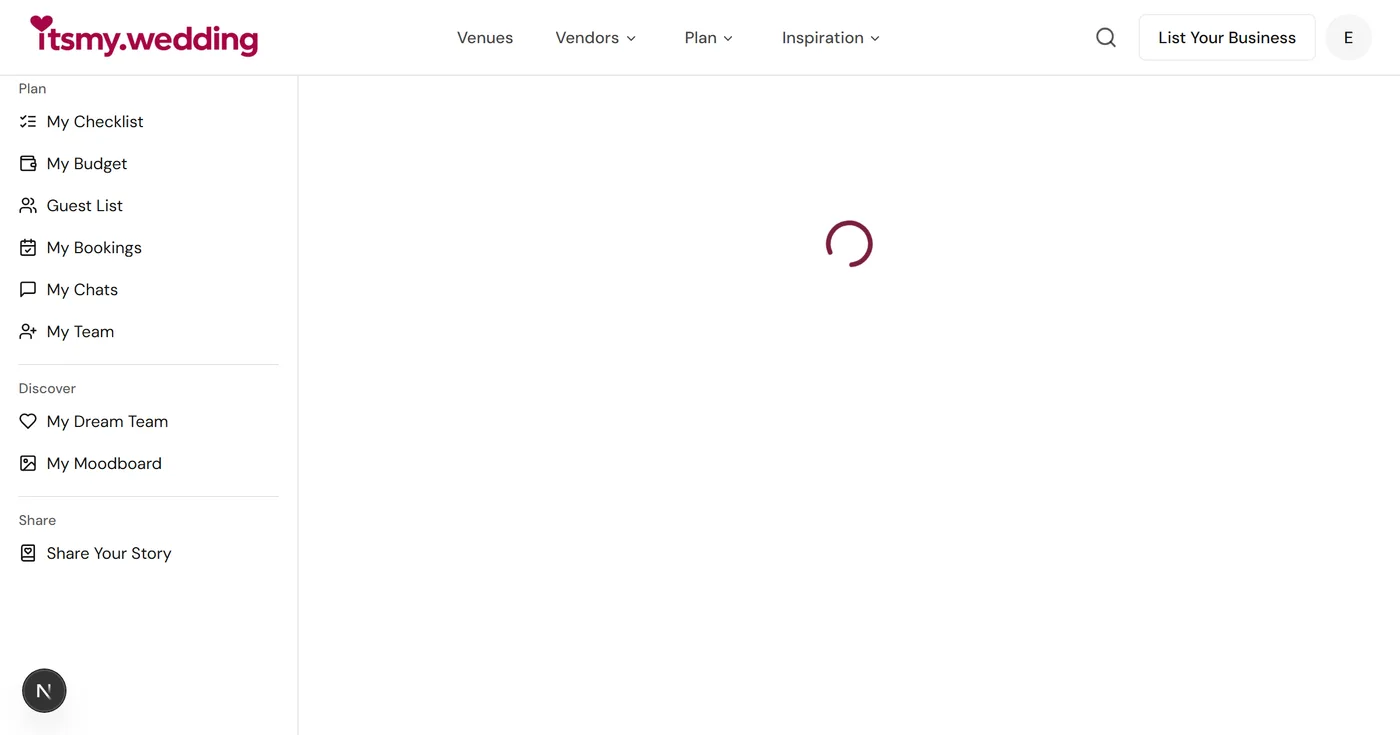
How to track your wedding budget without a spreadsheet: use a dedicated tool like the itsmy.wedding Budget Manager which pre-configures Indian wedding categories, auto-calculates totals, and shows visual spending breakdowns. Set your total budget first, adjust category allocations, then log every vendor payment as it happens. A 5-minute weekly review of the dashboard catches overspend early — before individual line items compound into a 20–30% budget overrun.
Nearly 70% of couples exceed their original wedding budget, according to Zola's First Look Report. That figure is not because couples are careless — it is because the tools most people use to track their spending are fundamentally mismatched to the way wedding finances actually work. A wedding is not a monthly household budget with predictable, recurring expenses. It is a one-time project with 10-20 vendors, staggered payment milestones, last-minute additions, and family members contributing from multiple directions. Spreadsheets were not designed for this.
According to The Knot's Real Weddings Study, 55% of couples rank budgeting as the single most important factor in wedding planning, yet 48% say managing the gap between what they can afford and what they want is their biggest pain point. The disconnect between knowing budgets matter and actually tracking them well is where most financial stress originates. A Benzinga analysis of recent wedding data found that hidden costs — service charges, gratuities, overtime fees, and weather contingencies — add 9-15% to total costs beyond vendor quotes, a gap that spreadsheets rarely anticipate.
This guide explains why spreadsheets fail for wedding budgets, what modern tracking tools do differently, and how to set up a working budget system in five minutes using our Budget Manager.
Why Spreadsheets Fail for Wedding Budgets
Spreadsheets are powerful tools. They handle corporate finance, scientific data, and inventory management brilliantly. But wedding budget tracking has specific requirements that expose every weakness spreadsheets carry.
Formula Errors Are More Common Than You Think
A study cited by GoLimelight found that SUM formulas that exclude crucial rows are among the most common spreadsheet errors, silently underestimating expenses. When you add a new vendor row in the middle of your budget sheet, existing formulas do not automatically expand to include it. You discover the error weeks later when your "total spent" figure is mysteriously lower than what your bank account shows. According to ITILITE's analysis of expense tracking errors, manual data entry in spreadsheets leads to incorrect entries, oversight errors, and misinterpreted data — problems that compound when you are juggling 15 vendor invoices across multiple months.
No Reminders, No Alerts
A spreadsheet does not know that your photographer's second instalment is due next Tuesday. It does not alert you when catering costs exceed 35% of your total budget. It does not flag that you have spent nothing on decoration with eight weeks to go. You are responsible for checking the spreadsheet, interpreting the numbers, and remembering every deadline yourself. In practice, couples check their budget spreadsheet enthusiastically for the first two weeks and then sporadically — or not at all — for the remaining months.
Version Conflicts and Sharing Problems
Indian weddings involve multiple financial contributors. The couple tracks their own spending. Parents contribute to specific categories. Siblings handle logistics expenses. When three people edit the same Google Sheet, you get conflicting versions, accidentally overwritten cells, and formulas that break because someone pasted values into a formula cell. Microassist's analysis of real-world spreadsheet failures documents how accidental overwrites in shared spreadsheets have caused budget shortfalls in organisations far more sophisticated than a wedding planning team.
No Visual Context
A column of numbers does not tell you whether you are on track. You need to build your own charts, update them manually, and interpret them correctly. Most couples never get to this step. They see rows of figures, feel vaguely informed, and miss the pattern that their decoration spending is 40% over allocation while their photography budget sits untouched.
Important
What a Modern Budget Tracker Does Differently
A purpose-built wedding budget tracker solves each of the problems above — not by being a better spreadsheet, but by being a fundamentally different kind of tool. Here is what changes when you move to a dedicated tracker like our Budget Manager.
Pre-Configured Categories
You do not start from a blank grid. A wedding budget tracker comes with category structures designed for Indian weddings — venue, catering, photography, videography, decor, attire, jewellery, entertainment, invitations, transport, and contingency — with recommended percentage allocations based on real data. You adjust the percentages to match your priorities, and the tool calculates category budgets from your total automatically.
Real-Time Visual Breakdowns
Every payment you log updates a visual dashboard instantly. Pie charts show category distribution. Progress bars show how much of each category allocation you have used. Colour coding flags categories that are approaching or exceeding their limits. You understand your financial position in three seconds, not thirty minutes.
Multi-User Access Without Conflicts
Modern budget tools handle concurrent access properly. When your mother logs a ₹15,000 decoration purchase from her phone while you log a ₹50,000 photographer advance from yours, both entries appear correctly without overwriting each other. There is no "which version is current?" confusion.
Payment Milestone Tracking
Wedding vendor payments follow a predictable pattern: advance at booking, second instalment at confirmation, balance before the event, and final settlement after. A budget tracker lets you set up these milestones per vendor and see outstanding balances at a glance. This is particularly valuable when you are managing 10-15 vendors simultaneously — which is standard for Indian weddings.
Tip
Setting Up Your Wedding Budget in 5 Minutes
You do not need an hour of setup time. Here is how to go from zero to a fully structured wedding budget using our Budget Manager.
Step 1: Set Your Total Budget
Open the Budget Manager and enter your total wedding budget. If you are unsure what your total should be, use the Cost Calculator first — it models realistic costs based on your city, guest count, and style preferences. For a detailed breakdown of what different budget levels buy you in Kerala, see our budget tier plans.
Step 2: Review and Adjust Category Allocations
The tool pre-loads standard Indian wedding categories with recommended percentages. Review them against your priorities. If photography matters more to you than decoration, drag the photography allocation up and decoration down. The rupee amounts recalculate automatically.
Step 3: Add Your Vendors
As you book vendors, add them to the relevant category. Enter the total contract amount and the payment schedule — advance paid, next instalment date, balance due date. The tracker subtracts confirmed vendor costs from your category budget and shows remaining allocation.
Step 4: Log Every Payment
This is the discipline that separates couples who stay on budget from those who do not. Every time you make a payment — UPI transfer, cash, cheque, card — log it immediately. It takes ten seconds on your phone. The dashboard updates in real time.
Step 5: Review Weekly
Set a weekly reminder to review your dashboard. Five minutes each Sunday is enough. Look at the category progress bars, check for any approaching payment deadlines, and scan for categories that are trending over allocation. Early detection prevents overspending — a category that is 10% over at the halfway point is fixable; the same category at 40% over with two weeks to go is not.
Track your wedding budget
See every payment, deposit, and balance across all your events in one place.
The Right Budget Categories for Indian Weddings
Category allocation is where most couples go wrong. They either use a Western template that does not account for Indian wedding structures — multi-day events, large guest counts, elaborate catering — or they skip categories entirely and discover gaps when invoices arrive.
Note
How we compiled these allocation ranges: Category percentages are derived from itsmy.wedding vendor data and cross-referenced with published breakdowns from CalcWise Finance and The Wedding Ties. Figures represent typical Kerala and South Indian wedding structures; couples should adjust allocations to match their own priorities.
Here are the standard categories and recommended allocation ranges for Indian weddings, based on data from CalcWise Finance and The Wedding Ties:
| Category | Recommended Allocation | What It Covers |
|---|---|---|
| Venue | 15–25% | Ceremony hall, reception venue, generator, parking |
| Catering | 25–35% | Food, beverages, serving staff, banana leaves or crockery, GST |
| Photography & videography | 10–15% | Candid team, traditional coverage, drone, cinematic edit, albums |
| Decor & flowers | 8–12% | Mandapam, stage, entrance, floral arrangements, lighting |
| Attire & jewellery | 10–15% | Bridal saree/lehenga, groom outfit, accessories, rental jewellery |
| Entertainment & music | 3–5% | Sound system, DJ, chenda melam, nadaswaram, live music |
| Invitations | 2–3% | Digital e-invites, printed cards for elders, save-the-dates |
| Makeup & styling | 2–4% | Bridal makeup artist, groom grooming, family styling |
| Transport & logistics | 2–3% | Decorated car, guest shuttle, airport transfers |
| Contingency buffer | 10–15% | Unexpected costs, last-minute additions, vendor overruns |
These percentages are starting points, not rules. A couple who cares deeply about food might allocate 40% to catering and reduce decoration to 5%. A couple planning a destination wedding might push venue to 30% and trim entertainment. The categories exist to ensure you do not forget a spending area — the allocations exist to ensure you make deliberate tradeoffs rather than accidental ones.
For a Kerala-specific breakdown with exact rupee amounts at different budget tiers, see our Kerala wedding budget guide.
Tip
Tracking Vendor Payments and Milestones
The average Indian wedding involves 10-15 vendors. Each vendor has their own payment schedule, and those schedules overlap in ways that are nearly impossible to hold in your head. Here is the standard payment cycle and how to track it.
The Typical Vendor Payment Cycle
Most wedding vendors follow a four-stage payment pattern:
- Advance at booking (10-30%): Paid when you confirm the vendor. This secures your date and locks the quoted price.
- Second instalment at confirmation (20-30%): Paid 2-3 months before the wedding when you finalise details — menu choices, shot list, decoration layout.
- Balance before the event (30-40%): Paid 1-2 weeks before the wedding. Most vendors will not begin final preparations until this is received.
- Final settlement (0-10%): Any remaining balance or adjustments settled within a week after the wedding. This covers actuals that differed from estimates — extra guests, overtime, additional items.
Why Payment Tracking Matters
Without a system, you lose track of which vendors have received which instalments. At the ₹10-15 lakh budget level common in Kerala weddings, you are managing ₹3-5 lakhs in outstanding vendor balances at any given point during planning. A missed payment can delay a vendor's preparation. A double payment — which happens more often than couples admit — is money that is extremely difficult to recover.
In a budget tracker, each vendor entry shows: total contract amount, payments made, payment dates, next instalment due, and outstanding balance. You see all 12 vendors on one screen. You know exactly where every rupee has gone.
Coordinating Family Contributions
In many Indian families, different relatives fund different aspects of the wedding. The bride's family covers the venue and catering. The groom's family handles decoration and jewellery. An uncle sponsors the photography. Without centralised tracking, no one has a complete picture of total spending. A shared budget tracker gives every contributor visibility into the overall budget while letting each person manage their designated categories.
Common Budget Traps and How to Avoid Them
Budget overruns rarely happen because of a single large mistake. They accumulate through a series of small, individually reasonable decisions that collectively push spending 20-30% beyond the plan. Here are the traps to watch for.
Catering GST and Service Charges
This is the most common budget trap in Indian weddings. You negotiate a per-plate rate of ₹800 and multiply by 400 guests to get ₹3,20,000. But the final invoice includes 5% GST on food (18% if the venue is an air-conditioned banquet hall with liquor), service staff charges of ₹15,000-25,000, beverage costs quoted separately, and a surcharge for late-night service. The actual cost lands at ₹3,80,000-4,20,000 — a 20-30% overrun on a single category. According to Panache Haute Couture's wedding budget analysis, catering typically accounts for 25-35% of total wedding spending, making this the single largest area for cost surprises.
How to avoid it: When entering a caterer's quote into your budget tracker, add a 15% buffer above the quoted per-plate rate. Log the GST and service charges as separate line items. Ask your caterer for an all-inclusive quote that covers staff, beverages, and service tax — and get it in writing. For a deep dive into catering costs, see our Kerala sadhya catering cost guide.
Decoration Scope Creep
Decoration starts with "simple and elegant" and ends with "we added fairy lights to the parking lot." Each individual addition — an extra floral arrangement here, upgraded drapes there, a photo booth corner, an entrance archway — feels small. Collectively, they can double the decoration budget. This is scope creep, and it is the second most common source of wedding budget overruns.
How to avoid it: Set a firm decoration budget in your tracker and share the number with your decorator from the first conversation. Ask for an itemised quote, not a package price. When they suggest additions, check them against your tracker before agreeing. If the total exceeds your allocation, something must come out before something new goes in.
Last-Minute Guest Additions
Every 100 additional guests costs ₹1.5-3 lakhs in catering, seating, and hospitality costs, as detailed in our tier-based budget plans. The guest list is usually "finalised" three months before the wedding and then grows by 15-25% as relatives remember people who cannot be excluded. This guest count overrun cascades through multiple budget categories — more food, more seating, more invitations, a bigger venue setup.
How to avoid it: Build your budget around a guest count that is 10% higher than your initial list. Track confirmed RSVPs in your planner and update catering numbers weekly during the final month.
The "We're Already Over, So It Doesn't Matter" Mindset
Once couples realise they have exceeded their budget in one category, a psychological barrier breaks. Subsequent spending decisions become less disciplined because the budget feels already broken. This is the most dangerous trap because it turns a 10% overrun into a 30% overrun.
How to avoid it: A budget tracker shows you the overrun in context. If you are ₹50,000 over on catering but ₹30,000 under on entertainment, the net position is only ₹20,000 over — which might be absorbable by your contingency buffer. Visual context prevents the emotional reaction that turns one overrun into general overspending.
Important
When to Review Your Budget
Setting up a budget tracker is the first step. Reviewing it consistently is what actually prevents overspending. Here is a practical review rhythm that works without consuming your planning time.
Weekly Check-In (5 Minutes)
Every Sunday evening, open your Budget Manager and scan three things:
- Category progress bars: Is any category approaching its limit faster than expected?
- Upcoming payments: Are any vendor instalments due this week?
- Recent entries: Did all payments from the past week get logged?
This five-minute habit catches problems when they are small. A category trending 10% over at the halfway point needs a minor adjustment. The same category at 40% over in the final month needs a painful conversation.
Monthly Deep Review (30 Minutes)
Once a month, sit down with your partner — and contributing family members, if applicable — for a deeper review:
- Compare actual spending to planned allocations across all categories.
- Identify categories where you are likely to underspend and reallocate those funds to categories under pressure.
- Update vendor payment schedules if any dates have shifted.
- Review the contingency buffer — how much remains, and what known upcoming costs might draw from it?
Final Month: Daily Awareness
In the last 30 days before the wedding, expenses accelerate. Final vendor payments, last-minute purchases, tips, transport bookings, and emergency items all cluster into this window. During this period, log expenses on the same day they occur and check your dashboard daily. This is when the discipline of consistent tracking pays its highest dividend.
For a complete planning timeline that integrates budget reviews with every other planning task, see our Indian wedding checklist timeline. Our AI Wedding Checklist generates a personalised schedule based on your wedding date.
Start Tracking Now
The best time to start tracking your wedding budget is the day you set your date. The second-best time is today. Every week of untracked spending is a week where small overruns accumulate unnoticed.
Here is your three-step starting point:
- Set your total budget using the Cost Calculator if you need help determining a realistic number for your city and guest count. Our Kerala wedding cost calculator guide walks through the process in detail.
- Open the Budget Manager and configure your categories. Five minutes of setup gives you a system that works for the entire planning period.
- Log your first expense. If you have already paid a venue advance or a photographer booking fee, enter it now. The tracker only works if it reflects reality.
Wedding planning is one of the most financially complex projects most couples undertake. The Knot Worldwide's 2026 trends report found that 71% of couples did not feel prepared for the sheer number of decisions involved. A budget tracker does not make decisions for you — but it makes the financial consequences of each decision visible before you commit, not after.
For comprehensive planning resources, explore our best wedding planning tools for 2026, and for a full budget guide tailored to Kerala, read our Kerala wedding budget guide.
Your wedding deserves your presence, not your stress. Start your budget tracker now and take the financial guesswork out of your planning.
Topics
wedding budget trackerwedding budget apptrack wedding spendingwedding budget without spreadsheetwedding financial planningExplore more
Frequently Asked Questions
1Why should I use a budget tracker instead of a spreadsheet for my wedding?
2How do I set budget categories for my Indian wedding?
3What is the most common budget mistake in Indian weddings?
4Can I track vendor payments in a wedding budget tool?
Continue reading
Related Articles

Kerala Wedding Budget Guide: 2026 Cost Breakdown
Best Free Wedding Planning Tools in 2026: The Complete Guide
Kerala Wedding Cost Calculator: 2026 Budget Estimator

Budget Wedding in Kerala: Complete Plans for ₹5 Lakh, ₹10 Lakh & ₹15 Lakh

Best Season for South India Destination Weddings: Month-by-Month Western Ghats Guide
Destination Wedding Cost in South India 2026: 5-Tier Budget Guide
Still planning?
Get quotes from India's best vendors
Tell us what you're planning and we'll match you with verified photographers, venues, decorators, and more.
Get free quotes