
Temple Wedding Photography in South India: Rules, Tips & Restrictions by Temple
Navigate temple wedding photography rules across 12 south Indian temples — no-flash zones, camera fees, gear tips, and how to hire the right photographer.

Senior Wedding Planner
Priya Nair is a senior wedding planner based in Kochi with over eight years of experience coordinating Hindu, Christian, and destination weddings across Kerala.
On this page
Temple wedding photography across south India follows strict rules — flash is banned in virtually every sanctum, camera fees range from ₹100 – ₹500, and Guruvayur permits only authorized temple photographers. Knowing each temple's restrictions before you book a photographer is the difference between a stunning wedding album and a missed ceremony.
Quick Answer
Quick answer: Temple wedding photography across south India follows strict rules — flash is banned in virtually every sanctum, camera fees range from ₹100 – ₹500, and Guruvayur permits only authorized temple photographers. Knowing each temple's restrictions before you book a photographer is the difference between a stunning wedding album and a missed ceremony.
Note
Pricing methodology: Cost ranges in this guide are based on vendor pricing data from the itsmy.wedding marketplace and published industry reports, collected in Q4 2025 – Q1 2026.
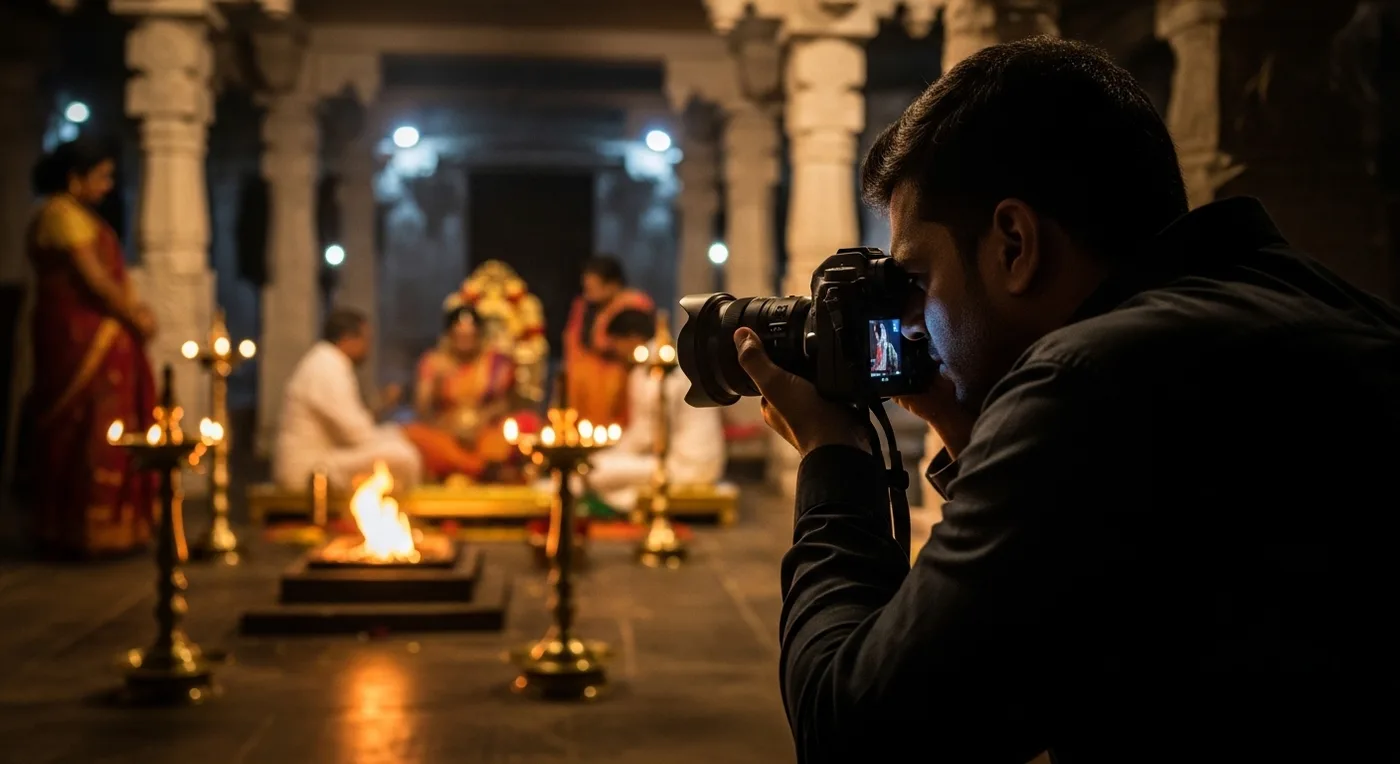
Temple wedding photography is a distinct discipline — your photographer works in near-darkness, cannot use flash, faces restricted access zones, and gets exactly one chance to capture moments that cannot be staged or repeated.
I have covered weddings at over forty temples across Kerala, Tamil Nadu, and Karnataka, and the single biggest regret I hear from couples is this: "We didn't know about the photography rules." They hired a talented studio photographer who had never shot inside a temple. The results were dark, distant, and disappointing — not because the photographer lacked skill, but because they lacked preparation.
This guide covers photography rules at twelve major south Indian temples, the gear and techniques that work in temple conditions, and how to find the right photographer. For broader planning, see our south Indian temple wedding guide.
Why Is Temple Wedding Photography Different from Conventional Wedding Photography?
A hotel wedding gives the photographer control — lighting rigs, positioning freedom, the ability to ask the couple to repeat a moment. Temple weddings strip all of that away.
No artificial light. Flash is prohibited inside the sanctum and inner mandapams of virtually every south Indian temple. The Archaeological Survey of India enforces strict no-flash rules at heritage-protected sites. Your photographer works with oil lamps, windows, and sparse electric lighting.
Restricted movement. Many temples confine photographers to designated spots. At Guruvayur, outside photographers are banned entirely. Walking in front of the deity or crossing boundary lines is forbidden.
No retakes. The thali-tying, the saptapadi — each happens once. Your photographer must anticipate every moment and be in position before it happens.
Sacred protocol. Temples follow specific etiquette rules — footwear removal, modest clothing, silence during key rituals. A photographer who disrupts the ceremony will be asked to leave — I have seen it happen at Meenakshi Temple.
Time compression. The core ceremony lasts 45 to 90 minutes. Every critical moment clusters within that window.
Note
What Are the Photography Rules at Major South Indian Temples?
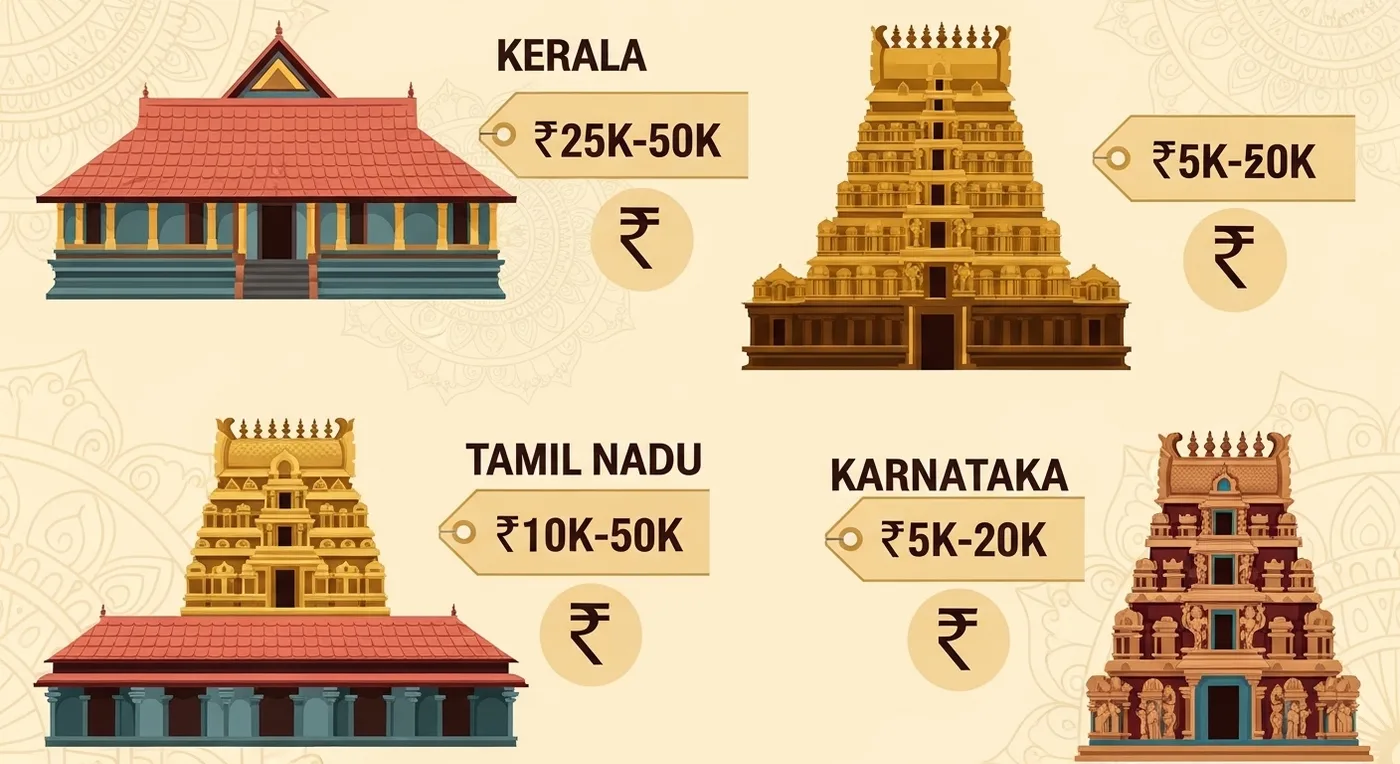
Rules vary dramatically — what is acceptable at Dharmasthala may get your camera confiscated at Guruvayur. This table covers twelve temples where couples frequently marry.
| Temple | Personal Cameras | Flash | Tripods | Drones | Video | Temple Photographer Required | Camera Fee |
|---|---|---|---|---|---|---|---|
| Guruvayur (Kerala) | Not allowed | Banned | Banned | Banned | Temple videographer only | Yes — mandatory | Included in ceremony fee |
| Padmanabhaswamy (Kerala) | Restricted to outer areas | Banned | Banned | Banned | Restricted | Recommended | ₹200 – ₹200 |
| Meenakshi Amman (Tamil Nadu) | Allowed in outer mandapam | Banned inside | Banned | Banned | Allowed with permission | No | ₹100 – ₹200 |
| Kamakshi Amman (Tamil Nadu) | Allowed in ceremony area | Banned in sanctum | Banned | Banned | Allowed | No | ₹100 – ₹100 |
| Varadharaja Perumal (Tamil Nadu) | Allowed in 96-pillar hall | Banned in sanctum | Banned | Banned | Allowed | No | ₹200 – ₹200 |
| Brihadeeswarar (Tamil Nadu) | Allowed (ASI rules apply) | Banned | Banned | Banned (ASI site) | Allowed with ASI permit | No | ₹500 – ₹500 |
| Srirangam (Tamil Nadu) | Allowed in outer prakarams | Banned | Banned | Banned | Allowed with fee | No | ₹200 – ₹300 |
| Tirupati (Andhra Pradesh) | Very restricted | Banned | Banned | Banned | Very restricted | TTD guidelines apply | ₹200 – ₹500 |
| Dharmasthala (Karnataka) | Allowed freely | Banned inside sanctum | Allowed outside | Banned inside premises | Allowed | No | Free |
| Chamundeshwari (Karnataka) | Allowed | Banned inside sanctum | Allowed outside | Banned | Allowed | No | ₹100 – ₹100 |
| Udupi Sri Krishna (Karnataka) | Allowed | Banned inside | Allowed outside | Banned | Allowed | No | Free |
| Gokarna (Karnataka) | Allowed with restrictions | Banned inside | Banned | Banned | Allowed with permission | No | ₹100 – ₹200 |
Key pattern: Karnataka temples are the most photographer-friendly. Tamil Nadu temples allow personal photographers but restrict gear. Kerala temples — especially Guruvayur — are the most restrictive.
Important
How Do You Handle Low-Light Photography in Temple Interiors?
Temple interiors are among the most challenging low-light environments a photographer will face. Oil lamps, narrow window openings, and sparse electric bulbs create pockets of warm golden light surrounded by deep shadow.
High ISO is essential. Modern full-frame sensors handle ISO 3200-6400 with acceptable noise. At a recent wedding I documented at Srirangam, I shot the thali-tying sequence at ISO 5000 and the results were clean enough for large prints.
Wide apertures create intimacy. Fast primes at f/1.4 to f/2.0 gather maximum light while isolating the couple from the busy background — drawing attention to faces and hands during rituals.
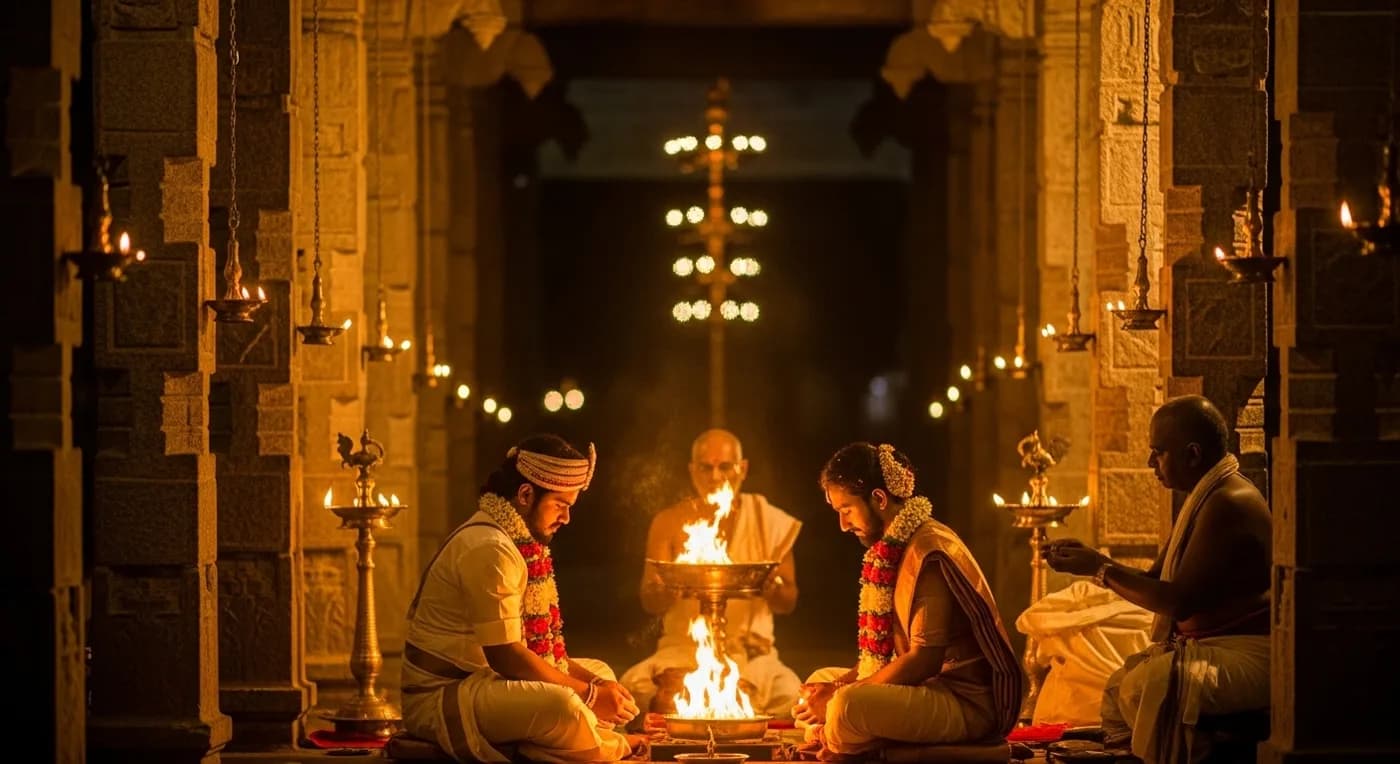
Oil lamp light is an asset. The warm glow of deepams produces light no studio setup can replicate. Experienced temple photographers catch faces lit by lamp light, creating images with a timeless, painterly quality. Golden tones against dark temple stone have become a signature of south Indian wedding albums.
Window light creates spotlights. Many Dravidian temples have narrow openings that funnel sunlight into shafts across corridors — a photographer who knows the temple understands where these fall at different times.
Post-processing matters. RAW format is mandatory. Temple images need noise reduction, shadow brightening, and white balance correction for mixed lighting.
Looking for Photographers in Chennai?
Tell us what you need and get quotes from verified photographers
Which Camera Gear Works Best for Temple Wedding Photography?
Equipment choices matter more for temple work than at any other wedding venue type.
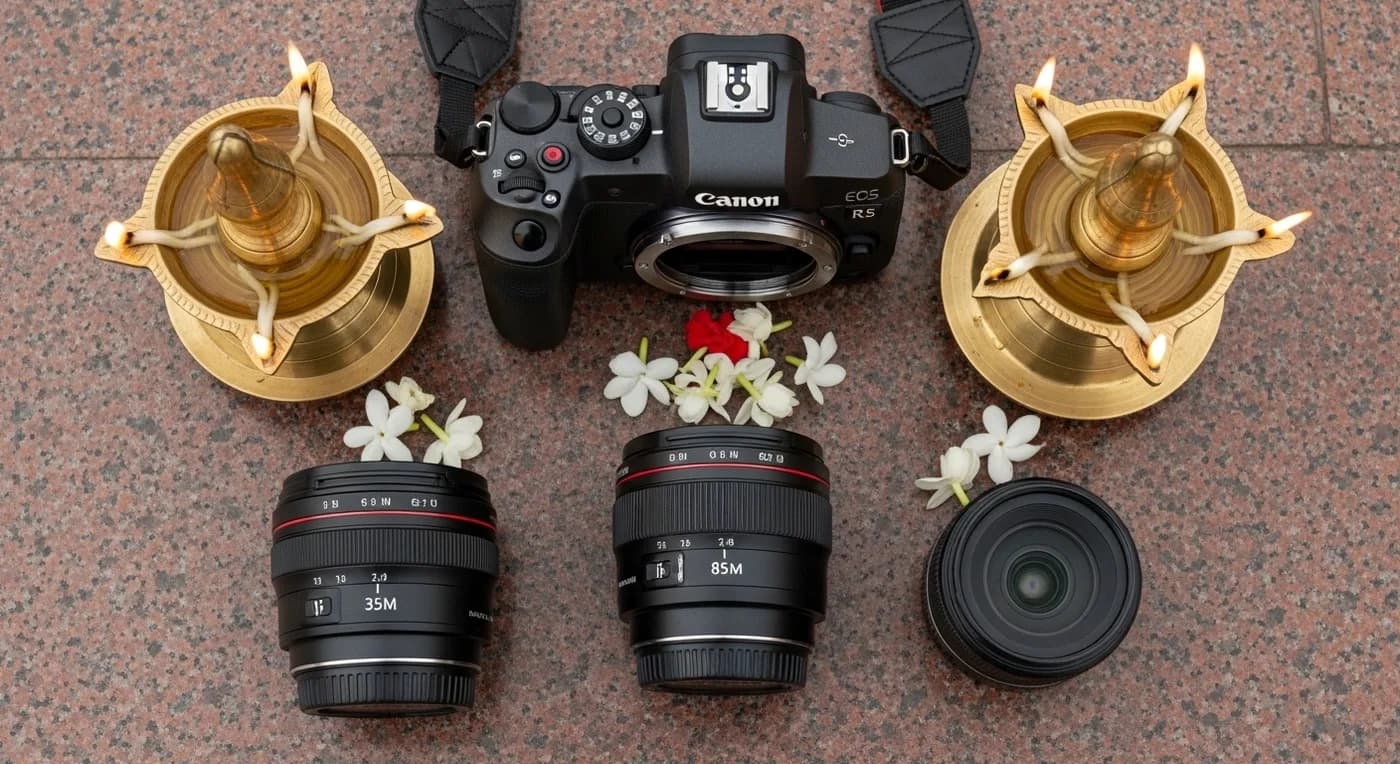
Camera body: Full-frame mirrorless cameras (Sony A7 series, Canon EOS R6/R8, Nikon Z6 III) offer the high-ISO performance and silent electronic shutter modes that temple work demands. The mechanical click of a DSLR echoes in quiet temple spaces — silent shutter is a requirement, not a preference.
Prime lenses over zooms. Fast primes outperform zooms in low light:
- 35mm f/1.4 — environmental portraits showing the couple within temple architecture
- 50mm f/1.8 — the ceremony workhorse at a comfortable distance
- 85mm f/1.4 — tight portraits and candid expressions during rituals
A 24-70mm f/2.8 zoom works as backup, but its maximum aperture costs two stops of light compared to a prime at f/1.4 — the difference between a usable shot and a blurry one.
Wide-angle for architecture. A 16-35mm lens captures gopurams, pillared corridors, and the grandeur of the setting — typically before or after the ceremony when there is more freedom to move.
No tripods or monopods. Virtually every temple bans them. Your photographer must shoot handheld with in-body image stabilisation (IBIS) and solid technique at 1/60th of a second.
Tip
What Are the Best Angles and Compositions for Dravidian Temple Architecture?
South Indian Dravidian temple architecture offers visual opportunities no hotel can match. The geometric precision of pillared corridors, soaring gopurams, and intricate stone carvings transform wedding photographs from documentation into art.
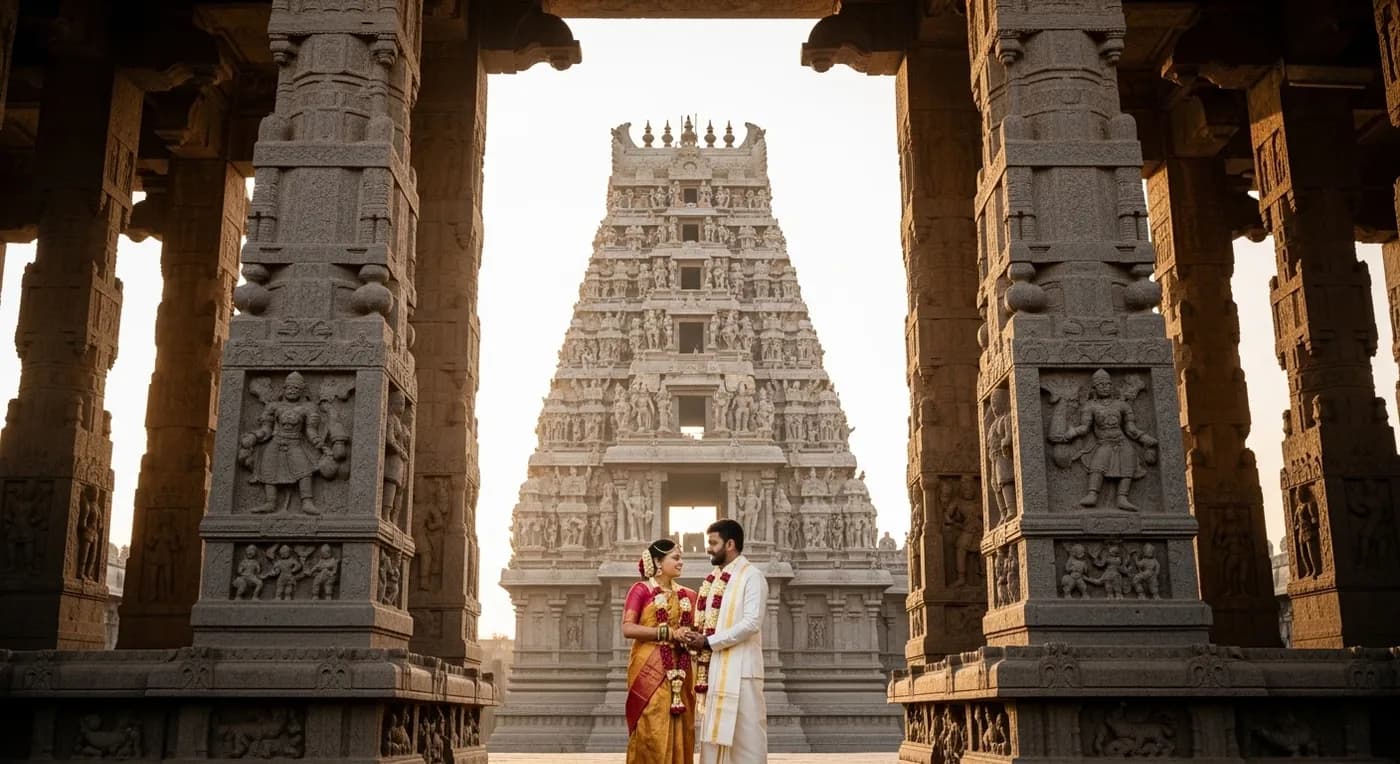
Gopuram framing. Position the couple in the foreground with the gopuram rising behind them. Early morning or late afternoon light gives the best shadow detail on carved surfaces. This is the signature shot of any temple wedding album.
Pillar corridors. The repeating geometry of temple corridors creates natural leading lines drawing the eye to the couple. At Varadharaja Perumal's 96-pillar mandapam or Meenakshi's Thousand Pillar Hall, these corridors produce images of extraordinary depth. Have the couple walk slowly while the photographer shoots from a low angle.
Oil lamp close-ups. Rows of lit brass deepams create bokeh and warmth in the foreground. Shooting through lamps toward the couple produces an ethereal glow that defines south Indian temple wedding photography.
Stone carvings as backdrop. Temple walls carry centuries of carved narrative — gods, dancers, lotus patterns. Using these for couple portraits creates images layered with cultural meaning. Find carvings with clean compositions that complement rather than compete with the couple.
How Do You Coordinate with Temple Authorities for Photography Permissions?
Photography permission requires advance coordination — not wedding-morning scrambling.
Visit the temple office in person. Bring a formal request stating the date, ceremony type, and photographer details. Pay camera fees in advance and collect the receipt. For heritage temples under ASI protection, the ASI fee is separate from the temple fee.
Get written permission. Verbal approvals are unreliable — temple staff rotate shifts, and the person who said "yes" may not be present on your wedding day. Request a stamped receipt mentioning photography permission for your date.
Brief your photographer on the layout. Arrange a pre-wedding visit at the same time of day as your ceremony. This lets the photographer identify light sources and mark shooting positions. In my experience, this single step improves photo quality by 30 to 40 percent.
Coordinate with temple photographers. At Guruvayur and Padmanabhaswamy, coordinate early with the temple's in-house photographer. Understanding what they will and will not deliver helps you plan supplementary coverage outside the sanctum.
Looking for Photographers in Bangalore?
Tell us what you need and get quotes from verified photographers
What Should You Look for When Hiring a Temple Wedding Photographer?
A portfolio full of gorgeous hotel photos tells you nothing about how that photographer performs in a dark mandapam with no flash.
Ask for temple-specific samples. You need actual ceremony documentation from inside a temple — not outdoor pre-wedding shoots. Look for consistently well-exposed images in warm, low-light conditions.
Verify temple familiarity. A photographer who has shot at your specific temple three or more times knows where light falls at 6:30 AM versus 9 AM and which pillar offers the best angle to the fire. Ask them to name their preferred positions.
Check gear. If they mention a crop-sensor camera or lenses slower than f/2.8, they are not equipped. Full-frame bodies with fast primes and RAW shooting are the minimum.
Discuss realistic deliverables. Expect 100 to 200 curated images from a full temple wedding, with 30 to 50 exceptional frames. Anyone promising 500 from a 60-minute ceremony is not being honest.
Pricing. Packages vary by temple, city, and experience:
- Budget (2-3 hours, ceremony only): ₹15,000 – ₹25,000
- Standard (half-day, ceremony + portraits): ₹25,000 – ₹40,000
- Premium (full-day, pre-wedding shoot + ceremony): ₹40,000 – ₹50,000
Metro-city photographers may charge more for destination temple assignments.
Tip
Common Questions About Temple Wedding Photography in South India
Which temples in south India are photographer-friendly for weddings?
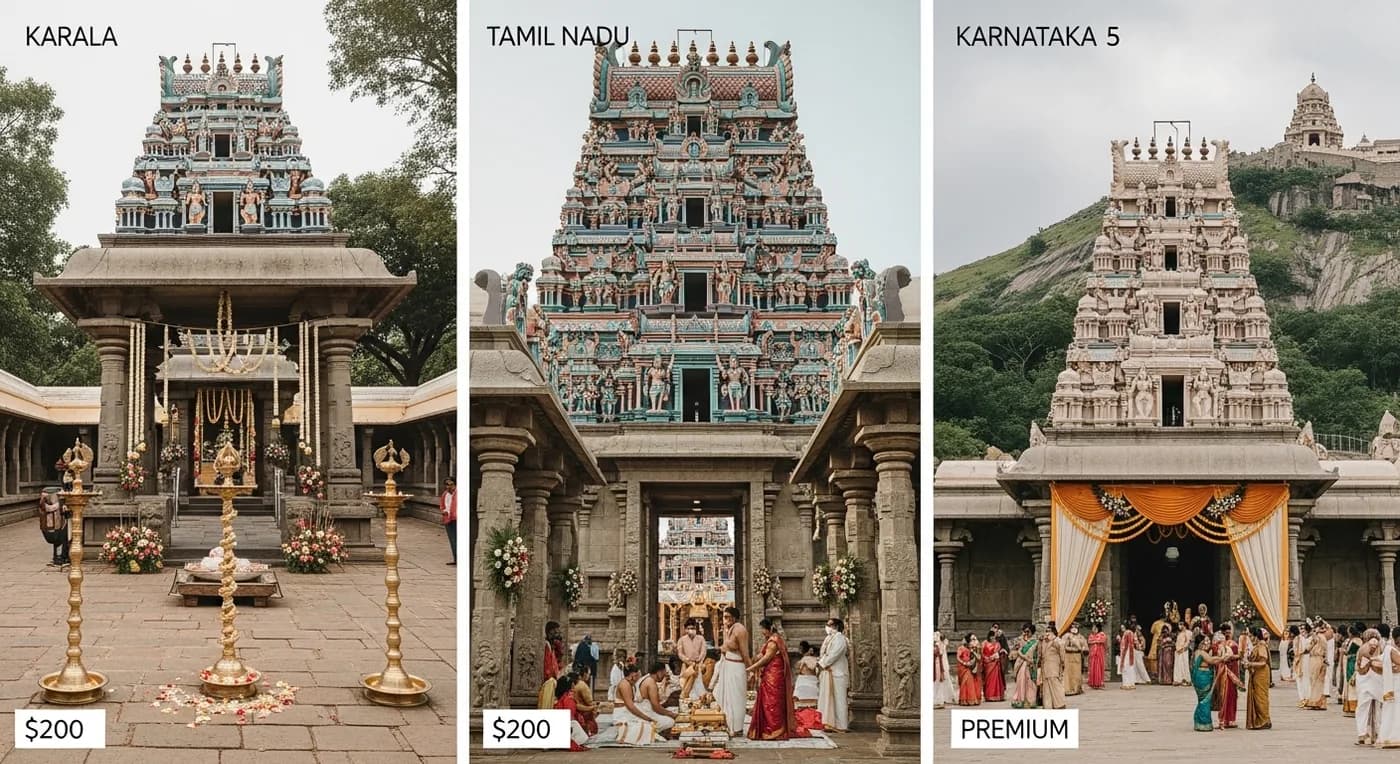
Karnataka temples are the most accommodating — Dharmasthala allows cameras freely with no fee, and Chamundeshwari and Udupi are similarly relaxed. Tamil Nadu's Kamakshi Amman and Varadharaja Perumal welcome professionals in ceremony areas. Kerala's Guruvayur is the most restrictive, requiring the temple's own photographer.
What is the typical cost range for a temple wedding photographer?
Professional temple wedding photography costs ₹15,000 – ₹50,000 across south India. Ceremony-only packages start at the lower end, while full-day packages with portraits and pre-wedding shoots reach the upper range.
Are camera flashes permitted during ceremonies?
No. Flash is prohibited in the sanctum and inner mandapams across all twelve temples covered here. Professionals work exclusively with ambient light — oil lamps, window light, and electric fixtures.
Is aerial drone photography possible at temple venues?
Drone photography is not permitted within any major south Indian temple's premises. Temples under ASI heritage protection have federal restrictions. Written requests for exterior aerial shots are rarely approved.
What camera equipment is essential for temple interiors?
A full-frame mirrorless body with silent shutter, fast prime lenses (50mm f/1.8 minimum, ideally 35mm f/1.4 and 85mm f/1.4), in-body stabilisation, and dual memory card slots for redundancy.
How does ambient temple lighting affect the photos?
Oil lamp warmth, filtered daylight, and electric bulbs shift colour temperature across the frame. Skilled photographers treat this mixed lighting as an asset — the tonal variety adds depth that flash destroys. RAW shooting is essential for post-processing balance.
Is it better to book a local photographer or bring your own?
For temples with mandatory in-house photographers like Guruvayur, there is no choice. For others, a photographer with direct venue experience holds a clear advantage. If bringing your own, arrange a scouting visit at least one week ahead.
The restrictions of temple photography are not obstacles — they are the conditions that create the intimate, lamp-lit images that make temple wedding albums unlike anything else. Start with the rules, know your temple, and hire someone who has been there before. The oil lamps and stone corridors of south India's great temples have been producing beauty for a thousand years without a single flash.
For complete planning, see our south Indian temple wedding guide, or explore the Meenakshi Temple wedding guide and Karnataka temple weddings guide.
Topics
temple wedding photographytemple wedding photography tipstemple photography rules indiasouth indian wedding photographytemple wedding photographerwedding photography restrictionssouth indian temple weddingExplore more
Frequently Asked Questions
1Which south Indian temples allow wedding photography?
2How much does a temple wedding photographer cost in south India?
3Is flash photography allowed in south Indian temples?
4Can we use drones for temple wedding photography?
5What camera gear works best for temple wedding photography?
6How do you handle low light inside temple wedding venues?
7Should we hire a local photographer or bring our own for a temple wedding?
Continue reading
Related Articles
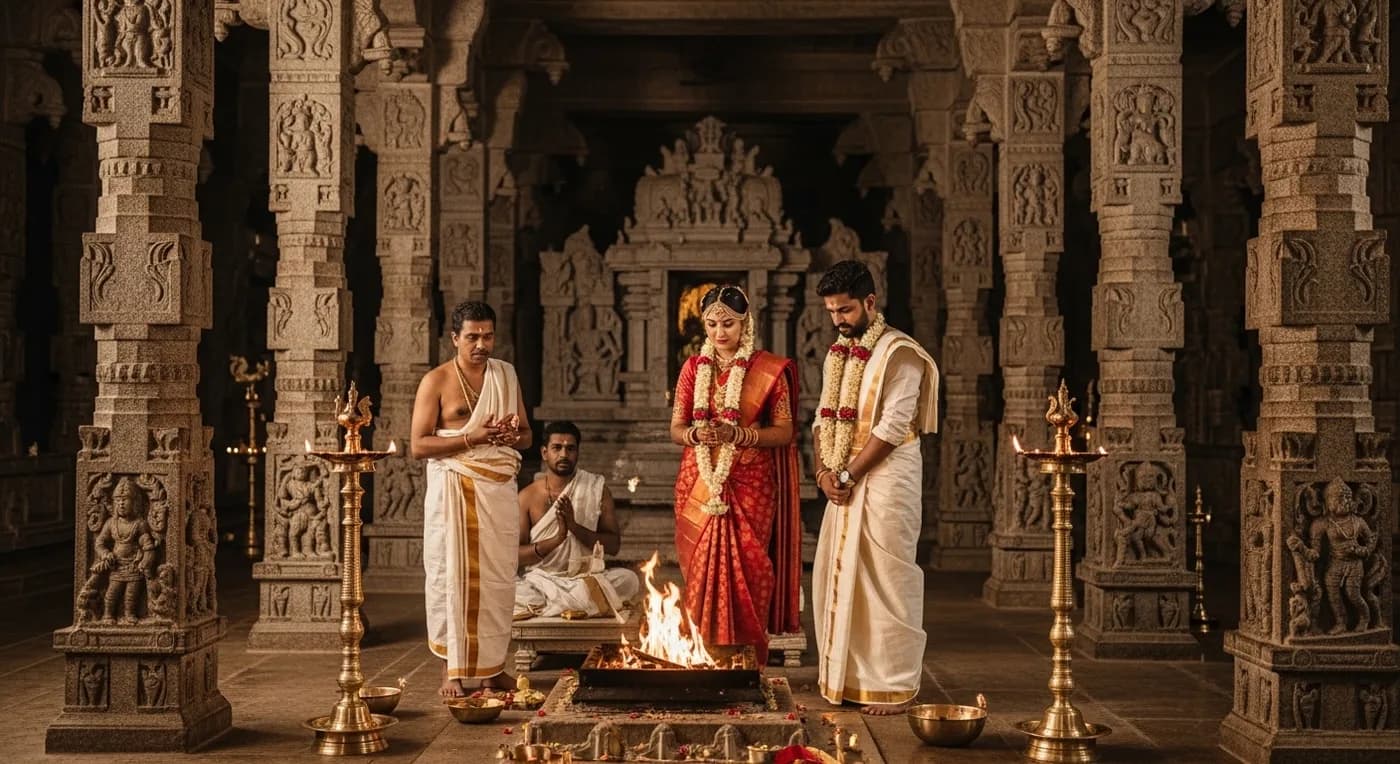
South Indian Temple Weddings: Complete Planning Guide for 2026
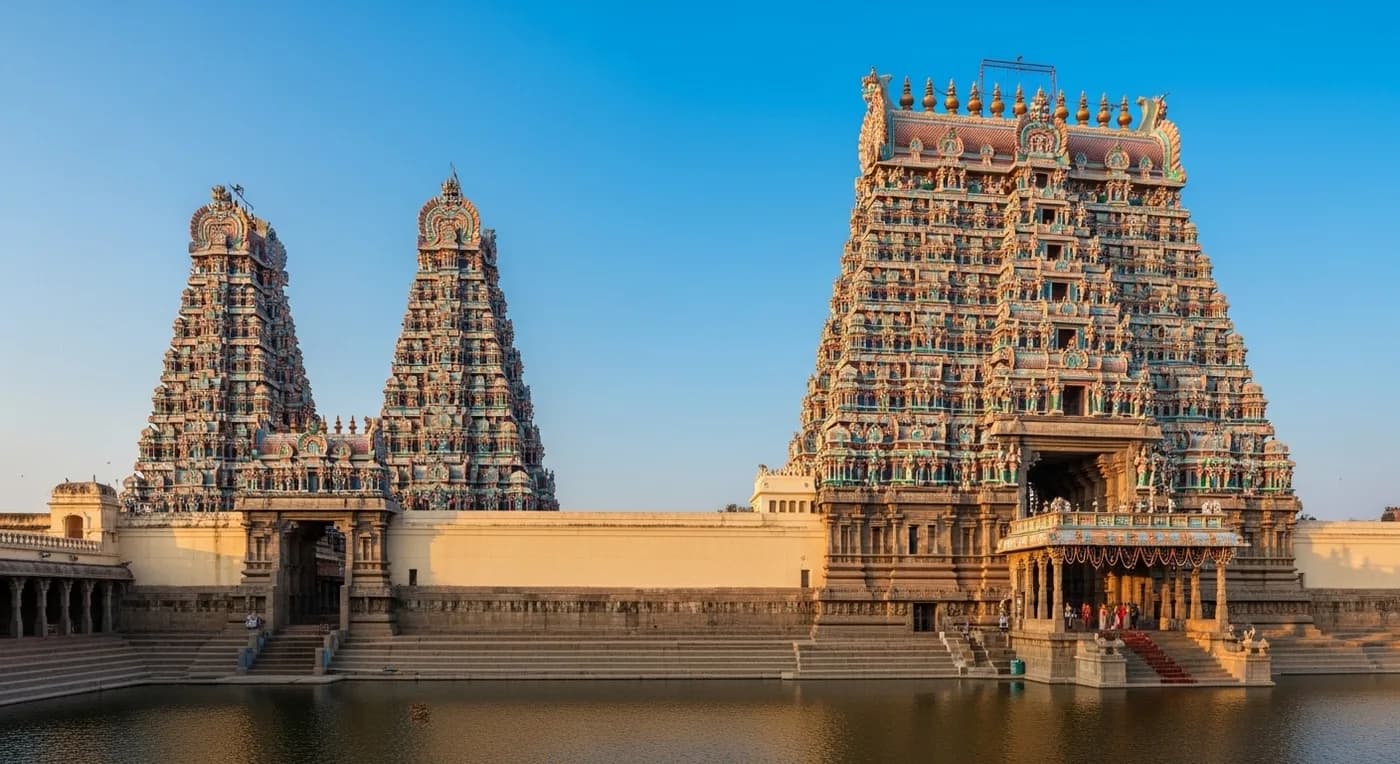
Meenakshi Temple Wedding in Madurai: Cost, Booking & Complete Guide
Karnataka Temple Weddings: 5 Sacred Venues from Dharmasthala to Chamundi Hills
Best Season for South India Destination Weddings: Month-by-Month Western Ghats Guide
Destination Wedding Cost in South India 2026: 5-Tier Budget Guide
Destination Wedding in South India: Complete 2026 Planning Guide
Still planning?
Get quotes from India's best vendors
Tell us what you're planning and we'll match you with verified photographers, venues, decorators, and more.
Get free quotes