
South Indian Church Wedding Guide: Denominations, Traditions & Planning
Plan a South Indian church wedding across 8+ denominations in Kerala, Tamil Nadu, Karnataka, and Goa — costs from ₹4 lakh, legal steps, and top churches.


On this page
South India is home to over 12 million Christians across 8+ denominations — from Kerala's ancient Syrian tradition (tracing to 52 AD) to Goa's Portuguese-influenced Catholic customs. Church weddings here cost ₹4–30 lakhs depending on denomination and guest count, follow the Indian Christian Marriage Act 1872, and are restricted during Lent (February–April) and Advent (November–December). This guide covers every denomination, state, and planning step.
Quick Answer
Quick answer: A South Indian church wedding spans Kerala, Tamil Nadu, Karnataka, and Goa — each state with distinct Christian traditions. Costs range from ₹4 lakh (intimate CSI ceremony) to ₹30 lakh+ (grand Syrian Catholic celebration). Book your church 6–12 months ahead, complete mandatory pre-marital counselling, and avoid Lent and Advent when scheduling. The ceremony itself runs 30–90 minutes depending on whether a full Mass is included.
Growing up in Kottayam — the heartland of Kerala's Christian community — I attended my first church wedding at age seven. My grandmother whispered the meaning of each ritual as it unfolded: the Minnukettu, the Manthrakodi, the solemn Syriac chanting that predates most European cathedrals. Two decades and dozens of weddings later, I still find that no two church weddings in South India feel the same. A Syro-Malabar ceremony in Thrissur sounds nothing like a CSI service in Nagercoil, and a Goan Catholic wedding with its Roce and Besanv has customs a Kerala Orthodox bride has never seen.
That diversity is exactly what makes planning a South Indian church wedding both beautiful and complex. This guide covers every denomination, every state, and the practical steps that turn a date on the church register into the wedding day you have imagined. For denomination-specific rituals in Kerala, our Kerala Christian wedding traditions guide goes deeper.
How Many Christians Live in South India?
South India is home to nearly two-thirds of India's 28 million Christians — a concentration that makes church weddings a major segment of the regional wedding industry. The numbers, drawn from the Census 2011, explain why certain states have such deep church wedding infrastructure.
| State | Christian Population | % of State | Major Denominations |
|---|---|---|---|
| Kerala | 6,141,269 | 18.38% | Syro-Malabar, Orthodox, Latin Catholic, Mar Thoma, CSI |
| Tamil Nadu | 4,418,331 | 6.12% | CSI, Latin Catholic, Pentecostal |
| Karnataka | 1,142,647 | 1.87% | Mangalorean Catholic, CSI, Pentecostal |
| Goa | 366,130 | 25.10% | Roman Catholic (Portuguese rite) |
| Andhra Pradesh + Telangana | 1,129,784 | 1.34% | CSI, Lutheran, Pentecostal, Baptist |
Kerala's 18.38% Christian population supports an extensive church wedding ecosystem — from dedicated bridal saree shops to specialist church decorators. Tamil Nadu's Christians are concentrated in the southern districts, with Kanyakumari at 46.85% Christian — making it one of the most Christian districts in all of India.
Looking for Wedding Planners in Kochi?
Tell us what you need and get quotes from verified wedding planners
What Are the Major Church Wedding Denominations?
Not all church weddings are alike. The denomination determines the liturgy, the vestments, the length of the ceremony, the pre-wedding rituals, and even the guest count. Here is a quick guide to the traditions you will encounter across South India.
Catholic (Three Rites in Kerala Alone)
The Syro-Malabar Catholic Church is the largest single denomination among Kerala Christians, with over 5 million faithful and major archdioceses in Ernakulam-Angamaly, Changanassery, Thrissur, and Kottayam. Their weddings feature the Eastern Syriac liturgy, the Manthrakodi ceremony, and elaborate multi-course receptions.
The Latin Catholic community, concentrated along Kerala's coast and in Tamil Nadu's Kanyakumari district, follows the Western Roman rite with Portuguese-era influences. The Syro-Malankara Catholic Church, with its Major Archdiocese in Trivandrum (officially Thiruvananthapuram), blends West Syriac traditions with Catholic communion.
For a detailed comparison of all three rites, see our Catholic vs Orthodox wedding guide.
Orthodox and Jacobite
The Malankara Orthodox Syrian Church and the Jacobite Syrian Christian Church share a common liturgical DNA but differ in ecclesiastical allegiance. The Orthodox church is autocephalous (self-governing), while the Jacobite church follows the Patriarch of Antioch. Both feature the dramatic Crowning ceremony — where ornate crowns are placed on the couple's heads — and extensive Syriac liturgy.
CSI (Church of South India)
Formed in 1947 by merging Anglican, Methodist, Congregational, and Reformed traditions, the CSI spans 24 dioceses and 5 million members across South India and Sri Lanka. Their weddings are typically shorter, less ornate, and follow a simplified Protestant liturgy. CSI is the dominant denomination in parts of Tamil Nadu and has significant presence in Bangalore and Kerala. For a complete guide, see our CSI wedding traditions post.
Pentecostal and Evangelical
India's fastest-growing Christian segment includes the India Pentecostal Church of God (IPC), Assemblies of God, Church of God, and numerous independent ministries. Weddings are congregation-centred, typically modest in scale, and emphasise worship and prayer over ritual.
Note
Denomination tip: If you and your partner belong to different denominations, you will need a dispensation from the relevant bishop. The process takes 2–4 months — start early. See our inter-faith wedding guide for mixed-denomination specifics.
How Does a Church Wedding Ceremony Work?
Despite denominational differences, every South Indian church wedding follows a recognisable structure mandated by canon law and Indian civil law. Here is the universal framework.
| Step | Duration | What Happens |
|---|---|---|
| Processional | 3–8 min | Bride enters; wedding party takes positions |
| Opening prayer and hymn | 3–5 min | Priest welcomes congregation |
| Scripture readings | 8–12 min | Old Testament, Psalm, New Testament, Gospel |
| Homily | 5–15 min | Priest addresses the couple |
| Exchange of vows | 3–5 min | Consent, promises, declaration |
| Exchange of rings | 2–3 min | Blessing and giving of rings |
| Nuptial blessing | 3–5 min | Priest blesses the marriage |
| Holy Communion (if Mass) | 15–20 min | Adds significant time for Catholic ceremonies |
| Register signing | 3–5 min | Legal formality under the Marriage Act |
| Recessional | 2–4 min | Couple exits the church |
Without Mass: 30–45 minutes. With Nuptial Mass: 60–90 minutes. Orthodox and Jacobite ceremonies with the full Crowning liturgy can run closer to 90 minutes. CSI and Pentecostal services are typically the shortest at 30–45 minutes.
What Are the Legal Requirements for a Church Wedding?
Every church wedding in India falls under the Indian Christian Marriage Act 1872. The legal framework is simpler than many couples expect, but the timelines are strict.
Age requirements: Groom must be 21 years or older; bride must be 18 years or older.
Ceremony window: Between 6:00 AM and 7:00 PM unless special permission is obtained.
Banns publication: The priest must announce the intended marriage in church for at least 14 days before the ceremony, allowing time for objections. The marriage must then occur within 2 months of the Banns publication.
Required documents:
- Baptism certificates (issued within 6 months) for both parties
- Government ID with age proof (Aadhaar, passport, or voter ID)
- No Objection Certificate from home parish (if marrying elsewhere)
- Pre-marital counselling completion certificate
- Passport-sized photographs
- Signed affidavit on marital status and mental fitness
Witnesses: Minimum 2 credible witnesses besides the officiating minister.
Important
Pre-marital counselling is mandatory for Catholic weddings — the CBCI requires couples to complete a structured programme at least 3 months before the wedding. Orthodox and CSI churches have similar requirements, though the format varies by diocese.
How Much Does a South Indian Church Wedding Cost?
Church weddings in South India range from intimate and affordable to grand and extravagant, depending primarily on denomination, guest count, and venue choice.
| Tier | Guest Count | Total Cost | Typical Denomination |
|---|---|---|---|
| Budget | 100–200 | ₹4,00,000 – ₹8,00,000 | CSI, Pentecostal, small Latin Catholic |
| Mid-range | 300–500 | ₹8,00,000 – ₹15,00,000 | Mar Thoma, Latin Catholic, Orthodox |
| Premium | 500–1,000 | ₹15,00,000 – ₹30,00,000 | Syro-Malabar, large Orthodox |
Church booking donations themselves are modest — typically ₹5,000 – ₹25,000 — but the reception venue, catering (₹280 – ₹1,200 per plate), and decoration drive the total. For a complete cost breakdown, see our church wedding cost guide.
Looking for Caterings in Kottayam?
Tell us what you need and get quotes from verified caterings
Which Churches Are Popular for Weddings in South India?
Each state has landmark churches that couples aspire to marry in — some for heritage, others for sheer architectural beauty.
Kerala
The Basilica of Our Lady of Dolours (Puthanpally) in Thrissur is ranked among the tallest churches in Asia with its 260-foot Bible Tower and a Platinum Jubilee Hall that seats over 1,000 for receptions. In Fort Kochi, Santa Cruz Cathedral Basilica — over 500 years old — offers Indo-European Gothic architecture that photographs beautifully. The St. Francis Church (1503), the oldest European church in India, hosts heritage weddings on Saturdays.
For our full venue guide with 15 churches, booking costs, and capacity details, see Best Churches for Weddings in Kerala.
Tamil Nadu
Santhome Cathedral Basilica in Chennai, built over the tomb of St. Thomas the Apostle, has dedicated wedding halls and is among the most sought-after Catholic wedding venues in the state. St. George's Cathedral — where the CSI was inaugurated in 1947 — can accommodate over 2,000 guests with its outdoor pandal. In Kanyakumari, St. Xavier's Cathedral in Kottar is the first cathedral in the world dedicated to St. Francis Xavier.
Karnataka and Goa
Bangalore's St. Patrick's Church (established 1841) on Brigade Road is one of the city's most popular wedding churches, with a community hall seating 500. In Goa, Our Lady of Immaculate Conception in Panjim — with its iconic zigzag staircase and Portuguese Baroque façade — performs only Roman Catholic wedding ceremonies.
When Is the Best Season for a Church Wedding?
The Christian liturgical calendar creates specific windows and blackout periods for weddings. Getting this wrong means your parish priest will say no before you even discuss flowers.
| Period | Dates (2026) | Status | Applies To |
|---|---|---|---|
| Peak season | October–November | Open | All denominations |
| Post-Christmas window | January–mid February | Open | All denominations |
| Lent | Feb 18 – Apr 5 | Banned (Syro-Malabar) / Restricted (Latin) | Catholic |
| Great Lent | ~50 days before Easter | Banned | Orthodox, Jacobite |
| Dormition Fast | Aug 1–15 | Banned | Orthodox, Jacobite |
| Advent | Nov 29 – Dec 24 | Discouraged | All Catholic rites |
| Christmas Fast | Dec 1–25 | Banned | Orthodox, Jacobite |
The safest months are October, November, January, and late April through May (after Easter but before the monsoon hits Kerala). Book at least 6–12 months ahead for popular parishes in Kottayam, Ernakulam, and Thrissur — weekend dates in October and November fill up within weeks of becoming available.
Tip
Money-saving tip: Tuesday and Wednesday weddings are 30–40% cheaper for venue hire and catering, and your preferred church will almost certainly be available. Many Kerala Christian families now opt for weekday ceremonies to redirect savings toward the reception or honeymoon.
How Do Church Wedding Traditions Vary by State?
Kerala: The Most Diverse
Kerala packs more denominational variety into one state than any other region in India. The signature rituals — Madhuram Veppu (sweetening ceremony), Minnukettu (tying the wedding pendant), Manthrakodi (blessing the wedding saree) — belong primarily to the Syrian and Orthodox traditions. Latin Catholics along the coast follow a more Western-influenced Mass with local adaptations.
The Knanaya community in Kottayam adds exclusive rituals: the Mylanchi Idal (henna ceremony) and Chantham Chartal (beautification ritual) found nowhere else. For the full ritual breakdown across all five Kerala denominations, see our Kerala Christian traditions guide.
Tamil Nadu: CSI and Latin Catholic
Tamil Nadu's Christians are concentrated in the southern districts. The CSI is the dominant Protestant body, particularly in Tirunelveli, Kanyakumari, and parts of Madurai. Their ceremonies follow a simplified English-language liturgy adapted from the Anglican Book of Common Prayer. Tamil Christian brides traditionally wear a white or off-white saree with a thali inscribed with a cross — a practice that blends Hindu Tamil wedding customs with Christian symbolism.
For city-specific guides: Christian wedding in Chennai.
Karnataka: Mangalorean Catholic Heritage
The coastal Karnataka Mangalorean Catholics have some of the most distinctive pre-wedding customs. The Roce ceremony — where the bride and groom are anointed with coconut milk and oil — is held 1–2 days before the wedding, accompanied by traditional folk songs called Voyos. A female elder called the yejman conducts the anointing. For more details, see our Mangalorean Catholic traditions guide.
For city-specific guides: Christian wedding in Bangalore.
Goa: Portuguese Influences
Goa's Catholic traditions carry 450 years of Portuguese influence (1510–1961). The Chuddo — glass bangles in green, yellow, and red symbolising fertility — is placed on the bride's wrists. The Besanv (parental benediction) happens before the church ceremony. The post-wedding feast features Sorpotel (pork dish) with Sannas (steamed rice cakes), and receptions often include ballroom dancing with a live band. Brides in Goa traditionally wear Western-style white wedding gowns rather than sarees.
What Should You Plan Next?
Your church wedding planning journey depends on where you are in the timeline:
- Just engaged? Start with our Church Wedding Planning Checklist for a 12-month timeline with documentation deadlines.
- Budgeting? Our Church Wedding Cost Guide has itemised breakdowns by denomination and tier.
- Choosing a venue? Browse Best Churches for Weddings in Kerala for 15 venues with capacity and booking details.
- Comparing denominations? Read Catholic vs Orthodox Wedding Differences or CSI Wedding Traditions.
- Planning the ceremony details? Our Kerala Christian Wedding Traditions covers every ritual step-by-step.
Use our AI Wedding Checklist to generate a personalised timeline based on your denomination, guest count, and budget.
Looking for Photographers in Kochi?
Tell us what you need and get quotes from verified photographers
Common Questions About South Indian Church Weddings
How many Christian denominations have distinct wedding traditions in South India?
South India has at least 8 denominations with unique wedding customs: Syro-Malabar Catholic, Latin Catholic, Syro-Malankara Catholic, Malankara Orthodox, Jacobite Syrian, Mar Thoma, CSI, and Pentecostal. Each follows its own liturgy and pre-wedding rituals. The legal framework under the Indian Christian Marriage Act 1872 applies to all of them.
What documents do I need for a church wedding in India?
Both partners need baptism certificates issued within the last 6 months, government-issued age and identity proof, a No Objection Certificate from your home parish if you are marrying elsewhere, proof of pre-marital counselling completion, photographs, and a signed affidavit. The priest publishes Banns for a minimum of 14 days before the ceremony date.
When should Christians in South India avoid scheduling a wedding?
The main restriction period is Lent — Syro-Malabar parishes ban weddings entirely during this 50-day fast. Latin Catholics may marry during Lent but must keep celebrations simple. Orthodox and Jacobite churches also restrict weddings during the Dormition Fast (August 1–15) and Christmas Fast (December 1–25). Advent is discouraged across all Catholic rites.
Is a church wedding legally binding without separate civil registration?
A church wedding performed by a licensed minister under the Indian Christian Marriage Act 1872 is fully legal. The minister signs the marriage register and issues a certificate. That said, some couples register additionally under the Special Marriage Act for documentation purposes — particularly useful for passport name changes and visa applications.
Can someone from one denomination marry someone from another in a church?
Yes, with proper permissions. A Catholic marrying an Orthodox Christian needs the Catholic Bishop's dispensation, and the Catholic party must agree to raise children in the faith. CSI and Protestant inter-denomination marriages are usually simpler. The ceremony location and liturgy are negotiated between the families and the respective priests.
Topics
south indian church weddingchristian wedding south indiachurch wedding indiaKerala church weddingCSI weddingcatholic wedding south indiaorthodox wedding KeralaExplore more
Frequently Asked Questions
1How many Christian denominations have distinct wedding traditions in South India?
2What legal documents are needed for a church wedding in India?
3When should Christians in South India avoid scheduling weddings?
4Is a church wedding legally valid in India without separate registration?
5Can a Catholic marry an Orthodox Christian in a South Indian church?
Continue reading
Related Articles
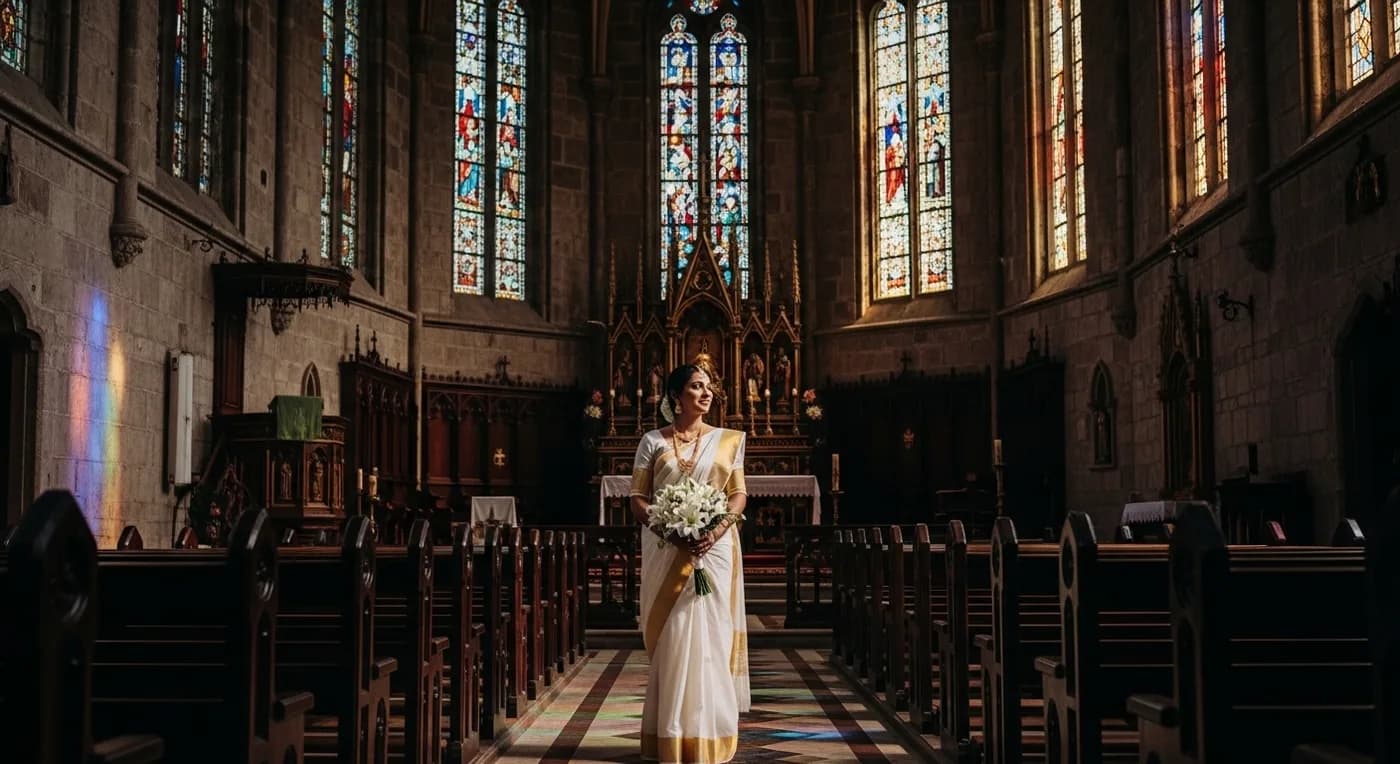
Kerala Christian Wedding Traditions: A Complete Guide to Rituals and Customs
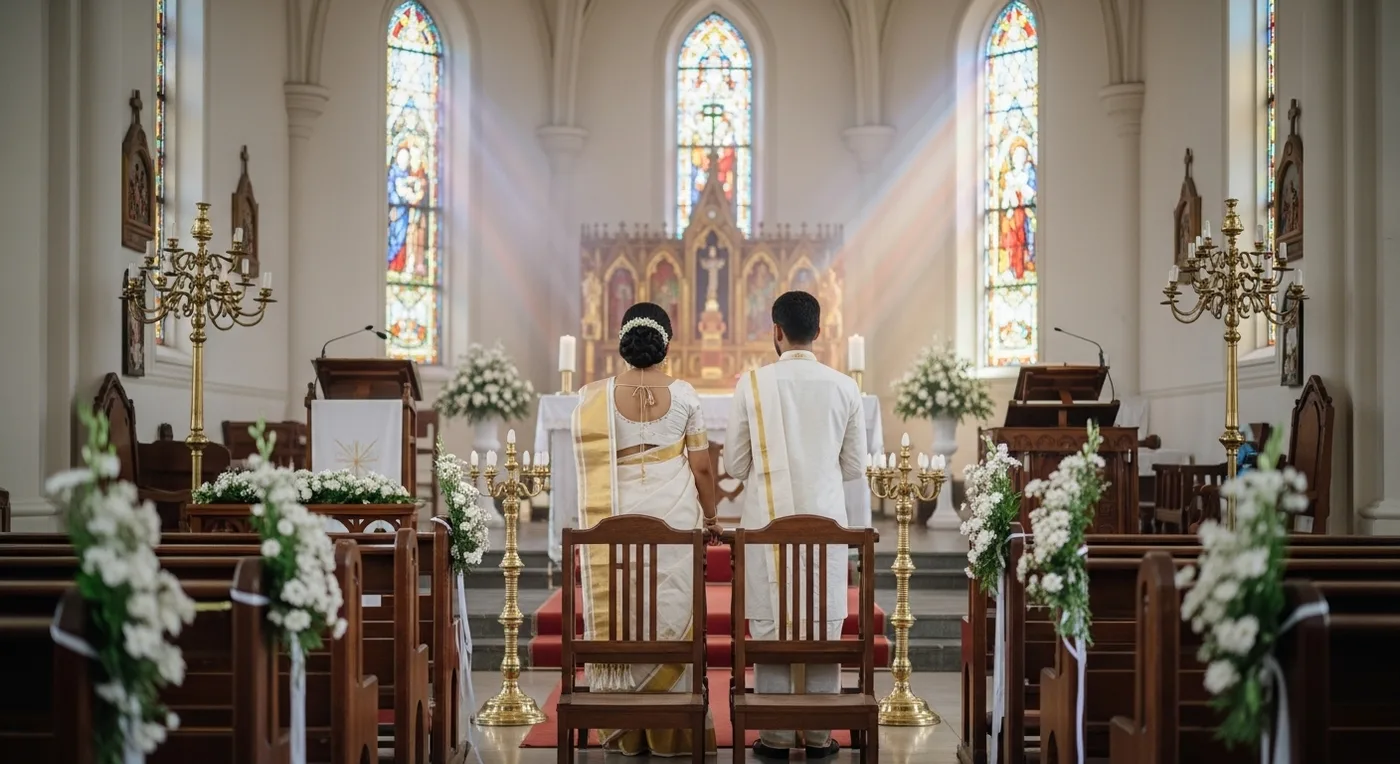
Syrian Christian Wedding in Kerala: Planning Guide, Costs & Timeline for 2026
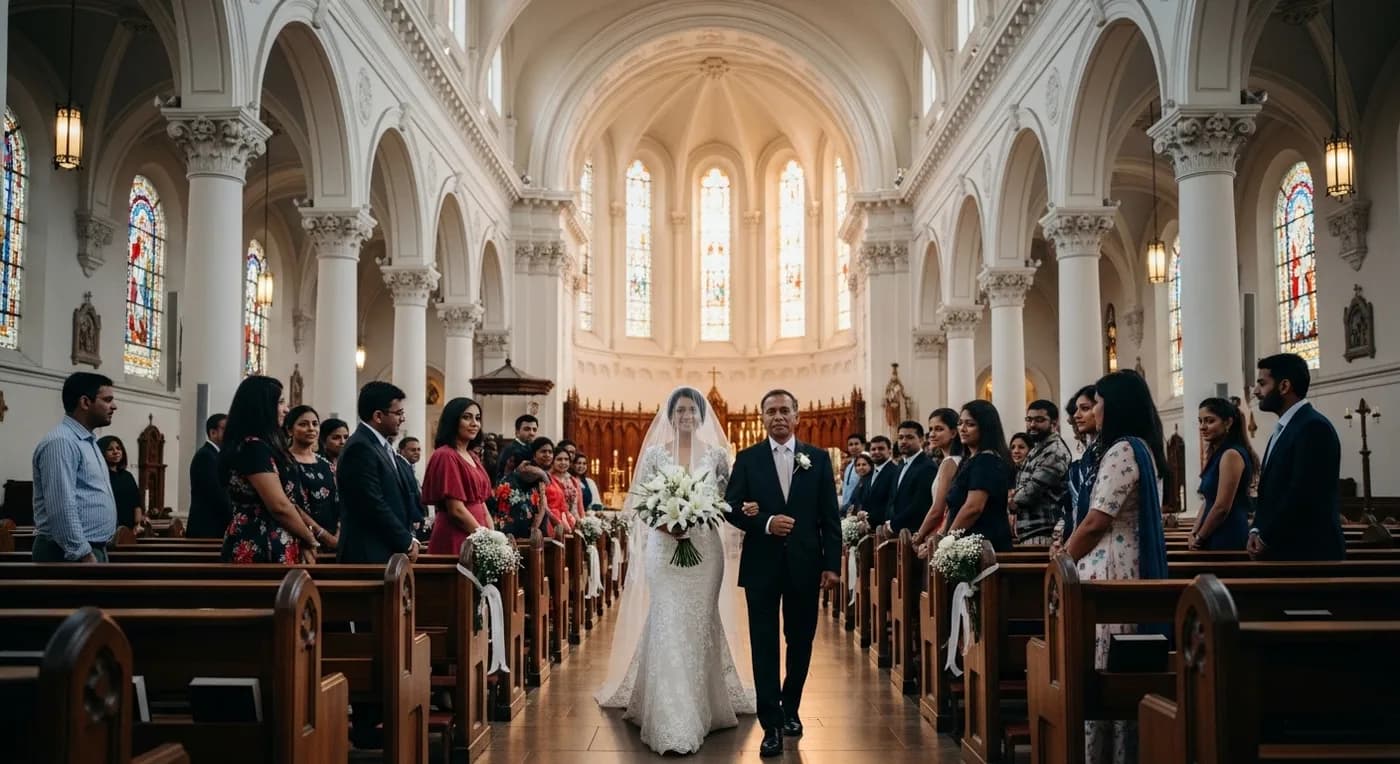
Christian Wedding in Bangalore: Church Ceremonies & Receptions
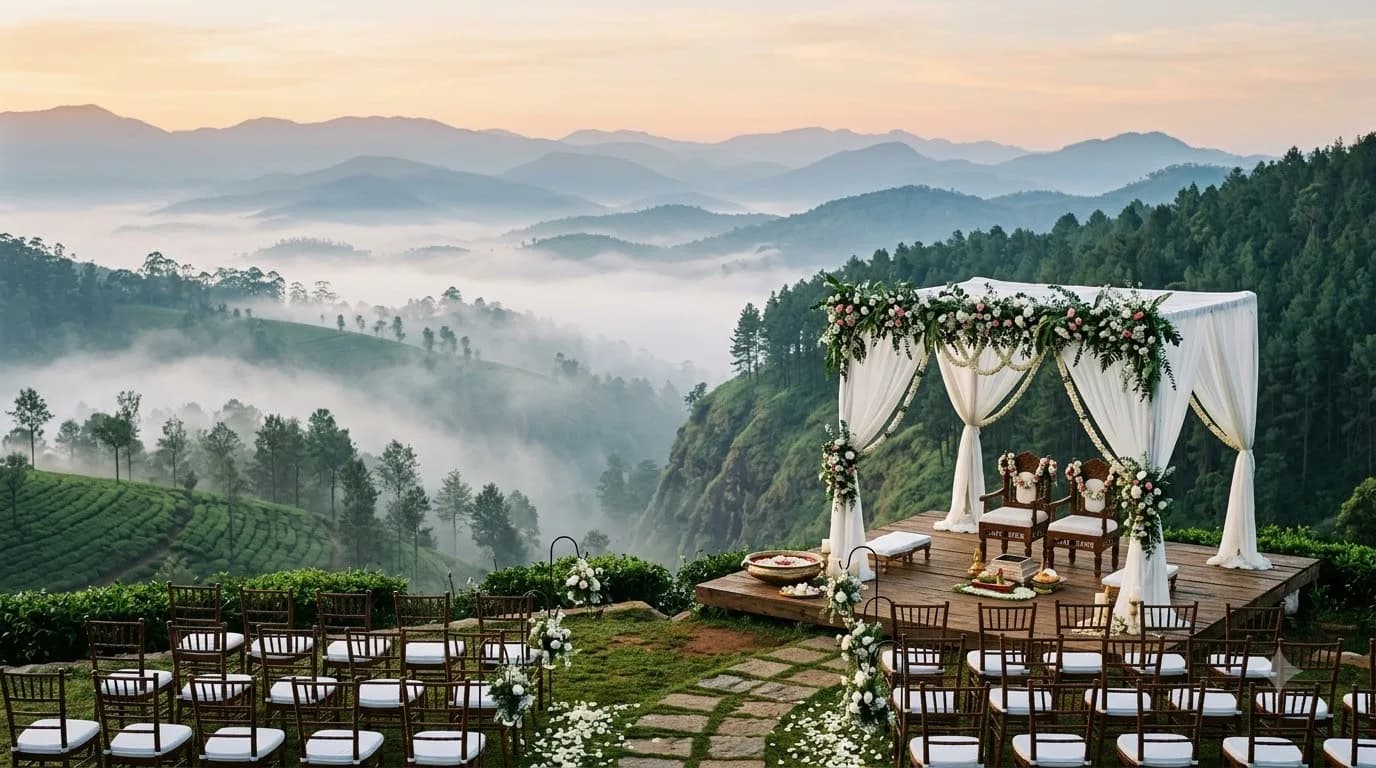
Best Season for South India Destination Weddings: Month-by-Month Western Ghats Guide
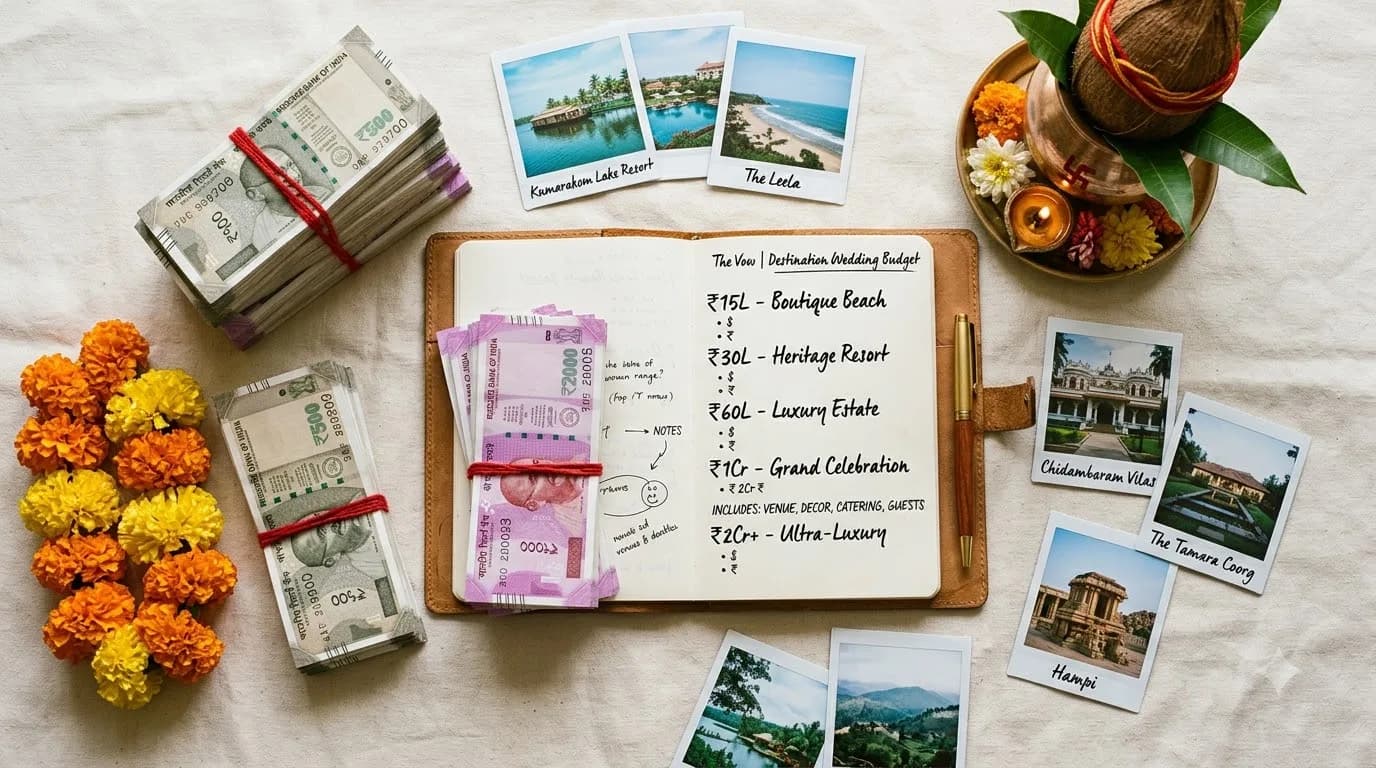
Destination Wedding Cost in South India 2026: 5-Tier Budget Guide
Destination Wedding in South India: Complete 2026 Planning Guide
Still planning?
Get quotes from India's best vendors
Tell us what you're planning and we'll match you with verified photographers, venues, decorators, and more.
Get free quotes