
Nadar Wedding Traditions: The Ponn Urukku Ceremony & More
Nadar wedding traditions explained — the Ponn Urukku gold-melting ritual (1–2 hours), elder-led ceremonies across 2–3 days, and Tirunelveli community roots.

On this page
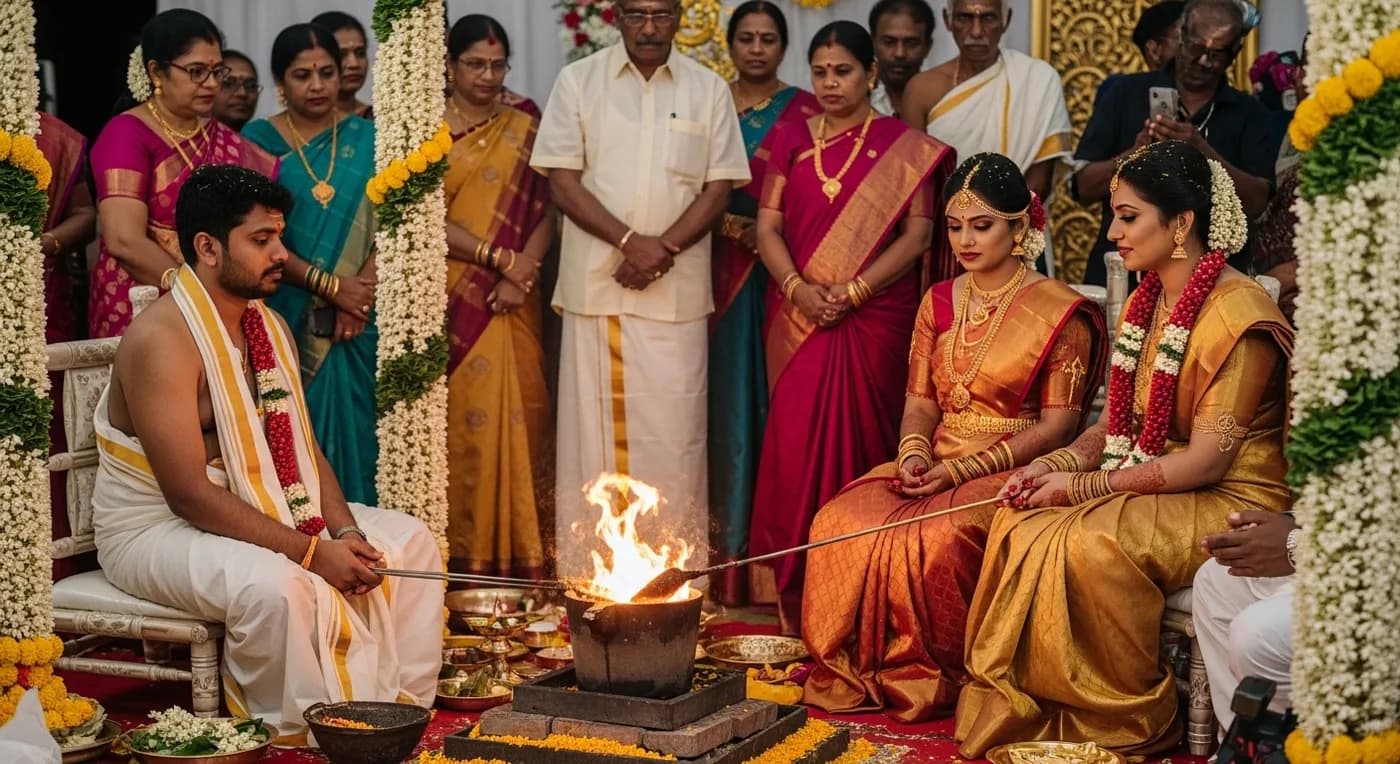
Nadar weddings are defined by the Ponn Urukku — a ritual found in no other Indian wedding tradition where raw gold is melted publicly and forged into the bride's thali before assembled guests. The ceremony takes 1–2 hours alone; the full celebration spans 2–3 days. Community elders (not Brahmin priests) lead the ceremony, reflecting the Nadar tradition's emphasis on collective witness and equality.
Quick Answer
Quick answer: Nadar weddings are defined by the Ponn Urukku — a ritual found in no other Indian wedding tradition where raw gold is melted publicly and forged into the bride's thali before assembled guests. The ceremony takes 1–2 hours alone; the full celebration spans 2–3 days. Community elders (not Brahmin priests) lead the ceremony, reflecting the Nadar tradition's emphasis on collective witness and equality.
Note
Pricing methodology: Cost ranges in this guide are based on vendor pricing data from the itsmy.wedding marketplace and published industry reports, collected in Q4 2025 – Q1 2026.
Nadar weddings feature an extraordinary ritual found in no other Indian wedding tradition: the Ponn Urukku — a dramatic ceremony in which raw gold is melted in front of the gathered community and forged into the bride's thali (sacred wedding pendant) while guests watch the transformation from precious metal to sacred symbol. This single ceremony captures the essence of Nadar wedding culture: public witness, communal investment, and a reverence for the tangible bond between families.
The Nadar community — one of Tamil Nadu's largest and most dynamic populations — brings a distinctive approach to the wedding celebration that sets it apart from both Brahmin and other non-Brahmin Tamil traditions. From the community elder-led ceremony structure to the legendary feast that follows, a Nadar wedding is a study in collective celebration, practical symbolism, and deep community pride. This guide covers every major element. For the broader Tamil Hindu ceremony framework, see our Tamil wedding traditions guide; for planning logistics, the Chennai wedding planning guide covers venues, budgets, and timelines.
The Nadar Community: History and Identity
Understanding Nadar wedding traditions requires understanding the community itself — its history, its transformation, and the values that shape its celebrations.
Origins and Geography
The Nadars are historically rooted in the southern tip of Tamil Nadu — the districts of Tirunelveli, Thoothukudi (Tuticorin), and Kanyakumari. The community's traditional association was with the palmyra palm — cultivation, tapping, and the production of palm-derived products. This connection to the land and to labour is deeply embedded in Nadar identity, even as the community has transformed dramatically over the past century.
The Social Transformation
The Nadar community's trajectory over the past 150 years is one of the most remarkable social transformations in modern Indian history. From agricultural and artisanal origins, the Nadars emerged as one of Tamil Nadu's most prominent business and professional communities through a combination of collective effort, emphasis on education, and entrepreneurial energy. Today, their weddings are part of an Indian wedding industry valued at ₹10.79 lakh crore and projected to reach ₹24 lakh crore by 2030. The community produced leaders across every field — most notably Kamaraj (K. Kamaraj Nadar), the former Chief Minister of Tamil Nadu and Congress President, often called the kingmaker of Indian politics.
This history matters for understanding the wedding because Nadar celebrations reflect these values: collective witness (the community gathers to affirm the union), practical symbolism (the Ponn Urukku transforms raw material into something sacred through visible effort), and hospitality without hierarchy (the feast is for everyone, served equally).
Migration to Chennai
While the community's heartland remains in the Tirunelveli-Thoothukudi-Kanyakumari belt, large Nadar populations have settled in Chennai (formerly Madras), particularly in commercial areas like Sowcarpet, Parrys, and T. Nagar. Many successful business families maintain strong ties to their home districts and return there for weddings — particularly for the Ponn Urukku ceremony, which carries deeper resonance when performed in the family's ancestral context.
Note
Pre-Wedding Ceremonies
Nichayathartham (Engagement)
The Nichayathartham is the formal engagement where both families meet — typically at the bride's home or a community hall — and publicly confirm the match. Elders from both sides exchange betel leaves, areca nuts, fruits, and sweets, and the wedding date is announced. In traditional Nadar practice, the engagement is witnessed by community elders whose presence serves as a social ratification of the union.
What distinguishes the Nadar Nichayathartham from other Tamil engagements is the emphasis on community elder involvement. The bride's and groom's families do not merely announce the match to each other — they seek the formal approval and blessing of respected community figures whose presence legitimises the union in the eyes of the wider Nadar community.
Gold Preparation and Collection
In the weeks before the wedding, the bride's family begins the critical process of preparing the gold for the Ponn Urukku. This involves collecting gold from various family sources — jewellery pieces that are no longer worn, gold coins, gifts from relatives, and newly purchased gold. The collection is both practical (gathering the raw material for the thali) and symbolic (representing the family's collective investment in the marriage).
Family members from both the bride's and groom's sides may contribute gold to the collection, making the Ponn Urukku a communal investment rather than solely the bride's family's responsibility. The total quantity is carefully calibrated — enough to forge the thali and associated wedding jewellery, while the pieces selected carry emotional significance.
Haldi and Pandal Erection
The Manjal Neerattu Vizha (turmeric ceremony) follows the broader Tamil tradition — turmeric paste applied to the bride and groom at their respective homes, accompanied by singing and celebration. In Nadar practice, this ceremony is often more communal than in Brahmin traditions, with a wider circle of women from the community participating alongside family members.
The pandal (wedding canopy) is erected at the ceremony venue — typically a community hall, the family home, or a rented mandapam. The pandal's construction is itself a communal act, with neighbours and community members pitching in to raise the structure, decorate it with flowers and banana trunks, and prepare the space for the ceremonies to follow.
Ponn Urukku: The Gold-Melting Ceremony
The Ponn Urukku (literally "gold melting") is the centrepiece of a Nadar wedding and the single most distinctive ritual in any South Indian wedding tradition. No other community in India includes the public melting and forging of gold as a wedding ceremony.
The Setting
The Ponn Urukku is performed in a dedicated space within the wedding venue, visible to all guests. A specialist jeweller — typically a trusted local goldsmith known to the family — sets up a portable furnace, crucible, and moulding equipment. The bride's family arranges the collected gold items on a display table near the furnace, where guests can see what is about to be transformed.
Step by Step
1. Gathering of guests. The Ponn Urukku is a public ceremony — its power lies in community witness. Family, friends, and community members gather around the furnace area. Elders take prominent positions. The atmosphere is one of anticipation and reverence.
2. Display of the gold. The bride's family presents the raw gold to the assembled guests — jewellery pieces, coins, and bars, each with its own history. An elder or family spokesperson may narrate the provenance of significant pieces: "This bangle belonged to the bride's grandmother; these coins were brought back from her grandfather's textile business." The display is both an inventory and a storytelling moment.
3. Lighting the furnace. The jeweller lights the furnace — traditionally a charcoal-based setup, though modern jewellers use controlled gas furnaces for safety and precision. The fire itself carries symbolic weight: transformation, purification, and the alchemical conversion of the ordinary into the sacred.
4. Melting the gold. The collected gold items are placed into the crucible and heated until they liquefy. This is the most dramatic visual moment of the entire wedding — guests watch as solid, formed objects dissolve into a shimmering pool of molten gold. The transformation is visceral, almost hypnotic. The old forms — a grandmother's bangle, a grandfather's coin — cease to exist as separate objects and merge into a single, undifferentiated mass.
5. Pouring and moulding. The molten gold is carefully poured into a prepared mould — the shape of the thali. The jeweller works with practiced speed, shaping the gold while it is still malleable. In some families, the jeweller also creates additional small pieces — earrings, a ring, or a pendant — from the remaining gold.
6. Cooling and presentation. As the gold cools and solidifies, the new thali takes its final form. The jeweller performs any finishing work — polishing, smoothing, and attaching the thali to the sacred yellow thread (manjal kayiru). The completed thali is presented to the bride's family, who hold it up for the community to see. The transformation is complete: what was many separate objects is now one — a symbol of the union about to be consecrated.
Tip
Symbolic Meaning
The Ponn Urukku operates on multiple symbolic levels simultaneously:
Transformation: Individual objects become a unified whole — mirroring the marriage itself, where two individuals and two families become one unit.
Family sacrifice: The gold melted is not anonymous — it is personal, carrying memories and history. Melting it is an act of sacrifice, transforming inherited wealth into a new beginning.
Community witness: The entire process happens in public view. Nothing is hidden. The community sees the gold, watches the melting, and witnesses the thali's creation. This transparency is a statement of trust and accountability.
Practical investment: Unlike purely symbolic rituals, the Ponn Urukku creates a tangible, valuable object. The thali is real gold, forged from the family's real wealth. The marriage begins with a literal, measurable investment.
The Wedding Ceremony
Following the Ponn Urukku — typically on the same day or the next morning — the main wedding ceremony takes place. The Nadar wedding ceremony shares structural elements with the broader Tamil Hindu tradition but carries distinctive characteristics that reflect the community's values.
Non-Brahminical Structure
One of the most significant distinguishing features of a traditional Nadar wedding is the role of the officiant. In many Nadar families, the ceremony is not presided over by a Brahmin priest. Instead, respected community elders or a senior family member leads the proceedings. This reflects the community's historical self-reliance and its emphasis on community authority over priestly intermediation.
In practice, the elder recites blessings, guides the couple through the rituals, and narrates the significance of each step to the assembled guests. Some modern Nadar families do engage a purohit — particularly those in Chennai — but the role of community elders remains central regardless.
Thali Tying
The thali tying is the ceremony's climactic moment — and it carries a unique emotional weight when the thali being tied is the one the community watched being forged hours or a day earlier. The groom ties the freshly made thali around the bride's neck while the nadaswaram reaches its crescendo and the community erupts in blessing. Three knots are tied, and the marriage is sealed.
Garland Exchange and Community Blessings
The Maalai Maatral (garland exchange) follows the Tamil tradition — competitive, joyful, and energetic. After the exchange, community elders come forward one by one to bless the couple, offering rice, flowers, and spoken blessings. This procession of elders can take considerable time at large Nadar weddings, as the community's respect for its seniors means every elder is given their moment.
Registration
Many Nadar families include a formal registration signing as part of the ceremony — a practical acknowledgement that the marriage carries legal as well as spiritual and communal significance. The register is signed before community witnesses, combining tradition with modern legal requirements.
Food, Music, and Celebrations
The Feast
The Nadar wedding feast is a lavish, predominantly non-vegetarian affair that reflects the community's culinary traditions rooted in the southern Tamil Nadu kitchen.
Mutton and chicken are central — mutton biryani, chicken curry cooked in the distinctive southern Tamil style with curry leaves and coconut, and kari kozhambu (meat curry) are standard. Seafood features prominently in coastal Nadar weddings, with prawn curry and fish preparations joining the menu. Vegetarian dishes — sambar, rasam, kootu, and multiple poriyal (dry vegetable) preparations — round out the banana-leaf spread.
The sweets are distinctive: tirunelveli halwa (the famous wheat halwa from Tirunelveli, slow-cooked in ghee until it reaches a glass-like consistency) is almost mandatory at any southern Tamil celebration, alongside payasam, adhirasam, and seasonal fruit preparations.
Looking for Caterings in Chennai?
Tell us what you need and get quotes from verified caterings
Music and Entertainment
Nadaswaram and thavil accompany the ceremony, as in all Tamil weddings. But Nadar celebrations often extend the musical programme beyond the classical instruments — folk music traditions (villupaattu, koothu), film songs, and contemporary entertainment are incorporated into the post-ceremony celebrations. The evening reception typically features a mix of traditional and modern entertainment: a nadaswaram recital during the formal blessing, followed by DJ or live band music for the social celebration.
Return Gifts
The thamboolam (return gift) tradition at Nadar weddings is generous. Guests receive parcels containing betel leaves, areca nuts, fruits, and often a meaningful gift — silk cloth, utensils, or decorative items. The quality of the thamboolam is considered a reflection of the family's hospitality and standing within the community.
Planning Your Nadar Wedding
Venue Options
In Tirunelveli/Thoothukudi: Community halls run by Nadar sangams are the traditional choice — they are designed for large gatherings, equipped for elaborate catering, and available at reasonable rates for community members. The Nadar Mahajana Sangam halls in Tirunelveli and Thoothukudi are among the most popular. Family homes — particularly older ancestral homes in the Tirunelveli belt — are used for the Ponn Urukku even when the main ceremony is held elsewhere.
In Chennai: The Nadar community has a strong presence in Chennai, with dedicated community halls in areas like T. Nagar, Sowcarpet, and Adyar. Alternatively, families choose commercial kalyana mandapams or hotels that can accommodate the guest count (often 800 to 2,000) and provide the kitchen infrastructure for the elaborate feast.
In Kanyakumari: The Kanyakumari district has a significant Nadar population, and weddings here carry a distinctive coastal flavour — seafood-heavy menus, beachside venues, and the visual backdrop of India's southern tip.
Specialist Jewellers for Ponn Urukku
If you are holding a Ponn Urukku ceremony, the jeweller is not a vendor — they are a performer and a craftsman in one. Source your jeweller through family networks or the local Nadar sangam. In Tirunelveli and Thoothukudi, there are goldsmith families who have performed Ponn Urukku at hundreds of weddings and understand both the technical requirements and the ceremonial context. If you are holding the ceremony in Chennai, confirm that your chosen jeweller is willing to travel with their equipment or has a portable setup suitable for an indoor venue.
Modern Adaptations
Some modern Nadar families adapt the Ponn Urukku for contemporary settings:
- Scaled-down melting: Rather than melting the full collection, a symbolic quantity of gold is melted to forge the thali, with the remaining jewellery displayed but not melted.
- Pre-forged thali with symbolic ceremony: The thali is crafted by the jeweller in advance, and a symbolic melting of a small gold piece is performed at the ceremony to represent the tradition.
- Video documentation: Families who cannot hold a full Ponn Urukku at the wedding venue sometimes perform the melting at the jeweller's workshop, professionally filmed, and screen the video during the wedding celebrations.
Important
Budget Expectations
Nadar weddings vary widely depending on family means and community expectations:
- Traditional (community hall in Tirunelveli/Thoothukudi, 400-800 guests): ₹5,00,000 – ₹15,00,000
- Mid-range (Chennai kalyana mandapam, 600-1000 guests): ₹15,00,000 – ₹30,00,000
- Premium (Chennai hotel or resort, 1000-2000 guests): ₹30,00,000 – ₹60,00,000 — with 4.6 million weddings generating ₹6.5 lakh crore in a single season, large-scale Nadar celebrations represent the premium segment of this market
These ranges include venue, catering, decoration, music, and photography. The gold for the Ponn Urukku is a separate, significant investment — typically ₹2,00,000 – ₹10,00,000 or more depending on the quantity melted and the family's tradition.
Looking for Venues in Chennai?
Tell us what you need and get quotes from verified venues
On itsmy.wedding, you can browse verified vendors who understand the specific requirements of Nadar weddings — from jewellers experienced with Ponn Urukku ceremonies to caterers who can deliver an authentic southern Tamil feast. For a complete overview of Chennai wedding planning, visit our Chennai wedding planning guide, and for the broader ritual framework, see our Tamil wedding traditions guide.
A Nadar wedding is a celebration that tells a community's story through the most personal of ceremonies. The Ponn Urukku, with its fire and molten gold and public witness, is not just a ritual — it is a statement about what this community values: transparency, collective investment, tangible commitment, and the transformation of individual resources into a shared future. No other wedding tradition in India makes the creation of the marriage symbol itself a communal, visible act. That alone makes the Nadar wedding one of the most remarkable celebrations in the country.
Tip
Start planning your wedding — generate a personalised checklist with our AI Wedding Checklist, estimate your budget with the Cost Calculator, or create a beautiful digital invitation.
Topics
nadar wedding traditionsponn urukku ceremonynadar marriage customsnadar wedding ritualstamil nadar weddingmadras weddingsExplore more
Frequently Asked Questions
1What is the Ponn Urukku ceremony in Nadar weddings?
2What makes Nadar weddings different from other Tamil weddings?
3How long is a Nadar wedding ceremony?
4What is the Nadar community?
Continue reading
Related Articles
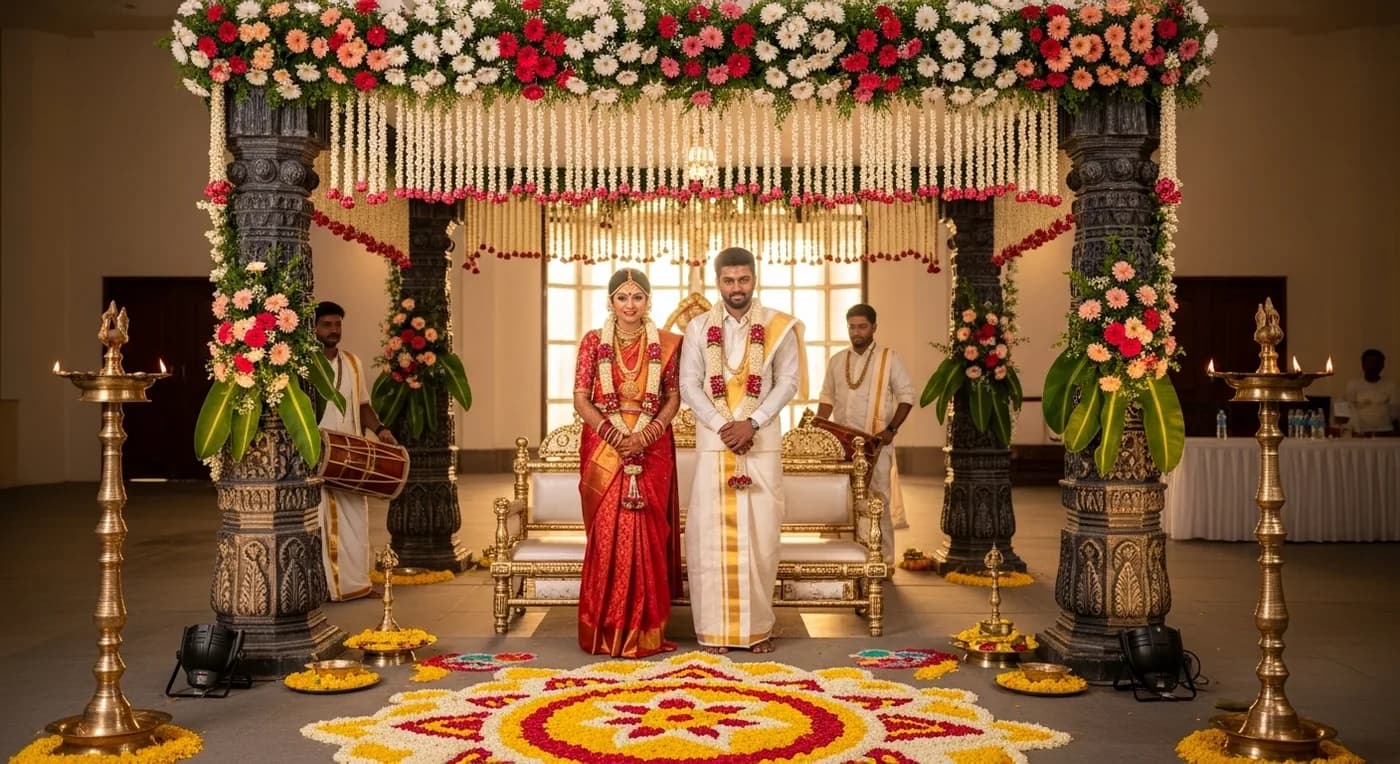
How to Plan a Chennai Wedding: The Complete 2026 Guide
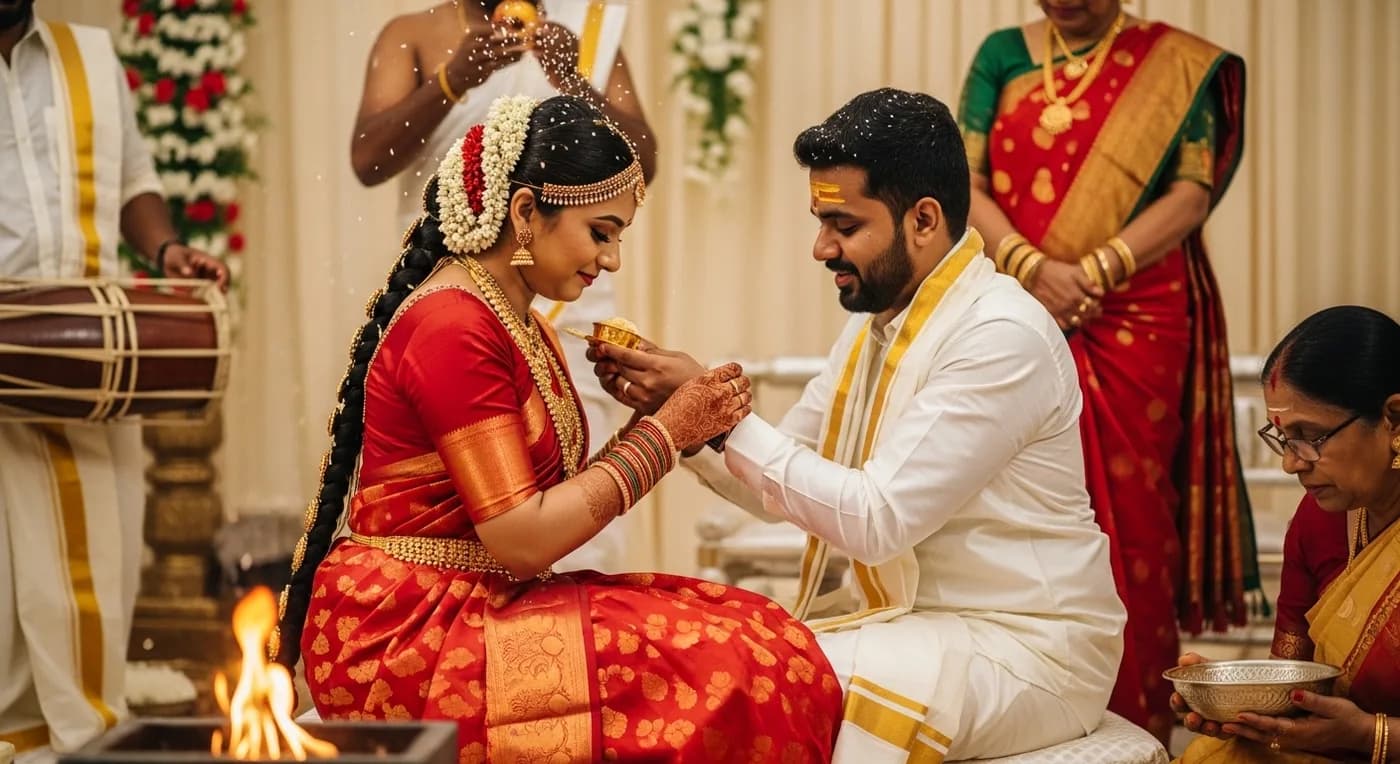
Tamil Wedding Traditions: Rituals, Meaning & Modern Adaptations
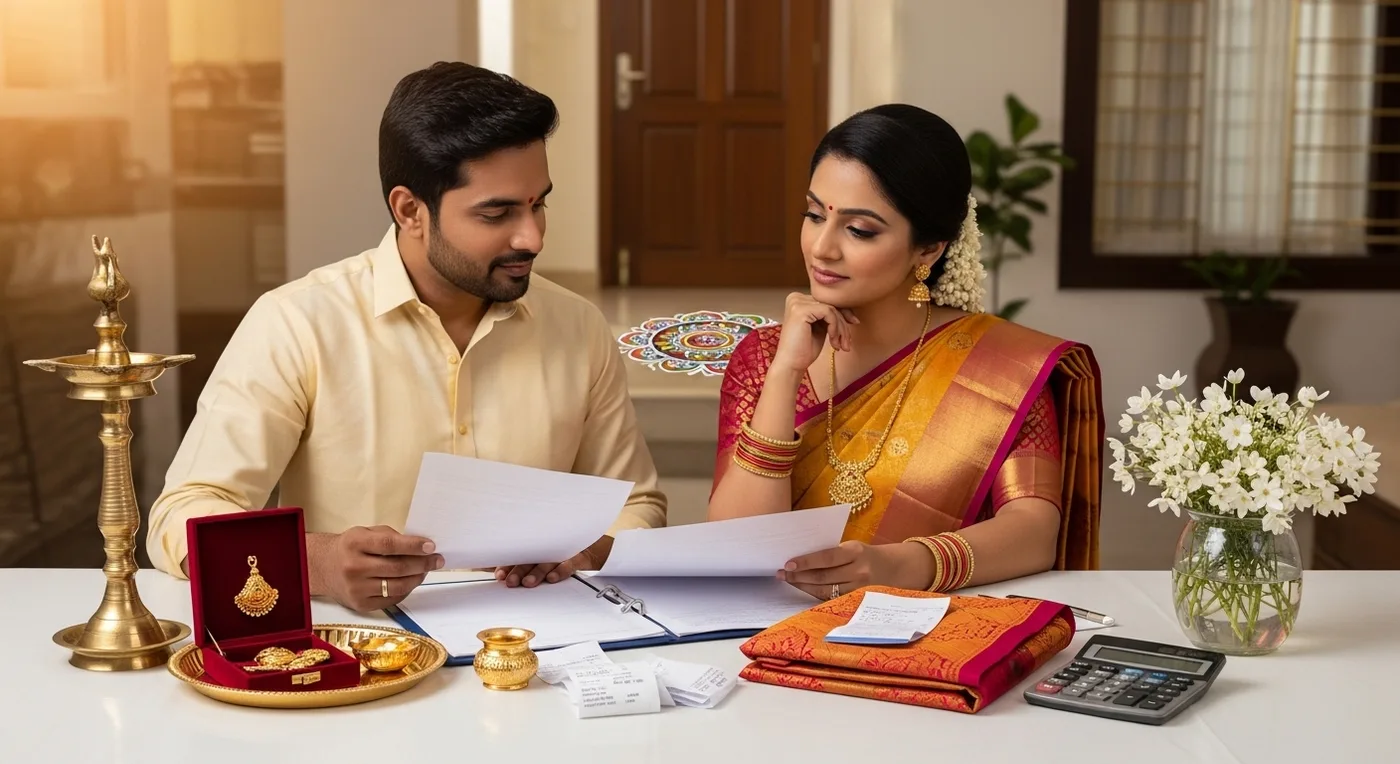
Chennai Wedding Cost in 2026: ₹5–20 Lakhs Full Budget Breakdown
Best Season for South India Destination Weddings: Month-by-Month Western Ghats Guide
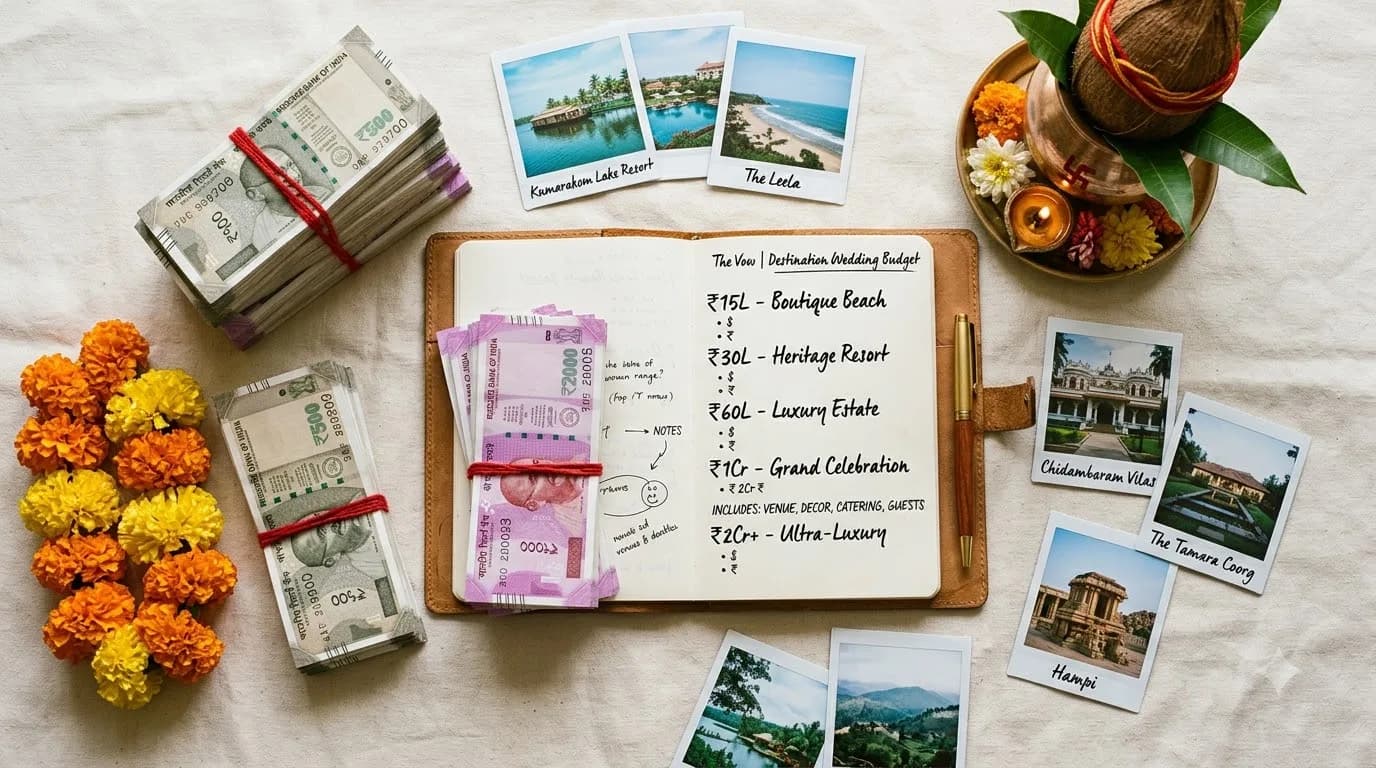
Destination Wedding Cost in South India 2026: 5-Tier Budget Guide
Destination Wedding in South India: Complete 2026 Planning Guide
Still planning?
Get quotes from India's best vendors
Tell us what you're planning and we'll match you with verified photographers, venues, decorators, and more.
Get free quotes