
Kerala Mandap Decoration 2026: Styles, Costs & Trends
Kerala mandap decoration costs ₹50,000–₹12 lakhs in 2026. Modern Traditional is the top trend — brass and jasmine on clean contemporary frames. Book 6-9 months ahead for peak dates.

Wedding Finance Advisor
Arjun Das is a wedding finance advisor who helps couples across Kerala plan celebrations that match their vision without breaking the bank.
On this page
Kerala mandap decoration costs range from ₹50,000 for basic local-flower setups to ₹8–12 lakhs for grand destination wedding installations. The dominant 2026 trend is "Modern Traditional" — Koothambalam-style brass and jasmine elements presented within clean contemporary structures. Book decorators 6–9 months ahead; top Kochi and Trivandrum studios fill peak-season Saturdays a full year in advance.
Quick Answer
Quick answer: Kerala mandap decoration costs: basic (₹50K–₹1L), mid-range with mixed flowers and lighting (₹1–3L), premium with imported flowers (₹3–6L), grand destination mandaps (₹8–12L). The 2026 top trend is "Modern Traditional" — Koothambalam brass and jasmine on clean contemporary frames. Book 6–9 months ahead for peak season.
Note
Pricing methodology: Cost ranges in this guide are based on vendor pricing data from the itsmy.wedding marketplace and published industry reports, collected in Q4 2025 – Q1 2026.
The mandap is the single most photographed element of a Kerala wedding. In an industry worth ₹10.79 lakh crore and projected to reach ₹24 lakh crore by 2030, decoration budgets have grown in step — couples are spending more on mandap design than ever before. It frames every ritual from the muhurtham to the thalikettu, it anchors the ceremony space, and it sets the aesthetic tone for the entire celebration. Guests may not remember the exact menu or the playlist, but they will remember the mandap — and so will every photograph from the day. When couples say they want their wedding to "look beautiful," what they almost always mean, whether they realise it or not, is they want a mandap that takes their breath away.
In 2026, Kerala mandap design is in the middle of a genuine renaissance. The heavy red velvet and thermocol structures that dominated for decades are giving way to a more nuanced design language — one that draws deeply from Kerala's own architectural heritage while embracing contemporary minimalism, sustainable materials, and sophisticated lighting. The result is mandaps that feel rooted in tradition but look unmistakably modern. This guide covers everything you need to make informed mandap decisions: the major style categories, the materials and what they cost, the specific trends shaping 2026 design, regional variations across Kerala, lighting strategy, sustainability, budget planning across four tiers, how to select the right decorator, the setup timeline, and how to coordinate your mandap design with your photographer. Whether you are planning a traditional Hindu ceremony in Thrissur or a fusion celebration at a resort in Kochi, this is the reference you need.
Understanding Mandap Styles
Before you start collecting inspiration images, it helps to understand the four broad mandap categories that Kerala decorators work with. Each has a distinct design vocabulary, material palette, and price range. Knowing which category speaks to you narrows the conversation with your decorator significantly.
Traditional Koothambalam
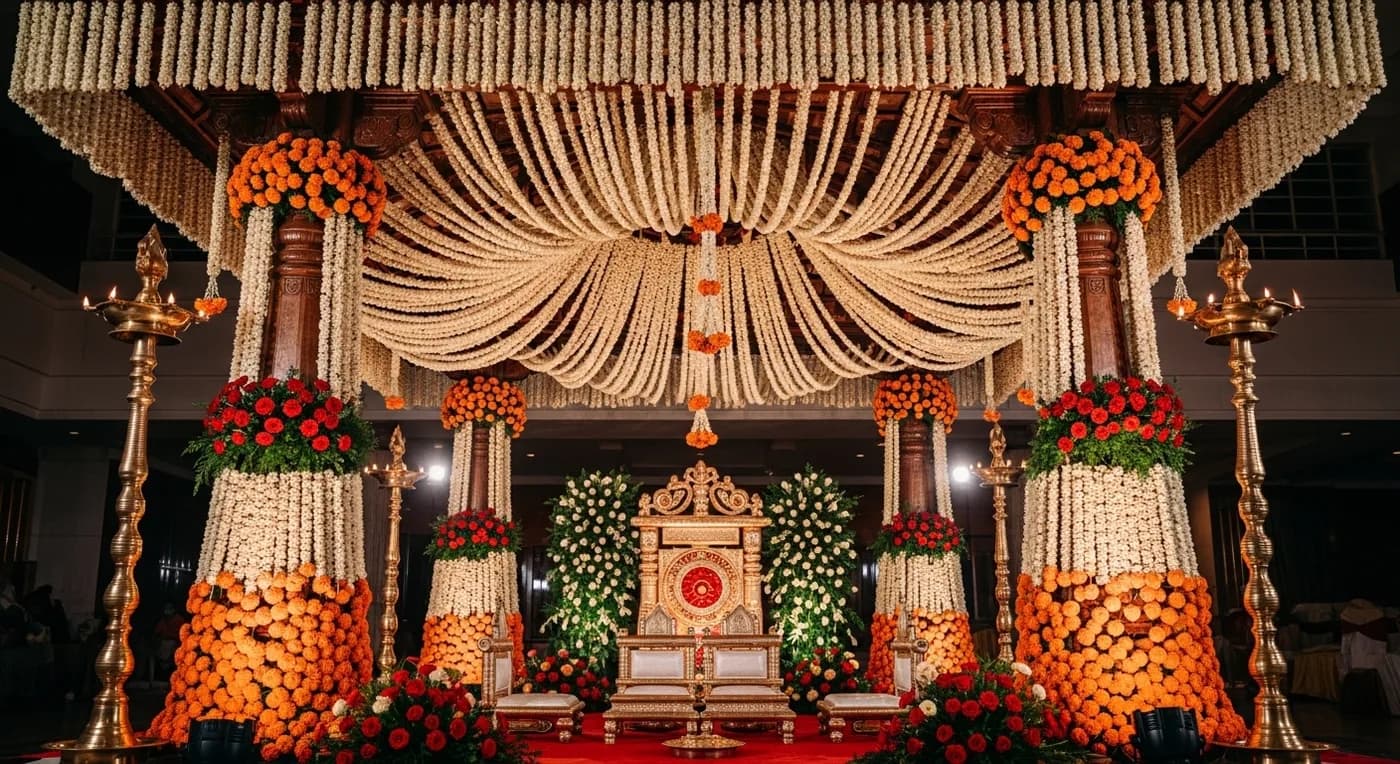
Named after Kerala's ancient temple theatre architecture, this is the most culturally grounded mandap style. The Koothambalam mandap draws its visual identity from the elements that define Kerala's sacred spaces: dark wood or teak-finished structures, polished brass Nilavilakku (oil lamps) flanking the couple, banana stems as pillars, coconut fronds woven into the canopy, and cascading garlands of jasmine, marigold, and kanakambaram. The colour palette stays in the warm spectrum — deep golds, creams, and the natural greens of fresh foliage.
This style is heavy on cultural symbolism. The Nilavilakku represents the light of wisdom. The banana stems symbolise fertility and prosperity. The coconut fronds are a prayer for abundance. For families who want their mandap to carry meaning beyond aesthetics — particularly in temple-adjacent ceremonies in Thrissur, Palakkad, and Guruvayur — the Koothambalam style remains the definitive choice. It is also the most affordable category when executed with local, seasonal materials.
Contemporary Minimalist
At the other end of the spectrum sits the contemporary mandap: clean geometric lines, often built on sleek metal or acrylic frames, draped with soft fabrics in whites, ivories, or pastels. Floral arrangements here favour imported varieties — hydrangeas, peonies, orchids, ranunculus — arranged in sculptural, curated compositions rather than dense garlands. LED uplighting replaces oil lamps. Glass panels and transparent acrylic elements create an airy, open feel.
This style works particularly well in hotel ballrooms and resort settings in Kochi and Trivandrum, where the venue architecture already provides a neutral, polished backdrop. It photographs beautifully in both natural and artificial light, and it appeals to couples who want a design-forward aesthetic without overt cultural motifs.
Fusion
The fusion mandap is, in 2026, the most requested category across Kerala. It takes the warmth and cultural resonance of the Koothambalam style and presents it within a contemporary structural framework. Imagine a sleek, clean-lined arch or geometric canopy in white or sage green, but adorned with traditional brass Nilavilakku at its base, jasmine garlands draped along the frame, and a brass Uruli filled with floating flowers at the entrance. The structure says "modern." The details say "Kerala."
Fusion mandaps require a decorator with genuine design skill — it is not simply about placing a brass lamp next to an acrylic panel. The best fusion designs feel intentional and cohesive, as though the traditional and contemporary elements grew from the same idea. This is where decorator selection becomes critical, and we cover that in detail later.
Destination and Outdoor
For garden ceremonies in Wayanad, beach weddings in Alappuzha, and backwater celebrations in Kumarakom, the destination mandap is engineered differently. Structures must be lightweight and weather-resistant. Fabric canopies replace solid roofing to let natural light filter through. Ground anchoring systems replace heavy bases. Floral choices lean toward hardy varieties that survive heat and humidity — local jasmine, marigold, and tropical greens hold up far better than imported peonies in an outdoor Kerala setting.
The destination mandap also needs to work with the landscape rather than compete with it. A mandap overlooking the backwaters in Alappuzha does not need elaborate floral walls — it needs a frame that draws the eye to the water beyond. The best destination decorators understand this restraint.
Note
The 2026 Shift: The overwhelming trend in 2026 is 'Modern Traditional' — taking the warmth and cultural richness of Koothambalam-style design and presenting it in a cleaner, more architecturally refined frame. Think: traditional brass elements on a sleek white or sage-green backdrop instead of heavy red velvet.
Material Guide: What Goes Into a Mandap
Understanding mandap materials helps you evaluate quotes, make substitutions, and have informed conversations with your decorator. Here is a breakdown of the major material categories, their cost implications, and their sustainability profile.
Structural Materials
The skeleton of every mandap is its structure. Wood (especially teak-finished frames) delivers a rich, traditional look and costs more upfront but is reusable across events. Metal frames — typically powder-coated steel or aluminium — are the workhorse of the industry: durable, versatile, and easily draped with fabric. Bamboo is emerging as the sustainable alternative, offering a warm, organic look at lower cost. Acrylic and glass elements bring a contemporary edge but are fragile and expensive — best used as accents rather than primary structure. Fabric-wrapped steel is the most common approach in mid-range mandaps: a metal frame becomes invisible under silk, organza, or cotton draping.
Floral Materials
Flowers are typically the single largest variable cost in any mandap budget. Jasmine (mulla) and marigold are the Kerala staples — affordable, fragrant, culturally significant, and available year-round. Roses sit in the mid-range and come in enough colour varieties to match any palette. Orchids are the go-to upgrade when couples want a premium, contemporary feel. Lotus flowers carry deep cultural significance in Kerala Hindu ceremonies and work beautifully in brass Uruli arrangements. Mixed greenery — eucalyptus, ferns, ruscus — is increasingly used to create lush, foliage-forward designs at lower cost than flower-only arrangements.
Fabric, Lighting, and Traditional Elements
Silk draping in gold and cream is traditional and premium. Velvet adds richness but can feel heavy in Kerala's climate. Organza is the modern decorator's fabric of choice — light, luminous, and available in every colour. For lighting, LED panels and fairy lights dominate, with chandeliers and crystal installations reserved for premium budgets. Nilavilakku oil lamps, banana stems, coconut fronds, Uruli brass vessels, and Nirapara (traditional rice measure) are the cultural elements that ground any Kerala mandap in its heritage.
| Material Category | Cost Range (2026) | Sustainability Rating | Visual Impact |
|---|---|---|---|
| Local flowers (jasmine, marigold) | 8,000 - 25,000 | High — seasonal, biodegradable | Warm, traditional, fragrant |
| Imported flowers (orchids, hydrangeas) | 40,000 - 1,50,000 | Low — air-freighted, short-lived | Contemporary, sculptural |
| Brass elements (Nilavilakku, Uruli) | 5,000 - 20,000 (rental) | Very High — reused indefinitely | Culturally grounded, photogenic |
| Fabric draping (silk, organza) | 15,000 - 60,000 | Medium — reusable if rented | Elegant, versatile |
| LED lighting setup | 15,000 - 80,000 | High — energy-efficient, no heat | Transformative, photography-friendly |
| Structural frame (metal/bamboo) | 10,000 - 50,000 | High — reused across events | Foundation of entire design |
| Acrylic/glass accents | 20,000 - 75,000 | Low — fragile, often single-use | Modern, airy, premium |
2026 Design Trends
Every year brings shifts in mandap design, and 2026 is no exception. Here are the seven trends that are defining Kerala mandap aesthetics this season — and how to incorporate them thoughtfully.
Sage and Gold
The most visible colour shift in 2026 is the move from red-gold dominance to sage green and gold. Sage — a muted, dusty green — provides a sophisticated, nature-inspired backdrop that complements Kerala's greenery and works beautifully with traditional brass elements. Gold remains, but as an accent rather than a primary colour. This palette photographs exceptionally well in both daylight and evening ceremonies and avoids the visual heaviness that pure red-gold mandaps can create.
Arch Mandaps
The square or rectangular mandap frame, while still used, is being steadily overtaken by arch structures — single arches, double arches, and asymmetric arch installations. Arches create a natural framing device for the couple, draw the eye upward, and offer more flexible floral and fabric arrangement than flat-topped structures. They also photograph dramatically from a wider range of angles.
Dried Flower Accents
Mixed arrangements combining fresh flowers with dried blooms — pampas grass, dried palm fans, preserved roses, and dried lavender — are adding textural depth to mandap design. Dried elements extend the design palette beyond what fresh flowers alone can achieve and reduce overall floral cost. They also hold up better in Kerala's humidity than delicate imported fresh flowers.
Glass and Acrylic Elements
Floating candle arrangements in glass bowls, transparent acrylic panels integrated into the mandap structure, and glass terrariums with fresh greenery are bringing a lightness and transparency to 2026 designs. These elements work particularly well in contemporary and fusion mandaps, where they create a visual contrast with the warmth of brass and flowers.
Foliage-Forward Design
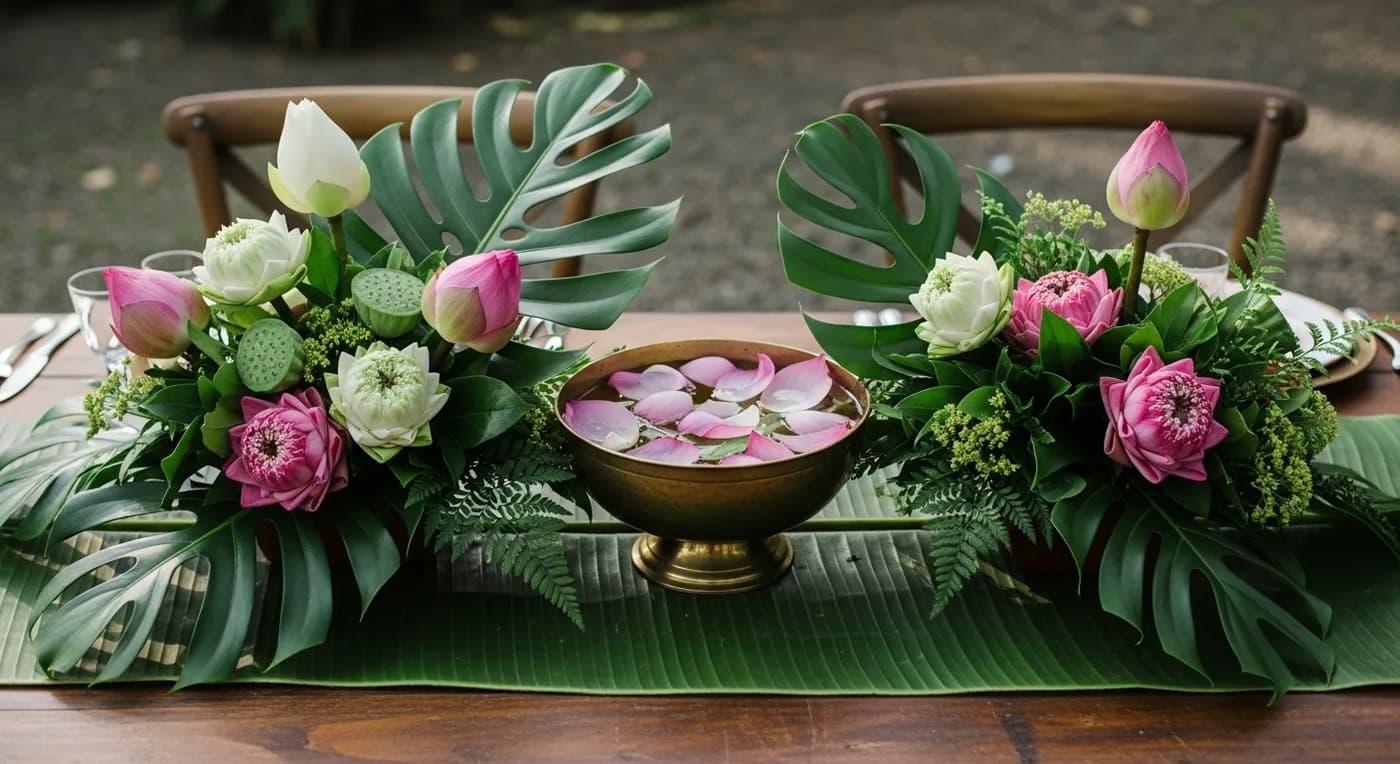
More greens, fewer flowers. Foliage-forward mandaps use lush tropical greenery — monstera leaves, ferns, eucalyptus, and trailing vines — as the primary decorative material, with flowers used sparingly as focal-point accents. This approach is both cost-effective (greenery costs a fraction of premium flowers) and sustainable, and it gives mandaps a fresh, organic quality that resonates strongly with 2026 aesthetics.
Chandelier Mandaps
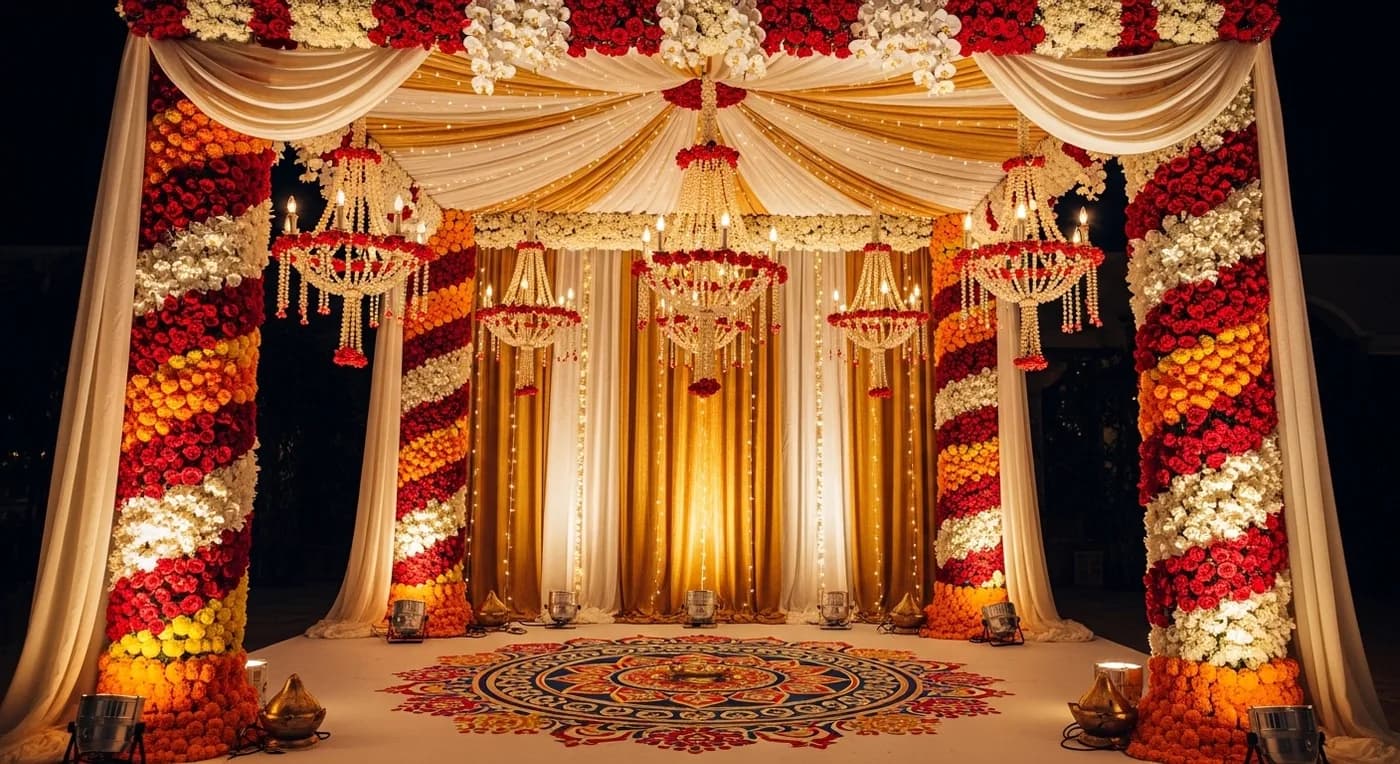
Instead of a traditional canopy, top-tier 2026 mandaps are using hanging chandelier installations as the overhead element. Crystal chandeliers, floral chandeliers (cascading flower arrangements suspended from the ceiling), and modern geometric pendant installations create a dramatic sense of height and grandeur. These require venues with adequate ceiling height and rigging capacity — most hotel ballrooms in Kochi and Trivandrum can accommodate them, but auditoriums and temple halls often cannot.
Personalised Details
The most meaningful 2026 trend is personalisation — custom monograms woven into the mandap structure, elements from the couple's story incorporated into the design, or meaningful family heirlooms (a grandmother's brass lamp, a family's antique Uruli) integrated into the arrangement. These details do not cost much, but they transform a beautiful mandap into a deeply personal one.
Tip
Trend Translation: Don't just show your decorator a Pinterest image — discuss the elements you like. "I want this arch shape with our traditional Nilavilakku and jasmine" is far more useful than "I want this exact mandap." Good decorators adapt trends to Kerala's cultural context.
Regional Styles Across Kerala
Mandap aesthetics in Kerala are not uniform. Each region has its own design sensibility, influenced by local traditions, venue types, and the decorator community that serves the area.
Thrissur
The cultural capital delivers the most traditional mandap designs in the state. Thrissur decorators are masters of the Koothambalam style — heavy brass, elaborate jasmine garlands, temple-inspired wooden structures, and banana stem arrangements that would hold their own in any heritage museum. Wedding halls here expect grandeur, and the decorator community delivers it. If you want an authentically traditional Kerala mandap, Thrissur is the benchmark.
Kochi
Kochi is the contemporary fusion capital of Kerala weddings. The city's hotel and resort venues — from Le Meridien to Grand Hyatt — attract decorators who are comfortable with international design trends adapted for Kerala sensibilities. This is where you will find the most experimental mandap designs: asymmetric arches, unconventional colour palettes, foliage-forward installations, and design concepts that push beyond the traditional vocabulary. Kochi decorators also tend to be the most experienced with destination-style outdoor setups at waterfront venues.
Looking for Decorators in Kochi?
Tell us what you need and get quotes from verified decorators
Trivandrum
Trivandrum mandap design sits between Thrissur's tradition and Kochi's experimentation. The city favours clean, elegant compositions — well-proportioned, beautifully lit, and slightly more conservative in colour and material choices. Trivandrum's top convention centres and hotels have hosted enough high-profile weddings that decorators here are exceptionally polished in their execution. What Trivandrum mandaps may lack in adventurousness, they make up for in consistent, refined quality.
Kozhikode
Influenced by the Malabar aesthetic, Kozhikode mandaps are known for rich fabrics, generous proportions, and grand stage presence. The Malabar wedding tradition — across both Hindu and Muslim ceremonies — favours opulence: deep jewel tones, heavy floral installations, and stages designed to impress large gatherings. Nikah stages in Kozhikode often rival the most elaborate Hindu mandaps in their visual impact and material investment.
Kottayam
With its significant Christian population, Kottayam mandap design (and its equivalent, the church and reception stage) has a distinct personality: white and gold as the dominant palette, elegant simplicity, and designs adapted for church halls and parish community centres. The aesthetic influence is more Western than in other Kerala districts, with clean lines, candelabra elements, and draped fabric taking precedence over brass and banana stems.
Lighting Integration: The Defining Element
If there is one element that separates a good mandap from a great one, it is lighting. The same floral arrangement, the same structural frame, the same fabric draping can look dramatically different — from flat and ordinary to warm and magical — based solely on how the lighting is designed.
LED Uplighting
Colour-selectable LED uplighting placed at the base of the mandap structure washes the entire installation in warm amber, soft pink, or cool white light depending on the desired mood. This is the single most cost-effective lighting upgrade for any mandap. A set of LED uplights at 15,000-30,000 rupees can transform the entire look of a 1 lakh mandap.
Fairy Light Canopies
Fairy lights — whether woven into the mandap canopy, cascading from above, or wrapped around structural elements — create an intimate, warm ambiance that is universally flattering in photographs. They work in every mandap style, from traditional to contemporary, and cost between 10,000 and 40,000 depending on coverage area.
Chandelier and Crystal Installations
For premium budgets, a chandelier or crystal installation suspended above the mandap creates a focal point of grandeur. Rental costs for quality chandeliers range from 30,000 to 1,50,000 depending on size and style. Crystal bead curtains surrounding the mandap are a popular middle-ground option at 20,000-60,000.
Spotlight Placement for Photography
This is where your decorator and photographer must collaborate. Directional spotlights that illuminate the couple's faces without creating harsh shadows are essential for ceremony photography. Many decorators default to overhead lighting that creates unflattering downward shadows — a photographer experienced with Kerala wedding mandaps will immediately spot this and suggest adjustments.
Candlelight Elements
Both real candles (in glass hurricanes for safety) and LED candles are used for ambient warmth. Real candles create a richer, more atmospheric effect but many Kerala venues — particularly hotels in Kochi and Trivandrum — prohibit open flames. LED alternatives have improved dramatically and are now nearly indistinguishable in photographs.
Note
The Photography-Lighting Connection: Your mandap lighting should serve two masters — the live experience and the camera. Ask your decorator to do a lighting test at the venue during the same time of day as your ceremony. What looks beautiful to the eye can appear completely different through a camera lens, especially mixed lighting (daylight from windows plus artificial mandap lights).
Sustainability in Mandap Design
Kerala's wedding industry generates enormous amounts of single-use waste, and the mandap is one of the largest contributors. With 4.6 million weddings happening during peak season alone, the aggregate environmental toll of mandap waste is staggering. Thermocol (expanded polystyrene) base structures, imported flowers that wilt within hours and go to landfill, disposable fabric that cannot be reused, and energy-intensive traditional lighting all take a measurable environmental toll. In 2026, sustainability is no longer a fringe concern — it is a mainstream design consideration, and the best decorators in Kerala are offering genuinely sustainable options that do not compromise on visual quality.
Structural Sustainability
The most impactful single change you can make is eliminating thermocol base structures. Traditional mandap building relies heavily on carved thermocol blocks hidden under fabric and flowers — these are non-biodegradable and used exactly once. Replacing them with bamboo frames or reusable metal structures eliminates the single largest source of mandap waste. Bamboo, in particular, adds a natural warmth that thermocol-under-fabric never achieves.
Tip
Sustainable Swap: Replace thermocol (polystyrene) base structures with bamboo or metal frames that the decorator reuses across events. This single change eliminates the largest source of non-biodegradable waste in traditional mandap design — and bamboo actually looks better than hidden thermocol.
Floral Sustainability
Choose local, seasonal flowers — jasmine, marigold, lotus, kanakambaram, and roses grown in Kerala or Tamil Nadu. These have no air-freight carbon footprint, they are fresher (and therefore last longer through your ceremony), and they cost a fraction of imported alternatives. Foam-free flower arrangements using chicken wire, moss, or natural binding methods eliminate floral foam (another non-biodegradable material) from the equation. After the event, partner with a decorator who offers flower composting or donation to temples for post-ceremony garlands.
Energy and Reuse
LED lighting consumes 75% less energy than traditional incandescent bulbs and generates almost no heat — a meaningful benefit in Kerala's climate, where traditional bulbs can make a closed mandap area uncomfortably warm. Rented fabric draping (rather than purchased single-use fabric) and rented brass elements are inherently sustainable because they serve hundreds of events over their lifetime. Potted plants instead of cut flower arrangements can be gifted to guests or replanted after the ceremony — a practice that is gaining popularity at weddings in Palakkad and Wayanad, where many venues have garden space for post-event planting.
Tip
The Full Circle: Several decorators in Kochi and Trivandrum now offer a "full circle" sustainability package: bamboo/metal structures, local flowers only, foam-free arrangements, LED lighting, rented brass and fabric, and post-event composting or temple donation. Ask for this specifically — it is typically 10-15% cheaper than conventional decoration, not more expensive.
Budget Tiers: Detailed Breakdown
Understanding what each budget level actually delivers helps you set realistic expectations and allocate your overall wedding budget with confidence. Here is the detailed breakdown across four tiers for 2026 Kerala pricing.
| Component | Budget (50K-1L) | Mid-Range (1-3L) | Premium (3-6L) | Grand (6-12L) |
|---|---|---|---|---|
| Structure | Basic wooden or rented metal frame | Custom metal/bamboo frame with fabric wrap | Designed structure — arch, geometric, or traditional carved | Bespoke installation — multi-element, destination-grade |
| Flowers | Local jasmine, marigold, basic roses | Mixed local and premium roses, orchid accents | Imported flowers (hydrangeas, peonies) mixed with premium local | Fully imported, designer floral installations, floral chandeliers |
| Lighting | Basic fairy lights, 2-4 uplights | LED uplighting scheme, fairy light canopy, spotlights | Chandelier rental, colour-wash LEDs, integrated structural lighting | Full lighting design with DMX control, custom installations |
| Fabric | Simple cotton or synthetic draping | Organza and basic silk draping, colour-coordinated | Premium silk, layered organza, designer fabric combinations | Couture fabric selection, hand-finished draping, imported textiles |
| Traditional Elements | 1-2 Nilavilakku, basic banana stems | Full brass set (Nilavilakku, Uruli, Nirapara), dressed banana stems | Antique or premium brass collection, elaborate traditional elements | Curated heritage collection, custom brass commissions |
| Setup Time | 4-6 hours morning of | Day-before structural + morning-of floral | 2 days for full build-out | 3-4 days for complete venue transformation |
| Coverage | Mandap only | Mandap + entrance + basic reception stage | Mandap + entrance + reception + guest area + pathway | Full venue — every space designed and decorated |
| Team Size | 3-5 people | 8-12 people | 15-25 people | 30+ people across multiple days |
For a broader collection of decor styles beyond the mandap — including entrance themes, guest area setups, and reception backdrops — see our Kerala wedding decoration ideas guide.
Where most Kerala couples land: With the national average wedding cost at ₹29.6 lakh, decor typically claims 10-15% of the budget. The 1-3 lakh mid-range tier covers the majority of weddings in 2026. This budget delivers a genuinely beautiful mandap with quality flowers, proper lighting, and cultural elements. Couples in Kochi and Trivandrum tend toward the upper end of this range due to venue expectations, while the same quality in Thrissur, Palakkad, or Kottayam often comes in at the lower end.
The cost trap to avoid: Moving from mid-range to premium is often driven by a single decision — imported flowers. A mandap that would cost 2 lakhs with premium local roses and orchid accents jumps to 4 lakhs when the same design uses hydrangeas and peonies throughout. Before committing to imported flowers, ask your decorator to show you the design with premium local alternatives. The visual difference is often far smaller than the price difference.
Choosing Your Decorator
The decorator you select has more influence on your mandap outcome than any other single decision — more than your budget, your venue, or your Pinterest board. A skilled decorator with a modest budget will outperform an average decorator with a generous one. Here is how to evaluate and select the right professional.
Portfolio Review
Ask to see their full portfolio, not just a curated highlight reel. You want to see variety — different venues, different budget levels, different styles. A decorator who can show you a beautiful traditional mandap at an auditorium in Palakkad AND a contemporary fusion design at a resort in Kochi has range. A portfolio that shows the same design executed twenty times in different colours does not.
Venue-Specific Experience
Has the decorator worked at your specific venue before? Venue familiarity matters enormously. Every hall, hotel, and outdoor space has different ceiling heights, lighting conditions, electrical capacity, wall anchor points, and restrictions. A decorator who knows your venue will design for its strengths and work around its limitations. A decorator visiting for the first time will discover these constraints during setup — which is too late.
Itemised Pricing
This is non-negotiable. Your quote must break down flowers, structure, lighting, fabric, labour, transport, and teardown as separate line items. A single lump-sum number tells you nothing about value and gives you no ability to make informed substitutions.
Important
Quote Red Flag: If a decorator gives you a single lump-sum price without breaking down flowers, structure, lighting, fabric, and labour separately, you cannot evaluate value or make informed substitutions. Always insist on an itemized quote. This also protects you if the decorator tries to substitute cheaper materials on the day.
Insurance and Liability
Confirm that the decorator carries insurance for venue damage. A mandap installation involves heavy structures, rigging, electrical work, and large teams working under time pressure. Accidental damage to venue walls, flooring, or fixtures is not uncommon, and without insurance, you are personally liable for repairs.
Setup and Teardown
Verify explicitly that the quote includes both setup and teardown. Some decorators quote only for installation and charge separately (and substantially) for dismantling and clearing after the event. Teardown responsibility should be clearly stated in your agreement.
References
Ask for contact details of 2-3 recent clients — not testimonials on their website, but actual couples you can call. Ask those references about timeliness, material quality versus what was promised, on-site problem-solving, and whether the final result matched the design rendering.
Looking for Decorators in Thrissur?
Tell us what you need and get quotes from verified decorators
The Setup Timeline
Mandap installation is not a single-morning affair for anything beyond the most basic setups. Here is the realistic timeline for a mid-range to premium mandap in Kerala.
6-9 months before: Book your decorator. Share venue details, initial inspiration, and budget range. For peak season weddings (November through February), top decorators in Kochi and Trivandrum are booked a year in advance for premium Saturday dates.
3 months before: Design development begins. Your decorator presents concepts, mood boards, or 3D renderings. This is when you finalise style, colour palette, and material choices. Expect 2-3 revision rounds.
1 month before: Final design approved. Material sourcing begins — particularly for imported flowers or custom structural elements that require fabrication. Brass rentals are confirmed.
1 week before: Venue walkthrough with the decorator. Measurements are confirmed, electrical points are mapped, and venue restrictions are reviewed one final time. This walkthrough should also include your photographer if possible.
Day before the ceremony: Structural elements are installed — the frame, fabric base, lighting rigs, and any heavy installations. For premium and grand-tier mandaps, structural work may begin two days prior.
Morning of the ceremony: Floral arrangements are completed, candles and lamps are placed, lighting is tested, and final styling adjustments are made. Fresh flowers are always the last element installed for maximum freshness.
During the event: A professional decorator will have an on-site coordinator present through the ceremony to make real-time adjustments — relighting candles, refreshing wilted flowers, adjusting lighting as the natural light changes.
Post-event: Teardown occurs the same evening or the following morning, depending on venue agreements. Sustainable decorators will arrange flower composting or temple donation during this phase.
Important
Venue Restrictions: Many hotels and convention centres in Kochi, Trivandrum, and Thrissur have strict rules about nails, tape, smoke machines, and open flames. Confirm venue restrictions with your decorator BEFORE finalizing the design — redesigning a mandap at the last minute is expensive and stressful.
Working With Your Photographer
Your mandap is designed to be seen — and the way most guests will "see" it, both during and long after the wedding, is through photographs. Coordinating mandap design with your photographer is not optional; it is a design requirement.
Backdrop Considerations
The mandap backdrop is the background of every ceremony portrait. Discuss with your photographer what works behind human subjects at your venue. Busy floral patterns can compete with faces. Solid or gently textured backgrounds — a clean fabric drape, a wall of greenery, softly lit candles — keep the focus on the couple. Your decorator should design the mandap knowing that the centre panel (directly behind where the couple sits) will be the most photographed square metre of your entire wedding.
Lighting for Ambiance and Camera
What looks warm and inviting to the human eye does not always photograph well. Mixed colour temperatures — warm mandap lights competing with cool daylight from windows — create colour-cast problems that even skilled editing cannot fully fix. Your photographer can advise on colour temperature consistency and flag potential issues during the venue walkthrough. LED uplights with adjustable colour temperature are invaluable here.
Angles and Sightlines
Your photographer will shoot the mandap from at least four angles: front-on, both sides at 45 degrees, and from behind (the couple looking out at guests). Each angle should present a considered composition, not a back-of-house view of exposed wiring and structural supports. Ask your decorator to "finish" the mandap from all sides, not just the front-facing perspective.
Avoiding Obstructions
Tall floral arrangements on the mandap itself, thick structural pillars, and hanging installations that block sightlines all create problems for ceremony photography. The best approach is a three-way conversation between you, your decorator, and your photographer before the design is finalised. A photographer who has shot at your venue before will know exactly which positions need clear sightlines and can flag potential obstructions in the design phase, when they are easy to adjust.
Note
The Three-Way Meeting: Schedule one meeting — in person or on a video call — with your decorator and photographer together, at least 2 months before the wedding. Twenty minutes of joint discussion will prevent more problems than any amount of back-and-forth messaging between the three of you separately.
Common Questions About Kerala Mandap Decoration
How much does mandap decoration cost in Kerala in 2026?
Basic mandap decoration using local flowers like jasmine and marigold, simple fabric draping, and a rented metal frame starts at 50,000 to 1,00,000 rupees. This covers the mandap structure itself with modest floral arrangements and basic lighting. Mid-range designs that incorporate a mix of local and premium flowers, proper LED uplighting, quality fabric draping, and traditional brass elements run between 1 and 3 lakhs. Premium mandaps with imported flowers, custom-designed structures, chandelier lighting, and layered fabric installations cost 3 to 6 lakhs. Grand destination wedding mandaps — full venue transformations with bespoke installations, designer florals, and multi-day setup — can reach 8 to 12 lakhs. The district matters: identical quality costs 15-25% less in Palakkad or Alappuzha compared to Kochi or Trivandrum.
What is the difference between traditional and contemporary Kerala mandap styles?
Traditional Kerala mandaps, inspired by the Koothambalam (temple theatre) architectural tradition, use brass Nilavilakku oil lamps, polished banana stems as pillars, coconut fronds woven into the canopy, and dense garlands of jasmine, marigold, and kanakambaram. The colour palette centres on warm golds, deep creams, and natural greens. The overall effect is rich, culturally grounded, and fragrant. Contemporary mandaps take a fundamentally different approach: clean geometric structures built on metal or acrylic frames, pastel or white colour palettes, sculptural flower arrangements using imported varieties, LED lighting integrated into the structure, and glass or acrylic accent elements. The aesthetic is minimal, airy, and design-forward. In 2026, the most popular choice is actually a fusion of both — traditional elements like brass lamps and jasmine garlands presented within a contemporary structural framework.
How do I choose a mandap decorator in Kerala?
Start by reviewing their full portfolio — not a curated Instagram highlight reel, but a comprehensive collection showing different venues, budgets, and styles. Verify they have worked at your specific venue before, as venue familiarity directly impacts execution quality. Request an itemised quote that breaks down flowers, structure, lighting, fabric, labour, and teardown separately — never accept a lump sum. Confirm they carry liability insurance for venue damage. Explicitly verify that teardown and clearing are included in the quoted price. Ask for contact details of 2-3 recent clients (not website testimonials) and call them. Finally, assess the design process: a good decorator will offer mood boards or renderings and accommodate 2-3 revision rounds before finalising the design.
Can I have a sustainable mandap that still looks premium?
Absolutely — and in many cases, sustainable mandaps look better than conventional ones. Use local seasonal flowers (jasmine, marigold, lotus, roses from Kerala and Tamil Nadu) which are fresher and more fragrant than imported alternatives. Choose brass and wooden structural elements instead of disposable thermocol. Opt for LED lighting which uses 75% less energy and generates no heat. Rent fabric draping and brass items rather than purchasing single-use materials. Use potted plants instead of cut flowers for accent greenery — they can be gifted to guests or replanted. Eliminate floral foam by using chicken wire or natural binding methods. Several leading decorators in Kochi and Trivandrum now offer complete sustainability packages that are actually 10-15% less expensive than conventional decoration.
How far in advance should I book a mandap decorator in Kerala?
For peak wedding season (November through February), book your decorator 6 to 9 months in advance. The top decorators in Kochi and Trivandrum fill their premium Saturday dates a full year ahead. Once booked, share your venue details and initial vision at least 3 months before the wedding to allow for proper design development. The final design should be approved and signed off at least 1 month before, giving the decorator time to source materials and fabricate any custom structural elements. For off-season weddings (March through September), you may find availability with shorter lead times, but 3-4 months advance booking is still recommended for the best selection of decorators.
Further Reading
- Kerala Wedding Decor Cost Guide — Full breakdown of all decoration costs beyond the mandap
- Sustainable Floral Decor Guide — Deep dive into eco-friendly floral choices for Kerala weddings
- Kerala Wedding Budget Guide — Complete budget planning across every wedding category
Tip
Get your numbers right — use the Wedding Cost Calculator to model your budget by city, guest count, and style. Track spending in real time with the Budget Manager, and generate a personalised planning timeline with the AI Checklist.
Topics
mandap decoration Keralawedding mandap trends 2026Kerala wedding stage designmandap cost Keralasustainable mandap decortraditional vs modern mandapExplore more
Frequently Asked Questions
1How much does mandap decoration cost in Kerala in 2026?
2What is the difference between traditional and contemporary Kerala mandap styles?
3How do I choose a mandap decorator in Kerala?
4Can I have a sustainable mandap that still looks premium?
5How far in advance should I book a mandap decorator in Kerala?
Continue reading
Related Articles
Wedding Decor Cost in Kerala: Flowers, Lights, and Mandapam Pricing
Sustainable Floral Decor for Kerala Weddings: The 2026 Guide
Kerala Wedding Budget Guide: 2026 Cost Breakdown
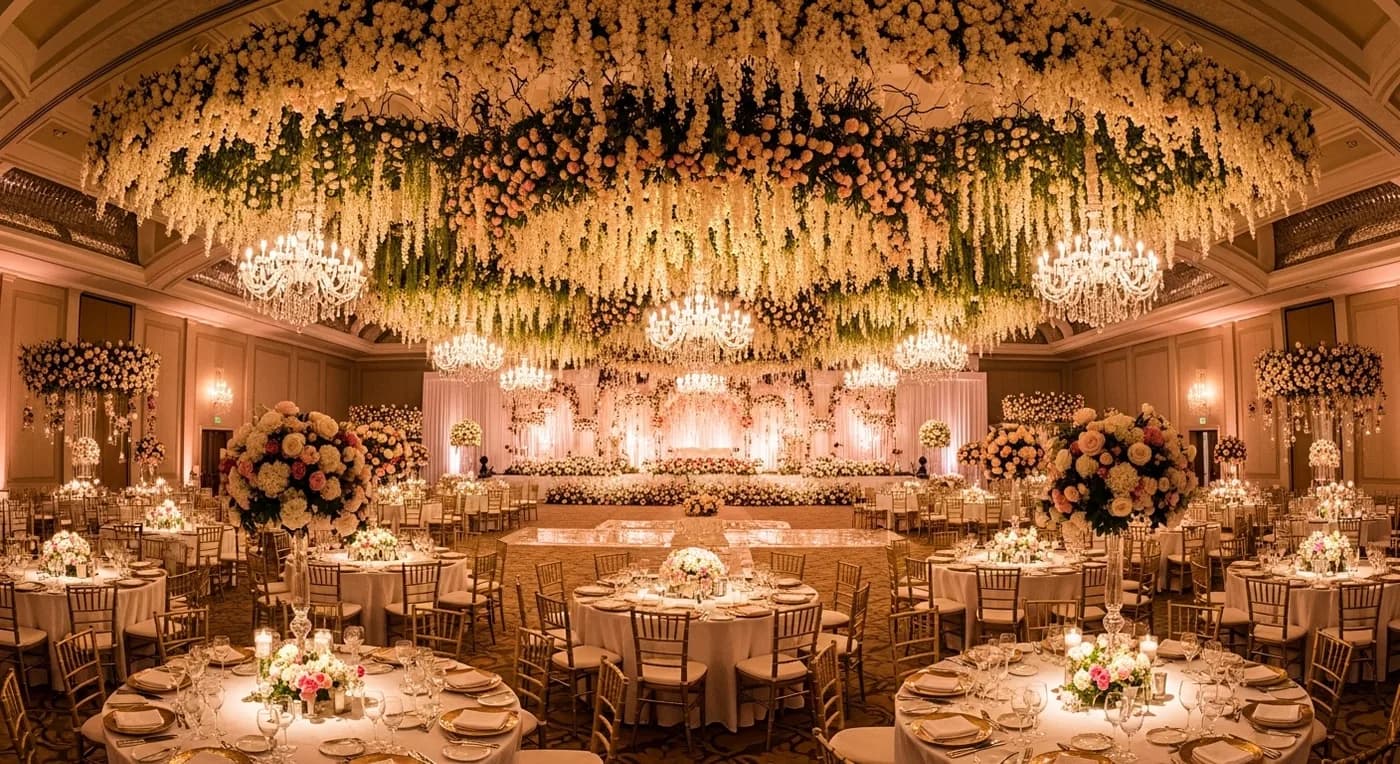
Average Wedding Cost in India (2026): City-by-City Breakdown
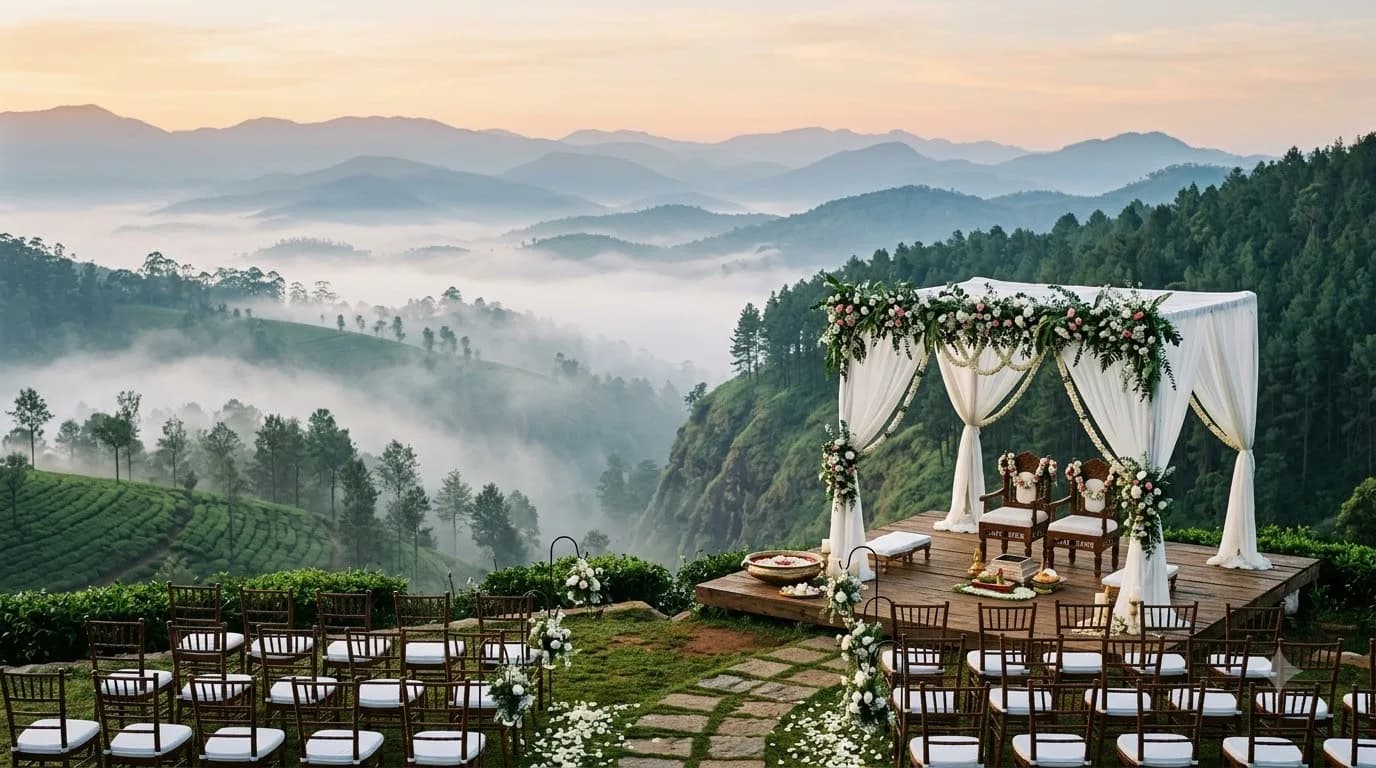
Best Season for South India Destination Weddings: Month-by-Month Western Ghats Guide
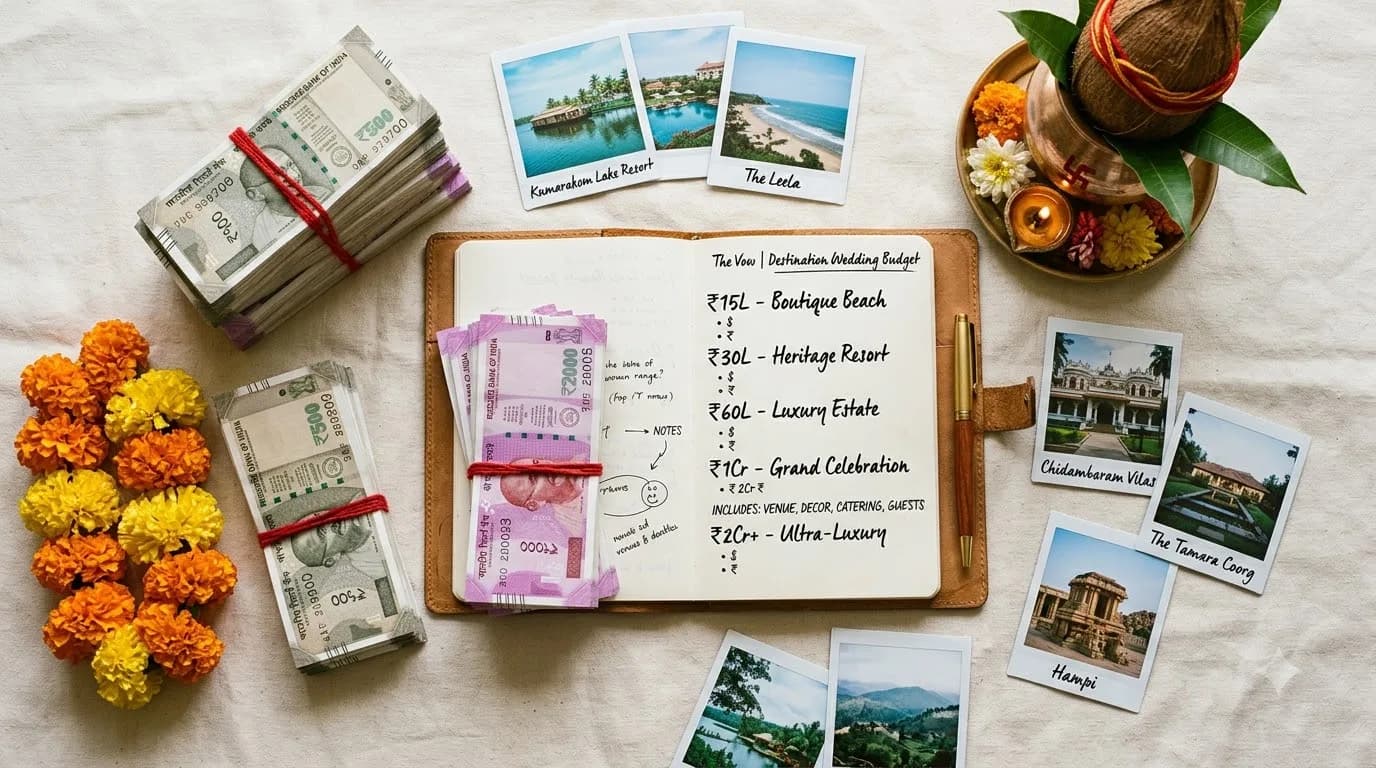
Destination Wedding Cost in South India 2026: 5-Tier Budget Guide
Still planning?
Get quotes from India's best vendors
Tell us what you're planning and we'll match you with verified photographers, venues, decorators, and more.
Get free quotes