
Konkani GSB Wedding Rituals: Naandi to Saptapadi Guide
A guide to Konkani GSB wedding rituals: Naandi Pooja, Uddida Muhurat, the Kashitali mangalsutra, Saptapadi and 15+ ceremonies spread across 3–5 wedding days.

Coastal Karnataka Wedding Editor
Deepa Shetty is the coastal Karnataka wedding editor at itsmy.
On this page
A Konkani GSB wedding spans 3 to 5 days of concentrated ceremonies, with more than 15 distinct rituals from Naandi Pooja to Saptapadi. After the Naandi, the couple keep a strict Saatvik diet with no meat, fish, onion or garlic. The bride traditionally wears a nine-yard silk sari and receives the signature Kashitali, a necklace of gold and coral beads. Guest counts typically range from 200 to 800.
Quick Answer
Quick answer: A Konkani GSB wedding spans 3 to 5 days with more than 15 rituals, from Naandi Pooja to Saptapadi. After the Naandi, the couple keep a Saatvik diet with no meat, fish, onion or garlic. The bride traditionally wears a nine-yard silk sari and receives the Kashitali, a necklace of gold and coral beads.
Note
Pricing methodology: Cost ranges combine itsmy.wedding marketplace data from Q4 2025 – Q1 2026 with venue and menu rates listed on WedMeGood, rechecked in November 2026.
If you have never seen a Goud Saraswat Brahmin wedding in Mangalore, you are missing one of coastal Karnataka's most intricate ceremonies. I first saw one at my closest friend's wedding. Watching her grind black urad dal on a stone grinder at dawn, surrounded by chanting and the scent of camphor, was unlike anything I had seen at any other wedding. Every ritual carries meaning drawn from Vedic tradition and from the community's long migration down the Konkan coast.
The Goud Saraswat Brahmins trace their name to the Saraswati region of northern India, according to Wikipedia's history of the community. Their journey south, first to Goa and then down the coast to Mangalore, created a distinctive Konkani-speaking Brahmin culture. Konkani is still the home language of about 16% of Mangaluru, per Wikipedia's language data for the city. This guide walks through every ceremony, from the first coconut offering at the Naandi to the coconut distribution at the Vaina Pooja. For the wider Mangalore picture, see our Mangalore wedding planning guide.
Who Are the Goud Saraswat Brahmins?
The Goud Saraswat Brahmins (GSBs) are a Konkani-speaking Brahmin community settled along India's west coast, from Goa through Mangalore and Udupi to Kerala. Most GSBs in Karnataka and Kerala follow Madhvacharya's Dvaita philosophy. They look to the Kashi Math and Gokarna Math for spiritual guidance, while a smaller Smartha section follows other mathas.
Their move south came in several waves. In Goa, Portuguese rule brought laws from December 1567 that banned public Hindu rituals, including marriages, sacred-thread ceremonies and cremation. Many GSB families left for the kingdoms of the Kanara coast. There they built temples, mathas and a thriving trading community. Others sailed further south. Onmanorama's history of Kerala's Konkani community draws on the 1961 census to trace families who reached Calicut, Cochin and Porakad in the 16th century.
Note
The community is known for its emphasis on education, its cooking and a temple-centred social life. Interestingly, Wikipedia notes that many GSBs eat fish at home, but wedding meals are traditionally vegetarian. In Mangaluru, the Sri Venkataramana Temple on Car Street is a cultural anchor. Deccan Herald describes it as one of the 18 GSB temples in the area, believed to date from the 17th century, and it was reconsecrated in January 2012.
What Happens During Naandi Pooja?
Naandi Pooja formally opens the wedding at both the bride's and groom's homes, traditionally up to ten days before the ceremony. Today, many families hold it a few days ahead instead.
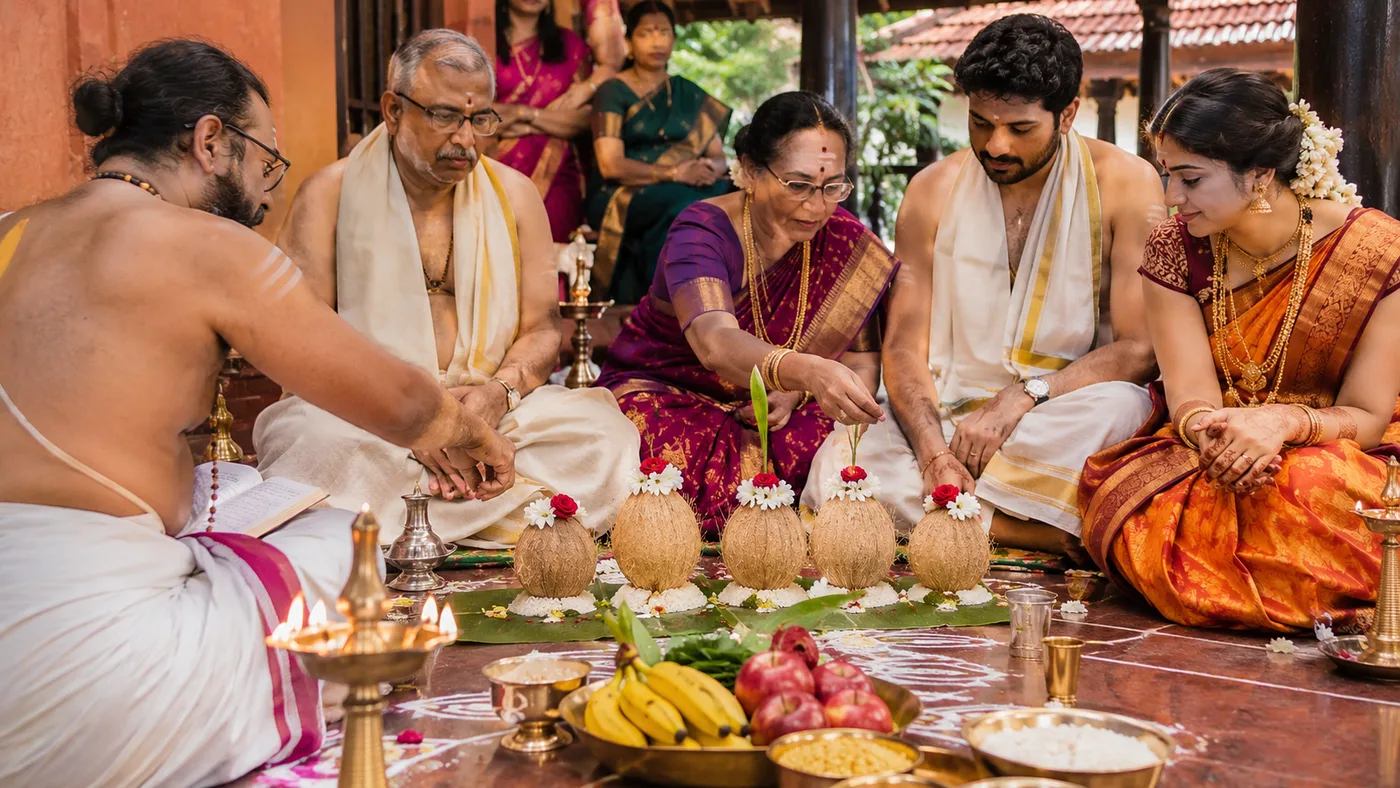
Coconuts are placed before the family deity and offered with prayers to God and the ancestors. The priest performs a homa and chants Vedic mantras for the coming union. From that day, the bride and groom keep a strict Saatvik diet: no meat, fish, onion or garlic. According to KonkaniVhakkal's account of GSB rituals, this discipline prepares the couple in body and mind for the sacrament of marriage.
The Saatvik period brings other restrictions too. Traditionally, the couple avoid funerals and other events considered inauspicious. Meanwhile, family members rally around them, and both homes take on a festive, protected air.
Tip
Haldi Mangalsnanam: The Turmeric Bath
The Haldi Mangalsnanam is a turmeric bath held a day or two before the wedding, combining purification, beautification and blessings from married women. It is one of the warmest rituals of the week.
Married women (sumangalis) apply a paste of turmeric, sandalwood and oil to the bride's or groom's face, arms and feet. Turmeric is treated as a purifier across South Indian ritual, and it brightens the skin before the big day. Then the bride is bathed in warm water, sometimes scented with flowers.
In modern GSB weddings, families often pair the Mangalsnanam with a mehendi evening. Konkani families in Mangalore have adopted mehendi enthusiastically over the past two decades. So the evening becomes a social gathering with music and snacks, while the bath keeps its ritual meaning.
Kankan Survuche: The Bangle Ceremony
Kankan Survuche is the bangle ceremony, when the bride's mother slides coloured glass bangles onto her wrists as a blessing for a long, prosperous married life. It is intimate and often tearful.
The bride's mother chooses bangles in auspicious colours, typically green and red, while elder women sing blessings. In GSB tradition, the bangles carry the bride's prayers for her husband's long life. She usually wears them for several days after the wedding.
Only close female relatives tend to attend. For many families, it is the moment the bride's mother adorns her daughter for the last time under her own roof.
Phool Muddi: Welcoming the Groom's Family
Phool Muddi is the formal welcome of the groom's family at the bride's home, with flowers, blessings and, today, often the exchange of rings. It is the first big gathering of both families.
The bride wears fresh jasmine in her hair. Coastal Karnataka's jasmine is famous enough that Udupi Mallige holds a Geographical Indication, registered in 2007. The groom's mother arrives with a tray of sweets, a new sari and ceremonial items. She blesses the bride with a tilak and offers the gifts, signalling her family's welcome. The bride receives them and touches her future mother-in-law's feet.
In contemporary weddings, the ring exchange often happens here, so the Phool Muddi doubles as the engagement. Afterwards, the families share a meal, and the priests confirm the muhurta for the main ceremony.
What Is the Uddida Muhurat, and Why Is It So Significant?
The Uddida Muhurat is the most distinctive Konkani GSB pre-wedding ritual: the bride grinds black urad dal on a stone grinder at an auspicious time, marking her readiness for married life. If you see only one pre-wedding ritual, make it this one.
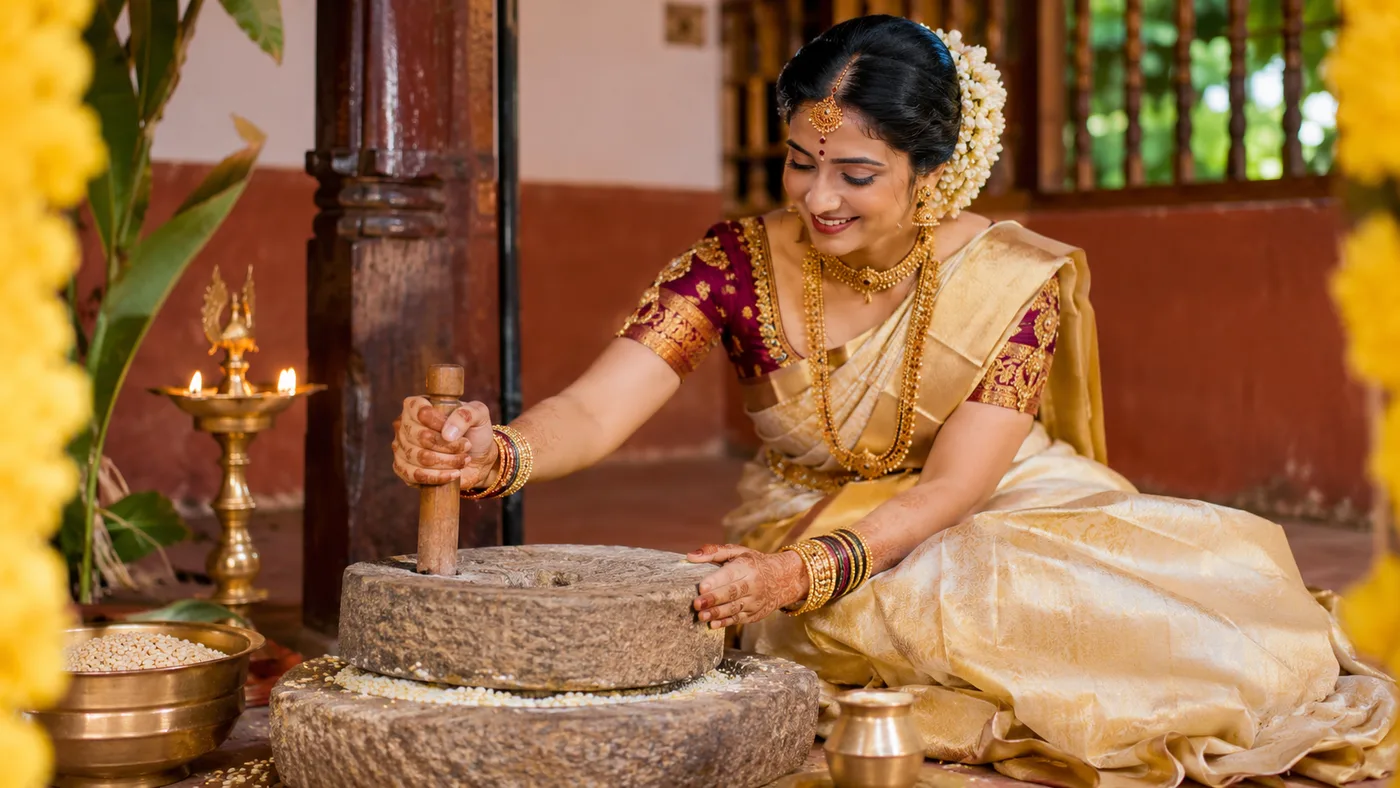
The bride sits before the stone grinder early in the morning, at the time the priest has set. She pours dried urad dal onto the stone and turns the heavy upper wheel with both hands while mantras fill the room. Elder women sit beside her, guiding her rhythm and teasing her gently.
The symbolism is domestic and generous. Urad dal is a staple of festive Konkani cooking, and the act of grinding stands for the bride taking up the care of a new household. At my friend's wedding, her grandmother kept one hand on the stone throughout. Nobody had to explain what that meant.
The Groom's Kashi Yatra
On the wedding day, the groom performs the Kashi Yatra. Wikipedia describes the ritual as the groom declaring that he will become an ascetic and set off on pilgrimage to Kashi, carrying an umbrella, a fan and other items. He begins to walk away from the venue.
The bride's father stops him, offering his daughter's hand and persuading him that the householder's life is just as noble. The groom "agrees" and returns to marry. The ritual is common across South Indian Brahmin weddings, but Konkani families play it with particular humour.
Note
Ghade Udda: The Water-Drawing Rite
Ghade Udda is an early-morning ritual in which the bride and her mother draw water together, honouring water's role in sustaining the new household. It is one of the quietest moments of the wedding.
On the wedding morning, the bride goes with her mother to a well, or in modern homes a decorated brass vessel that stands in for one. They draw water together and pass it between brass tumblers. The rhythmic act symbolises the passing of household knowledge from mother to daughter.
It usually happens very early, before the main rituals begin. The bride is often in a simple cotton sari, without full makeup. As a result, families treasure it as a raw, honest moment before the day's spectacle.
Mandap Pooja and the Dharemani
At the Mandap Pooja, the bride honours each of the four mandap pillars with turmeric and kumkum, consecrating the space where she will marry. A necklace ritual follows straight after.
The bride steps into the mandap with her right foot first, an auspicious start. At each pillar she applies turmeric and kumkum, invoking the guardians of the four directions.
Then the bride's family places the dharemani around her neck. Wikipedia's entry on the mangalsutra explains that Konkani women traditionally wear three necklaces. The first is the dharemani or muhurtmani, with a large gold bead. The second is a mangalsutra with one or two gold discs, and the third is the Kashitali of gold and coral beads.
Varapooja: Honouring the Bride's Sisters
Varapooja is the ritual gifting that honours the bride's sisters and close female relatives for their role in raising and supporting her. It strengthens the bond between the two families.
The groom's family presents gifts, typically silk saris, jewellery or cash, to the bride's sisters and female cousins. Each woman is honoured in turn, usually the eldest first. The ritual recognises that the bride's upbringing was a shared effort by her female kin. It also makes sure her sisters feel valued and included on the day.
How Does the Bridal Entry and Varamaala Unfold?
A cloth held between the bride and groom drops at the auspicious moment, and the couple then exchange garlands. It is the first time they face each other in the ceremony.
The bride enters the mandap escorted by her maternal uncle. Family members hold a white cloth between the couple, blocking their view. The priest chants mantras and builds the tension. At the precise muhurta, the cloth drops, the couple see each other, and the Varamaala begins.
Both place garlands of jasmine, marigold and roses around each other's necks. The families cheer, drums often sound, and the mood shifts from anticipation to celebration.
Looking for Decorators in Mangalore?
Tell us what you need and get quotes from verified decorators
What Is the Significance of Kanyadaan?
Kanyadaan is the emotional peak of the ceremony, when the bride's parents formally entrust their daughter to the groom with Vedic mantras. Many parents describe it as the most meaningful act of their lives.
The bride sits beside her father while the priest recites mantras. Her father places her hand in the groom's, and water is poured over their joined palms. The mother places her hand over theirs to add her blessing.
In GSB tradition, Kanyadaan is regarded as a deeply meritorious act. Tears are common, from the parents and the bride alike. Many families today frame it as "entrusting" rather than "giving away". That shift keeps the ritual's spiritual power while honouring the bride's own agency.
How Is the Kashitali Mangalsutra Tied?
The Kashitali, a necklace of gold and coral beads, is tied around the bride's neck during the ceremony and marks her as a married Konkani woman. It is the piece most GSB brides treasure most.
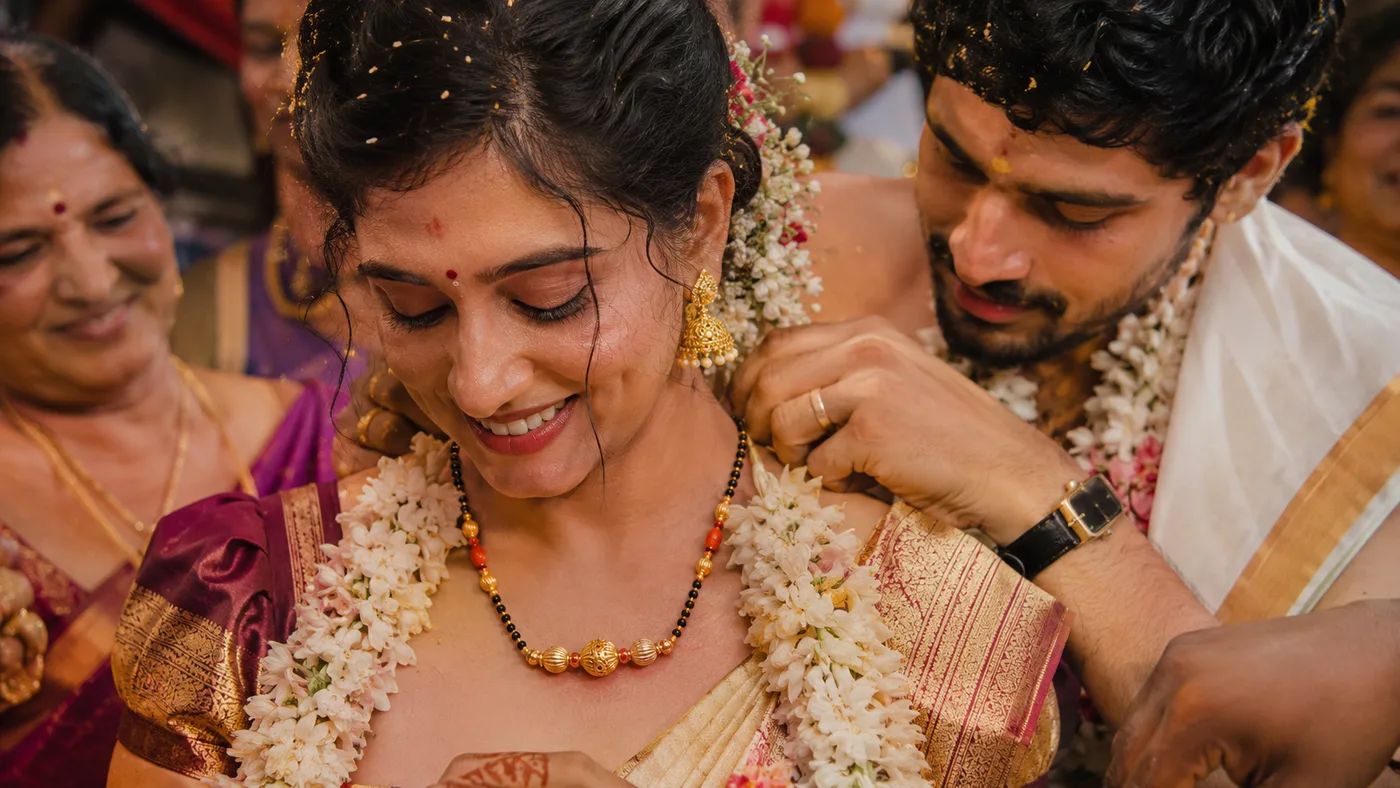
Unlike the black-bead mangalsutra common elsewhere, the Kashitali pairs gold with red coral. Families traditionally associate coral with good fortune in marriage. Together with the dharemani and the gold-disc mangalsutra, it completes the Konkani bride's trio of wedding necklaces.
Many women wear the Kashitali for life, and it often passes down as an heirloom. Families usually commission it from traditional Mangaluru goldsmiths who know the community's bead patterns.
What Happens During the Layee Homa Fire Ceremony?
In the Layee Homa, the bride's maternal relatives pass a bag of rice in order of seniority, and the couple then offer it into the sacred fire as a symbol of abundance. The maternal side takes centre stage here.
The maternal uncle (maama) plays the central role. The bag passes from the eldest maternal uncle to the youngest, then through the bride's brothers, before the couple offer it to the fire. The order honours family hierarchy and recognises that her mother's family has supported her all her life.
Afterwards, the maternal uncle often gives the bride her toe rings. These are traditionally silver and become a sign of her married status.
What Are the Seven Vows of Saptapadi?
Saptapadi, the seven steps beside the sacred fire, is the moment the marriage becomes binding, with each step tied to a vow. Wikipedia's entry on Saptapadi describes it as the most important rite of a Hindu wedding.
The couple walk beside the agni with the end of the bride's sari knotted to the groom's panche. At each step, the priest recites a vow. A common interpretation runs:
- Nourishment — may we provide for each other and our family
- Strength — may we grow strong together in body and mind
- Prosperity — may we create wealth by righteous means
- Happiness — may our home be filled with joy
- Children — may we be blessed with virtuous children
- Health — may we enjoy long and healthy lives together
- Friendship — may we remain devoted companions
After the seventh step, the marriage is considered complete and, in Hindu belief, a bond that lasts across lifetimes. Many priests then point the couple towards the star Arundhati, the traditional symbol of marital devotion.
What Are the Key Post-Wedding Ceremonies?
Four rituals follow the wedding: Sheraga Ghalche, Baglari Basche, Okulimuddi and Vaina Pooja. They move the mood from solemn to playful.
Sheraga Ghalche — Setting the Pallu
After Saptapadi, the groom's mother steps forward and sets the pallu of the bride's new sari. The gesture marks the bride's formal entry into the groom's family. Traditionally, the bride also received a new name chosen by her in-laws. Many modern couples skip the name change, but some families keep it as a gesture of welcome.
Baglari Basche — The Playful Blockade
When the couple reach the groom's home, his sisters and female cousins form a laughing barricade at the door. They demand gifts as the "price of entry". The groom's side negotiates with mock seriousness, the sisters raise their demands, and it all dissolves into laughter and hugs. In short, it turns a nervous homecoming into a joyful welcome.
Okulimuddi — The Ring Game
The Okulimuddi ring game has had everyone cheering at every GSB wedding I have attended. A brass bowl is filled with water and milk until the liquid turns opaque. A ring or coin goes in, and the couple plunge their hands in together to find it. Whoever finds it first is playfully declared the "dominant partner".
Families crowd around and shout for their side. Usually the game runs as a best of three or five. It is the most entertaining moment of the post-wedding rituals, a burst of fun after the solemn ceremony.
Vaina Pooja — The Coconut Offering
Vaina Pooja is a closing worship in which coconuts, often 108, are blessed and then shared with married women as a gesture of abundance and gratitude. The number 108 is sacred across Hindu tradition. The coconuts sit on a decorated platform, are worshipped with mantras and are then distributed. Receiving one is considered auspicious, and women take them home as blessings for their own marriages.
Looking for Caterers in Mangalore?
Tell us what you need and get quotes from verified caterers
What Does the Konkani Bride Wear?
Traditionally, a Konkani GSB bride wears a nine-yard silk sari draped in the Konkani style, though many modern brides choose a six-yard Kanchipuram silk. Red, maroon and deep green with gold zari borders are the favourite colours.
The nine-yard drape uses the full length of the sari, and experienced older women in the family usually dress the bride on the wedding morning. The technique passes from mother to daughter. During some rituals, the bride also covers her head with a white cloth. After Saptapadi, she changes into the new sari from the groom's family at the Sheraga Ghalche.
The bridal jewellery usually includes:
- Kashitali — gold and coral beads, the centrepiece
- Dharemani and mangalsutra — the large gold bead and the gold-disc necklace
- Nath — a nose ring, often a gold hoop with pearls
- Bangles — green and red glass bangles from the Kankan Survuche
- Hair — jasmine woven through a braided plait
- Toe rings — silver, often given at the Layee Homa
What Food Is Served at a Konkani GSB Wedding?
Konkani GSB wedding meals are traditionally Saatvik vegetarian, with no meat, fish, eggs, onion or garlic in any dish. The cuisine turns that restriction into an art form.
The feast is served on banana leaves, with guests seated in rows. The menu shows off Konkani vegetarian cooking:
- Dalitoy — a light, coconut-tempered dal, the signature dish of GSB cuisine
- Batata song — spiced potato with coconut and curry leaves
- Valval — a mild mixed-vegetable stew in coconut milk
- Patholi — rice and jaggery parcels steamed in turmeric leaves
- Sambar — tamarind lentil curry with seasonal vegetables
- Kosambari — moong dal salad with coconut and lemon
- Payasa — coconut milk and jaggery dessert
- Rice — plain rice, a flavoured rice and curd rice to close
The cooking is usually done by cooks who specialise in GSB Saatvik food, a distinct skill. So families often hire cooks linked to local GSB temples or community bodies who understand the rules.
Important
Catering for a Saatvik GSB feast costs ₹350 – ₹700 per plate for 200–500 guests. For comparison, WedMeGood's Mangaluru banquet listings show vegetarian menus from about ₹300 at budget halls to around ₹600 at large kalyana mantapas.
What Does the Complete Konkani Wedding Timeline Look Like?
The main ceremony runs about 3–4 hours, inside a 3–5 day sequence of rituals. Here is a ceremony-by-ceremony timeline.
| Day | Ceremony | Duration | Key Highlights |
|---|---|---|---|
| Several days before (traditionally up to 10) | Naandi Pooja | 1-2 hours | Coconuts offered; Saatvik diet begins |
| Day -2 | Haldi Mangalsnanam | 1-2 hours | Turmeric bath and purification |
| Day -1 | Kankan Survuche | 30-45 mins | Mother places bangles on bride |
| Day -1 | Phool Muddi | 1-2 hours | Groom's family welcomed; ring exchange |
| Day -1 | Uddida Muhurat | 1-2 hours | Bride grinds urad dal |
| Wedding morning | Ghade Udda | 30 mins | Water-drawing ritual with mother |
| Wedding morning | Kashi Yatra | 15-20 mins | Groom's mock pilgrimage |
| Wedding morning | Mandap Pooja & Dharemani | 30 mins | Turmeric on pillars; gold-bead necklace |
| Wedding | Varapooja | 20-30 mins | Gifts to bride's sisters |
| Wedding | Bridal Entry & Varamaala | 15-20 mins | Cloth drops; garland exchange |
| Wedding | Kanyadaan | 20-30 mins | Parents entrust daughter |
| Wedding | Kashitali tying | 10-15 mins | Gold-and-coral necklace tied |
| Wedding | Layee Homa | 30-45 mins | Rice offering; toe rings |
| Wedding | Saptapadi | 30-45 mins | Seven steps beside the fire |
| Post-wedding | Sheraga Ghalche | 15 mins | Mother-in-law sets bride's pallu |
| Post-wedding | Baglari Basche | 15-30 mins | Sisters block entry; demand gifts |
| Post-wedding | Okulimuddi | 15-20 mins | Ring game in milky water |
| Post-wedding | Vaina Pooja | 30-45 mins | Coconuts worshipped and shared |
The main ceremony, from Mandap Pooja through Saptapadi, runs roughly 3 to 4 hours. With the rituals before and after, the celebration spans 3 to 5 days.
How Do Konkani GSB Weddings Differ from Bunt Weddings?
GSB weddings are Konkani-speaking, Vedic and Saatvik vegetarian, while Bunt weddings are Tulu-speaking, matrilineal and centred on the Dhareyeruna water rite. Both communities call Mangalore home, but their traditions diverge sharply. For the full Bunt guide, see our Bunt wedding traditions guide.
| Aspect | Konkani GSB Wedding | Bunt Wedding |
|---|---|---|
| Diet | Saatvik vegetarian (no onion or garlic) | Vegetarian ceremony feast; non-veg common at receptions |
| Bridal sari | Nine-yard Konkani drape or Kanchipuram silk | Red Kancheevaram silk |
| Marriage necklace | Kashitali (gold and coral), dharemani, gold-disc mangalsutra | Gold chain with black beads; vadungila ring |
| Key pre-wedding ritual | Uddida Muhurat (dal grinding) | Murthasese (bridal adornment) |
| Key ceremony ritual | Kanyadaan and Layee Homa | Dhareyeruna (water over joined hands) |
| Cultural root | Vedic Brahminical; mostly Madhva | Tulu matrilineal (Aliyasantana); Naga worship |
| Language | Konkani | Tulu |
| Signature playful moment | Okulimuddi ring game | Chambu sit-and-rise |
| Ceremony duration | 3-4 hours | 2-3 hours |
| Guest count | 200-800 | 300-1,500 |
For the city's other traditions, see our Mangalorean Catholic wedding guide and Kannada wedding traditions guide.
What Should You Budget for a Konkani GSB Wedding in 2026?
A Konkani GSB wedding in Mangalore typically costs ₹10,00,000 – ₹35,00,000 in 2026, with ritual materials, specialist cooks and bridal gold the defining lines. GSB weddings are often smaller than Bunt weddings but spend more per guest on ritual and food.
| Expense | Typical 2026 range |
|---|---|
| Venue: community or temple-linked hall (200–500 guests) | ₹1,00,000 – ₹4,00,000 |
| Venue: hotel banquet or resort | ₹3,00,000 – ₹8,00,000 |
| Saatvik catering (200–500 guests) | ₹1,50,000 – ₹5,00,000 |
| Bridal attire and jewellery (sari, Kashitali, accessories) | ₹2,00,000 – ₹8,00,000 |
| Photography and videography (3–5 days) | ₹80,000 – ₹3,00,000 |
| Mandap decoration and florals | ₹80,000 – ₹3,50,000 |
| Priest fees, ritual materials and coconuts | ₹30,000 – ₹1,00,000 |
| Music, lighting and miscellaneous | ₹40,000 – ₹1,50,000 |
New gold can swing the jewellery line sharply, so price the Kashitali and other pieces early. For a full breakdown across communities, see our Mangalore wedding cost guide.
Tip
Common Questions About Konkani Wedding Rituals
How long does a GSB Konkani wedding take from start to finish?
Plan for three to five days of concentrated ritual. The Naandi Pooja opens the sequence, traditionally up to ten days ahead, though many families now hold it closer to the date. Activity then builds from the Haldi Mangalsnanam two days out through to the Vaina Pooja after the wedding. The main ceremony day alone packs in more than ten rituals over three to four hours, so start early and keep breaks for elders.
Why is the Uddida Muhurat so special in Konkani weddings?
The Uddida Muhurat is the ritual guests remember. At an auspicious hour, the bride grinds black urad dal on a stone grinder while elder women guide her and sing. It stands for her readiness to care for a new household, using an ingredient central to festive Konkani cooking. No other major Mangalore community has this ritual, which is why photographers and relatives crowd around for it.
Can a GSB wedding reception serve non-vegetarian food?
Traditionally, no. The Saatvik rule covers every wedding meal, even though many GSB families eat fish at home. Some modern families do host a separate reception dinner with non-vegetarian dishes, distinct from the ceremony feast. However, this remains uncommon, and orthodox families avoid it. If you have mixed guests, a separate dinner on another day is the most respectful way to offer meat or fish.
What do the Kashitali's coral beads signify?
Coral gives the Kashitali its distinctive red-and-gold look and, for many families, carries a sense of good fortune in marriage. The Kashitali is one of three necklaces a married Konkani woman traditionally wears. The others are the dharemani, with its large gold bead, and a mangalsutra with gold discs. Many women wear the Kashitali for life, and it often passes down as an heirloom.
When is the Kashi Yatra performed, and who takes part?
The Kashi Yatra takes place on the wedding day, shortly before the main ceremony. The groom dresses as a pilgrim, with an umbrella, fan and simple bundle, and announces that he is leaving for Kashi to live as an ascetic. The bride's father, often helped by the bride's brothers, stops him and persuades him to return for married life. It is light-hearted, quick and a favourite with photographers.
How does the Okulimuddi ring game work?
After the wedding, a brass bowl is filled with water and milk until the liquid turns cloudy. Someone drops in a ring or a coin, and the bride and groom search for it with their hands at the same moment. Whoever finds it first is declared the "dominant partner" of the marriage, to loud cheers. Families usually play best of three or five, and the teasing lasts for years.
What role does the maternal uncle play at a GSB wedding?
The maternal uncle, or maama, carries several key duties. He escorts the bride into the mandap for the bridal entry. During the Layee Homa, the bag of rice passes through his hands, and those of the other maternal relatives, before the couple offer it to the fire. He often presents the bride with her toe rings too. His role reflects the respect Konkani families give to the bride's mother's side.
A Konkani GSB wedding combines Vedic precision with Konkani warmth. Grinding dal at dawn, tying a gold-and-coral necklace and hunting for a ring in milky water all feel equally sacred. Every ritual carries a scholarly tradition that has survived migration and centuries of life on the Kanara coast. Whether your mandap rises in a temple-linked hall in Mangaluru or a resort above the Arabian Sea, these ceremonies connect you to a long lineage and to the family you are about to build.
Tip
Start planning your wedding — generate a personalised checklist with our AI Wedding Checklist, estimate your budget with the Cost Calculator, or make your own wedding website.
Topics
konkani wedding ritualsgsb wedding traditionsgoud saraswat brahmin weddingkonkani wedding customsmangalore brahmin weddingnaandi poojauddida muhuratExplore more
Frequently Asked Questions
1How many days does a Konkani GSB wedding last?
2What is the Uddida Muhurat in a Konkani wedding?
3What does the Konkani bride wear?
4What is the Kashitali mangalsutra?
5What food is served at a Konkani GSB wedding?
6What is the Okulimuddi ring game?
7How does a Konkani wedding differ from a Bunt wedding?
8What is Naandi Pooja in a Konkani wedding?
Continue reading
Related Articles
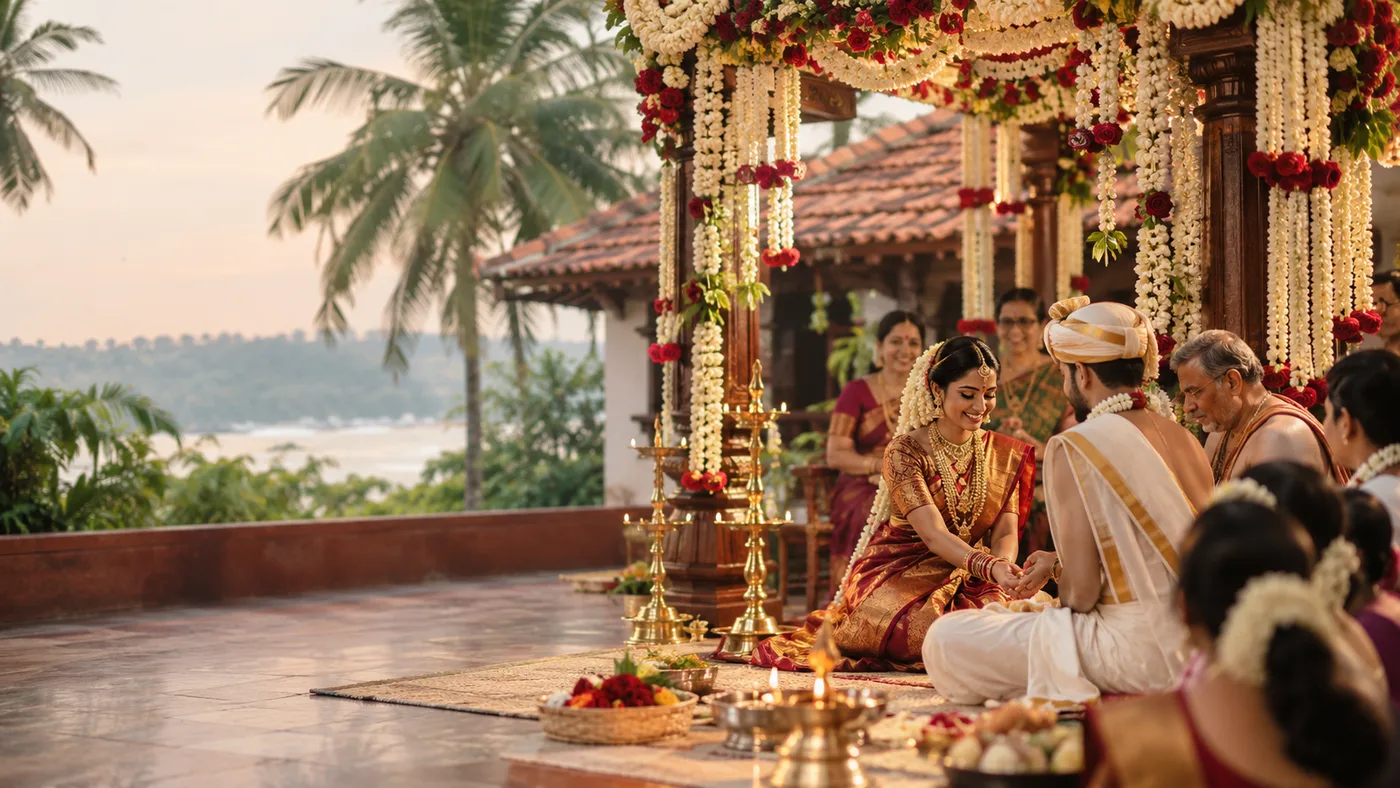
How to Plan a Mangalore Wedding: Complete 2026 Guide
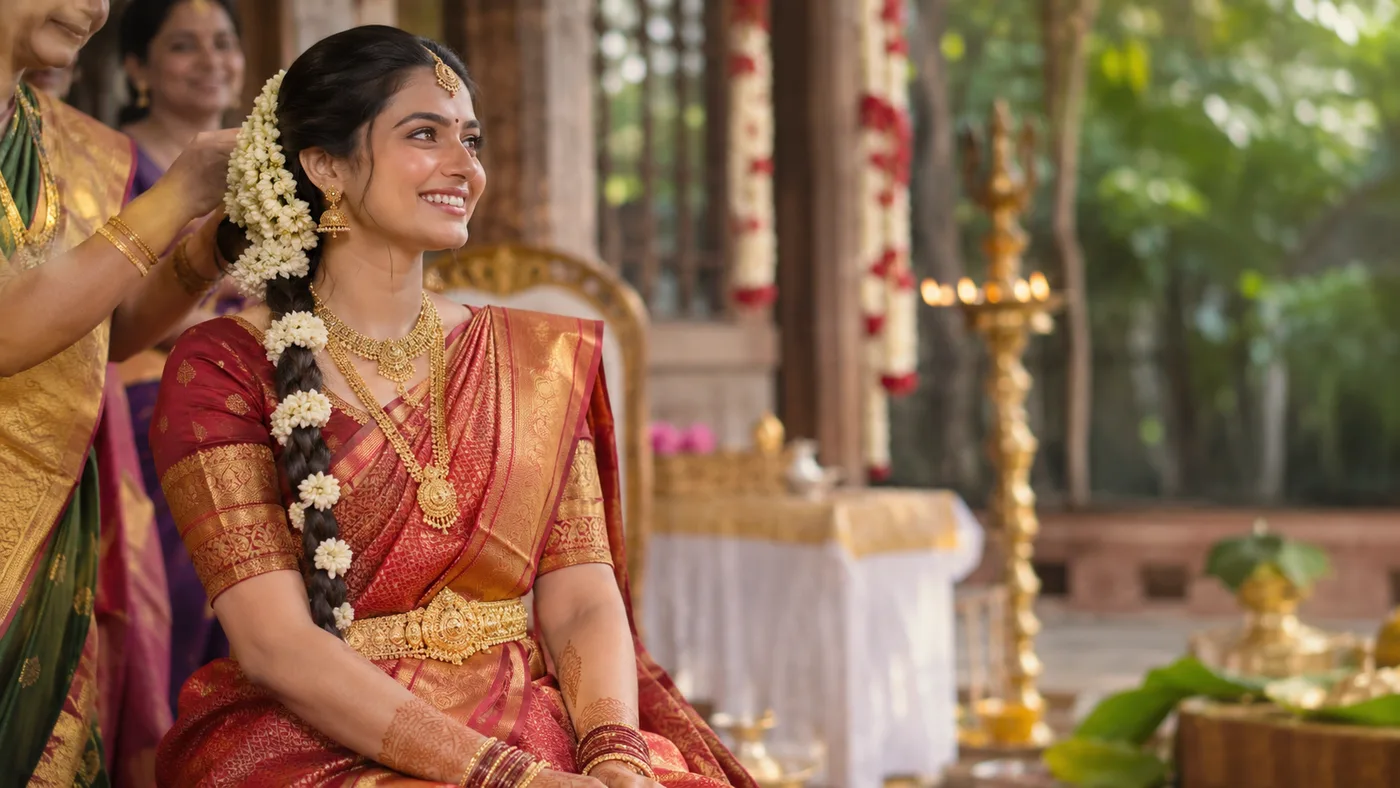
Bunt Wedding Traditions: Murthasese to Dhareyeruna Guide
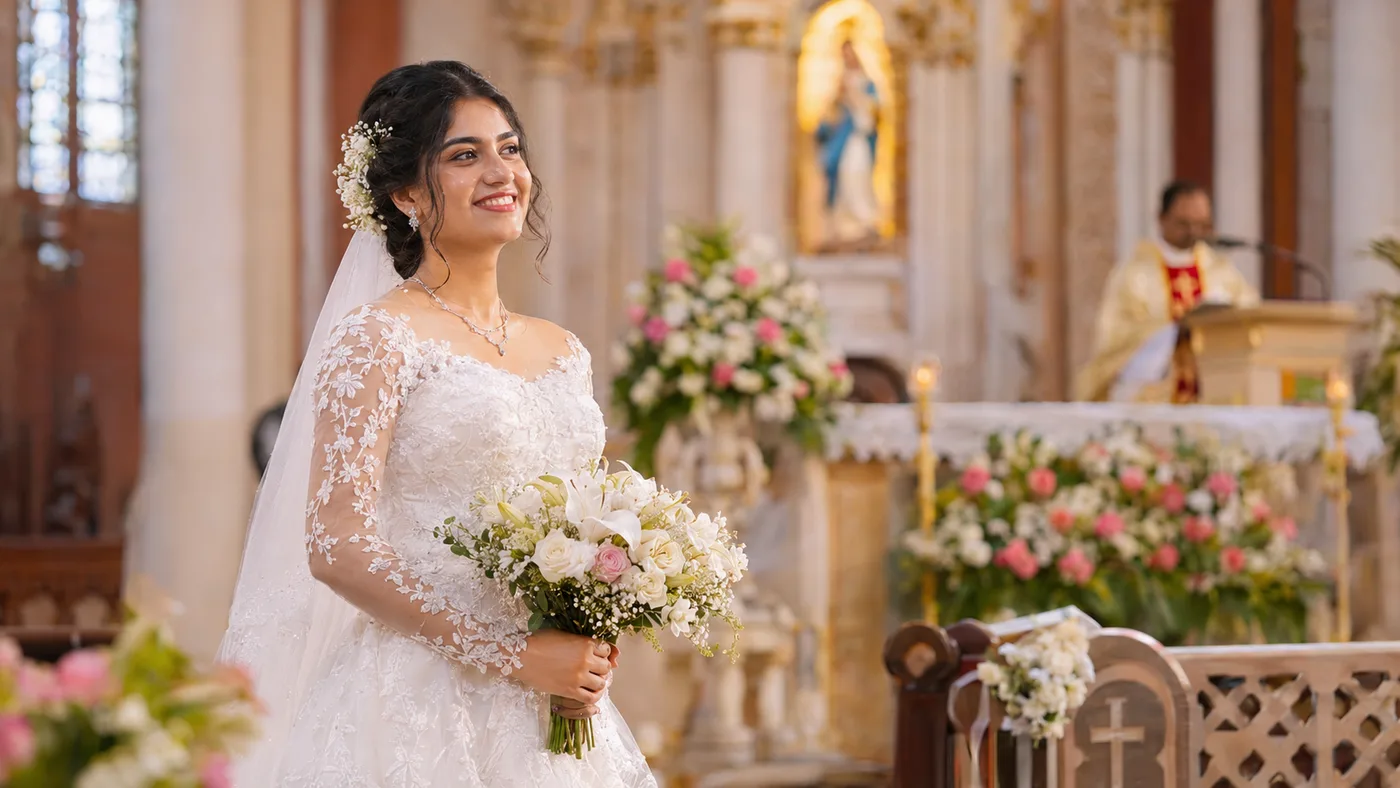
Mangalorean Catholic Wedding: Roce, Sado & Baila Traditions
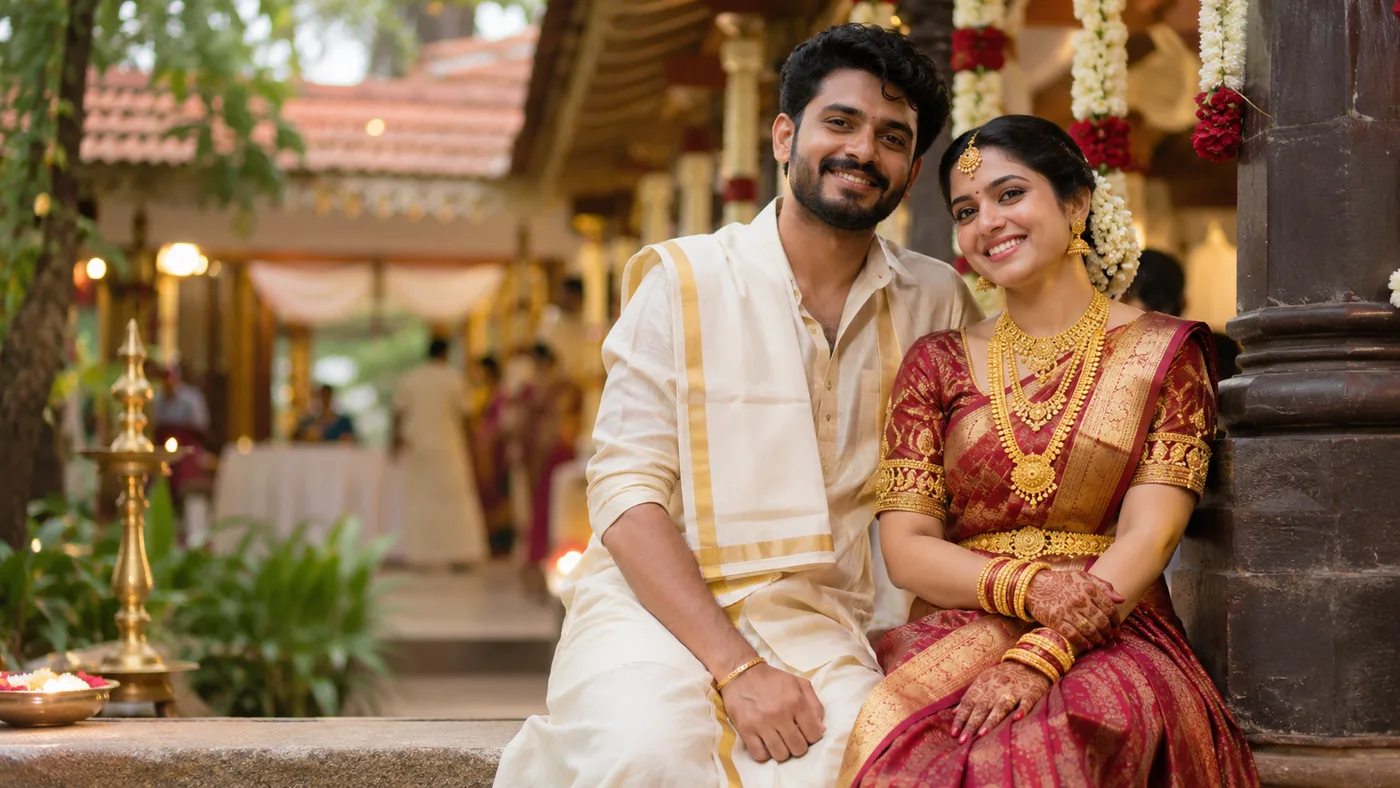
Mangalore Wedding Cost: Realistic 2026 Budget Breakdown
Assam Destination Wedding: Kaziranga, Majuli & Guwahati
Best Time for a Northeast India Wedding: Month by Month
Still planning?
Get quotes from India's best vendors
Tell us what you're planning and we'll match you with verified photographers, venues, decorators, and more.
Get free quotes