
Wedding Planner Cost in Bangalore: 2026 Fee Guide
Wedding planners in Bangalore charge ₹50,000-₹10 lakhs in 2026. Compare flat-fee, percentage, and day-of pricing with ROI analysis and tiers.

On this page
Wedding planners in Bangalore charge ₹50,000–2 lakhs for day-of coordination, ₹2–5 lakhs for partial planning, and ₹5–10+ lakhs for full-service management in 2026. Percentage-based planners take 10–15% of total budget. For weddings above ₹15 lakhs, a good planner typically saves 10–20% through vendor negotiation — often recouping their own fee.
Quick Answer
Quick answer: Wedding planners in Bangalore charge ₹50,000–2 lakhs (day-of coordination), ₹2–5 lakhs (partial planning), or ₹5–10+ lakhs (full-service). Percentage-based planners charge 10–15% of total budget. For weddings above ₹15 lakhs, a good planner typically saves 10–20% through vendor negotiations — often recovering their entire fee in savings.
Note
Pricing methodology: Cost ranges in this guide are based on vendor pricing data from the itsmy.wedding marketplace and published industry reports, collected in Q4 2025 – Q1 2026.
Bangalore's wedding planner market has expanded rapidly as India's overall wedding industry reaches ₹10.79 lakh crore, projected to hit ₹24 lakh crore by 2030 (IBEF, 2025). About 35% of urban Indian couples now hire professional planners, a sharp jump from 15% in 2019 (WedMeGood Industry Report, 2024). In a city where tech professionals manage demanding careers, multi-community guest lists, and weddings that blend Kannadiga, Tamil, Telugu, and North Indian traditions, professional planning has shifted from luxury to practical necessity for many couples.
But not every Bangalore (officially Bengaluru) wedding needs a planner. Families with experience coordinating celebrations, single-day mantapa weddings, and guest lists under 200 can often manage beautifully without one. The real question is whether your specific wedding — its scale, complexity, and timeline — benefits from professional coordination. This guide breaks down exactly what planners charge, what each tier includes, and how to calculate whether the investment pays for itself.
For the complete DIY planning approach, see our Bangalore wedding planning guide.
How Much Do Wedding Planners Charge in Bangalore?
Wedding planner fees in Bangalore fall into three distinct tiers, with rates running 10–15% higher than comparable cities like Hyderabad due to the metro's higher cost of living and vendor density (WeddingWire India, 2025). Here's what each tier costs and which Bangalore-based planners operate at each level.
Pricing by Service Tier
| Service Tier | Fee Range | Typical Wedding Size | Planning Duration |
|---|---|---|---|
| Day-of Coordination | ₹50,000 – ₹2,00,000 | 150–400 guests | 4–8 weeks |
| Partial Planning | ₹2,00,000 – ₹5,00,000 | 300–600 guests | 3–6 months |
| Full-Service Planning | ₹5,00,000 – ₹10,00,000 | 400–1,000+ guests | 6–12 months |
| Premium / Destination | ₹8,00,000 – ₹15,00,000 | 500–1,500+ guests | 8–14 months |
Named Planners and Starting Rates
Not all planners publish rates openly, but here's what we've found through vendor listings and direct enquiry across WedMeGood and WeddingWire India profiles.
Budget-friendly options:
- Vismaya Eventz — starts at approximately ₹45,000 for day-of coordination
- Art of Events — starts at approximately ₹50,000 for day-of packages
Mid-range planners:
- Panigrahana — starts at approximately ₹2,00,000 – ₹4,00,000 for partial to full planning
- One Horizon — starts at approximately ₹4,00,000 – ₹6,00,000 for full-service packages
Premium planners:
- The Mogra Collective — starts at approximately ₹6,00,000 for bespoke full-service planning
- Katha Weddings — starts at approximately ₹6,00,000 for design-forward celebrations
- Revelations — starts at approximately ₹8,00,000 for luxury multi-event weddings
Having worked alongside several Bangalore wedding planners for editorial coverage, we've noticed that mid-range planners often deliver the highest value relative to cost. Their vendor networks rival premium firms, but their lower overheads keep fees grounded.
Note

For a complete breakdown of all vendor costs, see our Bangalore wedding budget guide.
Flat Fee vs Percentage: Which Pricing Model Works Better?
About 70% of Bangalore wedding planners use flat-fee structures, though percentage-based and hybrid models are gaining ground among premium firms, according to vendor profile data on WedMeGood. Each model creates different incentives — and understanding them helps you negotiate smarter.
Side-by-Side Comparison
| Factor | Flat Fee | Percentage (10–15%) | Hybrid |
|---|---|---|---|
| Cost range | ₹2,00,000 – ₹9,00,000 | 10–15% of total budget | Base fee + 5–8% of budget |
| Budget certainty | High — you know upfront | Low — scales with spending | Moderate |
| Planner incentive | Deliver within scope | May encourage higher spend | Balanced |
| Best for | Fixed-budget weddings | Complex, high-budget events | Couples wanting accountability |
| ₹30L wedding example | ₹3–5L flat | ₹3–4.5L (at 10–15%) | ₹1.5L base + ₹1.5–2.4L |
The Incentive Problem with Percentage Pricing
Here's the uncomfortable truth. A planner earning 12% of your total spend benefits when that total goes up. If they suggest upgrading from a ₹3-lakh decorator to a ₹5-lakh one, their own fee increases by ₹24,000. Multiply that across five vendor categories and the incentive misalignment adds up.
This doesn't mean percentage-based planners are dishonest. Many are excellent. But the structure rewards spending, not saving. If you go with a percentage model, consider requesting a fee cap — a maximum amount regardless of how high the total budget climbs.
Important
When Percentage Makes Sense
Percentage pricing works best for complex, multi-day weddings where the scope is genuinely hard to define upfront. Destination weddings in Coorg or Mysore, celebrations spanning four or five events, and weddings with 800+ guests all carry unpredictable logistics that a flat fee might not cover fairly.
In our experience covering Bangalore weddings, the flat-fee model consistently produces better outcomes for couples with budgets between ₹15 and ₹40 lakhs. Above ₹40 lakhs, the complexity often justifies a percentage or hybrid arrangement where the planner's compensation reflects the workload.
What Do Wedding Planners Actually Do?
A professional wedding planner in Bangalore manages 200+ individual tasks across an average 8-month planning cycle, according to scope-of-work documents shared by bhandaryskitchen.com's wedding planning resource. The scope varies dramatically by tier, so here's exactly what you're paying for at each level.
Service Breakdown by Tier
| Service | Day-of Coordination | Partial Planning | Full-Service |
|---|---|---|---|
| Vendor coordination on event day | Yes | Yes | Yes |
| Timeline and run-sheet creation | Yes | Yes | Yes |
| Emergency handling | Yes | Yes | Yes |
| Venue shortlisting | No | Yes | Yes |
| Vendor sourcing and negotiations | No | Yes (3–5 categories) | Yes (all categories) |
| Budget creation and tracking | No | Yes | Yes |
| Design concept and decor direction | No | Partial | Yes |
| Guest list management | No | No | Yes |
| Invitation coordination | No | No | Yes |
| Travel and hotel logistics | No | No | Yes |
| Pre-wedding event planning | No | 1–2 events | All events |
Day-of Coordination: What It Really Covers
A day-of coordinator doesn't plan your wedding. They execute it. You handle vendor selection, design, and logistics yourself — or with family — and the coordinator takes over four to eight weeks before the event.
Their job on the wedding day: arrive at the venue three hours early, supervise decor setup, confirm catering timelines, manage the ceremony sequence with the priest, handle vendor payments, and solve problems without bothering the couple or their parents. They're the professional buffer between your planning and the real-time chaos of 300+ people in one place.
Full-Service: The 200-Task Reality
Full-service planners earn their fee through sheer volume of coordination. A typical Bangalore wedding involves managing the venue contract, shortlisting and booking 8–12 vendor categories, negotiating each rate, scheduling tastings and trials, creating floor plans, coordinating guest accommodation across hotels, managing RSVPs, arranging transport logistics, overseeing rehearsals, and producing a minute-by-minute run sheet for each event.
For multi-community weddings — say a Kannadiga-Tamil celebration or a Hindu-Christian ceremony — the planner also coordinates between different ritual requirements, ensuring the venue setup transitions smoothly between ceremony styles.

Looking for Wedding Planners in Bangalore?
Tell us what you need and get quotes from verified wedding planners
Can a Wedding Planner Save You Money?
For weddings above ₹15 lakhs, planners typically negotiate 10–20% savings on vendor costs through industry relationships and volume commitments, according to WeddingWire India's vendor engagement data. That discount range often covers the planner's own fee — making the net cost of hiring one close to zero.
ROI Analysis: A ₹25-Lakh Wedding
Let's run the numbers on a mid-range Bangalore wedding with 400 guests.
| Category | Without Planner | With Planner (15% savings) | Savings |
|---|---|---|---|
| Venue | ₹4,00,000 | ₹3,40,000 | ₹60,000 |
| Catering | ₹6,00,000 | ₹5,10,000 | ₹90,000 |
| Photography | ₹2,00,000 | ₹1,70,000 | ₹30,000 |
| Decor | ₹3,00,000 | ₹2,55,000 | ₹45,000 |
| Entertainment | ₹1,00,000 | ₹85,000 | ₹15,000 |
| Other vendors | ₹3,00,000 | ₹2,55,000 | ₹45,000 |
| Total vendor cost | ₹19,00,000 | ₹16,15,000 | ₹2,85,000 |
| Planner fee | — | ₹3,00,000 | — |
| Net cost of planner | — | — | ₹15,000 extra |
The planner nearly pays for themselves through negotiation alone. And this calculation doesn't count the hidden savings.
Hidden Savings Most Couples Miss
No rush-booking penalties. Last-minute vendor bookings carry 15–25% premiums. A planner's timeline prevents these entirely.
No over-ordering. Families routinely over-order food by 20–30% "just in case." A planner calculates accurate quantities based on RSVP data and catering norms, saving ₹30,000–80,000 on a 400-guest wedding.
No duplicate services. Without a coordinator tracking deliverables, couples sometimes pay for overlapping services — a decorator and a florist both handling table arrangements, or a DJ and a band booked for the same time slot.
Penalty avoidance. Missed vendor deadlines, late venue payments, and incorrect setup specifications all carry financial consequences. Planners track every deadline across every vendor contract.
Tip
Based on our conversations with three Bangalore-based wedding planners, the average negotiated discount on venue rates alone is 12–18% for returning planner-clients versus walk-in couples. Caterers extend 8–12% reductions for planners who bring consistent business.
Day-of Coordination vs Full Planning: What's Right for You?
The right tier depends less on your budget and more on your available time, planning comfort, and wedding complexity. A WedMeGood survey of 2,000+ Indian couples found that 42% of couples who hired full-service planners cited "lack of time" as the primary reason — not lack of knowledge.
Decision Matrix
| Your Situation | Recommended Tier | Why |
|---|---|---|
| Under ₹10L budget, organised couple, family support | Day-of coordination (₹50,000 – ₹2,00,000) | Your family handles planning; coordinator handles execution |
| ₹10–25L, working professionals, 300–500 guests | Partial planning (₹2,00,000 – ₹5,00,000) | You choose the big vendors; planner fills gaps and coordinates |
| ₹25L+, complex logistics, 500+ guests | Full-service (₹5,00,000 – ₹10,00,000) | Too many moving parts for part-time management |
| Multi-day, destination, or multi-community | Premium full-service (₹8,00,000 – ₹15,00,000) | Cross-venue, cross-vendor, cross-culture coordination |
The Guest Count Factor
Guest count is the strongest predictor of whether you need a planner. Weddings under 200 guests involve straightforward logistics that a capable family member can manage. Between 200 and 500, a day-of coordinator adds genuine value. Above 500, professional coordination becomes almost essential — the parking, seating, catering flow, and transportation logistics compound in ways that overwhelm even experienced families.
When to Skip the Planner Entirely
Not every couple needs professional help. You can confidently skip if you're hosting a single-event mantapa wedding with in-house catering, your family has coordinated multiple weddings before, your guest list stays under 150, and your total budget sits below ₹8 lakhs. That's how thousands of Bangalore weddings happen successfully every year. For couples going the DIY route, our Bangalore wedding checklist and budget wedding strategies guide together cover the planning essentials a planner would otherwise handle.
We've observed that partial planning delivers the strongest return for most Bangalore couples earning dual incomes. The venue and caterer are usually family decisions anyway. Having a professional handle photography shortlisting, decor coordination, entertainment, and day-of logistics turns a stressful six-month process into a manageable one.
Use our Bangalore wedding checklist to track every planning milestone.
How to Choose the Right Wedding Planner
India's wedding planning market remains largely unregulated — no licensing requirements, no mandatory certification, and no industry body enforcing standards (LiveMint, 2024). That puts the entire evaluation burden on you. Here's a structured approach.
Check Portfolio Fit
Don't just look at pretty photos. Examine five to eight complete weddings in the planner's portfolio and ask specifically about weddings similar to yours — same venue type, similar guest count, comparable budget, and your community's traditions. A planner who excels at luxury farmhouse weddings in Kanakapura Road might not be the right fit for a traditional Iyengar ceremony at a Basavanagudi mantapa.
Verify the Vendor Network
A planner's real value lies in their vendor relationships. Ask for specific names: which caterers, decorators, and photographers do they work with regularly? Call two or three of those vendors and verify the relationship. A planner who's been active in Bangalore for three or more years should have connections with 30–50 vendors across all categories.
Clarify What's NOT Included
Common hidden costs in planner contracts include travel and accommodation for destination pre-wedding events, overtime charges for events running past midnight, additional fees for events added after signing, and vendor replacement coordination when you reject their recommendations.
Red Flags to Walk Away From
No written contract. If a planner hesitates to put deliverables in writing, walk away immediately.
Vague scope of work. "Full planning support" means nothing. Every vendor category and every event should be listed explicitly.
Undisclosed vendor commissions. Some planners receive 10–20% commissions from recommended vendors. This isn't inherently wrong, but it must be disclosed. If they deny receiving any commissions, they're either brand new or not being transparent.
No backup protocol. Ask what happens if the planner falls ill on your wedding day. A named substitute should be part of the agreement.
Five Questions to Ask Before Signing
- Can you share references from three weddings with a similar budget and guest count?
- Do you receive commissions from vendors you recommend? If so, how does that affect my costs?
- What is the cancellation and refund policy at each stage?
- Who is your backup if you're unavailable on the wedding day?
- How many weddings do you handle simultaneously during peak season?
Looking for Wedding Planners in Bangalore?
Tell us what you need and get quotes from verified wedding planners
In Bangalore specifically, ask planners about their experience with your venue type. Farmhouse weddings in the Kanakapura–Bannerghatta corridor require different logistics expertise than five-star hotel events in the MG Road corridor. A planner who knows your venue's specific load-in restrictions, generator policies, and parking constraints will save you headaches that a generalist won't anticipate.
Common Questions About Wedding Planner Cost in Bangalore
How much do wedding planners charge in Bangalore?
Bangalore wedding planners operate across three price tiers. Day-of coordination runs ₹50,000 – ₹2,00,000, partial planning costs ₹2,00,000 – ₹5,00,000, and full-service management ranges from ₹5,00,000 – ₹10,00,000 or higher. Planners using the percentage model charge 10–15% of total wedding spend. On a ₹25-lakh wedding, that works out to ₹2.5–3.75 lakhs.
Is it worth hiring a wedding planner in Bangalore?
For celebrations above ₹15 lakhs, professional planners typically recoup their fee through vendor negotiation savings of 10–20%. They also manage 200+ coordination tasks — from vendor payment deadlines to seating arrangements — and prevent expensive mistakes like double-bookings or incorrect setup specifications. For weddings under ₹10 lakhs with fewer than 200 guests, the fee may not be proportionate to the value.
What separates a wedding planner from a wedding coordinator?
A planner handles the complete process: venue shortlisting, vendor sourcing, budget management, design direction, and event-day execution — typically engaged 6–12 months before the wedding. A coordinator manages only the final 4–8 weeks and the event day itself, ensuring your existing plans execute on time. The price difference is substantial: planners charge ₹2,00,000 – ₹10,00,000 while coordinators charge ₹50,000 – ₹2,00,000.
Do Bangalore planners charge flat fees or a percentage of the budget?
Both models exist, but roughly 70% of Bangalore planners prefer flat fees. Flat-fee planners charge ₹2,00,000 – ₹9,00,000 based on scope and experience. Percentage-based planners take 10–15% of total wedding costs. The critical difference: flat fees give you cost certainty, while percentage models scale with spending — creating a subtle incentive for the planner to recommend pricier options.
When should I hire a wedding planner for a Bangalore wedding?
Book a full-service planner 8–12 months ahead to secure the widest venue and vendor options. Partial planners should come aboard 6 months before the wedding. Day-of coordinators need at least 6–8 weeks to review your plans, meet your vendors, and build a detailed run sheet. For peak-season dates between October and February, top planners book up 10+ months in advance — so don't delay.
For all other vendor costs, see our Bangalore wedding budget guide.
Topics
wedding planner cost bangalorewedding planning charges bangalorewedding coordinator price bangalorewedding planner fees bangalore 2026how much wedding planner bangalorebengaluru weddingsExplore more
Frequently Asked Questions
1How much do wedding planners charge in Bangalore?
2Is it worth hiring a wedding planner in Bangalore?
3What is the difference between a wedding planner and a wedding coordinator?
4Do wedding planners in Bangalore charge a flat fee or percentage?
5When should I hire a wedding planner for a Bangalore wedding?
Continue reading
Related Articles
Bangalore Wedding Budget: Realistic 2026 Cost Breakdown
Bangalore Wedding Checklist: Complete Planning Timeline
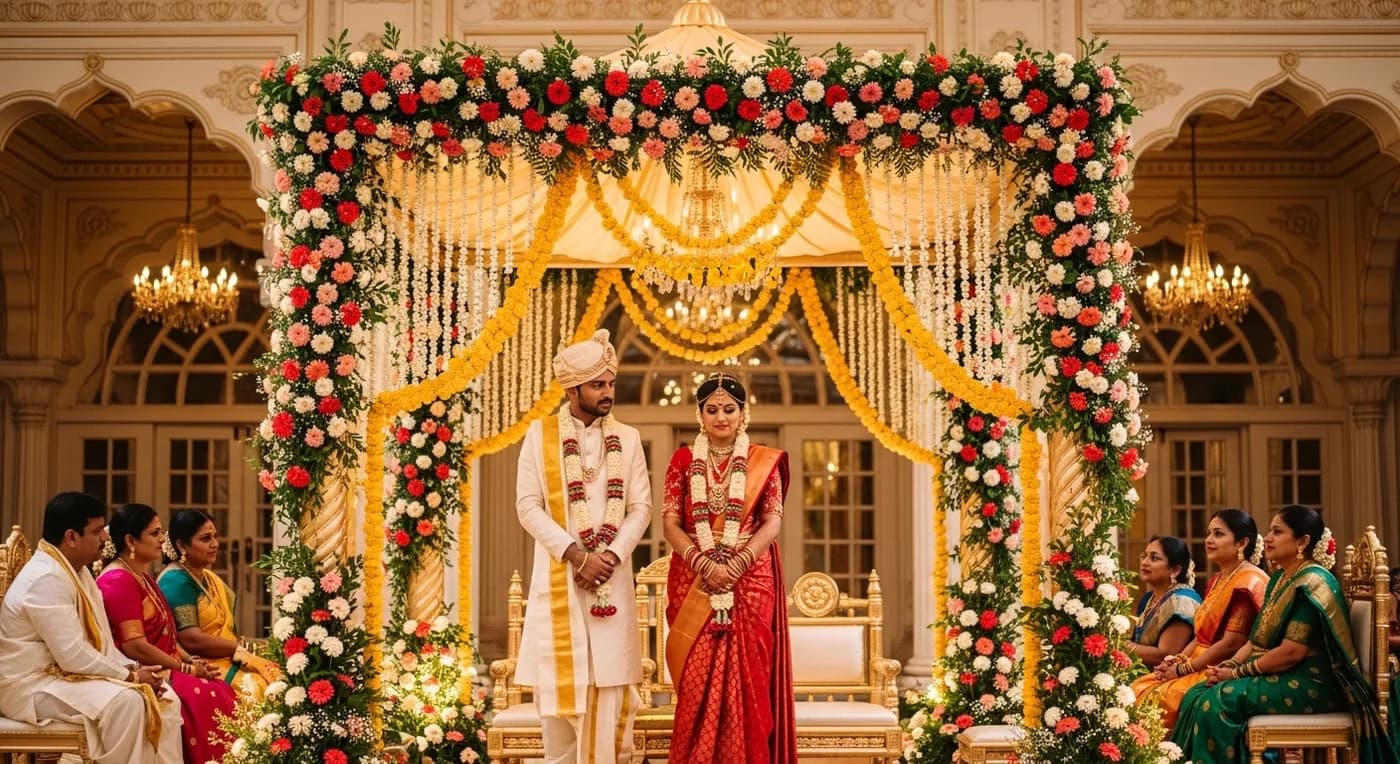
Bangalore Wedding Planning: ₹5-60L Costs & Venues (2026)

Best Season for South India Destination Weddings: Month-by-Month Western Ghats Guide
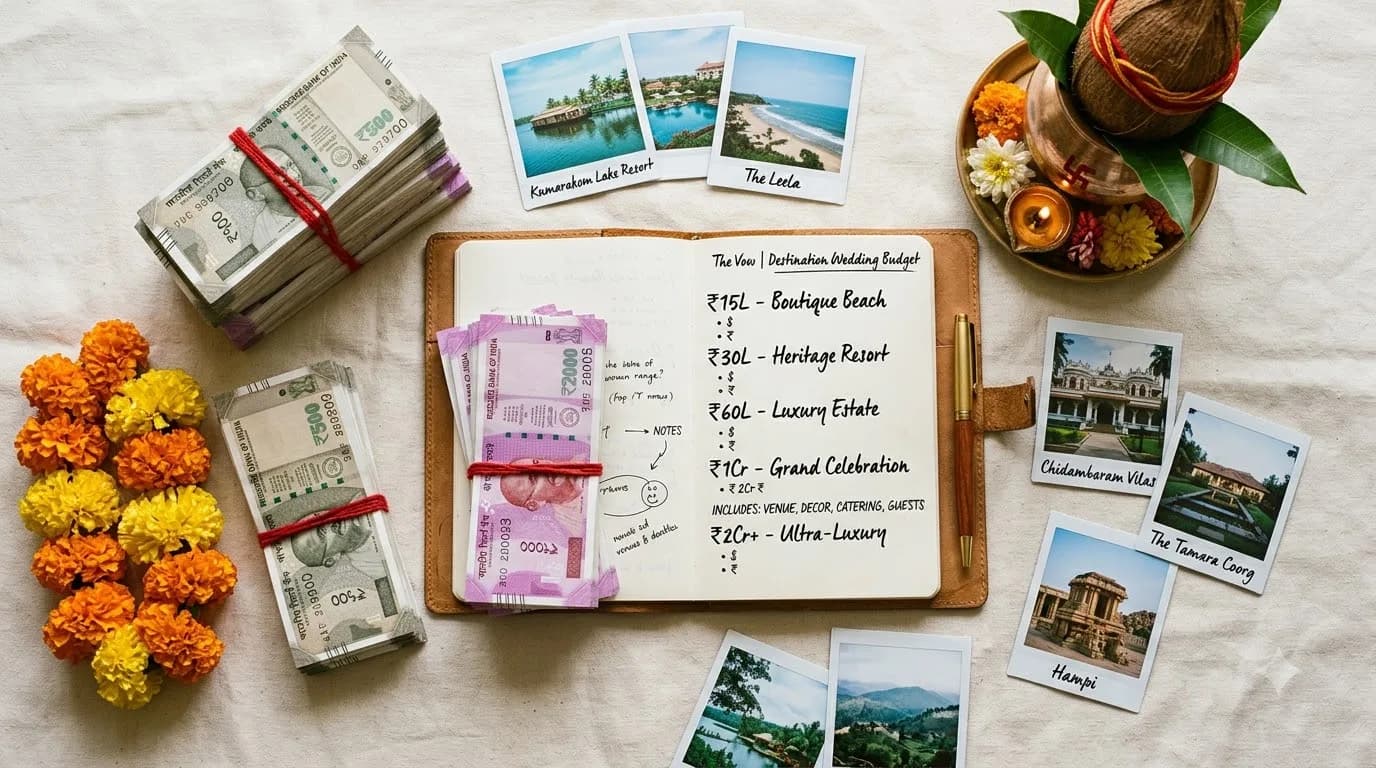
Destination Wedding Cost in South India 2026: 5-Tier Budget Guide
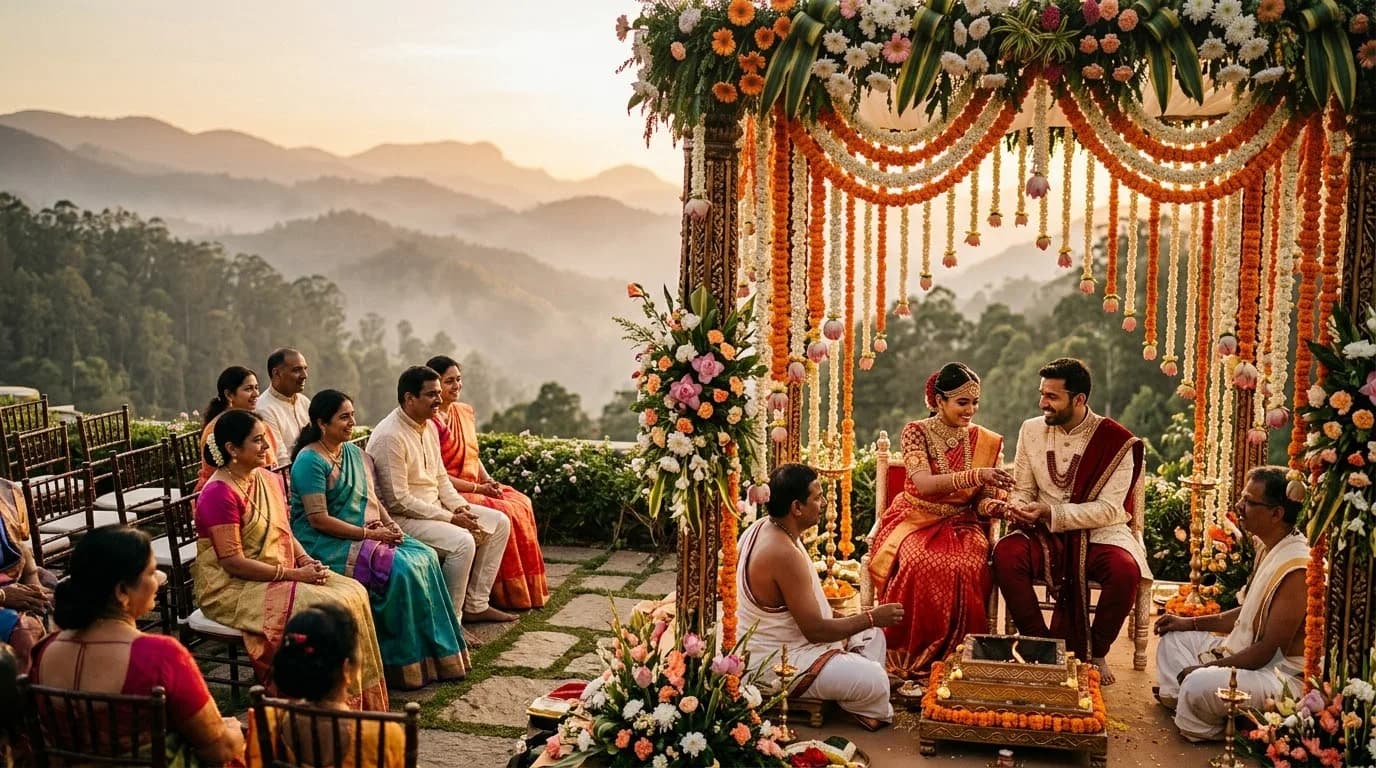
Destination Wedding in South India: Complete 2026 Planning Guide
Still planning?
Get quotes from India's best vendors
Tell us what you're planning and we'll match you with verified photographers, venues, decorators, and more.
Get free quotes