
Coffee Plantation Wedding in Coorg: Complete Guide
Plan a coffee plantation wedding in Coorg — mandap setup in coffee groves, natural decor ideas, lighting, sound, pest management, and rain backup for ₹15–35 lakhs.

On this page
A coffee plantation wedding in Coorg costs ₹15–35 lakhs for 100–250 guests, with the best window running October through February. The setting — arabica coffee growing under shade trees at 1,100 metres — creates an atmosphere no indoor venue can match. The trade-off: you are working outdoors in the Western Ghats. That means insects, rainfall, uneven terrain, and power logistics all demand careful advance planning.
Quick Answer
Quick answer: A coffee plantation wedding in Coorg costs ₹15–35 lakhs for 100–250 guests, with the best window running October through February. The setting — arabica coffee growing under shade trees at 1,100 metres — creates an atmosphere no indoor venue can match. The trade-off: you are working outdoors in the Western Ghats.
Note
Pricing methodology: Cost ranges in this guide are based on vendor pricing data from the itsmy.wedding marketplace and published industry reports, collected in Q4 2025 – Q1 2026.
The first plantation wedding I helped coordinate taught me one key lesson: the coffee grove is not just a pretty backdrop. It is a living, working farm with its own rules. Root systems block stakes. Shade canopies muffle speaker coverage. Soil turns soft after a single rain shower. And the insect population treats your fairy lights as an open invitation. Couples who plan for these realities end up with the most magical celebrations I have ever witnessed. On the other hand, couples who assume "outdoor venue" means "banquet hall without a roof" end up with stories they would rather forget.
This guide covers how to set up and run a wedding in a Coorg coffee grove — mandap construction, lighting, sound, pest control, rain backup, and dining. If you are still deciding whether Coorg is right for your wedding, start with our complete Coorg destination wedding guide. It covers venue options, budget breakdowns, and guest logistics. Already know you want a Kodava-style ceremony? In that case, our Kodava wedding traditions guide walks through every ritual. This post assumes you have already chosen Coorg — now you need to know exactly how to make a coffee grove ceremony work.
What Makes a Coffee Plantation Wedding Different from Other Outdoor Venues?
A garden wedding, a beach wedding, and a coffee plantation wedding share one thing — they are all outdoors. That is where the similarities end. The coffee plantation is a very different environment. Once you understand what makes it unique, every planning decision that follows becomes clearer.
The sensory experience. Coorg's arabica coffee grows at 900 to 1,200 metres in the Western Ghats. The plants reach 2 to 3 metres tall. They are grown under taller shade trees — silver oak, jackfruit, and fig — that form a natural canopy 8 to 15 metres overhead. Walk into a mature coffee grove and you step into a green cathedral. Filtered sunlight dapples through the canopy. The air carries the earthy aroma of coffee cherries and damp soil. Pepper vines spiral up every trunk. The temperature sits 5 to 8 degrees cooler than open areas nearby. Having watched morning mist roll through coffee groves at a dozen Coorg ceremonies, I can tell you this sensory mix — the light, the fragrance, the cool air, the living green architecture above — is unlike any other wedding setting in India.
The natural canopy. Unlike a garden venue where you build all overhead coverage, a coffee plantation provides partial natural cover. The shade trees block direct sun and reduce light rain to a gentle drip. As a result, your guests are sheltered without needing a full pandal structure. However, the canopy also blocks sound, makes lighting placement harder, and creates uneven shade patterns that challenge photographers.
The terrain. Coffee estates are not flat lawns. The ground between rows is uneven, with exposed roots, mulch, and seasonal mud. The rows also follow the contour of the hillside. So setting up a ceremony means working with this terrain, not fighting it. That requires specific ground prep that a flat garden venue never demands.
The elevation climate. Madikeri, Coorg's district headquarters, sits at about 1,100 metres. During the October to February wedding season, mornings drop to 12 to 15 degrees. Daytime peaks at 22 to 25 degrees. Evenings then cool fast after sunset. This is comfortable for guests — but it means your evening reception needs warmth planning. Think blankets, fire pits, and warm beverages — things a Bangalore or Kerala wedding would never require. Karnataka Tourism highlights Coorg's year-round pleasant climate, but "pleasant" at 8 PM in December means guests reaching for shawls.
Which Coorg Estates and Resorts Allow Wedding Ceremonies in the Plantation?
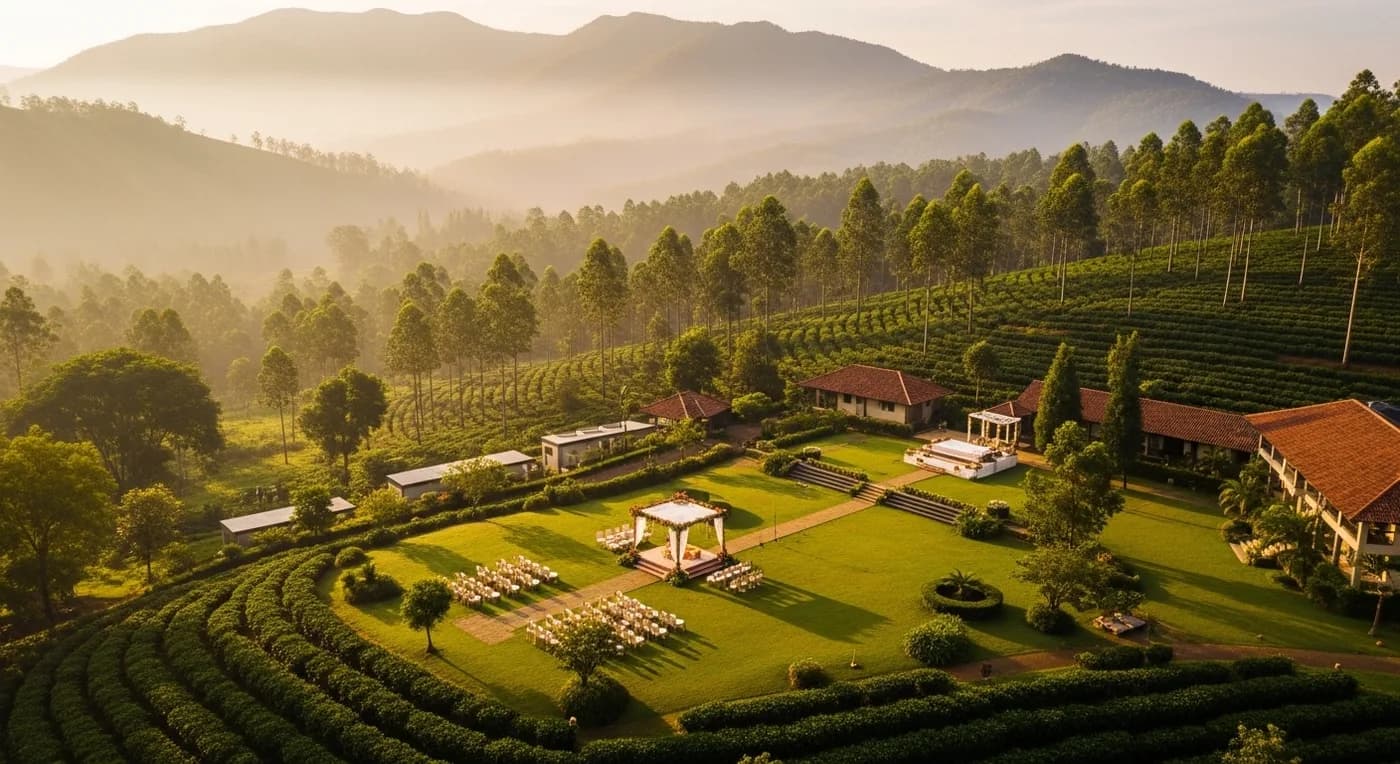
Not every Coorg property with coffee plants on the grounds will let you set up a mandap between the rows. Some premium resorts offer dedicated ceremony spaces with pre-built infrastructure. In contrast, private estates offer a rawer, more flexible experience. Here is how the options break down. For detailed reviews of each venue — including rooms, pricing, and capacity — see our best wedding venues in Coorg guide.
Resort Venues with Plantation Ceremony Spaces
Tamara Coorg — The most established plantation wedding venue in the district. Their 180-acre property near Napoklu has a designated clearing in the coffee grove specifically maintained for ceremonies, with pre-levelled ground, discreet power access points, and a tested sound setup. Capacity: 150 to 200 guests. Wedding package: ₹25,00,000 – ₹40,00,000. The in-house events team has managed dozens of plantation ceremonies and understands every logistical nuance.
Evolve Back Coorg — Built on the Kabbe Estate, a working coffee and spice plantation, Evolve Back offers a central courtyard and plantation lawn for ceremonies. Their environmental ethos means they work carefully with the estate's existing landscape rather than clearing large areas. Capacity: 100 to 200 guests. Wedding package: ₹20,00,000 – ₹35,00,000. Their in-house organic farm supplies much of the catering — a genuine farm-to-table experience.
Orange County Coorg — Offers open-air event spaces set among coffee and cardamom plantations with views of the Brahmagiri range. An amphitheatre-style lawn serves as the primary ceremony space. Capacity: 150 to 300 guests. Wedding package: ₹15,00,000 – ₹25,00,000.
Ibnii Spa Resort — A 200-acre wilderness retreat near Madikeri with forest clearing and hilltop ceremony spaces. Best for intimate gatherings of 80 to 150 guests. Wedding package: ₹12,00,000 – ₹20,00,000. The remote, wild atmosphere is unmatched, but larger weddings will need off-site accommodation at Madikeri hotels.
Private Coffee Estates
Private estates — including Tata Coffee properties and family-owned plantations around Pollibetta, Siddapur, and Somwarpet — offer a completely different proposition. You rent the estate (or a section of it) and bring in all vendors yourself. Rental costs range from ₹2,00,000 – ₹8,00,000 for 2 to 3 days, depending on the property and season.
Advantages of private estates: Total creative control, no resort-imposed vendor restrictions, more authentic plantation atmosphere (no manicured lawns — just coffee, trees, and earth), and typically lower base cost.
Disadvantages: No pre-built infrastructure means you source everything — power, water, sanitation, furniture, kitchen setup, and lodging at nearby homestays or hotels. You also need a wedding planner who has worked in Coorg before. The logistics of running a full event on a working estate are far more complex than at a resort.
Tip
Looking for Venues in Coorg?
Tell us what you need and get quotes from verified venues
How Do You Set Up a Mandap in a Coffee Grove?
This is where plantation weddings diverge sharply from garden weddings. A manicured lawn accepts stakes, supports heavy structures, and drains predictably. A coffee grove does none of these things. Here is a step-by-step approach to mandap construction in a plantation setting.
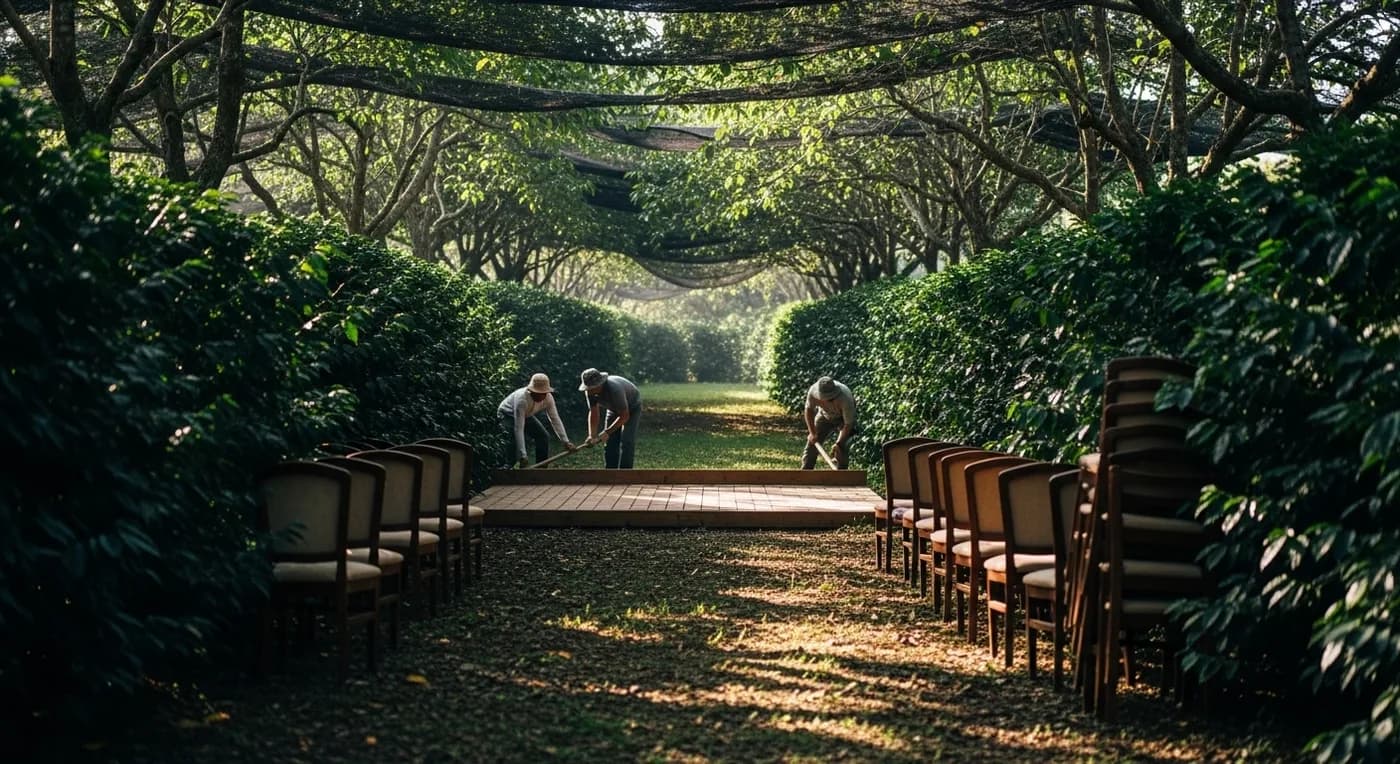
Ground preparation. The first task is creating a level surface. Coffee groves grow on contoured hillsides, and the ground between rows is mulched, root-threaded, and uneven. You have three main options. First, a raised plywood platform — the most reliable approach, built by a local carpenter over 2 to 3 days for ₹30,000 – ₹80,000. Second, heavy-duty ground-levelling with compacted earth and a carpet overlay. Third, at resort venues with cleared areas, simply using the pre-prepared surface that already exists.
Structural pillars. Critical rule: do not drive stakes into the ground. Coffee plants have shallow, spreading root systems. The shade trees above also have wide surface roots. Driving deep stakes damages the trees and will earn you a hefty penalty from any estate owner. Instead, use weighted bases — concrete blocks, sandbags, or water-filled ballast bases that hold the pillars upright through sheer mass. A standard four-pillar mandap needs 50 to 80 kg of ballast per pillar to resist wind at elevation.
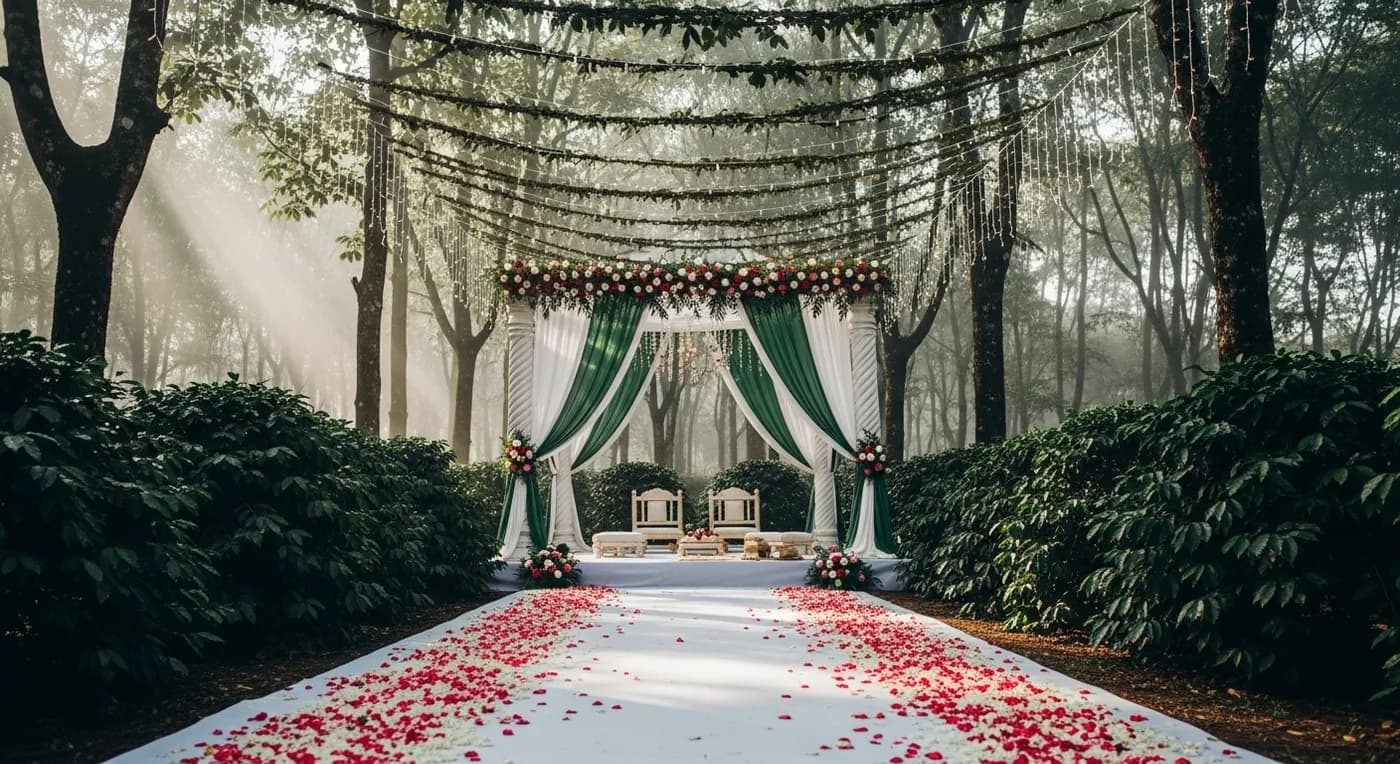
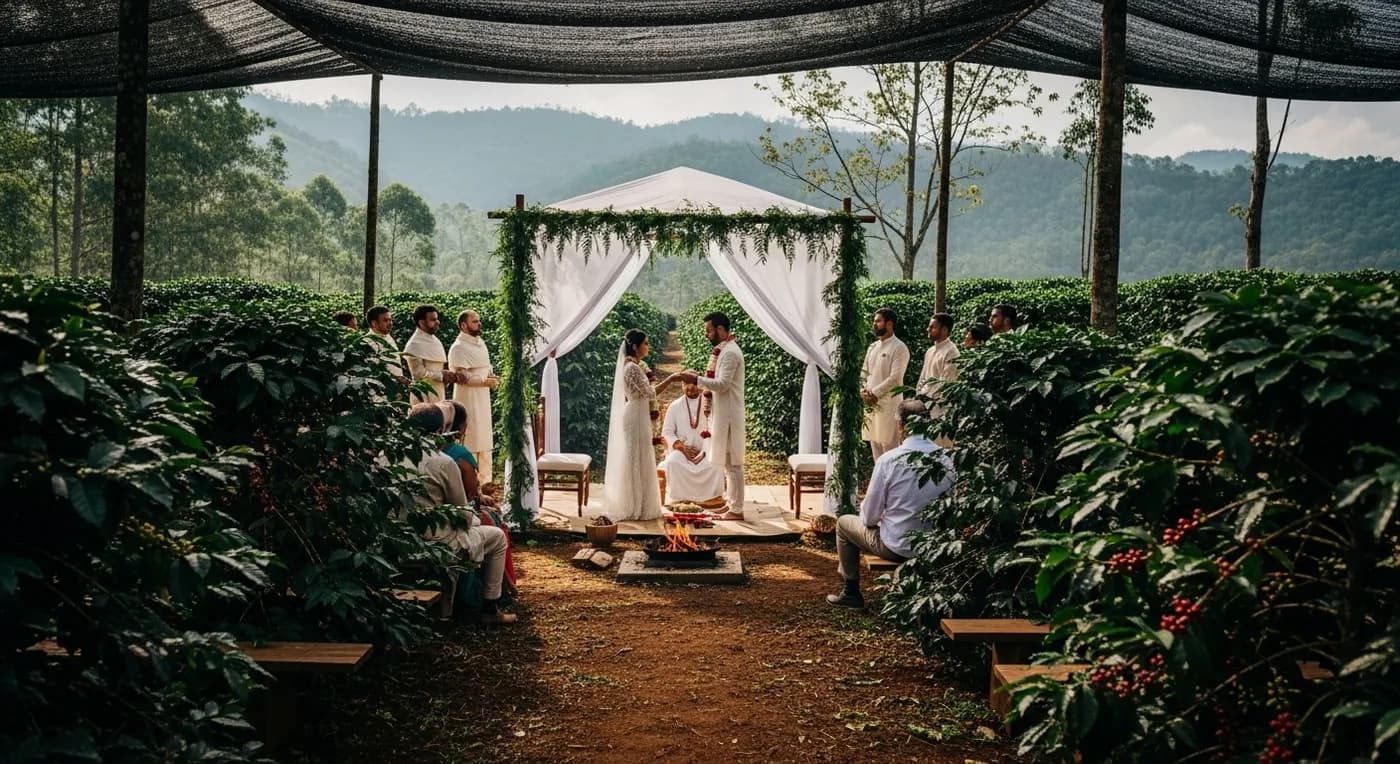
Canopy and draping. The beauty of a plantation mandap is that the shade tree canopy above acts as a natural ceiling. Your fabric draping connects the pillars and cascades outward. But it does not need to create full overhead coverage the way a freestanding mandap does. Light, flowing fabrics — chiffon, organza, or muslin — work better than heavy brocades. They move in the breeze and catch dappled light. They also create less wind resistance and put less weight on the freestanding structure.
Aisle. Between the coffee rows, a carpet runner or a scattered petal path creates a natural processional aisle. The rows of coffee plants on either side form living green walls. If the ground is soft or uneven, a jute or coir runner provides both visual warmth and stable footing for the bride.
Seating. Chairs placed on plantation ground need flat feet or cross-bar bases — narrow legs sink into soft earth. Wooden folding chairs or bamboo chairs work well both visually and in practice. Arrange seating to follow the natural layout of the clearing rather than forcing rigid rows. Also consider sight lines carefully: the mandap should be slightly raised (even 15 to 20 cm helps) so guests in rear rows can see the ceremony past the coffee plants.
Note
What Lighting Works Best in a Coffee Plantation Setting?
Lighting in a coffee grove works very differently from an open garden or banquet hall. The canopy above you is both an asset and a constraint. It filters natural light well during the day. But at night, it limits where you can place fixtures and how far light travels.
Daytime Ceremonies
The dappled light through the shade tree canopy is the single best natural lighting for wedding photos in South India. Photographers who have shot in Coorg plantations describe it as a giant natural softbox. Harsh shadows vanish. Skin tones glow. The play of light and leaf creates a bokeh-like background in every frame. If you can schedule your ceremony for late morning (10 to 11:30 AM) or mid-afternoon (3 to 4 PM), you are handing your photographer a gift that no artificial setup can match.
Evening and Night Lighting
Evening receptions in the plantation require careful lighting design. The approaches that work best:
Fairy lights woven through branches. This is the signature look of a plantation wedding. Warm white fairy lights (2700K to 3000K colour temperature — never cool white) strung through the coffee branches and shade trees create an ethereal canopy of light. A professional lighting vendor can rig 500 to 1,000 metres of fairy light strings across a ceremony and reception area for ₹40,000 – ₹1,20,000.
Mason jar lanterns and candle clusters. Glass lanterns with LED candles (real flame is a fire risk in a plantation) placed along pathways, on tables, and hung from lower branches at eye level provide warm, intimate accent lighting. Budget: ₹15,000 – ₹40,000 for 50 to 100 lanterns.
Uplighting on tree trunks. Small LED uplights at the base of shade trees wash the trunks in warm amber or soft white, creating dramatic vertical elements without competing with the fairy light canopy above. Budget: ₹20,000 – ₹50,000 for 10 to 20 fixtures.
What to avoid absolutely: Blue-tinted or UV-heavy lighting. Any light in the blue-white spectrum (above 5000K) attracts insects aggressively — and in a coffee plantation at dusk, that means transforming your beautifully lit reception into a bug magnet. Stick to warm amber and soft white across every fixture.
Power Logistics
Every lighting setup needs power, and a coffee grove has no wall outlets. Generator placement is one of the most underestimated logistics challenges at plantation weddings.
Distance. A standard diesel generator produces 70 to 85 decibels — about as loud as a vacuum cleaner running non-stop. Place it at least 40 to 50 metres from the ceremony area. Ideally, put it behind a natural barrier like a dense section of coffee plants, a storage building, or an earth berm. Longer cable runs cost more but greatly improve the sound experience.
Cable management. Power cables running across soft, potentially wet plantation ground are a trip hazard and a safety risk. Use heavy-duty outdoor cables, run them along the edges of coffee rows (not across walking paths), and cover every crossing point with cable ramps or buried conduit. Budget ₹15,000 – ₹35,000 for professional cable management.
Backup. Always have a second, smaller generator on standby. Losing power mid-ceremony in a location with zero ambient light is not a minor inconvenience — it is a safety emergency.
₹1,00,000 – ₹3,00,000 covers a complete lighting package for a 150-guest plantation wedding, including fairy lights, lanterns, uplighting, generator rental, fuel, and cable management.
How Do You Handle Sound and Music Outdoors?
Open-air acoustics in a coffee plantation are unforgiving. Sound fades fast without walls to reflect it. The canopy above absorbs high notes. On top of that, ambient noise — wind through trees, birds, insects — creates a steady hum that competes with your music and microphones. Here is how to manage it.
Speaker placement. A single PA system at the front will sound fine for the first three rows — and then get worse for everyone behind them. In a plantation setting, use distributed sound instead: multiple smaller speakers placed at intervals among the seating, wired back to a central mixer. This way, every guest hears at a steady volume. Your sound vendor needs to do a site survey at least one day before the event to test coverage and adjust placement.
Microphones. Wireless lapel microphones for the couple and officiant are essential. Handheld mics are unreliable outdoors — wind noise, handling noise, and the awkwardness of holding a mic during a ceremony all make them a poor choice. So invest in quality wireless lapel sets with wind screens.
Generator noise management. As noted in the lighting section, the generator should be at least 40 to 50 metres away. Run audio cables back from the generator zone if the sound equipment draws power from it — do not place the mixer near the generator and rely on wireless transmission, as interference from the generator's electrical field can cause buzzing.
Music after 10 PM. Kodagu district follows Karnataka's noise regulations. Amplified music after 10 PM requires permission from the District Magistrate's office. Your wedding planner or the resort should handle this application at least 2 weeks before the event. Without it, the police can — and occasionally do — shut down the music.
Important
Sound setup for a plantation wedding (distributed speakers, wireless mics, mixer, and operator) typically costs ₹50,000 – ₹1,50,000, sourced from Mysore or Bangalore-based vendors.
What Natural Elements Work as Plantation Wedding Decor?
The golden rule of plantation wedding decor, learned over years of watching couples get it right and get it wrong: the plantation IS the decor. Your job is to enhance, not compete. The couples who bring in towering floral arches, imported roses by the thousand, and heavy fabric canopies that block the canopy views are spending more money to achieve a worse result than the couples who let the grove speak for itself.
Here is what works:
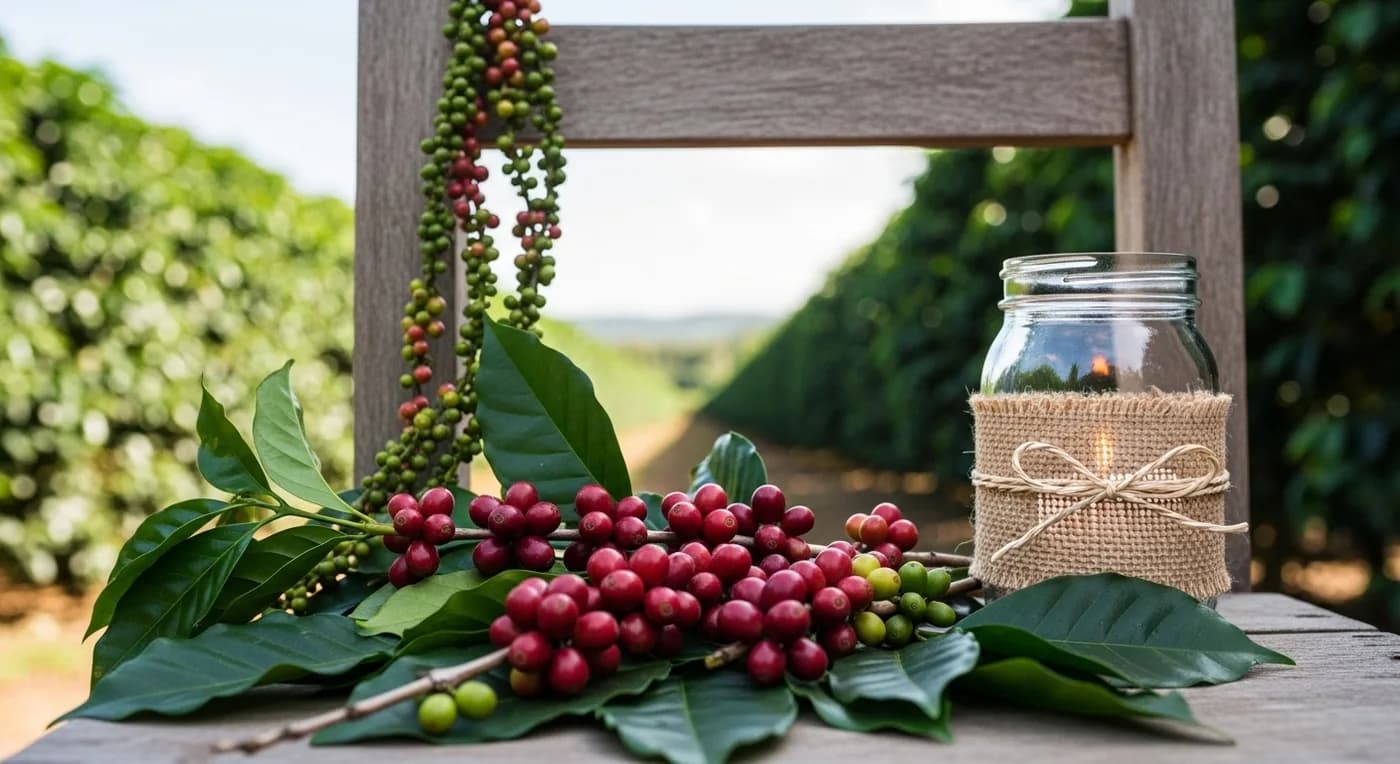
Coffee branch centrepieces. Fresh-cut coffee branches with green leaves and red cherries (if in season, typically November to January) arranged in simple glass or clay vessels. These cost almost nothing — the estate owner will often let you cut branches for free — and they are more visually interesting and conversation-starting than any imported floral arrangement.
Pepper vine and local wildflower garlands. Coorg's pepper vines, ferns, and wild orchids make stunning garland material. A local florist in Madikeri or Kushalnagar can source and assemble these for ₹20,000 – ₹60,000 — a fraction of the cost of roses shipped from Bangalore.
Burlap, jute, and bamboo accents. Table runners in raw jute, napkin rings in twisted burlap, and bamboo structures for signage or seating assignments tie into the plantation's earthy aesthetic. These materials are locally available, inexpensive, and biodegradable — no post-wedding waste guilt.
Mason jar lanterns. Glass jars with fairy lights or LED tea candles, hung from low branches or placed along pathways, create that warm, rustic glow that photographs beautifully against the dark green plantation backdrop.
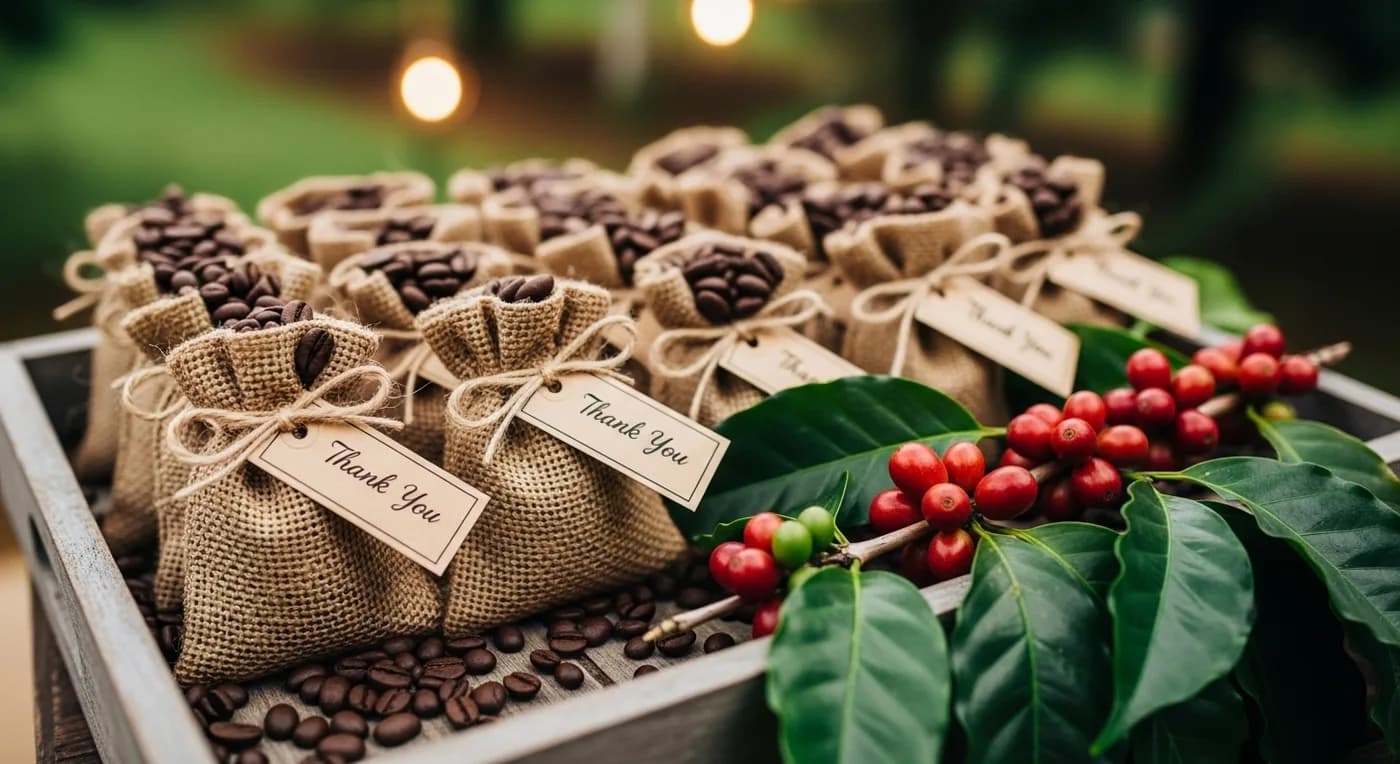
Coffee bean guest favours. Small burlap sachets filled with freshly roasted Coorg arabica beans, tied with a tag featuring the couple's names and date. Cost: ₹50 to ₹100 per favour. Your guests take home something that smells wonderful and is genuinely from the place where you married. Several estates and local roasters in Pollibetta and Kushalnagar will prepare custom-labelled bags.
What to avoid. Imported roses (they wilt fast in Coorg's humidity and look out of place against the wild green), heavy satin or brocade draping (visually clashes with the organic setting), elaborate stage backdrops (you have a living forest behind you — why cover it?), and anything that requires extensive structural support among the coffee plants.
Total decor budget for a 150-guest plantation wedding that follows the "enhance, don't compete" philosophy: ₹1,50,000 – ₹4,00,000.
Looking for Decorators in Bangalore?
Tell us what you need and get quotes from verified decorators
How Do You Manage Insects at an Outdoor Coorg Wedding?
This is the section that couples skip during planning and regret during the wedding. A coffee plantation in the Western Ghats is a thriving ecosystem. That means insects are not an occasional nuisance — they are permanent residents. Mosquitoes, midges, moths, and flying beetles all become more active at dusk, which is exactly when most evening receptions begin.
Professional pest control spraying. Hire a licensed pest control service (available in Madikeri and Kushalnagar) to spray the ceremony and dining areas 24 to 48 hours before the event. The timing matters: too early and the treatment fades, too late and the chemical smell lingers. Cost: ₹8,000 – ₹20,000 for comprehensive coverage of a standard event area.
Citronella perimeter. Citronella torches and coils placed every 3 to 4 metres around the perimeter of the ceremony and dining areas create a scented barrier that repels most mosquitoes. These also add to the warm, ambient lighting aesthetic. Budget: ₹5,000 – ₹12,000 for a full perimeter setup.
Lighting discipline. As covered in the lighting section: warm white only, no blue or UV-heavy fixtures anywhere in the event area. This single decision eliminates the majority of moth and beetle attraction.
Timing strategy. If your ceremony is flexible, schedule it before dusk — 4 to 5:30 PM — when insect activity is at its lowest. The golden hour light at this time is also the best for photography. Move indoors or under fully enclosed canopy tents for the post-sunset reception if the insect situation at your specific venue is known to be intense.
Guest comfort kits. Provide small sachets of natural insect repellent (citronella, lemongrass, or neem-based) at each guest's seat or at the venue entrance. This small gesture signals that you have thought about their comfort and gives them a personal defence layer. Cost: ₹30 to ₹60 per sachet.
Important
What Is Your Rain Backup Plan?
Coorg receives 2,500 to 3,500 mm of rain each year — among the highest in India. Most falls during the June to September monsoon. But even the October to February "dry" wedding season sees surprise showers, especially in October and November. Kodagu's weather data shows that no month is fully rain-free. So if you are hosting an outdoor ceremony in Coorg, rain is not a possibility you plan for — it is a probability.
Resort indoor spaces. Every major resort venue (Tamara, Evolve Back, Orange County, Ibnii) has an indoor banquet hall or covered pavilion that serves as a rain backup. When booking, confirm two things: that the indoor space is included in your package (some resorts charge extra for a last-minute shift), and that the indoor capacity matches your outdoor guest count. A venue that seats 200 outdoors but only 120 indoors is not actually providing a backup — it is providing a problem.
Quick-deploy transparent rain shelters. Clear-walled canopy tents keep the outdoor visual experience while blocking rain. These are available from Bangalore-based event companies. You can pre-rig them (assembled with collapsed walls that deploy in 15 to 20 minutes when needed) or bring them as a standby option. Cost: ₹50,000 – ₹1,50,000 depending on size and whether you want pre-rigging or standby deployment.
Weather monitoring. The India Meteorological Department (IMD) issues district-level forecasts for Kodagu that are reasonably accurate 48 to 72 hours out. Your wedding planner should be monitoring these forecasts starting a week before the event and providing daily updates.
Decision timeline. This is the question every couple asks: when do we call the backup? Set a clear trigger with your planner in advance. A sensible framework: if the IMD forecast shows more than 60% rain chance for your ceremony window, shift to indoor or deploy rain shelters that morning. Do not wait for actual raindrops. By then, your guests are seated and your mandap is dressed. A scramble to move indoors will define the memory of your ceremony more than any of the planning that came before it.
Tip
How Should You Plan the Outdoor Dining Experience?
The reception meal at a plantation wedding is not just dinner — it is an experience that should feel inseparable from the setting. The most memorable plantation receptions I have seen treat the dining as a continuation of the ceremony's connection to the land, not a shift to "party mode" under fluorescent lights.
Table Setup
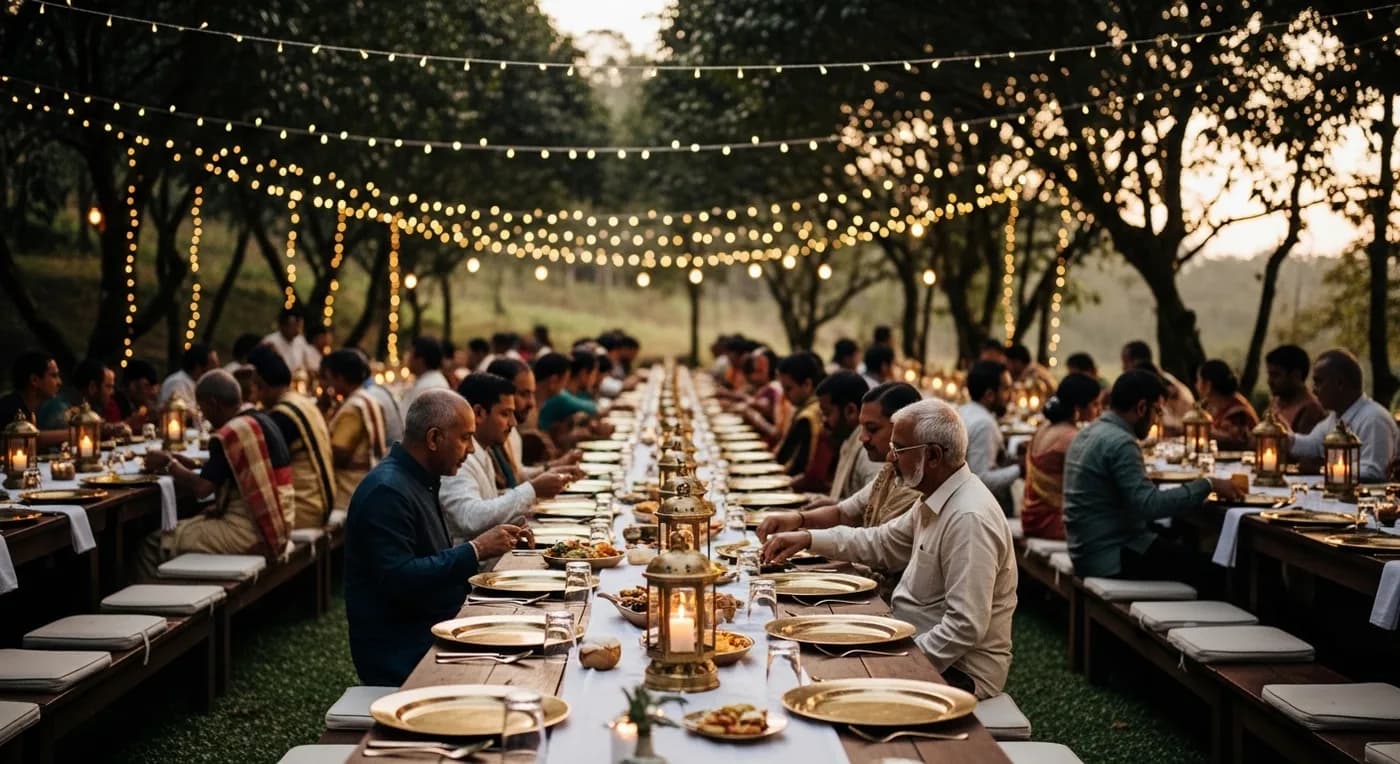
Long communal tables under the canopy — rather than round banquet tables — are the signature plantation dining format. They follow the natural lines of the coffee rows, seat 20 to 30 guests per table, and create a sense of shared celebration that round tables for 8 cannot match. Rent long wooden trestle tables from Mysore or Bangalore event suppliers for ₹30,000 – ₹80,000 for a 150-guest setup.
Buffet stations scattered among the coffee plants — a live dosa counter here, a biryani station there, a dessert table under a lantern-draped pepper vine — transform the meal into a walking experience where guests explore the grove between courses. This format requires more service staff but creates unforgettable memories.
The Kodava Feast
A coffee plantation wedding in Coorg without Kodava cuisine is a missed opportunity. The traditional feast features pandi curry (pork curry cooked with kachampuli, a sour fruit vinegar unique to Coorg), kadambuttu (steamed rice dumplings), baimbale curry (bamboo shoot curry), nool puttu (string hoppers), and payasam for dessert. Even non-Kodava couples can include a Kodava food station alongside their main menu — it roots the meal in the place and gives guests a taste experience they will not find anywhere else.
Resort venues like Tamara and Evolve Back offer Kodava menu options through their in-house kitchens. For private estates, caterers from Madikeri who specialise in Kodava cuisine charge ₹800 – ₹1,500 per plate for a full traditional spread.
Dining Lighting
The dining area needs its own lighting scheme, separate from the ceremony lighting. Guests need to see their food — a romantic fairy-light glow that worked perfectly for the ceremony will leave the dining area too dim for a comfortable meal. Supplement with suspended pendant lights or overhead string lights at a lower height (3 to 4 metres) directly above the tables. Warm white, always.
Food Safety Outdoors
Outdoor catering in a humid, tropical climate requires specific precautions. All hot food must be held in chafing dishes above 60 degrees Celsius. Cold items need ice beds or refrigerated display units. The catering team should have a food-safe hand-washing station set up in their service area. If you are using a private estate without a commercial kitchen, your caterer will bring a mobile kitchen setup — factor in the space and power requirements for this. An experienced Coorg-based caterer knows these protocols; a city caterer working their first plantation event may not.
What Does a Coffee Plantation Wedding in Coorg Cost Overall?
For a 150-guest celebration over 2 days at a resort venue, here is the complete cost picture:
| Category | Cost Range | Notes |
|---|---|---|
| Venue + accommodation (2-3 nights) | ₹12,00,000 – ₹35,00,000 | Resort buyout or block booking |
| Catering (all meals) | ₹4,00,000 – ₹8,00,000 | In-house or external Kodava + multi-cuisine |
| Decor (natural plantation style) | ₹1,50,000 – ₹4,00,000 | Coffee branches, local flowers, fairy lights |
| Lighting + power | ₹1,00,000 – ₹3,00,000 | Fairy lights, lanterns, generator, cabling |
| Sound + music | ₹50,000 – ₹1,50,000 | Distributed speakers, wireless mics, DJ/band |
| Photography + video | ₹2,00,000 – ₹4,00,000 | Bring from Bangalore; plantation experience essential |
| Pest management | ₹15,000 – ₹35,000 | Professional spraying + citronella perimeter |
| Rain backup (transparent shelter) | ₹50,000 – ₹1,50,000 | Pre-rigged canopy tent |
| Guest transport (from Bangalore) | ₹2,00,000 – ₹5,00,000 | Chartered buses or carpools |
| Wedding coordinator | ₹1,50,000 – ₹4,00,000 | Essential for plantation logistics |
| Miscellaneous + buffer (10%) | ₹1.5-3.5L | Always plan for overruns |
| Total | ₹15-35 lakhs |
For a detailed line-by-line budget breakdown and money-saving strategies specific to Coorg, see our Coorg wedding cost and budget guide.
The recent spotlight on Kodava culture — including the Rashmika Mandanna and Vijay Deverakonda wedding that brought national attention to Coorg's unique traditions — has increased demand for plantation weddings in the district. Book your preferred venue 10 to 14 months in advance for October to February dates. The best properties fill up quickly, especially for December and January weekends.
Common Questions About Coffee Plantation Weddings in Coorg
What is the best month for a coffee plantation wedding in Coorg?
November and December offer the best combination of clear skies, comfortable temperatures (15 to 25 degrees), post-monsoon greenery, and coffee cherry season (the red berries on the plants add colour to your photographs). January and February are also excellent but slightly drier, meaning the plantation looks less lush. October works but carries the highest residual monsoon risk. Avoid March to May (hot and dry, the plantation looks stressed) and June to September (heavy monsoon — outdoor events are essentially impossible).
How many guests can a coffee grove ceremony realistically accommodate?
Most designated plantation ceremony spaces at resort venues handle 100 to 200 guests comfortably. Beyond 200, the clearing size required starts to push you into areas where the ground is less prepared, sight lines become difficult, and the intimate "green cathedral" atmosphere — the entire reason you chose a plantation — begins to dilute. If your guest list exceeds 250, consider holding the ceremony in the grove for close family (80 to 100 people) and the reception on the resort's main lawn for the full guest list.
Should I hire a Bangalore-based or Coorg-based wedding planner?
Both work, but with different strengths. A Coorg-based planner knows every estate owner, every local vendor, and every weather pattern — invaluable for logistics. A Bangalore-based planner with Coorg experience brings a larger vendor network (especially for photography, entertainment, and specialist decor) and is easier to meet with during the months of planning. The best approach: a Bangalore-based planner who has executed at least three Coorg weddings and has a local coordinator on the ground in Madikeri.
Can we have a fire ceremony (havan/homa) in a coffee plantation?
Open fires in a working coffee plantation are extremely risky and typically prohibited by estate owners and resort policies. Coffee plants, mulch, and dry leaves are highly flammable. If your ceremony requires a sacred fire, it must be contained in a proper havan kund placed on a fireproof platform with a fire extinguisher on standby, and you need explicit written permission from the venue. Many couples opt to hold the fire ceremony in the resort's indoor space and the remaining rituals in the plantation.
What should photographers know before shooting a plantation wedding?
Plantation light changes rapidly — a cloud passing over the canopy can shift the exposure by 2 to 3 stops in seconds. Photographers should bring fast lenses (f/1.4 to f/2.8) for the dappled interior, and plan for mixed lighting during evening portions (fairy lights plus lanterns create warm but inconsistent colour temperatures). The uneven terrain also means tripods need careful placement. Recommend your photographer do a site visit the day before to scout angles and lighting conditions at the exact time of your ceremony.
A coffee plantation wedding in Coorg is one of the most distinctive celebration settings in India — the sensory richness, the natural beauty, and the intimate scale create an experience that guests remember for decades. But that experience is built on a foundation of practical logistics that must be right: the mandap anchored without stakes, the lighting warm enough to avoid insects, the sound distributed to reach every guest, the rain backup ready before you need it, and the pest control finished 48 hours before the first guest arrives. Get the logistics right, and the plantation does the rest. Start with the Coorg destination wedding guide for your venue shortlist, then come back here to plan the details.
Topics
coffee plantation wedding coorgcoffee estate wedding indiaplantation wedding coorgoutdoor wedding coorgcoorg nature weddingcoffee grove ceremonyExplore more
Frequently Asked Questions
1Can you hold a wedding ceremony in a coffee plantation?
2How do you set up a mandap in a coffee grove?
3What about mosquitoes and insects at outdoor Coorg weddings?
4What decor works best for a coffee plantation wedding?
5Do coffee plantation venues have backup indoor spaces?
Continue reading
Related Articles
Destination Wedding in Coorg: Complete 2026 Planning Guide
Best Wedding Venues in Coorg: ₹50K-₹40L Pricing Guide (2026)
Kodava Wedding Traditions: Coorg's Unique Marriage Customs
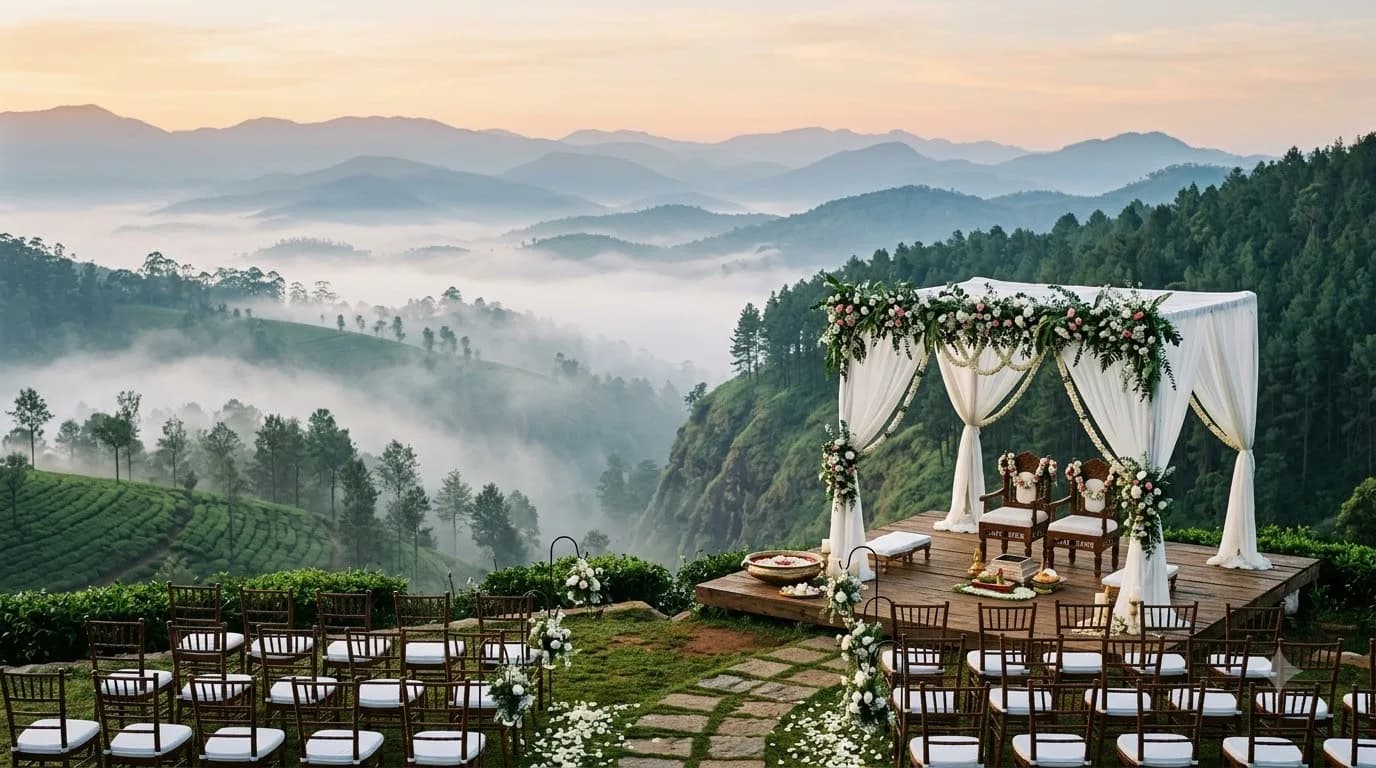
Best Season for South India Destination Weddings: Month-by-Month Western Ghats Guide
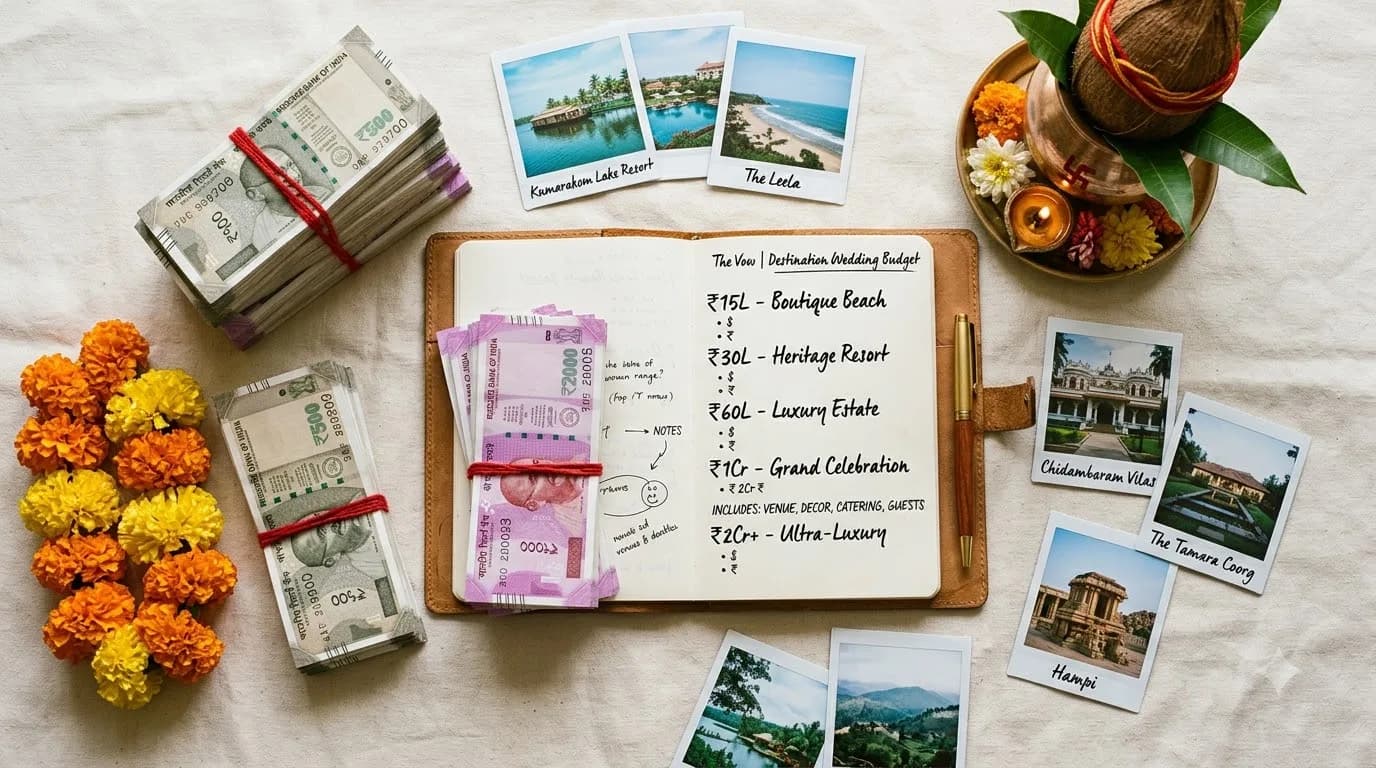
Destination Wedding Cost in South India 2026: 5-Tier Budget Guide
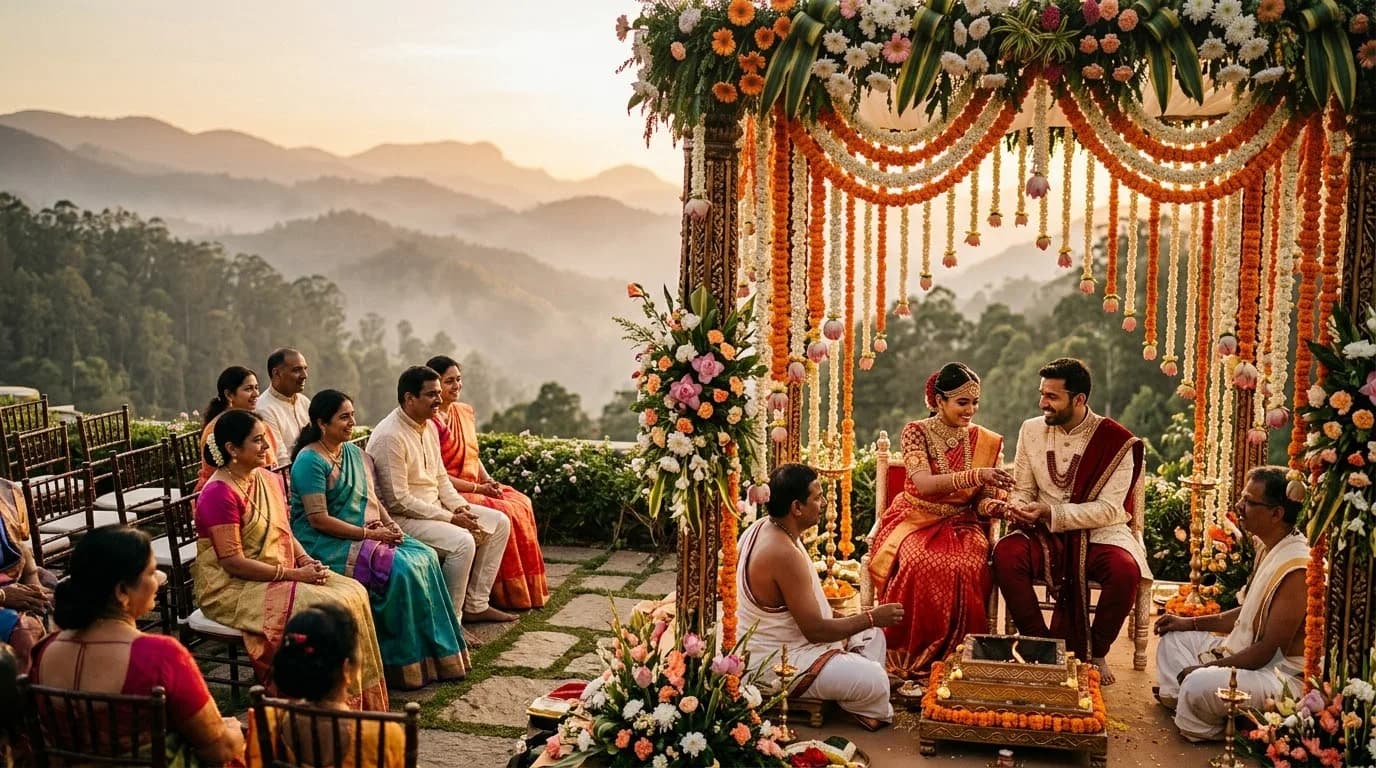
Destination Wedding in South India: Complete 2026 Planning Guide
Still planning?
Get quotes from India's best vendors
Tell us what you're planning and we'll match you with verified photographers, venues, decorators, and more.
Get free quotes