Choosing bridal jewellery for your wedding in Thrissur
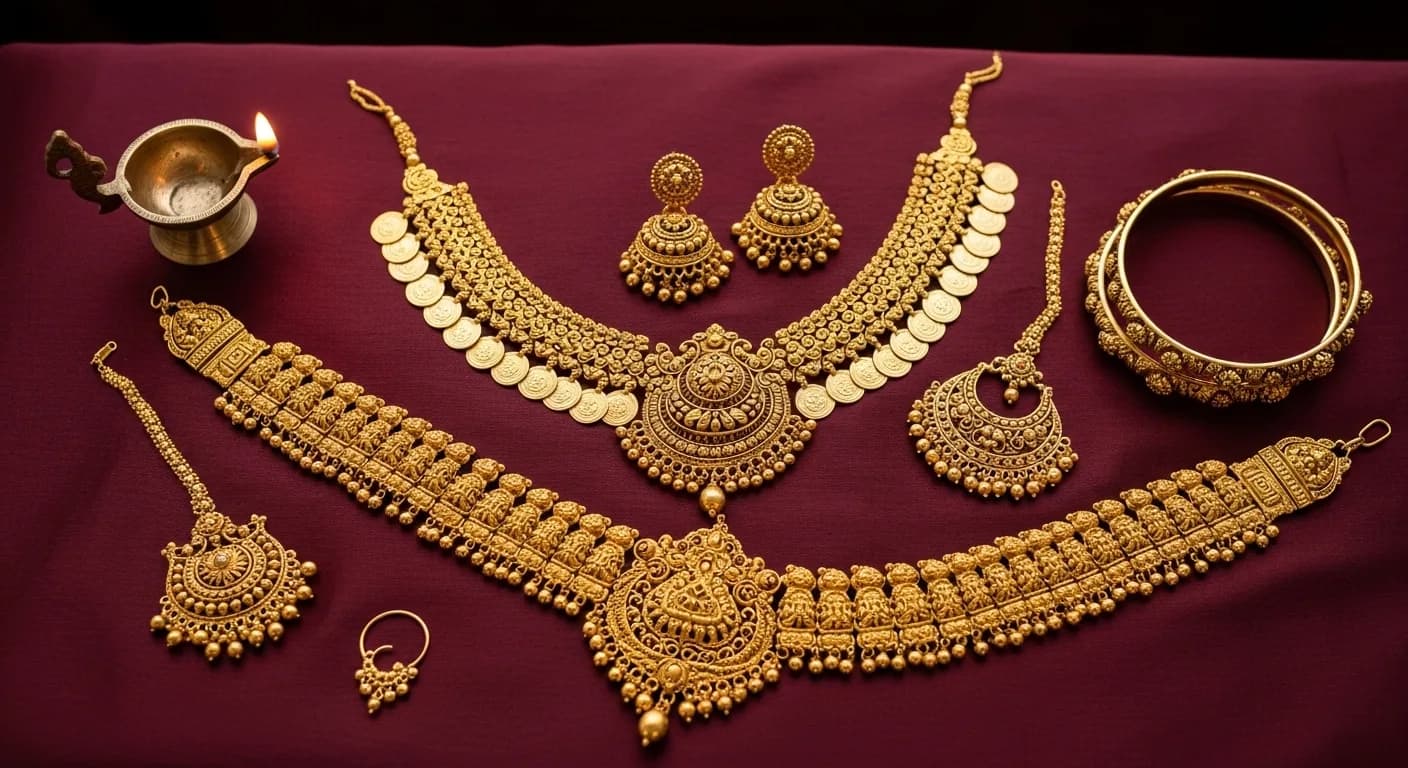
South Indian brides wear some of the most elaborate wedding jewellery in India — a tradition with deep community-specific roots that shape how a bridal set is commissioned, purchased, and worn in Thrissur. Hindu Namboothiri, Nair, and Menon traditions draw directly from temple jewellery design, built around pure 22-carat gold pieces with temple motifs, kasu (coin) detailing, and stone accents in semi-precious rubies and emeralds. Core pieces across the traditional Hindu bridal set include a long gold chain (adikkal or avileswara), oddiyanam (the ornate waist belt that sits over the saree pleats), kasumalai (a multi-layered coin necklace that is arguably the most iconic Kerala bridal piece), nethichutti paired with a maangtikka at the hair parting, jimikki earrings (the bell-shaped long earrings distinctive to Kerala), thick gold kappu bangles, a nose ring, and anklets. Syrian Christian weddings centre around the minnu, a small cross pendant on a thin gold or yellow-thread chain tied by the groom during the nuptial ceremony — and Syrian Christian families often layer inherited heirloom gold pieces (amma's bangles, grandmother's chain) alongside newly commissioned pieces. Mappila Muslim bridal collections feature distinctive gold chains layered in multiple strands, an ornate forehead ornament, wide gold kamarband, and heavy earrings often set with rubies and pearls. Major jewellers serving Thrissur include Bhima, Malabar Gold & Diamonds, Joyalukkas, Kalyan Jewellers, Josco, Alukkas, and Chungath — plus a handful of heritage family jewellers whose reputations span generations and whose hand-crafted pieces sit at the top end of the bridal market.
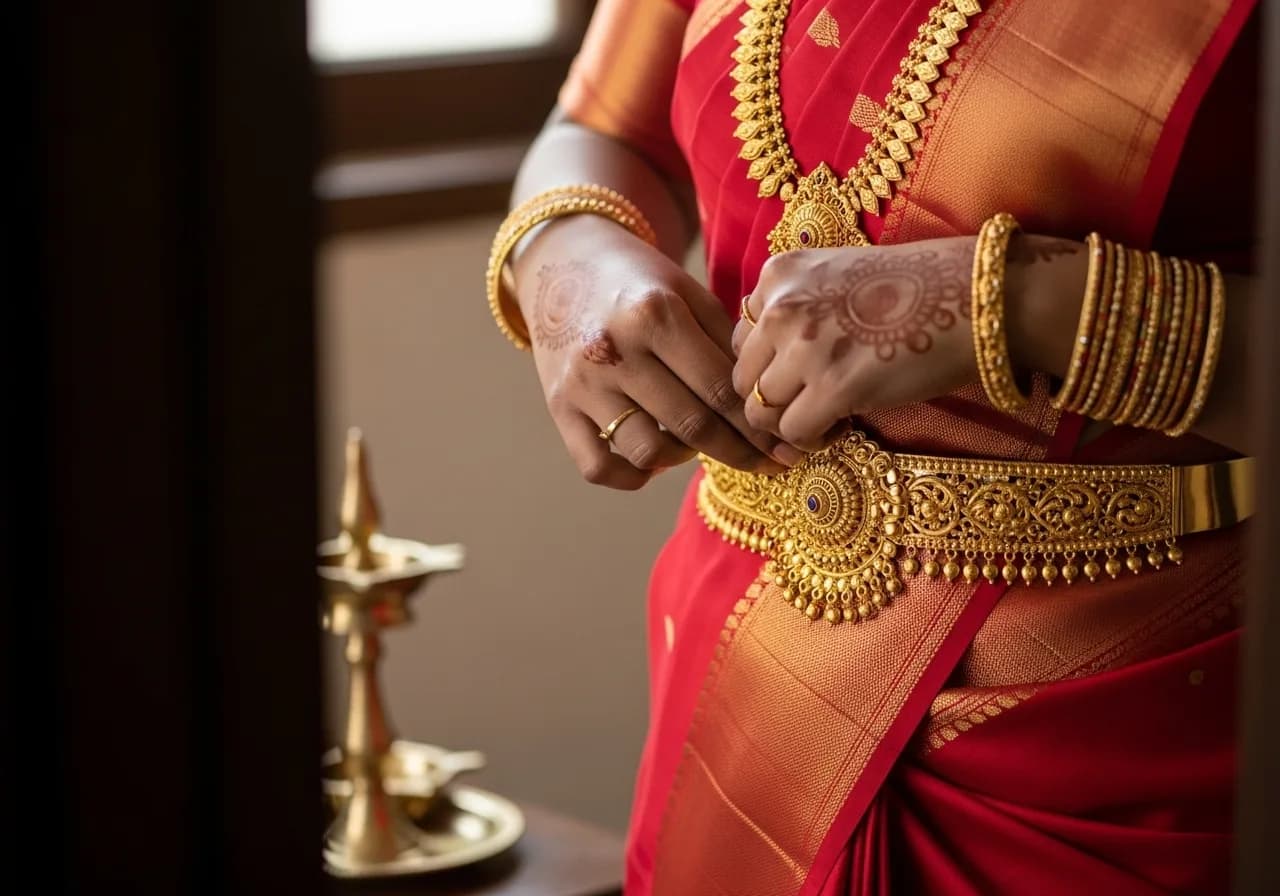
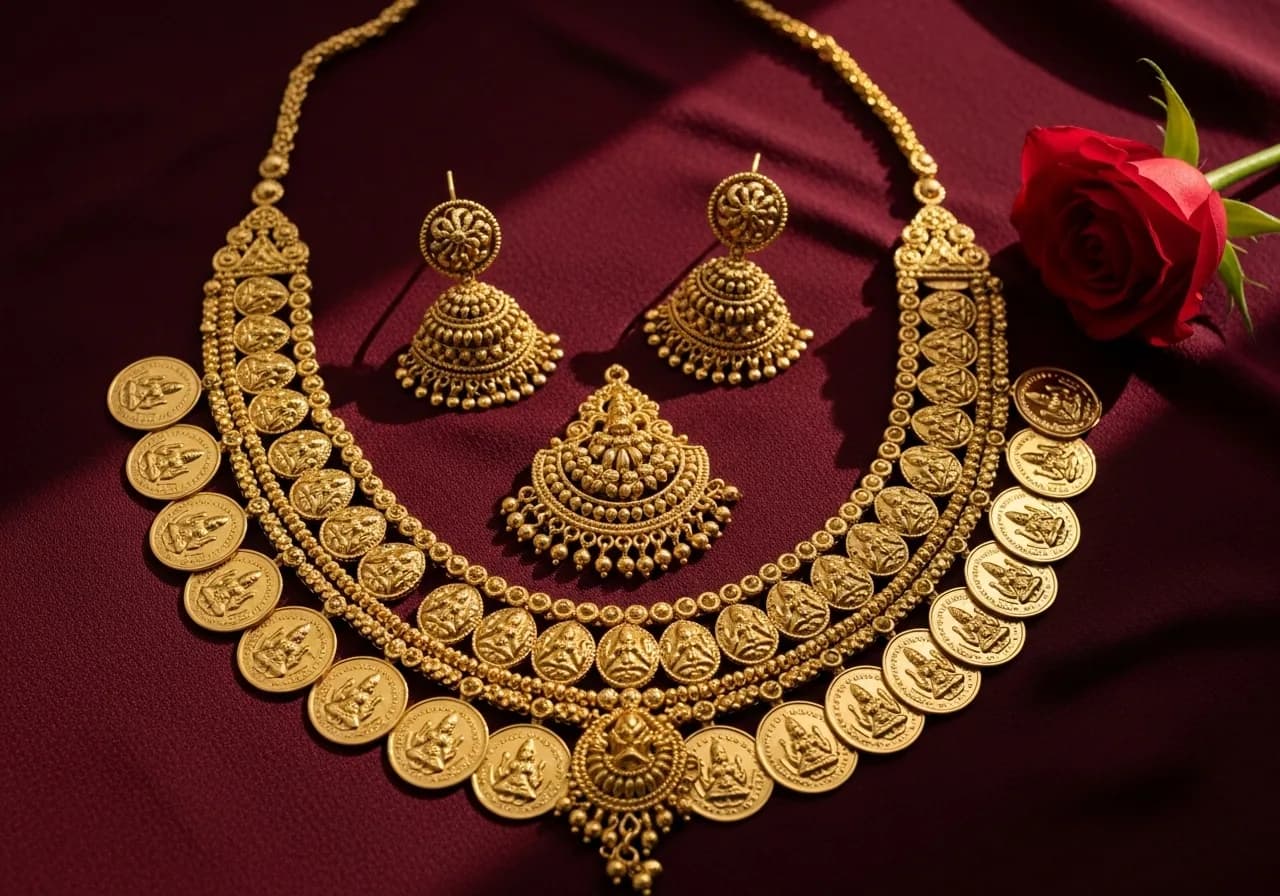
Pure 22-carat gold is the south Indian bridal standard — alloys like 18-carat, while common for daily-wear jewellery, are genuinely rare for full bridal sets in Thrissur because they're seen as compromising on auspiciousness and family tradition. A full bridal jewellery set in Thrissur covering the kasumalai, long chain, oddiyanam, jimikki earrings, nethichutti, bangles, nose ring, and anklets typically costs ₹5,00,000–₹50,00,000+ depending on total gold weight (most bridal sets weigh 150–400 grams), design complexity, and whether stones are set. Per-gram making charges vary substantially: machine-made commercial pieces run 8–12%, hand-crafted traditional temple-jewellery style sits at 15–30%, and heritage designer commissions at top-tier jewellers in Thrissur often cross 30%. Polki settings, diamond-studded gold, and kundan pieces add significantly to the final bill — a single statement polki necklace can run ₹1,00,000–₹25,00,000 depending on diamond quality and goldsmithing hours. For couples who don't want to commit the capital to a fully purchased bridal set, rental is a genuine option: wedding jewellery rental businesses in Thrissur offer full bridal sets including oddiyanam, kasumalai, and matching earrings for ₹15,000–₹75,000 per 24-hour period, and this has become increasingly popular for reception looks where the photographic ROI is high but the long-term wear is minimal (Wedding Rentals category covers this in more depth).
Always insist on BIS Hallmark certification stamped on every single piece before paying — 818 indicates 18K, 916 indicates 22K (the south Indian bridal standard), 958 indicates 23K, and 999 indicates pure 24K. The Hallmark is a four-part stamp including the BIS logo, purity grade, jeweller's mark, and assay centre mark, and any reputable jeweller in Thrissur will show you all four under a loupe without hesitation. For zari-work pieces and hand-crafted temple-style ornaments, the maker's reputation matters as much as the gold purity — fake or under-weight zari accents tarnish within months and photograph badly, so buy only from jewellers whose workshops you can verify. Understand the buyback and exchange policy before purchase — some jewellers in Thrissur offer 95–100% buyback on pieces purchased from them, while others deduct 10–15% in handling and re-certification charges, which is material when you're buying in the ₹10,00,000+ bracket. Syrian Christian and Namboothiri families typically have heirloom pieces passed down across generations — before commissioning a new bridal set, inventory what's already in the family and design the new commission to complement rather than duplicate. For destination weddings at Kumarakom, Kovalam, or Bekal, confirm insurance coverage on the bridal set during transport — most jewellers offer transit insurance as an add-on, and shipping a ₹20,00,000 bridal set without coverage is a meaningful risk. Finally, schedule the final piece pick-up 10–14 days before the wedding to allow time for final polishing, any re-sizing of bangles or rings, and a professional clean before the ceremony.
Thrissur is widely regarded as Kerala's gold capital — the Swaraj Round and its radiating streets house one of India's densest concentrations of gold jewellers, wholesalers, and master craftsmen, with the headquarters of several national chains (including Joyalukkas' origin roots and major Kalyan outlets) tracing back to this precinct. The district's annual Akshaya Tritiya gold turnover is among India's highest, and wholesale bullion pricing on Swaraj Round is often 1–2% below metro-city retail. Thrissur's heritage craftsmen around the Swaraj Round and Kunnamkulam belt still handcraft traditional Kerala temple jewellery pieces to order — the Palakka Mala, Kaasu Mala, Nagapadam, and the elaborate Lakshmi Kasu settings — and their skill is sought by brides across the state. For the Syrian Christian families around Thrissur and Irinjalakuda, local jewellers specialise in the minnu cross pendant central to the wedding ritual. Rental jewellery studios operate around MG Road and Patturaikkal. Brides from Kochi, Palakkad, and beyond routinely travel to Thrissur specifically for the pricing and craftsmanship advantage.