
How to Plan a Mumbai Wedding: ₹20-60L Costs & Venues (2026)
Mumbai weddings cost ₹20–60 lakhs for 300–500 guests in 2026. Five venue types, 12-month timeline, and Marathi/Gujarati/Catholic tradition guides for Maharashtra.

Mumbai & Maharashtra Wedding Editor
Priya Sharma is the Mumbai and Maharashtra wedding editor at itsmy.
On this page
Planning a Mumbai wedding in 2026 costs ₹20–60 lakhs for a 300–500 guest mid-range celebration, with the peak season running October through March. Budget weddings can be done under ₹10 lakhs at suburban banquet halls; premium five-star events reach ₹1 crore. Book your venue 10–12 months ahead for peak-season Saturday muhurats.
Quick Answer
Quick answer: A mid-range Mumbai wedding (300–500 guests) costs ₹20–45 lakhs in 2026. Budget halls in Navi Mumbai and Thane start under ₹10 lakhs; Taj, Trident, ITC, and Leela properties reach ₹50 lakhs to ₹1 crore. Peak season is October–March, with December–January at the apex. Book venues 10–12 months ahead. Lonavala and Alibaug destination weddings save 25–40% versus equivalent Mumbai luxury.
Note
Pricing methodology: Cost ranges in this guide are based on vendor pricing data from the itsmy.wedding marketplace, published industry reports from WedMeGood and wedding.net, and direct quotes from venues across the Mumbai Metropolitan Region collected in Q4 2025 – Q1 2026.
Planning a wedding in Mumbai (formerly Bombay) in 2026 typically costs between 20 and 45 lakhs for a mid-range celebration hosting 300 to 500 guests, with the peak wedding season running October through March. Having covered Mumbai weddings for nearly a decade — from sea-facing Marine Drive ceremonies to Lonavala farmhouse weekends to intimate Bandra rooftop receptions, plus a sprawling Marwari sangeet at the JW Marriott Juhu I still think about — I can say that Mumbai is India's most logistically demanding wedding city, and also its most thrilling. It is a place where space is the scarcest commodity, where venues book a year ahead for Saturday muhurats, where seven major communities celebrate side-by-side every peak-season weekend, and where the Arabian Sea quietly defines the aesthetic of nearly every memorable wedding photograph.
This guide walks through everything you need to plan a Mumbai wedding: choosing among the city's five distinct venue types, building a realistic budget across four tiers, assembling your vendor team in a market where the best teams are booked a year out, navigating community-specific traditions for Marathi, Gujarati, Sindhi, Marwari, Catholic, Maharashtrian Muslim, and Parsi ceremonies, and exploring the destination corridor — Lonavala, Alibaug, Karjat, Mahabaleshwar — that has reshaped what a Mumbai wedding even means. Whether you grew up in Dadar, moved to Powai for a tech job, or are flying back from Dubai for the family wedding, this is your full roadmap.
What Makes Mumbai Weddings Unique?
Mumbai sits at the apex of the Indian wedding market — most expensive, most space-constrained, most culturally diverse. No other city in India combines such pronounced venue scarcity with such intense vendor competition, and that contradiction shapes everything about how weddings work here. The Maharashtra economy contributes the largest share of India's GSDP according to the India Brand Equity Foundation, and Mumbai is the engine of that economy — which is exactly why wedding spend per guest runs 30-50% above the comparable tier in Bangalore or Hyderabad.
The Venue-Scarcity Economy
Mumbai's wedding economics are driven by one simple fact: the city is short of usable land and short of large indoor halls in equal measure. The 437 square kilometres of greater Mumbai house over 20 million people, and the Mumbai Metropolitan Region Development Authority consistently flags real-estate scarcity as a structural feature of the city's economy. For weddings, this translates into chronic shortage. Five-star ballrooms, mid-tier banquet halls, sea-facing terraces — every category has more demand than supply during peak season. Couples discover this the hard way: by January in any given year, the best venues for the following December are already 70-80% booked. Compare the Mumbai venue listings on wedding.net with what is actually available six months out, and the gap tells you everything.
The downstream effect is that venue cost dominates the budget more than in any other Indian metro. In Bangalore, venue is typically 20-30% of total spend; in Mumbai, it is closer to 30-40%. Couples who succeed in Mumbai are the ones who lock in the venue first and build the rest of the budget around what's left.
A Multi-Community Mosaic
Few cities host weddings across as many cultural traditions as Mumbai. On any given Saturday in December, the city simultaneously hosts Marathi ceremonies with Antarpat rituals, elaborate Gujarati and Marwari celebrations spread across three days, Sindhi weddings with the iconic Datar feast, Catholic nuptials at churches like Mount Mary in Bandra and Holy Cross in Kurla, Deccani Muslim Nikahs with biryani-driven Walimas, and the small but ceremonially rich Parsi weddings of South Bombay. The cosmopolitan layering goes deeper still: many couples in modern Mumbai are inter-community, which means a single wedding may need both a Brahmin priest and a Catholic chaplain, both Marathi Mangalashtak chants and Gujarati pheras. Vendors here have adapted — most established decorators, caterers, and photographers in Mumbai are fluent in at least four traditions.
The Sea-Facing Premium
The Arabian Sea is Mumbai's defining feature, and it commands a premium at every level of the wedding market. Sea-facing terraces along Bandstand, Worli, Marine Drive, Juhu, and Madh Island carry a 30-50% price uplift over comparable inland venues. The Taj Mahal Palace in Colaba and Taj Lands End in Bandra both quote sea-view ballroom rates 40% above their non-sea-view alternatives. Couples planning Mumbai weddings should decide upfront whether the sea is part of the brief — because once you commit to it, it changes the price tier you are shopping in. For couples who want the photographs without the full premium, sunset cocktail receptions on smaller rooftops in Bandra West or Worli deliver most of the visual impact at a third of the cost.
The Satellite-City Workaround
The structural answer to Mumbai's venue scarcity is the satellite-city workaround. Navi Mumbai and Thane have absorbed enormous wedding demand in the last five years, with banquet halls and four-star hotels in Vashi, Nerul, Belapur, and Ghodbunder Road costing 25-40% less than equivalent venues in Bandra or Andheri. Borivali, Goregaon, and Mira Road have similarly become workhorse mid-range zones. Beyond the city limits, the Lonavala-Alibaug-Karjat triangle has emerged as Mumbai's destination-wedding belt — a topic that gets its own section below. The Western Railway local network and the Mumbai-Pune Expressway make these satellite locations realistic for guest logistics in a way that would be impossible in many other cities.
How Should You Structure Your 12-Month Planning Timeline?
A 12-month timeline is the realistic minimum for a peak-season Mumbai wedding, and most couples who plan well start 14-15 months out. The city's venue scarcity is the binding constraint — once your date is set, the venue search has to start immediately. Here is the month-by-month framework.
Tip
- 12 months before — Set your overall budget and guest count. Consult a purohit or family astrologer for auspicious dates (or a Catholic chaplain, Qazi, or Mobed for non-Hindu communities). Begin venue visits across all five categories — five-star, banquet hall, sea-facing terrace, farmhouse, and destination resort. Lock in the venue the moment you and your families align.
- 10 months before — Shortlist photographers and videographers. Mumbai's top candid studios — the ones charging ₹2.5-5 lakhs for a wedding — fill their calendars 8-10 months out, especially for December and January dates. Begin decorator conversations and start building a Pinterest moodboard.
- 8 months before — Confirm your photographer, videographer, and decorator. Lock in your caterer if your venue allows outside catering, and schedule a tasting session. Start shopping for bridal and groom attire — Bhuleshwar, Kalbadevi, Lokhandwala, and the Bandra-Linking Road belt are Mumbai's primary wedding shopping zones, with designer studios concentrated in Khar West, Kala Ghoda, and Lower Parel.
- 6 months before — Book your makeup artist and schedule a trial. Finalise the catering menu across all events. Order printed and digital invitations. Plan pre-wedding events — sangeet, mehendi, haldi, and any community-specific rituals like Sakhar Puda or Roce.
- 4 months before — Book entertainment: sangeet choreographers, live bands, dhol players, DJs, and traditional shehnai or naadaswaram musicians. Arrange guest accommodation — Mumbai hotel inventory near major venues fills fast, so block rooms early. Finalise the decor concept with mood boards and colour palettes.
- 3 months before — Confirm all vendor contracts and payment milestones. Arrange transport logistics — guest shuttles, valet, bridal car. Mumbai's traffic is the planning variable that catches most outside-city families off guard, so build in 60-90 minute buffers for guest transit between events. The Mumbai Traffic Police publishes peak-hour advisories that are worth checking when scheduling muhurat times.
- 2 months before — Send formal invitations. Conduct outfit fittings. Finalise the day-of run-of-show with all vendors and your wedding planner.
- 1 month before — Confirm final headcount with the caterer. Walk through the venue with your decorator. Prepare a vendor contact sheet and brief your family point-of-contact. Pick up jewellery and finalise mehendi and haldi logistics.
- 1 week before — Final venue walkthrough. Pack an emergency kit. Brief the wedding-day timeline with the families. Enjoy your sangeet, mehendi, and haldi celebrations.
For a more detailed breakdown of vendor sequencing and Mumbai-specific timing, see our Mumbai wedding budget guide.
How Do You Choose the Right Wedding Venue?
The venue is the single most consequential choice in a Mumbai wedding — it sets your budget tier, defines your decor brief, dictates which caterers and photographers you can use, and shapes how guests experience the celebration. Mumbai offers five broad venue categories, and each has a distinct logic.
| Venue Type | Cost Range | Per-Plate | Best For | Guests |
|---|---|---|---|---|
| Five-star hotels | ₹5–25L | ₹3,500–7,000 | Luxury turnkey, multi-day | 200–700 |
| Banquet halls | ₹1.5–8L | ₹1,200–2,200 | Mid-range, outside catering | 200–600 |
| Sea-facing terraces | ₹3–15L | ₹2,500–5,000 | Skyline photographs, rooftop | 100–400 |
| Farmhouses | ₹2–10L | ₹1,500–3,000 | Outdoor privacy, weekend | 100–500 |
| Destination resorts | ₹4–30L | ₹1,500–4,000 | Multi-day captive experience | 100–300 |
Five-Star Hotels
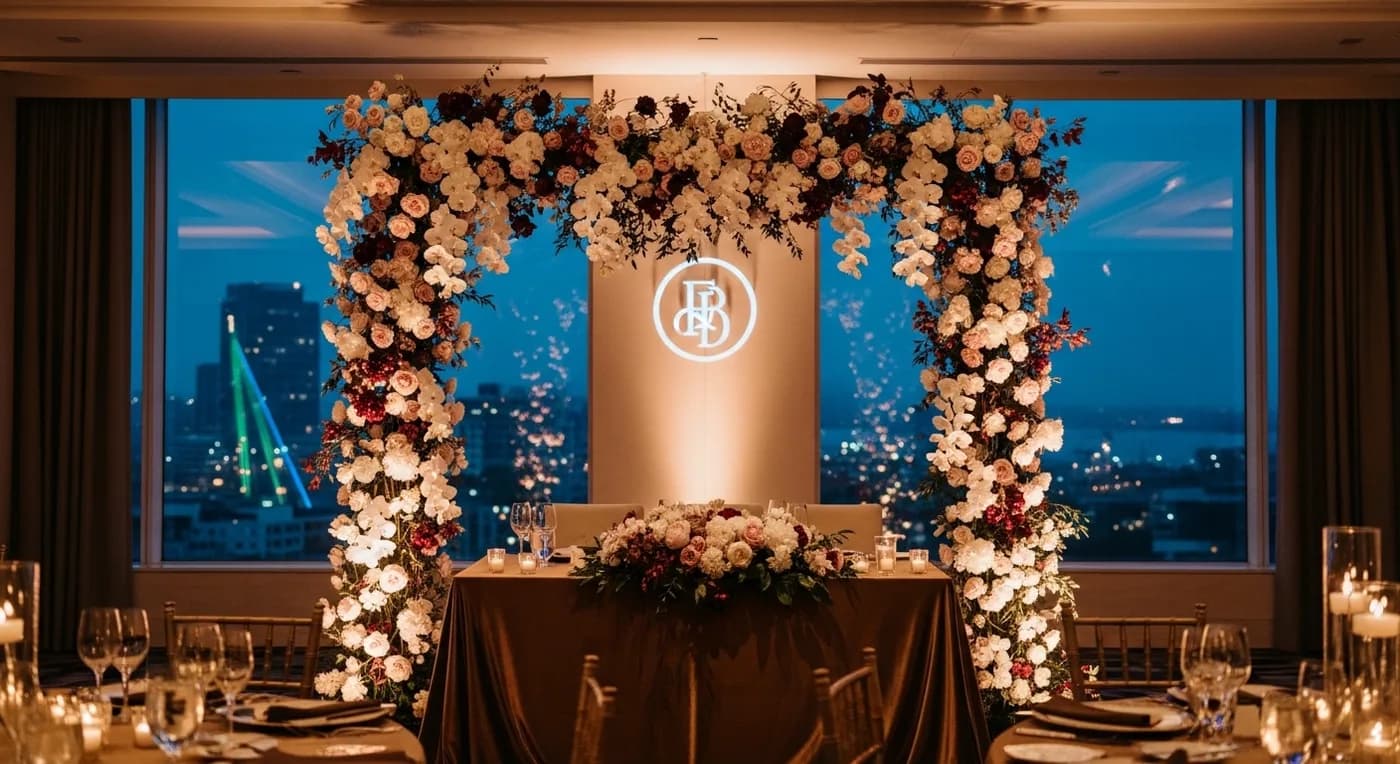
Mumbai's five-star wedding circuit is one of the deepest in India, anchored by some of the country's most iconic hospitality properties. The Taj Lands End in Bandra and the heritage Taj Mahal Palace in Colaba are the marquee picks, followed by Trident BKC, ITC Maratha in Sahar, JW Marriott Juhu, Grand Hyatt in Kalina, Sahara Star at Vile Parle, The Leela Mumbai in Andheri, the Sofitel BKC, and the Sahar-area Westin. These properties offer turnkey luxury — in-house catering, multiple ballrooms for parallel events, on-site rooms for guests, and a single event manager coordinating everything.
₹5,00,000 – ₹25,00,000Five-star hotel weddings work best for couples expecting 200-700 guests, hosting multiple events across 2-3 days, with budgets clearing ₹40 lakhs at minimum. Per-plate catering at this tier runs ₹3,500-6,000 for vegetarian and ₹4,500-7,000 for non-vegetarian menus. Booking lead time is the longest in the city — 12-14 months for Saturday muhurats in December and January. For a deeper venue-by-venue breakdown, see our best wedding venues in Mumbai guide.
Banquet Halls
Mumbai's mid-tier banquet halls are the workhorses of the wedding circuit — purpose-built spaces with kitchens, dining halls, mandap stages, and basic in-house decor that can be upgraded by an outside decorator. Mayfair Banquets and Convention in Worli, Grand Sarovar Premiere in Goregaon, Tunga Paradise in Andheri, the ISKCON Juhu auditorium, the Royal Heritage Banquet in Mira Road, and a dense cluster of halls along Western Express Highway from Borivali to Andheri serve the bulk of the city's mid-range demand.
₹1,50,000 – ₹8,00,000Banquet halls typically work for 200-600 guests and pair well with outside caterers (where allowed) at ₹1,200-2,200 per plate vegetarian. They are the right pick for couples whose budget sits between ₹15-30 lakhs and who prefer to allocate spend toward decor and photography rather than venue prestige. For a ranked directory and pricing comparison, see our banquet halls in Mumbai price list.
Sea-Facing & Rooftop Venues
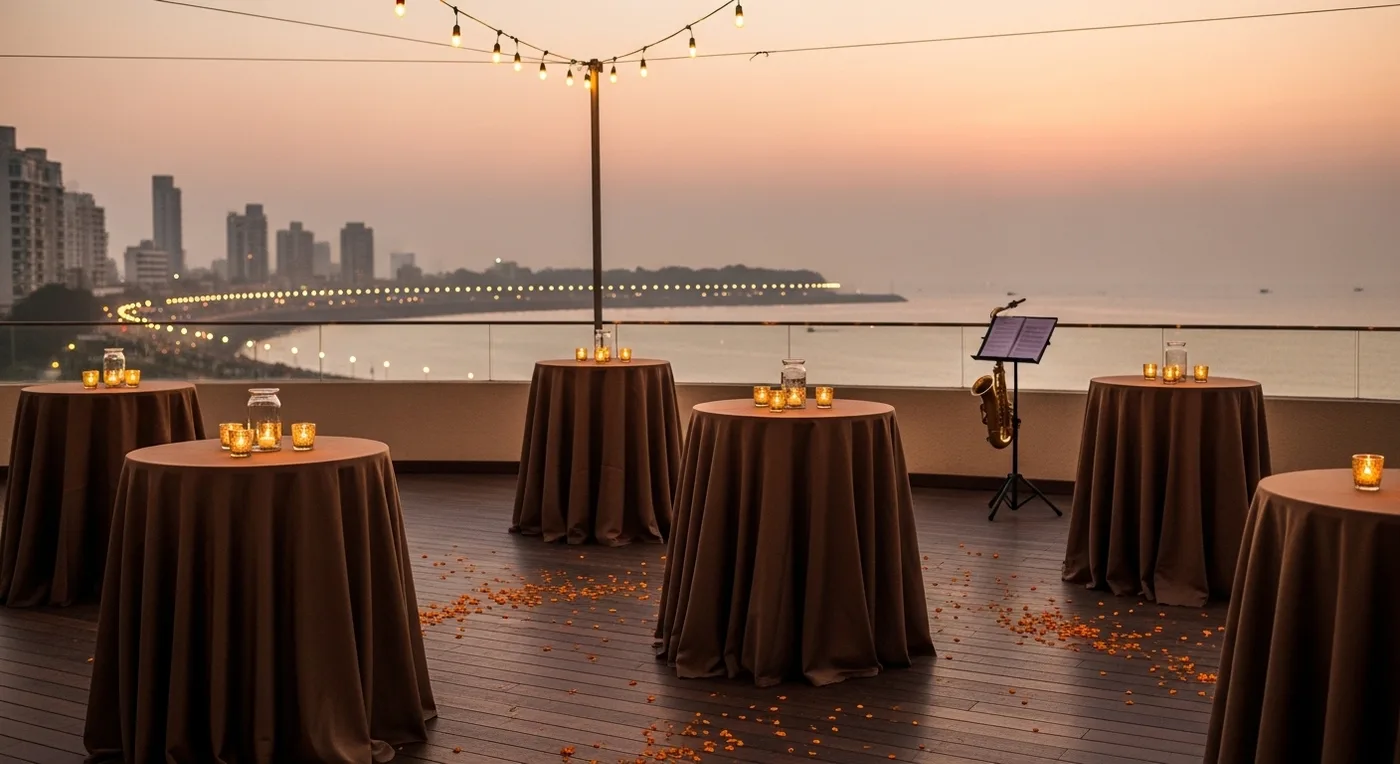
Sea-facing and rooftop venues have become Mumbai's signature wedding aesthetic over the last five years. The Bandstand promenade, Worli sea-face, Marine Drive's terraced hotels, Juhu beachside lawns, and a handful of rooftop spaces in Bandra West and Lower Parel offer the iconic Arabian Sea backdrop that defines so many Mumbai wedding photographs. Properties like the Sun n Sand Juhu, Novotel Juhu Beach, the rooftops of Soho House Bandra, and select event spaces along Worli sea-face host the bulk of these celebrations.
₹3,00,000 – ₹15,00,000Sea-facing venues typically work better for cocktail receptions and sangeet evenings than for full ceremonial weddings — the open-air format is exceptional after sunset and during the December-February cool months. Capacity varies sharply, from 80-guest rooftop intimate events to 400-guest beach-lawn receptions. The premium reflects the rarity: there are perhaps 20-25 truly sea-facing event spaces in all of Mumbai, and they are booked first every season.
Farmhouses
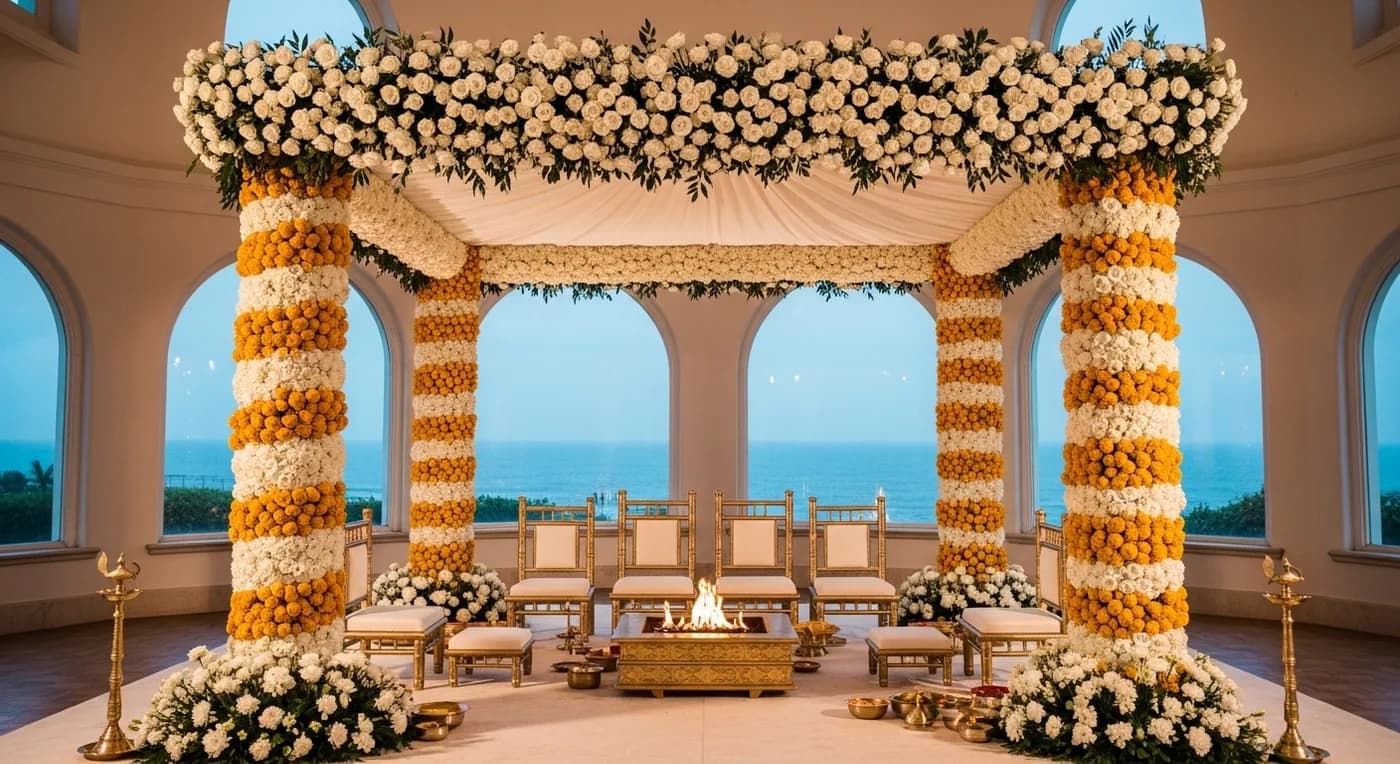
Mumbai's farmhouse circuit lies at the city's edges. Madh Island, accessed via the Versova ferry or a long drive through Malad, hosts a cluster of private farmhouses available for weekend buyout. Gorai, slightly further north, offers similar properties with beach access. Karjat, 90 minutes east on the Pune corridor, has emerged as the dominant farmhouse-wedding belt because of its space, weekend resort estates, and significantly lower rates than Madh.
₹2,00,000 – ₹10,00,000Farmhouses offer something Mumbai's banquet halls cannot: privacy, outdoor space, and the freedom to design the event from scratch. The trade-off is logistical — most farmhouses have basic infrastructure, so couples need to bring in caterers, decorators, generators, washroom infrastructure for larger guest counts, and sometimes air-conditioning units. Budgets here typically clear ₹15 lakhs once everything is layered in. Farmhouses suit couples who want intimate weekend celebrations for 100-250 guests and value creative freedom over turnkey convenience.
Destination Resorts within 2-3 Hours
Mumbai's destination corridor is the fastest-growing wedding format in the city, and it deserves a category of its own. Lonavala (2-3 hours via the Mumbai-Pune Expressway), Alibaug (3-3.5 hours by road or via the Gateway of India ferry), Mahabaleshwar (5-6 hours), Karjat (90 minutes), and Igatpuri (2.5-3 hours) all host wedding-capable resorts.
₹4,00,000 – ₹30,00,000Destination weddings unlock 2-3 day celebrations with captive guest experiences — sangeet on Friday, mehendi and haldi on Saturday morning, ceremony in the afternoon, reception that night. The format is increasingly preferred over a stretched-out Mumbai schedule because guests stay on-site, traffic disappears as a planning variable, and the resort handles most logistics. Costs typically run 20-30% lower than equivalent five-star quality in Mumbai itself, and a full resort buyout transforms the guest experience.
Looking for Venues in Mumbai?
Tell us what you need and get quotes from verified venues
How Do You Build a Realistic Mumbai Wedding Budget?
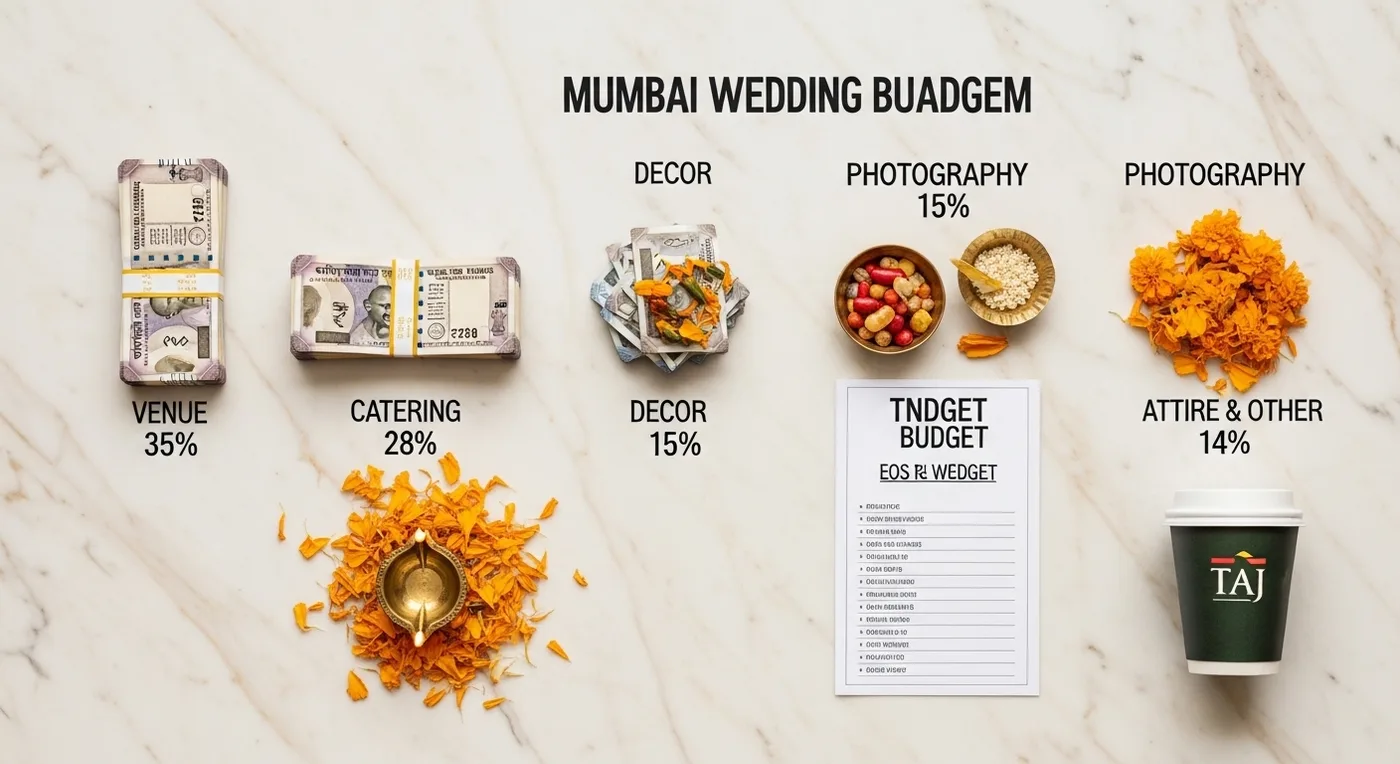
Mumbai wedding budgets cluster into four well-defined tiers, and the tier you pick is determined more by venue choice than by anything else. Once the venue is locked in, the rest of the budget — catering, decor, photography, attire, entertainment — falls into a predictable proportional structure.
Tier 1: Budget (₹10-20 Lakhs)
Budget weddings in Mumbai are entirely doable, but they require deliberate trade-offs. The venue lives in Navi Mumbai, Thane, Mira Road, or the deep western suburbs (Dahisar, Borivali). Per-plate catering sits at ₹800-1,200 for vegetarian Maharashtrian thalis or simple north Indian buffets. Photography is a single shooter at ₹50,000-1.5 lakhs covering one main event. Decor is functional rather than designer — fresh marigold and rose installations rather than imported floral imports.
₹10,00,000 – ₹20,00,000This tier works for guest counts of 150-300, and it is well-suited to families who prefer simplicity and want to allocate savings toward jewellery, gold, or post-wedding investments. Most couples in this tier celebrate over a single day with one or two pre-wedding events at home.
Tier 2: Mid-Range (₹25-45 Lakhs)
The mid-range tier is where the bulk of Mumbai's wedding market sits. The venue is either a four-star hotel in Andheri, Powai, BKC's edge, or Bandra East, or a higher-end banquet hall like Mayfair or Tunga Paradise. Per-plate catering runs ₹1,500-2,500. Photography uses a two-person team or a small studio at ₹1.5-3 lakhs. Decor budgets sit at ₹3-7 lakhs with proper floral installations and lighting design.
₹25,00,000 – ₹45,00,000Mid-range weddings typically host 300-500 guests across 2-3 events — a sangeet, a mehendi/haldi morning, the main ceremony, and a reception. This is also the tier most likely to opt for a destination weekend in Lonavala or Karjat as a substitute, since the same budget often buys a meaningfully better venue experience outside the city.
Tier 3: Luxury (₹50 Lakhs–1 Crore)
Luxury Mumbai weddings live at the Taj, Trident, ITC Maratha, JW Marriott, Grand Hyatt, and Leela tier. The venue alone consumes ₹15-30 lakhs across a multi-day buyout. Per-plate catering moves to ₹3,500-6,000 for elaborate multi-cuisine spreads (live counters, sushi bars, regional Indian stations). Photography is a full cinematic team at ₹2.5-5 lakhs covering pre-wedding shoots, all events, and a same-day edit. Decor is a designer-led production at ₹10-25 lakhs, often involving imported flowers, custom-built mandaps, and 3D-mapped lighting.
₹50,00,000 – ₹1,00,00,000Guest counts here range from 400-1,000+. Multi-day events are standard — sangeet on day one, mehendi and haldi parallel-tracked on day two, ceremony and reception on day three. The luxury tier is also where wedding planners become non-negotiable: at this scale, a coordinated planning team with a budget of ₹3-7 lakhs is what holds the production together.
Tier 4: Destination (₹30-80 Lakhs)
The destination tier overlaps in spend with mid-range and luxury Mumbai weddings, but the experience is qualitatively different. A 2-day Lonavala buyout at Della Resorts or The Fariyas typically costs ₹25-50 lakhs all-in for 150-300 guests, and an Alibaug weekend at Casuarina or Mansion House sits in a similar band. Mahabaleshwar runs slightly higher because of distance. Per-plate catering is built into resort packages at ₹2,000-4,500.
₹30,00,000 – ₹80,00,000The economics work because the venue, accommodation, and most catering are bundled — and because guests pay their own travel (Mumbai-Lonavala is a 2-3 hour drive). Couples who pick destination over equivalent Mumbai luxury report meaningfully higher guest satisfaction; the captive multi-day format simply lands better than a stretched-out city schedule. For comparative pricing across Indian metros, see our average wedding cost in India 2026 guide.
Important
Mumbai-specific budget gotcha: GST and service charges at five-star hotels can add 18-22% to the headline catering quote. Always ask for the all-in price including taxes, and confirm whether the venue charges separately for cake-cutting fees, outside-DJ permissions, or extended-hour usage past the ceremony cutoff. These hidden costs typically add ₹2-5 lakhs at the luxury tier.
What Are the Main Wedding Traditions in Mumbai?
Mumbai is the most multi-community wedding city in India, and that diversity plays out across at least seven distinct traditions on any peak-season weekend. Each community has its own rituals, attire, food, and pacing, and Mumbai vendors have evolved to be fluent across most of them.
Marathi (Maharashtrian) Weddings
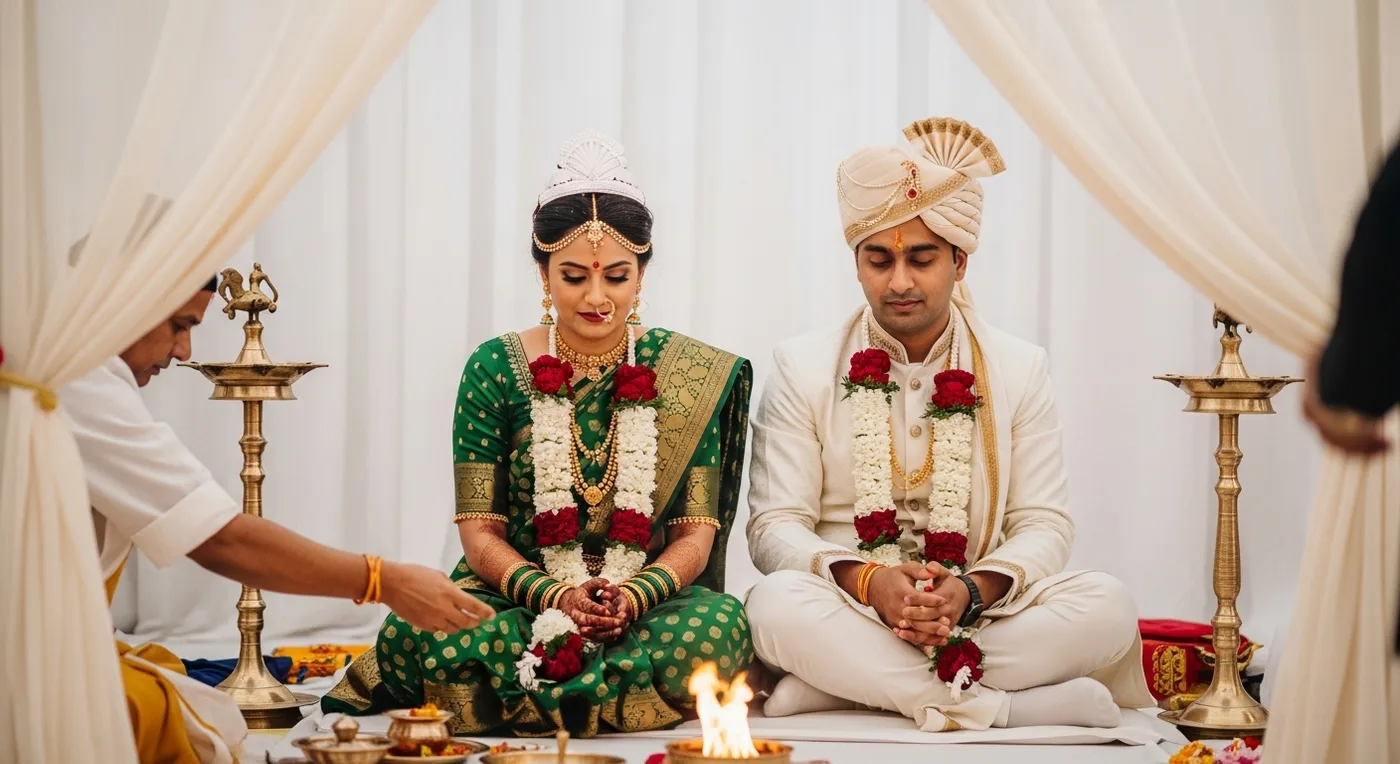
The Marathi wedding is the host tradition of Maharashtra and the most ceremonially distinctive in the region. The sequence opens with Sakhar Puda — the formal engagement ritual where the bride's family offers sugar (sakhar) packets — followed by Kelvan, the family blessing ceremony three days before the wedding. Halad Chadavane is the haldi: turmeric paste is first applied to the groom at his home, then physically transported to the bride's home and applied to her, symbolising the union of the two households.
On the wedding day itself, the Seemant Puja welcomes the groom's family at the venue. The bride performs Gurihar Puja — worshipping a small idol of Parvati. The defining ritual is the Antarpat: a curtain is held between the bride and groom while priests chant the Mangalashtak wedding hymns. When the curtain drops, the couple sees each other, and they exchange floral garlands. The Saptapadi (seven steps around the sacred fire) and mangalsutra tying complete the ceremony. The bride then performs Grihapravesh at her new home — kicking over a pot of rice at the threshold to signal abundance.
For a deep-dive on rituals, attire (the iconic nauvari sari, the peshwai pheta turban), and Mumbai-specific Marathi wedding planners, see our Marathi wedding traditions guide.
Gujarati Weddings
Mumbai's large Gujarati community — concentrated in Ghatkopar, Bhuleshwar, Kandivali, and the South Bombay Walkeshwar belt — celebrates weddings spread across 3-4 days. The sequence runs Ganesh Sthapna (invocation), Mandvo (the canopy ritual), Pithi (haldi), Sangeet, Mehendi, and the wedding day itself. Gujarati ceremonies feature four pheras rather than the seven of most other traditions — each phera representing dharma, artha, kama, and moksha. The Vidaai is famously emotional, marking the bride's departure from her parents' home.
Gujarati food is the social centrepiece — multi-course thalis featuring dhokla, fafda, undhiyu, kadhi, and a long sweet menu of jalebi, basundi, and shrikhand. Catering at a Gujarati Mumbai wedding routinely runs longer than the wedding itself, with food stations open across multiple sittings.
Sindhi Weddings
The Sindhi community in Mumbai — anchored in Ulhasnagar, Khar, and Versova — brings a distinctive set of rituals. Berana Satsang opens the multi-day celebration with religious singing. Lada is the engagement ceremony. Saanth is the Sindhi haldi equivalent. The wedding ceremony features Saptapadi, but the most emotionally distinctive Sindhi moment is the Datar — a post-pheras feast where families come together. Sindhi weddings are vibrant, music-heavy, and food-driven, with dishes like Sindhi kadhi, dal pakwan, and koki anchoring the meals.
Marwari Weddings
Mumbai's Marwari community — drawn from Rajasthan and concentrated in Malabar Hill, Walkeshwar, and Tardeo — hosts some of the city's longest and most elaborate weddings, often running 4-5 days. Key rituals include Pithi Dastoor (multi-day haldi), Mehendi, Tilak (groom-blessing), the Saptapadi, and culminating receptions with traditional Rajasthani folk dances like Ghoomar and Kalbeliya. Marwari weddings tend toward the luxury tier — ₹50 lakhs to ₹2 crore is common — and they are often hosted at marquee five-star venues.
Catholic Weddings
Mumbai's Catholic community — the East Indians of Bandra, Vasai, and Kurla, the Mangaloreans of Khar and Bhandup, and the smaller Goan-origin community — celebrates with a distinctive blend of Christian liturgy and South Indian Catholic ritual. The Roce is the pre-wedding cleansing ceremony, where coconut milk is anointed on the bride and groom at separate family gatherings. The wedding itself is a Holy Mass nuptial at churches like Mount Mary in Bandra, Holy Cross in Kurla, or St. Andrew's in Bandra West. Vows and ring exchange happen during the Mass. The reception features traditional East Indian or Mangalorean Catholic dishes — sorpotel, sannas, vindaloo, bebinca — and a strong dance-and-music culture.
Maharashtrian Muslim Weddings
Mumbai's Muslim wedding circuit centres on Bhendi Bazaar, Kurla, Mahim, and Mumbra in the Thane district. The sequence opens with Mehndi and Sangeet (more elaborate than in many other Muslim communities, reflecting Bombay's cultural blend). The Nikah is conducted by a Qazi, with the Mehr (bride-price) agreed and witnessed. The Walima is the post-Nikah feast hosted by the groom's family — biryani, kebabs, and slow-cooked nihari are the cornerstone dishes. Mumbai's Muslim weddings draw on Deccani, Konkani Muslim, and Bohra traditions, with each sub-community adding distinctive elements.
Parsi Weddings
Mumbai is home to India's largest Parsi (Zoroastrian) community, concentrated in Colaba, Cusrow Baug, Dadar Parsi Colony, and Bandra. Though small in number, Parsi weddings are ceremonially rich. The Achumichu is the welcome ritual where the groom is anointed with rice, a coconut, and a raw egg. The Ara Antar is the Parsi equivalent of Antarpat — a cloth curtain between bride and groom. The Lagan ceremony itself, conducted by a Mobed (Parsi priest), takes place in front of the sacred fire. The community's preferred venues are the Cusrow Baug Hall, the JN Petit Parsi Sanatorium, and the agiari halls of South Bombay.
Looking for Decorators in Mumbai?
Tell us what you need and get quotes from verified decorators
Where Should You Plan a Destination Wedding Near Mumbai?
The Mumbai destination corridor is one of the best in India — five distinct destinations within 2-3 hours, plus Goa within a one-hour flight. Each destination has a different mood, price tier, and seasonal logic.
Lonavala (2-3 hours)
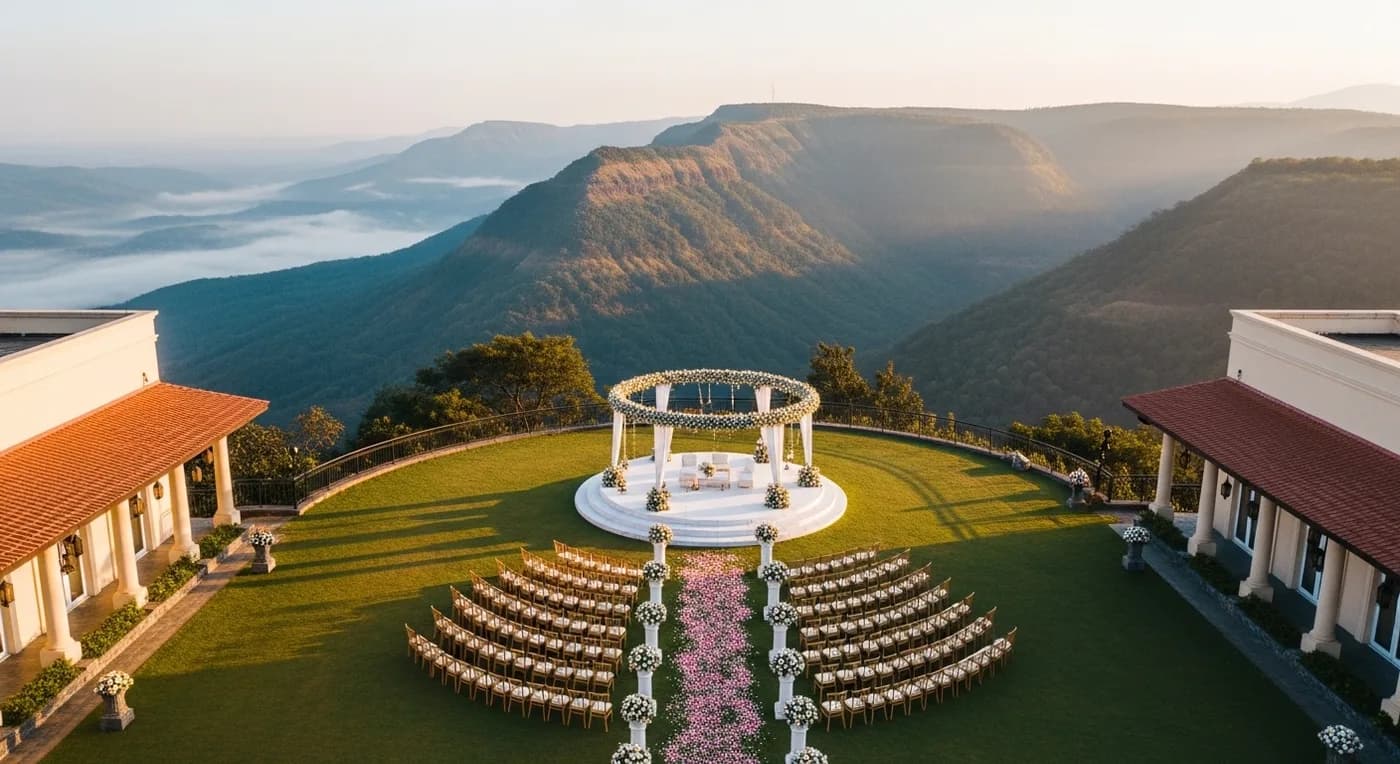
Lonavala is the default choice for Mumbai destination weddings. The Mumbai-Pune Expressway makes the drive predictable, and the hill-station climate stays cool from October through March. Della Resorts is the marquee property, hosting full buyouts for 200-400 guests at ₹25-50 lakhs for a 2-day weekend. The Fariyas Resort, Rhythm Lonavala, Lagoona Resort, and Upper Deck offer mid-tier alternatives at ₹10-25 lakhs. The Tripadvisor Lonavala wedding resort directory is a useful starting point for comparison shopping.
Lonavala works best for couples wanting hill-station aesthetics, captive multi-day celebrations, and a venue that feels meaningfully different from Mumbai. For pricing, packages, and a vendor-by-vendor breakdown, see our Lonavala destination wedding guide.
Alibaug (3-3.5 hours)
Alibaug has emerged as Mumbai's beachside destination of choice over the last five years. The RoRo ferry from Gateway of India to Mandwa cuts the journey to under two hours during good weather, while the road route via JNPT and Pen takes 3-3.5 hours. Casuarina Beach Villa, Mansion House, U Tropicana, and the Saffronstays portfolio of villas dominate the wedding market here. Resort buyouts run ₹15-40 lakhs for 100-250 guests over a 2-day weekend.
Alibaug is best from October through February — the post-monsoon dry season. Beach ceremonies, sunset cocktail receptions, and rustic-chic mandaps work especially well here. The aesthetic skews toward intimate, design-forward celebrations rather than the larger banquet-style format that Lonavala accommodates. For full property and pricing detail, see our Alibaug destination wedding guide.
Mahabaleshwar (5-6 hours)
Mahabaleshwar is for couples who want a hill-station heritage experience and don't mind the longer drive. Properties like Le Meridien Mahabaleshwar, the Brightlands Resort, and Saj by the Lake host wedding-scale events. Costs sit broadly in the Lonavala band — ₹15-40 lakhs — but the longer drive limits guest counts to families willing to commit to the round trip. October through February is the prime window.
Karjat (90 minutes)
Karjat is the closest destination option, just 90 minutes from Mumbai's eastern suburbs along the central railway line. The format here skews farmhouse-style — Saffronstays villas, Della Adventure Park's wedding spaces, and a cluster of private estates that buy out for weekends. Karjat weddings typically host 100-200 guests at ₹15-30 lakhs for a 2-day weekend. The proximity makes it a strong choice when guests cannot commit to the longer travel times of Lonavala or Alibaug.
Igatpuri (2.5-3 hours)
Igatpuri sits along the Mumbai-Nashik corridor and offers a quieter, less-developed alternative to Lonavala. Properties here are fewer but the rates run 15-25% lower, making it a strong budget-conscious destination pick.
Goa (1-hour flight)
Goa is technically a destination wedding for Mumbai couples, given the one-hour flight makes it logistically comparable to Alibaug. North Goa beach properties (Taj Aguada, Vivanta, W Goa) host beach-mandap ceremonies at ₹30-80 lakhs for 2-3 day buyouts. Goa weddings unlock a different aesthetic — Portuguese architecture, beach shacks, sunset Susegad cocktail hours — that no Mumbai-corridor destination can match.
Tip
For destination weddings, factor in guest accommodation logistics from day one. A 250-guest Lonavala buyout typically requires 100-130 rooms, and not all destination resorts have that inventory under one roof. Many couples block rooms across 2-3 properties within a 5-minute radius and arrange shuttle transport. Build this into your venue shortlist criteria — total room inventory matters as much as ceremony space.
What Vendor Categories Will You Need?
Beyond the venue, a Mumbai wedding requires roughly six vendor categories: photography, decor, catering, makeup and styling, entertainment, and overall planning. Each has a Mumbai-specific market dynamic worth understanding.
Photography & Videography
Mumbai's photography market is the deepest in India, with full-service candid studios charging anywhere from ₹50,000 for budget single-shooter coverage to ₹5 lakhs+ for multi-day cinematic teams. The WedMeGood Mumbai vendor directory lists hundreds of options across tiers.
₹75,000 – ₹5,00,000Top studios book 8-10 months ahead for peak-season dates. Pre-wedding shoots — at locations like Gateway of India, Worli sea-face, the BKC business district at night, or Lonavala lakeside — have become standard inclusions in mid-range and luxury packages. For per-package pricing comparisons across the Mumbai photography market, see our wedding photography cost in Mumbai guide.
Looking for Photographers in Mumbai?
Tell us what you need and get quotes from verified photographers
Decor & Floral
Mumbai's decor market spans the full spectrum from ₹1.5 lakh basic floral installations to ₹25 lakh production-led designer setups. Top decorators — names like Devika Sakhuja, Vivek Vilasini, and the larger studios in Kala Ghoda and Lower Parel — work primarily at the luxury tier. Mid-range decorators in Andheri and Thane handle the bulk of the city's wedding market.
₹3,00,000 – ₹25,00,000Decor lead time is 4-6 months for mid-range and 6-9 months for luxury production, with mood-boarding and design iteration consuming most of that runway.
Catering
Catering is where Mumbai weddings differ most sharply from other Indian metros. At five-star venues, in-house catering is mandatory; at banquet halls and farmhouses, outside catering is the norm. Mumbai's top wedding caterers — names like Foodlink, Thomas Caterers, and Le Marche — work across communities and cuisines.
₹1,50,000 – ₹30,00,000Per-plate pricing: ₹800-1,200 budget, ₹1,500-2,500 mid-range, ₹3,500-6,000 luxury. Tasting sessions are standard 4-6 months before the wedding. Always confirm what's included in the per-plate quote — welcome drinks, dessert station, live counters, and post-dinner mukhwas can all be billed separately.
Makeup & Styling
Mumbai is India's bridal makeup capital, with celebrity makeup artists charging ₹50,000-2.5 lakhs per event. The lead time for top names — artists like Namrata Soni, Kapil Bhalla's team, and Bianca Louzado — runs 6-8 months for peak-season dates.
Entertainment
Sangeet choreographers, live bands, dhol players, DJ services, and traditional musicians all operate in Mumbai's competitive entertainment market. Sangeet choreography alone runs ₹50,000-3 lakhs depending on complexity and rehearsal time.
Wedding Planners
For weddings clearing ₹40 lakhs, a planner is non-negotiable. Mumbai planners charge 8-15% of total wedding spend, or fixed retainers of ₹3-10 lakhs depending on scope. Top names like The Wedding Design Company, Wedlock, and several Bandra-based studios work across all tiers.
For a comparative metro view of vendor pricing, our Bangalore wedding planning guide maps out an instructive comparison — Mumbai vendor rates run 30-50% above Bangalore for equivalent quality across most categories.
Common Questions About Mumbai Weddings
How much does a 300-guest mid-range Mumbai wedding cost in 2026?
A 300-guest mid-range Mumbai wedding in 2026 typically costs ₹22-35 lakhs all-in, with the venue (a four-star hotel or premium banquet hall in Andheri, Powai, or Bandra East) consuming ₹6-12 lakhs, catering at ₹1,800-2,500 per plate adding another ₹6-9 lakhs, decor at ₹3-6 lakhs, photography at ₹1.5-3 lakhs, makeup and attire at ₹3-5 lakhs, and entertainment plus miscellaneous costs filling out the remainder. Couples who want to compress this budget should look at venues in Navi Mumbai or Thane, which can shift the total down by 20-30% without meaningfully changing the guest experience.
Which months should I avoid for a Mumbai wedding?
Avoid June through September entirely — this is the southwest monsoon, and Mumbai receives more than 2,400mm of rainfall during this window per IMD data. April and May are uncomfortably hot and humid, with afternoon temperatures crossing 35°C. Within the peak season, avoid the Pitru Paksha period (typically late September) and the days immediately around Diwali, since these are inauspicious for Hindu ceremonies. Late October through mid-March is the safe window, with December and January as the very peak.
Are Mumbai destination weddings cheaper than Mumbai city weddings?
For equivalent guest experience and quality tier, Mumbai destination weddings in Lonavala, Alibaug, or Karjat typically save 20-30% versus a comparable luxury Mumbai wedding. The savings come from venue economics — destination resorts include accommodation, multiple event spaces, and most catering in a single buyout package, whereas Mumbai luxury weddings stack venue rental, room blocks, and per-plate catering as separate line items. The catch is that destinations are not cheap in absolute terms — a quality Lonavala 2-day weekend still runs ₹25-50 lakhs.
How do I handle multi-community Mumbai weddings?
Inter-community weddings are common in Mumbai, and the city's vendor ecosystem has evolved to handle them well. The standard approach is to host both ceremonies — a morning Marathi or Hindu muhurat followed by an evening Catholic Mass, for example, or sequential Gujarati and Marwari ceremonies on consecutive days. Pick a venue with multiple event spaces (most five-star ballrooms, JW Marriott Juhu, ITC Maratha) and coordinate with priests, chaplains, or qazis from each tradition 6-8 months ahead. Cuisine is similarly managed by stacking food stations rather than blending menus.
What are the most common Mumbai wedding planning mistakes?
The single most common mistake is starting too late on the venue search — couples who begin venue visits 6-7 months before peak-season dates routinely find their top three options already booked. The second is underestimating Mumbai traffic in scheduling, which causes muhurat delays that cascade across the entire event timeline. The third is over-allocating budget to venue at the expense of photography and decor, which are what guests and the couple actually remember. The fourth is skipping the destination-wedding evaluation — many couples discover late in the process that a Lonavala or Alibaug weekend would have given them a better experience for the same budget.
Tip
Whatever tier you plan in, allocate at least 5-7% of total budget to a contingency fund. Mumbai weddings have more moving parts than most cities — vendor rescheduling, rain backup plans for sea-facing venues, last-minute room blocks, traffic-driven timeline shifts — and the contingency money is what keeps the day stress-free when those variables surface.
A Mumbai wedding is, ultimately, a logistics achievement as much as a celebration. The city rewards couples who plan early, anchor their decisions on the venue, build in time for traffic and weather, and pick the community traditions that matter most rather than trying to fit everything into a single ceremony. Whether you end up at the Taj Lands End watching the Bandra-Worli Sea Link light up the Arabian Sea, or in a Lonavala farmhouse with 150 guests under fairy lights, Mumbai delivers a wedding experience no other Indian city can quite replicate. Start with the date, lock in the venue, and the rest of the plan flows from there.
Topics
mumbai weddingwedding planning mumbaihow to plan wedding mumbaimaharashtra weddingmumbai wedding guide 2026bombay weddingsExplore more
Frequently Asked Questions
1How much does a wedding cost in Mumbai in 2026?
2What is the best month for a wedding in Mumbai?
3What are the most popular wedding venue types in Mumbai?
4How far in advance should I book wedding vendors in Mumbai?
5What are the main wedding traditions in Mumbai?
6Can I plan a destination wedding near Mumbai?
Continue reading
Related Articles
Top Wedding Venues in Mumbai: 5-Star, Banquet & Beach (2026)
Mumbai Wedding Budget Guide: ₹20-60L Breakdown for 2026
Banquet Halls in Mumbai: Price List & Per-Plate Rates (2026)
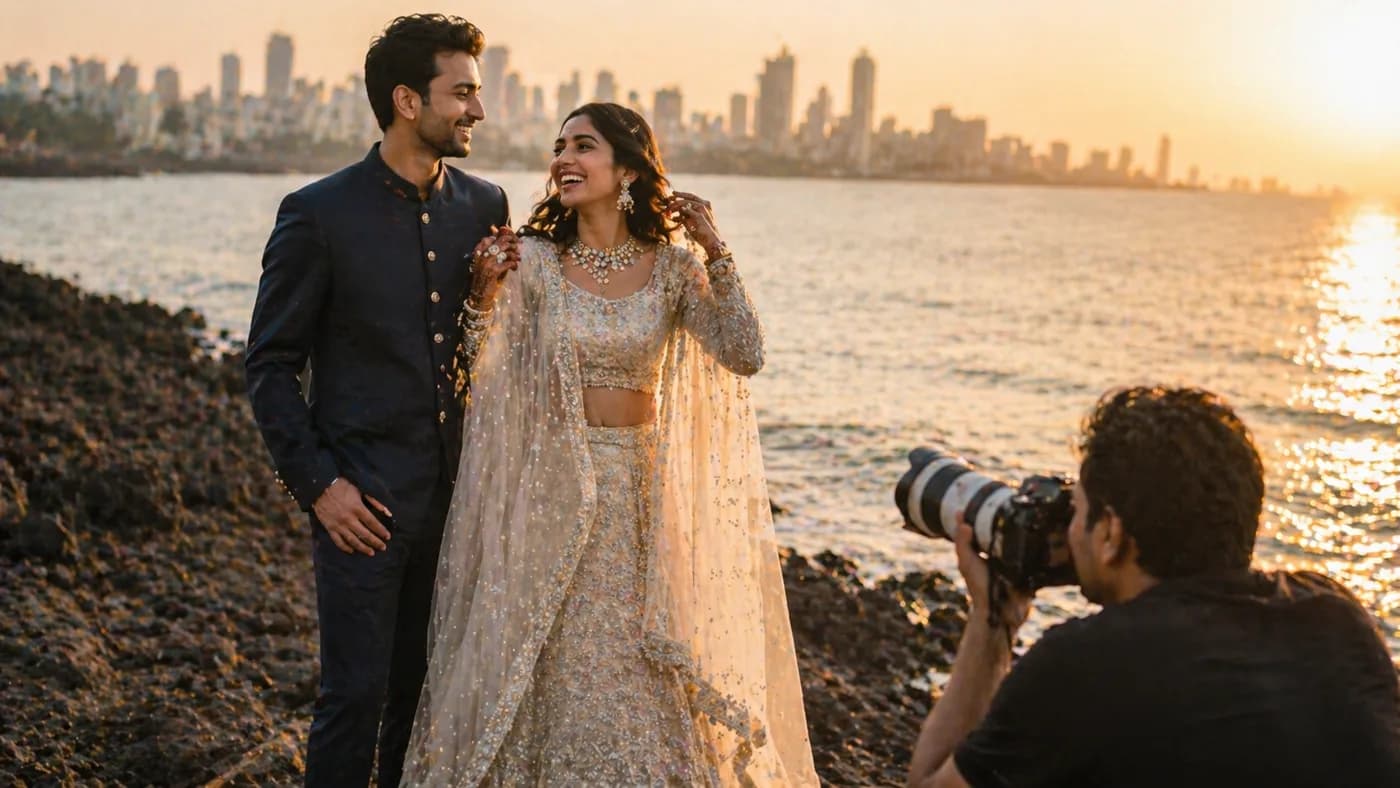
Wedding Photography Cost in Mumbai: ₹50K-5L Packages (2026)
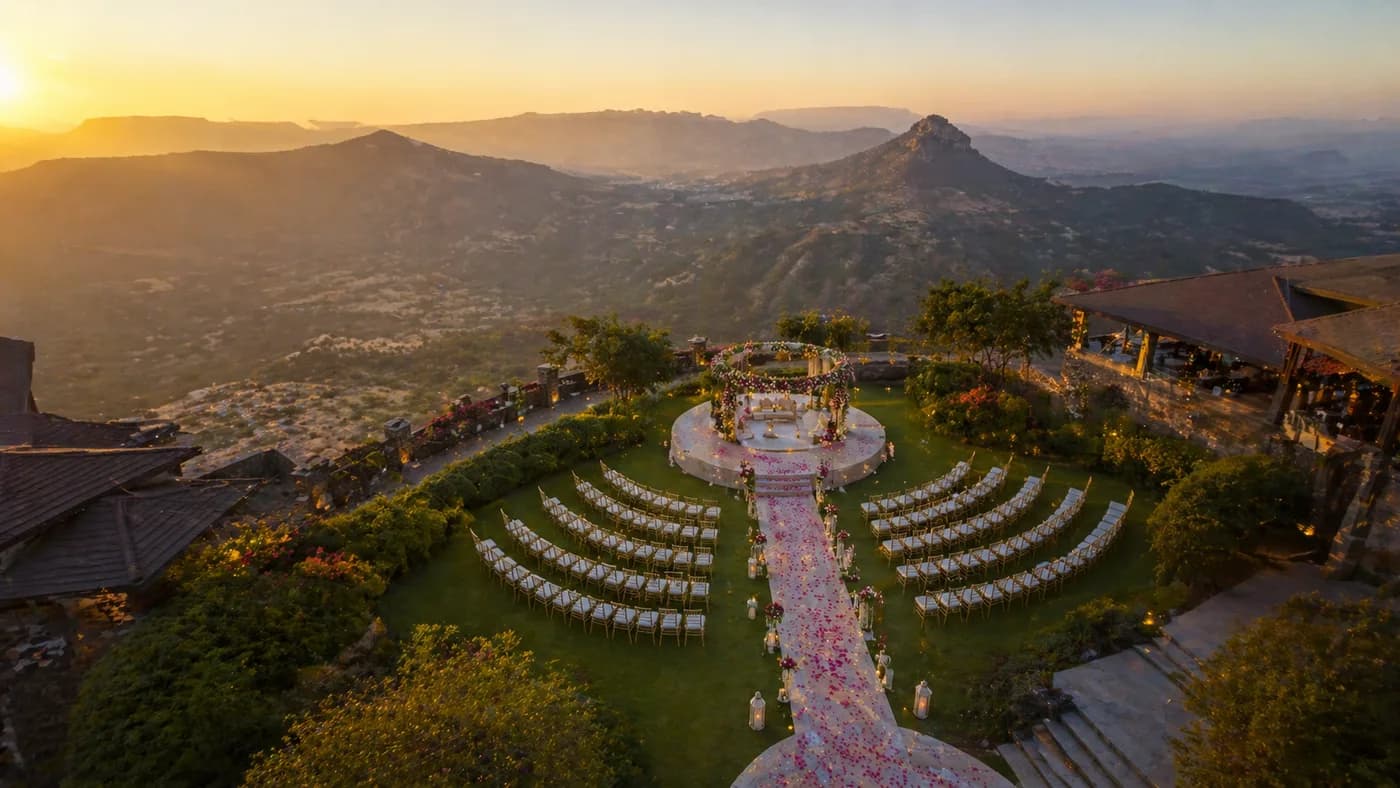
Lonavala Destination Wedding: Top Resorts & Costs (2026)
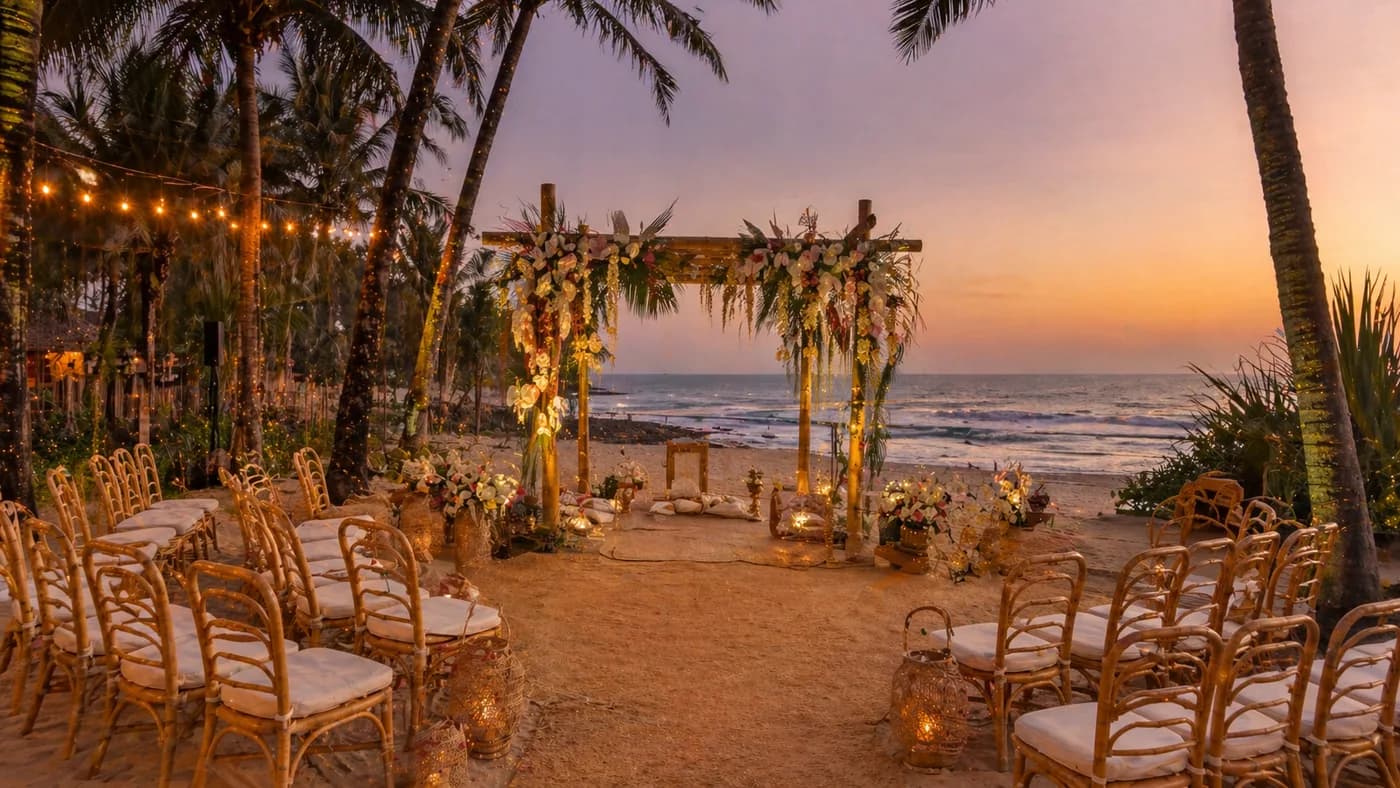
Alibaug Destination Wedding: Beach Venues & Costs (2026)
Still planning?
Get quotes from India's best vendors
Tell us what you're planning and we'll match you with verified photographers, venues, decorators, and more.
Get free quotes